NEA Seal of Acceptance Now Covers Makeup: What Eczema-Friendly Formulation Actually Requires
The National Eczema Association expanded its Seal of Acceptance™ to colour cosmetics on 1 September 2026 — foundation, concealer and primer first. Here is what the Seal screens for at the bench, how it changes a sourcing brief, and which formats Skincraftlab can build today.
Trending Products
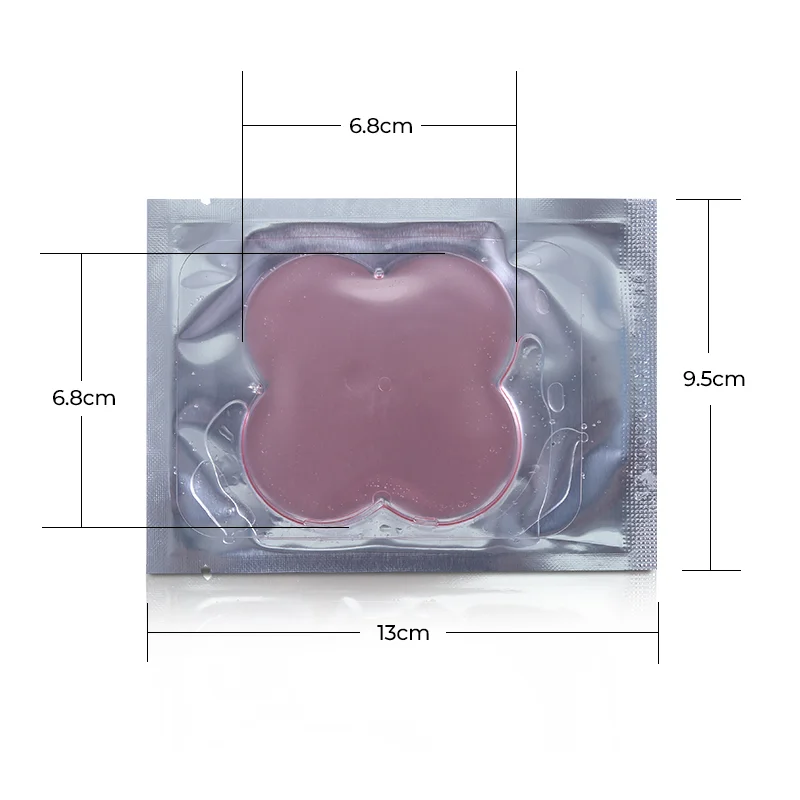
Leave-on hydrogel formats are the simplest route to a fragrance-free, barrier-hydration SKU — the format most sensitive-skin ranges start with [2].
Fragrance-free formulation route available; certified scope covers general liquid units (skin care waters, gels) [3].

Centella is the botanical most sensitive-skin briefs reach for first, but the ingredient is the easy part — the system around it is what breaks under the Seal's constraints [2].
Every botanical extract in the formula must be screened against the NEA Ecz-clusion List before sampling, not after [2].
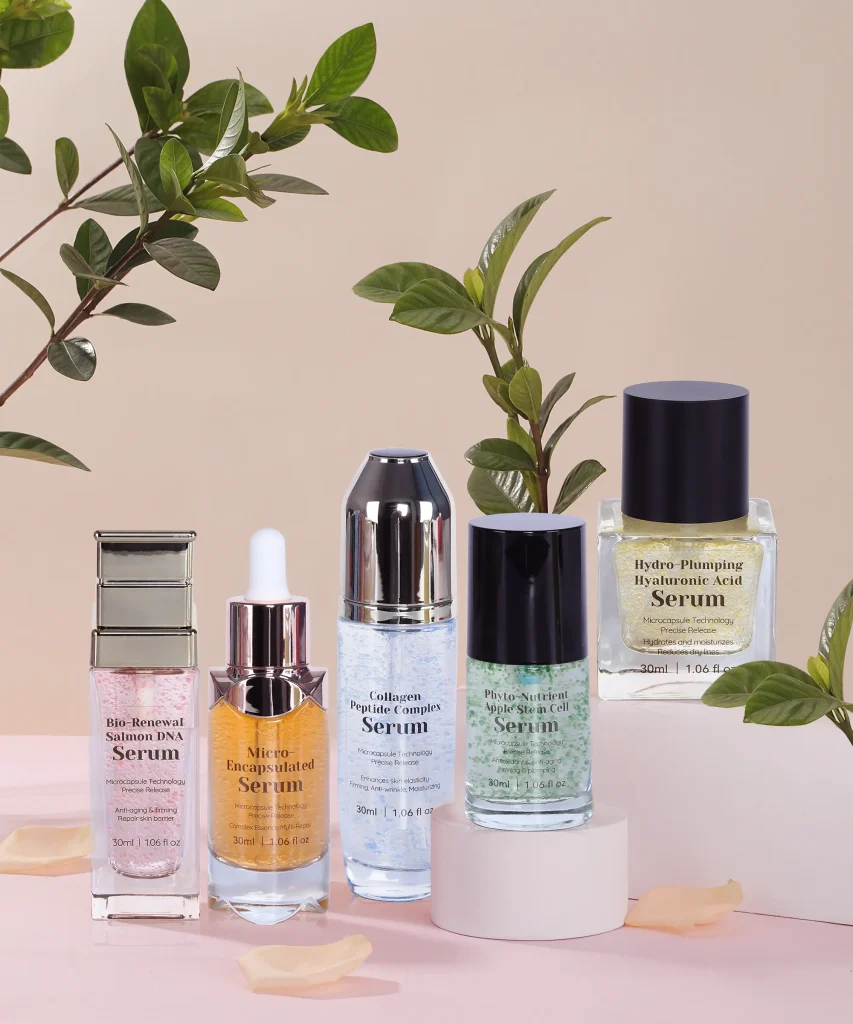
Cleansers and disposable wipes are already Seal categories, so pre-soaked pad formats have an existing review path [1][2].
Ask for the ingredient and formulation documentation set up front — it is part of the Seal review package [2].

Eye-area and lip formats are established Seal categories; eye skin care is also a certified production condition for us [1][2][3].
Projects in eye skin care and baby and child skin care are accepted — certified production conditions for both are recorded in our certification scope [3].
The Signal: The Seal of Acceptance Moved Into Makeup
On 1 September 2026 the National Eczema Association (NEA) announced that its Seal of Acceptance™ programme — running since 2008 — expanded into colour cosmetics for the first time. The initial launch covers base products: foundation, concealer and primer, with further makeup categories to follow [1].
The first makeup brands whose products earned the Seal are IT Cosmetics, Laura Geller Beauty, Rare Beauty and Tower 28 Beauty. IT Cosmetics' Seal-accepted product reaches consumers in January 2027 [1].
For a B2B reader, the important part is not the brand list. It is this: the Seal is a review gate with hard formulation constraints, not a marketing badge. Products are reviewed individually by the Seal Review Panel — board-certified dermatologists, allergists and eczema specialists — and must pass external testing before submission [2]. The programme states its purpose as helping the more than 31 million Americans living with eczema — and the wider sensitive-skin population — identify products that have been evaluated and found suitable for them [1].
Makeup has historically been the least screened category in a sensitive-skin routine. That gap is now a formulation requirement, and requirements create briefs.
What the Seal Screens For at the Bench
| Requirement [2] | What it means in the lab |
|---|---|
| No added fragrance | A fragrance-free formula, not an "unscented" one. Masking-fragrance strategies are out, and each botanical extract must be screened for its fragrance-allergen content. |
| No chemical UV absorbers | If the SKU is hybrid — tinted base with SPF — the filter system cannot rely on chemical absorbers. |
| No formaldehyde releasers | The preservative system is usually the first thing that breaks. Cost-driven preservative choices have to be rebuilt around this constraint. |
| Free of every ingredient on the NEA Ecz-clusion List | Screening has to happen ingredient-by-ingredient before formulation is locked, not as a final check. |
| External testing for sensitivity, irritation and toxicity | A lab test slot becomes part of the project timeline and budget. |
| Individual review by the Seal Review Panel | Passing your own safety assessment is not the same as passing the review. |
One clarification worth keeping in every customer conversation: the Seal signals suitability for people with eczema and sensitive skin as determined by NEA's review. It is not a treatment claim, and no manufacturer can promise a Seal outcome — NEA awards it to the finished product after review.
Where the Seal Already Applies
The makeup launch did not arrive in isolation. The programme's existing categories include moisturisers, sunscreens, cleansers, disposable wipes, haircare products, over-the-counter drugs, household cleaning products, laundry products, lip care and deodorant [1][2].
Read that list as a product roadmap rather than a press release: a sensitive-skin assortment can now be built end to end — cleanse, treat, moisturise, protect, and now tint. For brands that treat sensitive skin as a single hero SKU, the competitive frame has moved to range-level consistency.
What It Changes for Brands Sourcing From Asia
1. It is a reformulation project, not a one-SKU fix. Removing fragrance and rebuilding preservation touches every SKU in the range. Plan the pipeline, not a single sample.
2. Documentation becomes part of the product. Ingredient and formulation data are submitted as part of the review [2]. A supplier that cannot produce a clean ingredient and formulation documentation set will stall the process, regardless of formula quality.
3. Testing has to be scheduled, not improvised. External sensitivity, irritation and toxicity testing sits ahead of submission [2]. In practice this means a brand should decide the target market first and then build a timeline that contains a lab slot.
4. "Unscented" is not "fragrance-free". The first is a marketing convention; the second is a formulation fact and a review requirement.
5. Some formats carry the standard more easily than others. Leave-on hydrating formats, cleansers, pre-soaked pads and patches, eye-area and lip care, haircare and deodorant all sit inside existing Seal categories [1][2] — which makes them the shortest paths for a first sensitive-skin launch.
Where Skincraftlab Fits — And Where We Step Aside
| Format | Are we able to work on it? |
|---|---|
| Sheet and hydrogel masks, barrier serums and essences, toner pads, eye-area patches and masks | Yes. Certified scope: production of cosmetic products — general liquid units (skin care waters, gels); cream and lotion units (hair care products); wax units (wax-based products) [3]. |
| Eye skin care and baby and child skin care cosmetics | Yes — we accept projects in these two categories, and certified production conditions for both are recorded in our certification scope [3]. |
| Colour cosmetics — foundation, concealer, primer | No. Colour cosmetics are not in our certified scope, so we do not quote them. The formats named in the NEA announcement are outside what we can honestly supply [3]. |
Two things we state plainly, because a sourcing decision depends on them:
- The NEA Seal is awarded to the brand's finished product after NEA's review. Skincraftlab does not hold the Seal and cannot award it. What we can do is build to the constraints the Seal screens for and prepare the documentation set the review requires.
- No product we supply is "eczema-friendly" by assertion. That wording belongs to a reviewed product, not to a supplier's marketing page.
Landed-Cost Reality Check
Formulation changes do not change duty, but they do change project cost — so it is worth keeping the tariff position in view: heading 3304.99 for the US market carries a general rate of Free, and UK commodity 3304990000 carries a third-country duty of 0.00% with VAT at 20% still payable on import [4][5]. Duty is not the cost driver here; reformulation testing and documentation usually are.
The full duty and HS-code breakdown, including why zero duty is not zero cost, is in our skincare import duty guide.
FAQ
Q: Does the NEA Seal of Acceptance cover skincare products, not just makeup?
Yes. The programme has covered moisturisers, sunscreens, cleansers, disposable wipes, haircare, over-the-counter drugs, lip care and deodorant for years; the September 2026 expansion added colour cosmetics, starting with foundation, concealer and primer [1][2].
Q: Can a sensitive-skin skincare range be manufactured in Asia?
Yes, provided the formulation is built to the constraints the Seal screens for — no added fragrance, no chemical UV absorbers, no formaldehyde releasers, and full screening against the NEA Ecz-clusion List — and the manufacturer can hand over ingredient and formulation documentation for external review [2].
Q: Does Skincraftlab hold the NEA Seal of Acceptance?
No. The Seal is granted by NEA to a brand's finished product after individual review by the Seal Review Panel and external testing [1][2]. We can formulate to those constraints, produce within our certified scope, and prepare the documentation set — the review itself belongs to NEA and to the brand.
Q: Which formats should a brand start with for a first sensitive-skin launch?
Formats that already sit inside Seal categories and inside our certified scope are the shortest path: fragrance-free hydrogel or sheet masks, barrier serums and essences, pre-soaked toner pads, and eye-area care [1][2][3].
Act with Skincraftlab
If you are planning a sensitive-skin or fragrance-free range, send the brief with the constraint list above attached. Our R&D team will come back with a formulation route — private label, ODM or OEM — the documentation we can provide for external review, and a sample plan.
- Fragrance-free and barrier-focused formulation routes for leave-on and rinse-off formats
- Certified production scope documentation for buyer due diligence (certifications)
- Projects accepted for eye skin care and baby and child skin care cosmetics (certified production conditions on the SGS scope)
- Flexible MOQs for ranges that are still validating demand
Request a quote or browse the formats we produce.
Technical deep dive (long-form, indexable): Eczema-friendly skincare manufacturing — what the NEA Seal actually tests — the ingredient exclusions, clinical test panels by category and the documentation set the review requires.
Want the source reports behind this article?
Every figure and brand example in this trend is cited back to industry research from WGSN, Mintel, or equivalent primary sources. We'll email the underlying PDFs to verified B2B inquiries — free, no catch.
We reply within one business day. Your information is only used to send the requested reports and may be followed by a single sales contact — no list rental, no spam.
Ready to turn a trend into a product? Let's co-create it.
Poproś o Wycenę