How to Choose a Chinese Skincare OEM Manufacturer: Complete Audit Checklist
June 24, 2026
Skincraftlab
B2B Skincare Manufacturing Expert
What Is This Guide About?
A step-by-step factory audit checklist for first-time skincare brand owners evaluating Chinese OEM manufacturers — GMP verification, quality control, compliance documentation, and red flags to watch for.
Category
OEM
Audience
Brand owners, procurement, R&D
Updated
June 2026
How to Audit a Chinese Skincare OEM Factory?
A factory audit is the process of verifying that a cosmetics contract manufacturer meets the quality, compliance and documentation standards it claims. Skincraftlab, a GMP-certified ISO 22716 OEM/ODM manufacturer in Zhongshan, China, recommends every buyer verify four areas before placing a first order: third-party certification, facility conditions, batch documentation and MOQ flexibility. Certification should come from an independent auditor such as SGS, TÜV or Bureau Veritas, not from a self-declaration; a valid ISO 22716 certificate must be dated within the last 3 years. According to Skincraftlab's procurement data, a compliant Chinese factory serving export markets typically requires MOQs of 1,000 units per SKU for standard stock formulations, dropping to 500-1,000 units for startups testing the market. The company itself operates a 5,000 m2 GMP facility with 90+ face mask formulas, 239 products and 2,000+ brands served across 30+ countries since 2007. Request the factory's Certificate of Analysis (COA) and accelerated stability data (40°C/75% RH for 3 months) as proof of batch-level quality control before signing.
Why a Factory Audit Matters
Choosing the wrong Chinese skincare OEM manufacturer can cost you 6+ months of production delays and $10,000+ in lost inventory. A proper factory audit — whether on-site or virtual — is the single most important step in vetting a manufacturing partner.
This guide walks through the exact checklist used by procurement managers when auditing GMP-certified Chinese cosmetics factories.
Step 1: Verify GMP & ISO 22716 Certification
Before visiting any factory, request copies of their current certifications:
- ISO 22716: The international cosmetics GMP standard. Valid certification must be from a third-party auditor (SGS, TÜV, Bureau Veritas), not a self-declaration.
- FDA Facility Registration: For US market entry, the factory must be registered with the FDA's Voluntary Cosmetic Registration Program (VCRP).
- Cosmetics GMP (US): Some US retailers require Cosmetics GMP certification specifically, which aligns with FDA 2024 guidelines.
Red flag: If a factory cannot provide a current ISO 22716 certificate dated within the last 3 years, do not proceed.
Step 2: Production Facility Walk-Through
During the visit, check these specific areas:
| Area | What to Check | Why It Matters |
|---|---|---|
| Raw material storage | Temperature/humidity logs, FIFO labeling | Spoiled ingredients cause batch failures |
| Production floor | Dust-free environment, air filtration | Contamination risks for export cosmetics |
| Filling & packaging | Automated vs manual filling, cleanliness | Consistency and hygiene of final product |
| QC laboratory | In-house testing equipment, stability chambers | Batch-to-batch quality control |
| Finished goods warehouse | Stock rotation, pest control | Product shelf-life preservation |
Step 3: Documentation & Traceability
A qualified OEM must maintain complete batch records:
- Batch production records: Every production run documented with raw material lot numbers, quantities, operator signatures
- Certificate of Analysis (COA): For every batch, showing microbiological and physical test results
- Stability testing: Accelerated stability (40°C/75% RH for 3 months) and long-term stability (25°C/60% RH for 12 months)
- Raw material traceability: Full chain from supplier to finished product
Step 4: Compliance Documentation for Export
For US and EU market entry, the factory should provide:
- US FDA: Facility VCRP registration number, FDA-compliant label review, heavy metal testing ($350-$750/SKU)
- EU: Cosmetic Product Safety Report (CPSR) by qualified safety assessor ($480-$920/SKU), CPNP notification
- LatAm: COFEPRIS (Mexico), ANVISA (Brazil), or INVIMA (Colombia) documentation support
Step 5: Communication & MOQ Flexibility
The best factories offer:
- Low MOQ options: 500-1,000 units per SKU for startups (not 10,000+)
- English-speaking sales team: Direct communication without translation delays
- Sample turnaround: 7-10 working days for formulation samples
- Transparent pricing: Line-item breakdown of formulation, packaging, testing, and shipping costs
Red Flags to Watch For
- Factory cannot provide current third-party certification
- No English-speaking point of contact
- Minimum order of 5,000+ units per SKU for stock formulations
- Refuses to provide raw material COAs
- No in-house QC lab or stability testing capability
- Cannot name their existing export markets or provide client references
Act with CALLA
CALLA Skincare (skincraftlab.com) is a GMP-certified ISO 22716 OEM/ODM manufacturer in Zhongshan, China. We welcome factory audits — on-site or virtual — and provide full documentation including FDA VCRP registration, CPSR reports, batch traceability, and stability testing for all orders. MOQ starts at 500 units per SKU for stock formulations. Contact us to schedule a facility tour or request a compliance documentation package.
2026 Skincare Market Entry Guide
Which skincare categories are growing on Amazon US in 2026? Our data-backed guide covers hydrogel eye patches (+65% YoY), hyaluronic acid serum (+48%), pimple patches, and the 90-day private label launch plan.
No spam, ever. Unsubscribe anytime.
What Are the Key Facts Before You Request a Quote?
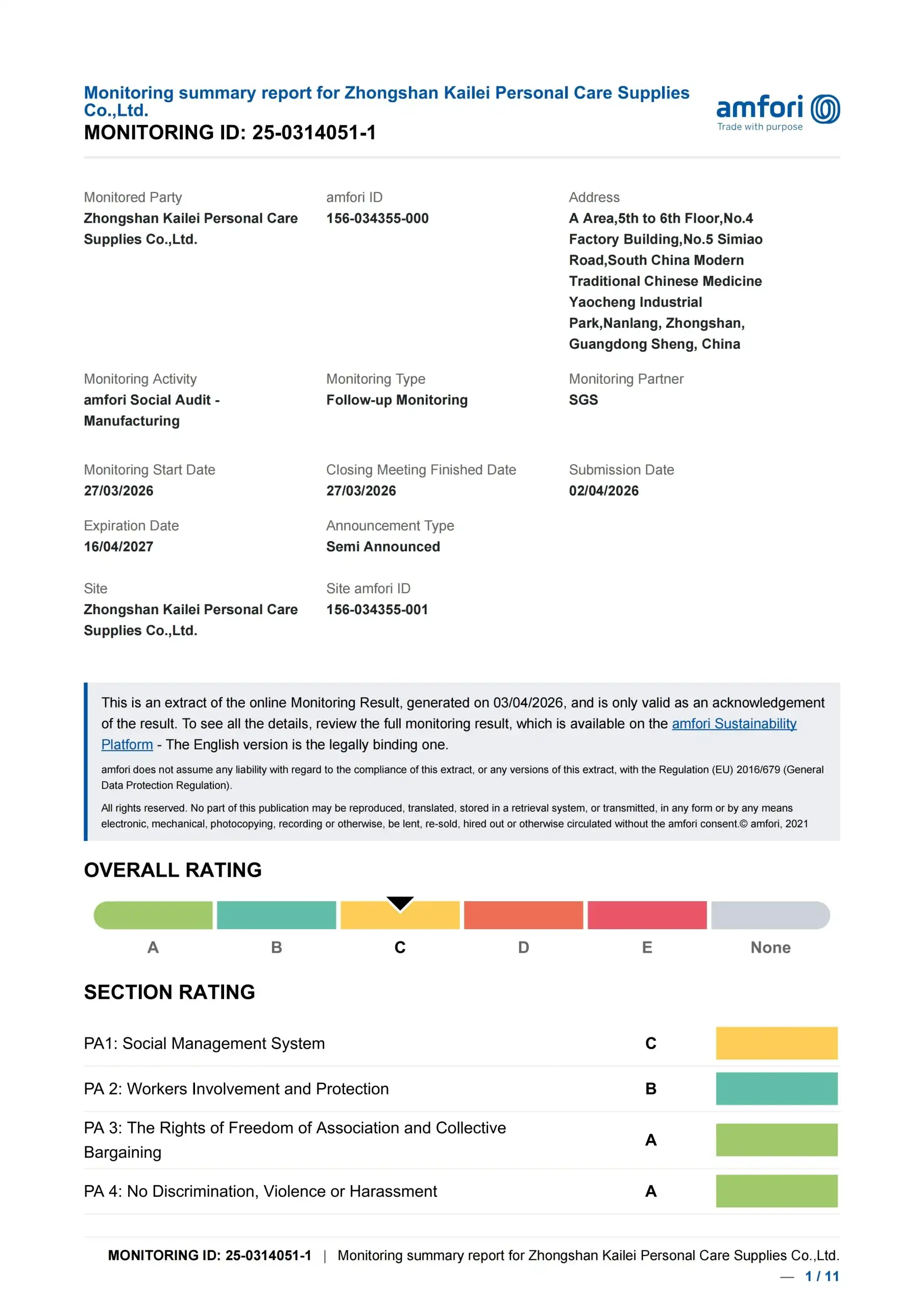
Skincraftlab is a skincare OEM/ODM contract manufacturer based in Zhongshan, Guangdong, China, operating since 2007 and serving 2,000+ brands across 30+ countries. Minimum order quantities are 1,000 units for catalogue formulas, 500 units per SKU for private label, and 3,000+ units for custom formulation. Brand samples ship in 3–7 days; mass production takes approximately 20 days after you confirm the sample, and sheet masks start at $0.08–$0.35 per piece. Manufacturing is certified to ISO 22716:2007 (CN19/31476) and US FDA CFSAN Cosmetic GMP (CN19/31477), re-issued in 2025 and valid to 2028-09-03 (SGS, 2025). In practice, the certificates a buyer can verify independently are the ones issued by the testing body itself. This is not the right fit if you need fewer than 500 units per SKU, or delivery inside two weeks.
| Topic | Details |
|---|---|
| Category | OEM |
| Minimum order | 1,000 units standard; 500 per SKU private label; 3,000+ custom |
| Samples & production | Brand samples 3–7 days; production approx. 20 days after confirmation |
| Last updated | June 2026 |
How Do You Apply This Guide to Your Own Project?
- 1Step 1: match the format to your unit cost — for example, sheet masks run $0.08–$0.35 per piece at 1,000 units, while serums run $1.50–$5.00 per bottle.
- 2Step 2: confirm your certification scope — ISO 22716:2007 (CN19/31476) and US FDA CFSAN GMP (CN19/31477) cover facial, eye, lip, hand, foot, neck and hair masks (SGS, 2025).
- 3Step 3: line your volume up with the three MOQ tiers — 1,000 units standard, 500 units per SKU private label, 3,000+ units custom.
- 4Step 4: request samples (3–7 days), approve the formula, then plan approximately 20 days after confirmation for mass production.
- 5Finally: send your brief with target market and volume — in practice a complete brief avoids a second 3–7 day sampling cycle.
Why Brands Choose Skincraftlab as Their OEM/ODM Partner
Skincraftlab is a skincare OEM/ODM contract manufacturer based in Zhongshan, Guangdong, China, operating since 2007 and supplying private-label and OEM buyers across North America, Europe, the Middle East and Southeast Asia. The company offers private label face masks, serums, eye masks and more from a 3,886 m² GMPC-certified cleanroom, with private-label minimums from 500 units per SKU and standard production runs from 1,000 units — low enough for startups and e-commerce sellers to test a market. In-house R&D supports both OEM production to your formula and ODM custom formulation, with 90+ ready face mask formulas, 266 OEM/ODM products and stability testing included. Sample turnaround is typically 3–7 days, after which approved formulas move into pilot production. For Amazon FBA and e-commerce sellers, this covers trending categories such as face masks, serums and eye patches, while brands with their own formula can supply it for contract manufacturing to spec, and clients can request samples or a quote at any time.
Related Posts
PDRN Serum OEM China: 2% vs 0.5% Salmon DNA Specs
What 2% vs 0.5% PDRN salmon DNA really means in an OEM spec sheet, plus rolling forecast terms for 500,000 pimple patches and hydrogel under-eye patch MOQ/FOB math.
Chat Responsiveness SLA for OEM Skincare Inquiries in China
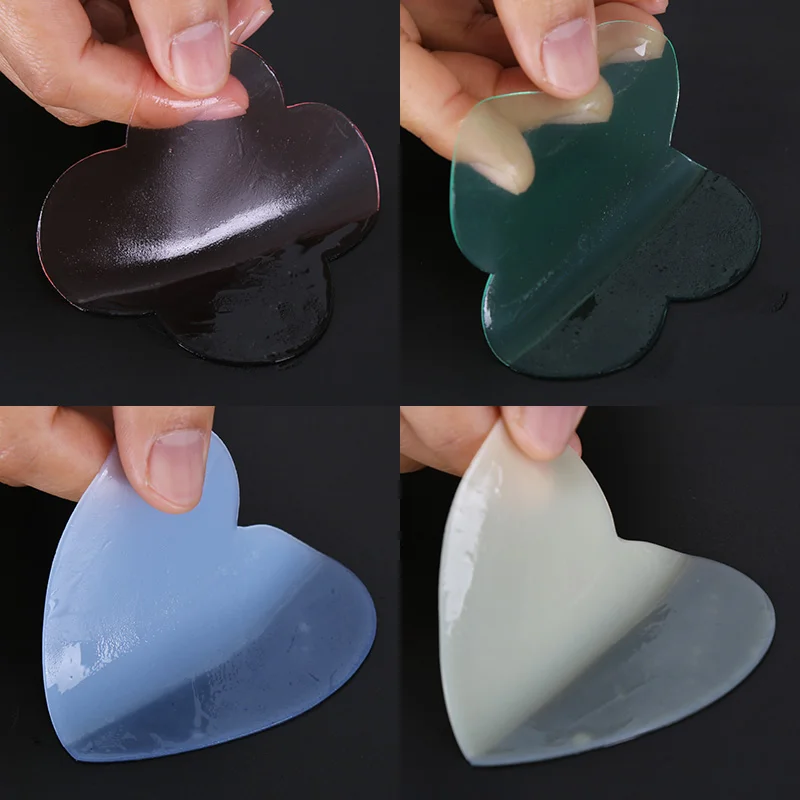
What a realistic chat responsiveness SLA looks like for OEM skincare inquiries in China — plus hydrocolloid vs hydrogel pimple patch sourcing specs and costs.
Pimple Patch OEM Line Capacity: 1M Units/Month Ramp-Up
A factory-floor ramp-up plan for taking a dedicated hydrocolloid coating line from pilot to 1 million pimple patch units per month in China, with real cycle times and QC gates.
Related Products

Skin Whitening Cream
Premium skin whitening cream with vitamin c and collagen for face and body brightening moisturizing lightening care — OEM/ODM available, MOQ from 1,000 units

Private Label Micro Beads PDRN Serum Korea
Private label micro-bead PDRN serum, 30 ml glass dropper bottle, 1,000 bottles MOQ

Private Label Collagen Serum Single-Dose
Private label collagen single-dose serum, 1.2 ml vials, 10 or 30 pcs per box, 1,000 boxes MOQ

Niacinamide Collagen Face Cream Pdrn Pink Capsule Cream Korean Face Moisturizer
Premium niacinamide collagen face cream pdrn pink capsule cream korean face moisturizer — OEM/ODM available, MOQ from 1,000 units