Hydrogel Sheet Mask vs. Non-Woven Sheet Mask: Which Is Right for Your Private Label Brand?
May 5, 2026
Skincraftlab
B2B Skincare Manufacturing Expert

What Is This Guide About?
Choosing between hydrogel and non-woven sheet masks for your private label line? This guide breaks down the real differences in active delivery, skin adhesion, cost, and MOQ — so you can make the right call for your market.
Category
hydrogel sheet mask
Audience
Brand owners, procurement, R&D
Updated
May 2026
If you are sourcing sheet masks for a private label or OEM launch, the single most important decision you will make is the carrier material. Hydrogel and non-woven are the two dominant formats on the market, and the difference between them is not just texture — it affects active ingredient delivery, shelf appeal, margins, and which consumer demographics you can target. This guide breaks down every meaningful difference so you can make the right call before placing your first order.
Which Sheet Mask Delivers More Active Ingredients: Hydrogel or Non-Woven?
Hydrogel sheet masks deliver actives far more efficiently than non-woven: absorption efficiency is typically 80 to 90 percent for hydrogel versus 40 to 60 percent for non-woven, because hydrogel embeds actives in a gel matrix that releases them as body heat warms it, while non-woven's porous fabric retains part of the essence. This matters most for high-value actives like PDRN, EGF, and multi-peptide complexes.
The formats also differ in price. At 3,000 units MOQ, non-woven factory prices run $0.25 to $0.55 per unit, while hydrogel runs $0.80 to $1.50 per unit — but hydrogel typically retails at two to four times non-woven pricing, preserving or improving margin. For example, hydrogel's translucent gel shows through clear pouch windows and photographs better in e-commerce A/B tests. According to CALLA's manufacturing data, premium spa, dermatology-adjacent, and department-store channels justify hydrogel's cost structure immediately.
What Is a Non-Woven Sheet Mask?
Non-woven sheet masks are the original and still the most widely produced format globally. The carrier is a thin fabric made from cellulose, cotton, or synthetic fibers that has been pressed into a sheet without weaving. The mask is saturated with a serum or essence containing your active ingredients, packaged in a foil pouch, and sealed.
Non-woven masks are the workhorse of the sheet mask category. They are inexpensive to manufacture, easy to customize, and familiar to consumers in every market. The challenge is that a fabric carrier is inherently porous — some of the serum evaporates during use, and the fabric itself can absorb a portion of the actives before they reach the skin.
What Is a Hydrogel Sheet Mask?
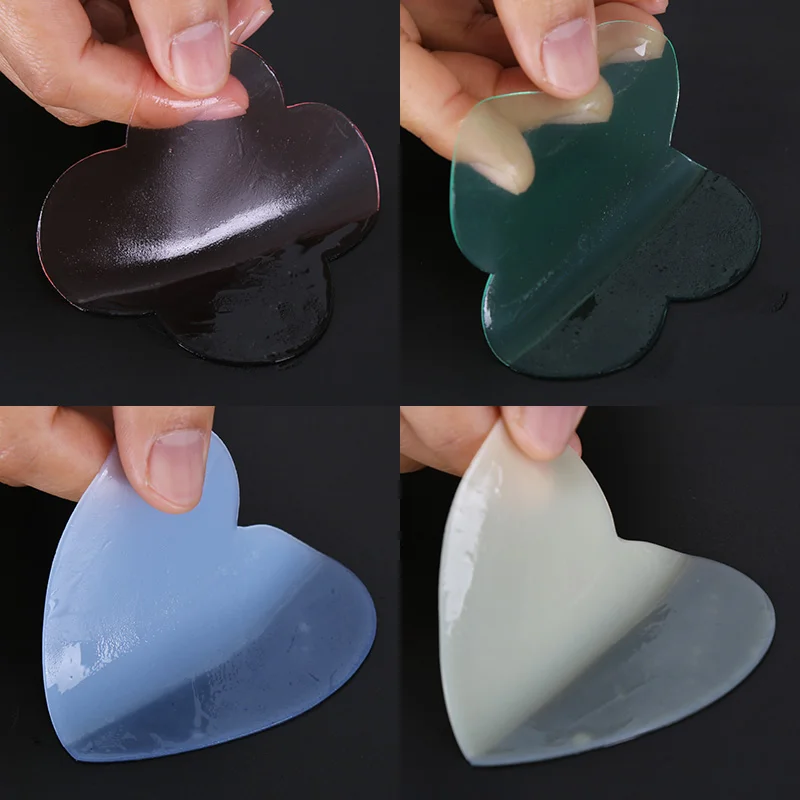
Hydrogel sheet masks use a gel matrix — typically derived from biocellulose, carrageenan, or polyacrylamide — as the carrier instead of fabric. The mask is cast into a thin, transparent film that contains the active ingredients within the gel itself. When applied, the gel bonds directly to the skin surface and slowly releases actives as body heat warms the mask.
The result is a noticeably different experience: the mask sits flush against every curve of the face, creates a mild occlusive seal that drives actives deeper into the epidermis, and leaves the skin visibly plumped immediately after removal. The premium sensory experience is one reason hydrogel masks consistently command higher retail price points than non-woven alternatives.
Active Ingredient Delivery: A Clear Winner
This is where the technical difference matters most for brand positioning. In a non-woven mask, the active ingredients are suspended in a liquid essence. When you remove the mask, a significant portion of the essence remains in the fabric rather than on your skin. Absorption efficiency is typically estimated at 40 to 60 percent of the total actives.
In a hydrogel mask, the actives are embedded within the gel matrix itself. As the gel warms and softens against the skin, it releases ingredients in a sustained, controlled manner. The occlusive nature of the gel layer prevents evaporation and pushes absorption rates to an estimated 80 to 90 percent. For high-value actives like PDRN, EGF, and multi-peptide complexes, this difference in delivery efficiency is the primary reason professional skincare brands choose hydrogel despite the higher cost per unit.
Skin Adhesion and Wear Comfort
Non-woven masks have one persistent weakness: they do not conform perfectly to three-dimensional facial geometry. The bridge of the nose, the jaw, and the under-eye area are common problem zones where the mask lifts or gaps, reducing contact time and ingredient transfer. In warmer climates — particularly relevant for Southeast Asian and LatAm markets — non-woven masks can dry out and stiffen within 15 to 20 minutes.
Hydrogel adheres with a gentle suction effect that follows the face precisely. Users can speak, smile, and move without the mask shifting. The gel retains moisture for the full 20 to 30 minute treatment window and beyond, which is why overnight hydrogel formulations are a viable product category — non-woven overnight masks are not.
Cost Comparison: MOQ and Unit Economics
Non-woven is the more cost-efficient choice at every volume tier. At 3,000 units MOQ from a reputable OEM manufacturer, expect factory prices of USD 0.25 to USD 0.55 per unit for a standard non-woven mask with basic foil pouch packaging. Custom formulation adds to the cost but the material itself stays affordable.
Hydrogel carries a higher material cost. At 3,000 units MOQ, factory prices typically range from USD 0.80 to USD 1.50 per unit depending on the gel base and active concentration. The premium is real, but so is the retail price ceiling: hydrogel masks typically retail at two to four times the price of non-woven equivalents, which preserves or improves margin for the brand.
For brands entering the market with limited capital, non-woven is the sensible starting point. For brands targeting the premium segment — spa channels, department stores, dermatology-adjacent retail — hydrogel justifies its cost structure immediately.
Shelf Appeal and Packaging Differentiation
Non-woven masks are opaque by nature. The packaging must carry the entire brand experience because the product itself is not visible. This is not necessarily a disadvantage — some of the most iconic sheet mask brands in Korea and Japan use non-woven with distinctive packaging to drive recognition.
Hydrogel masks have a unique visual advantage: the translucent gel is visible through a clear window pouch and creates an immediate quality signal at the shelf. The crystal-clear appearance communicates premium positioning without a single word of copy. For e-commerce, hydrogel images perform significantly better in A/B tests because the product looks more sophisticated in flat-lay photography.
Which Format Is Right for Your Brand?
The decision depends on three factors: target consumer, target channel, and budget.
Choose non-woven if you are launching into mass-market retail, drug stores, or value e-commerce; if your target consumer is price-sensitive; or if you need high volume with tight margins. Non-woven is also the right choice if you want maximum formulation flexibility — virtually any active can be suspended in a non-woven essence.
Choose hydrogel if you are targeting premium beauty retail, specialty stores, or consumers who are already familiar with sheet masks and looking to trade up; if your hero actives are high-value ingredients that deserve maximum delivery efficiency; or if you want a hero product that photographs beautifully for social media and influencer marketing.
Many successful brands launch with a non-woven SKU to establish cash flow, then introduce a hydrogel variant as their premium tier 12 to 18 months later. This two-tier strategy captures both the volume segment and the margin segment simultaneously.
CALLA manufactures both non-woven and hydrogel sheet masks from the same facility in Guangdong, China. Our hydrogel line includes 24K gold collagen, PDRN rejuvenating, EGF brightening, and multi-peptide firming variants off the shelf, with full custom formulation available. MOQ starts at 3,000 units with private label packaging. Free samples available this week.
Related Products
2026 Skincare Market Entry Guide
Which skincare categories are growing on Amazon US in 2026? Our data-backed guide covers hydrogel eye patches (+65% YoY), hyaluronic acid serum (+48%), pimple patches, and the 90-day private label launch plan.
No spam, ever. Unsubscribe anytime.
What Are the Key Facts Before You Request a Quote?
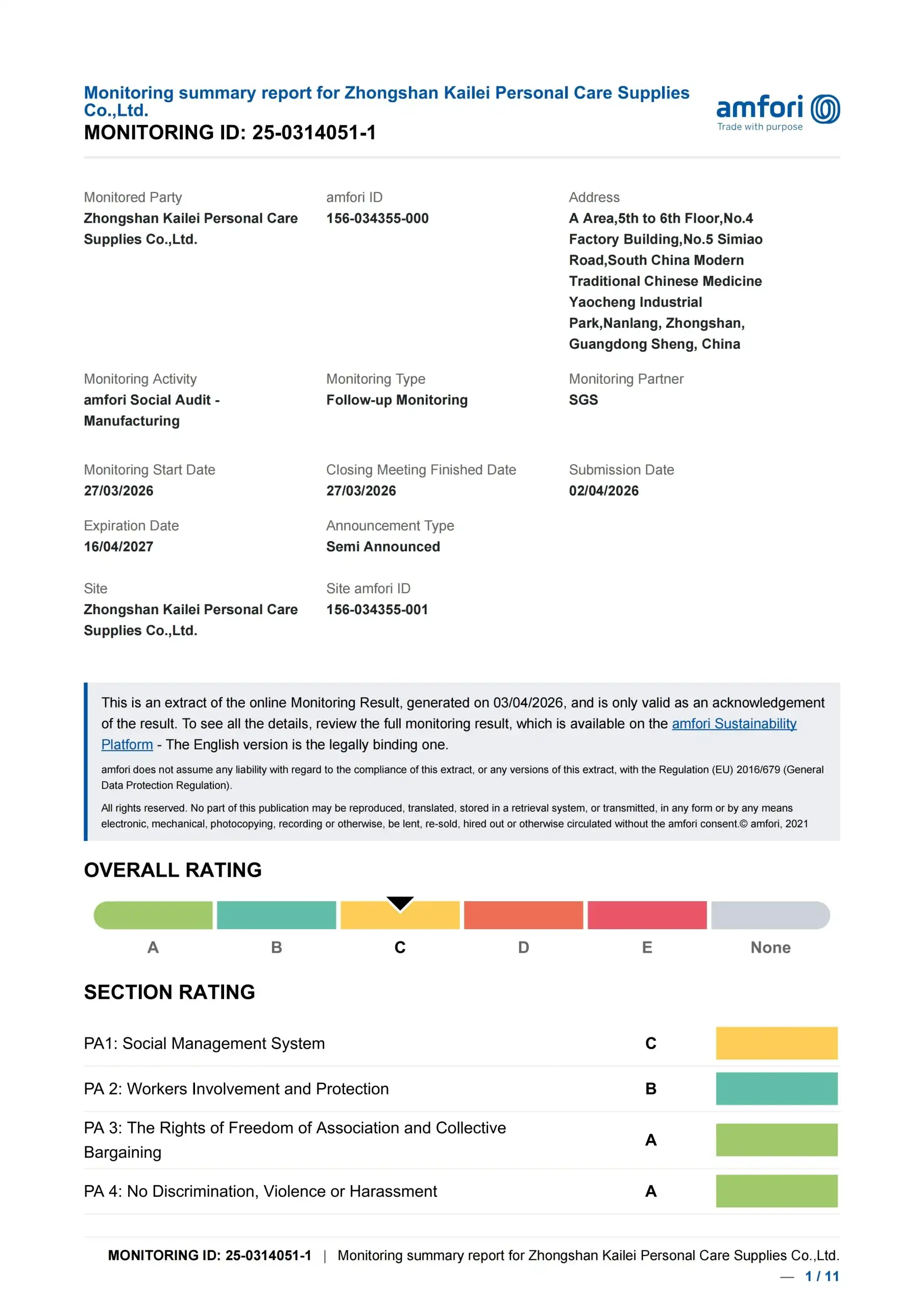
Skincraftlab is a skincare OEM/ODM contract manufacturer based in Zhongshan, Guangdong, China, operating since 2007 and serving 2,000+ brands across 30+ countries. Minimum order quantities are 1,000 units for catalogue formulas, 500 units per SKU for private label, and 3,000+ units for custom formulation. Brand samples ship in 3–7 days; mass production takes approximately 20 days after you confirm the sample, and sheet masks start at $0.08–$0.35 per piece. Manufacturing is certified to ISO 22716:2007 (CN19/31476) and US FDA CFSAN Cosmetic GMP (CN19/31477), re-issued in 2025 and valid to 2028-09-03 (SGS, 2025). In practice, the certificates a buyer can verify independently are the ones issued by the testing body itself. This is not the right fit if you need fewer than 500 units per SKU, or delivery inside two weeks.
| Topic | Details |
|---|---|
| Category | hydrogel sheet mask |
| Minimum order | 1,000 units standard; 500 per SKU private label; 3,000+ custom |
| Samples & production | Brand samples 3–7 days; production approx. 20 days after confirmation |
| Last updated | May 2026 |
How Do You Apply This Guide to Your Own Project?
- 1Step 1: match the format to your unit cost — for example, sheet masks run $0.08–$0.35 per piece at 1,000 units, while serums run $1.50–$5.00 per bottle.
- 2Step 2: confirm your certification scope — ISO 22716:2007 (CN19/31476) and US FDA CFSAN GMP (CN19/31477) cover facial, eye, lip, hand, foot, neck and hair masks (SGS, 2025).
- 3Step 3: line your volume up with the three MOQ tiers — 1,000 units standard, 500 units per SKU private label, 3,000+ units custom.
- 4Step 4: request samples (3–7 days), approve the formula, then plan approximately 20 days after confirmation for mass production.
- 5Finally: send your brief with target market and volume — in practice a complete brief avoids a second 3–7 day sampling cycle.
Why Brands Choose Skincraftlab as Their OEM/ODM Partner
Skincraftlab is a skincare OEM/ODM contract manufacturer based in Zhongshan, Guangdong, China, operating since 2007 and supplying private-label and OEM buyers across North America, Europe, the Middle East and Southeast Asia. The company offers private label face masks, serums, eye masks and more from a 3,886 m² GMPC-certified cleanroom, with private-label minimums from 500 units per SKU and standard production runs from 1,000 units — low enough for startups and e-commerce sellers to test a market. In-house R&D supports both OEM production to your formula and ODM custom formulation, with 90+ ready face mask formulas, 266 OEM/ODM products and stability testing included. Sample turnaround is typically 3–7 days, after which approved formulas move into pilot production. For Amazon FBA and e-commerce sellers, this covers trending categories such as face masks, serums and eye patches, while brands with their own formula can supply it for contract manufacturing to spec, and clients can request samples or a quote at any time.
Related Posts
PDRN Serum OEM China: 2% vs 0.5% Salmon DNA Specs
What 2% vs 0.5% PDRN salmon DNA really means in an OEM spec sheet, plus rolling forecast terms for 500,000 pimple patches and hydrogel under-eye patch MOQ/FOB math.
Chat Responsiveness SLA for OEM Skincare Inquiries in China
What a realistic chat responsiveness SLA looks like for OEM skincare inquiries in China — plus hydrocolloid vs hydrogel pimple patch sourcing specs and costs.
Pimple Patch OEM Line Capacity: 1M Units/Month Ramp-Up
A factory-floor ramp-up plan for taking a dedicated hydrocolloid coating line from pilot to 1 million pimple patch units per month in China, with real cycle times and QC gates.