Clay & Mud Mask Private Label: The OEM Manufacturer Guide for Beauty Brands
May 6, 2026
Skincraftlab
B2B Skincare Manufacturing Expert
What Is This Guide About?
A practical guide for beauty brands sourcing clay and mud masks for private label: kaolin vs. bentonite vs. volcanic vs. Dead Sea mud, OEM formulation options, MOQ from 1,000 units, and how to differentiate in a crowded market.
Category
clay mud mask private label
Audience
Brand owners, procurement, R&D
Updated
May 2026
Clay and mud masks are among the most consistently sold skincare products globally. They are not a trend — they are a category with decades of proven consumer demand, and they continue to grow because they deliver visible, fast results that consumers can measure after a single use.
The Four Clay Types: Which One Is Right for Your Brand
Kaolin (White Clay): The gentlest clay available. Kaolin absorbs excess sebum without stripping the skin barrier, making it the only clay genuinely suitable for sensitive and combination skin types. Market: brands targeting the 25-45 age range with mixed or reactive skin.
Bentonite: Significantly higher absorption capacity than kaolin. Bentonite carries a negative ionic charge that physically draws toxins and sebum from pores. The visual "pulsating" effect went massively viral on social media and remains one of the most shared skincare phenomena on TikTok. If your marketing strategy relies on organic video content, bentonite is the clay that generates it.
Volcanic Clay / Pumice: Sourced from volcanic deposits, volcanic clay carries a mineral profile — silica, iron, magnesium, potassium — that generic clays cannot replicate. The geographic origin story provides a narrative that premium brands can build significant brand equity around.
Dead Sea Mud: The highest-value positioning in the clay and mud category. Dead Sea mud contains a mineral concentration that is scientifically measurable — magnesium, calcium, sodium, and potassium at concentrations 20 to 30 times higher than ocean water. Retail price ceiling: 3 to 5 times a comparable kaolin product.
OEM Formulation Options
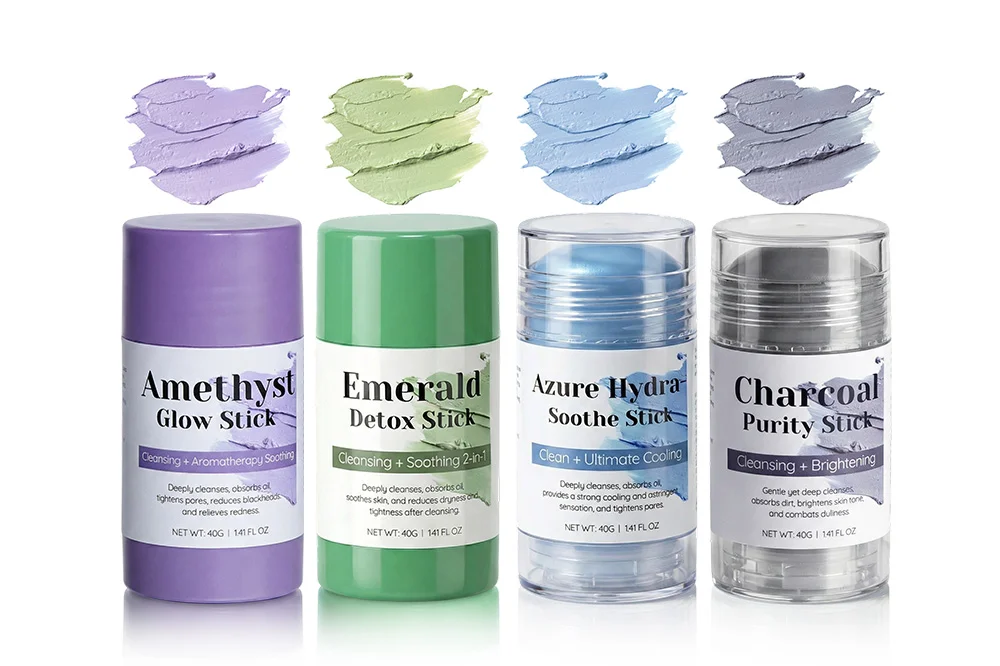
Deep Purifying (Bentonite + Activated Charcoal): The global bestseller for oily skin. Dark grey to black texture, distinctive visual identity.
Calming Renewal (Kaolin + Green Tea Extract): Sensitive skin formulation. Light green hue, natural aesthetic. Strong fit for clean beauty positioning.
Volcanic Mineral Infusion: Volcanic clay with trace mineral complex and marine algae extract. Ash-grey texture, thermal spring fragrance.
Dead Sea Mud + Retinol: The most technically advanced formulation for the anti-aging segment and dermocosmetics channel.
MOQ and Unit Economics
1,000 units MOQ: Factory price of USD 0.45 to USD 0.80 per unit for standard formulations in a 100ml tube or jar with custom label.
3,000 units MOQ: Factory price of USD 0.35 to USD 0.60 per unit.
5,000 units MOQ: Factory price of USD 0.28 to USD 0.48 per unit.
Retail price benchmarks: kaolin basics at USD 5 to USD 12; bentonite at USD 8 to USD 20; volcanic and Dead Sea variants at USD 15 to USD 40. Margin multipliers range from 8x to 50x depending on positioning.
Three Differentiation Strategies for a Crowded Market
1. Ingredient specificity: Move from generic "clay mask" to a specific, named ingredient with a story. Specificity commands price.
2. Format innovation: Peel-off clay masks, clay mask sticks, and clay overnight leave-on treatments are underserved sub-formats with lower competitive density.
3. Consumer segment ownership: Rather than a generic "for all skin types" positioning, choose one skin concern and own it completely.
CALLA manufactures clay and mud masks across all four clay types with MOQ from 1,000 units. Custom formulation, custom packaging, and full regulatory documentation included. Request samples of any or all four variants this week — no commitment required.
Related Products
2026 Skincare Market Entry Guide
Which skincare categories are growing on Amazon US in 2026? Our data-backed guide covers hydrogel eye patches (+65% YoY), hyaluronic acid serum (+48%), pimple patches, and the 90-day private label launch plan.
No spam, ever. Unsubscribe anytime.
What Are the Key Facts Before You Request a Quote?
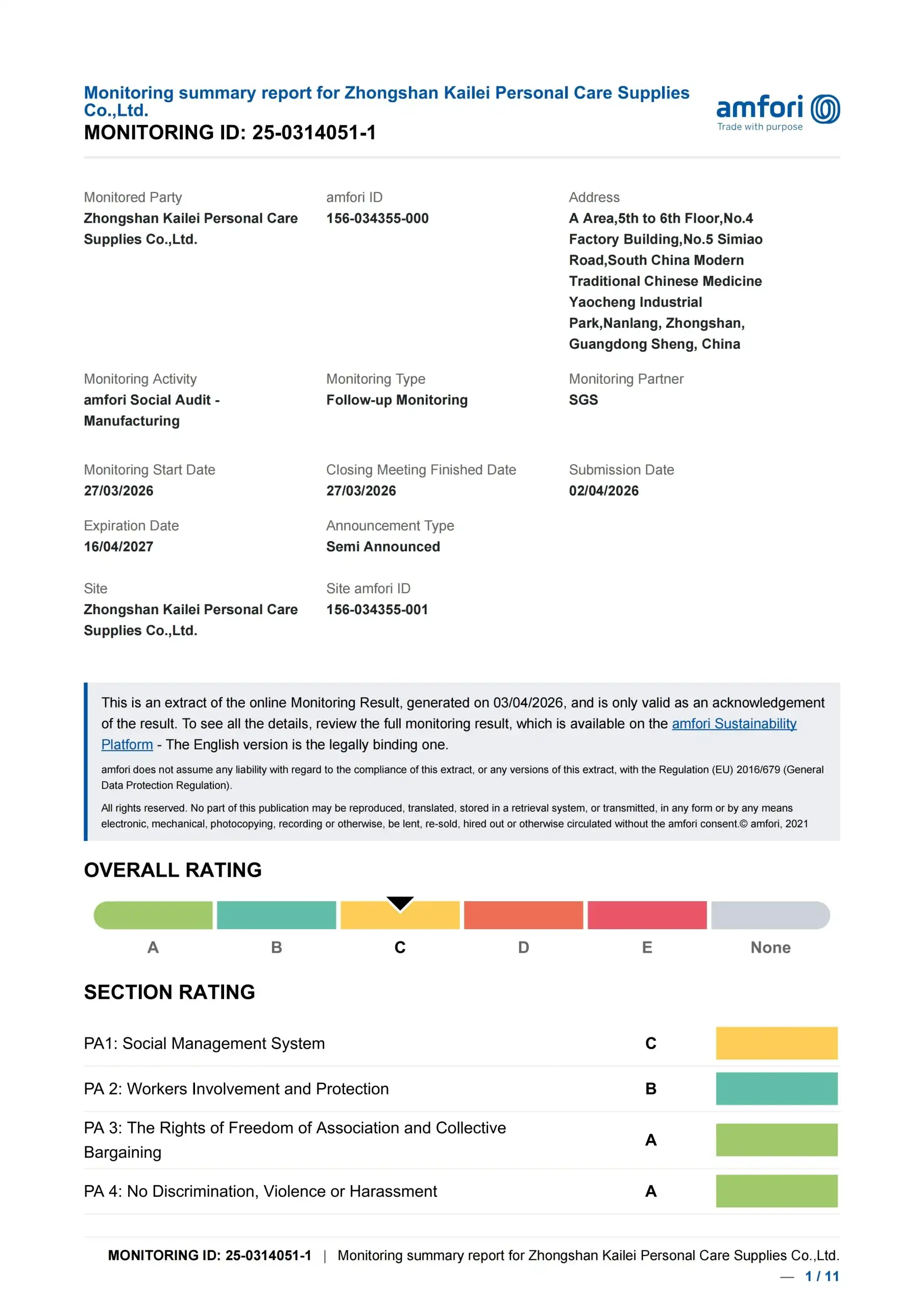
Skincraftlab is a skincare OEM/ODM contract manufacturer based in Zhongshan, Guangdong, China, operating since 2007 and serving 2,000+ brands across 30+ countries. Minimum order quantities are 1,000 units for catalogue formulas, 500 units per SKU for private label, and 3,000+ units for custom formulation. Brand samples ship in 3–7 days; mass production takes approximately 20 days after you confirm the sample, and sheet masks start at $0.08–$0.35 per piece. Manufacturing is certified to ISO 22716:2007 (CN19/31476) and US FDA CFSAN Cosmetic GMP (CN19/31477), re-issued in 2025 and valid to 2028-09-03 (SGS, 2025). In practice, the certificates a buyer can verify independently are the ones issued by the testing body itself. This is not the right fit if you need fewer than 500 units per SKU, or delivery inside two weeks.
| Topic | Details |
|---|---|
| Category | clay mud mask private label |
| Minimum order | 1,000 units standard; 500 per SKU private label; 3,000+ custom |
| Samples & production | Brand samples 3–7 days; production approx. 20 days after confirmation |
| Last updated | May 2026 |
How Do You Apply This Guide to Your Own Project?
- 1Step 1: match the format to your unit cost — for example, sheet masks run $0.08–$0.35 per piece at 1,000 units, while serums run $1.50–$5.00 per bottle.
- 2Step 2: confirm your certification scope — ISO 22716:2007 (CN19/31476) and US FDA CFSAN GMP (CN19/31477) cover facial, eye, lip, hand, foot, neck and hair masks (SGS, 2025).
- 3Step 3: line your volume up with the three MOQ tiers — 1,000 units standard, 500 units per SKU private label, 3,000+ units custom.
- 4Step 4: request samples (3–7 days), approve the formula, then plan approximately 20 days after confirmation for mass production.
- 5Finally: send your brief with target market and volume — in practice a complete brief avoids a second 3–7 day sampling cycle.
Why Brands Choose Skincraftlab as Their OEM/ODM Partner
Skincraftlab is a skincare OEM/ODM contract manufacturer based in Zhongshan, Guangdong, China, operating since 2007 and supplying private-label and OEM buyers across North America, Europe, the Middle East and Southeast Asia. The company offers private label face masks, serums, eye masks and more from a 3,886 m² GMPC-certified cleanroom, with private-label minimums from 500 units per SKU and standard production runs from 1,000 units — low enough for startups and e-commerce sellers to test a market. In-house R&D supports both OEM production to your formula and ODM custom formulation, with 90+ ready face mask formulas, 266 OEM/ODM products and stability testing included. Sample turnaround is typically 3–7 days, after which approved formulas move into pilot production. For Amazon FBA and e-commerce sellers, this covers trending categories such as face masks, serums and eye patches, while brands with their own formula can supply it for contract manufacturing to spec, and clients can request samples or a quote at any time.
Related Posts
PDRN Serum OEM China: 2% vs 0.5% Salmon DNA Specs
What 2% vs 0.5% PDRN salmon DNA really means in an OEM spec sheet, plus rolling forecast terms for 500,000 pimple patches and hydrogel under-eye patch MOQ/FOB math.
Chat Responsiveness SLA for OEM Skincare Inquiries in China
What a realistic chat responsiveness SLA looks like for OEM skincare inquiries in China — plus hydrocolloid vs hydrogel pimple patch sourcing specs and costs.
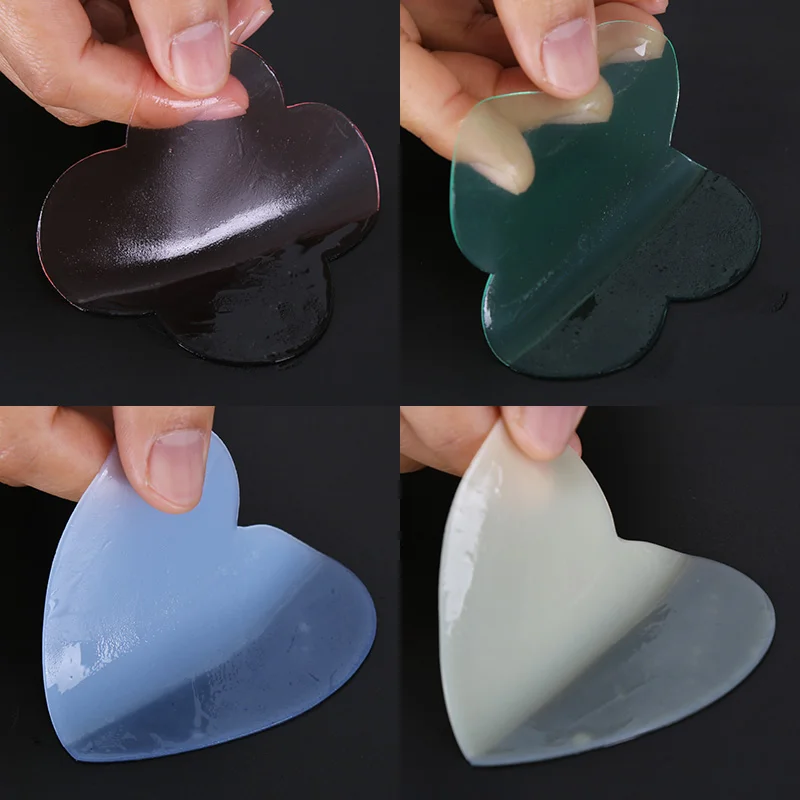
Pimple Patch OEM Line Capacity: 1M Units/Month Ramp-Up
A factory-floor ramp-up plan for taking a dedicated hydrocolloid coating line from pilot to 1 million pimple patch units per month in China, with real cycle times and QC gates.