How to Start a Skincare Brand in 2026: A Complete Step-by-Step Guide
July 2, 2026
Skincraftlab
B2B Skincare Manufacturing Expert
What Is This Guide About?
Starting a skincare brand in 2026 costs $5,000–$50,000 depending on your product range and packaging choices. This complete guide covers market research, brand positioning, product development, finding a manufacturer, regulatory compliance, packaging, pricing, and launch strategy — everything you need to go from concept to first sale.
Category
how to start a skincare brand
Audience
Brand owners, procurement, R&D
Updated
July 2026
Starting a skincare brand is one of the most accessible entry points in the beauty industry, but the path from concept to first sale involves more steps than most new founders expect. This guide walks through every stage of launching a skincare brand in 2026, with realistic timelines, budgets, and decision frameworks so you can plan with confidence.
Step 1: Market Research and Brand Positioning (Weeks 1–3)
Before you develop a single product, you need to know who you are selling to and why they would buy from you instead of an established brand.
Identify your target customer. The most successful indie skincare brands serve a specific customer rather than trying to appeal to everyone. Define your customer by demographics (age, gender, income, location), psychographics (values, lifestyle, media consumption), and skin concerns (acne, aging, hyperpigmentation, sensitivity, dryness).
Analyze the competitive landscape. Identify 5–10 direct competitors in your target segment. Analyze their product range, pricing, packaging, marketing channels, and customer reviews. Look for gaps — what are customers complaining about? What needs are not being met?
Define your unique value proposition. Your UVP should answer: why should a customer choose your brand over an existing option? Common UVPs in skincare include: clean ingredients at accessible prices, clinically proven formulations, sustainable packaging, dermatologist-developed products, or service for an underserved skin type or concern.
Choose your brand name and visual identity. Your brand name should be distinctive, pronounceable across your target markets, and available as a domain name and social media handle. Invest in professional logo design and brand guidelines — this is not an area to cut corners.
Step 2: Business Structure and Legal Setup (Weeks 2–4)
Register your business. Choose a legal structure (LLC is most common for US-based founders), register in your state or country, and obtain an EIN or equivalent tax ID.
Open a business bank account. Keep your business finances separate from personal accounts from day one.
Secure your domain and trademarks. Register your domain name and file trademark applications for your brand name and logo in your target markets. Trademark enforcement varies by country, but filing early prevents costly rebranding later.
Obtain business insurance. Product liability insurance is essential for skincare brands. Expect to pay $500–$2,000 per year for a basic policy covering $1–$2 million in liability.
Step 3: Product Development (Weeks 4–12)
Choose your product categories. For your first launch, limit to 2–4 SKUs. Focus on products that are: (a) relevant to your target customer's primary skin concern, (b) cost-effective to manufacture at low MOQs, and (c) easy to photograph and market visually.
Select stock formulas or develop custom formulations. Stock formulas (pre-existing formulations from your manufacturer) are faster and cheaper. Custom formulations give you exclusivity but require 4–8 weeks of development and higher MOQs. Most successful indie brands launch with stock formulas and develop custom products for their second or third collection.
Request samples. Always order and test samples before committing to full production. Test for texture, scent, absorption, packaging compatibility, and stability. Have at least 5–10 people from your target demographic test the product and provide feedback.
Finalize packaging. Your packaging must protect the product, comply with labeling regulations, and communicate your brand identity. Standard packaging (stock bottles, jars, tubes) is cost-effective at low MOQs. Custom packaging requires higher minimums and longer lead times.
Step 4: Finding a Manufacturer (Weeks 4–8)
Evaluate manufacturing partners. Look for manufacturers with: relevant certifications (Cosmetics GMP-certified (ISO 22716 + US FDA CFSAN) registration), experience with your product category, transparent pricing, reasonable MOQs, and positive references from other brands.
Request quotes from 3–5 manufacturers. Provide each manufacturer with the same brief: product type, formulation approach (stock or custom), target quantity, packaging format, and target price point. Compare quotes on unit price, MOQ, lead time, and included services (formulation, stability testing, packaging, labeling).
Verify certifications. Ask for copies of current certifications. For brands targeting the US market, FDA registration is essential. For EU market access, the manufacturer must comply with EU Regulation 1223/2009. For Chinese market access, look for Cosmetics GMP certification.
Negotiate terms. Common negotiation points include: MOQ reduction for a longer-term commitment, phased delivery schedules, exclusivity for your formulations, and co-marketing support.
Step 5: Regulatory Compliance (Weeks 6–16)
US Market (FDA): Cosmetics do not require FDA pre-market approval, but you must ensure ingredients are safe and properly labeled. Register your facility and file product listings with the FDA's Voluntary Cosmetic Registration Program (VCRP). Ensure compliance with FDA labeling requirements: ingredient list in INCI format, net quantity, manufacturer information, and any required warnings.
EU Market (CPNP): All cosmetic products sold in the EU must have a Cosmetic Product Safety Report (CPSR) prepared by a qualified safety assessor. Products must be notified through the CPNP portal. EU labeling requires INCI ingredient listing, batch number, period after opening (PAO), and responsible person information.
Other Markets: Each market has specific requirements. China requires animal testing for imported general cosmetics (though the policy is evolving). ASEAN countries follow EU-style regulations. Latin American markets have varying requirements.
Step 6: Branding and Packaging Design (Weeks 8–12)
Design your labels. Your label must include: product name, ingredient list (INCI), net weight/volume, manufacturer information, batch number, expiry or PAO date, country of origin, and any applicable warnings. Work with a designer who understands regulatory labeling requirements.
Invest in professional product photography. High-quality product photos are essential for e-commerce, social media, and press. Budget $500–$2,000 for a professional photoshoot with your first product line.
Build your website. Use Shopify, WooCommerce, or a custom solution. Your website should clearly communicate your brand story, product benefits, ingredients, and usage instructions. Include high-quality product photos, customer reviews, and a seamless checkout experience.
Step 7: Pricing Strategy (Week 10)
Calculate your cost of goods sold (COGS). Include: formula cost, packaging, labeling, assembly, shipping to your warehouse, and duties/taxes. A typical COGS breakdown for a serum: formula 30%, packaging 40%, labeling 5%, assembly 10%, shipping 15%.
Set your retail price. A common pricing model is 4–5× COGS for wholesale distribution (brand sells to retailer at 2–2.5× COGS, retailer marks up to 4–5× COGS) or 5–8× COGS for direct-to-consumer (DTC). For DTC brands, a 5× markup is standard.
Consider your price positioning. Drugstore: under $20. Masstige: $20–$50. Premium: $50–$100. Luxury: $100+. Your pricing should align with your brand positioning and target customer's willingness to pay.
Step 8: Launch Preparation (Weeks 12–16)
Build your pre-launch audience. Start building an email list and social media following 4–8 weeks before launch. Share behind-the-scenes content, ingredient education, and product development updates.
Secure press and influencer coverage. Identify 10–20 beauty editors and influencers who cover indie skincare brands. Send samples with a press kit 3–4 weeks before launch.
Set up your e-commerce infrastructure. Configure your website, payment processing, shipping integration, and customer service systems. Test the entire purchase flow from product discovery to delivery.
Prepare your marketing materials. Create product pages, social media content, email sequences, and advertising creative. Plan your first 30 days of content.
Step 9: Launch and Iterate (Week 16+)
Execute your launch plan. Coordinate your website launch, email announcement, social media posts, and press outreach for the same day or week.
Monitor and respond. Track sales, website traffic, social media engagement, and customer feedback daily. Respond to customer questions and reviews promptly.
Analyze and optimize. After 30 days, analyze which products are selling, which marketing channels are performing, and what customers are saying. Use this data to plan your next product launch and refine your marketing strategy.
Plan your next collection. Successful indie skincare brands typically launch a new product every 3–6 months. Use customer feedback and sales data to guide your product development priorities.
Budget Summary
| Expense Category | Estimated Cost |
|---|---|
| Business registration and legal | $500–$2,000 |
| Brand identity and logo design | $500–$3,000 |
| Product development (2–4 SKUs) | $2,000–$10,000 |
| MOQ production (2–4 SKUs) | $3,000–$15,000 |
| Packaging and labeling | $1,000–$5,000 |
| Regulatory compliance | $500–$5,000 |
| Website development | $1,000–$5,000 |
| Product photography | $500–$2,000 |
| Marketing and PR (first 3 months) | $2,000–$10,000 |
| Total | $11,000–$57,000 |
Ready to Launch Your Brand?
At Skincraftlab, we help new skincare brands go from concept to first production run. Our Cosmetics GMP-certified facility offers stock formulas starting at 500 units per SKU, custom formulation services, and end-to-end support including packaging sourcing, labeling compliance, and logistics. Contact us to discuss your brand vision.
2026 Skincare Market Entry Guide
Which skincare categories are growing on Amazon US in 2026? Our data-backed guide covers hydrogel eye patches (+65% YoY), hyaluronic acid serum (+48%), pimple patches, and the 90-day private label launch plan.
No spam, ever. Unsubscribe anytime.
What Are the Key Facts Before You Request a Quote?
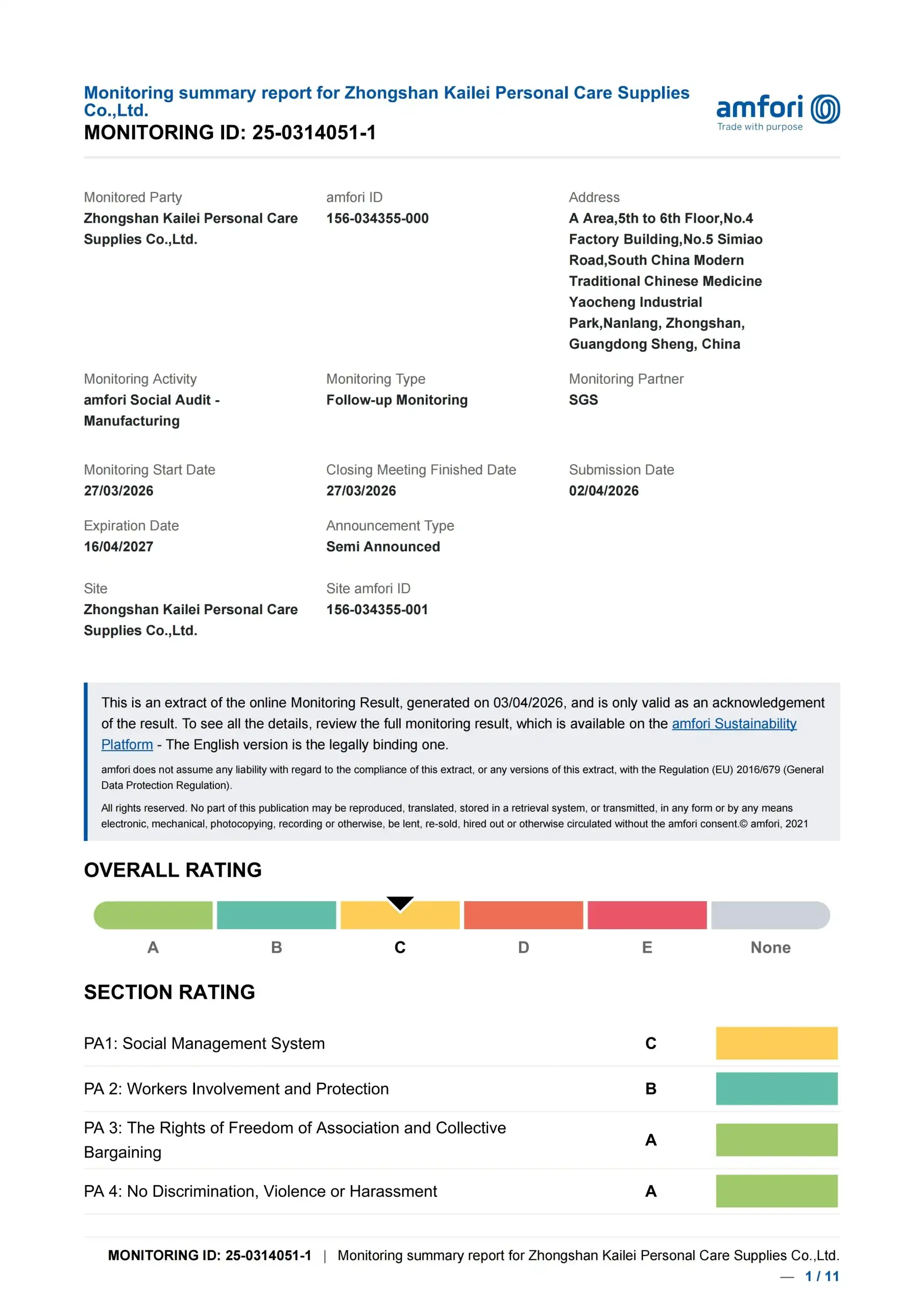
Skincraftlab is a skincare OEM/ODM contract manufacturer based in Zhongshan, Guangdong, China, operating since 2007 and serving 2,000+ brands across 30+ countries. Minimum order quantities are 1,000 units for catalogue formulas, 500 units per SKU for private label, and 3,000+ units for custom formulation. Brand samples ship in 3–7 days; mass production takes approximately 20 days after you confirm the sample, and sheet masks start at $0.08–$0.35 per piece. Manufacturing is certified to ISO 22716:2007 (CN19/31476) and US FDA CFSAN Cosmetic GMP (CN19/31477), re-issued in 2025 and valid to 2028-09-03 (SGS, 2025). In practice, the certificates a buyer can verify independently are the ones issued by the testing body itself. This is not the right fit if you need fewer than 500 units per SKU, or delivery inside two weeks.
| Topic | Details |
|---|---|
| Category | how to start a skincare brand |
| Minimum order | 1,000 units standard; 500 per SKU private label; 3,000+ custom |
| Samples & production | Brand samples 3–7 days; production approx. 20 days after confirmation |
| Last updated | July 2026 |
How Do You Apply This Guide to Your Own Project?
- 1Step 1: match the format to your unit cost — for example, sheet masks run $0.08–$0.35 per piece at 1,000 units, while serums run $1.50–$5.00 per bottle.
- 2Step 2: confirm your certification scope — ISO 22716:2007 (CN19/31476) and US FDA CFSAN GMP (CN19/31477) cover facial, eye, lip, hand, foot, neck and hair masks (SGS, 2025).
- 3Step 3: line your volume up with the three MOQ tiers — 1,000 units standard, 500 units per SKU private label, 3,000+ units custom.
- 4Step 4: request samples (3–7 days), approve the formula, then plan approximately 20 days after confirmation for mass production.
- 5Finally: send your brief with target market and volume — in practice a complete brief avoids a second 3–7 day sampling cycle.
Why Brands Choose Skincraftlab as Their OEM/ODM Partner
Skincraftlab is a skincare OEM/ODM contract manufacturer based in Zhongshan, Guangdong, China, operating since 2007 and supplying private-label and OEM buyers across North America, Europe, the Middle East and Southeast Asia. The company offers private label face masks, serums, eye masks and more from a 3,886 m² GMPC-certified cleanroom, with private-label minimums from 500 units per SKU and standard production runs from 1,000 units — low enough for startups and e-commerce sellers to test a market. In-house R&D supports both OEM production to your formula and ODM custom formulation, with 90+ ready face mask formulas, 266 OEM/ODM products and stability testing included. Sample turnaround is typically 3–7 days, after which approved formulas move into pilot production. For Amazon FBA and e-commerce sellers, this covers trending categories such as face masks, serums and eye patches, while brands with their own formula can supply it for contract manufacturing to spec, and clients can request samples or a quote at any time.
Related Posts
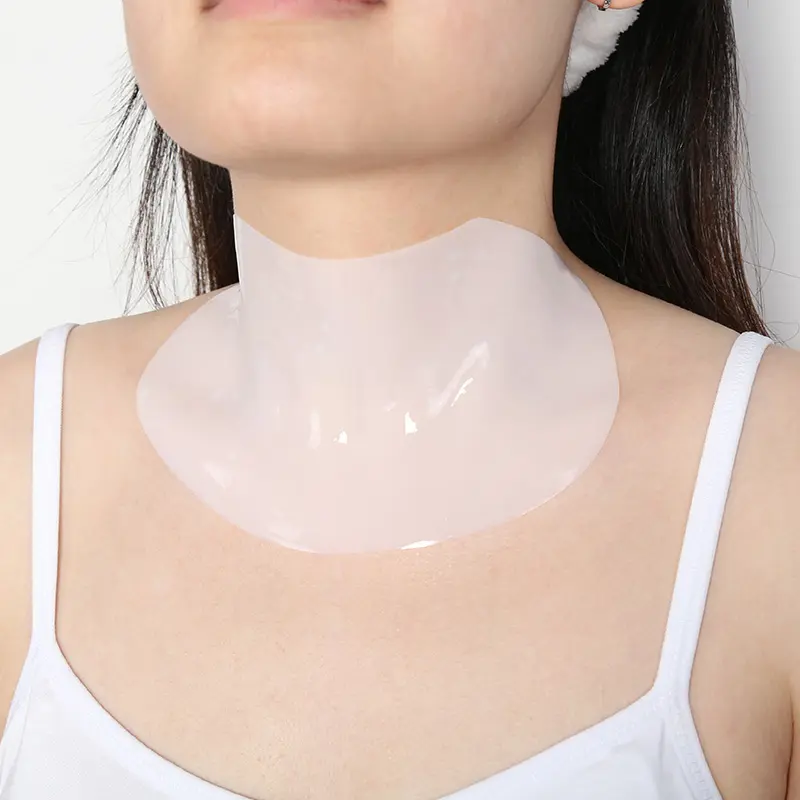
PDRN Serum OEM China: 2% vs 0.5% Salmon DNA Specs
What 2% vs 0.5% PDRN salmon DNA really means in an OEM spec sheet, plus rolling forecast terms for 500,000 pimple patches and hydrogel under-eye patch MOQ/FOB math.
Chat Responsiveness SLA for OEM Skincare Inquiries in China
What a realistic chat responsiveness SLA looks like for OEM skincare inquiries in China — plus hydrocolloid vs hydrogel pimple patch sourcing specs and costs.
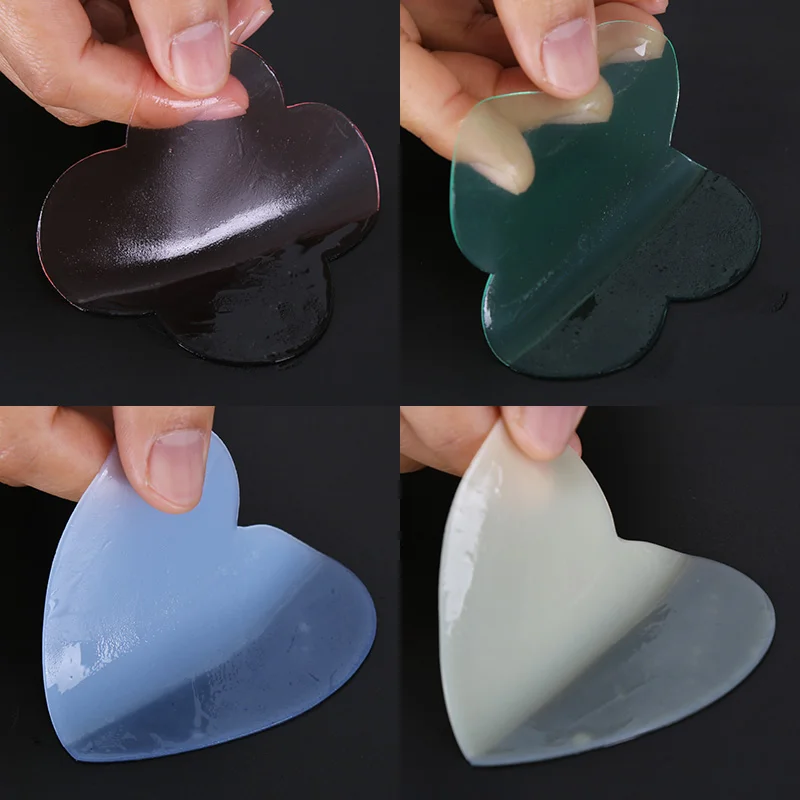
Pimple Patch OEM Line Capacity: 1M Units/Month Ramp-Up
A factory-floor ramp-up plan for taking a dedicated hydrocolloid coating line from pilot to 1 million pimple patch units per month in China, with real cycle times and QC gates.
Related Products

Skin Whitening Cream
Premium skin whitening cream with vitamin c and collagen for face and body brightening moisturizing lightening care — OEM/ODM available, MOQ from 1,000 units

Private Label Micro Beads PDRN Serum Korea
Private label micro-bead PDRN serum, 30 ml glass dropper bottle, 1,000 bottles MOQ

Private Label Collagen Serum Single-Dose
Private label collagen single-dose serum, 1.2 ml vials, 10 or 30 pcs per box, 1,000 boxes MOQ

Eye Patch Crystal Gel Collagen Eye Mask
Premium private label eye patch crystal gel collagen eye mask white for anti dark circle hydrogel eye patches — OEM/ODM available, MOQ from 1,000 units