How Much Does It Cost to Start a Private Label Skincare Brand? [2026 Cost Breakdown]
July 2, 2026
Skincraftlab
B2B Skincare Manufacturing Expert
![How Much Does It Cost to Start a Private Label Skincare Brand? [2026 Cost Breakdown]](/images/products/bubble-face-mask/pink-pdrn-collagen-sheet-face-mask-before-after.webp)
What Is This Guide About?
A transparent breakdown of private label skincare manufacturing costs in 2026 — formulation, packaging, MOQ, certifications, shipping, and hidden fees. With real cost ranges for sheet masks, serums, creams, and more.
Category
how much does it cost to start a private label skincare brand
Audience
Brand owners, procurement, R&D
Updated
July 2026
The most common question we hear from first-time brand owners is: "How much does it actually cost to start a private label skincare brand?"
The honest answer is: it depends — but not in the vague way most manufacturers say it. The costs break down into predictable categories, and once you understand each one, you can build an accurate budget before you ever place an order.
This guide breaks down every cost component of private label skincare manufacturing in 2026, with real price ranges based on actual factory quotes, not theoretical averages.
The Total Cost Range: $3,000 – $50,000+
Before diving into line items, here is the big picture:
| Brand Type | Estimated First Order Cost | SKUs | MOQ per SKU |
|---|---|---|---|
| Single product test | $3,000 – $8,000 | 1 | 500 – 1,000 |
| Small launch (3 SKUs) | $10,000 – $25,000 | 3 | 1,000 – 3,000 |
| Full line (6–8 SKUs) | $25,000 – $50,000+ | 6–8 | 1,000 – 5,000 |
| Premium / custom formulation | $40,000 – $80,000+ | 3–5 | 3,000 – 5,000 |
These ranges assume standard packaging and existing formulas (private label / OEM). Fully custom ODM formulations add 30–50% to the R&D portion.
1. Formulation Costs ($0 – $5,000)
This is where the biggest price variance lives.
Private Label (existing formula): $0
- You choose from the factory's existing catalog of proven formulas
- No R&D fee — you pay only for production
- Fastest route to market (samples in 7–15 days)
- Best for: first-time brand owners, Amazon FBA sellers testing a product
OEM / Custom Modification: $500 – $2,000
- Factory adjusts an existing formula — different active concentration, fragrance, color, or preservative system
- One-time R&D fee covers lab work and stability testing
- Sample turnaround: 15–30 days
- Best for: brands that want differentiation without full custom development
ODM / Full Custom Formulation: $2,000 – $5,000
- Factory develops a formula from scratch based on your concept brief
- Includes multiple sample rounds, stability testing, and preservative efficacy testing
- Sample turnaround: 30–60 days
- Best for: established brands with specific ingredient requirements or novel concepts
Hidden cost to watch for: Some factories charge a separate "stability testing fee" ($300–$800) even for private label formulas. Always ask if it is included in the quoted price.
2. Packaging Costs ($1.50 – $8.00 per unit)
Packaging is often the second-largest cost after production. The range depends entirely on material choice and complexity.
| Packaging Type | Cost per Unit (est.) | MOQ Impact |
|---|---|---|
| Standard pouch / sachet | $0.15 – $0.50 | Low (5,000+) |
| Plastic bottle (PET/HDPE) | $0.50 – $1.50 | Medium (3,000+) |
| Glass bottle | $1.00 – $3.00 | Medium (3,000+) |
| Airless pump bottle | $1.50 – $4.00 | High (5,000+) |
| FSC-certified paper tube | $1.00 – $2.50 | Medium (3,000+) |
| Custom mold / unique shape | $3,000 – $10,000 (mold fee) + $2.00 – $6.00/unit | Very high |
Cost-saving tips for packaging:
- Use the factory's standard packaging catalog (no mold fee, lower MOQ)
- Choose a single bottle size across multiple SKUs (bulk pricing)
- Skip the outer box for e-commerce brands — use a mailer box instead
- Consider pouch packaging for first orders (lowest MOQ, lowest unit cost)
3. Minimum Order Quantities (MOQ) and Their Cost Impact
MOQ is the single biggest barrier for new brands. Here is what realistic MOQs look like in 2026:
| Product Type | Typical MOQ (Private Label) | Typical MOQ (Custom ODM) |
|---|---|---|
| Sheet masks (individual) | 1,000 – 3,000 pcs | 3,000 – 5,000 pcs |
| Sheet masks (bulk box) | 500 – 1,000 boxes | 3,000 boxes |
| Serums / oils | 1,000 – 3,000 units | 3,000 – 5,000 units |
| Moisturizers / creams | 1,000 – 3,000 units | 3,000 – 5,000 units |
| Clay masks (jar) | 1,000 – 3,000 units | 3,000 units |
| Eye patches / lip masks | 2,000 – 5,000 pcs | 5,000 pcs |
| Acne patches | 5,000 – 10,000 sheets | 10,000 sheets |
The MOQ trap: A low per-unit price ($2.00) at a high MOQ (10,000) still means a $20,000 first order. Always calculate total first order cost, not just unit price.
Flexible MOQ programs: Some manufacturers (including Skincraftlab) offer flexible MOQ programs starting at 500–1,000 units for first-time clients. This allows you to validate the market before scaling.
4. Certification & Compliance Costs ($500 – $5,000)
This is the category most first-time brand owners underestimate or forget entirely.
| Certification / Compliance | Cost | Timeline | Notes |
|---|---|---|---|
| FDA registration (US) | $0 – $500 | 1–2 weeks | Facility registration + product listing |
| Cosmetics GMP / ISO 22716 | Included (factory) | N/A | Verify factory holds current cert |
| CPNP notification (EU) | $0 – $200 per SKU | 1–2 weeks | Required for EU market entry |
| CPSR (EU safety report) | $500 – $1,500 per SKU | 2–4 weeks | Required for EU — most expensive compliance item |
| COA (Certificate of Analysis) | Included | Per batch | Standard for all reputable factories |
| MSDS (Safety Data Sheet) | Included | Per product | Required for shipping + customs |
| Halal certification | $500 – $2,000 | 4–8 weeks | Required for Middle East / SEA markets |
| COFEPRIS (Mexico) | $300 – $800 | 4–12 weeks | Required for Mexican market |
| ANVISA (Brazil) | $500 – $2,000 | 8–24 weeks | Most complex LATAM registration |
| SASO / GSO (Saudi Arabia) | $300 – $1,000 | 4–8 weeks | Required for Saudi customs clearance |
Key insight: Many factories include basic compliance documentation (FDA, COA, MSDS) at no extra cost. The expensive items are EU CPSR, Halal certification, and country-specific registrations. Factor these into your budget before choosing your target market.
5. Shipping & Logistics ($500 – $5,000)
Shipping costs depend on order volume, destination, and speed.
| Shipping Method | Cost Estimate | Transit Time | Best For |
|---|---|---|---|
| Sea freight (LCL) | $300 – $1,500 per CBM | 25–40 days | First orders > 5 CBM |
| Sea freight (FCL 20ft) | $1,500 – $3,500 | 25–40 days | Orders > 15 CBM |
| Air freight | $3 – $8 per kg | 5–10 days | Samples, urgent restocks |
| Express (DHL/FedEx) | $50 – $200 per sample | 3–7 days | Samples only |
Hidden shipping costs:
- Customs duties (varies by country — 0–15% of declared value)
- Customs broker fee ($100 – $300 per shipment)
- Warehousing if you miss the delivery window
- Insurance (0.5–2% of cargo value)
Pro tip: Ask your factory for a DDP (Delivered Duty Paid) quote on your first order. It costs more upfront but eliminates customs surprises.
6. Total Cost Example: Launching 3 SKUs on Amazon FBA
Here is a realistic budget for a first-time brand launching 3 private label SKUs (sheet mask, serum, moisturizer) on Amazon US:
| Cost Item | Amount |
|---|---|
| Formulation (private label — existing formulas) | $0 |
| Packaging (standard bottles + labels, 3 SKUs × 1,000 units) | $4,500 |
| Production (3 SKUs × 1,000 units × $2.50 avg) | $7,500 |
| Stability testing (3 SKUs × $300) | $900 |
| FDA registration (facility already registered) | $0 |
| COA / MSDS (included) | $0 |
| Sea freight LCL (China → US West Coast) | $800 |
| Customs duties (~5%) | $375 |
| Amazon FBA prep fees | $600 |
| Total first order investment | ~$14,675 |
Revenue scenario at $19.99 retail:
- Revenue per unit (after Amazon fees): ~$10.00
- Break-even: ~1,468 units sold
- At 500 units/month: break-even in ~3 months
7. How to Reduce Your First Order Cost
If the numbers above feel high, here are legitimate ways to reduce your first order:
- Start with 1 SKU, not 3 — Validate demand before expanding
- Use existing formulas — Skip the R&D fee entirely
- Choose pouch packaging — Lowest MOQ and unit cost
- Target a single market — One set of compliance docs, not three
- Find a flexible-MOQ manufacturer — Some factories (like Skincraftlab) offer 500-unit starting MOQs
- Skip the outer box — E-commerce brands don't need retail-ready packaging
- Use standard bottle molds — No custom mold fee
- Consolidate shipping — One larger order costs less per unit than two small ones
The Bottom Line
You can launch a private label skincare brand for under $10,000 if you choose wisely — one SKU, existing formula, standard packaging, flexible MOQ. A full 3–6 SKU line with custom packaging will run $15,000 – $30,000.
The most expensive mistake is not the cost itself — it is ordering too much inventory before validating demand. Start small, prove the product works, then scale.
Need a custom quote for your first order? Skincraftlab offers flexible MOQs starting at 500 units with private label formulas ready to go. Request a free quote →
2026 Skincare Market Entry Guide
Which skincare categories are growing on Amazon US in 2026? Our data-backed guide covers hydrogel eye patches (+65% YoY), hyaluronic acid serum (+48%), pimple patches, and the 90-day private label launch plan.
No spam, ever. Unsubscribe anytime.
What Are the Key Facts Before You Request a Quote?
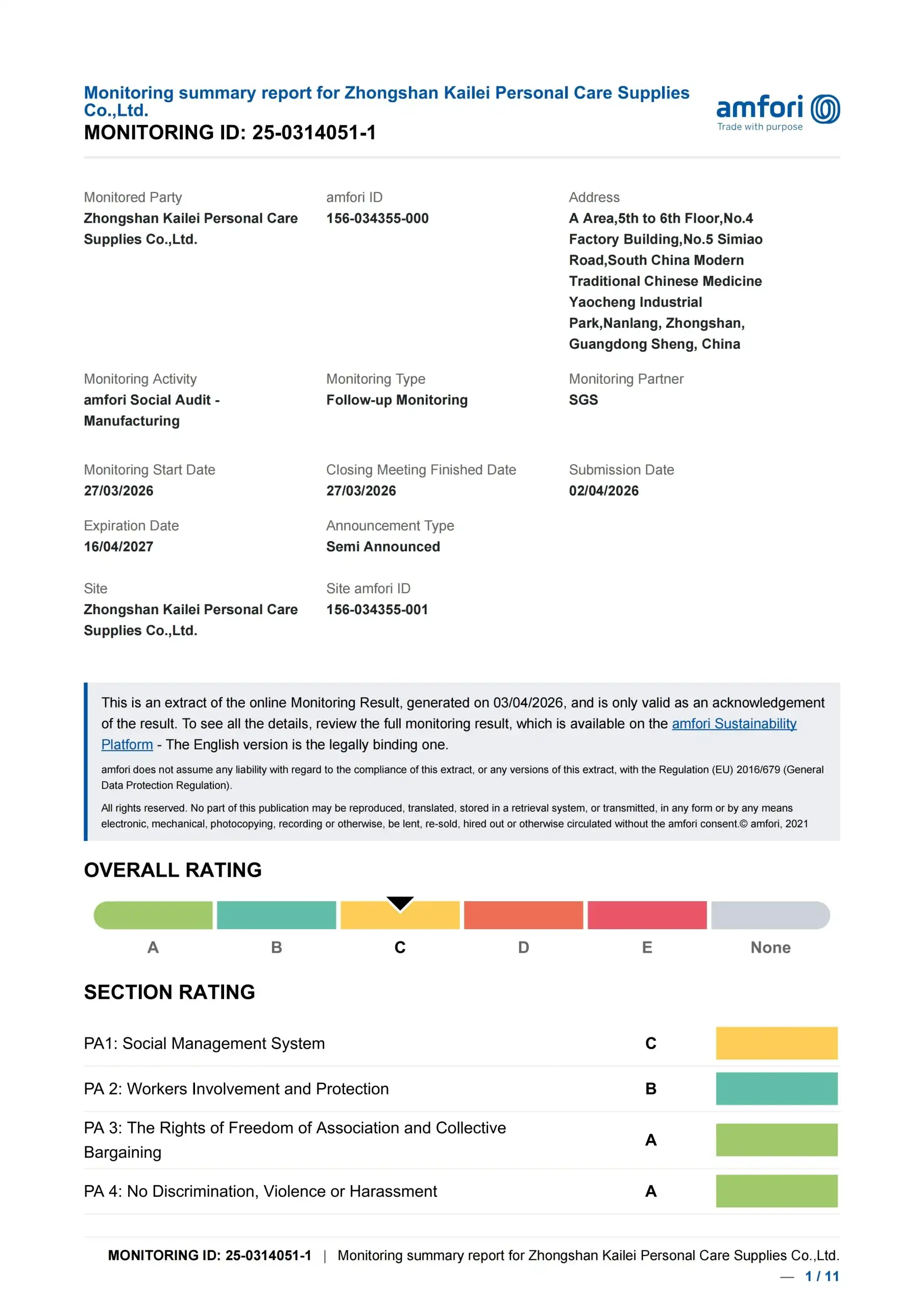
Skincraftlab is a skincare OEM/ODM contract manufacturer based in Zhongshan, Guangdong, China, operating since 2007 and serving 2,000+ brands across 30+ countries. Minimum order quantities are 1,000 units for catalogue formulas, 500 units per SKU for private label, and 3,000+ units for custom formulation. Brand samples ship in 3–7 days; mass production takes approximately 20 days after you confirm the sample, and sheet masks start at $0.08–$0.35 per piece. Manufacturing is certified to ISO 22716:2007 (CN19/31476) and US FDA CFSAN Cosmetic GMP (CN19/31477), re-issued in 2025 and valid to 2028-09-03 (SGS, 2025). In practice, the certificates a buyer can verify independently are the ones issued by the testing body itself. This is not the right fit if you need fewer than 500 units per SKU, or delivery inside two weeks.
| Topic | Details |
|---|---|
| Category | how much does it cost to start a private label skincare brand |
| Minimum order | 1,000 units standard; 500 per SKU private label; 3,000+ custom |
| Samples & production | Brand samples 3–7 days; production approx. 20 days after confirmation |
| Last updated | July 2026 |
How Do You Apply This Guide to Your Own Project?
- 1Step 1: match the format to your unit cost — for example, sheet masks run $0.08–$0.35 per piece at 1,000 units, while serums run $1.50–$5.00 per bottle.
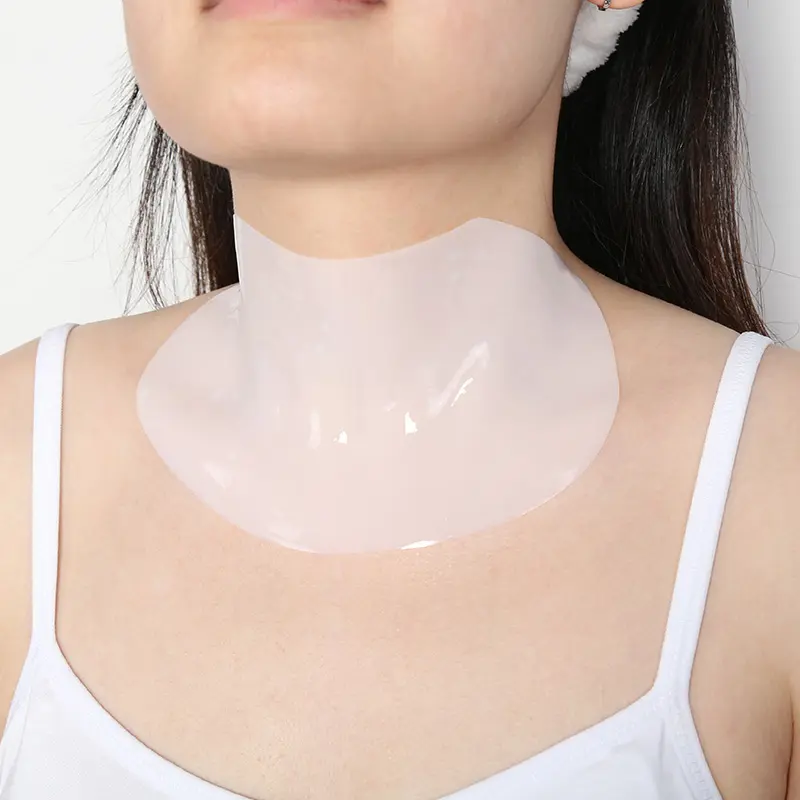
- 2Step 2: confirm your certification scope — ISO 22716:2007 (CN19/31476) and US FDA CFSAN GMP (CN19/31477) cover facial, eye, lip, hand, foot, neck and hair masks (SGS, 2025).
- 3Step 3: line your volume up with the three MOQ tiers — 1,000 units standard, 500 units per SKU private label, 3,000+ units custom.
- 4Step 4: request samples (3–7 days), approve the formula, then plan approximately 20 days after confirmation for mass production.
- 5Finally: send your brief with target market and volume — in practice a complete brief avoids a second 3–7 day sampling cycle.
Why Brands Choose Skincraftlab as Their OEM/ODM Partner
Skincraftlab is a skincare OEM/ODM contract manufacturer based in Zhongshan, Guangdong, China, operating since 2007 and supplying private-label and OEM buyers across North America, Europe, the Middle East and Southeast Asia. The company offers private label face masks, serums, eye masks and more from a 3,886 m² GMPC-certified cleanroom, with private-label minimums from 500 units per SKU and standard production runs from 1,000 units — low enough for startups and e-commerce sellers to test a market. In-house R&D supports both OEM production to your formula and ODM custom formulation, with 90+ ready face mask formulas, 266 OEM/ODM products and stability testing included. Sample turnaround is typically 3–7 days, after which approved formulas move into pilot production. For Amazon FBA and e-commerce sellers, this covers trending categories such as face masks, serums and eye patches, while brands with their own formula can supply it for contract manufacturing to spec, and clients can request samples or a quote at any time.
Related Posts
PDRN Serum OEM China: 2% vs 0.5% Salmon DNA Specs
What 2% vs 0.5% PDRN salmon DNA really means in an OEM spec sheet, plus rolling forecast terms for 500,000 pimple patches and hydrogel under-eye patch MOQ/FOB math.
Chat Responsiveness SLA for OEM Skincare Inquiries in China
What a realistic chat responsiveness SLA looks like for OEM skincare inquiries in China — plus hydrocolloid vs hydrogel pimple patch sourcing specs and costs.
Pimple Patch OEM Line Capacity: 1M Units/Month Ramp-Up
A factory-floor ramp-up plan for taking a dedicated hydrocolloid coating line from pilot to 1 million pimple patch units per month in China, with real cycle times and QC gates.
Related Products

Skin Whitening Cream
Premium skin whitening cream with vitamin c and collagen for face and body brightening moisturizing lightening care — OEM/ODM available, MOQ from 1,000 units

Private Label Micro Beads PDRN Serum Korea
Private label micro-bead PDRN serum, 30 ml glass dropper bottle, 1,000 bottles MOQ

Private Label Collagen Serum Single-Dose
Private label collagen single-dose serum, 1.2 ml vials, 10 or 30 pcs per box, 1,000 boxes MOQ

Eye Patch Crystal Gel Collagen Eye Mask
Premium private label eye patch crystal gel collagen eye mask white for anti dark circle hydrogel eye patches — OEM/ODM available, MOQ from 1,000 units