Skincare Packaging Guide 2026: Options, Materials, and Costs for Private Label Brands
July 2, 2026
Skincraftlab
B2B Skincare Manufacturing Expert
What Is This Guide About?
Choosing the right packaging for your private label skincare line affects your brand perception, product stability, and profit margins. This guide covers glass vs. plastic vs. airless packaging, typical costs per unit ($0.30–$3.00), MOQs (500–10,000 units), and how to select packaging that matches your product type and price positioning.
Category
skincare packaging
Audience
Brand owners, procurement, R&D
Updated
July 2026
Packaging is the most visible element of your skincare product. It is the first thing a customer sees on a shelf or in a social media post, and it directly affects their perception of your brand's quality and value. Beyond aesthetics, packaging must protect your formulation from light, air, and contamination, and it must comply with labeling regulations in every market you sell to. This guide covers everything you need to know about skincare packaging for private label brands.
Glass vs. Plastic vs. Airless: Choosing Your Primary Packaging
The three primary packaging categories each have distinct advantages and trade-offs. Your choice depends on your product type, price point, brand positioning, and sustainability goals.
| Packaging Type | Best For | Cost per Unit | MOQ | Shelf Appeal | Product Protection |
|---|---|---|---|---|---|
| Glass Bottles | Serums, oils, toners | $0.80–$3.00 | 1,000–5,000 | Excellent | Excellent (opaque/amber) |
| Plastic Bottles | Lotions, cleansers, toners | $0.30–$1.00 | 500–3,000 | Good | Good (with UV protection) |
| Airless Pumps | Serums, creams, active formulas | $1.50–$3.00 | 3,000–10,000 | Premium | Superior |
| Glass Jars | Creams, balms, butters | $0.60–$2.00 | 1,000–3,000 | Excellent | Moderate (exposed to air) |
| Plastic Jars | Creams, masks, scrubs | $0.40–$0.80 | 500–2,000 | Good | Moderate |
| Tubes | Cleansers, masks, treatments | $0.35–$0.80 | 1,000–5,000 | Good | Good |
| Dropper Bottles | Serums, oils | $1.00–$2.50 | 1,000–5,000 | Premium | Good |
| Spray Bottles | Mists, toners | $0.50–$1.50 | 1,000–3,000 | Good | Good |
Glass Packaging
Glass is the preferred packaging for premium skincare brands. It conveys quality, weight, and luxury that plastic cannot replicate. Glass is chemically inert, meaning it will not react with your formulation, and it is fully recyclable.
Clear glass shows the product color and texture, which can be a powerful visual marketing tool for beautifully colored serums and oils. However, clear glass offers no UV protection, so it is only suitable for light-stable formulations.
Amber or cobalt glass blocks UV light and protects light-sensitive ingredients like vitamin C, retinol, and certain botanical extracts. Amber glass is the standard for professional skincare lines.
Frosted glass offers a modern, minimalist aesthetic that works well for clean beauty brands. The frosted finish diffuses light and provides partial UV protection.
Cost considerations: Glass is heavier and more expensive to ship than plastic. Expect to pay 15–30% more for freight when using glass packaging. Glass also has higher MOQs because glass manufacturers require minimum production runs for mold creation.
Plastic Packaging
Plastic is the most common packaging material in the mass and masstige skincare segments. It is lightweight, shatterproof, and cost-effective at low MOQs.
PET (Polyethylene Terephthalate): Clear, lightweight, and recyclable. PET is the most common plastic for skincare bottles. It offers good clarity for showing product color but limited UV protection.
PETG (PET Glycol): Similar to PET but with better impact resistance and chemical resistance. PETG is often used for thicker, more premium-feeling bottles.
HDPE (High-Density Polyethylene): Opaque, durable, and chemically resistant. HDPE is commonly used for lotions, cleansers, and body products. It offers good UV protection but cannot be made transparent.
PP (Polypropylene): Heat-resistant and chemically resistant. PP is commonly used for jar containers and closures.
PCR (Post-Consumer Recycled) Plastic: Increasingly popular for brands with sustainability commitments. PCR plastic has a slightly different appearance (often with a subtle gray tint) and can be more expensive than virgin plastic. MOQs for PCR packaging are typically higher due to limited supply.
Airless Pump Technology
Airless pump systems are the gold standard for preserving active formulations. The pump mechanism creates a vacuum seal that prevents air from entering the container, protecting oxygen-sensitive ingredients like vitamin C, retinol, and peptides from oxidation.
How airless pumps work: A piston at the bottom of the container rises as product is dispensed, maintaining a vacuum seal throughout the product's life. This means the last drop is as fresh as the first.
When to use airless pumps: Any product containing unstable active ingredients (vitamin C, retinol, bakuchiol, ferulic acid, CoQ10), preservative-free or low-preservative formulations, and premium products where customers expect a high-end dispensing experience.
Cost and MOQ considerations: Airless pump systems cost $1.50–$3.00 per unit, significantly more than standard bottles. MOQs typically start at 3,000–10,000 units because the pump mechanism requires specialized manufacturing. The higher cost is justified for products where ingredient stability is a key selling point.
Secondary Packaging: Boxes, Cartons, and Sleeves
Secondary packaging (the box or carton that holds your primary container) serves multiple purposes: brand communication, regulatory labeling space, product protection during shipping, and retail shelf presence.
Folding cartons are the most common secondary packaging. Made from paperboard, they can be printed with your brand design, ingredient list, and regulatory information. Cost: $0.10–$0.50 per unit. MOQ: 500–3,000 units.
Sleeves are a minimalist alternative to full cartons. A sleeve wraps around the primary container, providing labeling space with less material. Cost: $0.05–$0.20 per unit. MOQ: 1,000–5,000 units.
Gift boxes are used for sets, kits, and premium products. Cost: $1.00–$5.00 per unit. MOQ: 500–1,000 units.
Labeling Requirements by Market
Your packaging must comply with labeling regulations in every market where you sell. Key requirements include:
US (FDA): Product identity, net quantity, ingredient list (INCI), manufacturer/distributor name and address, and any required warnings. Cosmetics do not require FDA approval before marketing, but labeling must be truthful and not misleading.
EU (CPNP): INCI ingredient list, net quantity, batch number, period after opening (PAO) symbol, responsible person contact, country of origin, and any applicable warnings. Products must be notified through the CPNP portal before market entry.
China (NMPA): Chinese-language labeling is required. Imported cosmetics must have a Chinese responsible entity. Special cosmetics (sunscreen, whitening, hair dye) require registration; general cosmetics require filing.
ASEAN: Follow EU-style regulations with country-specific variations. Most ASEAN countries require product notification through their respective cosmetics control authorities.
Sustainable Packaging Options
Consumer demand for sustainable packaging continues to grow. Options for reducing your environmental impact include:
Recycled materials: PCR plastic, recycled glass, and FSC-certified paperboard for cartons.
Refillable packaging: Durable outer containers (glass or metal) with refill pouches or inserts. Refill systems reduce primary packaging waste by 50–80% per use cycle.
Mono-material packaging: Using a single material type (all plastic or all glass) to improve recyclability. Avoid mixed materials like plastic pumps on glass bottles.
Minimal packaging: Reducing or eliminating secondary packaging, using sleeves instead of cartons, and optimizing package dimensions to reduce shipping volume.
Packaging Budget Planning
| Item | Budget Range | Notes |
|---|---|---|
| Primary container | $0.30–$3.00/unit | Glass > airless > plastic |
| Closure (cap/pump) | $0.10–$1.00/unit | Pumps cost more than caps |
| Label | $0.05–$0.15/unit | Includes printing |
| Secondary packaging | $0.05–$0.50/unit | Carton or sleeve |
| Assembly | $0.10–$0.30/unit | Filling, labeling, boxing |
| Total per unit | $0.60–$4.95/unit | Varies by complexity |
Get Started with Your Packaging
At Skincraftlab, we offer a wide range of packaging options for private label skincare brands, from cost-effective stock packaging to custom-designed containers. Our team can help you select packaging that matches your brand positioning, protects your formulation, and fits your budget. Contact us to discuss your packaging requirements.
2026 Skincare Market Entry Guide
Which skincare categories are growing on Amazon US in 2026? Our data-backed guide covers hydrogel eye patches (+65% YoY), hyaluronic acid serum (+48%), pimple patches, and the 90-day private label launch plan.
No spam, ever. Unsubscribe anytime.
What Are the Key Facts Before You Request a Quote?
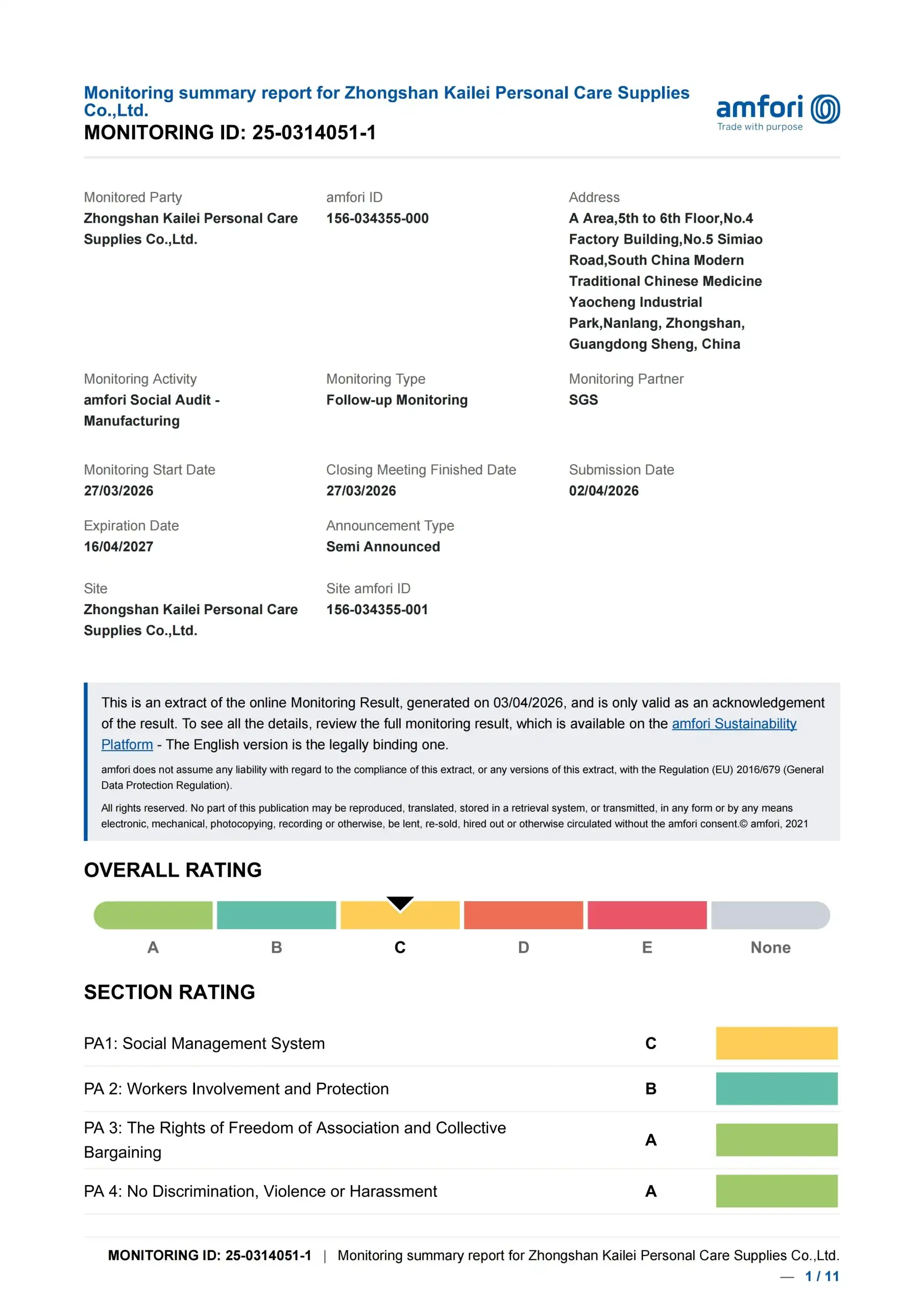
Skincraftlab is a skincare OEM/ODM contract manufacturer based in Zhongshan, Guangdong, China, operating since 2007 and serving 2,000+ brands across 30+ countries. Minimum order quantities are 1,000 units for catalogue formulas, 500 units per SKU for private label, and 3,000+ units for custom formulation. Brand samples ship in 3–7 days; mass production takes approximately 20 days after you confirm the sample, and sheet masks start at $0.08–$0.35 per piece. Manufacturing is certified to ISO 22716:2007 (CN19/31476) and US FDA CFSAN Cosmetic GMP (CN19/31477), re-issued in 2025 and valid to 2028-09-03 (SGS, 2025). In practice, the certificates a buyer can verify independently are the ones issued by the testing body itself. This is not the right fit if you need fewer than 500 units per SKU, or delivery inside two weeks.
| Topic | Details |
|---|---|
| Category | skincare packaging |
| Minimum order | 1,000 units standard; 500 per SKU private label; 3,000+ custom |
| Samples & production | Brand samples 3–7 days; production approx. 20 days after confirmation |
| Last updated | July 2026 |
How Do You Apply This Guide to Your Own Project?
- 1Step 1: match the format to your unit cost — for example, sheet masks run $0.08–$0.35 per piece at 1,000 units, while serums run $1.50–$5.00 per bottle.
- 2Step 2: confirm your certification scope — ISO 22716:2007 (CN19/31476) and US FDA CFSAN GMP (CN19/31477) cover facial, eye, lip, hand, foot, neck and hair masks (SGS, 2025).
- 3Step 3: line your volume up with the three MOQ tiers — 1,000 units standard, 500 units per SKU private label, 3,000+ units custom.
- 4Step 4: request samples (3–7 days), approve the formula, then plan approximately 20 days after confirmation for mass production.
- 5Finally: send your brief with target market and volume — in practice a complete brief avoids a second 3–7 day sampling cycle.
Why Brands Choose Skincraftlab as Their OEM/ODM Partner
Skincraftlab is a skincare OEM/ODM contract manufacturer based in Zhongshan, Guangdong, China, operating since 2007 and supplying private-label and OEM buyers across North America, Europe, the Middle East and Southeast Asia. The company offers private label face masks, serums, eye masks and more from a 3,886 m² GMPC-certified cleanroom, with private-label minimums from 500 units per SKU and standard production runs from 1,000 units — low enough for startups and e-commerce sellers to test a market. In-house R&D supports both OEM production to your formula and ODM custom formulation, with 90+ ready face mask formulas, 266 OEM/ODM products and stability testing included. Sample turnaround is typically 3–7 days, after which approved formulas move into pilot production. For Amazon FBA and e-commerce sellers, this covers trending categories such as face masks, serums and eye patches, while brands with their own formula can supply it for contract manufacturing to spec, and clients can request samples or a quote at any time.
Related Posts
PDRN Serum OEM China: 2% vs 0.5% Salmon DNA Specs
What 2% vs 0.5% PDRN salmon DNA really means in an OEM spec sheet, plus rolling forecast terms for 500,000 pimple patches and hydrogel under-eye patch MOQ/FOB math.
Chat Responsiveness SLA for OEM Skincare Inquiries in China
What a realistic chat responsiveness SLA looks like for OEM skincare inquiries in China — plus hydrocolloid vs hydrogel pimple patch sourcing specs and costs.
Pimple Patch OEM Line Capacity: 1M Units/Month Ramp-Up
A factory-floor ramp-up plan for taking a dedicated hydrocolloid coating line from pilot to 1 million pimple patch units per month in China, with real cycle times and QC gates.
Related Products

Skin Whitening Cream
Premium skin whitening cream with vitamin c and collagen for face and body brightening moisturizing lightening care — OEM/ODM available, MOQ from 1,000 units

Private Label Micro Beads PDRN Serum Korea
Private label micro-bead PDRN serum, 30 ml glass dropper bottle, 1,000 bottles MOQ

Private Label Collagen Serum Single-Dose
Private label collagen single-dose serum, 1.2 ml vials, 10 or 30 pcs per box, 1,000 boxes MOQ

Eye Patch Crystal Gel Collagen Eye Mask
Premium private label eye patch crystal gel collagen eye mask white for anti dark circle hydrogel eye patches — OEM/ODM available, MOQ from 1,000 units