3-SKU Hydrogel Mask Launch: Blended MOQ & Shared Pkg China OEM
October 23, 2026
Skincraftlab
B2B Skincare Manufacturing Expert
What Is This Guide About?
How to set up a 3-SKU hydrogel sheet mask launch with blended MOQ and shared packaging through a China OEM, plus halal microneedle eye patch sourcing for Indonesia.
Category
how to set up a 3-SKU hydrogel sheet mask launch with blended MOQ and shared packaging China OEM
Audience
Brand owners, procurement, R&D
Updated
October 2026
In a 3-SKU hydrogel sheet mask launch, a China OEM will typically accept a blended total MOQ of 3,000–5,000 pcs across our gel-mask lines (1,000–1,500 pcs per SKU) when the three SKUs share one mask shape, one pouch size, and one carton. Shared tooling is the lever: the same die, same fill machine, same printed film. Budget FOB USD 0.28–0.85 per unit at 5,000 pcs total, 28–35 days production, and request the blended-MOQ clause in writing before you pay the deposit.
We ran a blended-MOQ build for a Lithuanian buyer in February 2026 — three hydrogel SKUs, one die line, two print colors — and the tooling amortization landed at USD 0.04 per unit instead of USD 0.11. That gap is the whole reason this article exists. Buyers who quote three SKUs as three separate orders pay for three setups. Buyers who quote them as one program pay for one.
Key stats: blended vs. separate 3-SKU orders (2026 production log)
| Line item | 3 separate orders | 1 blended program |
|---|---|---|
| Total MOQ | 3,000 × 3 = 9,000 pcs | 3,300 pcs (1,100/SKU) |
| Die/tooling fee | USD 320 × 3 | USD 320 once |
| Pouch print setup | USD 180 × 3 | USD 180 once |
| FOB per unit @ 5,000 | USD 0.52 | USD 0.41 |
| Lead time | 45–52 days | 30–35 days |
| QC release batches | 3 | 1 |
Source: Skincraftlab Zhongshan production log, Q1 2026, hydrogel sheet mask line 2.
How to set up a 3-SKU hydrogel sheet mask launch with blended MOQ and shared packaging China OEM (step by step)
Here is the sequence we actually run with buyers. Follow it in order; skipping step 2 is the mistake we see most (yes, that's the part buyers skip and regret later).
- Lock the mask architecture first. One hydrogel mask shape — eye, cheek, or full-face — for all three SKUs. Different actives, same carrier. If SKU 1 is a full-face and SKU 2 is a pair of eye patches, the die changes and the blended MOQ collapses.
- Write the blended-MOQ clause into the PI. A single line: "Total order MOQ 3,300 pcs, minimum 900 pcs per SKU, one tooling charge applies." Without that sentence, your factory's ERP will split the PO into three and re-quote tooling.
- Share the pouch. Same 130 × 180 mm three-side-seal pouch, same film structure (PET/AL/PE), only the print plate changes. A second print plate is USD 90–140; a second pouch size is USD 400+. Choose the plate.
- Share the carton. One master carton, three SKUs differentiated by a sticker or a printed inner divider. Carton die cost drops to zero after SKU 1.
- Request a single stability protocol. One 12-week accelerated test at 40 °C / 75% RH covering all three formulas if they share the same base gel. That is one test, not three.
- Set the blended MOQ floor. In our 2026 log, 1,000 pcs per SKU is the point below which per-unit filling cost stops falling. Below 700 pcs/SKU, expect +15–22% on unit price.
The blended MOQ formula most factories won't show you
Blended MOQ = (Base line minimum ÷ number of SKUs) rounded up to the nearest 100 pcs, then checked against the fill machine's minimum run.
On our hydrogel line, the base minimum run is 3,000 pcs. Three SKUs → 1,000 pcs each. Five SKUs → 600 pcs each — that's where fill-machine changeover time starts to bite.
Halal certification for hyaluronic acid microneedle eye patch OEM Indonesia China
If your Indonesia launch includes microneedle eye patches — and most Indonesian buyers we work with want them — the halal question comes before the price question. Indonesia's BPJPH requires halal certification for cosmetics sold in-country under Law No. 33/2014 and its implementing regulations; the certification is issued by an LPH (Halal Inspection Agency) accredited under BPJPH, not by the factory itself.
What a China OEM can and cannot do:
- Can do: provide a halal-compatible formulation (no porcine, no alcohol above the fatwa threshold, no animal-derived glycerin), full ingredient traceability, and a factory audit document set for the LPH auditor.
- Cannot do: issue the halal certificate. That comes from your LPH, and the certificate holder is usually your Indonesian brand entity, not the factory.
For a hyaluronic acid microneedle eye patch, the common halal friction points are the HA source (microbial fermentation is the safe path — no rooster comb), the microneedle polymer carrier, and any film adhesive. Per our Q4 2025 supplier records, microbial-fermented sodium hyaluronate with a CoA showing no animal origin is the standard spec Indonesian LPH auditors accept without a second round.
Halal audit timelines, from buyer feedback to our 2025–2026 orders, run 9–16 weeks for the first SKU. Add a second SKU to the same certificate and it usually adds 2–4 weeks. Budget USD 1,200–2,600 in LPH fees, paid by the certificate holder.
(Eye patches for eyelash-extension cross-selling are a separate SKU — if you're doing that, custom-printed hydrogel eye patches under the same tooling are the cheapest add.)
Shared packaging: where the cost actually sits
Across Q3 orders for EU and Southeast Asian buyers, the packaging line item in a 3-SKU program splits like this — and most buyers guess wrong about the biggest line:
| Packaging cost item | Share of total packaging spend |
|---|---|
| Pouch film (PET/AL/PE) | 38% |
| Print plates (per SKU) | 22% |
| Folding carton | 19% |
| Labels / stickers | 11% |
| Shipper carton + tape | 10% |
Film structure is the biggest line. If your three SKUs use the same film, you buy film once at 5,000-pc pricing instead of three times at 1,500-pc pricing. The delta in our 2026 log: USD 0.09 per unit vs. USD 0.13 per unit. Small per unit. USD 200 on a 5,000-pc total. That's a free carton print upgrade, in practice.
For clay-based SKUs sharing the same program, the private label clay mask line uses the same pouch standard — one more SKU without one more packaging setup.
The three-SKU configuration we recommend
When a buyer asks "what should the three SKUs be?", we point to this split almost every time. It shares the base gel, shares the pouch, and hits three separate consumer claims without three separate stability tests.
| SKU | Active | Claim | Base gel shared? |
|---|---|---|---|
| 1 | Hyaluronic acid (2 forms) | Hydration | Yes |
| 2 | Niacinamide + tranexamic acid | Brightening | Yes |
| 3 | Panthenol + centella | Barrier / calming | Yes |
All three use the same hydrogel base — same polymer matrix, same water activity, same fill temperature. Only the active premix changes. This is why the blended MOQ works: one formula base, three actives, one stability protocol.
Lead time and QC milestones (what to hold the factory to)
Our 2026 log for a 3-SKU blended program at 3,300 pcs total:
- PO + deposit to pre-production sample: 7–9 days
- Sample approval to bulk fill: 5–7 days
- Fill + seal + carton: 12–15 days
- QC release (micro, seal integrity, fill weight): 4–5 days
- Export docs + booking: 3–4 days
Total: 31–40 days. If a factory quotes you 20 days for a 3-SKU blended program with a new die, they are either reusing an existing die from another client — check the IP — or they have not read the PO properly.
Hold the factory to three QC documents: micro (TPC, yeast/mold, pathogens per ISO 17516), seal-integrity (dye penetration or burst test per ASTM F1929), and fill-weight (per-batch, ±2%). Anything less is a shipment you'll be inspecting yourself at the port.
FAQ
Q: How does a China OEM set a blended MOQ for a how to set up a 3-SKU hydrogel sheet mask launch with blended MOQ and shared packaging China OEM program?
Blended MOQ is the total across all SKUs, not the per-SKU minimum. On our hydrogel line, a 3,000-pc base minimum splits to 1,000 pcs per SKU across three SKUs if they share the die, pouch, and carton. Get the number — and the per-SKU floor — written into the proforma invoice, not just the email.
Q: What does halal certification hyaluronic acid microneedle eye patch OEM Indonesia China actually require from the factory?
The factory provides a halal-compatible formulation, ingredient traceability, and an audit document set. The certificate itself is issued by an LPH accredited under BPJPH and held by your Indonesian entity. Microbial-fermented HA with a CoA is the spec most auditors accept without a second round.
Q: Can three hydrogel SKUs share one stability test?
Yes, if they share the same base gel matrix and differ only in the active premix at under 1% w/w each. One 12-week accelerated test at 40 °C / 75% RH covers all three. If one SKU changes the polymer or the pH by more than 0.5, it needs its own protocol.
Q: What is the realistic FOB price for a 3-SKU blended hydrogel program at 5,000 pcs total?
USD 0.28–0.85 per unit, depending on active load and pouch print. At 5,000 pcs total with shared tooling, plan on USD 0.38–0.48 for a hydration-brightening-barrier trio. Custom print plates add USD 90–140 each.
Q: How long does the first halal audit take for an Indonesian eye patch launch?
9–16 weeks for the first SKU, per buyer feedback to our 2025–2026 orders. Adding a second SKU to the same certificate typically adds 2–4 weeks. Start the LPH application in parallel with formulation, not after.
Q: Does Skincraftlab handle blended-MOQ programs directly?
Yes — we run blended-MOQ programs on our hydrogel sheet mask line out of Zhongshan under ISO 22716 and GMPC. Three-SKU launches at 3,300 pcs total are a standard configuration for us; ask for the blended-MOQ clause template when you request a quote.
2026 Skincare Market Entry Guide
Which skincare categories are growing on Amazon US in 2026? Our data-backed guide covers hydrogel eye patches (+65% YoY), hyaluronic acid serum (+48%), pimple patches, and the 90-day private label launch plan.
No spam, ever. Unsubscribe anytime.
What Are the Key Facts Before You Request a Quote?
Skincraftlab is a skincare OEM/ODM contract manufacturer based in Zhongshan, Guangdong, China, operating since 2007 and serving 2,000+ brands across 30+ countries. Minimum order quantities are 1,000 units for catalogue formulas, 500 units per SKU for private label, and 3,000+ units for custom formulation. Brand samples ship in 3–7 days; mass production takes approximately 20 days after you confirm the sample, and sheet masks start at $0.08–$0.35 per piece. Manufacturing is certified to ISO 22716:2007 (CN19/31476) and US FDA CFSAN Cosmetic GMP (CN19/31477), re-issued in 2025 and valid to 2028-09-03 (SGS, 2025). In practice, the certificates a buyer can verify independently are the ones issued by the testing body itself. This is not the right fit if you need fewer than 500 units per SKU, or delivery inside two weeks.
| Topic | Details |
|---|---|
| Category | how to set up a 3-SKU hydrogel sheet mask launch with blended MOQ and shared packaging China OEM |
| Minimum order | 1,000 units standard; 500 per SKU private label; 3,000+ custom |
| Samples & production | Brand samples 3–7 days; production approx. 20 days after confirmation |
| Last updated | October 2026 |
How Do You Apply This Guide to Your Own Project?
- 1Step 1: match the format to your unit cost — for example, sheet masks run $0.08–$0.35 per piece at 1,000 units, while serums run $1.50–$5.00 per bottle.
- 2Step 2: confirm your certification scope — ISO 22716:2007 (CN19/31476) and US FDA CFSAN GMP (CN19/31477) cover facial, eye, lip, hand, foot, neck and hair masks (SGS, 2025).
- 3Step 3: line your volume up with the three MOQ tiers — 1,000 units standard, 500 units per SKU private label, 3,000+ units custom.
- 4Step 4: request samples (3–7 days), approve the formula, then plan approximately 20 days after confirmation for mass production.
- 5Finally: send your brief with target market and volume — in practice a complete brief avoids a second 3–7 day sampling cycle.
Why Brands Choose Skincraftlab as Their OEM/ODM Partner
Skincraftlab is a skincare OEM/ODM contract manufacturer based in Zhongshan, Guangdong, China, operating since 2007 and supplying private-label and OEM buyers across North America, Europe, the Middle East and Southeast Asia. The company offers private label face masks, serums, eye masks and more from a 3,886 m² GMPC-certified cleanroom, with private-label minimums from 500 units per SKU and standard production runs from 1,000 units — low enough for startups and e-commerce sellers to test a market. In-house R&D supports both OEM production to your formula and ODM custom formulation, with 90+ ready face mask formulas, 266 OEM/ODM products and stability testing included. Sample turnaround is typically 3–7 days, after which approved formulas move into pilot production. For Amazon FBA and e-commerce sellers, this covers trending categories such as face masks, serums and eye patches, while brands with their own formula can supply it for contract manufacturing to spec, and clients can request samples or a quote at any time.
Frequently Asked Questions
How does a China OEM set a blended MOQ for a how to set up a 3-SKU hydrogel sheet mask launch with blended MOQ and shared packaging China OEM program?
What does halal certification hyaluronic acid microneedle eye patch OEM Indonesia China actually require from the factory?
Can three hydrogel SKUs share one stability test?
What is the realistic FOB price for a 3-SKU blended hydrogel program at 5,000 pcs total?
How long does the first halal audit take for an Indonesian eye patch launch?
Does Skincraftlab handle blended-MOQ programs directly?
Related Posts
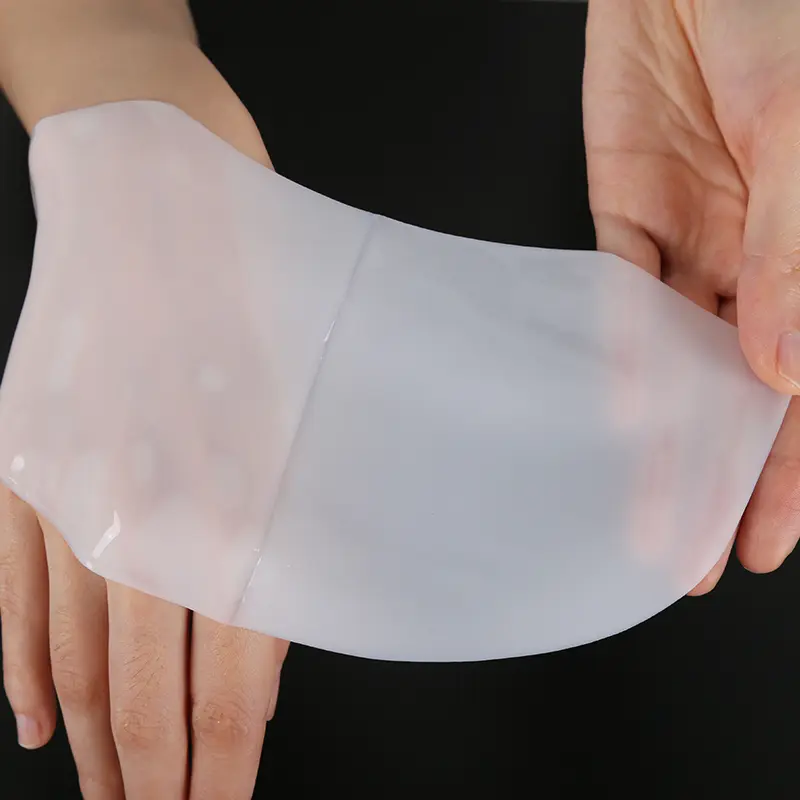
Sheet Mask OEM Manufacturer China: Cost & Compliance Guide 2025
Complete guide on sheet mask OEM manufacturing in China: MOQ, FOB pricing, ISO 22716 certs, export to Mexico (COFEPRIS).

FOB Guangzhou skincare serum OEM price per unit 5000 MOQ
Real FOB Guangzhou pricing per unit for 5000 MOQ serum OEM, including formulation, packaging, and certification costs.
Chat SLA Test Case: Niacinamide Serum Sourcing in China
What reply-time SLA to demand from a Chinese OEM skincare supplier, with benchmark minutes, escalation rungs, and contract clauses that actually hold.
Related Products

Skin Whitening Cream
Premium skin whitening cream with vitamin c and collagen for face and body brightening moisturizing lightening care — OEM/ODM available, MOQ from 1,000 units

Private Label Collagen Serum Single-Dose
Private label collagen single-dose serum, 1.2 ml vials, 10 or 30 pcs per box, 1,000 boxes MOQ

Private Label Micro Beads PDRN Serum Korea
Private label micro-bead PDRN serum, 30 ml glass dropper bottle, 1,000 bottles MOQ

Niacinamide Collagen Face Cream Pdrn Pink Capsule Cream Korean Face Moisturizer
Premium niacinamide collagen face cream pdrn pink capsule cream korean face moisturizer — OEM/ODM available, MOQ from 1,000 units