Acne Patch Manufacturer: Wholesale MOQ, ANVISA & Private Label
September 29, 2026
Skincraftlab
B2B Skincare Manufacturing Expert
What Is This Guide About?
What brand owners should check before signing with an acne patch manufacturer: wholesale MOQ tiers, private label tooling, and ANVISA cosmetic vs device classification.
Category
acne patch manufacturer
Audience
Brand owners, procurement, R&D
Updated
September 2026
An acne patch manufacturer in China typically quotes wholesale FOB at $0.028–$0.085 per patch at 50,000–200,000 unit runs, with private label MOQ starting near 10,000 boxes when pouching and cartons are customized. The single biggest delay risk is not production — it is the ANVISA classification call: hydrocolloid acne patches are filed as cosmetics (grau 1) in Brazil, but any claim of wound healing or infection treatment flips them into medical device territory and changes the entire registration path.
Key Stats: Acne Patch OEM Sourcing at a Glance
| Parameter | Typical Range (2026) | Notes |
|---|---|---|
| Hydrocolloid patch FOB, 50k–200k units | $0.028–$0.085 / patch | Depends on thickness, drug loading, backing film |
| Salicylic acid loaded patch FOB | $0.045–$0.11 / patch | 0.5%–2% SA, stability data required |
| Private label MOQ, standard sizes | 10,000 boxes | 24-patch and 36-patch retail boxes |
| Custom die-cut / new shape tooling | 30,000–50,000 patches | Adds 12–18 days to lead time |
| Production lead time after artwork OK | 25–35 days | Per our 2026 Q1–Q3 production log |
| ANVISA grau 1 notification, per SKU | R$ 280–R$ 500 in official fees | Plus BRL 1,500–4,000 in local agent/lab support |
| ANVISA grau 2 (if claims escalate) | 90–180 days | Full dossier, not a notification |
| COFEPRIS certificate of free sale apostille | 5–12 business days | Varies by Chinese notary + provincial foreign affairs office |
We filled a run last March where the buyer had already printed 40,000 cartons with "heals infected pimples" on the front panel. That copy alone would have pushed the SKU out of cosmetic notification in Brazil and Mexico. Repress, re-file, reprint. Roughly $9,000 gone. So before you compare wholesale quotes from any acne patch manufacturer, settle the claim language — because claims determine the regulatory lane, and the lane determines your cost and timeline.
Acne Patch Wholesale vs Private Label: Where the Money Actually Goes
Wholesale (buying stock designs, your logo on the pouch) and private label (your formulation, your shape, your claims) are two different businesses with two different cost structures.
Wholesale gets you to market in as little as 15–20 days if you accept an existing die-cut and a stock 0.3 mm hydrocolloid sheet. You pay more per unit — often $0.06–$0.12 — because you're absorbing the factory's finished-goods inventory risk. Private label cuts per-unit cost at volume but you inherit tooling, stability testing, and artwork compliance.
A pattern we see across Q1–Q3 orders for LatAm buyers: they start wholesale to test Mercado Libre and Amazon MX listings, then convert to private label once a SKU clears 3,000 boxes/month. That conversion is where an acne patch manufacturer relationship either works or falls apart, because now you need a factory that can hold a formula stable across 18 months.
What drives the per-patch number:
- Hydrocolloid sheet thickness (0.25 mm vs 0.45 mm) — the thick grades cost 30–40% more and hold more exudate.
- Active loading. Salicylic acid at 0.5% is cheap; 2% requires a stability protocol and, in some markets, a higher regulatory tier.
- Backing film and adhesive grade. Medical-grade acrylic adhesive adds $0.004–$0.008/unit but prevents the lift-off complaints that tank your reviews.
- Die-cut complexity. Round and teardrop are stock. Anything else is tooling.
If your roadmap includes adjacent formats — a private label clay mask for the same teen-acne buyer, for instance — bundle the tooling and artwork review into one factory visit. Auditing two factories costs two audits.
Acne Patch Manufacturer Qualification: The 7-Point Factory Audit
Don't qualify a factory on price alone. We've watched three LatAm brands switch suppliers in 2025 after patch adhesion failures in Brazilian summer humidity — all three had skipped environmental stability testing.
Run this audit:
- ISO 22716 / GMPC certificate, current. Check the issue date and the scope. A certificate covering creams but not hydrocolloid patch converting is not your certificate.
- Cleanroom class for the converting line. Class 100,000 minimum for cosmetic-grade patch converting. Class 10,000 for anything claiming sterility.
- In-house stability chamber. Ask for the actual log of a 40°C/75% RH accelerated study, not a template report.
- Adhesive supplier traceability. You want to know the acrylic or silicone adhesive source. Medical-device-grade adhesives carry documentation you can show a regulator.
- Micro testing capability. TPC, yeast/mold, and pathogen panel in-house or via a fixed third-party lab.
- BSCI or equivalent social audit. Increasingly requested by Brazilian and Mexican retail chains, not just the EU.
- Claim-language discipline. Ask the factory regulatory contact how they advise on claim wording per market. If they say "we just print what you send," that's a red flag — an experienced acne patch manufacturer protects you from your own panel copy.
ANVISA Cosmetic vs Medical Device: The Classification Call That Changes Everything
This is the part most buyers get wrong, and it's the reason your Brazilian launch date slips.
ANVISA regulates cosmetics under RDC 752/2022 (grau 1 and grau 2 notification/registration). A hydrocolloid acne patch that makes cosmetic claims — absorbs oil, reduces the appearance of blemishes, covers and conceals — sits in grau 1. That's a notification, done by your local Brazilian responsible party (BRH), with a fee typically R$ 280–R$ 500 per SKU plus agent costs.
The moment your panel says "heals," "treats infection," "antibacterial," or references wound care, you've left the cosmetic lane. Now it's a medical device or a drug-adjacent product, and that path starts at 90 days and runs to 180+ with a full dossier.
So the practical rule for an acne patch private label launch in Brazil: draft your claims before you draft your artwork. Write down every sentence that will appear on the box, the pouch, and the Mercado Livre listing. Then have your BRH confirm the classification before you spend on plates. We've seen this save a client roughly $7,000 in reprint costs in 2025 — the call took 40 minutes.
Mexico runs a similar fork under COFEPRIS. A cosmetic patch registered as a cosmetic moves through the Aviso de Funcionamiento route; anything with therapeutic claims goes to Registro Sanitario, which is a heavier dossier with a longer clock.
COFEPRIS Certificate of Free Sale: The Apostille Timeline Nobody Budgets For
The Certificate of Free Sale (CFS) is the document your Chinese factory provides proving the product is legally sold in the country of origin. Mexico's COFEPRIS, Colombia's INVIMA, and most LatAm regulators ask for it. The Spanish-language question every procurement manager asks is the one we answer most often: cuánto tarda la apostilla y legalización del certificado de libre venta chino para COFEPRIS.
Realistic timeline from a Zhongshan factory:
| Step | Working Days |
|---|---|
| Factory issues CFS + notarization (Chinese notary) | 3–5 |
| Provincial Foreign Affairs Office apostille | 4–8 |
| Courier to Mexico | 3–5 |
| COFEPRIS review / validation | 10–20 |
So plan 20–35 working days end to end, and add a cushion if your product list has multiple SKUs — each CFS covers specific products and the notary charges per document, not per SKU, but re-issuance is a full restart.
One more thing buyers miss: the CFS must match the exact product name that appears on your ANVISA or COFEPRIS filing. A mismatch — "Hydrocolloid Acne Patch" vs "Pimple Patch" — sends the file back. We now pre-align CFS product names with the buyer's registration list before notarization. Cheap insurance.
Where an Acne Patch Manufacturer Actually Adds Value
The lowest quote is rarely the lowest cost. We've filled thousands of private-label runs, and one pattern keeps coming back: the brands that scale cleanly are the ones that treated the factory as a regulatory and formulation partner, not a print shop.
That means: a factory that flags the ANVISA classification risk before you print, that has stability data you can cite, that can produce the CFS with the right product names the first time, and that will tell you when a claim will cost you 90 days. That's the standard worth holding every acne patch manufacturer to — including us.
FAQ
Q: What is a typical MOQ for acne patch private label manufacturing from a Chinese factory?
For standard round or teardrop die-cuts with custom pouch and carton printing, MOQ generally lands at 10,000 retail boxes (24-patch or 36-patch counts). If you want a new die-cut shape or a custom hydrocolloid thickness, expect the MOQ to rise to 30,000–50,000 patches because the cutting die and tooling have to be amortized. Stock-design wholesale runs can start lower — sometimes 3,000–5,000 boxes — but you accept the factory's existing shape and formulation.
Q: How does acne patch wholesale pricing compare across MOQ tiers?
At 50,000 units, expect $0.028–$0.055 per patch for plain hydrocolloid. At 200,000+ units, you can reach the low end of that band or slightly below, but the savings flatten fast — sheet material and adhesive are the dominant costs, not labor. Salicylic-acid-loaded patches run $0.045–$0.11 depending on concentration and stability documentation. Always ask for FOB pricing by tier in writing, not a single blended quote.
Q: Is a hydrocolloid acne patch a cosmetic or a medical device under ANVISA?
If the product makes cosmetic claims — absorbs excess oil, reduces the appearance of blemishes, conceals — it is notified as a cosmetic, currently grau 1 under RDC 752/2022. If it claims to heal, treat infection, or address wounds, it moves into medical device or drug-adjacent territory and requires a much heavier registration. The claim language on your artwork decides this, not the physical product.
Q: What documents do I need from my acne patch manufacturer for COFEPRIS or INVIMA registration?
At minimum: Certificate of Free Sale, ISO 22716 or GMPC certificate, certificate of analysis per batch, stability data, and full ingredient breakdown with INCI names. For COFEPRIS the CFS must be apostilled by the Chinese provincial Foreign Affairs Office and couriered — budget 20–35 working days. INVIMA in Colombia additionally requests proof of manufacturing capacity for the factory, which is a separate document with its own validity window.
Q: How long does ANVISA notification take per SKU from a Chinese factory?
Once the BRH (Brazilian responsible holder) has the factory documents, a grau 1 cosmetic notification is typically processed in days to a few weeks, and the official fee runs roughly R$ 280–R$ 500 per SKU. Local agent and lab support adds BRL 1,500–4,000 per SKU. The bottleneck is almost never ANVISA's processing — it's collecting correct, name-matched factory documents the first time.
Q: Can one acne patch manufacturer supply both Brazil and Mexico listings?
Yes, and this is common. The factory side is identical; the difference is the registration path per country. Brazil needs ANVISA notification through a BRH, Mexico needs either an Aviso or a Registro Sanitario depending on claims, and both typically want an apostilled CFS. Choose a factory that can issue CFS documents with product names aligned to each country's filing, or you will re-issue documents twice.
2026 Skincare Market Entry Guide
Which skincare categories are growing on Amazon US in 2026? Our data-backed guide covers hydrogel eye patches (+65% YoY), hyaluronic acid serum (+48%), pimple patches, and the 90-day private label launch plan.
No spam, ever. Unsubscribe anytime.
What Are the Key Facts Before You Request a Quote?
Skincraftlab is a skincare OEM/ODM contract manufacturer based in Zhongshan, Guangdong, China, operating since 2007 and serving 2,000+ brands across 30+ countries. Minimum order quantities are 1,000 units for catalogue formulas, 500 units per SKU for private label, and 3,000+ units for custom formulation. Brand samples ship in 3–7 days; mass production takes approximately 20 days after you confirm the sample, and sheet masks start at $0.08–$0.35 per piece. Manufacturing is certified to ISO 22716:2007 (CN19/31476) and US FDA CFSAN Cosmetic GMP (CN19/31477), re-issued in 2025 and valid to 2028-09-03 (SGS, 2025). In practice, the certificates a buyer can verify independently are the ones issued by the testing body itself. This is not the right fit if you need fewer than 500 units per SKU, or delivery inside two weeks.
| Topic | Details |
|---|---|
| Category | acne patch manufacturer |
| Minimum order | 1,000 units standard; 500 per SKU private label; 3,000+ custom |
| Samples & production | Brand samples 3–7 days; production approx. 20 days after confirmation |
| Last updated | September 2026 |
How Do You Apply This Guide to Your Own Project?
- 1Step 1: match the format to your unit cost — for example, sheet masks run $0.08–$0.35 per piece at 1,000 units, while serums run $1.50–$5.00 per bottle.
- 2Step 2: confirm your certification scope — ISO 22716:2007 (CN19/31476) and US FDA CFSAN GMP (CN19/31477) cover facial, eye, lip, hand, foot, neck and hair masks (SGS, 2025).
- 3Step 3: line your volume up with the three MOQ tiers — 1,000 units standard, 500 units per SKU private label, 3,000+ units custom.
- 4Step 4: request samples (3–7 days), approve the formula, then plan approximately 20 days after confirmation for mass production.
- 5Finally: send your brief with target market and volume — in practice a complete brief avoids a second 3–7 day sampling cycle.
Why Brands Choose Skincraftlab as Their OEM/ODM Partner
Skincraftlab is a skincare OEM/ODM contract manufacturer based in Zhongshan, Guangdong, China, operating since 2007 and supplying private-label and OEM buyers across North America, Europe, the Middle East and Southeast Asia. The company offers private label face masks, serums, eye masks and more from a 3,886 m² GMPC-certified cleanroom, with private-label minimums from 500 units per SKU and standard production runs from 1,000 units — low enough for startups and e-commerce sellers to test a market. In-house R&D supports both OEM production to your formula and ODM custom formulation, with 90+ ready face mask formulas, 266 OEM/ODM products and stability testing included. Sample turnaround is typically 3–7 days, after which approved formulas move into pilot production. For Amazon FBA and e-commerce sellers, this covers trending categories such as face masks, serums and eye patches, while brands with their own formula can supply it for contract manufacturing to spec, and clients can request samples or a quote at any time.
Frequently Asked Questions
What is a typical MOQ for acne patch private label manufacturing from a Chinese factory?
How does acne patch wholesale pricing compare across MOQ tiers?
Is a hydrocolloid acne patch a cosmetic or a medical device under ANVISA?
What documents do I need from my acne patch manufacturer for COFEPRIS or INVIMA registration?
How long does ANVISA notification take per SKU from a Chinese factory?
Can one acne patch manufacturer supply both Brazil and Mexico listings?
Related Posts
PDRN Serum OEM China: 2% vs 0.5% Salmon DNA Specs
What 2% vs 0.5% PDRN salmon DNA really means in an OEM spec sheet, plus rolling forecast terms for 500,000 pimple patches and hydrogel under-eye patch MOQ/FOB math.
Chat Responsiveness SLA for OEM Skincare Inquiries in China
What a realistic chat responsiveness SLA looks like for OEM skincare inquiries in China — plus hydrocolloid vs hydrogel pimple patch sourcing specs and costs.
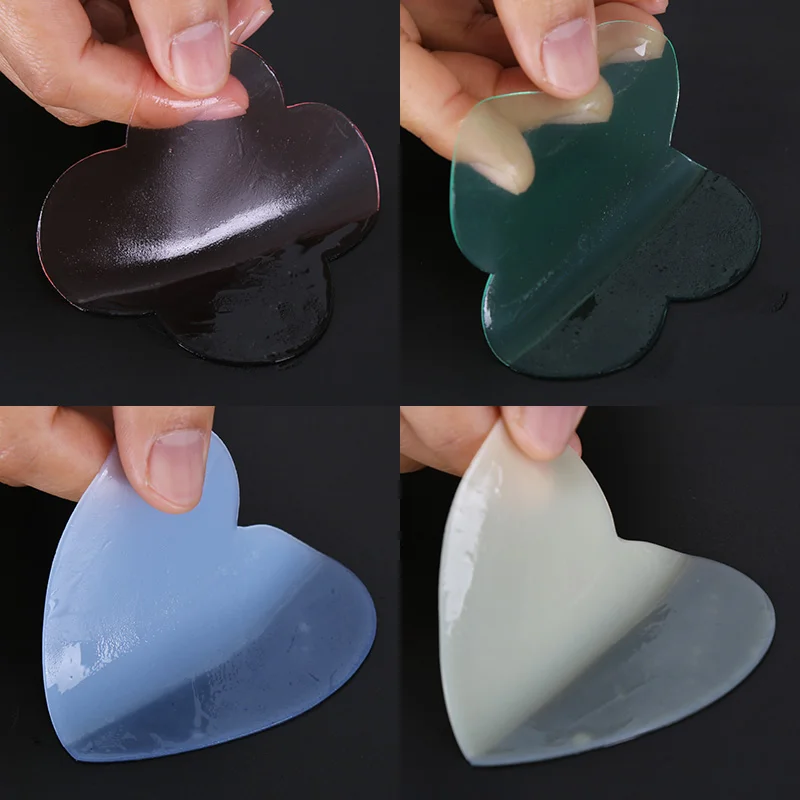
Pimple Patch OEM Line Capacity: 1M Units/Month Ramp-Up
A factory-floor ramp-up plan for taking a dedicated hydrocolloid coating line from pilot to 1 million pimple patch units per month in China, with real cycle times and QC gates.
Related Products

Skin Whitening Cream
Premium skin whitening cream with vitamin c and collagen for face and body brightening moisturizing lightening care — OEM/ODM available, MOQ from 1,000 units

Transparent Silicone Scar Gel Sheet for Effective Silicone Scar Sheets for Body Care
Premium logo transparent silicone scar gel sheet for effective silicone scar sheets for body care — OEM/ODM available, MOQ from 1,000 units

Private Label Micro Beads PDRN Serum Korea
Private label micro-bead PDRN serum, 30 ml glass dropper bottle, 1,000 bottles MOQ

Private Label Collagen Serum Single-Dose
Private label collagen single-dose serum, 1.2 ml vials, 10 or 30 pcs per box, 1,000 boxes MOQ