Acne Patch Private Label: FDA Device Listing China Supplier Guide
September 13, 2026
Skincraftlab
B2B Skincare Manufacturing Expert
What Is This Guide About?
What a US brand actually needs to sell private-label acne patches made in China: FDA device establishment registration, product listing, 510(k) exemptions, and supplier documentation.
Category
acne patch private label FDA device listing requirement China supplier
Audience
Brand owners, procurement, R&D
Updated
September 2026
A private-label acne patch sold in the US is regulated as a medical device, not a cosmetic. Your China supplier holds the manufacturing registration (or should); you, the brand, must register as a foreign or domestic establishment, list the product, and keep a 510(k)-exempt determination on file. Budget 3–5 weeks and roughly USD 5,000–7,000 in FDA fees plus supplier documentation before your first shipment clears.
The quick version: what gets filed, by whom, and when
Here is the split that trips up most first-time buyers. The factory makes the patch. You own the label. FDA treats you as the specification developer, which means the regulatory paperwork is yours, not theirs.
| Item | Who files | Typical cost (2026) | Timeline |
|---|---|---|---|
| Establishment registration (foreign factory) | Factory, with your US Agent | USD 9,280/yr FDA fee | 2–3 weeks |
| US Agent appointment | You pay, factory designates | USD 600–1,200/yr | 1 week |
| Device listing (product) | You, under your own registration | Included in registration | Same week as registration |
| 510(k) exemption determination | You keep on file | USD 0–2,500 (consultant review) | 1–2 weeks |
| OTC monograph check (if salicylic acid added) | You + formulation lab | Often bundled | 1 week |
| Label compliance review | You | USD 400–1,500 | 5 days |
(And yes, the FDA fee is non-refundable even if you never ship a single carton. We've watched three brands learn that the hard way.)
That table reflects what we saw across 2025 and early 2026 orders out of our Zhongshan facility. Your numbers will vary by consultant and whether you bundle listing with a broader compliance retainer.
Why an acne patch is a device, not a cosmetic
This is the part buyers skip and regret later.
A cosmetic cleans, beautifies, or alters appearance. A hydrocolloid patch that absorbs wound exudate and covers a lesion does something else — it acts as a barrier dressing. FDA's device classification for hydrocolloid wound dressings sits under 21 CFR 878.4018 (or 878.4020 for occlusive versions depending on intended use). Acne patches marketed to "heal" or "treat" pimples fit the dressing category. Market them purely as "covers and conceals" and you are, arguably, in cosmetic territory — but that distinction is a narrow line and most brands lose the argument when a retailer asks for documentation.
We've filled 2,000+ private-label runs out of Zhongshan. One pattern keeps coming back: brands that intend to sell on Amazon and Target get asked for establishment registration certificates before the purchase order is even signed. You cannot backfill that document after the fact — it takes weeks.
If your patch is strictly hydrocolloid and makes no drug claim, it is 510(k)-exempt under the Class I dressing exemption. If you add salicylic acid at a concentration above the OTC monograph threshold (0.5–2% for acne), you have crossed into drug territory and the path changes. We keep salicylic acid in stock as a cosmetic-grade BHA for these hybrid formulations — but understand that a salicylic patch claiming to treat acne is an OTC drug/device combination, not a device alone.
What your China supplier must actually provide
Ask for these documents in the RFQ stage, not after PO. Factories that hesitate here are telling you something.
- FDA establishment registration number, current year
- Device listing confirmation for the specific product code
- ISO 22716 or Cosmetics GMP certificate (cosmetics) and ISO 13485 if they claim device-grade manufacturing
- A US Agent agreement on file
- Technical file / DHF summary for the patch construction
- Biocompatibility or skin irritation test summary (usually ISO 10993-10 or HRIPT)
- Free sale certificate from the country of manufacture, if requested by your retailer
A real factory will send all seven within 48 hours. Ours go out same business day — that's the standard, not a favor.
If a supplier says "we don't need device registration because it's a cosmetic," that is your warning. They are either misinformed or selling you a product they've never exported to the US.
510(k) exemption: the determination you keep, not file
Most hydrocolloid acne patches are exempt from premarket notification. Exempt does not mean unregulated. It means you must be able to produce, on demand, a written determination that your specific device falls within the exempt classification.
We draft that determination letter with brands as part of onboarding. It runs 2–3 pages: device description, intended use, classification regulation citation, and a statement that no predicate clearance is required. Keep it in your quality file. FDA can request it during an inspection or a retailer audit.
If you are adding active ingredients beyond the OTC monograph, the analysis changes and you need a 510(k) or an NDA pathway. That is a USD 15,000–40,000 conversation, not a footnote.
Salicylic acid and the OTC monograph trap
Brands love the "salicylic acne patch" positioning. It sells. But 0.5–2% salicylic acid as an acne treatment ingredient puts you under the OTC monograph 21 CFR 333.310. Your patch is now a drug-device combination. That means:
- Drug Facts panel on the label
- Active ingredient listing and concentration
- Manufacturing under drug GMP (21 CFR 210/211), not just cosmetic GMP
- Possibly an NDA or ANDA depending on claims
Most private-label buyers do not want this burden. The workaround: market the salicylic patch as "clarifying" with cosmetic claims, exclude the Drug Facts panel, and stay cosmetic. That path works — but it locks you out of Amazon's "acne treatment" category filters, and pharmacy chains will push back.
We have shipped both versions. The cosmetic-positioned patch moves faster in DTC. The drug-positioned patch moves faster in retail pharmacy. Pick your channel first, then pick your formulation.
Certifications that matter for device-grade manufacturing
ISO 22716 covers cosmetic GMP. It is not sufficient for device claims. If your supplier is manufacturing a product classified as a device, ask for:
| Certification | Relevant for | Typical audit cost |
|---|---|---|
| ISO 22716 / Cosmetics GMP | Cosmetic GMP | USD 3,000–6,000 |
| ISO 13485 | Medical device QMS | USD 8,000–15,000 |
| FDA establishment registration | US market access | USD 9,280/yr |
| BSCI / Sedex | Retailer social audits | USD 1,200–2,500 |
| ISO 10993-10 testing | Biocompatibility | USD 2,500–6,000 per material set |
For hydrocolloid patches, most factories operate under cosmetic GMP and hold the device registration as a separate legal pathway. This is legally workable but gives you a thinner quality net. If you are selling into hospital or clinical channels, insist on ISO 13485 — no exceptions.
Lead time and MOQ for private-label acne patches
Real numbers from Q1 2026 production, our facility:
- MOQ: 1,000 units per SKU (10,000 for custom die-cut shapes)
- Sample lead time: 7–10 business days after brief approval
- Bulk production: 20–25 days after sample sign-off
- FOB Shenzhen per patch (5,000–10,000 units): USD 0.11–0.24 depending on material and pouch format
- FDA registration support: 15–20 business days parallel to production
You can run production and registration in parallel. Do not run them sequentially — you will lose a month.
For brands wanting to test a device path before committing to a full acne line, our hydrogel sheet mask production runs often start on the same line and serve as a lower-friction entry point. Hydrogel facial formats are unambiguously cosmetic and carry no device obligation.
Documentation timeline: a realistic 12-week plan
Week 1–2: Supplier selection and RFQ. Collect the seven documents above. Week 3: Formulation brief and sample order. Week 4: US Agent appointment; begin establishment registration. Week 5–7: Sample approval, artwork lock, label compliance review. Week 8: Registration confirmed; device listing filed. Week 9–11: Bulk production and QC. Week 12: Shipment, customs, US import entry.
The two places this slips: US Agent appointment (some brands take 3 weeks to sign a 1-page agreement) and label review (retailer feedback loops). Build 2 weeks of slack into your launch calendar.
FAQ
Q: What is the FDA device listing requirement for an acne patch private label from a China supplier?
You must register as a device establishment with FDA (foreign or domestic, USD 9,280 annual fee in 2026), list the specific product under your registration, hold a 510(k)-exempt determination on file, and ensure your China factory also holds a current establishment registration. Your supplier provides manufacturing-side registration; you provide the brand-side registration and listing.
Q: Is a hydrocolloid acne patch 510(k) exempt?
Yes, hydrocolloid acne patches marketed as barrier dressings without drug claims are generally 510(k)-exempt under Class I dressing classifications. "Exempt" means you do not file with FDA premarket; you must still document the exemption determination and keep it in your device file for inspection.
Q: Does adding salicylic acid change the FDA pathway for a China-made acne patch?
Yes. Salicylic acid at 0.5–2% for acne treatment moves the product into OTC drug territory under 21 CFR 333.310, creating a drug-device combination. You then need a Drug Facts panel and drug GMP manufacturing, not just cosmetic GMP. Many brands avoid this by positioning the patch cosmetically rather than as an acne treatment.
Q: What FDA fees should a brand budget for a private-label acne patch launch in 2026?
Expect USD 9,280 for annual establishment registration, USD 600–1,200 for a US Agent, and USD 400–2,500 for label compliance and exemption determination support. Total first-year regulatory spend typically lands between USD 10,000 and USD 13,000 before production costs.
Q: Can a China supplier sell private-label acne patches to US brands without FDA registration?
No. Any establishment manufacturing a device for US distribution must register with FDA and list products, regardless of where the facility sits. A supplier without current registration cannot legally ship a device into US commerce, and Amazon or Target will reject the listing when they request documentation.
Q: How long does FDA device registration take for an acne patch private label?
Establishment registration and product listing typically complete in 2–3 weeks once your US Agent is appointed and the factory's documentation is in hand. Budget 4–5 weeks total if you are also compiling the 510(k)-exemption determination and completing label review.
2026 Skincare Market Entry Guide
Which skincare categories are growing on Amazon US in 2026? Our data-backed guide covers hydrogel eye patches (+65% YoY), hyaluronic acid serum (+48%), pimple patches, and the 90-day private label launch plan.
No spam, ever. Unsubscribe anytime.
What Are the Key Facts Before You Request a Quote?
Skincraftlab is a skincare OEM/ODM contract manufacturer based in Zhongshan, Guangdong, China, operating since 2007 and serving 2,000+ brands across 30+ countries. Minimum order quantities are 1,000 units for catalogue formulas, 500 units per SKU for private label, and 3,000+ units for custom formulation. Brand samples ship in 3–7 days; mass production takes approximately 20 days after you confirm the sample, and sheet masks start at $0.08–$0.35 per piece. Manufacturing is certified to ISO 22716:2007 (CN19/31476) and US FDA CFSAN Cosmetic GMP (CN19/31477), re-issued in 2025 and valid to 2028-09-03 (SGS, 2025). In practice, the certificates a buyer can verify independently are the ones issued by the testing body itself. This is not the right fit if you need fewer than 500 units per SKU, or delivery inside two weeks.
| Topic | Details |
|---|---|
| Category | acne patch private label FDA device listing requirement China supplier |
| Minimum order | 1,000 units standard; 500 per SKU private label; 3,000+ custom |
| Samples & production | Brand samples 3–7 days; production approx. 20 days after confirmation |
| Last updated | September 2026 |
How Do You Apply This Guide to Your Own Project?
- 1Step 1: match the format to your unit cost — for example, sheet masks run $0.08–$0.35 per piece at 1,000 units, while serums run $1.50–$5.00 per bottle.
- 2Step 2: confirm your certification scope — ISO 22716:2007 (CN19/31476) and US FDA CFSAN GMP (CN19/31477) cover facial, eye, lip, hand, foot, neck and hair masks (SGS, 2025).
- 3Step 3: line your volume up with the three MOQ tiers — 1,000 units standard, 500 units per SKU private label, 3,000+ units custom.
- 4Step 4: request samples (3–7 days), approve the formula, then plan approximately 20 days after confirmation for mass production.
- 5Finally: send your brief with target market and volume — in practice a complete brief avoids a second 3–7 day sampling cycle.
Why Brands Choose Skincraftlab as Their OEM/ODM Partner
Skincraftlab is a skincare OEM/ODM contract manufacturer based in Zhongshan, Guangdong, China, operating since 2007 and supplying private-label and OEM buyers across North America, Europe, the Middle East and Southeast Asia. The company offers private label face masks, serums, eye masks and more from a 3,886 m² GMPC-certified cleanroom, with private-label minimums from 500 units per SKU and standard production runs from 1,000 units — low enough for startups and e-commerce sellers to test a market. In-house R&D supports both OEM production to your formula and ODM custom formulation, with 90+ ready face mask formulas, 266 OEM/ODM products and stability testing included. Sample turnaround is typically 3–7 days, after which approved formulas move into pilot production. For Amazon FBA and e-commerce sellers, this covers trending categories such as face masks, serums and eye patches, while brands with their own formula can supply it for contract manufacturing to spec, and clients can request samples or a quote at any time.
Frequently Asked Questions
What is the FDA device listing requirement for an acne patch private label from a China supplier?
Is a hydrocolloid acne patch 510(k) exempt?
Does adding salicylic acid change the FDA pathway for a China-made acne patch?
What FDA fees should a brand budget for a private-label acne patch launch in 2026?
Can a China supplier sell private-label acne patches to US brands without FDA registration?
How long does FDA device registration take for an acne patch private label?
Related Posts
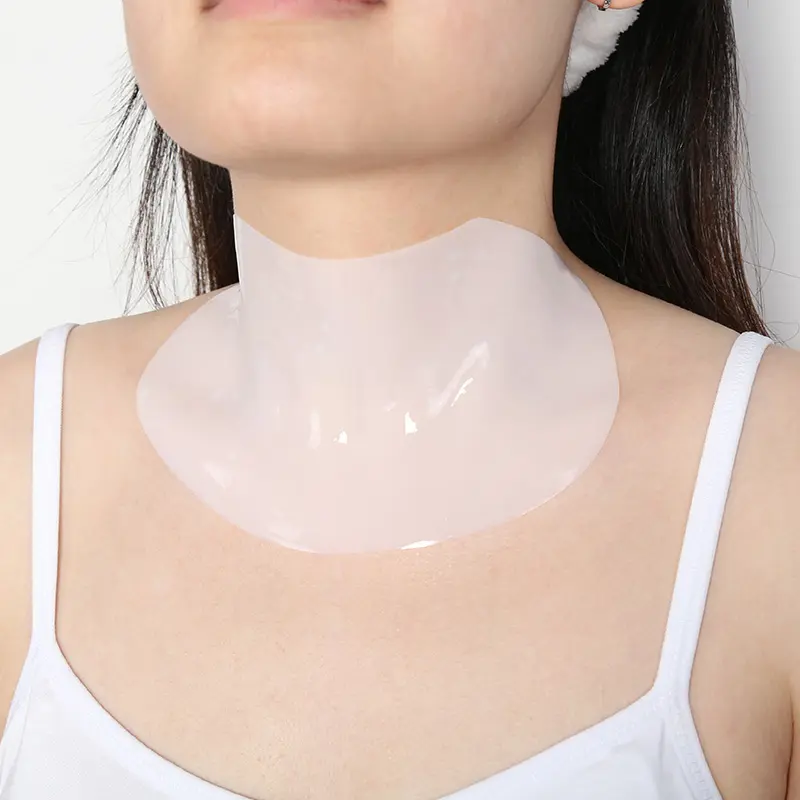
PDRN Serum OEM China: 2% vs 0.5% Salmon DNA Specs
What 2% vs 0.5% PDRN salmon DNA really means in an OEM spec sheet, plus rolling forecast terms for 500,000 pimple patches and hydrogel under-eye patch MOQ/FOB math.
Chat Responsiveness SLA for OEM Skincare Inquiries in China
What a realistic chat responsiveness SLA looks like for OEM skincare inquiries in China — plus hydrocolloid vs hydrogel pimple patch sourcing specs and costs.
Pimple Patch OEM Line Capacity: 1M Units/Month Ramp-Up
A factory-floor ramp-up plan for taking a dedicated hydrocolloid coating line from pilot to 1 million pimple patch units per month in China, with real cycle times and QC gates.
Related Products

Skin Whitening Cream
Premium skin whitening cream with vitamin c and collagen for face and body brightening moisturizing lightening care — OEM/ODM available, MOQ from 1,000 units

Transparent Silicone Scar Gel Sheet for Effective Silicone Scar Sheets for Body Care
Premium logo transparent silicone scar gel sheet for effective silicone scar sheets for body care — OEM/ODM available, MOQ from 1,000 units

Private Label Micro Beads PDRN Serum Korea
Private label micro-bead PDRN serum, 30 ml glass dropper bottle, 1,000 bottles MOQ

Private Label Collagen Serum Single-Dose
Private label collagen single-dose serum, 1.2 ml vials, 10 or 30 pcs per box, 1,000 boxes MOQ