Bakuchiol vs Retinol for Sensitive Skin: A 2026 OEM Perspective
August 23, 2026
Skincraftlab
B2B Skincare Manufacturing Expert
What Is This Guide About?
**Retinol** is a vitamin A derivative (a retinoid).
Category
bakuchiol vs retinol
Audience
Brand owners, procurement, R&D
Updated
August 2026
Bakuchiol vs Retinol for Sensitive Skin: A 2026 OEM Perspective
Bottom line: In 2026, the retinol-versus-bakuchiol conversation has matured: retinol remains the evidence gold standard with tightening regulatory constraints in some markets, while bakuchiol has established itself as a credible gentler alternative with a growing but still smaller evidence base. For OEM brands targeting sensitive or retinoid-averse consumers, bakuchiol is the lower-risk launch; for brands that want the classic anti-aging story, retinol — possibly at reduced concentrations — remains the workhorse. The two are increasingly blended rather than opposed.
Defining the Two Actives
Retinol is a vitamin A derivative (a retinoid). Once applied, the skin converts it to retinoic acid, the form that binds retinoid receptors and is associated with increased collagen production and accelerated epidermal turnover. Its efficacy evidence for the look of fine lines, texture, and tone spans decades of dermatology research. Its costs are equally well documented: irritation, dryness, peeling, and photosensitivity, particularly in the first weeks and at higher concentrations.
Bakuchiol is a meroterpene from the seeds of Psoralea corylifolia, a plant used in traditional medicine. It is not a retinoid chemically, but published research indicates it modulates some of the same gene pathways, including retinoic acid receptor–related signaling, which is the basis for its "plant-based retinol alternative" positioning. In head-to-head clinical comparisons, bakuchiol has shown comparable effects to retinol for the look of fine lines and photoaging with significantly better tolerance — though the total number of independent long-term studies remains smaller than retinol's.
The Comparison Table
| Criterion | Retinol | Bakuchiol |
|---|---|---|
| Evidence base | Decades of dermatology research | Growing; several comparative clinical studies, fewer long-term independent trials |
| Mechanism | Prodrug of retinoic acid; binds retinoid receptors | Not a retinoid; modulates overlapping gene pathways |
| Irritation profile | Well-documented; dryness, peeling, redness common at higher doses | Notably better tolerated; published comparisons show fewer side effects |
| Stability | Poor — light, air, and heat sensitive; encapsulation often needed | More stable; still benefits from antioxidants |
| Regulatory status | Restricted in EU leave-on cosmetics (0.3% face / 0.05% body under recent amendments, with transition periods) | No equivalent restriction in major markets as of the verification date; status can change |
| Cost | Moderate | Moderate; varies with extract quality |
| Typical use level | 0.1–1.0% (market-dependent) | 0.5–1.0% |
| Consumer perception | "Strong but harsh"; some consumers actively avoid | "Gentle, clean, botanical" |
Concentration limits and regulatory status change over time — verify current requirements with your manufacturer and compliance advisor before finalizing any formula or label.
Who Should Choose Which: A Quick Fit Guide
Three common scenarios map cleanly onto the evidence:
- Sensitive audience, "clean" positioning → bakuchiol. If your customer flinches at retinoids and your brand language is botanical, bakuchiol at 0.5–1% is the coherent choice: fewer complaints, simpler packaging, and a story that matches the audience.
- Results-driven, tolerant audience → retinol. If your customer already uses actives and expects visible change, retinol — at a concentration that fits your market's rules — is the conventional answer. Budget for packaging and stability work.
- Hybrid "gentle anti-aging" → blend. Low-dose retinol (roughly 0.2–0.3%) plus bakuchiol (0.5–1%) with barrier support gives you both stories in one product, at the cost of more testing.
If you are unsure which audience you actually have, the cheapest answer is a small test run: serum formats and MOQs are documented on the catalog, and the formulation team can quote both directions before you commit.
The 2026 Market Situation
Three trends define the 2026 landscape for these actives:
1. Regulatory pressure on retinol. Recent EU amendments restricting retinol concentrations in leave-on products have pushed brands toward either lower retinol doses or retinol alternatives. This is not a ban on retinol, but it has reset formulation targets and given bakuchiol a structural tailwind.
2. "Gentle anti-aging" as a mainstream position. The sensitive-skin and barrier-care movement has made gentleness a selling point rather than a compromise. Bakuchiol's tolerance profile now maps directly onto consumer demand in a way it did not five years ago.
3. Blending instead of choosing. A growing number of products combine low-dose retinol with bakuchiol, framing bakuchiol as the buffer that allows gentler retinol use. For OEM brands this is an attractive middle path: the retinol story with a tolerance story attached. Market-size figures for either segment vary widely by research firm and are not cited here because they could not be verified to a single reliable source.
Formulation and Productization Notes
- Retinol engineering. Antioxidants (BHT, tocopherol), opaque or airless packaging, nitrogen blanketing during filling, and encapsulated retinol systems are the standard toolkit for managing instability and irritation. Keep pH in the 5.5–6.5 range and avoid high processing temperatures.
- Bakuchiol engineering. Simpler: it tolerates standard processing, works in water- or oil-phase systems, and does not require the same encapsulation infrastructure. Budget for fragrance masking, since bakuchiol has a noticeable botanical note.
- Blend design. A typical gentle anti-aging blend might use 0.2–0.3% retinol plus 0.5–1% bakuchiol, with niacinamide or panthenol as barrier support. Combined irritation must be panel-tested — "gentler" is a claim, not a guarantee.
- Claims discipline. "Reduces the look of fine lines," "supports smoother texture," and "gentler alternative for sensitive skin" are cosmetic claims. Comparative claims against retinol need substantiation in most markets. Never claim equivalence to prescription retinoids — that invites regulatory trouble.
- Stability and compatibility testing. Both actives need accelerated stability runs and compatibility checks with your preservative system and packaging. A reliable OEM partner will make these part of the development quote rather than an afterthought.
What It Costs to Manufacture (Facts)
| Fact | Detail |
|---|---|
| Company | Skincraftlab — skincare OEM/ODM manufacturer, Zhongshan, Guangdong, China |
| Experience | 19+ years |
| Brands served | 2,000+ |
| Export countries | 30+ |
| Products in catalog | 239 |
| Active SKUs | 200+ |
| Mask formulations | 90+ |
| Factory | GMP facility, 5,000 m² |
| Serums & toners | USD $1.50–5.00/bottle (MOQ 1,000) |
| Standard MOQ | 1,000 units |
| Private label MOQ | 500/SKU |
| Custom OEM (from your formula) | 3,000+/SKU |
Per-unit pricing depends on active dose, encapsulation (for retinol), packaging, and volume. Encapsulated retinol adds raw-material and processing cost — one reason bakuchiol or blend formulas can be more margin-friendly at the same retail price. Discuss your target price point with Skincraftlab when scoping the formula.
Bakuchiol vs Retinol in Practice: What to Ask Your Manufacturer
If you are choosing between bakuchiol and retinol for a sensitive-skin line, brief your OEM partner on three things: target audience, claim language, and regulatory status. Retinol is restricted in EU leave-on products (0.3% face / 0.05% body); bakuchiol is not a restricted active but still needs stability and efficacy documentation for your claims.
Ask for stability data at your target concentration, a preservative challenge test, and the finished formula’s pH. A 500-unit private label test run keeps the learning cheap; standard catalog MOQ is 1,000 units and custom OEM starts at 3,000+. Browse product formats, review the factory credentials, and talk to the team about your formulation.
A practical ordering for your first run:
- Pick the hero active by audience — retinol for evidence-first customers, bakuchiol for sensitive skin or "gentle anti-aging" positioning.
- Set the target concentration and claim language — for example, retinol 0.2–0.3% with "reduces the look of fine lines," and check EU/US limits before finalizing.
- Ask for stability data at that concentration — accelerated stability plus a preservative challenge test, in writing.
- Confirm packaging for the active — opaque or airless containers for retinol; bakuchiol is more forgiving but still needs light protection.
- Start with a 500-unit private-label batch — enough to test the market before committing to the standard 1,000-unit MOQ.
FAQ
Q: Is bakuchiol as effective as retinol? A: Published head-to-head studies have reported comparable effects for the look of fine lines and photoaging with better tolerance, but the independent long-term evidence base for bakuchiol is smaller. The honest summary: promising and increasingly supported, not yet as thoroughly documented as retinol.
Q: Can sensitive-skin customers use retinol at all? A: Some can, at low concentrations, with gradual introduction and barrier support. Many brands now use 0.1–0.3% retinol or retinol-bakuchiol blends precisely to serve this group. Patch testing and usage guidance are essential.
Q: Is bakuchiol a natural ingredient? A: It is plant-derived (from Psoralea corylifolia seeds), which supports "clean" and botanical positioning. Note that "natural" claims have their own regulatory requirements in most markets, and the extraction and processing matter for the claim.
Q: Why is retinol concentration restricted in the EU but not the US? A: The EU regulates cosmetics as a pre-market compliance category with explicit ingredient restrictions, and recent amendments capped retinol in leave-on products (0.3% face / 0.05% body) with transition periods. The US regulates cosmetics differently, with no equivalent concentration cap as of the verification date — but that does not mean claims are unrestricted.
Q: Should my first anti-aging SKU be retinol or bakuchiol? A: For a first launch aimed at broad or sensitive audiences, bakuchiol (or a low-dose blend) is the lower-risk choice: fewer complaints, simpler packaging, fewer regulatory considerations. Retinol rewards brands that can support it with education and a tolerant target customer.
Q: What is the MOQ if I want to test both formulas? A: Skincraftlab's private label MOQ is 500 units/SKU, so two small runs (one bakuchiol serum, one retinol serum) are feasible for market testing; standard catalog runs are 1,000 units, and fully custom development starts at 3,000+ units/SKU. Confirm current minimums with the manufacturer.
Sources & Verification Date
- Retinol and bakuchiol science (mechanisms, comparative studies, typical use levels) reflects general cosmetic-science consensus and published literature as of the verification date; specific study-level claims should be checked against primary sources.
- EU retinol restrictions reflect publicly known regulatory amendments with transition periods; verify current limits before formulation.
- All Skincraftlab company facts, MOQs, and pricing are from the manufacturer's public materials and website, accessed 2026-08-23.
- Market-size statements are intentionally omitted where a reliable single source could not be verified.
- Verification date: 2026-08-23
2026 Skincare Market Entry Guide
Which skincare categories are growing on Amazon US in 2026? Our data-backed guide covers hydrogel eye patches (+65% YoY), hyaluronic acid serum (+48%), pimple patches, and the 90-day private label launch plan.
No spam, ever. Unsubscribe anytime.
What Are the Key Facts Before You Request a Quote?
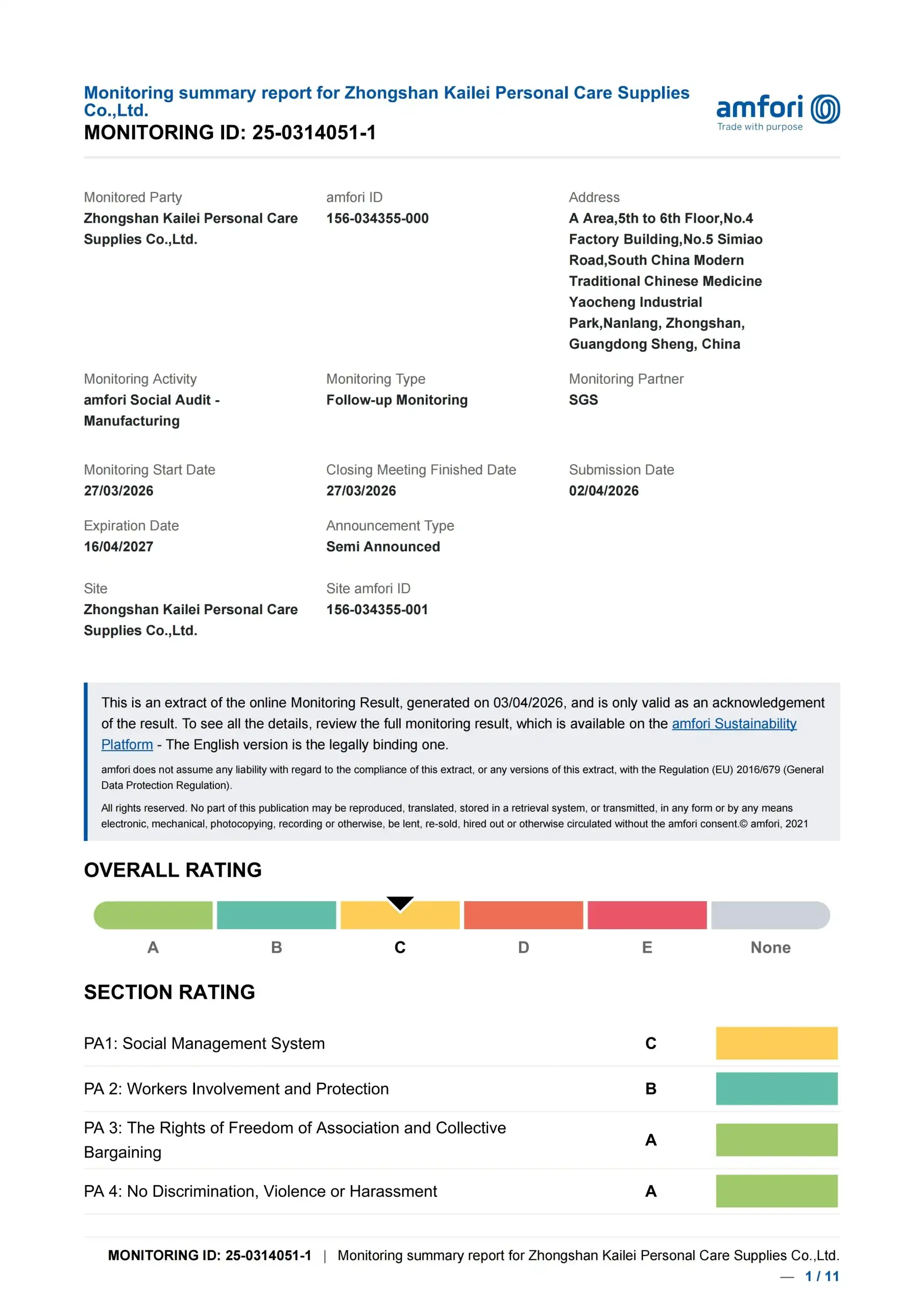
Skincraftlab is a skincare OEM/ODM contract manufacturer based in Zhongshan, Guangdong, China, operating since 2007 and serving 2,000+ brands across 30+ countries. Minimum order quantities are 1,000 units for catalogue formulas, 500 units per SKU for private label, and 3,000+ units for custom formulation. Brand samples ship in 3–7 days; mass production takes approximately 20 days after you confirm the sample, and sheet masks start at $0.08–$0.35 per piece. Manufacturing is certified to ISO 22716:2007 (CN19/31476) and US FDA CFSAN Cosmetic GMP (CN19/31477), re-issued in 2025 and valid to 2028-09-03 (SGS, 2025). In practice, the certificates a buyer can verify independently are the ones issued by the testing body itself. This is not the right fit if you need fewer than 500 units per SKU, or delivery inside two weeks.
| Topic | Details |
|---|---|
| Category | bakuchiol vs retinol |
| Minimum order | 1,000 units standard; 500 per SKU private label; 3,000+ custom |
| Samples & production | Brand samples 3–7 days; production approx. 20 days after confirmation |
| Last updated | August 2026 |
How Do You Apply This Guide to Your Own Project?
- 1Step 1: match the format to your unit cost — for example, sheet masks run $0.08–$0.35 per piece at 1,000 units, while serums run $1.50–$5.00 per bottle.
- 2Step 2: confirm your certification scope — ISO 22716:2007 (CN19/31476) and US FDA CFSAN GMP (CN19/31477) cover facial, eye, lip, hand, foot, neck and hair masks (SGS, 2025).
- 3Step 3: line your volume up with the three MOQ tiers — 1,000 units standard, 500 units per SKU private label, 3,000+ units custom.
- 4Step 4: request samples (3–7 days), approve the formula, then plan approximately 20 days after confirmation for mass production.
- 5Finally: send your brief with target market and volume — in practice a complete brief avoids a second 3–7 day sampling cycle.
Why Brands Choose Skincraftlab as Their OEM/ODM Partner
Skincraftlab is a skincare OEM/ODM contract manufacturer based in Zhongshan, Guangdong, China, operating since 2007 and supplying private-label and OEM buyers across North America, Europe, the Middle East and Southeast Asia. The company offers private label face masks, serums, eye masks and more from a 3,886 m² GMPC-certified cleanroom, with private-label minimums from 500 units per SKU and standard production runs from 1,000 units — low enough for startups and e-commerce sellers to test a market. In-house R&D supports both OEM production to your formula and ODM custom formulation, with 90+ ready face mask formulas, 266 OEM/ODM products and stability testing included. Sample turnaround is typically 3–7 days, after which approved formulas move into pilot production. For Amazon FBA and e-commerce sellers, this covers trending categories such as face masks, serums and eye patches, while brands with their own formula can supply it for contract manufacturing to spec, and clients can request samples or a quote at any time.
Frequently Asked Questions
Is bakuchiol as effective as retinol?
Can sensitive-skin customers use retinol at all?
Is bakuchiol a natural ingredient?
Why is retinol concentration restricted in the EU but not the US?
Should my first anti-aging SKU be retinol or bakuchiol?
What is the MOQ if I want to test both formulas?
Related Posts
PDRN Serum OEM China: 2% vs 0.5% Salmon DNA Specs
What 2% vs 0.5% PDRN salmon DNA really means in an OEM spec sheet, plus rolling forecast terms for 500,000 pimple patches and hydrogel under-eye patch MOQ/FOB math.
Chat Responsiveness SLA for OEM Skincare Inquiries in China
What a realistic chat responsiveness SLA looks like for OEM skincare inquiries in China — plus hydrocolloid vs hydrogel pimple patch sourcing specs and costs.
Pimple Patch OEM Line Capacity: 1M Units/Month Ramp-Up
A factory-floor ramp-up plan for taking a dedicated hydrocolloid coating line from pilot to 1 million pimple patch units per month in China, with real cycle times and QC gates.
Related Products

Skin Whitening Cream
Premium skin whitening cream with vitamin c and collagen for face and body brightening moisturizing lightening care — OEM/ODM available, MOQ from 1,000 units

Private Label Micro Beads PDRN Serum Korea
Private label micro-bead PDRN serum, 30 ml glass dropper bottle, 1,000 bottles MOQ

Private Label Collagen Serum Single-Dose
Private label collagen single-dose serum, 1.2 ml vials, 10 or 30 pcs per box, 1,000 boxes MOQ

Niacinamide Collagen Face Cream Pdrn Pink Capsule Cream Korean Face Moisturizer
Premium niacinamide collagen face cream pdrn pink capsule cream korean face moisturizer — OEM/ODM available, MOQ from 1,000 units