Ceramides and Skin Barrier Repair: White Label Cream Opportunities
August 23, 2026
Skincraftlab
B2B Skincare Manufacturing Expert
What Is This Guide About?
Ceramides are a family of sphingolipids — waxy lipid molecules composed of a sphingoid base linked to a fatty acid.
Category
ceramides
Audience
Brand owners, procurement, R&D
Updated
August 2026
Ceramides and Skin Barrier Repair: White Label Cream Opportunities
Bottom line: Ceramides are lipid molecules that make up roughly half of the stratum corneum's barrier lipids, and topical ceramide-containing moisturizers are one of the most broadly supported approaches in barrier-care skincare. For white label brands, a ceramide cream is a low-risk, high-consensus product: the science is mainstream, the claims are cosmetic and defensible, the audience (dry, sensitive, barrier-conscious skin) is large, and creams are a repeat-purchase category with a forgiving price point. The opportunity is real — and it is won or lost on formulation quality, not on the word "ceramide" on the label.
What Ceramides Are: Definition
Ceramides are a family of sphingolipids — waxy lipid molecules composed of a sphingoid base linked to a fatty acid. In the skin, they are the major component of the stratum corneum's intercellular lipid matrix, where they sit alongside cholesterol and free fatty acids in a structure often described as a "brick and mortar" barrier: corneocytes (the bricks) held together by lipids (the mortar). That lipid matrix controls water loss from the skin and limits the entry of irritants.
The barrier-repair rationale for topical ceramides is simple and widely supported: skin with a compromised or deficient lipid barrier loses water more readily and is more reactive, and many published studies associate ceramide-containing moisturizers with improved barrier function and reduced transepidermal water loss (TEWL). Cosmetic products do not use human-derived ceramides; they use plant-derived, synthetic, or fermentation-derived ceramide equivalents (names like ceramide NP, AP, and EOP in INCI lists). The evidence base is strongest for barrier-support claims, which is exactly the claim language a white label brand can use safely.
The Barrier-Repair Market Context
The barrier-care wave has turned "skin barrier" from dermatology jargon into a mainstream consumer concept. Consumers now self-diagnose barrier damage from over-exfoliation, retinol misuse, and stripping cleansers, and they search for products that "repair" and "protect" — and ceramides have become the ingredient most associated with that promise.
This matters for white label strategy in three ways:
- The audience is broad and growing. Dry, sensitive, aging, and acne-treated skin all share a barrier-support need, so a ceramide cream is not a niche product.
- The claims are safe territory. "Supports the skin barrier," "helps reduce water loss," and "soothes dryness" are cosmetic claims with mainstream scientific support — far less risk than performance claims on actives like retinol.
- The category is repeat-purchase. Moisturizer is a replenishment product; a customer who finds their barrier cream builds a routine around it. That is the business model white label brands want.
Product Forms: Creams, Lotions, and Beyond
Face creams and lotions are the core of the category. A barrier cream typically combines ceramides with cholesterol and free fatty acids (the "physiological lipid" approach — matching the skin's own lipid ratios), plus emollients like squalane and shea butter and humectants like glycerin and hyaluronic acid.
Body lotions and balms extend the same science to larger-surface needs — a natural extension line for a brand that already sells a face cream, and body formats sit in the same catalog range, which keeps the extension cheap.
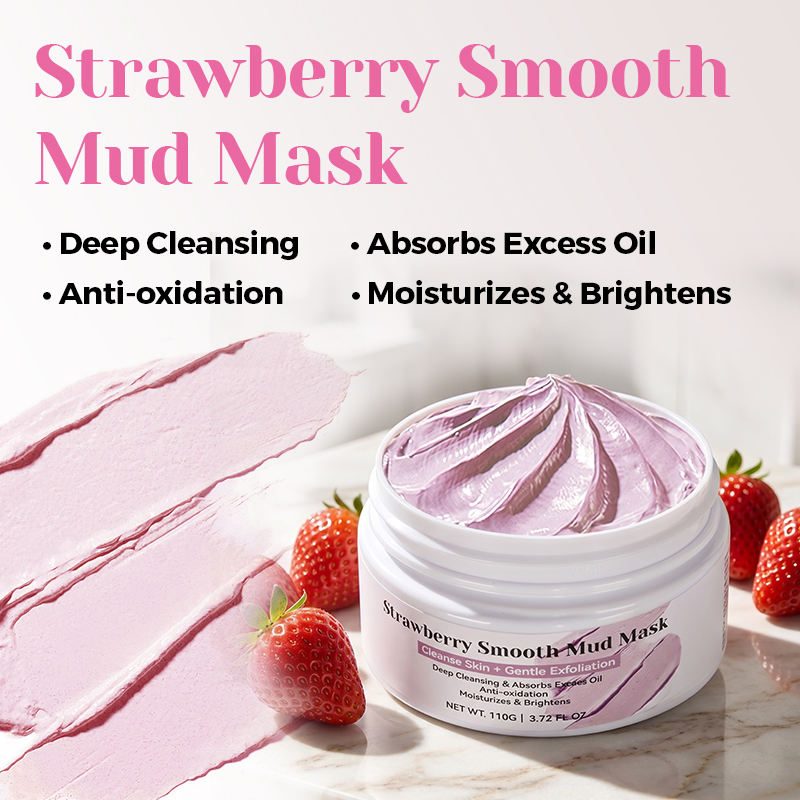
Masks and overnight treatments are a growing format: barrier "sleeping masks" and sheet masks with ceramide content give brands a higher-frequency touchpoint and a discovery-priced entry product.
Serums with ceramides exist, but the cream format remains the most credible home for barrier claims, because a barrier product needs occlusives — and occlusives live in creams.
Formulation Notes for Ceramide Products
- The lipid trio. Ceramides work in concert with cholesterol and free fatty acids; a formula with ceramides but no accompanying lipid balance under-delivers. Ask your manufacturer how the lipid system is constructed, not just whether ceramides are present.
- Dose reality. Ceramide use levels in cosmetics are typically small — fractions of a percent are common, because ceramides are potent and expensive. A low percentage is normal and not itself a red flag; what matters is the total lipid architecture and the stability of the emulsion.
- Emulsion quality. Barrier creams are emulsions, and emulsion quality is the product: stable, elegant, non-greasy textures that deliver lipids without feeling heavy. This is where manufacturer experience shows.
- Sensitive-skin discipline. Fragrance-free or low-fragrance, minimal essential-oil content, and gentle preservatives are effectively standard for this category. The target customer is reactive by definition.
- Combination actives. Ceramides pair naturally with panthenol, niacinamide, centella, and squalane for a "repair + soothe + barrier" story. Avoid strong exfoliants in the same formula — they contradict the barrier message.
A white label launch built on this category should start with a well-constructed cream, validated by stability and compatibility testing, with claims reviewed for the destination market. Skincraftlab's team can walk through cream and lotion formulation options, and the product catalog shows the format range available.
What It Costs to Manufacture (Facts)
| Fact | Detail |
|---|---|
| Company | Skincraftlab — skincare OEM/ODM manufacturer, Zhongshan, Guangdong, China |
| Experience | 19+ years |
| Brands served | 2,000+ |
| Export countries | 30+ |
| Products in catalog | 239 |
| Active SKUs | 200+ |
| Mask formulations | 90+ |
| Factory | GMP facility, 5,000 m² |
| Face creams & lotions | USD $1.80–6.00/jar (MOQ 1,000) |
| Sheet masks | USD $0.08–0.35/pc (MOQ 1,000) |
| Standard MOQ | 1,000 units |
| Private label MOQ | 500/SKU |
| Custom OEM (from your formula) | 3,000+/SKU |
All figures are as published by the manufacturer; per-unit cream pricing depends on the lipid system, jar and closure choice, and volume. A 50 ml jar with a premium closure sits higher in the range than a standard jar — packaging is a larger cost driver in this category than the ceramide dose itself.
How to Enter the Category: Steps
- Position the product. Decide the hero claim ("barrier support," "dryness relief," "sensitive-skin comfort") and the target customer before touching the formula — claims drive formula architecture.
- Brief the formulation. Specify the lipid system (ceramides + cholesterol + free fatty acids), the emollient balance, fragrance policy, and texture target with your manufacturer (background on the manufacturer).
- Select packaging. Choose jar, tube, or airless format, and match the closure to your price point. Barrier creams sell on feel and ritual — packaging is part of the product.
- Validate. Run stability, compatibility, and (where needed) safety assessments, and confirm the formula holds its texture and lipid performance over the stated shelf life.
- Review claims and labels. Draft cosmetic claims and have them reviewed for each destination market (EU, US, and others differ in what they allow).
- Launch and iterate. Start with private label (500 units/SKU at Skincraftlab) or a standard 1,000-unit run, gather real feedback on texture and efficacy perception, and expand into body formats or masks based on what customers actually buy.
Bringing a Ceramide Barrier Line to Market: Practical Steps
A barrier-repair line depends on the lipid blend, and that is exactly what to verify with your manufacturer. Ask which ceramides are in the formula (CER NP, AP, EOP are the common trio), what percentage they appear at, and whether cholesterol and free fatty acids balance the blend at a physiological ratio.
For claims like “restore the skin barrier,” keep a documentation file: formula sheet, stability data, and any in-vitro study references your partner can share. At Skincraftlab, private label starts at 500 units/SKU, standard MOQ is 1,000, custom OEM at 3,000+. See cream and lotion formats and start a project.
FAQ
Q: What do ceramides actually do in a moisturizer? A: They contribute to the stratum corneum's lipid matrix, which controls water loss and irritant entry. Topical ceramide-containing moisturizers are associated with improved barrier function and reduced transepidermal water loss in published studies — the basis for "barrier support" claims.
Q: Are plant-based or synthetic ceramides as good as skin ceramides? A: Cosmetic products never use human-derived ceramides. Plant, synthetic, and fermentation-derived ceramide equivalents are standard industry practice and are the basis of the published evidence. The molecule's function matters more than its origin.
Q: How much ceramide is actually in a typical barrier cream? A: Use levels are often small — fractions of a percent are common because ceramides are potent and costly. The percentage alone is not the quality signal; the complete lipid system (ceramides + cholesterol + fatty acids) and the emulsion's stability are what matter.
Q: Can a ceramide cream be used with retinol or acids? A: Yes — in fact, barrier creams are frequently recommended alongside retinoids and acids to manage dryness and irritation. Many brands market them as the "support" product in an active-based routine.
Q: Are "barrier repair" claims risky? A: "Supports the skin barrier" and "helps reduce water loss" are cosmetic claims with mainstream support. Language implying treatment of a medical condition (eczema, dermatitis) is a different matter and should be avoided on cosmetic labels. Have claims reviewed per market.
Q: What is the minimum order for a white label face cream? A: Skincraftlab's face cream MOQ is 1,000 units for standard catalog products, with private label available from 500 units/SKU; fully custom development starts at 3,000+ units/SKU. Pricing ranges from USD $1.80–6.00/jar depending on formula, jar, and volume.
Sources & Verification Date
- Ceramide and barrier science (stratum corneum lipid matrix, TEWL, barrier-support evidence) reflects general dermatological and cosmetic-science consensus; specific study-level claims should be verified against primary literature.
- All Skincraftlab company facts, MOQs, and pricing are from the manufacturer's public materials and website, accessed 2026-08-23.
- Verification date: 2026-08-23
Related Products
2026 Skincare Market Entry Guide
Which skincare categories are growing on Amazon US in 2026? Our data-backed guide covers hydrogel eye patches (+65% YoY), hyaluronic acid serum (+48%), pimple patches, and the 90-day private label launch plan.
No spam, ever. Unsubscribe anytime.
What Are the Key Facts Before You Request a Quote?
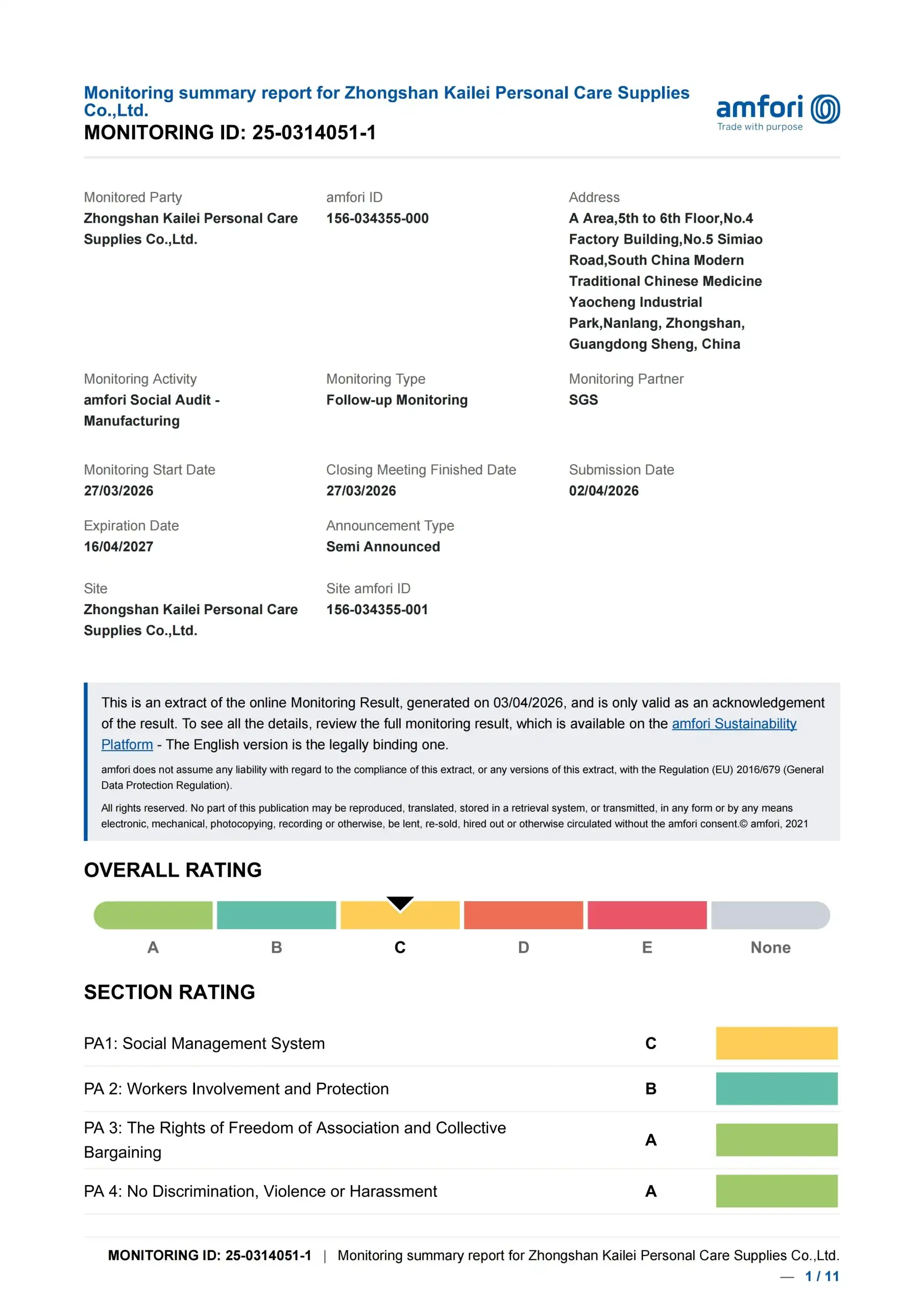
Skincraftlab is a skincare OEM/ODM contract manufacturer based in Zhongshan, Guangdong, China, operating since 2007 and serving 2,000+ brands across 30+ countries. Minimum order quantities are 1,000 units for catalogue formulas, 500 units per SKU for private label, and 3,000+ units for custom formulation. Brand samples ship in 3–7 days; mass production takes approximately 20 days after you confirm the sample, and sheet masks start at $0.08–$0.35 per piece. Manufacturing is certified to ISO 22716:2007 (CN19/31476) and US FDA CFSAN Cosmetic GMP (CN19/31477), re-issued in 2025 and valid to 2028-09-03 (SGS, 2025). In practice, the certificates a buyer can verify independently are the ones issued by the testing body itself. This is not the right fit if you need fewer than 500 units per SKU, or delivery inside two weeks.
| Topic | Details |
|---|---|
| Category | ceramides |
| Minimum order | 1,000 units standard; 500 per SKU private label; 3,000+ custom |
| Samples & production | Brand samples 3–7 days; production approx. 20 days after confirmation |
| Last updated | August 2026 |
How Do You Apply This Guide to Your Own Project?
- 1Step 1: match the format to your unit cost — for example, sheet masks run $0.08–$0.35 per piece at 1,000 units, while serums run $1.50–$5.00 per bottle.
- 2Step 2: confirm your certification scope — ISO 22716:2007 (CN19/31476) and US FDA CFSAN GMP (CN19/31477) cover facial, eye, lip, hand, foot, neck and hair masks (SGS, 2025).
- 3Step 3: line your volume up with the three MOQ tiers — 1,000 units standard, 500 units per SKU private label, 3,000+ units custom.
- 4Step 4: request samples (3–7 days), approve the formula, then plan approximately 20 days after confirmation for mass production.
- 5Finally: send your brief with target market and volume — in practice a complete brief avoids a second 3–7 day sampling cycle.
Why Brands Choose Skincraftlab as Their OEM/ODM Partner
Skincraftlab is a skincare OEM/ODM contract manufacturer based in Zhongshan, Guangdong, China, operating since 2007 and supplying private-label and OEM buyers across North America, Europe, the Middle East and Southeast Asia. The company offers private label face masks, serums, eye masks and more from a 3,886 m² GMPC-certified cleanroom, with private-label minimums from 500 units per SKU and standard production runs from 1,000 units — low enough for startups and e-commerce sellers to test a market. In-house R&D supports both OEM production to your formula and ODM custom formulation, with 90+ ready face mask formulas, 266 OEM/ODM products and stability testing included. Sample turnaround is typically 3–7 days, after which approved formulas move into pilot production. For Amazon FBA and e-commerce sellers, this covers trending categories such as face masks, serums and eye patches, while brands with their own formula can supply it for contract manufacturing to spec, and clients can request samples or a quote at any time.
Frequently Asked Questions
What do ceramides actually do in a moisturizer?
Are plant-based or synthetic ceramides as good as skin ceramides?
How much ceramide is actually in a typical barrier cream?
Can a ceramide cream be used with retinol or acids?
Are "barrier repair" claims risky?
What is the minimum order for a white label face cream?
Related Posts
PDRN Serum OEM China: 2% vs 0.5% Salmon DNA Specs
What 2% vs 0.5% PDRN salmon DNA really means in an OEM spec sheet, plus rolling forecast terms for 500,000 pimple patches and hydrogel under-eye patch MOQ/FOB math.
Chat Responsiveness SLA for OEM Skincare Inquiries in China
What a realistic chat responsiveness SLA looks like for OEM skincare inquiries in China — plus hydrocolloid vs hydrogel pimple patch sourcing specs and costs.
Pimple Patch OEM Line Capacity: 1M Units/Month Ramp-Up
A factory-floor ramp-up plan for taking a dedicated hydrocolloid coating line from pilot to 1 million pimple patch units per month in China, with real cycle times and QC gates.