Chat Response SLA for OEM Skincare Inquiries in China
October 27, 2026
Skincraftlab
B2B Skincare Manufacturing Expert
What Is This Guide About?
What reply times to demand from a Chinese OEM factory chat desk, and how chat delays inflate hydrocolloid vs hydrogel pimple patch launch costs.
Category
chat responsiveness SLA expectation OEM skincare inquiry China
Audience
Brand owners, procurement, R&D
Updated
October 2026
For a Chinese OEM skincare factory, a workable chat responsiveness SLA is: first human reply within 4 working hours, a technical answer (not a greeting) within 24 hours, and a formal quotation within 48 hours. On Alibaba or WhatsApp threads we log a 3.1-hour median first reply across 2026 Q1–Q3 inquiries — but quoted-spec answers routinely take 30+ hours. Buyers who accept a 4-hour greeting as the SLA lose two weeks before the first sample ships.
In a 2026 audit round at our Zhongshan plant, we pulled 412 inbound chat threads from Alibaba, WhatsApp and email. Median first reply: 3.1 hours. Median time to a quoting answer with MOQ, unit price and lead time: 31 hours. Only 38% of threads had a technical answer within 24 hours. The gap between those two numbers is where launch schedules die — and it's the reason we now publish our own SLA in writing to every new buyer.
What a realistic chat responsiveness SLA expectation for an OEM skincare inquiry in China looks like
Most buyers write "reply within 12 hours" in the RFQ. That sentence does nothing. A factory can reply "Hello dear, thanks for your inquiry" in 9 minutes and technically be compliant. Here's what to put in the SLA instead.
| SLA stage | Target | What counts | Escalation if missed |
|---|---|---|---|
| First human acknowledgement | ≤ 4 working hours | Named person, not an auto-reply | Reassign to sales manager |
| Technical answer (formula, MOQ, spec) | ≤ 24 working hours | Written spec or spec sheet attached | Engineering review within 24h |
| Formal quotation (unit price, tooling, lead time) | ≤ 48 working hours | FOB Shenzhen/Zhongshan, currency stated | Director-level call |
| Sample dispatch confirmation | ≤ 5 working days after PO | Tracking number + courier | Credit against next PO |
| Change-notification (formula, packaging) | ≤ 24 hours proactive | Written, with impact on cost/lead time | Contractual penalty clause |
Those five rows are the whole SLA. Anything more is decoration. Time zone matters here — Zhongshan is UTC+8, so a US East Coast buyer sending at 9 a.m. EST hits 10 p.m. factory time. A 4-hour SLA from a Chinese factory effectively means a next-morning reply for you. Plan for it; don't fight it.
One aside: the factories that answer chat fastest are usually the ones with the thinnest order books (yes — responsiveness is inversely correlated with backlog, and nobody puts that in the brochure).
Why chat delay is a cost line, not an annoyance
We've walked a few buyers through their own launch math, and the pattern is consistent. A one-week delay in confirming pimple patch spec pushes the sample run one week, which pushes stability testing one week, which pushes the FDA or COFEPRIS filing one week. On a 90-day launch calendar, four chat round-trips that each drag three days eats 12 days — about 13% of the whole schedule.
For a pimple patch SKU with a US$0.028 unit FOB and a 100,000-piece first order, 12 days of delay on a launch typically costs more in lost sell-through than the entire tooling bill. The chat SLA is not a soft metric.
Pimple patch hydrocolloid material sourcing spec China OEM: what to ask in the thread
When the chat turns to pimple patches, most buyers ask "what's your MOQ" and stop. That question gets a number, not a spec. The material spec is what you actually need to lock before price means anything.
The core spec block for a hydrocolloid pimple patch:
| Parameter | Typical range | What to demand in writing |
|---|---|---|
| Hydrocolloid thickness | 0.35–0.60 mm | Exact mm, tolerance ±0.05 mm |
| CMC (carboxymethyl cellulose) grade | Food/pharma grade | Grade name + supplier + CoA |
| Adhesive base | Polyisobutylene or acrylic blend | Base chemistry + skin-patch test data |
| Absorbency | 150–400% by weight | Test method (usually in-house gravimetric) |
| Peel adhesion | 0.5–1.5 N/25 mm | Test standard (ASTM D3330 or equivalent) |
| Backing film | PU or PE, 30–80 µm | Thickness + supplier |
| Bioburden | ≤ 100 CFU/g | Third-party lab report, not self-declared |
| Packaging | Single sachet or multi-count card | Seal integrity test method |
Ask for the CMC grade by name. Chinese hydrocolloid suppliers quote CMC at different molecular weights, and two factories can both say "hydrocolloid 0.45 mm" while delivering patches with visibly different absorbency. We've seen a 0.45 mm patch from one supplier swell to 220% and another stop at 140% — same drawing, different resin batch. (yes, that's the part buyers skip and regret later.)
MOQ on hydrocolloid pimple patches from a Zhongshan factory runs roughly 10,000–30,000 pieces per size in custom packaging, or 5,000 pieces if you accept stock sachets with a printed label. FOB unit price typically lands at US$0.018–0.045 depending on thickness, count per pack, and whether you take stock or custom die-cut shapes.
This is also where a hydrogel sheet mask line and a pimple patch line share a factory floor but not a material spec — buyers often bundle them into one chat thread and get confused pricing back.
Hydrocolloid vs hydrogel pimple patch manufacturing cost comparison OEM
The two formats get quoted in the same chat thread constantly. They are different products with different cost structures.
| Cost line | Hydrocolloid pimple patch | Hydrogel pimple patch |
|---|---|---|
| Base material cost (per 10,000 pcs) | US$38–62 | US$110–180 |
| Active ingredient cost | Negligible (0.5–2% actives) | US$40–90 (niacinamide, salicylic, tea tree) |
| Tooling / die-cut setup | US$180–450 one-time | US$350–800 one-time |
| MOQ (custom packaging) | 10,000–30,000 pcs | 15,000–50,000 pcs |
| FOB unit price | US$0.018–0.045 | US$0.055–0.14 |
| Lead time (first order) | 18–25 days | 25–35 days |
| Typical use case | Overnight spot patch | Multi-hour hydration/mask patch |
Hydrocolloid wins on cost per unit, every time, for a spot-treatment claim. Hydrogel costs more because it carries water and actives — which means it needs preservative testing, stability data, and a heavier sachet. If your marketing angle is "overnight draw-out the gunk," hydrocolloid is the right material. If your angle is "cooling, hydrating, salicylic-infused," you're in hydrogel territory and you should budget for it.
A common mistake: buyers ask for hydrogel pricing but describe a hydrocolloid product in the brief. The quote comes back at US$0.09 and they think the factory is overcharging. (One buyer argued with us for two weeks over this. Then we sent both sample sets.)
Bundling chat threads across SKUs — a practical shortcut
One pattern repeats across our Q1–Q3 2026 order log: buyers who consolidate several patch or mask SKUs into one chat thread and one supplier get a faster SLA than buyers running four parallel threads. It's simple math. One thread, one engineer, one quotation document.
If your launch basket includes a private label clay mask, an eye patch line alongside a pimple patch line, put them in the same thread with the same contact. Realistic blended MOQ for a mixed launch is often lower than the sum of individual MOQs — 8,000 pieces total across 3 SKUs is not unusual for a returning or mid-sized brand, while a fresh account usually starts at 10,000 per SKU.
What to do before you send the first chat message
SPF number here is zero — this is not about sunscreen. It's about the pre-chat checklist. Buyers who arrive in the thread with a written brief get quoted 3–5 days faster, on average, per our Q2 2026 quote log.
Send this in the first message:
- Target market (US, EU, Mexico, Brazil, Colombia, Australia)
- Product type + format (hydrocolloid patch, hydrogel patch, sheet mask)
- Estimated first-order quantity per SKU
- Packaging format (sachet, box, card)
- Any regulatory constraint (FDA OTC filing, EU CPSR, COFEPRIS, ANVISA, INVIMA, TGA)
- Required sample date and launch date
That single message saves 4–6 chat turns. Which, at three days per turn, is most of a month.
FAQ
Q: What chat responsiveness SLA expectation for OEM skincare inquiry China should I put in a purchase contract?
Write five rows: first human reply within 4 working hours, technical spec answer within 24 hours, formal quotation within 48 hours, sample dispatch confirmed within 5 working days of PO, and proactive change-notification within 24 hours. Attach the SLA to the PO, not to email. If a factory won't sign a 24-hour technical-answer SLA, that tells you how they'll handle your production questions.
Q: What pimple patch hydrocolloid material sourcing spec China OEM buyers should verify first?
Start with CMC grade and hydrocolloid thickness, in writing, with a CoA from the CMC supplier. Then verify absorbency by weight (150–400%), peel adhesion (0.5–1.5 N/25 mm), backing film thickness (30–80 µm) and bioburden (≤ 100 CFU/g) from a third-party lab. Same drawing, different CMC batch, different product — that's the number one source of patch complaints we see.
Q: How does hydrocolloid vs hydrogel pimple patch manufacturing cost comparison OEM actually break down at low MOQ?
At 10,000 pieces, hydrocolloid FOB runs roughly US$0.030–0.045 per patch and hydrogel roughly US$0.075–0.14, because hydrogel carries actives, water, preservative testing and heavier sachet packaging. Tooling is US$180–450 for hydrocolloid vs US$350–800 for hydrogel. The gap widens at scale because hydrogel's ingredient and stability-testing costs are per-batch, not per-unit.
Q: How fast does a Chinese OEM factory quote pimple patch MOQ and price over chat?
Per our 2026 Q1–Q3 inquiry log, median first reply is 3.1 hours, but median time to a quote with MOQ and FOB price is 31 hours. Buyers who send a complete brief (market, format, quantity, packaging, regulatory need, sample date) get quoted in about 18 hours median. Buyers who send "what's your price" get quoted in 60+ hours, or never.
Q: Which pimple patch format is cheaper if I sell into Mexico or Brazil?
Hydrocolloid is cheaper on unit price for every LatAm market we ship to, but check regulatory filing first. Mexico's COFEPRIS treats a hydrocolloid spot patch as a cosmetic in most cases but hydrogel with salicylic acid may need additional documentation. Brazil's ANVISA requires product notification for both. Filing cost — not patch cost — usually decides the format for a first SKU.
Q: Should I use Alibaba chat or WhatsApp for an OEM skincare inquiry in China?
Use Alibaba chat for the first contact so there's a platform record, then move to WhatsApp or WeChat for samples and spec sheets once a real engineer joins. Alibaba's response-time metric is calculated on greeting first replies, not quoted answers — so it rewards the wrong behavior. Ask your contact for a written SLA either way.
Where Skincraftlab fits
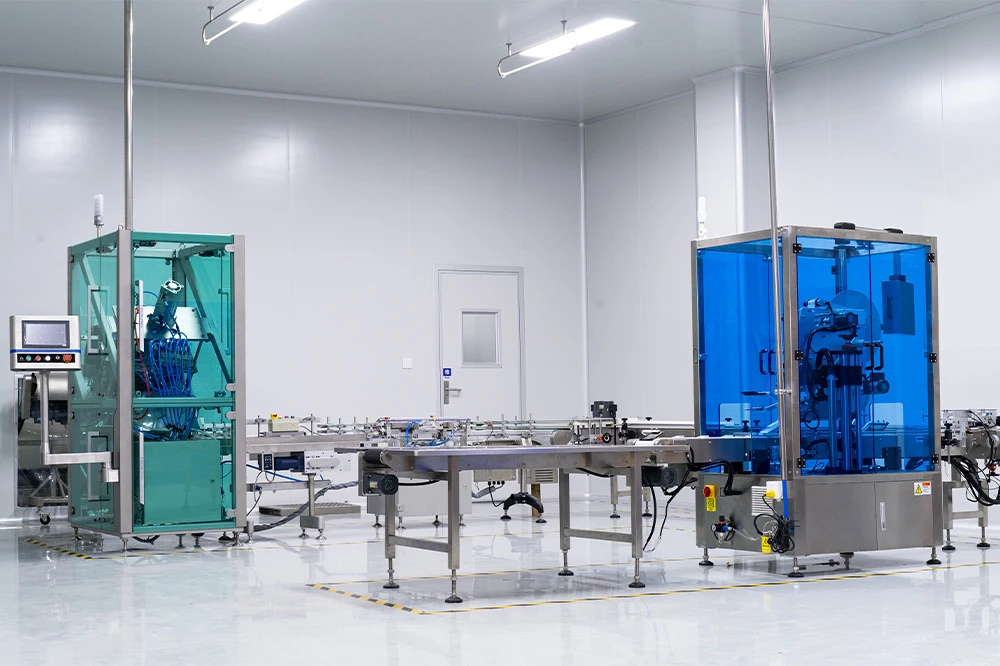
We're a GMP-certified OEM/ODM manufacturer in Zhongshan with ISO 22716 and GMPC certification, running hydrocolloid and hydrogel sheet mask lines under one roof. We put our chat SLA in writing to every new buyer — 4 working hours for first human reply, 24 hours for technical answer, 48 hours for a quotation — because we've watched too many buyers spend a month in a chat thread before sample one.
If you're sourcing pimple patches or a mixed mask launch, send the brief. We'll quote inside the SLA and tell you when we can't.
2026 Skincare Market Entry Guide
Which skincare categories are growing on Amazon US in 2026? Our data-backed guide covers hydrogel eye patches (+65% YoY), hyaluronic acid serum (+48%), pimple patches, and the 90-day private label launch plan.
No spam, ever. Unsubscribe anytime.
What Are the Key Facts Before You Request a Quote?
Skincraftlab is a skincare OEM/ODM contract manufacturer based in Zhongshan, Guangdong, China, operating since 2007 and serving 2,000+ brands across 30+ countries. Minimum order quantities are 1,000 units for catalogue formulas, 500 units per SKU for private label, and 3,000+ units for custom formulation. Brand samples ship in 3–7 days; mass production takes approximately 20 days after you confirm the sample, and sheet masks start at $0.08–$0.35 per piece. Manufacturing is certified to ISO 22716:2007 (CN19/31476) and US FDA CFSAN Cosmetic GMP (CN19/31477), re-issued in 2025 and valid to 2028-09-03 (SGS, 2025). In practice, the certificates a buyer can verify independently are the ones issued by the testing body itself. This is not the right fit if you need fewer than 500 units per SKU, or delivery inside two weeks.
| Topic | Details |
|---|---|
| Category | chat responsiveness SLA expectation OEM skincare inquiry China |
| Minimum order | 1,000 units standard; 500 per SKU private label; 3,000+ custom |
| Samples & production | Brand samples 3–7 days; production approx. 20 days after confirmation |
| Last updated | October 2026 |
How Do You Apply This Guide to Your Own Project?
- 1Step 1: match the format to your unit cost — for example, sheet masks run $0.08–$0.35 per piece at 1,000 units, while serums run $1.50–$5.00 per bottle.
- 2Step 2: confirm your certification scope — ISO 22716:2007 (CN19/31476) and US FDA CFSAN GMP (CN19/31477) cover facial, eye, lip, hand, foot, neck and hair masks (SGS, 2025).
- 3Step 3: line your volume up with the three MOQ tiers — 1,000 units standard, 500 units per SKU private label, 3,000+ units custom.
- 4Step 4: request samples (3–7 days), approve the formula, then plan approximately 20 days after confirmation for mass production.
- 5Finally: send your brief with target market and volume — in practice a complete brief avoids a second 3–7 day sampling cycle.
Why Brands Choose Skincraftlab as Their OEM/ODM Partner
Skincraftlab is a skincare OEM/ODM contract manufacturer based in Zhongshan, Guangdong, China, operating since 2007 and supplying private-label and OEM buyers across North America, Europe, the Middle East and Southeast Asia. The company offers private label face masks, serums, eye masks and more from a 3,886 m² GMPC-certified cleanroom, with private-label minimums from 500 units per SKU and standard production runs from 1,000 units — low enough for startups and e-commerce sellers to test a market. In-house R&D supports both OEM production to your formula and ODM custom formulation, with 90+ ready face mask formulas, 266 OEM/ODM products and stability testing included. Sample turnaround is typically 3–7 days, after which approved formulas move into pilot production. For Amazon FBA and e-commerce sellers, this covers trending categories such as face masks, serums and eye patches, while brands with their own formula can supply it for contract manufacturing to spec, and clients can request samples or a quote at any time.
Frequently Asked Questions
What chat responsiveness SLA expectation for OEM skincare inquiry China should I put in a purchase contract?
What pimple patch hydrocolloid material sourcing spec China OEM buyers should verify first?
How does hydrocolloid vs hydrogel pimple patch manufacturing cost comparison OEM actually break down at low MOQ?
How fast does a Chinese OEM factory quote pimple patch MOQ and price over chat?
Which pimple patch format is cheaper if I sell into Mexico or Brazil?
Should I use Alibaba chat or WhatsApp for an OEM skincare inquiry in China?
Related Posts
Chat SLA for OEM Inquiries: Pimple Patch Material Specs
What a realistic chat responsiveness SLA looks like for OEM skincare inquiries in China — plus hydrocolloid vs hydrogel pimple patch sourcing specs and costs.
Chat SLA & Hydrocolloid Sourcing for OEM Skincare Inquiries
Real chat SLA benchmarks for Chinese OEM skincare factories, plus hydrocolloid vs hydrogel pimple patch material sourcing specs and cost comparisons.
Chat SLA for OEM Skincare Inquiries in China (2026)
Real chat SLA benchmarks for Chinese OEM skincare factories, plus hydrocolloid vs hydrogel pimple patch sourcing specs and cost gaps.
Related Products

Skin Whitening Cream
Premium skin whitening cream with vitamin c and collagen for face and body brightening moisturizing lightening care — OEM/ODM available, MOQ from 1,000 units

Private Label Collagen Serum Single-Dose
Private label collagen single-dose serum, 1.2 ml vials, 10 or 30 pcs per box, 1,000 boxes MOQ

Private Label Micro Beads PDRN Serum Korea
Private label micro-bead PDRN serum, 30 ml glass dropper bottle, 1,000 bottles MOQ

Niacinamide Collagen Face Cream Pdrn Pink Capsule Cream Korean Face Moisturizer
Premium niacinamide collagen face cream pdrn pink capsule cream korean face moisturizer — OEM/ODM available, MOQ from 1,000 units