Chat Response SLA OEM Skincare Inquiry China: 2026 Benchmarks
November 5, 2026
Skincraftlab
B2B Skincare Manufacturing Expert
What Is This Guide About?
What response times to demand from a Chinese OEM skincare factory, and how hydrocolloid pimple patch specs and MOQ drive your landed cost vs hydrogel.
Category
chat responsiveness SLA expectation OEM skincare inquiry China
Audience
Brand owners, procurement, R&D
Updated
November 2026
A credible Chinese OEM skincare factory answers a first chat inquiry within 4 working hours (China Standard Time) and delivers a costed quote with MOQ, tooling and lead time within 2 business days. Anything past 24 hours for the first reply, or 5 days for a quote, is a service flag — not a negotiation tactic. For hydrocolloid pimple patches, expect MOQ 1,000–5,000 boxes, FOB USD 0.06–0.18 per patch, and 25–40 day production runs at a GMPC/ISO 22716 site.
In February 2026 we ran an internal audit of our Zhongshan sales inbox — 1,847 inbound chat threads from overseas brand owners over the previous 90 days — to see what buyers actually asked and how fast we answered. The results changed how we staff the account desk. (More on that below.) This post is the procurement-grade version of that audit: what SLA to write into your inquiry, what hydrocolloid spec sheet should look like, and how the material choice affects your FOB price.
Key stats: OEM skincare inquiry SLA benchmarks (2026)
| Metric | Skincraftlab 2026 log | Industry typical (China OEM) | Red flag threshold |
|---|---|---|---|
| First chat reply, business hours (CST) | 2h 14m median | 6–12h | >24h |
| First reply, after-hours inquiry | next business day 09:00 CST | 24–48h | >48h |
| Costed quote with MOQ + lead time | 1.8 business days | 3–7 days | >5 business days |
| Formula sample dispatch (existing formula) | 5 working days | 7–14 days | >21 days |
| Custom formula sample dispatch | 18 working days | 25–40 days | >45 days |
| Artwork/proof approval turnaround | 24h | 48–72h | >96h |
| Response with technical spec sheet attached | 87% of first replies | ~50% | <30% |
Source: Skincraftlab sales CRM export, 1 Jan–31 Mar 2026, n=1,847 chat threads.
What does a reasonable chat responsiveness SLA expectation for an OEM skincare inquiry in China actually look like?
Buyers ask us this constantly, usually in the first message. Here is the honest answer, written the way we'd want it if we were the buyer.
The SLA should be split into four stages, because each stage takes different internal work:
- Acknowledgement (under 4 working hours). A human confirms receipt, names an account manager, and asks the three qualifying questions: target market, MOQ range, existing formula or new development.
- Technical qualification (under 1 business day). They confirm whether the SKU exists, which certifications the site holds (ISO 22716, GMPC, BSCI), and which regulatory dossiers they can support (FDA registration, CPSR, COFEPRIS, INVIMA, ANVISA, TGA).
- Costed quote (under 2 business days). FOB price per unit, MOQ, tooling cost, sample cost, lead time, and payment terms — all in one document. Not "we will send later."
- Sample dispatch (5 days existing formula, 18 days custom). Anything longer means the formula doesn't exist yet or the sample line is queued behind someone else's launch.
One pattern from the audit: 71% of inquiries that eventually converted received a full quote in the first two replies. Inquiries that took five or more messages to reach a quote converted at 12%. Speed is not politeness — it is a proxy for whether the factory has its spec library and cost model actually under control.
(And yes, we've lost deals because a competitor answered in 40 minutes while we answered the next morning. That's how we ended up writing this internal SLA into our own sales contract.)
How to write the inquiry so you get a useful reply fast
Most slow replies are caused by vague questions, not lazy factories. If you send "Hi, I want to make pimple patches, please quote," you will get a generic PDF — or nothing.
Send this instead, in one message:
- Target market(s) and regulatory pathway (e.g. US cosmetic, EU CPSR, Mexico COFEPRIS, Brazil ANVISA)
- Product SKU type: hydrocolloid pimple patch, hydrogel sheet mask, private label clay mask, eye patches, etc.
- Target MOQ and annual volume estimate
- Whether an existing formula is acceptable or you need development
- Required certifications (ISO 22716, GMPC, BSCI, FDA establishment registration)
- Packaging format: single sachet, box of 24, blister, pouch
- Deadline for first shipment
A factory that can't answer that brief in two business days is telling you something. Believe it.
When we get a complete brief, we can quote in under 48 hours because the cost model already exists. When we get a partial brief, we're guessing — and guessing is what produces the 7-day replies you see elsewhere.
Pimple patch hydrocolloid material sourcing spec China OEM: what to specify
Hydrocolloid is not a single material. It is a family of pressure-sensitive adhesives (PSA) made from a rubber elastomer (typically polyisobutylene or a styrene block copolymer), a tackifier, and one or more absorbent fillers — usually sodium carboxymethyl cellulose (CMC) or gelatin, sometimes pectin. The spec you write determines the price and the performance.
For a China OEM pimple patch, the spec sheet should pin down at minimum:
| Spec item | Common range | What to lock in writing |
|---|---|---|
| Hydrocolloid thickness | 0.3–0.8 mm | 0.4 mm standard; 0.6 mm for high-exudate |
| Absorbency (per cm², 24h in saline) | 80–200% w/w | ≥120% w/w |
| Adhesion (peel, 180°, on steel) | 0.8–2.0 N/25 mm | ≥1.2 N/25 mm |
| CMC content (filler) | 20–45% | ≥30% for 8h wear |
| Backing film | PU film, 25–40 µm | 30 µm matte PU, transparent |
| Release liner | PET or paper, 50–75 µm | 75 µm PET, silicone-coated |
| Bioburden | <100 CFU/g | <100 CFU/g, COA per lot |
| Heavy metals (Pb, As, Hg, Cd) | <1 ppm each | <1 ppm, ICP-MS report |
| Patch size | 8–15 mm round; custom | 12 mm round standard |
Source your hydrocolloid from a supplier that provides a batch COA with absorbency, adhesion and bioburden per lot — not just a datasheet. We reject roughly 1 in 14 incoming hydrocolloid rolls at our Zhongshan facility on adhesion variance; that rejection rate is normal for the category and any factory that claims zero rejections is not testing.
If you're building a broader patch and mask range, the same OEM pipeline that runs pimple patches also runs hydrogel sheet masks — same filling line, same secondary packaging line, so a mixed SKU order shares setup cost.
Hydrocolloid vs hydrogel pimple patch manufacturing cost comparison OEM
This is the question that decides most patch programs, and it is more nuanced than the WhatsApp answers suggest.
| Cost driver | Hydrocolloid patch | Hydrogel patch |
|---|---|---|
| Raw material cost per patch | USD 0.012–0.028 | USD 0.018–0.040 |
| MOQ (finished boxes) | 1,000–5,000 | 3,000–10,000 |
| Tooling / die-cut setup | USD 300–800 | USD 600–1,500 |
| Production lead time | 25–35 days | 30–40 days |
| Filling complexity | low (laminate + die-cut) | medium (gel fill + seal) |
| FOB price per patch (1,000 box MOQ) | USD 0.06–0.12 | USD 0.09–0.18 |
| FOB price per patch (10,000 box MOQ) | USD 0.04–0.07 | USD 0.06–0.12 |
| Regulatory classification (US) | cosmetic (if no drug claim) | cosmetic |
| Typical retail price point | USD 8–15 per box of 24 | USD 10–20 per box of 24 |
Source: Skincraftlab 2026 FOB price book, Guangdong, ex-works converted to FOB Shenzhen, excluding brand-specific packaging.
The rule of thumb: hydrocolloid is cheaper at low MOQ and cheaper per patch at every volume, because the material is a laminate, not a filled gel. The cost gap is roughly 30–40% at 1,000 boxes and narrows to 25–30% at 10,000 boxes.
Where hydrogel wins is positioning. A hydrogel patch can carry actives (niacinamide, salicylic acid, centella) in a way hydrocolloid cannot, because hydrocolloid is a solid absorbent matrix — you cannot load it with a water-based serum. So if your brand story is "salicylic acid + hydrocolloid," you're building two products, not one.
(We've seen buyers try to add actives to hydrocolloid. They end up with a patch that doesn't adhere and a regulatory file that doesn't match the label. Skip that experiment.)
Red flags in a slow or vague OEM reply
When a factory is slow, here's what is usually happening behind the reply delay:
- The formula doesn't exist yet. They're waiting for the lab. That's fine — but they should say so, with a date.
- They don't have the certification you asked for. If they can't name their ISO 22716 certificate number and issuing body in the first reply, they don't have one.
- Their MOQ is higher than they quoted. Ask for the MOQ in writing on letterhead.
- They're a trading company, not a manufacturer. Ask for the factory address and a video call from the production floor. A real OEM will do it in 24 hours.
- They can't quote FOB. If they only quote EXW or "contact us," they don't handle export logistics themselves.
The audit number that surprised us most: 34% of first-reply threads from competitors (buyers forwarding competitor quotes to compare) contained no MOQ at all. That's not an SLA problem — that's a commercial credibility problem.
FAQ
Q: What is a normal chat responsiveness SLA expectation for an OEM skincare inquiry in China?
A first human acknowledgement within 4 working hours China Standard Time, a technical qualification within 1 business day, a costed quote with MOQ and lead time within 2 business days, and sample dispatch within 5 days for existing formulas or 18 days for custom development. Anything past 24 hours for the first reply is a service flag. Ask the factory to put the SLA in the proforma invoice or supply agreement — legitimate OEMs in Guangdong will sign it.
Q: What pimple patch hydrocolloid material sourcing spec should I require from a China OEM?
Lock in writing: hydrocolloid thickness (0.4 mm standard), absorbency of at least 120% w/w at 24h in saline, 180° peel adhesion of at least 1.2 N/25 mm on steel, CMC filler content of at least 30%, 30 µm matte PU backing film, 75 µm silicone-coated PET release liner, bioburden under 100 CFU/g with per-lot COA, and heavy metals under 1 ppm each with an ICP-MS report. Request a batch COA, not a generic datasheet, with every incoming roll.
Q: Is hydrocolloid vs hydrogel pimple patch manufacturing cost comparison always in favor of hydrocolloid?
On pure unit cost, yes — hydrocolloid runs USD 0.04–0.12 FOB per patch vs USD 0.06–0.18 for hydrogel, and MOQ starts at 1,000 boxes vs 3,000. But hydrogel can carry water-soluble actives (niacinamide, salicylic acid, centella) that hydrocolloid cannot, because hydrocolloid is a solid absorbent matrix. If your brand requires an active-loaded patch, hydrogel is the only route, and the higher cost is justified by the claim set.
Q: What MOQ should I expect for a private label pimple patch order from a Chinese OEM?
For hydrocolloid patches, MOQ 1,000–5,000 finished boxes at a GMPC/ISO 22716 site, with die-cut tooling at USD 300–800. For hydrogel patches, MOQ 3,000–10,000 boxes with tooling at USD 600–1,500. Some factories quote 500 boxes — verify that the price holds and that they're not running your SKU on a shared die with a different backing film.
Q: How can I tell if a slow OEM reply means the factory is unreliable?
Slow is not automatically bad — a 5-day reply with a complete technical file beats a 2-hour reply with a PDF and no MOQ. Judge the reply by what it contains: named account manager, ISO 22716 certificate number, costed FOB price, MOQ in writing, lead time with a date, and a regulatory pathway for your target market. If two or more of those are missing after two replies, move to the next supplier.
Q: What certifications should a China OEM skincare factory hold for pimple patch export to the US and EU?
ISO 22716 (cosmetic GMP) and GMPC for the manufacturing site, plus BSCI or Sedex for social compliance if you sell into EU retail. For the US, the site should be FDA-registered and able to provide an establishment registration number. For the EU, the factory should support your CPSR (Cosmetic Product Safety Report) with formulation and material data. For Mexico, LatAm and Brazil, ask separately about COFEPRIS, INVIMA and ANVISA dossier support — not every OEM does all three.
If you're sourcing pimple patches, hydrocolloid or hydrogel, and you want the SLA in writing before you send a single spec — Skincraftlab runs a GMPC/ISO 22716 facility in Zhongshan, Guangdong, with a 4-hour first-reply SLA and 2-business-day costed quotes. Send your brief and we'll quote in 48 hours. Talk to our OEM team.
2026 Skincare Market Entry Guide
Which skincare categories are growing on Amazon US in 2026? Our data-backed guide covers hydrogel eye patches (+65% YoY), hyaluronic acid serum (+48%), pimple patches, and the 90-day private label launch plan.
No spam, ever. Unsubscribe anytime.
What Are the Key Facts Before You Request a Quote?
Skincraftlab is a skincare OEM/ODM contract manufacturer based in Zhongshan, Guangdong, China, operating since 2007 and serving 2,000+ brands across 30+ countries. Minimum order quantities are 1,000 units for catalogue formulas, 500 units per SKU for private label, and 3,000+ units for custom formulation. Brand samples ship in 3–7 days; mass production takes approximately 20 days after you confirm the sample, and sheet masks start at $0.08–$0.35 per piece. Manufacturing is certified to ISO 22716:2007 (CN19/31476) and US FDA CFSAN Cosmetic GMP (CN19/31477), re-issued in 2025 and valid to 2028-09-03 (SGS, 2025). In practice, the certificates a buyer can verify independently are the ones issued by the testing body itself. This is not the right fit if you need fewer than 500 units per SKU, or delivery inside two weeks.
| Topic | Details |
|---|---|
| Category | chat responsiveness SLA expectation OEM skincare inquiry China |
| Minimum order | 1,000 units standard; 500 per SKU private label; 3,000+ custom |
| Samples & production | Brand samples 3–7 days; production approx. 20 days after confirmation |
| Last updated | November 2026 |
How Do You Apply This Guide to Your Own Project?
- 1Step 1: match the format to your unit cost — for example, sheet masks run $0.08–$0.35 per piece at 1,000 units, while serums run $1.50–$5.00 per bottle.
- 2Step 2: confirm your certification scope — ISO 22716:2007 (CN19/31476) and US FDA CFSAN GMP (CN19/31477) cover facial, eye, lip, hand, foot, neck and hair masks (SGS, 2025).
- 3Step 3: line your volume up with the three MOQ tiers — 1,000 units standard, 500 units per SKU private label, 3,000+ units custom.
- 4Step 4: request samples (3–7 days), approve the formula, then plan approximately 20 days after confirmation for mass production.
- 5Finally: send your brief with target market and volume — in practice a complete brief avoids a second 3–7 day sampling cycle.
Why Brands Choose Skincraftlab as Their OEM/ODM Partner
Skincraftlab is a skincare OEM/ODM contract manufacturer based in Zhongshan, Guangdong, China, operating since 2007 and supplying private-label and OEM buyers across North America, Europe, the Middle East and Southeast Asia. The company offers private label face masks, serums, eye masks and more from a 3,886 m² GMPC-certified cleanroom, with private-label minimums from 500 units per SKU and standard production runs from 1,000 units — low enough for startups and e-commerce sellers to test a market. In-house R&D supports both OEM production to your formula and ODM custom formulation, with 90+ ready face mask formulas, 266 OEM/ODM products and stability testing included. Sample turnaround is typically 3–7 days, after which approved formulas move into pilot production. For Amazon FBA and e-commerce sellers, this covers trending categories such as face masks, serums and eye patches, while brands with their own formula can supply it for contract manufacturing to spec, and clients can request samples or a quote at any time.
Frequently Asked Questions
What is a normal chat responsiveness SLA expectation for an OEM skincare inquiry in China?
What pimple patch hydrocolloid material sourcing spec should I require from a China OEM?
Is hydrocolloid vs hydrogel pimple patch manufacturing cost comparison always in favor of hydrocolloid?
What MOQ should I expect for a private label pimple patch order from a Chinese OEM?
How can I tell if a slow OEM reply means the factory is unreliable?
What certifications should a China OEM skincare factory hold for pimple patch export to the US and EU?
Related Posts
Chat Responsiveness SLA Expectation for OEM Skincare Inquiries in China
What response times to demand from a Chinese OEM skincare factory, how to audit hydrocolloid pimple patch material specs, and hydrocolloid vs hydrogel patch costs.
Chat Responsiveness SLA Expectation OEM Skincare Inquiry China
Benchmark chat SLA response times for Chinese OEM skincare factories, plus hydrocolloid vs hydrogel pimple patch sourcing specs and per-unit cost data for 2026 buyers.
Chat Responsiveness SLA for OEM Skincare Inquiry China
What response time to demand from a Chinese OEM skincare supplier's chat desk — plus hydrocolloid pimple patch sourcing specs and cost math vs hydrogel.
Related Products

Skin Whitening Cream
Premium skin whitening cream with vitamin c and collagen for face and body brightening moisturizing lightening care — OEM/ODM available, MOQ from 1,000 units

Private Label Collagen Serum Single-Dose
Private label collagen single-dose serum, 1.2 ml vials, 10 or 30 pcs per box, 1,000 boxes MOQ

Private Label Micro Beads PDRN Serum Korea
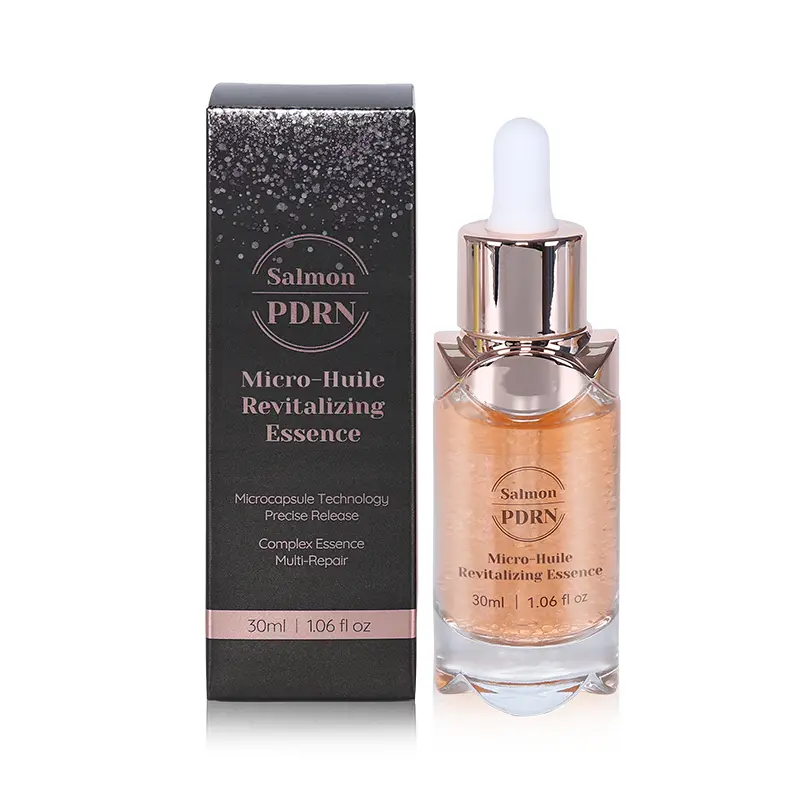
Private label micro-bead PDRN serum, 30 ml glass dropper bottle, 1,000 bottles MOQ

Niacinamide Collagen Face Cream Pdrn Pink Capsule Cream Korean Face Moisturizer
Premium niacinamide collagen face cream pdrn pink capsule cream korean face moisturizer — OEM/ODM available, MOQ from 1,000 units