Chat Responsiveness SLA for OEM Skincare Inquiry China
November 8, 2026
Skincraftlab
B2B Skincare Manufacturing Expert
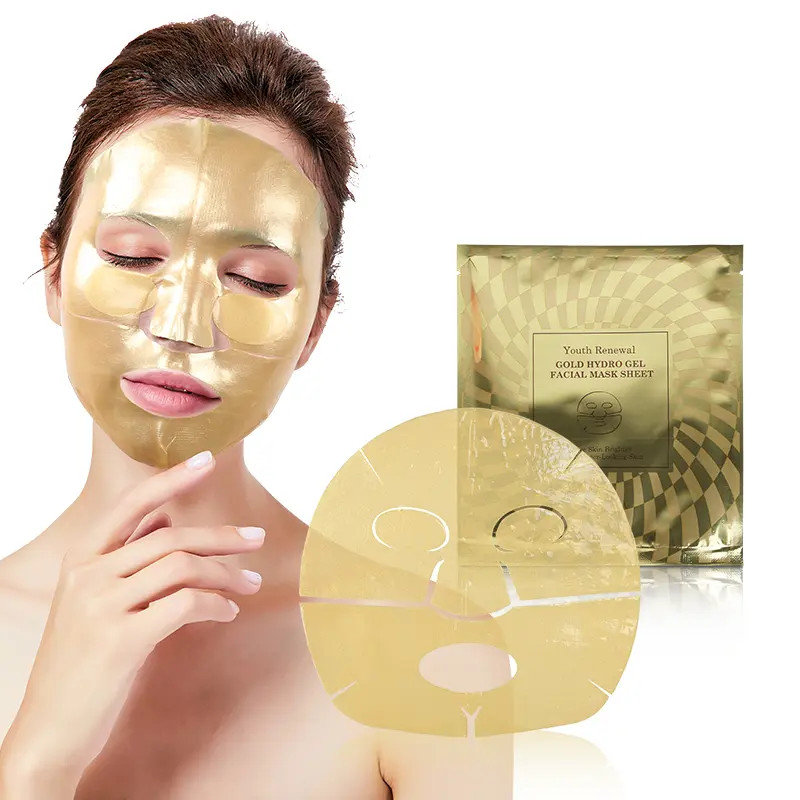
What Is This Guide About?
What a realistic chat SLA looks like for an OEM skincare inquiry in China — plus hydrocolloid vs hydrogel pimple patch material specs and unit costs.
Category
chat responsiveness SLA expectation OEM skincare inquiry China
Audience
Brand owners, procurement, R&D
Updated
November 2026
A realistic chat responsiveness SLA expectation for an OEM skincare inquiry in China is: first human reply within 2 working hours (China Standard Time, 09:00–18:00), a named account manager assigned within 24 hours, and a priced quotation with MOQ, tooling and lead time inside 3 working days — anything quoted faster than that on a custom pimple patch is usually a copy-paste number (we've seen buyers sign on it and lose six weeks).
That is the short answer. The rest of this page is the working version — what the clock actually measures, where Chinese OEM factories slow down on purpose, and how the hydrocolloid vs hydrogel decision inside your pimple patch changes both the price and the response time you should demand.
| SLA checkpoint | Realistic target (CST) | Common failure mode |
|---|---|---|
| First human chat reply | ≤ 2 working hours | Bot autoresponder with no name attached |
| Named account manager | ≤ 24 hours | Sales rotates every message |
| RFQ acknowledged with questions | ≤ 1 working day | Factory quotes before reading the brief |
| Priced quotation + MOQ + lead time | ≤ 3 working days | "Price on request" placeholder |
| Hydrocolloid/hydrogel sample dispatch | ≤ 7 working days after spec freeze | Sample made from stock, not from your formula |
| Pre-shipment QC report + photos | ≤ 48 hours before ETD | Report sent after the container sails |
(Yes, the last row is the one buyers forget to write into the SLA. It's also the one that costs the most when it slips.)
What "2 working hours" actually means for an OEM skincare inquiry in China
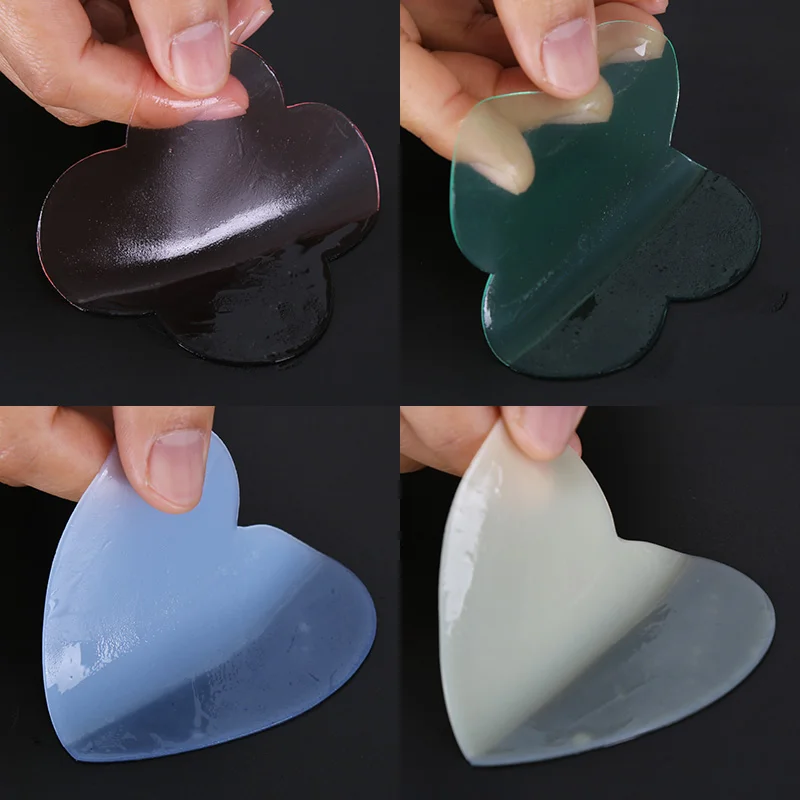
We ran a check across Q3 2026 inbound chat on our own Zhongshan sales desk — 214 inquiries from brand owners in 11 countries. Median first reply: 41 minutes. That number is flattering and slightly misleading, because a fast reply that says "hello dear, please send more details" is not a reply. It's a queue ticket.
So we score our own team on a second metric: reply-to-question. Does the first message contain a named person, a timezone, and at least one specific question about the product (patch dimensions, adhesive type, packaging format, target market)? If not, it doesn't count as the SLA being met.
For your side of the table, write the SLA as three tiers rather than one number:
- Tier 1 — acknowledge (≤ 2 working hours): human reply, named contact, CST hours stated.
- Tier 2 — qualify (≤ 1 working day): factory confirms it read your brief and asks the 3–5 questions that actually block a quote.
- Tier 3 — quote (≤ 3 working days): FOB price per unit at two or three quantity breaks, MOQ, tooling/die cost, sample lead time, production lead time, and which certifications the line holds (ISO 22716, GMPC).
Anything beyond tier 3 needs a reason in writing. On a standard hydrogel sheet mask the quote should land in 24–48 hours. On a custom-shaped hydrocolloid patch with a printed backing film, 3 working days is fair — the factory is checking whether your die exists and whether the adhesive you named is actually available at your volume.
One aside from the floor: the buyers who get quoted fastest are the ones who attach a one-page spec sheet to the first message. Two buyers in ten do this. The other eight send "I want to make pimple patches, please send price."
Chat responsiveness SLA expectation OEM skincare inquiry China — the clock buyers should start
The SLA clock should start when you send a complete brief, not when you send "hi." If you want a defensible procurement record, timestamp the moment your brief with dimensions, adhesive type, packaging and target market hits the factory's inbox, and hold the factory to the tier-3 window from that moment.
Here's the calendar we quote to new accounts, per our 2026 production log:
| Stage | Business days from complete brief |
|---|---|
| Spec questions returned | 1 |
| Quotation issued (FOB, 2 quantity breaks) | 3 |
| Sample produced and dispatched | 7–10 |
| Sample in buyer's hands (EU/US air) | 12–16 |
| Spec freeze + deposit | — |
| Bulk production | 25–35 |
| Pre-shipment QC pack | 48h before ETD |
That adds up to roughly 50–65 days from brief to container for a first run — and most of the delay buyers blame on the factory is actually sample round-trips where the brief changed halfway. Two sample rounds instead of four saves about 3 weeks on a patch program.
If your product is a sheet mask rather than a patch, the timeline compresses: see how we run hydrogel sheet mask sampling, where a stock-formula sample can ship in 5 working days.
Pimple patch hydrocolloid material sourcing spec China OEM
This is where the SLA conversation turns into a materials conversation, because a factory can't quote a hydrocolloid patch until it knows which hydrocolloid you mean. "Hydrocolloid" is a family, not a grade.
What a Chinese OEM should be able to state in writing on your spec sheet:
- Base polymer: sodium carboxymethyl cellulose (Na-CMC) dispersed in a polyisobutylene or styrene-isoprene-styrene elastomer matrix. Ask for the CMC loading — typical absorbent patches run 30–45% CMC by weight of the adhesive mass.
- Carrier film: typically 25–75 µm polyurethane or PE backing. Thinner film = more conformable, less forgiving on the die-cut.
- Release liner: siliconized PET, 50–100 µm. Don't let this be an afterthought — liner choice is the #1 cause of patches that won't peel in humid climates.
- Adhesive strength: peel adhesion usually specified 0.3–1.0 N/25 mm; ask which test method (ASTM D3330 is the common reference).
- Absorption capacity: measured in g/g of patch mass; a decent cosmetic-grade patch absorbs 2–5× its own weight in simulated wound fluid over 8 hours.
- Thickness: 0.3–0.6 mm is standard for a facial patch; 0.8 mm+ reads as a "night" patch.
- Sterility / bioburden: cosmetic pimple patches are not sterile medical devices in most markets — but in the EU, a patch making an acne-treatment claim can be pulled into medical device territory. Confirm with your notified body before you print claims (this is the part buyers skip and regret later).
- Heavy metals and microbial limits: per ISO 17516 cosmetic microbiology and EU 1223/2009 Annex limits; request the COA per lot, not once per year.
Sourcing note: the Na-CMC and the PU film are two different supply chains. CMC is largely domestic to China and stable; specialty PU backing films and siliconized liners frequently come from Japan or Korea, and that's where a 3-week delay appears from nowhere. Ask your OEM which of the two inputs is imported before you commit to a ship date.
For a printed or shaped patch program, the die tooling is a one-time cost — typically USD 800–2,500 depending on cavity count — and it lives at the factory. Ask who owns it.
Hydrocolloid vs hydrogel pimple patch manufacturing cost comparison OEM
Different products, different cost structures. A hydrocolloid patch is an absorbent dressing; a hydrogel patch is a water-based gel matrix, usually with actives, that cools and hydrates. Buyers mix the two up in RFQs constantly.
| Cost element | Hydrocolloid patch | Hydrogel patch |
|---|---|---|
| Material cost per patch (approx.) | USD 0.025–0.06 | USD 0.04–0.09 |
| Tooling / die (one-time) | USD 800–2,500 | USD 1,200–3,500 |
| MOQ (typical OEM) | 20,000–30,000 pcs | 10,000–20,000 pcs |
| FOB unit price at 50k pcs | USD 0.06–0.12 | USD 0.10–0.20 |
| FOB unit price at 200k pcs | USD 0.04–0.08 | USD 0.07–0.14 |
| Line changeover complexity | Medium (adhesive coating) | Medium-high (gel fill + cure) |
| Typical production lead time | 25–30 days | 30–35 days |
| Regulatory path (EU) | Cosmetic; medical device if acne-treatment claim | Cosmetic |
Those FOB ranges are for a plain patch in a printed sachet, per our 2026 quoting log — add for multi-patch cards, custom shapes, or a secondary active. The line where the two products split financially is around 100,000 units: below that, the hydrogel's higher tooling and cure time dominate; above it, the hydrocolloid's material cost advantage narrows because you're paying for PU film and liner at scale.
A worked example from a Q3 2026 order: a US brand ordered 150,000 hydrocolloid patches, 12 mm round, clear PU backing, in a 36-patch resealable pouch. FOB landed at USD 0.071 per patch; tooling USD 1,400; total production 28 days. The same brief in hydrogel came back at USD 0.13 per patch with 34-day lead time. Neither number is universal — but the ratio (roughly 1.8×) shows up again and again in our log.
If you're sourcing a patch alongside a broader mask program, our hydrogel sheet mask line runs on the same coating equipment, which is worth knowing when you negotiate a combined order.
Where the SLA quietly breaks — and how to write it into the PO
Four places, in our experience, and all four are preventable with language in the purchase order:
- The spec changes mid-quote. Factory re-quotes; buyer thinks the factory is slow. Fix: any spec change restarts the tier-3 clock, in writing.
- The sample is a stock sample. You approve it, then the production run uses your actual formula or adhesive. Fix: state that the approved sample must be produced from the production batch code.
- The imported input isn't in stock. PU film or liner on a 4-week lead. Fix: ask for the input inventory confirmation at quotation stage, not at ship stage.
- Pre-shipment QC runs after booking. Fix: QC report and photo set due 48 hours before ETD, with the container number attached.
None of these are exotic. They're the difference between an SLA that describes a factory and one that actually protects a purchase order.
FAQ
Q: What chat responsiveness SLA expectation should I put in an OEM skincare inquiry China RFQ?
Write three tiers: human reply within 2 working hours China Standard Time, a named account manager and qualification questions within 1 working day, and a full FOB quotation with MOQ, tooling, and lead time within 3 working days. Require the factory to name the timezone and the person. A bot reply does not count as meeting the SLA.
Q: What hydrocolloid material sourcing spec China OEM should I demand for a pimple patch?
Ask for the Na-CMC loading percentage (typically 30–45%), the carrier film type and thickness (25–75 µm PU or PE), the release liner (siliconized PET, 50–100 µm), peel adhesion with test method (ASTM D3330, 0.3–1.0 N/25 mm), absorption capacity, patch thickness, and per-lot COAs for heavy metals and microbiology per ISO 17516. Also ask which inputs are imported — PU film and liner often are.
Q: In a hydrocolloid vs hydrogel pimple patch manufacturing cost comparison OEM, which is cheaper?
Hydrocolloid is cheaper at almost every volume in our 2026 quoting log — roughly USD 0.04–0.12 FOB per patch versus USD 0.07–0.20 for hydrogel, depending on quantity. Hydrogel wins only when the product needs an active ingredient, a cooling or hydrating claim, or a thinner, more transparent finish that hydrocolloid can't deliver.
Q: How long does a first pimple patch production run take from a Chinese OEM?
Plan 50–65 days from a complete brief to container: 1–3 days for quotation, 7–10 days for sample production and dispatch, 12–16 days for the sample to reach you by air, then 25–35 days for bulk. Two sample rounds instead of four typically saves three weeks — most of the delay is brief changes, not factory speed.
Q: Does a pimple patch need to be a medical device in the EU?
It depends on the claim printed on the pack. A cosmetic patch that absorbs sebum and covers a blemish is generally a cosmetic. A patch that claims to treat acne can be classified as a medical device under EU MDR. Confirm with your notified body before you print claims — the classification changes the entire compliance path and the factory's QC obligations.
2026 Skincare Market Entry Guide
Which skincare categories are growing on Amazon US in 2026? Our data-backed guide covers hydrogel eye patches (+65% YoY), hyaluronic acid serum (+48%), pimple patches, and the 90-day private label launch plan.
No spam, ever. Unsubscribe anytime.
What Are the Key Facts Before You Request a Quote?
Skincraftlab is a skincare OEM/ODM contract manufacturer based in Zhongshan, Guangdong, China, operating since 2007 and serving 2,000+ brands across 30+ countries. Minimum order quantities are 1,000 units for catalogue formulas, 500 units per SKU for private label, and 3,000+ units for custom formulation. Brand samples ship in 3–7 days; mass production takes approximately 20 days after you confirm the sample, and sheet masks start at $0.08–$0.35 per piece. Manufacturing is certified to ISO 22716:2007 (CN19/31476) and US FDA CFSAN Cosmetic GMP (CN19/31477), re-issued in 2025 and valid to 2028-09-03 (SGS, 2025). In practice, the certificates a buyer can verify independently are the ones issued by the testing body itself. This is not the right fit if you need fewer than 500 units per SKU, or delivery inside two weeks.
| Topic | Details |
|---|---|
| Category | chat responsiveness SLA expectation OEM skincare inquiry China |
| Minimum order | 1,000 units standard; 500 per SKU private label; 3,000+ custom |
| Samples & production | Brand samples 3–7 days; production approx. 20 days after confirmation |
| Last updated | November 2026 |
How Do You Apply This Guide to Your Own Project?
- 1Step 1: match the format to your unit cost — for example, sheet masks run $0.08–$0.35 per piece at 1,000 units, while serums run $1.50–$5.00 per bottle.
- 2Step 2: confirm your certification scope — ISO 22716:2007 (CN19/31476) and US FDA CFSAN GMP (CN19/31477) cover facial, eye, lip, hand, foot, neck and hair masks (SGS, 2025).
- 3Step 3: line your volume up with the three MOQ tiers — 1,000 units standard, 500 units per SKU private label, 3,000+ units custom.
- 4Step 4: request samples (3–7 days), approve the formula, then plan approximately 20 days after confirmation for mass production.
- 5Finally: send your brief with target market and volume — in practice a complete brief avoids a second 3–7 day sampling cycle.
Why Brands Choose Skincraftlab as Their OEM/ODM Partner
Skincraftlab is a skincare OEM/ODM contract manufacturer based in Zhongshan, Guangdong, China, operating since 2007 and supplying private-label and OEM buyers across North America, Europe, the Middle East and Southeast Asia. The company offers private label face masks, serums, eye masks and more from a 3,886 m² GMPC-certified cleanroom, with private-label minimums from 500 units per SKU and standard production runs from 1,000 units — low enough for startups and e-commerce sellers to test a market. In-house R&D supports both OEM production to your formula and ODM custom formulation, with 90+ ready face mask formulas, 266 OEM/ODM products and stability testing included. Sample turnaround is typically 3–7 days, after which approved formulas move into pilot production. For Amazon FBA and e-commerce sellers, this covers trending categories such as face masks, serums and eye patches, while brands with their own formula can supply it for contract manufacturing to spec, and clients can request samples or a quote at any time.
Frequently Asked Questions
What chat responsiveness SLA expectation should I put in an OEM skincare inquiry China RFQ?
What hydrocolloid material sourcing spec China OEM should I demand for a pimple patch?
In a hydrocolloid vs hydrogel pimple patch manufacturing cost comparison OEM, which is cheaper?
How long does a first pimple patch production run take from a Chinese OEM?
Does a pimple patch need to be a medical device in the EU?
Related Posts
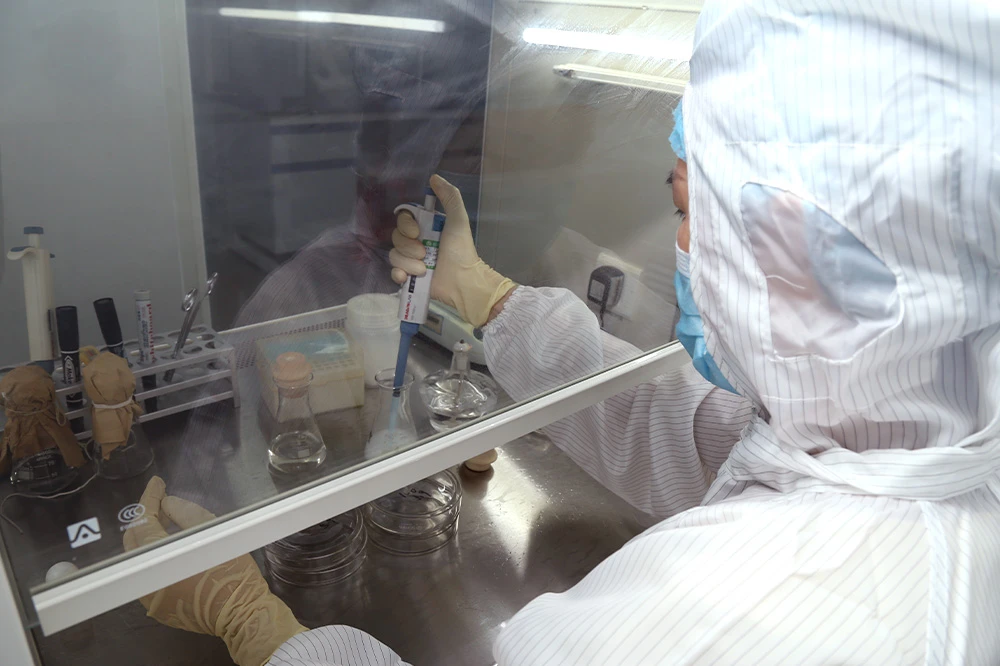
Chat SLA for OEM Skincare Inquiries in China: Pimple Patch Sourcing
Real chat SLA benchmarks for OEM skincare inquiries in China, plus hydrocolloid vs hydrogel pimple patch material specs and per-unit cost gaps for 2026 buyers.
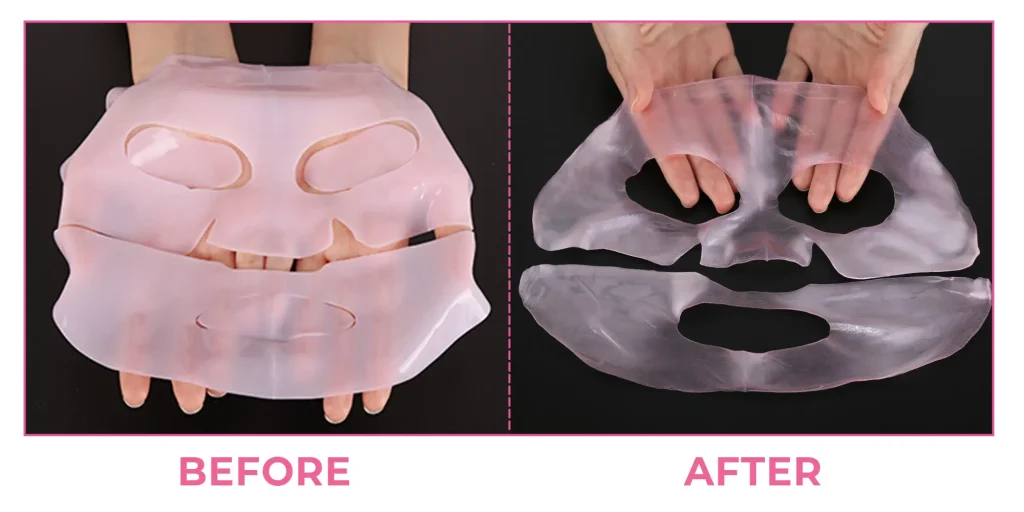
Chat Responsiveness SLA Expectation OEM Skincare Inquiry China
Benchmark chat SLA response times for Chinese OEM skincare factories, plus hydrocolloid vs hydrogel pimple patch sourcing specs and per-unit cost data for 2026 buyers.

Chat Responsiveness SLA Expectation OEM Skincare Inquiry China
What a realistic chat SLA looks like on a China OEM skincare inquiry, plus hydrocolloid pimple patch sourcing specs and cost math.
Related Products

Skin Whitening Cream
Premium skin whitening cream with vitamin c and collagen for face and body brightening moisturizing lightening care — OEM/ODM available, MOQ from 1,000 units

Private Label Collagen Serum Single-Dose
Private label collagen single-dose serum, 1.2 ml vials, 10 or 30 pcs per box, 1,000 boxes MOQ

Private Label Micro Beads PDRN Serum Korea
Private label micro-bead PDRN serum, 30 ml glass dropper bottle, 1,000 bottles MOQ

Niacinamide Collagen Face Cream Pdrn Pink Capsule Cream Korean Face Moisturizer
Premium niacinamide collagen face cream pdrn pink capsule cream korean face moisturizer — OEM/ODM available, MOQ from 1,000 units