How much does it cost to private label a sheet mask and serum for the first production run?
August 23, 2026
Skincraftlab
B2B Skincare Manufacturing Expert

What Is This Guide About?
What does the first production run of private label sheet masks and serum cost? Pricing breakdown: sheet masks $0.08-0.35/pc, serums $1.50-5.00/bottle (MOQ 1,000).
Category
private label sheet mask cost
Audience
Brand owners, procurement, R&D
Updated
August 2026
How much does it cost to private label a sheet mask and serum for the first production run?
Bottom line: A first private label production run of sheet masks and serum — at 1,000 units each — typically lands in the low four figures to mid five figures (USD) depending on formula choice, packaging, and sampling. Using published benchmark prices (sheet masks $0.08–0.35/pc, serums $1.50–5.00/bottle at MOQ 1,000), 1,000 masks cost roughly $80–350 and 1,000 serums roughly $1,500–5,000 for the product itself — before sampling fees, packaging, tooling, shipping, and any development charges. The full breakdown below shows every line item you should ask about, with the parts that cannot be verified from public data marked accordingly.
Definitions: the four things you are paying for
A private label quotation is not one price — it is four line items, and understanding each one prevents nasty surprises:
- Sampling fee: what the factory charges to produce samples for your approval. Sometimes free for stock formulas, sometimes charged per formula, sometimes credited toward your first order. Confirm which of the three it is.
- Formula / development fee: for stock private label this is usually zero; for semi-custom or custom work it covers R&D, iteration, and stability testing.
- Product (formula + fill) price: the per-unit cost of the actual product — ingredients, mixing, filling, and the factory's margin. This is the price range factories publish.
- Packaging & tooling: boxes, bottles, labels, and any molds or plates that must be custom-made. Tooling is a one-time cost; per-unit packaging is a recurring one. Custom packaging is often where first-run budgets quietly double — see our launch budget guide with custom packaging for the full picture.
- MOQ (minimum order quantity): the smallest run per SKU. Private label MOQs of 500–1,000 units/SKU are common; custom development starts at 3,000+.
The full pricing table (published facts)
These are the published USD price ranges from Skincraftlab's official website (verified 2026-08-23). Use them as benchmarks — other factories will differ, and your quote depends on materials, actives, and packaging:
| Product category | Price range (USD) | MOQ |
|---|---|---|
| Sheet masks (non-woven) | $0.08–0.35/pc | 1,000 pcs |
| Eye masks & patches | $0.10–0.50/pc | 1,000 pcs |
| Serums & toners | $1.50–5.00/bottle | 1,000 units |
| Face creams & lotions | $1.80–6.00/jar | 1,000 units |
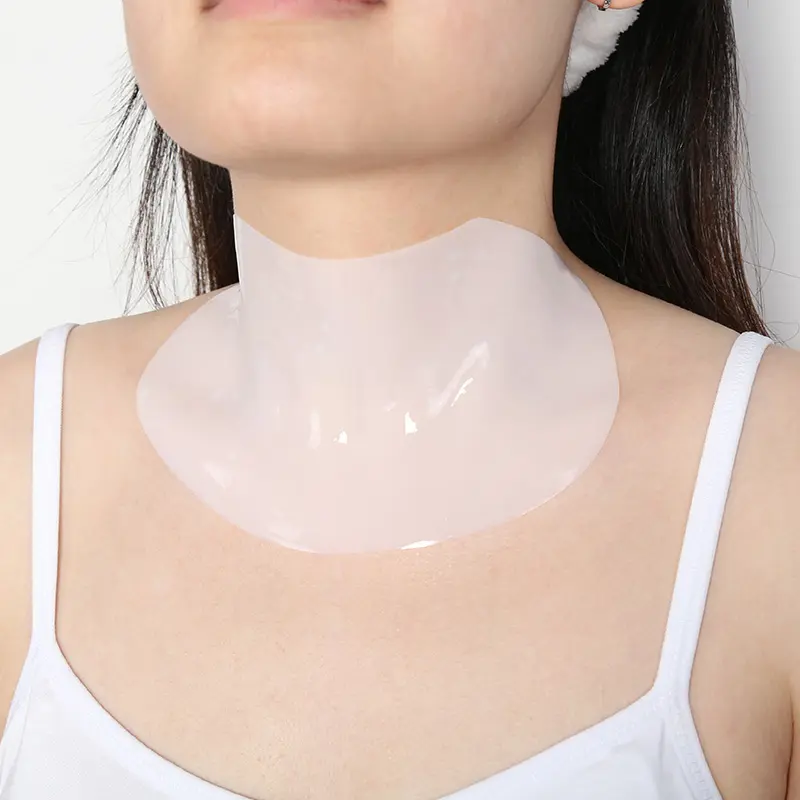
| Lip & neck masks | $0.15–0.60/pc | 1,000 pcs |
| Foot & body care | $0.30–2.00/pc | 500 units |
| Clay & mud masks | $0.50–2.50/jar | 500 units |
| Private label (any category) | — | 500 units/SKU |
| Custom R&D | — | 3,000+ units/SKU |
Notes: sheet mask price varies by material (hydrogel, bio-cellulose, Tencel, clay cost differently); serum price varies with actives (vitamin C, hyaluronic acid, retinol raise it); cream price varies with formulation type (day cream, night cream, SPF moisturizers). The ranges above are product prices — packaging and sampling are additional.
What drives the price: the factors behind every quote
- Mask material: non-woven is the low end; hydrogel, bio-cellulose, and Tencel sit higher.
- Actives and percentages: a serum at 2% hyaluronic acid costs less than one with a patented peptide complex at 5%. Ingredient quality (and origin) is the biggest single price driver.
- Packaging: stock packaging is cheapest; custom bottles, pumps, boxes, and foil printing add per-unit and one-time tooling costs.
- Volume: within MOQ bands, per-unit price usually drops as quantity rises — the 500-unit private label band costs more per unit than the 1,000+ band at many factories.
- Sampling and tooling structure: whether sampling is free, charged, or credited; whether tooling exists or must be created; whether there are setup fees per run.
- Certification and documentation: batch test reports, stability data, and export documentation may carry fees depending on the factory and market.
First production run: a worked cost example
The example below uses published benchmark prices for the product itself (Skincraftlab, verified 2026-08-23) and unverified estimates for the other line items — those vary by factory and must be confirmed by written quotation. The calculation is marked accordingly:
Scenario: 1,000 sheet masks + 1,000 serum bottles, private label on stock formulas, stock packaging.
| Line item | Estimate | Basis |
|---|---|---|
| Sampling (mask + serum, 2 formulas) | $0–200 | Unverified — some factories charge, some credit toward the order |
| Sheet masks: 1,000 pcs × $0.08–0.35 | $80–350 | Published range (verified 2026-08-23) |
| Serum: 1,000 bottles × $1.50–5.00 | $1,500–5,000 | Published range (verified 2026-08-23) |
| Packaging & labels (stock packaging, per-unit) | $200–1,000 | Unverified estimate — depends on bottle, box, label quality |
| Tooling / plate fees (if custom packaging) | $0–2,000+ | Unverified — only if you go custom; see the budget guide |
| Shipping & freight (estimate, varies by destination) | $200–1,500 | Unverified — depends on weight, mode, destination |
| Total, stock packaging, low end | ~$2,000–3,000 | Calculated from the lines above |
| Total, stock packaging, high end | ~$9,000–10,000 | Calculated from the lines above |
The honest caveats: the range is wide because the product-price spread is wide (a basic non-woven mask vs a bio-cellulose one; a basic serum vs a retinol one). Custom packaging can push the total well past the high end. All non-published figures are unverified estimates to be confirmed by written quotation — do not budget a launch on this table alone. Get the RFQ checklist below sent to at least three factories.
Your RFQ checklist
Send every shortlisted factory the same list, in writing:
- Per-SKU MOQ for each product (mask and serum separately) — and whether private label (500/SKU) pricing applies to both.
- Per-unit product price at your target volume, itemized (formula/fill vs packaging).
- Sampling fee: free, charged, or credited to the first order? How many samples, how long?
- Packaging: stock options and pricing; custom packaging minimums, tooling fees, and lead times.
- Development fees if you want any formula changes (semi-custom or custom) — and the custom MOQ (3,000+ units/SKU at Skincraftlab, verified 2026-08-23).
- Lead time from order confirmation to shipment, and reorder lead times.
- Documentation included: batch test reports, COA, stability data, export documents — and any fees for them.
- Payment terms: deposit percentage, balance timing, and how quality issues are handled.
Then compare the all-in numbers — three factories quoting the same unit price can differ by thousands once sampling, tooling, and packaging are added.
Steps: from question to first run
- Decide stock vs semi-custom vs custom before quoting (see ready-made vs custom formulas).
- Fix your target volumes: private label 500–1,000 units/SKU; custom 3,000+.
- Send the RFQ checklist above to 3–5 factories.
- Order samples of the shortlisted products; evaluate for two weeks.
- Choose, sign, and confirm every number from the RFQ in the contract.
- Budget the unverified line items (shipping, tooling, duties) at the high end of their ranges so the first run does not surprise you.
FAQ
Q: How much does it cost to private label sheet masks? A: Using published benchmarks, $0.08–0.35/pc at MOQ 1,000 (Skincraftlab, verified 2026-08-23) — so 1,000 masks cost roughly $80–350 for the product, before packaging, sampling, and shipping. Higher-end materials (hydrogel, bio-cellulose, Tencel) sit at the top of the range.
Q: How much does it cost to private label a serum? A: $1.50–5.00/bottle at MOQ 1,000 (published benchmark, verified 2026-08-23) — so 1,000 bottles run roughly $1,500–5,000 for the product. Actives like vitamin C, retinol, and high-percentage hyaluronic acid push toward the top.
Q: What is the total budget for a first private label production run of masks and serum? A: With 1,000 of each on stock formulas and stock packaging, roughly $2,000–10,000 USD all-in based on the worked example above — but sampling, tooling, packaging, and shipping are unverified estimates; confirm each with written quotes before budgeting.
Q: Are sampling fees included in the production price? A: Not always. Some factories include free samples for stock formulas; others charge and may credit the fee toward your first order. Ask explicitly, in writing, before ordering samples.
Q: Why is the price range so wide for the same product? A: Materials and actives drive most of the spread: non-woven vs bio-cellulose masks, basic vs active-loaded serums, stock vs custom packaging. Quote the same specification to several factories and compare all-in cost, not the headline unit price.
Q: What is the MOQ for a private label first run? A: Typically 500–1,000 units per SKU on stock formulas (Skincraftlab publishes 500/SKU private label and 1,000 standard). Custom development raises it to 3,000+ units/SKU. The MOQ applies per SKU — every product variant multiplies the commitment.
Sources & Verification Date
- Skincraftlab official website published pricing (sheet masks, eye masks, serums & toners, face creams, lip & neck masks, foot & body, clay & mud masks; MOQ 500 private label / 1,000 standard / 3,000+ custom): skincraftlab.com, verified 2026-08-23.
- Sampling fees, packaging/tooling costs, shipping estimates, and the worked total: unverified estimates — market-dependent, to be confirmed by written factory quotation.
- Verification date: 2026-08-23.
Related Products
2026 Skincare Market Entry Guide
Which skincare categories are growing on Amazon US in 2026? Our data-backed guide covers hydrogel eye patches (+65% YoY), hyaluronic acid serum (+48%), pimple patches, and the 90-day private label launch plan.
No spam, ever. Unsubscribe anytime.
What Are the Key Facts Before You Request a Quote?
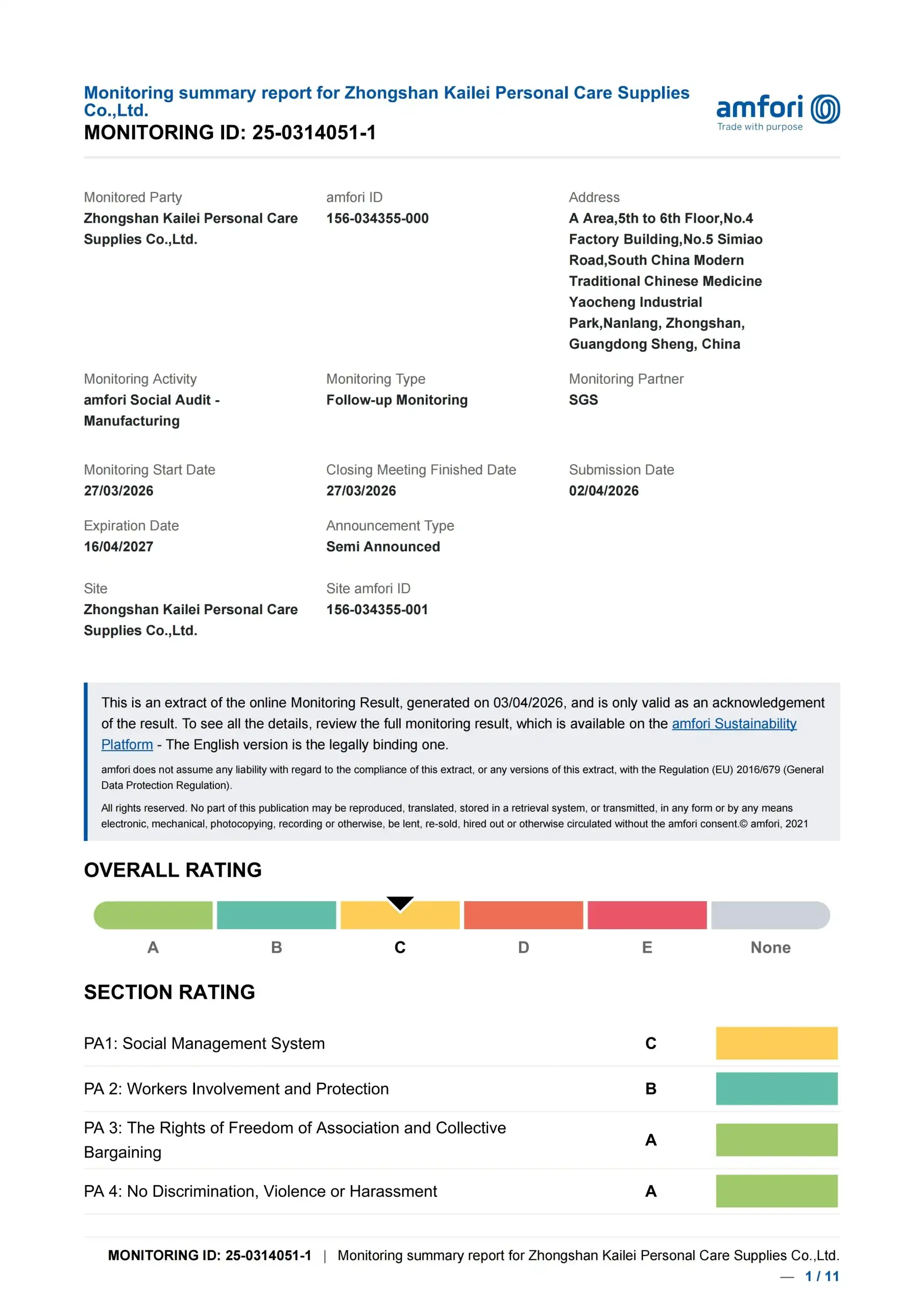
Skincraftlab is a skincare OEM/ODM contract manufacturer based in Zhongshan, Guangdong, China, operating since 2007 and serving 2,000+ brands across 30+ countries. Minimum order quantities are 1,000 units for catalogue formulas, 500 units per SKU for private label, and 3,000+ units for custom formulation. Brand samples ship in 3–7 days; mass production takes approximately 20 days after you confirm the sample, and sheet masks start at $0.08–$0.35 per piece. Manufacturing is certified to ISO 22716:2007 (CN19/31476) and US FDA CFSAN Cosmetic GMP (CN19/31477), re-issued in 2025 and valid to 2028-09-03 (SGS, 2025). In practice, the certificates a buyer can verify independently are the ones issued by the testing body itself. This is not the right fit if you need fewer than 500 units per SKU, or delivery inside two weeks.
| Topic | Details |
|---|---|
| Category | private label sheet mask cost |
| Minimum order | 1,000 units standard; 500 per SKU private label; 3,000+ custom |
| Samples & production | Brand samples 3–7 days; production approx. 20 days after confirmation |
| Last updated | August 2026 |
How Do You Apply This Guide to Your Own Project?
- 1Step 1: match the format to your unit cost — for example, sheet masks run $0.08–$0.35 per piece at 1,000 units, while serums run $1.50–$5.00 per bottle.
- 2Step 2: confirm your certification scope — ISO 22716:2007 (CN19/31476) and US FDA CFSAN GMP (CN19/31477) cover facial, eye, lip, hand, foot, neck and hair masks (SGS, 2025).
- 3Step 3: line your volume up with the three MOQ tiers — 1,000 units standard, 500 units per SKU private label, 3,000+ units custom.
- 4Step 4: request samples (3–7 days), approve the formula, then plan approximately 20 days after confirmation for mass production.
- 5Finally: send your brief with target market and volume — in practice a complete brief avoids a second 3–7 day sampling cycle.
Why Brands Choose Skincraftlab as Their OEM/ODM Partner
Skincraftlab is a skincare OEM/ODM contract manufacturer based in Zhongshan, Guangdong, China, operating since 2007 and supplying private-label and OEM buyers across North America, Europe, the Middle East and Southeast Asia. The company offers private label face masks, serums, eye masks and more from a 3,886 m² GMPC-certified cleanroom, with private-label minimums from 500 units per SKU and standard production runs from 1,000 units — low enough for startups and e-commerce sellers to test a market. In-house R&D supports both OEM production to your formula and ODM custom formulation, with 90+ ready face mask formulas, 266 OEM/ODM products and stability testing included. Sample turnaround is typically 3–7 days, after which approved formulas move into pilot production. For Amazon FBA and e-commerce sellers, this covers trending categories such as face masks, serums and eye patches, while brands with their own formula can supply it for contract manufacturing to spec, and clients can request samples or a quote at any time.
Frequently Asked Questions
How much does it cost to private label sheet masks?
How much does it cost to private label a serum?
What is the total budget for a first private label production run of masks and serum?
Are sampling fees included in the production price?
Why is the price range so wide for the same product?
What is the MOQ for a private label first run?
Related Posts
PDRN Serum OEM China: 2% vs 0.5% Salmon DNA Specs
What 2% vs 0.5% PDRN salmon DNA really means in an OEM spec sheet, plus rolling forecast terms for 500,000 pimple patches and hydrogel under-eye patch MOQ/FOB math.
Chat Responsiveness SLA for OEM Skincare Inquiries in China
What a realistic chat responsiveness SLA looks like for OEM skincare inquiries in China — plus hydrocolloid vs hydrogel pimple patch sourcing specs and costs.
Pimple Patch OEM Line Capacity: 1M Units/Month Ramp-Up
A factory-floor ramp-up plan for taking a dedicated hydrocolloid coating line from pilot to 1 million pimple patch units per month in China, with real cycle times and QC gates.