Do I need my own trademark before finding a private label skincare manufacturer?
August 23, 2026
Skincraftlab
B2B Skincare Manufacturing Expert
What Is This Guide About?
Do you need a trademark before private label skincare? You can start without one, but search availability first and file early. Risks and how to protect your brand.
Category
trademark private label skincare
Audience
Brand owners, procurement, R&D
Updated
August 2026
Do I need my own trademark before finding a private label skincare manufacturer?
Bottom line: No — you can start private label production without a registered trademark, and factories generally do not require one to manufacture for you. But you should do a trademark availability search before you order packaging, and file your application early, because the risks of skipping this — your brand name being squatted on, marketplace listings being removed, or being forced to rebrand after launch — are far more expensive than the filing fee. Start the trademark process in parallel with finding your manufacturer, not after.
Definitions: trademark basics for a skincare launch
- Trademark: a registered brand name, logo, or slogan that gives you exclusive rights to use it in connection with your goods in the jurisdictions where it is registered. For skincare, that means registering in the classes covering cosmetics (and, if you sell there, in each market you enter).
- Common law rights: in some countries (e.g., the US), using a brand in commerce gives you limited, geography- and evidence-dependent rights even without registration. Useful, but much weaker and harder to enforce than registration — and near-useless against someone who files first.
- First-to-file vs first-to-use: trademark systems differ. Some jurisdictions grant rights to whoever uses the mark first; many (including China) grant them to whoever files first. This is the single most important reason to file early if you manufacture in or sell into a first-to-file jurisdiction.
The practical translation: production does not need your trademark, but your brand does — and the clock starts the day you commit to a brand name, not the day you launch.
How trademarks and contract manufacturing actually interact
Here is the realistic timeline relationship between the two:
- Finding a manufacturer: no trademark needed. Factories ask for your brand name for labels and packaging, not for your trademark certificate. A mid-size OEM/ODM factory like Skincraftlab will produce and label your product with the name you provide (see how the private label process works); it does not police your trademark status.
- Packaging and labels: trademark needed before printing. Custom packaging is where it gets dangerous. If you print 1,000 boxes with a name that is later blocked by an existing trademark, the packaging is scrap and the launch is delayed. Search before you print.
- Marketplaces: often required or strongly preferred. Amazon and other platforms have brand registry programs that require registered trademarks for brand-gated benefits (A+ content, brand store, some protections). If your channel plan depends on these, registration becomes a prerequisite, not an afterthought.
- Enforcement: impossible without registration (in most cases). If someone else starts selling under your name, your remedies depend on registration — especially against squatters who filed first.
Registration process and timeline (unverified specifics)
The outline below is structurally accurate, but timelines and fees vary by jurisdiction and are marked to be confirmed — verify current figures with the trademark office or an attorney for your specific markets:
- Search: a clearance search for identical or confusingly similar marks in your target classes and countries. Days to weeks. This is the step most first-time founders skip and most regret.
- Application: filing with the relevant trademark office (per country or via international systems like the Madrid Protocol for multiple jurisdictions). Examiner review takes months; the exact duration depends on the office and backlog — to be confirmed for your market.
- Registration: typically 6–18 months from filing to registration in most major markets, to be confirmed. In first-to-file jurisdictions, your filing date (not registration date) is what protects you against later filers — which is why you file early even while registration is pending.
- Cost: filing fees vary by jurisdiction, number of classes, and whether you use an attorney. Budget a few hundred to a few thousand USD per jurisdiction, to be confirmed with current official fee schedules.
Risks of launching without a trademark — and how to avoid them
Risk 1: Brand name squatting. Someone files your name in a class or country before you do — common in first-to-file jurisdictions and against brands that gain attention quickly. Avoidance: file early, in every market you plan to sell, and monitor filings that resemble your name.
Risk 2: Infringement you did not know about. Your name collides with an existing mark, and you only discover it when packaging is printed, a marketplace rejects you, or a cease-and-desist arrives. Avoidance: do a professional clearance search before committing to the name.
Risk 3: Channel requirements block your launch. Amazon brand registry and some retailers require registration; without it, you lose listing features or access. Avoidance: treat registration as a launch prerequisite if your channel requires it.
Risk 4: Rebranding costs. If you must change the name after launch, you pay for new packaging, labels, listing edits, and lost recognition. Avoidance: search early, file early — rebranding costs 10–100× the filing fee.
Steps: the safe sequence
- Pick 2–3 candidate names and run a clearance search on each (trademark office databases + web + marketplace search) in every market you will sell.
- Shortlist and file the best name early — in first-to-file jurisdictions, your filing date is your shield. Use an attorney if the budget allows; DIY filing is possible but error-prone.
- Start manufacturer conversations in parallel — production does not wait for registration; just never print packaging until the search is clean. Here is how to shortlist a private label skincare manufacturer.
- Confirm channel requirements (Amazon brand registry, retail buyers) before ordering packaging; if a channel needs registration, adjust your timeline accordingly.
- Print packaging only after the search is clean (filing pending is fine in most cases; registration may be required for some channels).
- Monitor — set a reminder to check new filings against your name in your markets, and enforce promptly if you spot infringement.
Facts: what you can count on (and what you cannot)
Published, verifiable facts (Skincraftlab official website, verified 2026-08-23):
| Fact | Value |
|---|---|
| Private label MOQ (production does not require trademark) | 500 units/SKU |
| Standard MOQ | 1,000 units |
| Custom R&D MOQ | 3,000+ units/SKU |
| Brands served (private label clients) | 2,000+ across 30+ countries |
| Manufacturing experience | 19+ years |
Unverifiable / to be confirmed (marked honestly, per market):
| Item | Status |
|---|---|
| Trademark registration timelines (per office) | To be confirmed with current official schedules |
| Filing fees per jurisdiction | To be confirmed with current official fee schedules |
| Channel-specific trademark requirements (Amazon brand registry, etc.) | To be confirmed with current platform policies |
| Legal advice on your specific situation | Not provided here — consult a trademark attorney |
FAQ
Q: Do I need a trademark before contacting a skincare manufacturer? A: No. Factories produce and label for you without a trademark certificate — private label MOQ starts at 500 units/SKU regardless of your trademark status (Skincraftlab published figure, verified 2026-08-23). What matters is searching and filing before you print packaging.
Q: Can I private label skincare without a registered trademark? A: Yes, you can produce and sell, with caveats: you will have limited enforcement rights, some marketplaces restrict features without registration, and you are exposed to name squatting — especially in first-to-file jurisdictions. File early to close these gaps.
Q: When should I register my skincare brand trademark? A: As early as possible — ideally before you commit to packaging design. Your filing date is what protects you against later filers in first-to-file jurisdictions, so "file early" beats "file when you launch."
Q: How long does trademark registration take for a skincare brand? A: Typically 6–18 months from filing to registration in most major markets, but timelines vary by office and backlog — this is to be confirmed against current official schedules for your specific jurisdictions. Filing early matters because your filing date, not the registration date, is usually your protection.
Q: What happens if I launch without a trademark and someone else files my brand name? A: Depending on jurisdiction and evidence, you may face rebranding, marketplace takedowns, or costly disputes. Prevention — early search and filing — costs a fraction of the cure.
Q: Does Skincraftlab require a trademark to start production? A: No — it manufactures private label for brands at 500 units/SKU MOQ without requiring trademark registration. Its published facts (19+ years, 2,000+ brands, GMP 5,000 m²) are on its website; contact it to confirm current requirements, and handle trademark timing with your own attorney.
Sources & Verification Date
- Skincraftlab official website facts (MOQ 500/1,000/3,000+, 2,000+ brands, 19+ years): skincraftlab.com, verified 2026-08-23.
- Trademark concepts (first-to-file vs first-to-use, common law rights, class registration): general IP knowledge, qualitative, verified 2026-08-23.
- Registration timelines, fees, and channel requirements: to be confirmed per jurisdiction and platform — no specific numbers cited, verified 2026-08-23.
- Verification date: 2026-08-23.
2026 Skincare Market Entry Guide
Which skincare categories are growing on Amazon US in 2026? Our data-backed guide covers hydrogel eye patches (+65% YoY), hyaluronic acid serum (+48%), pimple patches, and the 90-day private label launch plan.
No spam, ever. Unsubscribe anytime.
What Are the Key Facts Before You Request a Quote?
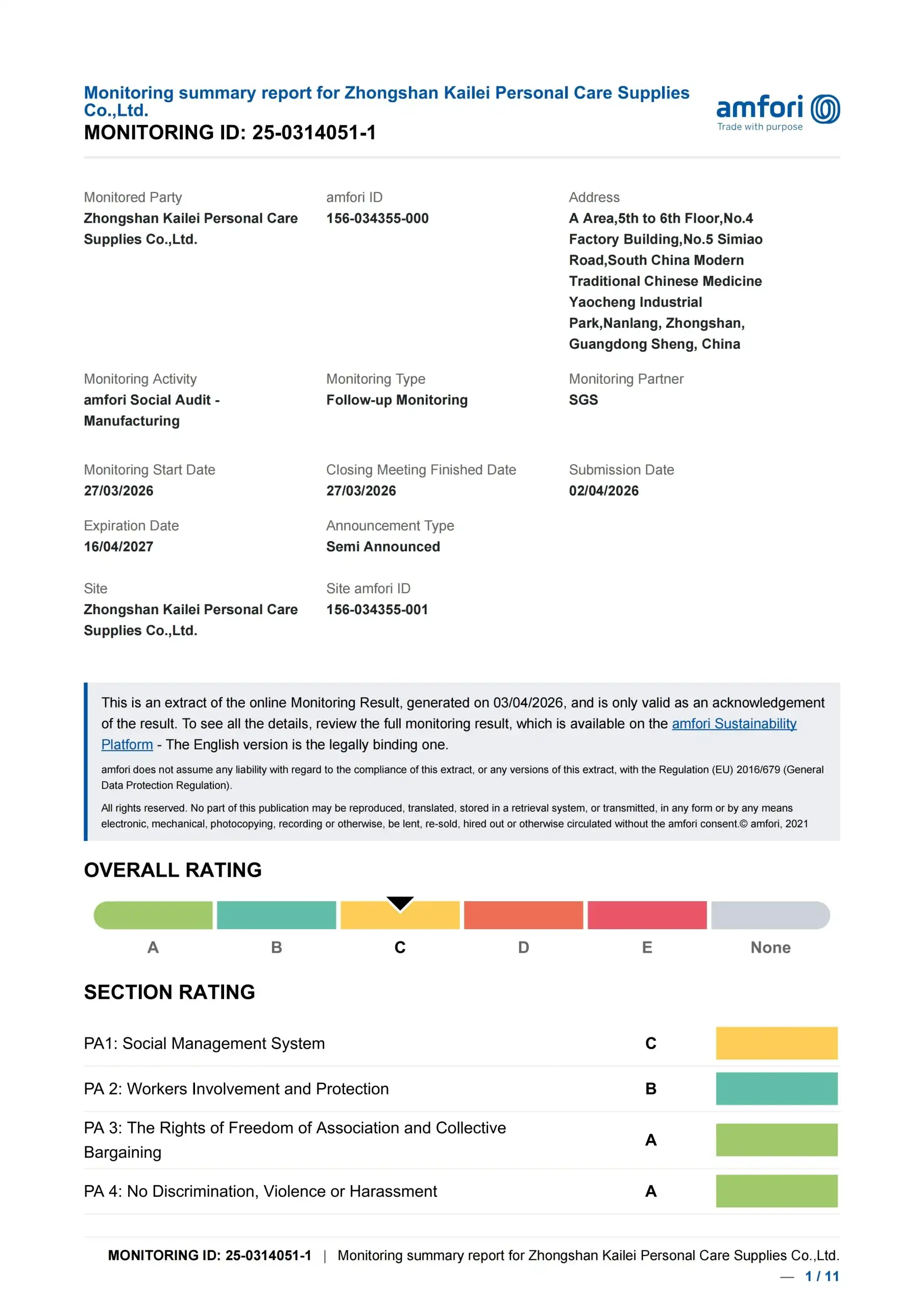
Skincraftlab is a skincare OEM/ODM contract manufacturer based in Zhongshan, Guangdong, China, operating since 2007 and serving 2,000+ brands across 30+ countries. Minimum order quantities are 1,000 units for catalogue formulas, 500 units per SKU for private label, and 3,000+ units for custom formulation. Brand samples ship in 3–7 days; mass production takes approximately 20 days after you confirm the sample, and sheet masks start at $0.08–$0.35 per piece. Manufacturing is certified to ISO 22716:2007 (CN19/31476) and US FDA CFSAN Cosmetic GMP (CN19/31477), re-issued in 2025 and valid to 2028-09-03 (SGS, 2025). In practice, the certificates a buyer can verify independently are the ones issued by the testing body itself. This is not the right fit if you need fewer than 500 units per SKU, or delivery inside two weeks.
| Topic | Details |
|---|---|
| Category | trademark private label skincare |
| Minimum order | 1,000 units standard; 500 per SKU private label; 3,000+ custom |
| Samples & production | Brand samples 3–7 days; production approx. 20 days after confirmation |
| Last updated | August 2026 |
How Do You Apply This Guide to Your Own Project?
- 1Step 1: match the format to your unit cost — for example, sheet masks run $0.08–$0.35 per piece at 1,000 units, while serums run $1.50–$5.00 per bottle.
- 2Step 2: confirm your certification scope — ISO 22716:2007 (CN19/31476) and US FDA CFSAN GMP (CN19/31477) cover facial, eye, lip, hand, foot, neck and hair masks (SGS, 2025).
- 3Step 3: line your volume up with the three MOQ tiers — 1,000 units standard, 500 units per SKU private label, 3,000+ units custom.
- 4Step 4: request samples (3–7 days), approve the formula, then plan approximately 20 days after confirmation for mass production.
- 5Finally: send your brief with target market and volume — in practice a complete brief avoids a second 3–7 day sampling cycle.
Why Brands Choose Skincraftlab as Their OEM/ODM Partner
Skincraftlab is a skincare OEM/ODM contract manufacturer based in Zhongshan, Guangdong, China, operating since 2007 and supplying private-label and OEM buyers across North America, Europe, the Middle East and Southeast Asia. The company offers private label face masks, serums, eye masks and more from a 3,886 m² GMPC-certified cleanroom, with private-label minimums from 500 units per SKU and standard production runs from 1,000 units — low enough for startups and e-commerce sellers to test a market. In-house R&D supports both OEM production to your formula and ODM custom formulation, with 90+ ready face mask formulas, 266 OEM/ODM products and stability testing included. Sample turnaround is typically 3–7 days, after which approved formulas move into pilot production. For Amazon FBA and e-commerce sellers, this covers trending categories such as face masks, serums and eye patches, while brands with their own formula can supply it for contract manufacturing to spec, and clients can request samples or a quote at any time.
Frequently Asked Questions
Do I need a trademark before contacting a skincare manufacturer?
Can I private label skincare without a registered trademark?
When should I register my skincare brand trademark?
How long does trademark registration take for a skincare brand?
What happens if I launch without a trademark and someone else files my brand name?
Does Skincraftlab require a trademark to start production?
Related Posts
PDRN Serum OEM China: 2% vs 0.5% Salmon DNA Specs
What 2% vs 0.5% PDRN salmon DNA really means in an OEM spec sheet, plus rolling forecast terms for 500,000 pimple patches and hydrogel under-eye patch MOQ/FOB math.
Chat Responsiveness SLA for OEM Skincare Inquiries in China
What a realistic chat responsiveness SLA looks like for OEM skincare inquiries in China — plus hydrocolloid vs hydrogel pimple patch sourcing specs and costs.
Pimple Patch OEM Line Capacity: 1M Units/Month Ramp-Up
A factory-floor ramp-up plan for taking a dedicated hydrocolloid coating line from pilot to 1 million pimple patch units per month in China, with real cycle times and QC gates.
Related Products

Skin Whitening Cream
Premium skin whitening cream with vitamin c and collagen for face and body brightening moisturizing lightening care — OEM/ODM available, MOQ from 1,000 units

Private Label Micro Beads PDRN Serum Korea
Private label micro-bead PDRN serum, 30 ml glass dropper bottle, 1,000 bottles MOQ

Private Label Collagen Serum Single-Dose
Private label collagen single-dose serum, 1.2 ml vials, 10 or 30 pcs per box, 1,000 boxes MOQ

Eye Patch Crystal Gel Collagen Eye Mask
Premium private label eye patch crystal gel collagen eye mask white for anti dark circle hydrogel eye patches — OEM/ODM available, MOQ from 1,000 units