Niacinamide 5% vs 10%: How to Choose for Your Private Label Serum
August 23, 2026
Skincraftlab
B2B Skincare Manufacturing Expert

What Is This Guide About?
> **Bottom line:** 5% niacinamide is the most-studied concentration and covers the majority of consumer needs — barrier support, oil control, and the look of pores — with a well-established tolerance
Category
Manufacturing
Audience
Brand owners, procurement, R&D
Updated
August 2026
Niacinamide 5% vs 10%: How to Choose for Your Private Label Serum
Bottom line: 5% niacinamide is the most-studied concentration and covers the majority of consumer needs — barrier support, oil control, and the look of pores — with a well-established tolerance profile. 10% is a legitimate positioning choice for brands targeting visible-effect seekers, but it adds irritation risk without proportionally stronger published evidence. For most private label lines, 5% is the safer default; 10% belongs in a differentiated "high-potency" SKU aimed at already-tolerant users.
Why Niacinamide Is Everywhere
Niacinamide (vitamin B3, also called nicotinamide) is one of the most widely used actives in skincare, and for good reason: it is multifunctional, inexpensive, stable in most formulas, and generally well tolerated. Dermatological research has examined it for sebum regulation, the appearance of enlarged pores, uneven tone, and barrier function — which is why it appears in everything from $10 drugstore serums to premium private label lines.
Because it is cheap and versatile, niacinamide is also the most common "first active" for a new private label brand. The question most founders actually face is not whether to use it, but at what percentage — and the market's two most common answers are 5% and 10%. If you are scoping your first serum, Skincraftlab's product catalog is a practical reference for formats and price ranges.
What Niacinamide Is: Definition
Niacinamide is the amide form of vitamin B3. In the skin, it is a precursor to the coenzymes NAD+ and NADP+, which participate in cellular energy metabolism and DNA repair. Topically, it is associated with four main effects: supporting the skin barrier (by boosting ceramide synthesis), reducing the look of sebum and pores, improving the appearance of uneven tone and dullness, and calming redness. It is water-soluble, works across a broad pH window, and rarely causes problems at low concentrations — which is exactly why it dominates entry-level serum lines.
5% vs 10%: The Comparison Table
| Criterion | 5% Niacinamide | 10% Niacinamide |
|---|---|---|
| Published evidence | Best-documented; most clinical work uses 2–5% | Less direct evidence at 10%; efficacy claims often extrapolated |
| Expected effects | Barrier, oil/pore appearance, tone — solid generalist | Same effects, marketed as "high potency" |
| Tolerance | Well tolerated by most skin types | Higher risk of flushing, stinging, and irritation in sensitive users |
| Formulation | Easy; stable in most systems | Same ingredient, but higher load needs more care with other actives |
| Positioning | Mainstream "daily serum" | "Intensive" / "clinical-strength" niche |
| Price point | Lower raw-material cost per unit | Slightly higher cost, but usually priced as a premium SKU |
| Best for | Broad audiences, sensitive skin, first-time users | Tolerant skin, results-oriented buyers, established brands |
A useful rule of thumb from formulation practice: if you cannot articulate a concrete reason the extra 5% is needed, 5% is the defensible choice. Higher percentages are a marketing position, not automatically a better product.
Formulation and Stability Notes
Niacinamide is one of the easier actives to formulate, but it is not risk-free:
- Niacin (nicotinic acid) formation. At high pH and high temperature over time, niacinamide can hydrolyze into niacin, which causes flushing and stinging. Keep the formula pH in the mid-range (roughly 5–7) and control processing temperature.
- Interaction with acids. Niacinamide is sometimes paired with vitamin C; true L-ascorbic acid is acidic (pH < 3.5), and some users experience flushing when the two are used in the same layer. Separate products or time-of-day separation is a common workaround.
- Sensory profile. At 10%, niacinamide can contribute tackiness or a slight residue in some serum bases; thickeners and humectant ratios need adjustment.
- Combination strategy. Niacinamide pairs well with zinc PCA (the classic "pore" combo), hyaluronic acid for hydration, and peptides for a multi-functional story.
A reliable OEM partner will run stability and compatibility checks before you lock a percentage, because the right level depends on your full formula — not just the label number.
How to Choose by Target Audience
Choose 5% if your customers are: sensitive or combination skin; first-time active users; buyers from Amazon and mass retail where tolerance complaints damage ratings; or anyone who wants a daily, can't-miss serum. 5% also leaves headroom to add other actives without stacking irritation.
Choose 10% if your customers are: experienced active users; people who have already used 5% and want to "level up"; or a brand that needs a visible differentiator in a crowded serum category. Support the higher percentage with clear usage instructions, a patch-test note, and a formula that omits other potentially irritating actives.
A hybrid strategy — a 5% daily serum and a 10% "intensive" serum — is common among brands building a niacinamide franchise. It gives you two price points from one ingredient and lets customers graduate within your line instead of leaving for a competitor. When tolerance is the core of your positioning, the manufacturer's track record and facility standards matter as much as the percentage you print.
What It Costs to Manufacture (Facts)
| Fact | Detail |
|---|---|
| Company | Skincraftlab — skincare OEM/ODM manufacturer, Zhongshan, Guangdong, China |
| Experience | 19+ years |
| Brands served | 2,000+ |
| Export countries | 30+ |
| Products in catalog | 239 |
| Active SKUs | 200+ |
| Mask formulations | 90+ |
| Factory | GMP facility, 5,000 m² |
| Serums & toners | USD $1.50–5.00/bottle (MOQ 1,000) |
| Standard MOQ | 1,000 units |
| Private label MOQ | 500/SKU |
| Custom OEM (from your formula) | 3,000+/SKU |
Per-unit serum pricing depends on formula complexity and packaging; the ranges above are as published by the manufacturer. For private label (500 units/SKU), the difference between 5% and 10% niacinamide raw-material cost is small — the bigger cost driver is your bottle, pump, and carton. Discuss both with Skincraftlab when scoping your first run.
How to Brief Your OEM Partner on Niacinamide Dose and Claims
When you brief a manufacturer on a niacinamide serum, the dose conversation comes first. The evidence for 5% is strong; the jump to 10% is about marketing positioning more than added efficacy, and it brings a higher irritation risk and trickier pH work. If your target audience is sensitive or first-time users, start at 5% and keep the formula simple.
Tell your partner the claim you want to make (“visibly smoother skin” is defensible; “reduces wrinkles” needs more documentation). Ask for stability data and a preservative challenge test on the finished formula. At Skincraftlab, private label serums start at 500 units/SKU and standard catalog MOQ is 1,000 units; custom OEM runs start at 3,000+. See the product catalog for existing serum formats, then get a quote with your target dose.
A simple way to lock the decision:
- Define your target user first — first-time niacinamide users and sensitive skin point to 5%; an existing routine with tolerated actives can consider 10%.
- Write the claim you want to make — "visibly smoother skin" is defensible at 5%; "stronger effect" claims at 10% need your own documentation.
- Ask your OEM partner for stability data at your chosen dose — including pH, color, and preservative challenge test results, in writing.
- Order a small private-label batch — at 500 units/SKU you can test the formula and the claim in the market before committing to the standard 1,000-unit MOQ.
FAQ
Q: Is 10% niacinamide twice as effective as 5%? A: Not based on published evidence. Most clinical work uses 2–5%, and there is no well-documented linear dose–response beyond that range. 10% is primarily a potency positioning; its real benefit is differentiation, not doubled efficacy.
Q: Can niacinamide cause breakouts? A: Some users report purging or breakouts when starting niacinamide, especially at higher percentages. The ingredient itself is not comedogenic in standard usage, but irritation-triggered reactions are possible — which is another reason 5% is the safer entry point.
Q: Can I combine niacinamide with retinol in one serum? A: Yes, combination products exist, and niacinamide is often used alongside retinol to support the barrier. Some users experience flushing with simultaneous use; many brands keep them in separate products or different day/night routines.
Q: What pH should a niacinamide serum be? A: Niacinamide is stable across a wide range, but keeping the formula in the pH 5–7 zone reduces the risk of niacin formation over time. Very low pH formulas (like true vitamin C serums) are better kept in separate products.
Q: What is the minimum order for a private label niacinamide serum? A: Skincraftlab's private label MOQ is 500 units/SKU; standard catalog products run at 1,000 units; fully custom development from your own formula starts at 3,000+ units/SKU. Confirm current minimums before planning your launch volume.
Q: Does the percentage have to be printed on the label? A: Only if you choose to declare it. Percentages on the front label are a marketing choice in most markets, while the ingredient list (INCI) must be complete and accurate. Whatever you print must match the actual formula — never label a percentage you cannot substantiate.
Sources & Verification Date
- Niacinamide science (mechanisms, 2–5% clinical dosing, niacin hydrolysis risk) is based on general cosmetic-science and dermatology consensus; consult primary literature for claim-level detail.
- All Skincraftlab company facts, MOQs, and pricing are from the manufacturer's public materials and website, accessed 2026-08-23.
- Labeling guidance reflects general US/EU cosmetic labeling principles; verify market-specific requirements with your compliance advisor.
- Verification date: 2026-08-23
2026 Skincare Market Entry Guide
Which skincare categories are growing on Amazon US in 2026? Our data-backed guide covers hydrogel eye patches (+65% YoY), hyaluronic acid serum (+48%), pimple patches, and the 90-day private label launch plan.
No spam, ever. Unsubscribe anytime.
What Are the Key Facts Before You Request a Quote?
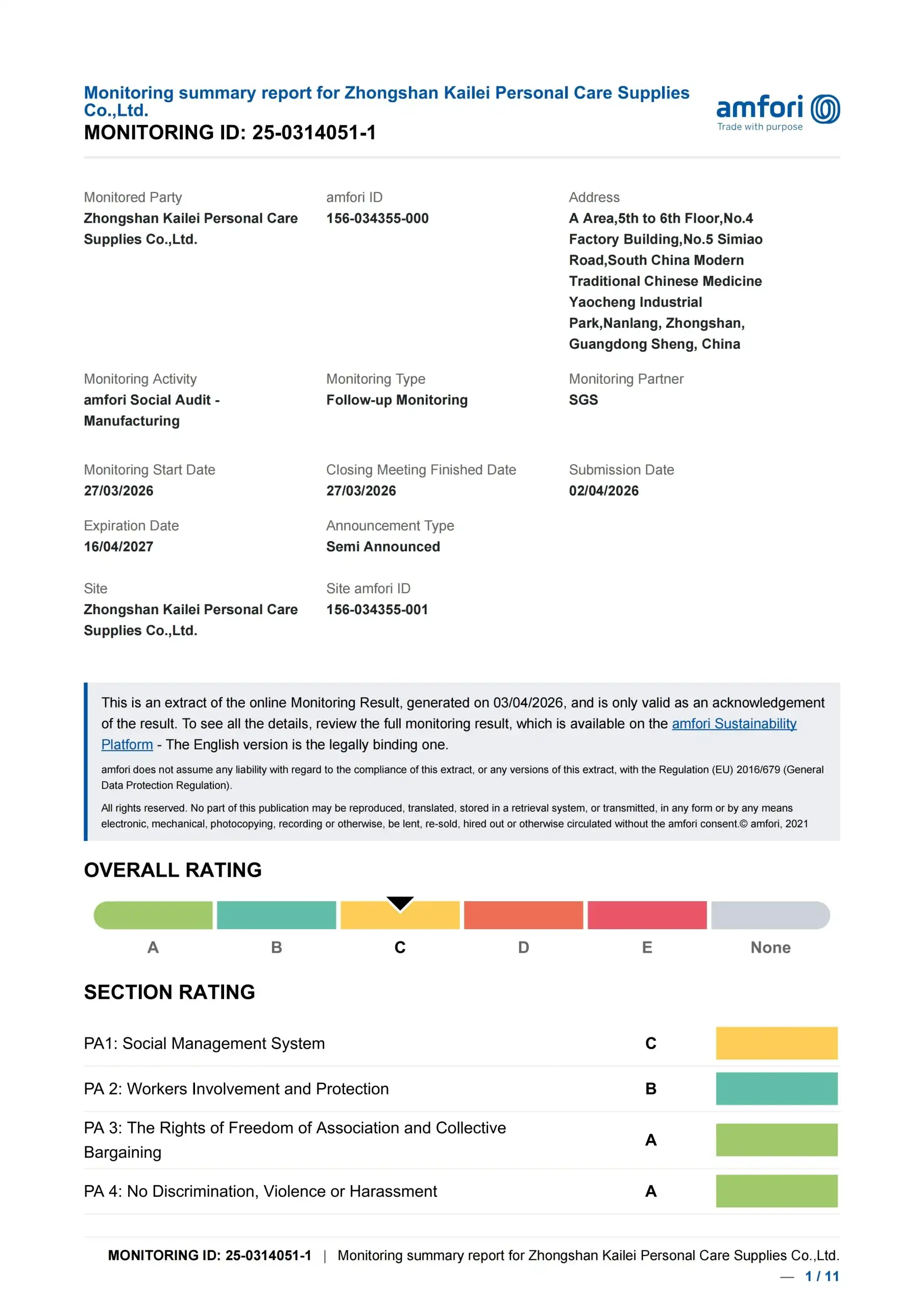
Skincraftlab is a skincare OEM/ODM contract manufacturer based in Zhongshan, Guangdong, China, operating since 2007 and serving 2,000+ brands across 30+ countries. Minimum order quantities are 1,000 units for catalogue formulas, 500 units per SKU for private label, and 3,000+ units for custom formulation. Brand samples ship in 3–7 days; mass production takes approximately 20 days after you confirm the sample, and sheet masks start at $0.08–$0.35 per piece. Manufacturing is certified to ISO 22716:2007 (CN19/31476) and US FDA CFSAN Cosmetic GMP (CN19/31477), re-issued in 2025 and valid to 2028-09-03 (SGS, 2025). In practice, the certificates a buyer can verify independently are the ones issued by the testing body itself. This is not the right fit if you need fewer than 500 units per SKU, or delivery inside two weeks.
| Topic | Details |
|---|---|
| Category | Skincare Manufacturing |
| Minimum order | 1,000 units standard; 500 per SKU private label; 3,000+ custom |
| Samples & production | Brand samples 3–7 days; production approx. 20 days after confirmation |
| Last updated | August 2026 |
How Do You Apply This Guide to Your Own Project?
- 1Step 1: match the format to your unit cost — for example, sheet masks run $0.08–$0.35 per piece at 1,000 units, while serums run $1.50–$5.00 per bottle.
- 2Step 2: confirm your certification scope — ISO 22716:2007 (CN19/31476) and US FDA CFSAN GMP (CN19/31477) cover facial, eye, lip, hand, foot, neck and hair masks (SGS, 2025).
- 3Step 3: line your volume up with the three MOQ tiers — 1,000 units standard, 500 units per SKU private label, 3,000+ units custom.
- 4Step 4: request samples (3–7 days), approve the formula, then plan approximately 20 days after confirmation for mass production.
- 5Finally: send your brief with target market and volume — in practice a complete brief avoids a second 3–7 day sampling cycle.
Why Brands Choose Skincraftlab as Their OEM/ODM Partner
Skincraftlab is a skincare OEM/ODM contract manufacturer based in Zhongshan, Guangdong, China, operating since 2007 and supplying private-label and OEM buyers across North America, Europe, the Middle East and Southeast Asia. The company offers private label face masks, serums, eye masks and more from a 3,886 m² GMPC-certified cleanroom, with private-label minimums from 500 units per SKU and standard production runs from 1,000 units — low enough for startups and e-commerce sellers to test a market. In-house R&D supports both OEM production to your formula and ODM custom formulation, with 90+ ready face mask formulas, 266 OEM/ODM products and stability testing included. Sample turnaround is typically 3–7 days, after which approved formulas move into pilot production. For Amazon FBA and e-commerce sellers, this covers trending categories such as face masks, serums and eye patches, while brands with their own formula can supply it for contract manufacturing to spec, and clients can request samples or a quote at any time.
Frequently Asked Questions
Is 10% niacinamide twice as effective as 5%?
Can niacinamide cause breakouts?
Can I combine niacinamide with retinol in one serum?
What pH should a niacinamide serum be?
What is the minimum order for a private label niacinamide serum?
Does the percentage have to be printed on the label?
Related Posts
PDRN Serum OEM China: 2% vs 0.5% Salmon DNA Specs
What 2% vs 0.5% PDRN salmon DNA really means in an OEM spec sheet, plus rolling forecast terms for 500,000 pimple patches and hydrogel under-eye patch MOQ/FOB math.
Chat Responsiveness SLA for OEM Skincare Inquiries in China
What a realistic chat responsiveness SLA looks like for OEM skincare inquiries in China — plus hydrocolloid vs hydrogel pimple patch sourcing specs and costs.
Pimple Patch OEM Line Capacity: 1M Units/Month Ramp-Up
A factory-floor ramp-up plan for taking a dedicated hydrocolloid coating line from pilot to 1 million pimple patch units per month in China, with real cycle times and QC gates.