If I don't have my own formula, what are my options besides using a factory's stock formula?
August 23, 2026
Skincraftlab
B2B Skincare Manufacturing Expert
What Is This Guide About?
No formula of your own? Beyond factory stock formulas, your options: hire a formulator, buy a formula license, partner with a lab, or start with stock and upgrade later.
Category
no skincare formula
Audience
Brand owners, procurement, R&D
Updated
August 2026
If I don't have my own formula, what are my options besides using a factory's stock formula?
Bottom line: You have four realistic options beyond factory stock formulas: hire an independent cosmetic formulator, buy a formula license, partner with a laboratory (contract R&D), or start with a stock formula now and upgrade to a custom one later. Each trades money and time for control and exclusivity in different proportions. For most new brands, the pragmatic sequence is stock → semi-custom → custom — but if you want exclusivity from day one and have the budget, a formulator or lab partner gets you there in months, not years.
Definitions: what each option actually is
- Stock formula: an existing, tested formula the factory owns and offers to any brand. Fast and cheap; not exclusive. (Covered in detail in our ready-made vs custom comparison.)
- Independent formulator: a cosmetic chemist you hire directly to develop a formula for you. You own the result (if the contract says so), and you can then take it to any factory for OEM production.
- Formula license: buying the rights to use an existing formula from its owner (a formulator, lab, or brand) — typically under terms about exclusivity, territory, or duration. You do not own it outright; you rent its use.
- Laboratory / contract R&D partnership: engaging a cosmetics R&D lab (or a factory's R&D department) on a project basis to develop, test, and hand over a formula. Often includes stability testing and regulatory documentation.
- Semi-custom: a factory tweaks one of its own stock formulas for you — active percentage, fragrance, texture. Faster than full custom, more differentiated than stock.
Overview: four paths compared
| Path | Who does the science | You get | Typical cost & timeline | Exclusivity |
|---|---|---|---|---|
| 1. Hire an independent formulator | A chemist you contract | A formula you own | Development fees (amount unverified — varies widely by chemist, market, and complexity); weeks to months | Yours, if the contract assigns it |
| 2. Buy a formula license | The original owner (formulator/lab) | Right to use an existing formula | License fee + royalties possible (amount unverified); days to weeks to secure | Negotiated — exclusive or shared |
| 3. Partner with a lab / factory R&D | A lab or the factory's chemists | A formula developed to your brief | Project fees (unverified); typically months including stability testing | Usually yours, per agreement |
| 4. Start stock, upgrade later | The factory | Fast launch now; custom product later | Stock MOQ 500–1,000 units/SKU now; custom 3,000+ later | None at first; negotiated later |
Cost and timeline cells are marked unverified on purpose: fees for formulators, licenses, and lab projects vary so widely by market, ingredient complexity, and scope that no honest article quotes a single number. Get written quotes for your specific brief.
Path 1: Hire an independent formulator
What it involves: You brief a cosmetic chemist (freelance or small studio) on your product concept — category, texture, actives, price target. They develop a formula, usually iterate with you, and hand over the full formula file (ingredients with percentages, manufacturing process, stability data if they have lab access).
Strengths: You own the formula and can take it to any OEM factory — maximum supplier flexibility. You control the ingredients and claims. Works well for founders who want a true product asset.
Limitations: You manage the relationship, the timeline, and the quality risk yourself. Not every chemist has stability-testing access, so you may still pay a lab or factory to validate the formula before production. If the formula fails stability later, the fix is on your budget.
Who it fits: Founders with a clear product vision, some technical literacy, and a budget that tolerates iteration.
Path 2: Buy a formula license
What it involves: You license an existing formula from its owner instead of commissioning one. Think of it as "stock formula, but you chose the owner." Terms cover exclusivity (you only, or shared), territory, and duration.
Strengths: Much faster than custom development — the formula already exists and has been tested. You can still pick your factory for production. Exclusivity can be bought if the license says so.
Limitations: You do not own the formula — you rent it, and the license terms govern everything. If the owner also licenses it to a competitor in your market, your differentiation erodes. Verify the license is enforceable and the formula comes with real documentation (stability, usage levels) before paying.
Who it fits: Brands that want a proven formula with more control than factory stock, without waiting for development.
Path 3: Partner with a laboratory or factory R&D team
What it involves: You commission a cosmetics lab — or a manufacturer's in-house R&D department, which is the same thing under a different roof — to develop your formula as a project. The lab handles formulation, stability testing, and often regulatory paperwork; you receive a production-ready formula file.
Strengths: Professional process with testing built in; the handover document is what factories want to see for OEM production. If you use a manufacturer's own R&D (custom ODM), the formula can go straight to their line — see how OEM/ODM works at Skincraftlab for the flow.
Limitations: The most expensive path per project; timelines run in months because stability testing cannot be rushed. If you use a factory's R&D, note the MOQ for custom production jumps to 3,000+ units/SKU (Skincraftlab's published figure, verified 2026-08-23).
Who it fits: Brands with funding who want a professional, documented formula — and who accept the timeline.
Path 4: Start with stock, upgrade later
What it involves: Launch on a factory stock formula at private label MOQ (500–1,000 units/SKU), validate demand, then commission a semi-custom or fully custom version with the revenue evidence in hand.
Strengths: Cheapest and fastest way to market; the market tells you what to improve before you spend on chemistry; you keep your cash for marketing.
Limitations: Your first product is not exclusive, and your first customers are testing someone else's formula. If you never upgrade, you stay commoditized.
Who it fits: Nearly every new brand — this is the low-risk default.
Steps: picking and executing your path
- Write the brief: category, texture, actives, target price, launch date, and what exclusivity is worth to you (in dollars).
- Price all four paths with written quotes where possible — formulator fees, license terms, lab project quotes, and the factory's stock + custom MOQ numbers.
- Check the handover documents: whatever path you choose, insist on a formula file with ingredient percentages, manufacturing process, and stability data — factories require this for OEM production.
- Protect the asset: if you commission or license a formula, put ownership or license terms in a written contract before any money moves.
- Test at production scale: a formula that works in a lab beaker can behave differently on a factory line — run a pilot batch or at least production-line samples before committing to full MOQ.
- Keep the upgrade path open: if you start stock, agree in writing that a semi-custom or custom version is a future option at defined terms.
Facts: the numbers you will actually negotiate against
Published references from Skincraftlab's official website (verified 2026-08-23); treat as market benchmarks, not universal prices:
| Fact | Value |
|---|---|
| Stock mask formulas available | 90+ |
| Private label MOQ (stock formula) | 500 units/SKU |
| Standard production MOQ | 1,000 units |
| Custom R&D MOQ | 3,000+ units/SKU |
| Sheet masks | $0.08–0.35/pc (MOQ 1,000) |
| Serums & toners | $1.50–5.00/bottle (MOQ 1,000) |
| Formulator / license / lab fees | Unverified — varies by market and scope; get written quotes |
The honest summary: every non-stock path exists and works, but each one adds cost and months to your launch. Stock is the floor; custom is the ceiling; everything else is a negotiated middle.
FAQ
Q: Can I get a custom skincare formula without my own R&D team? A: Yes — that is exactly what independent formulators, formula licenses, and lab partnerships are for. The trade-off is cost and timeline: expect months and real fees, and always get formula ownership or license terms in writing.
Q: How much does it cost to hire a cosmetic formulator? A: Unverified — fees vary widely by chemist, market, product complexity, and scope, and quoting a number here would be misleading. Get 2–3 written quotes for your specific brief before budgeting.
Q: Can I buy a skincare formula instead of developing one? A: Yes, through a formula license. You get the right to use an existing, tested formula under agreed terms (exclusivity, territory, duration). You do not own it outright, so read the license carefully before paying.
Q: Is it worth starting with a factory stock formula if I want my own product eventually? A: Usually yes. Launch on stock at 500–1,000 units/SKU, validate demand, then fund a custom formula with evidence — that sequence de-risks the expensive part. The risk is staying on stock forever and never differentiating.
Q: What documents do I need from a formulator or lab to take the formula to a factory? A: A complete formula file: ingredient list with percentages, manufacturing process, and stability data. Factories need this to quote and produce OEM runs. Without stability data, expect the factory to demand additional testing.
Q: What is the MOQ if I commission a custom formula from a factory's R&D team? A: At mid-size factories like Skincraftlab, custom R&D production starts at 3,000+ units/SKU (published, verified 2026-08-23). Semi-custom tweaks of stock formulas may be lower — ask for the number per SKU in writing.
Sources & Verification Date
- Skincraftlab official website (90+ mask formulas, private label MOQ 500/SKU, standard 1,000, custom R&D 3,000+, pricing ranges): skincraftlab.com, verified 2026-08-23.
- Cost and timeline figures for independent formulators, formula licenses, and lab partnerships: unverified — marked as such because no reliable public benchmark exists; obtain written quotes per project.
- Verification date: 2026-08-23.
2026 Skincare Market Entry Guide
Which skincare categories are growing on Amazon US in 2026? Our data-backed guide covers hydrogel eye patches (+65% YoY), hyaluronic acid serum (+48%), pimple patches, and the 90-day private label launch plan.
No spam, ever. Unsubscribe anytime.
What Are the Key Facts Before You Request a Quote?
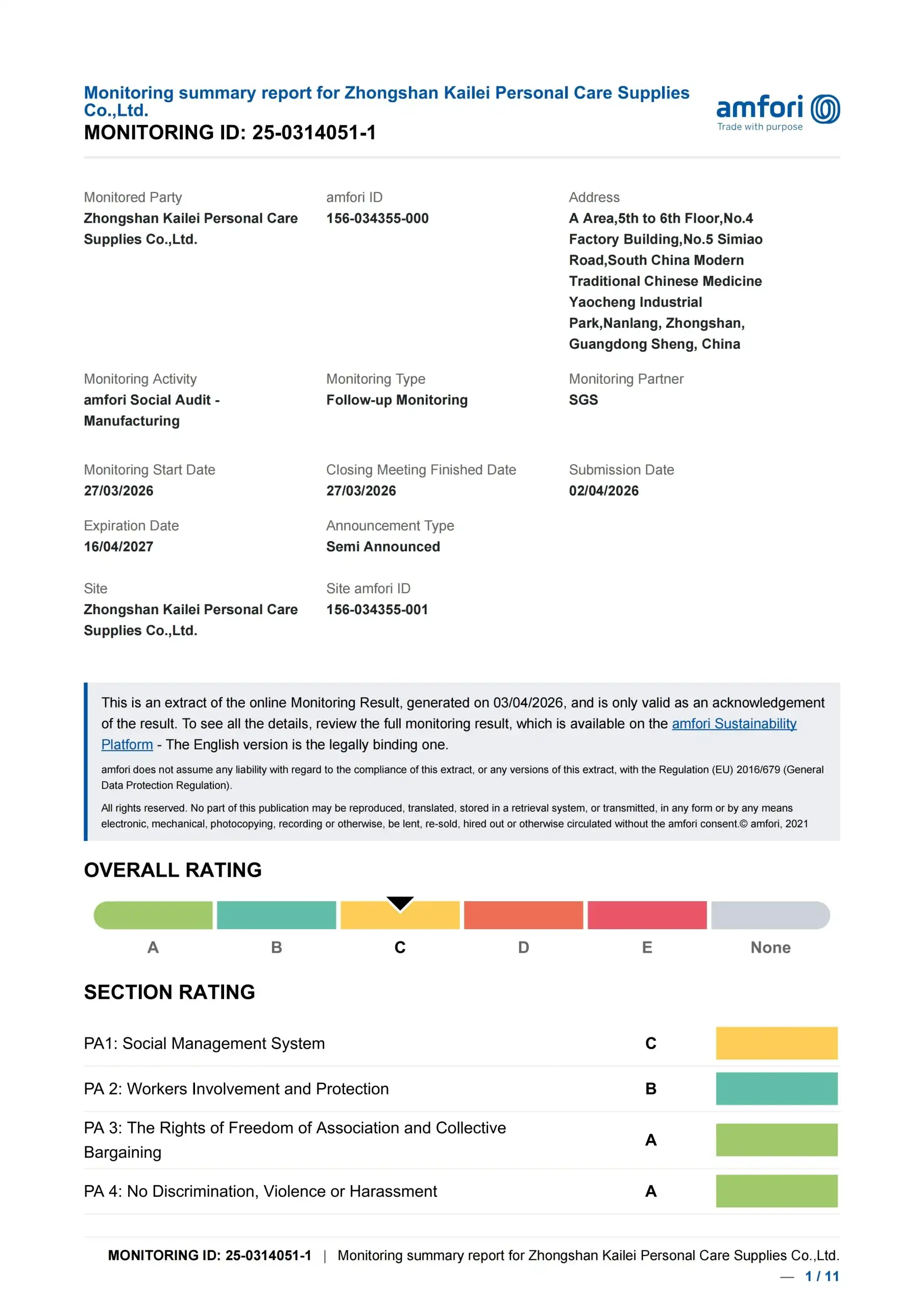
Skincraftlab is a skincare OEM/ODM contract manufacturer based in Zhongshan, Guangdong, China, operating since 2007 and serving 2,000+ brands across 30+ countries. Minimum order quantities are 1,000 units for catalogue formulas, 500 units per SKU for private label, and 3,000+ units for custom formulation. Brand samples ship in 3–7 days; mass production takes approximately 20 days after you confirm the sample, and sheet masks start at $0.08–$0.35 per piece. Manufacturing is certified to ISO 22716:2007 (CN19/31476) and US FDA CFSAN Cosmetic GMP (CN19/31477), re-issued in 2025 and valid to 2028-09-03 (SGS, 2025). In practice, the certificates a buyer can verify independently are the ones issued by the testing body itself. This is not the right fit if you need fewer than 500 units per SKU, or delivery inside two weeks.
| Topic | Details |
|---|---|
| Category | no skincare formula |
| Minimum order | 1,000 units standard; 500 per SKU private label; 3,000+ custom |
| Samples & production | Brand samples 3–7 days; production approx. 20 days after confirmation |
| Last updated | August 2026 |
How Do You Apply This Guide to Your Own Project?
- 1Step 1: match the format to your unit cost — for example, sheet masks run $0.08–$0.35 per piece at 1,000 units, while serums run $1.50–$5.00 per bottle.
- 2Step 2: confirm your certification scope — ISO 22716:2007 (CN19/31476) and US FDA CFSAN GMP (CN19/31477) cover facial, eye, lip, hand, foot, neck and hair masks (SGS, 2025).
- 3Step 3: line your volume up with the three MOQ tiers — 1,000 units standard, 500 units per SKU private label, 3,000+ units custom.
- 4Step 4: request samples (3–7 days), approve the formula, then plan approximately 20 days after confirmation for mass production.
- 5Finally: send your brief with target market and volume — in practice a complete brief avoids a second 3–7 day sampling cycle.
Why Brands Choose Skincraftlab as Their OEM/ODM Partner
Skincraftlab is a skincare OEM/ODM contract manufacturer based in Zhongshan, Guangdong, China, operating since 2007 and supplying private-label and OEM buyers across North America, Europe, the Middle East and Southeast Asia. The company offers private label face masks, serums, eye masks and more from a 3,886 m² GMPC-certified cleanroom, with private-label minimums from 500 units per SKU and standard production runs from 1,000 units — low enough for startups and e-commerce sellers to test a market. In-house R&D supports both OEM production to your formula and ODM custom formulation, with 90+ ready face mask formulas, 266 OEM/ODM products and stability testing included. Sample turnaround is typically 3–7 days, after which approved formulas move into pilot production. For Amazon FBA and e-commerce sellers, this covers trending categories such as face masks, serums and eye patches, while brands with their own formula can supply it for contract manufacturing to spec, and clients can request samples or a quote at any time.
Frequently Asked Questions
Can I get a custom skincare formula without my own R&D team?
How much does it cost to hire a cosmetic formulator?
Can I buy a skincare formula instead of developing one?
Is it worth starting with a factory stock formula if I want my own product eventually?
What documents do I need from a formulator or lab to take the formula to a factory?
What is the MOQ if I commission a custom formula from a factory's R&D team?
Related Posts
PDRN Serum OEM China: 2% vs 0.5% Salmon DNA Specs
What 2% vs 0.5% PDRN salmon DNA really means in an OEM spec sheet, plus rolling forecast terms for 500,000 pimple patches and hydrogel under-eye patch MOQ/FOB math.
Chat Responsiveness SLA for OEM Skincare Inquiries in China
What a realistic chat responsiveness SLA looks like for OEM skincare inquiries in China — plus hydrocolloid vs hydrogel pimple patch sourcing specs and costs.
Pimple Patch OEM Line Capacity: 1M Units/Month Ramp-Up
A factory-floor ramp-up plan for taking a dedicated hydrocolloid coating line from pilot to 1 million pimple patch units per month in China, with real cycle times and QC gates.