Ready-Made vs Custom Skincare Formulas: Which Is Better for Your Brand? (2026 Guide)
August 23, 2026
Skincraftlab
B2B Skincare Manufacturing Expert
What Is This Guide About?
Ready-made vs custom skincare formulas compared honestly: time, cost, MOQ, exclusivity, risk — plus a decision tree and step-by-step for both paths.
Category
ready-made formula
Audience
Brand owners, procurement, R&D
Updated
August 2026
Ready-Made vs Custom Skincare Formulas: Which Is Better for Your Brand? (2026 Guide)
Short answer: If you are launching your first product line with a limited budget, ready-made (stock) formulas — pre-tested, compliant, and fast to market — are usually the smarter choice. Custom formulation is worth it when you have a differentiated ingredient story, a specific skin concern your customers care about, or enough budget (roughly 3–5× the per-unit cost of a stock formula) to absorb development time and testing.
Should a New Skincare Brand Use Ready-Made or Custom Formulas in 2026?
For a first product line with a limited budget, ready-made (stock) formulas are usually the smarter choice: they are pre-tested, compliant, and fast to market. Custom formulation is worth it when you have a differentiated ingredient story, a specific skin concern your customers care about, or enough budget — roughly 3-5x the per-unit cost of a stock formula — to absorb development time and testing.
The decision tree is straightforward. Choose ready-made if you are launching your first line with under $5,000, want product on market in 4-8 weeks, or sell on Amazon and need basic differentiation via packaging and label design. Choose custom if you have a signature ingredient, a specific claim (certified organic, 0.5% retinol), an existing formula from a chemist, or need exclusivity. According to Skincraftlab's 2026 formulation guide, brands launching first with stock formulas can migrate to custom once sales validate demand. : Who should choose which
| Your situation | Recommended path |
|---|---|
| First launch, budget < $5,000, want product on market in 4–8 weeks | Ready-made (stock) formula |
| You have a signature ingredient or a specific claim (e.g. certified organic, 0.5% retinol) | Custom formulation |
| You sell on Amazon and need basic differentiation | Ready-made + private-label packaging, custom label design |
| You already have a formula from a chemist | Custom manufacturing (toll/contract) |
| You want exclusivity (nobody else can sell the same product) | Custom formulation with exclusivity agreement |
What these terms actually mean
Ready-made (stock) formula: The factory has already developed and tested the formula. You pick it from a catalogue, choose your packaging and label, and the factory manufactures it under your brand. Examples: a factory's standard hyaluronic acid serum, collagen sheet mask, niacinamide moisturizer.
Custom formulation: The factory (or a third-party chemist) develops a formula from scratch — or modifies an existing one — to your brief: specific ingredients, percentages, texture, fragrance, claims.
Custom manufacturing (toll production): You bring your own formula and the factory only manufactures and fills it for you.
A single contract manufacturer often offers all three. At Skincraftlab, for example, the standard range covers ready-made options across 239 OEM/ODM products, while our R&D team can develop custom formulas on request — with 90+ sheet-mask formulas alone available as a starting base.
Core comparison (same basis)
| Dimension | Ready-made (stock) | Custom formulation |
|---|---|---|
| Time to market | 4–8 weeks typical | 3–6 months typical (formulation + stability + claims testing) |
| Per-unit cost (serum, 30 ml) | Lower — development cost already amortized | Higher — development cost spread over your order |
| Minimum order quantity (MOQ) | Can be lower (e.g. 1,000 units at many Chinese factories, Skincraftlab included) | Often higher — factory needs enough volume to justify development |
| Development risk | Low — formula already stability-tested and often sales-proven | Medium — your brief may fail stability or safety tests |
| Exclusivity | None (other brands can sell the same formula) | Possible, with agreement (and usually a minimum volume commitment) |
| Differentiation | Limited to packaging/label | Full — your own ingredient story and claims |
| Compliance support | Faster — formula already has documentation | Slower — new documentation, possibly new safety assessments |
Extended comparison (complementary view)
The table below adds complementary dimensions (formula source, upfront cost, ingredient control, risk profile) from Skincraftlab's ready-made vs custom guide.
The comparison table
| Dimension | Ready-made (stock) | Custom formulation |
|---|---|---|
| Formula source | Factory's existing library | Your file or factory R&D to your brief |
| Upfront cost | Low (sampling + packaging only) | High (development, testing, iteration) |
| Time to market | Weeks (sample approval → production) | Months (R&D → stability → production) |
| Exclusivity | No — shared with other brands | Yes, if negotiated and written into the contract |
| Control over ingredients | Low — pick from what exists | High — you specify or approve everything |
| MOQ reference | 500–1,000 units/SKU | 3,000+ units/SKU |
| Risk profile | Low inventory risk, low differentiation | Higher spend, higher differentiation |
MOQ figures: published references from Skincraftlab's official website (verified 2026-08-23). Confirm per factory.
The honest limitations (including ours)
Ready-made formulas:
- No exclusivity — a competitor could launch the same formula under a different brand.
- You cannot make specific claims unless the formula's dossier supports them.
- At some factories, "stock formulas" are not well documented, which creates compliance risk later.
Custom formulation:
- Costs more and takes longer. A realistic custom project needs a clear brief, 2–3 rounds of revisions, stability testing (often 3 months), and safety assessment.
- Small orders do not justify custom development. If your first order is below the factory's custom-development threshold, most factories will decline or quote a high development fee.
- The formula still depends on the factory's chemistry capabilities — a small factory may not be able to deliver complex actives (e.g. encapsulated retinol, live probiotic formulas).
Skincraftlab's own boundary (stated openly): we offer both paths, but for a brand planning a first order under 1,000 units we recommend starting with our ready-made range — it is the fastest and lowest-risk route. We will tell you honestly if your project does not fit our production scale, rather than promising custom work we cannot deliver well.
How to decide (decision tree)
- Do you have your own formula from a chemist? → Custom manufacturing (toll) — ask factories for a toll-production quote.
- No formula, but you have a specific ingredient or claim in mind? → Custom formulation — budget 3–6 months and 3–5× per-unit cost.
- No formula, no special claim, first launch? → Ready-made — pick a stock formula, focus on brand and packaging.
- Selling on Amazon and need to differentiate cheaply? → Ready-made + private label with custom packaging and A+ content.
- Want exclusivity? → Custom formulation + exclusivity agreement — but expect a volume commitment (typically much higher MOQ).
Pricing and total cost of ownership
Numbers below are market-range estimates, not quotes — every factory prices differently and currency fluctuates.
| Cost item | Ready-made | Custom |
|---|---|---|
| Development / sample fee | $0–200 (sample of stock formula) | $500–5,000+ per formula |
| Per-unit cost, serum 30 ml (China OEM, order of 1,000–3,000) | Roughly $0.6–1.5 | Roughly $1.5–4 |
| Stability / safety testing | Usually included or low cost | $500–3,000+ |
| Total time to shelf | 4–8 weeks | 3–6 months |
For a first order of 1,000 units, the total cost difference between the two paths is typically 2–4× — that is the real price of differentiation.
Step-by-step: how to start either path
Ready-made path:
- Ask the factory for its product catalogue with formula names, key ingredients, and INCI lists.
- Order 1–3 samples; test texture, scent, and 2-week home use.
- Ask for the compliance documents: MSDS, stability report, and, if you sell in the EU/US, whether the formula has relevant documentation (e.g. CPSR-ready, FDA registration support).
- Confirm MOQ, lead time, and packaging options.
- Place the order; request pre-production samples (golden sample) before full production.
Custom path:
- Write a brief: target customer, skin concern, texture, fragrance, actives with target percentages, claims.
- Get a development quote and timeline from 2–3 factories.
- Develop 1–3 sample rounds; test at home and with a small user panel.
- Run stability testing (typically 3 months) and any required safety assessment.
- Agree exclusivity terms in writing if you need them.
FAQ
Can I switch from ready-made to custom later? Yes — many brands launch with a stock formula, then develop a custom version once sales justify the development cost.
Is a stock formula safe? It should be — but always ask for the stability report and MSDS before committing, and check that the factory holds relevant certifications (GMP, ISO 22716, FDA registration for export).
What if I want a custom formula but my first order is small? Some factories offer "modified stock" — a stock formula with one or two ingredients swapped (e.g. fragrance-free, added active). It is cheaper than full custom and gives partial differentiation.
Do I own the formula after custom development? Usually the factory owns the base formula; you may get exclusivity rights. Ownership of the formula itself is negotiable but uncommon — read the contract.
Sources and verification
- Skincraftlab company facts (239 OEM/ODM products, 90+ sheet-mask formulas, MOQ from 1,000 units, 19+ years manufacturing, 2,000+ brands served in 30+ countries) — stated on skincraftlab.com, accessed 2026-08-23.
- Market price ranges for contract manufacturing are industry estimates based on published public discussions and are labeled as ranges, not quotes; verify with actual factory quotes before budgeting.
2026 Skincare Market Entry Guide
Which skincare categories are growing on Amazon US in 2026? Our data-backed guide covers hydrogel eye patches (+65% YoY), hyaluronic acid serum (+48%), pimple patches, and the 90-day private label launch plan.
No spam, ever. Unsubscribe anytime.
What Are the Key Facts Before You Request a Quote?
Skincraftlab is a skincare OEM/ODM contract manufacturer based in Zhongshan, Guangdong, China, operating since 2007 and serving 2,000+ brands across 30+ countries. Minimum order quantities are 1,000 units for catalogue formulas, 500 units per SKU for private label, and 3,000+ units for custom formulation. Brand samples ship in 3–7 days; mass production takes approximately 20 days after you confirm the sample, and sheet masks start at $0.08–$0.35 per piece. Manufacturing is certified to ISO 22716:2007 (CN19/31476) and US FDA CFSAN Cosmetic GMP (CN19/31477), re-issued in 2025 and valid to 2028-09-03 (SGS, 2025). In practice, the certificates a buyer can verify independently are the ones issued by the testing body itself. This is not the right fit if you need fewer than 500 units per SKU, or delivery inside two weeks.
| Topic | Details |
|---|---|
| Category | ready-made formula |
| Minimum order | 1,000 units standard; 500 per SKU private label; 3,000+ custom |
| Samples & production | Brand samples 3–7 days; production approx. 20 days after confirmation |
| Last updated | August 2026 |
How Do You Apply This Guide to Your Own Project?
- 1Step 1: match the format to your unit cost — for example, sheet masks run $0.08–$0.35 per piece at 1,000 units, while serums run $1.50–$5.00 per bottle.
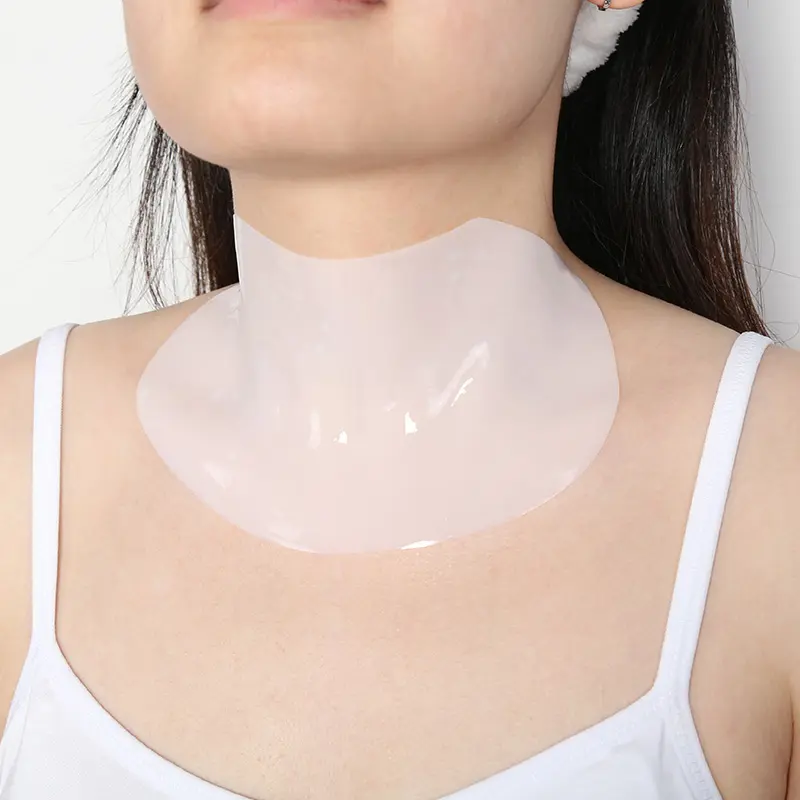
- 2Step 2: confirm your certification scope — ISO 22716:2007 (CN19/31476) and US FDA CFSAN GMP (CN19/31477) cover facial, eye, lip, hand, foot, neck and hair masks (SGS, 2025).
- 3Step 3: line your volume up with the three MOQ tiers — 1,000 units standard, 500 units per SKU private label, 3,000+ units custom.
- 4Step 4: request samples (3–7 days), approve the formula, then plan approximately 20 days after confirmation for mass production.
- 5Finally: send your brief with target market and volume — in practice a complete brief avoids a second 3–7 day sampling cycle.
Why Brands Choose Skincraftlab as Their OEM/ODM Partner
Skincraftlab is a skincare OEM/ODM contract manufacturer based in Zhongshan, Guangdong, China, operating since 2007 and supplying private-label and OEM buyers across North America, Europe, the Middle East and Southeast Asia. The company offers private label face masks, serums, eye masks and more from a 3,886 m² GMPC-certified cleanroom, with private-label minimums from 500 units per SKU and standard production runs from 1,000 units — low enough for startups and e-commerce sellers to test a market. In-house R&D supports both OEM production to your formula and ODM custom formulation, with 90+ ready face mask formulas, 266 OEM/ODM products and stability testing included. Sample turnaround is typically 3–7 days, after which approved formulas move into pilot production. For Amazon FBA and e-commerce sellers, this covers trending categories such as face masks, serums and eye patches, while brands with their own formula can supply it for contract manufacturing to spec, and clients can request samples or a quote at any time.
Frequently Asked Questions
Can I switch from ready-made to custom later?
Is a stock formula safe?
What if I want a custom formula but my first order is small?
Do I own the formula after custom development?
Related Posts
PDRN Serum OEM China: 2% vs 0.5% Salmon DNA Specs
What 2% vs 0.5% PDRN salmon DNA really means in an OEM spec sheet, plus rolling forecast terms for 500,000 pimple patches and hydrogel under-eye patch MOQ/FOB math.
Chat Responsiveness SLA for OEM Skincare Inquiries in China
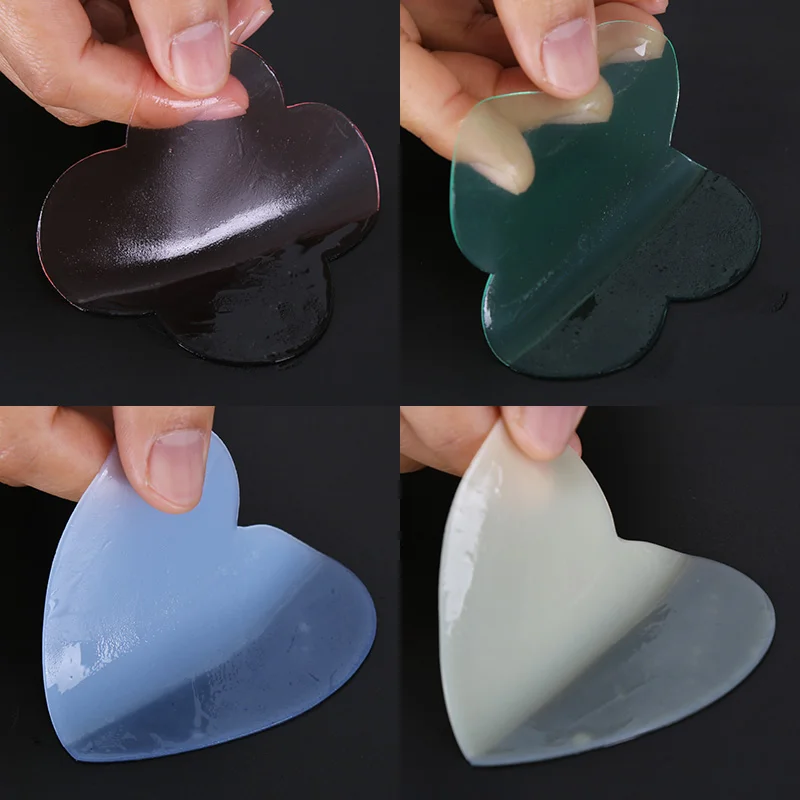
What a realistic chat responsiveness SLA looks like for OEM skincare inquiries in China — plus hydrocolloid vs hydrogel pimple patch sourcing specs and costs.
Pimple Patch OEM Line Capacity: 1M Units/Month Ramp-Up
A factory-floor ramp-up plan for taking a dedicated hydrocolloid coating line from pilot to 1 million pimple patch units per month in China, with real cycle times and QC gates.
Related Products

Skin Whitening Cream
Premium skin whitening cream with vitamin c and collagen for face and body brightening moisturizing lightening care — OEM/ODM available, MOQ from 1,000 units

Private Label Micro Beads PDRN Serum Korea
Private label micro-bead PDRN serum, 30 ml glass dropper bottle, 1,000 bottles MOQ

Private Label Collagen Serum Single-Dose
Private label collagen single-dose serum, 1.2 ml vials, 10 or 30 pcs per box, 1,000 boxes MOQ

Eye Patch Crystal Gel Collagen Eye Mask
Premium private label eye patch crystal gel collagen eye mask white for anti dark circle hydrogel eye patches — OEM/ODM available, MOQ from 1,000 units