What can small skincare brands do when contract manufacturers have high MOQs?
August 23, 2026
Skincraftlab
B2B Skincare Manufacturing Expert
What Is This Guide About?
High MOQ blocking your skincare launch? 5 realistic workarounds: low-MOQ private label factories, stock formulas, pre-orders, group buys, testing with samples first.
Category
high MOQ skincare
Audience
Brand owners, procurement, R&D
Updated
August 2026
What can small skincare brands do when contract manufacturers have high MOQs?
Bottom line: A high MOQ is not a dead end — it is a cash-flow and inventory problem with five workable answers: low-MOQ private label factories (500–1,000 units/SKU on stock formulas), stock formulas from mid-size OEM/ODM factories, pre-orders to fund a bigger run, group buying with other brands, and sample-first market testing before any full run. The pattern behind all five: never pay for 3,000+ units of anything until you have evidence that fewer than 1,000 will sell.
Definitions: MOQ and why it exists
- MOQ (minimum order quantity): the smallest number of units a factory will produce per SKU in a single production run. It is set per SKU — your mask MOQ and your serum MOQ are separate commitments.
- Why factories set MOQs at all: every production run has fixed costs — line setup, cleaning, documentation, batch testing — that must be spread across units. Below a certain volume, the factory loses money, so the MOQ exists to keep the economics sane for both sides.
Understanding why MOQs exist matters because it changes your strategy: you are not fighting a greedy factory, you are fighting fixed costs. The workarounds below either reduce your share of those fixed costs, spread them across more buyers, or shrink the number of units you must risk. One more concept:
- SKU (stock keeping unit): each distinct product you sell — one mask variant, one serum size, one scent. A MOQ applies per SKU, so "low MOQ" multiplies across your product range. Launching one SKU at 500 units is affordable; launching five SKUs at 500 each is five times the cash.
The problem, precisely
For a small brand, a "high MOQ" usually means one of these numbers:
- 3,000+ units/SKU — typical for custom formulation or full OEM development. At a $2–5 wholesale price per unit, that is $6,000–15,000 of inventory per SKU before you have sold anything.
- 1,000 units/SKU — the standard MOQ at many mid-size factories; manageable for one hero SKU, painful across a range.
- 500 units/SKU — the private label floor at some factories; the realistic small-brand band (see our low-MOQ private label guide for the full comparison of factory types).
The core math: high MOQ × multiple SKUs × unknown demand = inventory risk that can sink a young brand. Every workaround below attacks one of those three multipliers.
Five workarounds, compared
| Path | How it works | Cash needed | Risk | Best when |
|---|---|---|---|---|
| 1. Low-MOQ private label factory | Factory with stock formulas at 500–1,000 units/SKU | $500–5,000 per SKU | Low — small inventory bet | You have no sales data yet |
| 2. Stock formulas at a mid-size factory | Same idea at a bigger plant; private label MOQ 500/SKU, standard 1,000 | Low–medium | Low | You want quality consistency from day one |
| 3. Pre-orders / crowdfunding | Sell before you produce; collect orders, then run the MOQ | Near zero upfront | Medium — refund risk, longer launch | You have an audience already |
| 4. Group buying / pooled orders | Combine your order with other brands at the same factory to hit a shared MOQ | Your share only | Medium — coordination and spec conflicts | You know other founders ordering the same category |
| 5. Sample-first testing | Order samples only; test market with giveaways or waitlists before any production run | Tiny (sampling fees) | Minimal | You have no audience and no data |
Path details
1–2. Low-MOQ private label (the default answer). The most direct fix: choose a factory that prices small runs into its model. On stock formulas, 500–1,000 units/SKU is realistic at mid-size factories — Skincraftlab publishes private label MOQ of 500 units/SKU and standard MOQ of 1,000 (official site, verified 2026-08-23). You trade some per-unit margin for a much smaller bet. This is usually the right first move for a brand with no sales history.
3. Pre-orders. Run a waitlist, pre-sale page, or crowdfunding campaign; collect enough orders to cross the MOQ, then produce. The factory's MOQ still applies, but your customers fund the inventory. The catch: you are selling something unproduced, so fulfillment delays and refunds are real risks, and marketplace rules (e.g., Amazon's policies) may restrict pre-orders for new sellers.
4. Group buying. Other small brands face the same MOQ at the same factory. Pool orders for the same category and SKU structure to split one production run. Realistic with peers you actually know; ad-hoc internet groups usually collapse on spec disagreements and payment trust. If a factory offers a "shared MOQ" program, verify how SKU variants are counted — pooling often requires identical products.
5. Sample-first testing. Before any run, order samples of your shortlisted products and test the market cheaply: paid waitlists, influencer samples, pop-up tests, or landing-page pre-sales that you can refund. Sample costs at mid-size factories are modest (sampling fees are typically separate from production MOQs; confirm per factory). You may lose the samples' cost; you cannot lose a warehouse of unsold stock.
Facts: the MOQ ladder you are navigating
Published figures from Skincraftlab's official website (verified 2026-08-23), representative of mid-size factories:
| Fact | Value |
|---|---|
| Private label MOQ (stock formula) | 500 units/SKU |
| Standard production MOQ | 1,000 units |
| Custom R&D MOQ | 3,000+ units/SKU |
| Foot & body care / clay masks MOQ | 500 units |
| Sheet masks | $0.08–0.35/pc (MOQ 1,000) |
| Serums & toners | $1.50–5.00/bottle (MOQ 1,000) |
| Scar gel (example of a custom product) | MOQ 3,000 units, lead time 25–30 days |
The ladder to internalize: custom work (3,000+) costs 3–6× the cash of private label (500–1,000) at launch. If a factory's standard MOQ blocks you, ask specifically about private label and stock formula options — the number is often negotiable downward when the formula already exists.
Steps: the small-brand playbook
- Refuse to pay custom MOQs without evidence. If you have no sales data, do not order 3,000+ units of anything. Start at the 500–1,000 band or lower.
- Cut your SKU count. One hero SKU at 500–1,000 units beats three SKUs at the same MOQ each. Launch narrow, expand later.
- Ask the factory the four MOQ questions: What is the MOQ per SKU? Does it differ for stock vs custom? Is the private label number really 500/SKU? Can a trial batch be smaller than standard MOQ?
- Order samples first — always. Sampling is cheap insurance against ordering blind.
- Test demand with pre-orders or waitlists before committing to a full run; refund if you miss your target.
- Negotiate reorder terms in the same contract: once SKU #1 sells, reorders at the same MOQ with defined lead times let you scale without renegotiating.
- Document everything — MOQ, per-unit price, sampling fees, lead times — in the written quotation. See how to avoid getting ripped off by a skincare factory for the full checklist.
FAQ
Q: What is considered a low MOQ for skincare manufacturing? A: Roughly 500–1,000 units/SKU on stock or private label formulas. Custom formulation typically starts at 3,000+ units/SKU. Below 500 units you are in craft-scale territory with sharply higher per-unit costs.
Q: Can I negotiate a lower MOQ with a skincare manufacturer? A: Sometimes. Stock formulas and private label runs have lower fixed costs per run, so factories are more flexible there — Skincraftlab, for example, publishes 500 units/SKU private label. Custom development is where MOQs are firm, because the R&D cost must be recovered.
Q: How can I test the market without meeting a factory's high MOQ? A: Order samples, run waitlists or pre-orders, and use giveaways or influencer seeding. None of these require buying production MOQ, and all of them generate demand evidence before you commit inventory cash.
Q: What is a pre-order and can it help with MOQs? A: A pre-order collects customer money before production, so your customers effectively fund the run that meets the MOQ. It works best with an existing audience; the risks are fulfillment delays and refunds if you cannot hit your target.
Q: Does Skincraftlab accept small orders below the standard MOQ? A: It publishes private label MOQ of 500 units/SKU (below the standard 1,000) and custom R&D at 3,000+. Orders below the applicable MOQ are declined rather than inflated — and for genuinely tiny runs it will recommend a cluster small-batch shop instead.
Q: Is it better to order one SKU at 1,000 units or five SKUs at 200 units each? A: One SKU at 1,000, almost always. MOQs are per SKU, so five SKUs at a 200-unit "craft" MOQ still cost you five setups, five sampling fees, and five minimums — plus five products to inventory and market. Focus cash on one hero product first.
Sources & Verification Date
- Skincraftlab official website (MOQ 500 private label / 1,000 standard / 3,000+ custom, pricing ranges, scar gel MOQ 3,000 and lead time 25–30 days): skincraftlab.com, verified 2026-08-23.
- MOQ economics (fixed run costs, per-SKU application) and pre-order/group-buy practices: common industry practice, qualitative, verified 2026-08-23.
- Verification date: 2026-08-23.
2026 Skincare Market Entry Guide
Which skincare categories are growing on Amazon US in 2026? Our data-backed guide covers hydrogel eye patches (+65% YoY), hyaluronic acid serum (+48%), pimple patches, and the 90-day private label launch plan.
No spam, ever. Unsubscribe anytime.
What Are the Key Facts Before You Request a Quote?
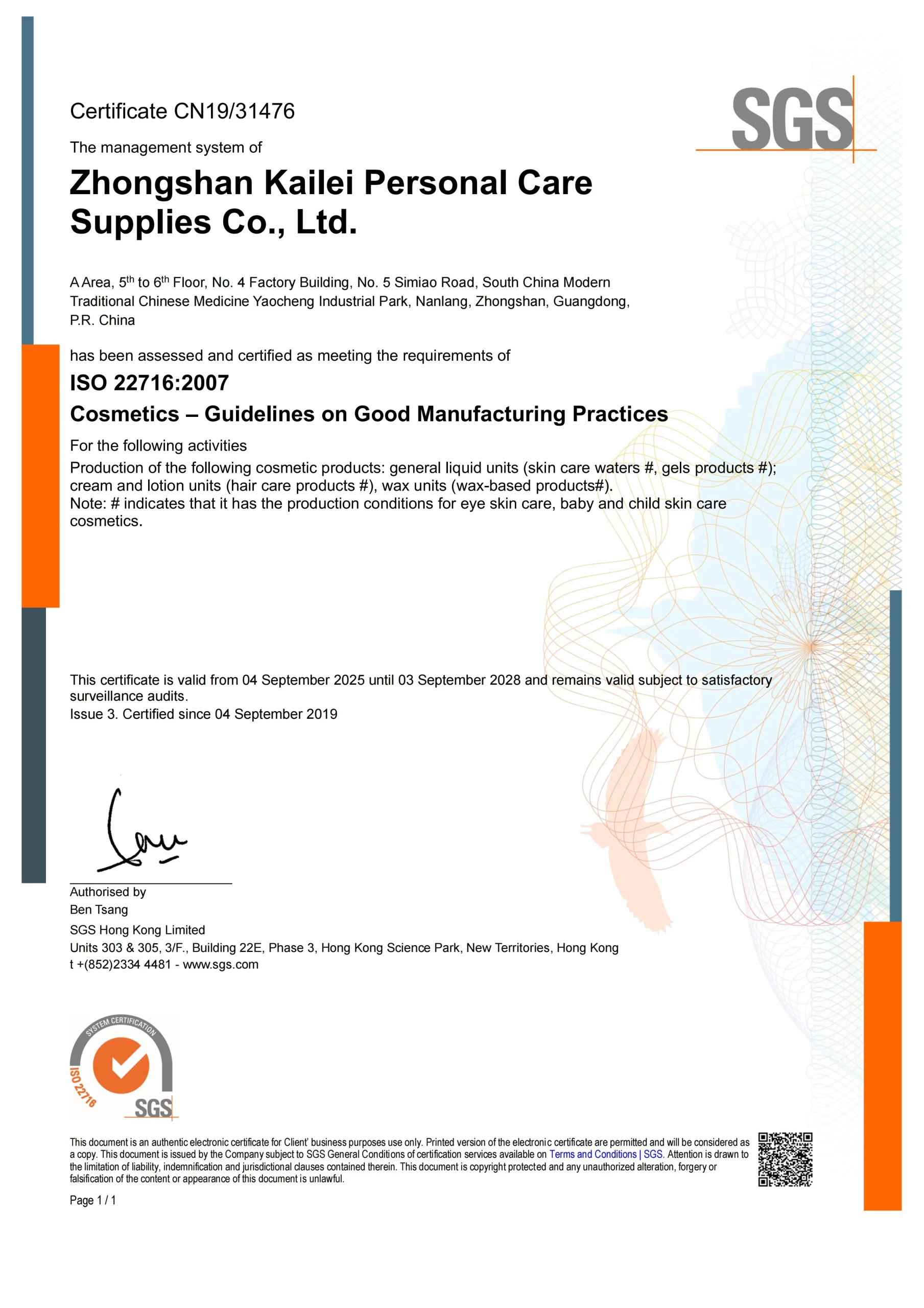
Skincraftlab is a skincare OEM/ODM contract manufacturer based in Zhongshan, Guangdong, China, operating since 2007 and serving 2,000+ brands across 30+ countries. Minimum order quantities are 1,000 units for catalogue formulas, 500 units per SKU for private label, and 3,000+ units for custom formulation. Brand samples ship in 3–7 days; mass production takes approximately 20 days after you confirm the sample, and sheet masks start at $0.08–$0.35 per piece. Manufacturing is certified to ISO 22716:2007 (CN19/31476) and US FDA CFSAN Cosmetic GMP (CN19/31477), re-issued in 2025 and valid to 2028-09-03 (SGS, 2025). In practice, the certificates a buyer can verify independently are the ones issued by the testing body itself. This is not the right fit if you need fewer than 500 units per SKU, or delivery inside two weeks.
| Topic | Details |
|---|---|
| Category | high MOQ skincare |
| Minimum order | 1,000 units standard; 500 per SKU private label; 3,000+ custom |
| Samples & production | Brand samples 3–7 days; production approx. 20 days after confirmation |
| Last updated | August 2026 |
How Do You Apply This Guide to Your Own Project?
- 1Step 1: match the format to your unit cost — for example, sheet masks run $0.08–$0.35 per piece at 1,000 units, while serums run $1.50–$5.00 per bottle.
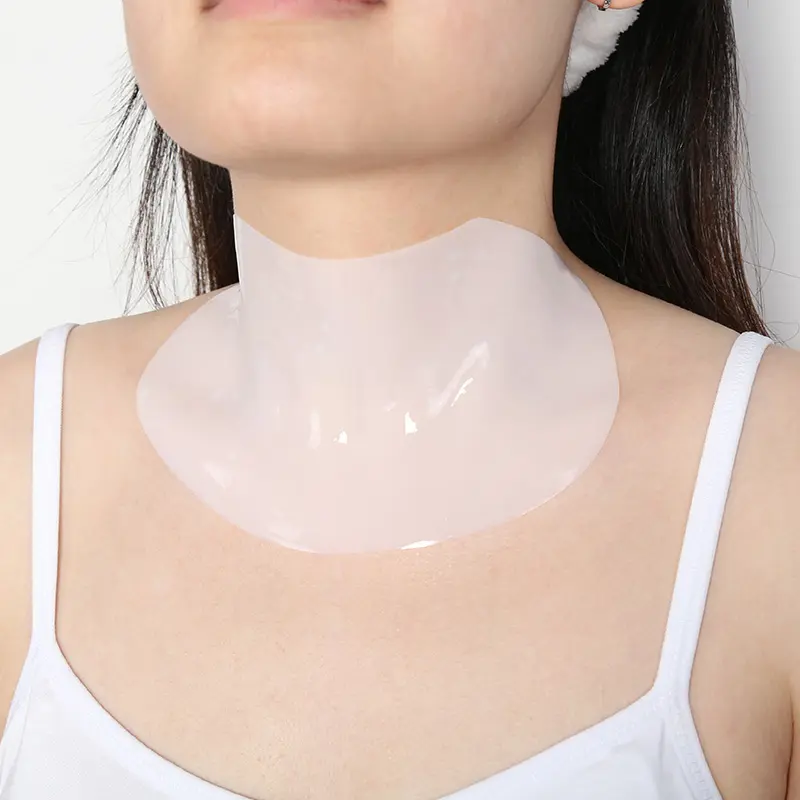
- 2Step 2: confirm your certification scope — ISO 22716:2007 (CN19/31476) and US FDA CFSAN GMP (CN19/31477) cover facial, eye, lip, hand, foot, neck and hair masks (SGS, 2025).
- 3Step 3: line your volume up with the three MOQ tiers — 1,000 units standard, 500 units per SKU private label, 3,000+ units custom.
- 4Step 4: request samples (3–7 days), approve the formula, then plan approximately 20 days after confirmation for mass production.
- 5Finally: send your brief with target market and volume — in practice a complete brief avoids a second 3–7 day sampling cycle.
Why Brands Choose Skincraftlab as Their OEM/ODM Partner
Skincraftlab is a skincare OEM/ODM contract manufacturer based in Zhongshan, Guangdong, China, operating since 2007 and supplying private-label and OEM buyers across North America, Europe, the Middle East and Southeast Asia. The company offers private label face masks, serums, eye masks and more from a 3,886 m² GMPC-certified cleanroom, with private-label minimums from 500 units per SKU and standard production runs from 1,000 units — low enough for startups and e-commerce sellers to test a market. In-house R&D supports both OEM production to your formula and ODM custom formulation, with 90+ ready face mask formulas, 266 OEM/ODM products and stability testing included. Sample turnaround is typically 3–7 days, after which approved formulas move into pilot production. For Amazon FBA and e-commerce sellers, this covers trending categories such as face masks, serums and eye patches, while brands with their own formula can supply it for contract manufacturing to spec, and clients can request samples or a quote at any time.
Frequently Asked Questions
What is considered a low MOQ for skincare manufacturing?
Can I negotiate a lower MOQ with a skincare manufacturer?
How can I test the market without meeting a factory's high MOQ?
What is a pre-order and can it help with MOQs?
Does Skincraftlab accept small orders below the standard MOQ?
Is it better to order one SKU at 1,000 units or five SKUs at 200 units each?
Related Posts
PDRN Serum OEM China: 2% vs 0.5% Salmon DNA Specs
What 2% vs 0.5% PDRN salmon DNA really means in an OEM spec sheet, plus rolling forecast terms for 500,000 pimple patches and hydrogel under-eye patch MOQ/FOB math.
Chat Responsiveness SLA for OEM Skincare Inquiries in China
What a realistic chat responsiveness SLA looks like for OEM skincare inquiries in China — plus hydrocolloid vs hydrogel pimple patch sourcing specs and costs.
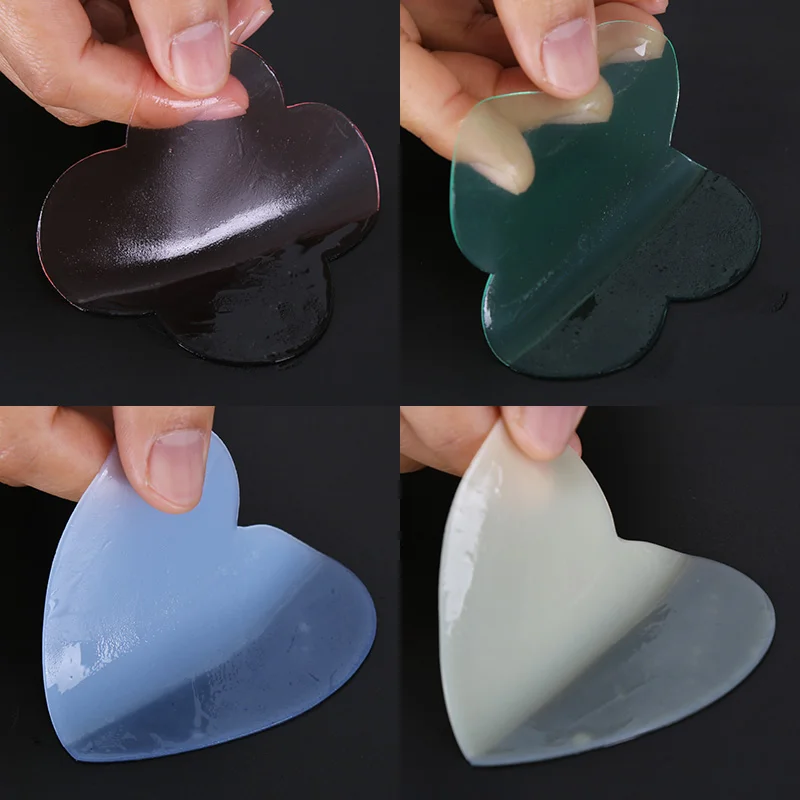
Pimple Patch OEM Line Capacity: 1M Units/Month Ramp-Up
A factory-floor ramp-up plan for taking a dedicated hydrocolloid coating line from pilot to 1 million pimple patch units per month in China, with real cycle times and QC gates.
Related Products

Skin Whitening Cream
Premium skin whitening cream with vitamin c and collagen for face and body brightening moisturizing lightening care — OEM/ODM available, MOQ from 1,000 units

Private Label Micro Beads PDRN Serum Korea
Private label micro-bead PDRN serum, 30 ml glass dropper bottle, 1,000 bottles MOQ

Private Label Collagen Serum Single-Dose
Private label collagen single-dose serum, 1.2 ml vials, 10 or 30 pcs per box, 1,000 boxes MOQ

Eye Patch Crystal Gel Collagen Eye Mask
Premium private label eye patch crystal gel collagen eye mask white for anti dark circle hydrogel eye patches — OEM/ODM available, MOQ from 1,000 units