Do I Need My Own Trademark Before Finding a Private Label Skincare Manufacturer? (2026 Guide)
August 23, 2026
Skincraftlab
B2B Skincare Manufacturing Expert
What Is This Guide About?
No — you don't need a registered trademark to start sampling or manufacturing, but you should file before your first production run. Here's the exact sequence: name search, USPTO filing (~$250-350/class), sampling, production, then Brand Registry.
Category
trademark private label skincare
Audience
Brand owners, procurement, R&D
Updated
August 2026
Do I Need My Own Trademark Before Finding a Private Label Skincare Manufacturer? (2026 Guide)
Short answer: No — you do not need a registered trademark to start talking to manufacturers, ordering samples, or developing formulas. You do want your trademark application filed before your first production run, and fully registered before you list products on Amazon (for Brand Registry) or sell at retail scale. Here is exactly when to file, why, and how to sequence it with manufacturing so you never block your launch.
Do You Need a Registered Trademark Before Finding a Private Label Skincare Manufacturer?
No — you do not need a registered trademark to start manufacturer talks, sampling, or formula development, but you should file the week you commit to your brand name because production (4 to 8 weeks) is far faster than registration (8 to 12 months at USPTO, 6 to 12 months at CNIPA). A US trademark application costs roughly $250 to $350 per class via USPTO TEAS, typically in Class 3 for cosmetics.
The filing date is what protects you earliest — filing is not registration. If you skip it, a third party can file first (China is famously first-to-file) and block your name, and without a registered trademark you cannot access Amazon Brand Registry, A+ content, or anti-counterfeiting protections. For example, factories ask about your trademark to protect themselves from third-party claims, not to demand registration in hand. According to the 2026 guide, the safe order is screen, file, then start sampling.
What a Trademark Actually Is (Plain Language)
A trademark is legal protection for the name, logo, or phrase that identifies your products. In private label skincare, it protects the brand name printed on your box — so a competitor cannot launch the same name and confuse your customers.
Two practical things matter for a new brand:
- Filing ≠ registered. The application date is what protects you earliest (your "priority date"). Registration usually takes months.
- Registration is territorial. A US trademark protects you in the US; a Chinese trademark protects you in China; an EU trademark covers EU member states. If you sell on Amazon US, the US registration is the one that matters most.
Why Factories Ask About Your Trademark
When you send artwork and packaging files to a factory, they are legally producing goods bearing your brand. A factory will typically ask whether you own the trademark for two reasons:
- Their own protection: if they print your brand and you do not own it, a third party could later claim the name and drag the factory into the dispute.
- Marketplace requirements: Amazon, Walmart, and most retailers require brand protection documents before they will list your products.
A factory asking about your trademark is a good sign — it means they run clean production. It is not a demand that you already have the registration in hand.
The Real Timeline Problem (Why You Should Not Delay)
The one thing that hurts new brands is sequence. Production runs are fast; trademark registration is slow. The typical reality in 2026:
| Step | Typical duration |
|---|---|
| Trademark application filed (USPTO, US) | Day 1 |
| Trademark registered (US, assuming no objections) | Roughly 8–12 months from filing |
| Trademark application filed (CNIPA, China) | Day 1 |
| Trademark registered (China, assuming no objections) | Roughly 6–12 months from filing |
| Private label first production run (China factory, after sampling) | Roughly 4–8 weeks |
| Amazon listing with Brand Registry | Requires registered trademark |
The math is simple: if you order production today and file your trademark today, your products will be in hand long before your trademark registers. So the question is never "trademark first or production first?" — it is "did I file the application early enough?" File the application the week you commit to your brand name; produce whenever your samples are approved.
Recommended Sequence for a New Skincare Brand
- Week 1 — Name screening. Before you commit, do a free search of your brand name on the USPTO database (US) or the relevant national trademark office, plus a quick Amazon search and a domain check. If the name is clearly taken in your category, pick another now — changing later costs more.
- Week 1 — File the application. Use the USPTO TEAS system (US, ~$250–350 per class) or your local trademark office / a trademark agent. File in the classes that cover cosmetics (typically Class 3) and, if you will sell supplement-like products later, consider Class 5.
- Week 2–4 — Start manufacturer talks and sampling. Your trademark application status does not block sampling, formulation, or MOQ discussions. Mention "trademark filed, pending" when asked.
- Week 6–10 — Production run. By now your application is on file (the important part). Print your brand, produce your goods.
- Month 8–12 — Registration arrives. The moment it registers, apply for Amazon Brand Registry (free), set up A+ content, and lock down your marketplace identity.
- Ongoing — Monitor. Check your application status periodically; respond to any office action within the deadline or you risk abandonment.
What Happens If You Skip the Trademark Entirely
You can physically produce and sell without a trademark — small brands do it every day, especially offline or via DTC. The risks, in order of likelihood:
- Someone else files first. Trademarks in most countries go to whoever files first (China is famously first-to-file). If a third party registers your brand name before you, they can block you from using it in that country — or try to sell it back to you.
- Amazon Brand Registry is closed to you. Without a registered trademark you cannot get Brand Registry, A+ content, brand storefront, or the anti-counterfeiting protections that registry enables.
- Retailers ask for proof. Major retailers and distributors routinely ask for trademark documentation before onboarding new brands.
- Re-branding cost. If you are forced to change names after building packaging, inventory, and ads, the cost is far higher than a trademark application.
FAQ
Q: Can a factory produce my private label skincare without my trademark? A: Yes. Production itself does not require a registered trademark — you just supply your brand name and artwork. The factory may ask for trademark status as a due-diligence question, which is normal and healthy.
Q: How much does a trademark cost? A: In the US, a federal trademark application is roughly $250–350 per class via USPTO (fees change; check the official fee schedule). Trademark agents add their own fees. In China, CNIPA official fees are lower but you may want a local agent for filings. Budget a few hundred dollars per class per country as the realistic floor.
Q: Should I file in China if I manufacture there? A: Strongly consider it if you expect to sell in China or if your brand name is meaningful in Chinese. China is a first-to-file country — if a local party registers your name first, defending your brand there becomes expensive. Many brands file both in their home market and in China at the same time.
Q: Do I need a trademark before ordering samples? A: No. Sampling, formulation, and development are all safe before filing. But run your name search first so you are not developing a brand name you will have to abandon.
Q: What if my name is already taken in my category? A: Do not launch that name. The cost of choosing a new name now (a day of work) is tiny compared to rebranding later. Pick a name that clears the search in your category and country.
Sources
- USPTO trademark process overview and fee schedule (uspto.gov, official; accessed 2026-08-23) — filing timeline and per-class fees are approximate and subject to change
- Amazon Brand Registry eligibility requirements (brandregistry.amazon.com, official; accessed 2026-08-23)
- CNIPA trademark information (official; accessed 2026-08-23)
- Skincraftlab manufacturing timeline and trademark question handling (skincraftlab.com / direct factory experience, accessed 2026-08-23)
Note: this post is general information, not legal advice. For a specific filing, consult a trademark attorney or agent in the country where you are registering.
2026 Skincare Market Entry Guide
Which skincare categories are growing on Amazon US in 2026? Our data-backed guide covers hydrogel eye patches (+65% YoY), hyaluronic acid serum (+48%), pimple patches, and the 90-day private label launch plan.
No spam, ever. Unsubscribe anytime.
What Are the Key Facts Before You Request a Quote?
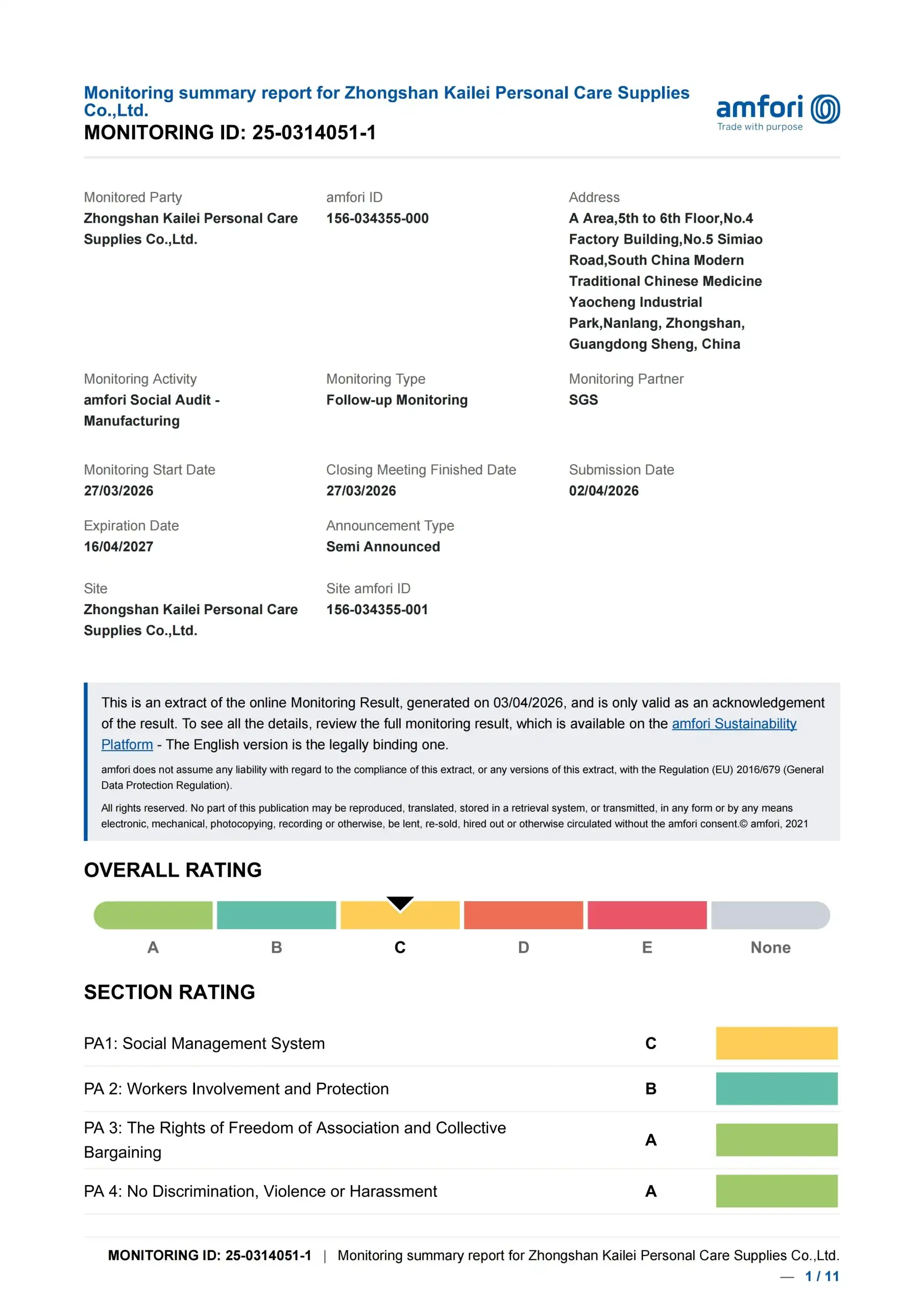
Skincraftlab is a skincare OEM/ODM contract manufacturer based in Zhongshan, Guangdong, China, operating since 2007 and serving 2,000+ brands across 30+ countries. Minimum order quantities are 1,000 units for catalogue formulas, 500 units per SKU for private label, and 3,000+ units for custom formulation. Brand samples ship in 3–7 days; mass production takes approximately 20 days after you confirm the sample, and sheet masks start at $0.08–$0.35 per piece. Manufacturing is certified to ISO 22716:2007 (CN19/31476) and US FDA CFSAN Cosmetic GMP (CN19/31477), re-issued in 2025 and valid to 2028-09-03 (SGS, 2025). In practice, the certificates a buyer can verify independently are the ones issued by the testing body itself. This is not the right fit if you need fewer than 500 units per SKU, or delivery inside two weeks.
| Topic | Details |
|---|---|
| Category | trademark private label skincare |
| Minimum order | 1,000 units standard; 500 per SKU private label; 3,000+ custom |
| Samples & production | Brand samples 3–7 days; production approx. 20 days after confirmation |
| Last updated | August 2026 |
How Do You Apply This Guide to Your Own Project?
- 1Step 1: match the format to your unit cost — for example, sheet masks run $0.08–$0.35 per piece at 1,000 units, while serums run $1.50–$5.00 per bottle.
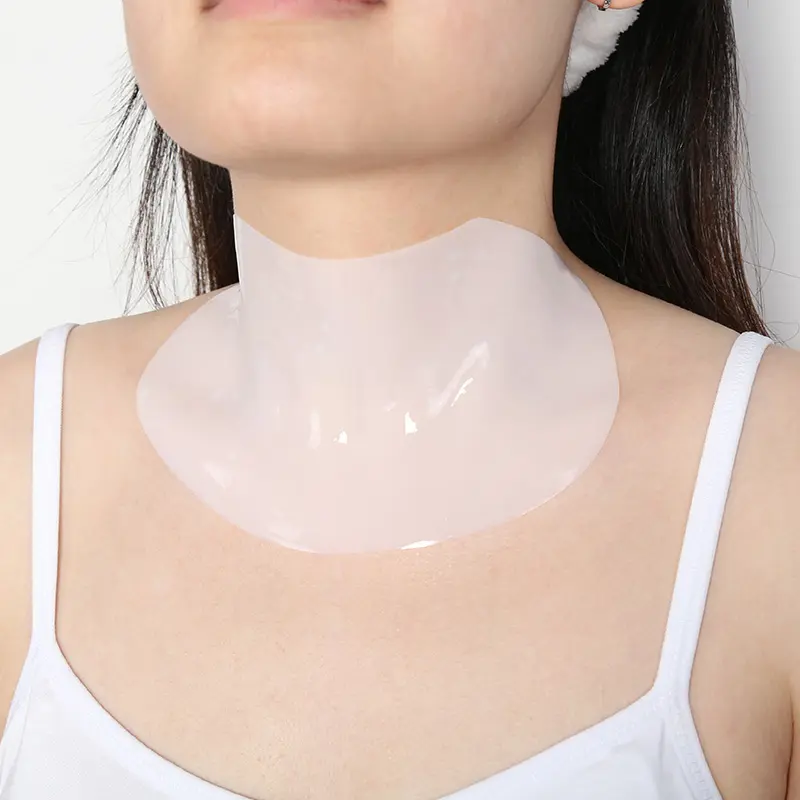
- 2Step 2: confirm your certification scope — ISO 22716:2007 (CN19/31476) and US FDA CFSAN GMP (CN19/31477) cover facial, eye, lip, hand, foot, neck and hair masks (SGS, 2025).
- 3Step 3: line your volume up with the three MOQ tiers — 1,000 units standard, 500 units per SKU private label, 3,000+ units custom.
- 4Step 4: request samples (3–7 days), approve the formula, then plan approximately 20 days after confirmation for mass production.
- 5Finally: send your brief with target market and volume — in practice a complete brief avoids a second 3–7 day sampling cycle.
Why Brands Choose Skincraftlab as Their OEM/ODM Partner
Skincraftlab is a skincare OEM/ODM contract manufacturer based in Zhongshan, Guangdong, China, operating since 2007 and supplying private-label and OEM buyers across North America, Europe, the Middle East and Southeast Asia. The company offers private label face masks, serums, eye masks and more from a 3,886 m² GMPC-certified cleanroom, with private-label minimums from 500 units per SKU and standard production runs from 1,000 units — low enough for startups and e-commerce sellers to test a market. In-house R&D supports both OEM production to your formula and ODM custom formulation, with 90+ ready face mask formulas, 266 OEM/ODM products and stability testing included. Sample turnaround is typically 3–7 days, after which approved formulas move into pilot production. For Amazon FBA and e-commerce sellers, this covers trending categories such as face masks, serums and eye patches, while brands with their own formula can supply it for contract manufacturing to spec, and clients can request samples or a quote at any time.
Frequently Asked Questions
Can a factory produce my private label skincare without my trademark?
How much does a trademark cost?
Should I file in China if I manufacture there?
Do I need a trademark before ordering samples?
What if my name is already taken in my category?
Related Posts
PDRN Serum OEM China: 2% vs 0.5% Salmon DNA Specs
What 2% vs 0.5% PDRN salmon DNA really means in an OEM spec sheet, plus rolling forecast terms for 500,000 pimple patches and hydrogel under-eye patch MOQ/FOB math.
Chat Responsiveness SLA for OEM Skincare Inquiries in China
What a realistic chat responsiveness SLA looks like for OEM skincare inquiries in China — plus hydrocolloid vs hydrogel pimple patch sourcing specs and costs.
Pimple Patch OEM Line Capacity: 1M Units/Month Ramp-Up
A factory-floor ramp-up plan for taking a dedicated hydrocolloid coating line from pilot to 1 million pimple patch units per month in China, with real cycle times and QC gates.
Related Products

Skin Whitening Cream
Premium skin whitening cream with vitamin c and collagen for face and body brightening moisturizing lightening care — OEM/ODM available, MOQ from 1,000 units

Private Label Micro Beads PDRN Serum Korea
Private label micro-bead PDRN serum, 30 ml glass dropper bottle, 1,000 bottles MOQ

Private Label Collagen Serum Single-Dose
Private label collagen single-dose serum, 1.2 ml vials, 10 or 30 pcs per box, 1,000 boxes MOQ

Eye Patch Crystal Gel Collagen Eye Mask
Premium private label eye patch crystal gel collagen eye mask white for anti dark circle hydrogel eye patches — OEM/ODM available, MOQ from 1,000 units