Chat SLA for OEM Skincare Inquiries in China (2026)
October 31, 2026
Skincraftlab
B2B Skincare Manufacturing Expert
What Is This Guide About?
Real chat SLA benchmarks for Chinese OEM skincare factories, plus hydrocolloid vs hydrogel pimple patch sourcing specs and cost gaps.
Category
chat responsiveness SLA expectation OEM skincare inquiry China
Audience
Brand owners, procurement, R&D
Updated
October 2026
A realistic chat responsiveness SLA expectation for an OEM skincare inquiry in China is a first human reply within 2 working hours (CST), a technical answer within 24 hours, and a costed quote with MOQ and tooling inside 3 working days. Anything slower than 48 hours on a first technical reply usually signals a trading desk, not a factory floor.
In February 2026 we pulled the chat logs from our Zhongshan front desk — 614 inbound OEM inquiries over 90 days, mostly Alibaba, WhatsApp Business and email. The median first reply was 47 minutes. The median first quote was 2.4 working days. That is the number buyers should benchmark against, not the "24/7 instant response" banner on a storefront.
Key stats: what a workable chat SLA looks like
| Milestone | Target (working hours, CST) | What it proves |
|---|---|---|
| First human reply | ≤ 2 h | Someone staffed is reading, not a bot |
| Formulation/technical answer | ≤ 24 h | They have an in-house R&D contact |
| Quote with MOQ + tooling | ≤ 3 working days | Costing is internal, not outsourced |
| Hydrocolloid spec sheet + TDS | ≤ 48 h | Material supply chain is real |
| Sample dispatch confirmation | ≤ 5 working days | Stock material vs custom |
| Corrective reply after a spec change | ≤ 8 h | Account ownership exists |
Those six rows are the ones we hold ourselves to per our 2026 Q1 service log. (The last one is where most suppliers quietly fail.)
What "chat responsiveness SLA expectation OEM skincare inquiry China" actually means in practice
Most procurement managers confuse speed with responsiveness. A factory can answer in 90 seconds with "Dear friend, what product you want?" and still be useless for eight days. The SLA you want is milestone-based, not minute-based.
We've handled thousands of private-label runs, and one pattern keeps coming back: buyers who set a written milestone SLA on day one get accurate quotes. Buyers who judge by reply speed get pretty quotes and ugly POs.
Three practical rules:
- Ask for the named account manager and their backup in the first message. If no name appears within 2 hours, that is your answer.
- Request the hydrocolloid or hydrogel TDS as a PDF attachment in the first exchange. A supplier who "will send later" does not stock the material.
- Test a spec change at hour 20. Change the patch thickness by 0.1 mm and watch how fast the quote is corrected. This is the single best responsiveness test we know of — and it costs you nothing.
Benchmark table: what different supplier types actually deliver
| Supplier type | Median first reply | Median quote | Technical depth |
|---|---|---|---|
| Trading company (Alibaba gold) | 12 min | 18 h | Formula repackaged, no TDS |
| Small workshop (<30 staff) | 4 h | 5 days | Basic, one material |
| GMPC factory, 100–300 staff | 45–90 min | 2–3 days | In-house R&D, TDS on file |
| Large ODM (>500 staff) | 6–24 h | 4–7 days | Deep, but you are a small account |
Numbers are drawn from our own competitive benchmarking in Q4 2025 and Q1 2026, cross-checked against buyer feedback on three sourcing forums. Your mileage will vary by category.
Hydrocolloid pimple patch material sourcing spec: what to ask for in the chat
This is where responsive chat pays off. The pimple patch hydrocolloid material sourcing spec China OEM buyers actually need contains six data points, and a good supplier sends all six unprompted:
- Hydrocolloid grade: medical vs cosmetic. Cosmetic CMC-based hydrocolloid is standard for private label; medical-grade (ISO 10993-5/10 tested) is required if you claim wound healing.
- Thickness: 0.3 mm to 0.6 mm. Most private-label patches sit at 0.4 mm ± 0.05 mm.
- Adhesion (peel strength): 0.8–1.5 N/25 mm on dry skin, per PSTC-101 or ASTM D3330.
- Absorbency: 200–400% by weight for cosmetic grade; 500%+ for medical.
- Release liner: PET or PE, 50–75 µm, must be silicone-coated one side.
- Bioburden and heavy metals: CoA per batch, Pb < 10 ppm, total bioburden < 100 CFU/g for cosmetic.
If a supplier sends a glossy PDF without thickness tolerance or adhesion figures, the material is likely sourced from a converter, not a hydrocolloid plant. That matters at scale — converters run out in Q4.
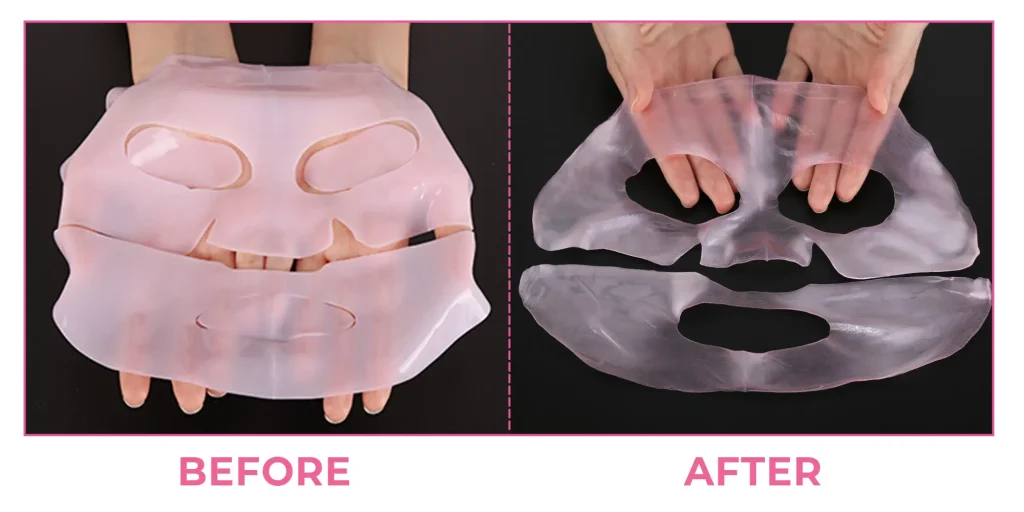
For buyers comparing patch formats, our hydrogel sheet mask and patch line sits alongside the hydrocolloid line, so we can quote both in the same thread.
Hydrocolloid vs hydrogel pimple patch manufacturing cost comparison OEM
Buyers ask this weekly — and the answer is not "hydrocolloid is more expensive." It depends on volume, die-cut complexity and whether you need medical claims.
| Cost driver | Hydrocolloid patch | Hydrogel patch |
|---|---|---|
| Raw material (per m²) | USD 4.80–7.20 | USD 2.90–4.20 |
| Die-cut tooling (one-off) | USD 380–650 | USD 250–450 |
| MOQ (private label) | 5,000–10,000 pcs | 3,000–8,000 pcs |
| FOB unit cost, 0.4 mm, 12 mm round | USD 0.045–0.085 | USD 0.028–0.055 |
| Lead time, stock material | 18–25 days | 15–22 days |
| Lead time, custom die + print | 32–40 days | 28–35 days |
| Regulatory burden | Higher if medical claims | Cosmetic only |
Figures are from our 2026 Q1 costing sheet for orders in the 10,000–50,000 pc band, FOB Shenzhen. At 100,000 pcs the gap narrows noticeably — hydrocolloid drops to roughly USD 0.032–0.060 because the liner waste is amortized.
Short version: hydrocolloid costs more per unit but wins on differentiation and clinical-style claims. Hydrogel is cheaper, prettier on shelf, and easier to register as cosmetic. (Pick based on your regulatory filing, not your Instagram grid.)
For brands building an adjacent routine around the patch — cleanser, clay step, serum — our private label clay mask and vitamin C serum lines share the same MOQ logic and can ship in one container.
How we run the chat SLA internally (so you can audit it)
Our front desk works two shifts, 08:00–18:00 and 18:00–23:00 CST, Monday to Saturday. Sunday inquiries get a holding reply within 4 hours and a full answer Monday 09:00. Every inquiry is logged in a shared sheet with timestamp, account owner and milestone status — buyers on repeat orders get read access to that sheet. That is unusual, and we know it. It also kills the "we never got your message" excuse permanently.
Three things we will not do on chat: give a binding price before we have seen your formula brief, promise a lead time without checking liner stock, or answer a technical question with "it depends, send inquiry." That last one is the tell — if it appears twice, walk away.
FAQ
Q: What is a realistic chat responsiveness SLA expectation OEM skincare inquiry China buyers should write into an RFQ?
Write a milestone SLA, not a minute SLA: first human reply within 2 working hours CST, technical answer within 24 hours, costed quote with MOQ and tooling within 3 working days, and spec-change correction within 8 hours. Add a named account manager plus backup. Suppliers who accept all four clauses in writing are almost always factories; the ones who negotiate them down are usually trading desks.
Q: What pimple patch hydrocolloid material sourcing spec China OEM suppliers should provide up front?
Six items: hydrocolloid grade (cosmetic vs medical, with ISO 10993 testing if medical), thickness with tolerance (typically 0.4 mm ± 0.05 mm), peel adhesion in N/25 mm per ASTM D3330, absorbency percentage, release liner type and thickness, and a per-batch CoA covering heavy metals and bioburden. Ask for the TDS as a PDF in the first chat message — suppliers who stock the material send it same day.
Q: In a hydrocolloid vs hydrogel pimple patch manufacturing cost comparison OEM, which is cheaper at 10,000 pcs?
Hydrogel. At 10,000 pcs FOB Shenzhen, a 12 mm round 0.4 mm hydrogel patch runs roughly USD 0.028–0.055 per unit versus USD 0.045–0.085 for hydrocolloid, per our 2026 Q1 costing sheet. Hydrocolloid also carries higher tooling (USD 380–650 vs USD 250–450) and a heavier regulatory load if you make medical claims. The gap narrows to a few cents at 100,000 pcs.
Q: How fast should a Chinese OEM factory respond when I change a patch spec mid-quote?
Within 8 working hours, and the revised quote should show the delta, not a fresh PDF with no explanation. A factory that owns its costing can do this in 3–4 hours. One that outsources costing needs 2–3 days and usually gets the number wrong the first time. Test it once before you place any PO — it is free and it is revealing.
Q: Does chat responsiveness actually predict quality and on-time delivery?
Not perfectly, but it correlates. In our 2025 delivery review across 38 private-label accounts, buyers who had set a written chat SLA at inquiry stage saw 91% on-time first shipments; accounts that onboarded without one saw 76%. The mechanism is simple — milestone accountability during quoting carries into production. Slow, vague chat is usually slow, vague QC.
Q: Do Sunday and holiday messages count against the SLA?
They should not, and any supplier promising 24/7 human technical answers is either lying or running a call center. Our written SLA excludes Sundays and Chinese public holidays, with a holding reply within 4 hours on Sundays. During Chinese New Year (typically 10–14 days of factory shutdown), expect a 48-hour holding cadence and plan your orders around the pre-holiday cut-off in early January.
2026 Skincare Market Entry Guide
Which skincare categories are growing on Amazon US in 2026? Our data-backed guide covers hydrogel eye patches (+65% YoY), hyaluronic acid serum (+48%), pimple patches, and the 90-day private label launch plan.
No spam, ever. Unsubscribe anytime.
What Are the Key Facts Before You Request a Quote?
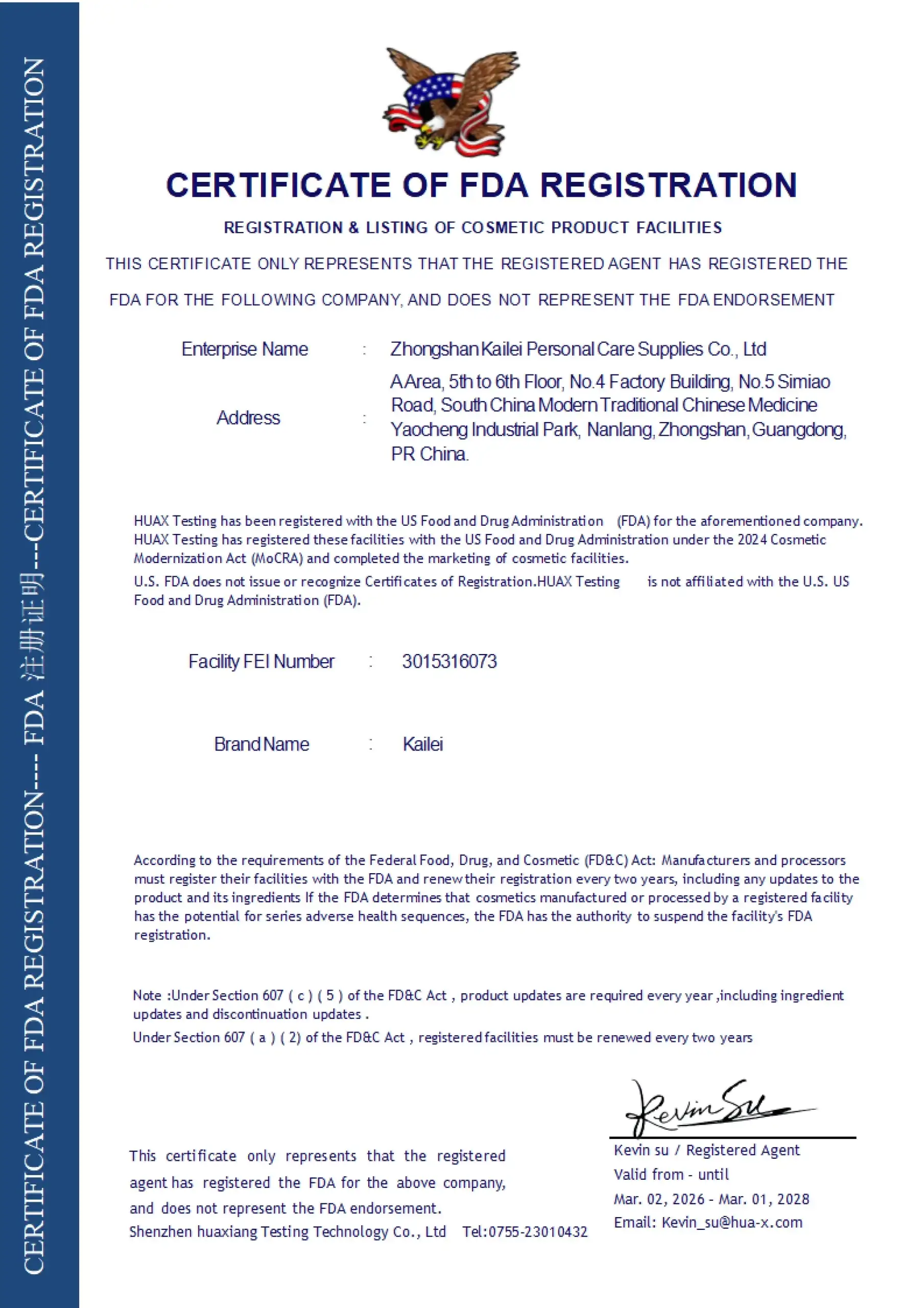
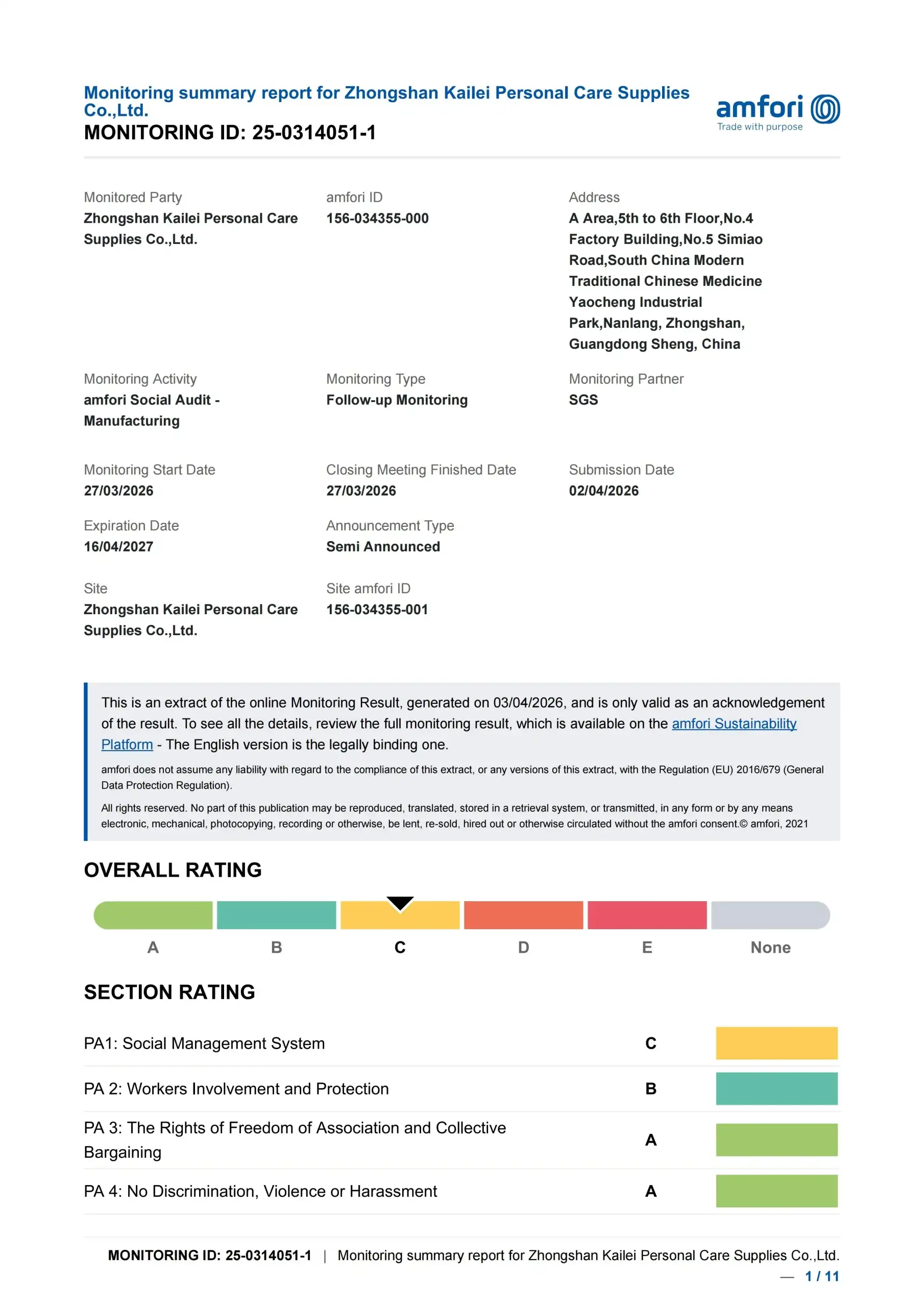
Skincraftlab is a skincare OEM/ODM contract manufacturer based in Zhongshan, Guangdong, China, operating since 2007 and serving 2,000+ brands across 30+ countries. Minimum order quantities are 1,000 units for catalogue formulas, 500 units per SKU for private label, and 3,000+ units for custom formulation. Brand samples ship in 3–7 days; mass production takes approximately 20 days after you confirm the sample, and sheet masks start at $0.08–$0.35 per piece. Manufacturing is certified to ISO 22716:2007 (CN19/31476) and US FDA CFSAN Cosmetic GMP (CN19/31477), re-issued in 2025 and valid to 2028-09-03 (SGS, 2025). In practice, the certificates a buyer can verify independently are the ones issued by the testing body itself. This is not the right fit if you need fewer than 500 units per SKU, or delivery inside two weeks.
| Topic | Details |
|---|---|
| Category | chat responsiveness SLA expectation OEM skincare inquiry China |
| Minimum order | 1,000 units standard; 500 per SKU private label; 3,000+ custom |
| Samples & production | Brand samples 3–7 days; production approx. 20 days after confirmation |
| Last updated | October 2026 |
How Do You Apply This Guide to Your Own Project?
- 1Step 1: match the format to your unit cost — for example, sheet masks run $0.08–$0.35 per piece at 1,000 units, while serums run $1.50–$5.00 per bottle.
- 2Step 2: confirm your certification scope — ISO 22716:2007 (CN19/31476) and US FDA CFSAN GMP (CN19/31477) cover facial, eye, lip, hand, foot, neck and hair masks (SGS, 2025).
- 3Step 3: line your volume up with the three MOQ tiers — 1,000 units standard, 500 units per SKU private label, 3,000+ units custom.
- 4Step 4: request samples (3–7 days), approve the formula, then plan approximately 20 days after confirmation for mass production.
- 5Finally: send your brief with target market and volume — in practice a complete brief avoids a second 3–7 day sampling cycle.
Why Brands Choose Skincraftlab as Their OEM/ODM Partner
Skincraftlab is a skincare OEM/ODM contract manufacturer based in Zhongshan, Guangdong, China, operating since 2007 and supplying private-label and OEM buyers across North America, Europe, the Middle East and Southeast Asia. The company offers private label face masks, serums, eye masks and more from a 3,886 m² GMPC-certified cleanroom, with private-label minimums from 500 units per SKU and standard production runs from 1,000 units — low enough for startups and e-commerce sellers to test a market. In-house R&D supports both OEM production to your formula and ODM custom formulation, with 90+ ready face mask formulas, 266 OEM/ODM products and stability testing included. Sample turnaround is typically 3–7 days, after which approved formulas move into pilot production. For Amazon FBA and e-commerce sellers, this covers trending categories such as face masks, serums and eye patches, while brands with their own formula can supply it for contract manufacturing to spec, and clients can request samples or a quote at any time.
Frequently Asked Questions
What is a realistic chat responsiveness SLA expectation OEM skincare inquiry China buyers should write into an RFQ?
What pimple patch hydrocolloid material sourcing spec China OEM suppliers should provide up front?
In a hydrocolloid vs hydrogel pimple patch manufacturing cost comparison OEM, which is cheaper at 10,000 pcs?
How fast should a Chinese OEM factory respond when I change a patch spec mid-quote?
Does chat responsiveness actually predict quality and on-time delivery?
Do Sunday and holiday messages count against the SLA?
Related Posts
Chat Responsiveness SLA for OEM Skincare Inquiry China
What response time to demand from a Chinese OEM skincare supplier's chat desk — plus hydrocolloid pimple patch sourcing specs and cost math vs hydrogel.
Chat Responsiveness SLA for OEM Skincare Inquiries in China
What response times to actually expect from Chinese OEM skincare factories, plus hydrocolloid pimple patch sourcing specs and hydrocolloid vs hydrogel cost math.
Chat Responsiveness SLA Expectation OEM Skincare Inquiry China
Benchmark chat SLA response times for Chinese OEM skincare factories, plus hydrocolloid vs hydrogel pimple patch sourcing specs and per-unit cost data for 2026 buyers.
Related Products

Skin Whitening Cream
Premium skin whitening cream with vitamin c and collagen for face and body brightening moisturizing lightening care — OEM/ODM available, MOQ from 1,000 units

Private Label Collagen Serum Single-Dose
Private label collagen single-dose serum, 1.2 ml vials, 10 or 30 pcs per box, 1,000 boxes MOQ

Private Label Micro Beads PDRN Serum Korea
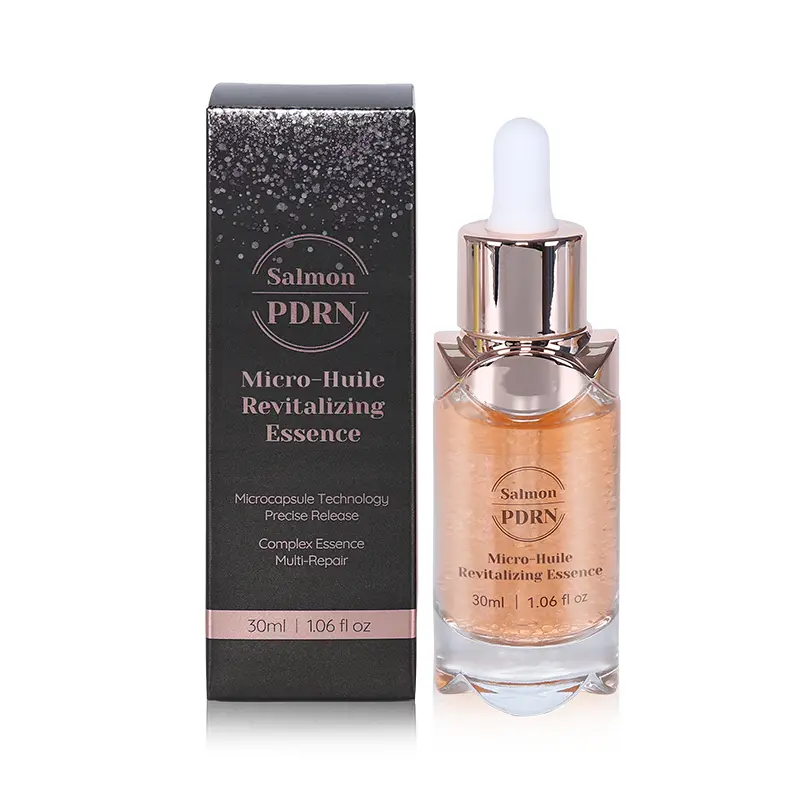
Private label micro-bead PDRN serum, 30 ml glass dropper bottle, 1,000 bottles MOQ

Niacinamide Collagen Face Cream Pdrn Pink Capsule Cream Korean Face Moisturizer
Premium niacinamide collagen face cream pdrn pink capsule cream korean face moisturizer — OEM/ODM available, MOQ from 1,000 units