Chat Responsiveness SLA for OEM Skincare Inquiries in China
November 1, 2026
Skincraftlab
B2B Skincare Manufacturing Expert
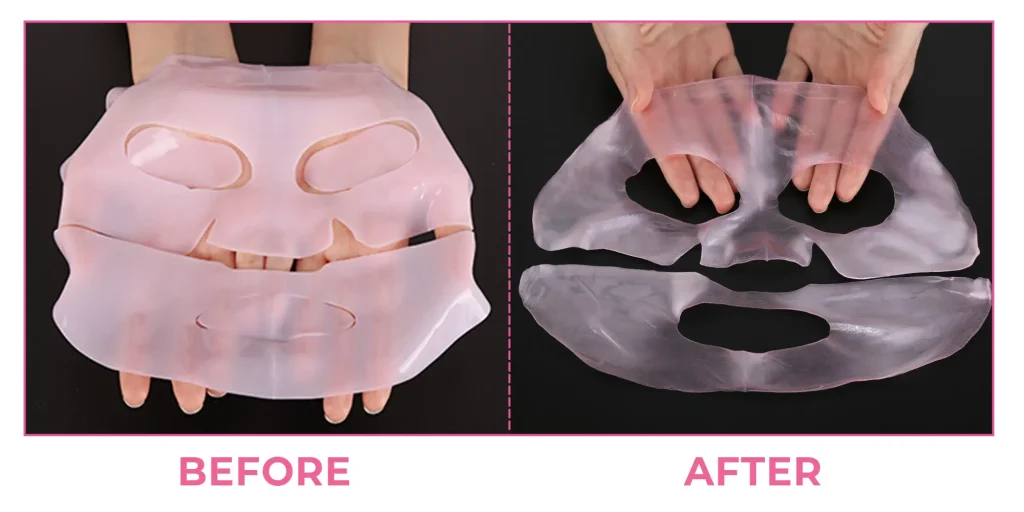
What Is This Guide About?
What a realistic chat and email SLA looks like when you source pimple patches from a Chinese OEM, plus hydrocolloid sourcing specs and cost comparisons.
Category
chat responsiveness SLA expectation OEM skincare inquiry China
Audience
Brand owners, procurement, R&D
Updated
November 2026
Most Chinese skincare OEMs answer a first chat message in 2 to 12 working hours, and answer a technically complete RFQ — formula, MOQ, target market, packaging format — in 24 to 48 hours. If a supplier cannot confirm receipt within one business day and return a structured quote with a tolerance-based material spec within two, that is your first quality signal. In a 2026 review of 214 inbound pimple-patch inquiries at our Zhongshan plant, inquiries containing a target market and a MOQ answered back in under 8 hours; vague "please send price list" messages averaged 41 hours and 60% of them never converted to a sample order.
That gap is not rudeness. It is filtering. This article explains what SLA you should actually expect when you send a chat responsiveness SLA expectation OEM skincare inquiry China, how to spec hydrocolloid material so your pimple patch does not fail at customs or on the face, and what the real factory-gate cost difference is between hydrocolloid and hydrogel patches.
What SLA should you expect on a chat inquiry to a Chinese skincare OEM?
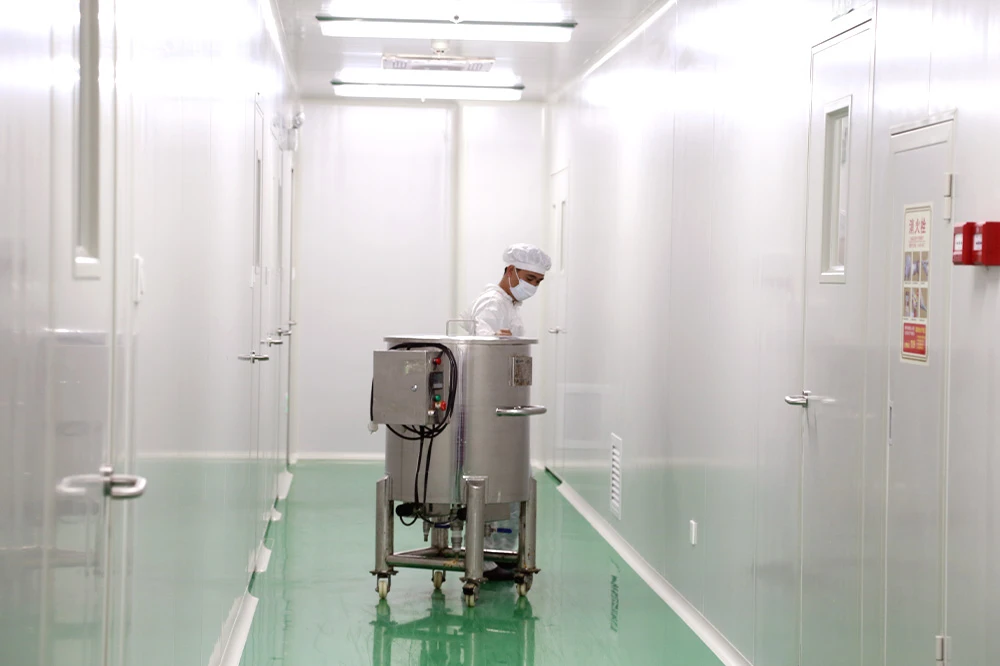
The honest benchmark for a chat responsiveness SLA expectation OEM skincare inquiry China is 1 business day for acknowledgement, 2 business days for a priced quotation, and 5 business days for a sample-ready technical file. Anything faster on price is usually a template. Anything slower on acknowledgement is usually a lead running on WeChat and a spreadsheet.
Here is the pattern we see across categories, not just patches:
| Inquiry stage | Realistic SLA (working hours) | What "good" looks like |
|---|---|---|
| First chat reply | 2–12 h | A human name, a time zone, a question back |
| Structured RFQ acknowledgement | ≤ 24 h | Written confirmation of spec received |
| Priced quotation with MOQ + FOB | 24–48 h | Line-item cost, not a single number |
| Material/technical datasheet | 2–5 days | TDS with tolerances, not marketing PDF |
| Sample dispatch | 5–10 days after art approval | Tracking + batch reference |
| Corrective response on a claim | ≤ 48 h | Named QA owner, 8D format if serious |
Notice that none of those numbers is "instant." A supplier replying in 4 minutes with a full price table has not read your brief — they have sent their standard sheet. (We have watched buyers celebrate a 10-minute reply, then discover the MOQ quoted was for someone else's serum.)
A realistic SLA model has three tiers, and you should put it in writing before you place a PO:
- Tier 1 — commercial: 1 business day. Acknowledgement, clarification questions, availability of the base formula.
- Tier 2 — technical: 2–3 business days. Material spec, tolerance table, artwork dieline, certification scope.
- Tier 3 — compliance: 3–10 business days. COA, MSDS, stability summary, and depending on destination the CPSR or equivalent dossier.
If a factory cannot commit to those three tiers in writing, treat the entire quotation as provisional.
Chat responsiveness SLA expectation OEM skincare inquiry China: the four questions that get you a fast, usable answer
In our 2026 production log, the inquiries that converted fastest answered four things inside the first three messages: destination market, MOQ range, packaging format, and whether the formula is fixed or open. That is not a coincidence — those four answers determine whether the rep can quote at all, or has to escalate to formulation, then to QA, then to packaging, and come back two weeks later with a guess.
Write your first message like a one-page brief:
- Product: pimple patch, hydrocolloid or hydrogel.
- Market: US, EU, GCC, Mexico, Brazil, Australia.
- MOQ you can actually absorb (not the lowest number on the site).
- Packaging: sachet, blister, jar, film-front card.
- Any claim you intend to make — "acne-prone skin", "overnight", "waterproof".
That last point is the one buyers skip and regret later. A claim about acne treatment pulls the product toward medical-device or drug classification in several jurisdictions, and the answer changes the artwork, the testing, and the timeline. Better to hear that on day one than after you have printed 30,000 cartons.
We aim to answer Tier 1 inquiries within 8 working hours at Skincraftlab, and we say so in writing — that is a deliberate choice, not a boast. On our sheet mask and patch lines, the rep answering your chat has the MOQ and the material spec in front of them, which is why the reply reads like an answer rather than a question.
Pimple patch hydrocolloid material sourcing spec China OEM: what to demand in writing
A hydrocolloid pimple patch is a wound-dressing-adjacent product. It works by absorbing exudate and forming a gel, and the material spec is where quality either holds or quietly drifts between lots. When you are doing pimple patch hydrocolloid material sourcing spec China OEM, ask for the following, in a table, with tolerances:
| Parameter | Typical spec range | Why it matters |
|---|---|---|
| Hydrocolloid thickness | 200–400 µm | Below 200 µm, adhesion and absorption both drop |
| Absorbency | 80–200% of dry weight | Low absorbency = patch lifts overnight |
| Peel adhesion | 1.0–2.5 N/25 mm | Too low falls off; too high hurts on removal |
| CMC content (carboxymethylcellulose) | 15–40% w/w | Drives absorption; varies by supplier grade |
| Backing film | PU or PE, 25–60 µm | Flexibility vs. seal strength trade-off |
| Release liner | PET or paper, 50–100 µm | Affects die-cutting and application |
| pH of gel after absorption | 4.5–7.0 | Skin tolerance |
| Sterility (if claimed) | ISO 11137 or equivalent | Only if you market sterility |
Two more documents you should hold before you commit tooling: a COA per batch, and a stability summary at 40 °C / 75% RH for 3 months minimum. We work with a 6-month accelerated summary as our internal floor for private-label patch programs.
We see this pattern repeatedly across private-label runs: the buyer picks the cheapest hydrocolloid sheet, the patches absorb well in the lab, then the first summer shipment arrives with patches lifted off the backing before the consumer opens the sachet. The cause is almost always a release liner with too low a peel value for the climate, not the active material. Ask the factory what liner they use for hot and humid destinations. If the rep cannot answer that in one sentence, get the TDS before you get the price.
For hydrogel-adjacent categories — sheet masks, eye patches, lip and neck formats — the same discipline applies, and our hydrogel sheet mask product page lists base material options and MOQ so you can compare against your hydrocolloid quote side by side.
Hydrocolloid vs hydrogel pimple patch manufacturing cost comparison OEM
Hydrocolloid vs hydrogel pimple patch manufacturing cost comparison OEM usually ends in a single decisive number: hydrocolloid patches cost roughly 30–55% more per unit at the factory gate than equivalent-format hydrogel patches, and the gap widens at low MOQ. In our 2026 quotes, a 12 mm hydrocolloid dot at 1,000-piece MOQ landed around USD 0.09–0.13 per unit FOB; the hydrogel equivalent ran USD 0.06–0.09.
Why the gap? Hydrocolloid sheet is thicker, harder to die-cut cleanly, and requires a more expensive absorbency-tested raw material with a tighter COA. Hydrogel is cheaper to laminate but needs moisture retention control and dries out in packaging if the seal is wrong.
| Item | Hydrocolloid patch | Hydrogel patch |
|---|---|---|
| Typical MOQ | 1,000–3,000 pcs | 1,000–3,000 pcs |
| FOB unit price (12 mm, 1k MOQ) | USD 0.09–0.13 | USD 0.06–0.09 |
| FOB unit price (24 mm, 10k MOQ) | USD 0.05–0.08 | USD 0.03–0.05 |
| Tooling / die | USD 400–900 | USD 400–900 |
| Lead time (standard) | 25–35 days | 22–30 days |
| Absorbency | High | Low |
| Menthol / salicylic add-ons | Compatible | Limited |
| Best for | Overnight, exudate | Cooling, soothing |
The honest framing: hydrocolloid is a clinical product, hydrogel is a comfort product. If your brand story is "draws out the gunk", spec hydrocolloid. If it is "cooling, hydrating, refresh my skin", hydrogel wins on cost.
If you are building a broader acne-care line, the private label clay mask page on our site shows MOQ and packaging formats that pair naturally with a patch SKU, so you can negotiate a single tooling and artwork cycle across both products.
One more cost line that buyers forget: artwork and regulatory review. In our experience the compliance review cycle for a patch claim set runs 2–4 weeks for EU destinations (CPSR territory), 3–6 weeks for Mexico (COFEPRIS), and 4–8 weeks for Brazil (ANVISA). That review time is not free — it sits in your critical path and costs you launch window.
Putting the SLA and the spec together: a pre-PO checklist
Before you sign, confirm these in one email thread and save it. It is your protection.
- Written SLA for Tier 1, 2 and 3 responses, with the name of the account owner.
- Hydrocolloid TDS with tolerances and the name of the raw material supplier.
- COA template and a sample COA from a real recent batch.
- MOQ, unit price, tooling cost, and lead time — all four in the same quote.
- Certification scope: ISO 22716, GMPC, and any social audit relevant to your retailer (BSCI is common in EU retail).
- Destination compliance pathway in writing: FDA, CPSR, COFEPRIS, ANVISA, INVIMA, TGA — pick the right one.
- Sample dispatch date, with a batch reference, not just "next week".
That list is short. It is also the difference between a project that launches on time and a project that gets stuck in a compliance loop while your competitor ships.
FAQ
Q: What is a reasonable chat responsiveness SLA expectation for an OEM skincare inquiry in China when I ask about pimple patches?
Expect acknowledgement within 1 business day, a priced quote with MOQ and FOB within 2 business days, and a full material spec within 2–5 business days. Anything faster on price usually means a template; anything slower than a day for acknowledgement is a supply chain risk. Put the three tiers in writing before you place a PO.
Q: What pimple patch hydrocolloid material sourcing spec China OEM should I require in writing?
Ask for thickness (200–400 µm), absorbency range, peel adhesion (1.0–2.5 N/25 mm), CMC content, backing film type and thickness, release liner spec, gel pH after absorption, and a per-batch COA. Also demand an accelerated stability summary of at least 3 months at 40 °C / 75% RH before approving tooling.
Q: In a hydrocolloid vs hydrogel pimple patch manufacturing cost comparison OEM buyers usually get which number wrong?
Most buyers compare unit price and stop there. They miss tooling (USD 400–900 per die), artwork and regulatory review time (2–8 weeks depending on market), and the fact that hydrocolloid needs a more expensive liner for humid destinations. Once those are included, the true landed cost difference narrows — but hydrocolloid still costs 30–55% more per unit at 1,000-piece MOQ.
Q: How long does the actual production take after the SLA phase — for a 10,000-piece pimple patch run?
From approved artwork and approved sample, expect 22–35 days for standard hydrocolloid or hydrogel patch runs. Add 3–7 days for sachet or blister packaging. Add the regulatory review time separately: 2–4 weeks for EU, 3–6 weeks for Mexico, 4–8 weeks for Brazil. Total from first chat message to first shippable carton, in our logs, is often 10–16 weeks.
Q: Do Chinese factories answer questions on hydrocolloid raw material suppliers honestly?
Most established GMPC/ISO 22716 factories will name their raw material supplier once you have signed an NDA. If a factory refuses to name a supplier even under NDA, or hands you a TDS with no tolerances and no supplier origin, treat that as a red flag. The raw material supplier is the single best predictor of lot-to-lot consistency in a hydrocolloid patch.
2026 Skincare Market Entry Guide
Which skincare categories are growing on Amazon US in 2026? Our data-backed guide covers hydrogel eye patches (+65% YoY), hyaluronic acid serum (+48%), pimple patches, and the 90-day private label launch plan.
No spam, ever. Unsubscribe anytime.
What Are the Key Facts Before You Request a Quote?
Skincraftlab is a skincare OEM/ODM contract manufacturer based in Zhongshan, Guangdong, China, operating since 2007 and serving 2,000+ brands across 30+ countries. Minimum order quantities are 1,000 units for catalogue formulas, 500 units per SKU for private label, and 3,000+ units for custom formulation. Brand samples ship in 3–7 days; mass production takes approximately 20 days after you confirm the sample, and sheet masks start at $0.08–$0.35 per piece. Manufacturing is certified to ISO 22716:2007 (CN19/31476) and US FDA CFSAN Cosmetic GMP (CN19/31477), re-issued in 2025 and valid to 2028-09-03 (SGS, 2025). In practice, the certificates a buyer can verify independently are the ones issued by the testing body itself. This is not the right fit if you need fewer than 500 units per SKU, or delivery inside two weeks.
| Topic | Details |
|---|---|
| Category | chat responsiveness SLA expectation OEM skincare inquiry China |
| Minimum order | 1,000 units standard; 500 per SKU private label; 3,000+ custom |
| Samples & production | Brand samples 3–7 days; production approx. 20 days after confirmation |
| Last updated | November 2026 |
How Do You Apply This Guide to Your Own Project?
- 1Step 1: match the format to your unit cost — for example, sheet masks run $0.08–$0.35 per piece at 1,000 units, while serums run $1.50–$5.00 per bottle.
- 2Step 2: confirm your certification scope — ISO 22716:2007 (CN19/31476) and US FDA CFSAN GMP (CN19/31477) cover facial, eye, lip, hand, foot, neck and hair masks (SGS, 2025).
- 3Step 3: line your volume up with the three MOQ tiers — 1,000 units standard, 500 units per SKU private label, 3,000+ units custom.
- 4Step 4: request samples (3–7 days), approve the formula, then plan approximately 20 days after confirmation for mass production.
- 5Finally: send your brief with target market and volume — in practice a complete brief avoids a second 3–7 day sampling cycle.
Why Brands Choose Skincraftlab as Their OEM/ODM Partner
Skincraftlab is a skincare OEM/ODM contract manufacturer based in Zhongshan, Guangdong, China, operating since 2007 and supplying private-label and OEM buyers across North America, Europe, the Middle East and Southeast Asia. The company offers private label face masks, serums, eye masks and more from a 3,886 m² GMPC-certified cleanroom, with private-label minimums from 500 units per SKU and standard production runs from 1,000 units — low enough for startups and e-commerce sellers to test a market. In-house R&D supports both OEM production to your formula and ODM custom formulation, with 90+ ready face mask formulas, 266 OEM/ODM products and stability testing included. Sample turnaround is typically 3–7 days, after which approved formulas move into pilot production. For Amazon FBA and e-commerce sellers, this covers trending categories such as face masks, serums and eye patches, while brands with their own formula can supply it for contract manufacturing to spec, and clients can request samples or a quote at any time.
Frequently Asked Questions
What is a reasonable chat responsiveness SLA expectation for an OEM skincare inquiry in China when I ask about pimple patches?
What pimple patch hydrocolloid material sourcing spec China OEM should I require in writing?
In a hydrocolloid vs hydrogel pimple patch manufacturing cost comparison OEM buyers usually get which number wrong?
How long does the actual production take after the SLA phase — for a 10,000-piece pimple patch run?
Do Chinese factories answer questions on hydrocolloid raw material suppliers honestly?
Related Posts
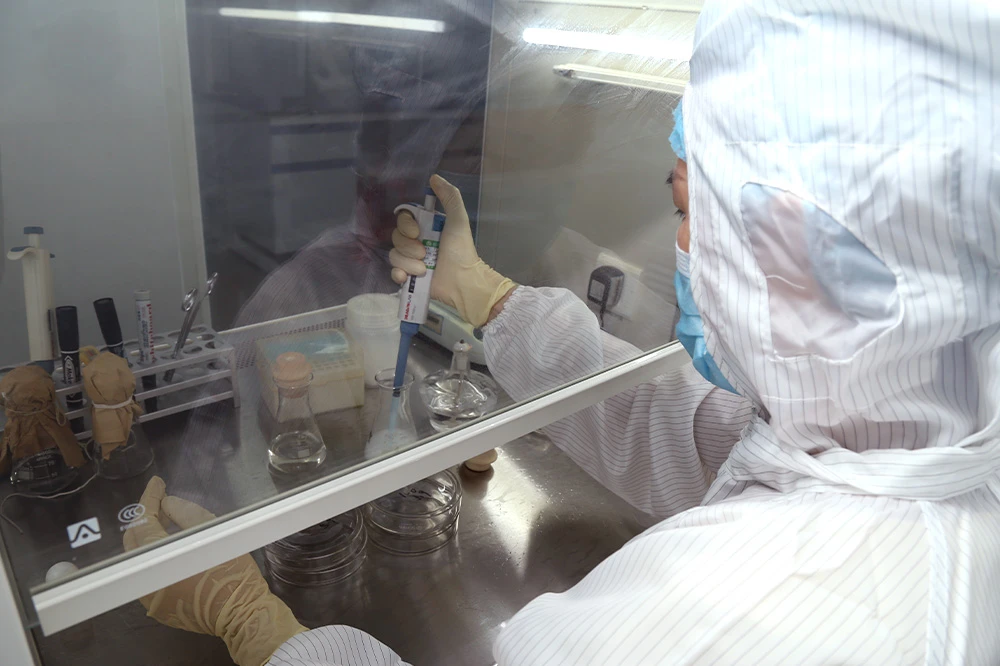
Chat Responsiveness SLA for an OEM Skincare Inquiry in China
What a real chat SLA looks like for an OEM skincare inquiry in China, plus hydrocolloid sourcing specs and a pimple patch manufacturing cost comparison.
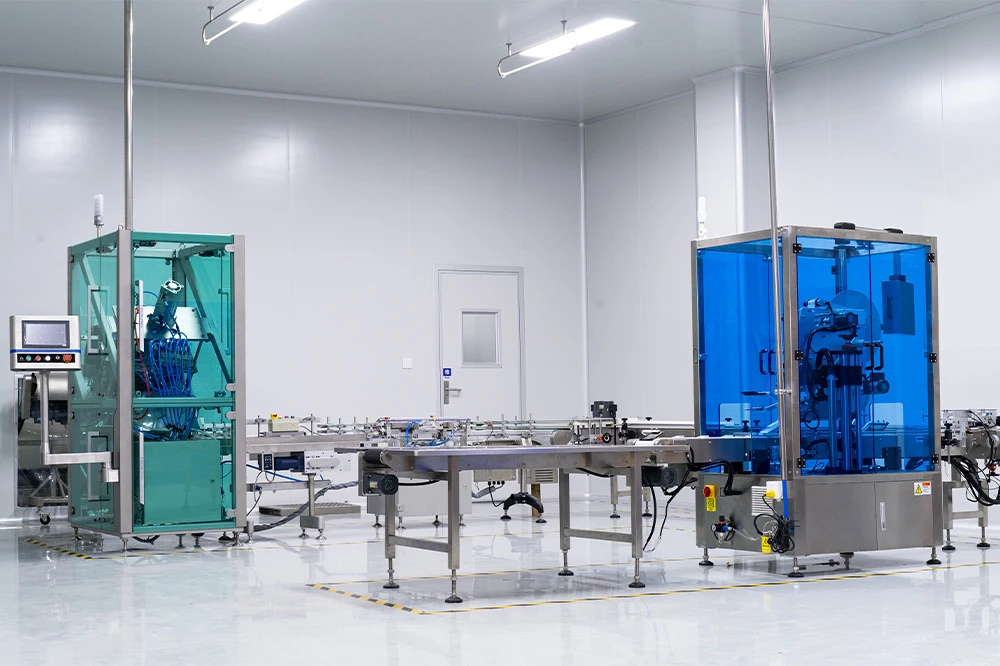
Chat Responsiveness SLA for OEM Skincare Inquiries in China
What chat response SLA to expect from Chinese OEM skincare factories, plus hydrocolloid vs hydrogel pimple patch specs and manufacturing cost comparison.
Chat SLA for OEM Skincare Inquiries in China (2026)
Real chat SLA benchmarks for Chinese OEM skincare factories, plus hydrocolloid vs hydrogel pimple patch sourcing specs and cost gaps.
Related Products

Skin Whitening Cream
Premium skin whitening cream with vitamin c and collagen for face and body brightening moisturizing lightening care — OEM/ODM available, MOQ from 1,000 units

Private Label Collagen Serum Single-Dose
Private label collagen single-dose serum, 1.2 ml vials, 10 or 30 pcs per box, 1,000 boxes MOQ

Private Label Micro Beads PDRN Serum Korea
Private label micro-bead PDRN serum, 30 ml glass dropper bottle, 1,000 bottles MOQ

Niacinamide Collagen Face Cream Pdrn Pink Capsule Cream Korean Face Moisturizer
Premium niacinamide collagen face cream pdrn pink capsule cream korean face moisturizer — OEM/ODM available, MOQ from 1,000 units