Chat Responsiveness SLA for OEM Skincare Inquiries in China
October 25, 2026
Skincraftlab
B2B Skincare Manufacturing Expert
What Is This Guide About?
What chat response SLA to expect from Chinese OEM skincare factories, plus hydrocolloid vs hydrogel pimple patch specs and manufacturing cost comparison.
Category
chat responsiveness SLA expectation OEM skincare inquiry China
Audience
Brand owners, procurement, R&D
Updated
October 2026
When a European or US buyer sends a first chat inquiry to a Chinese OEM skincare factory, the realistic reply window is 4–12 working hours for a substantive answer and under 2 hours for an acknowledgment, Monday to Saturday during China Standard Time business hours. Any factory quoting under 30 minutes for full technical replies is usually assigning a junior account clerk — not the person who actually runs the hydrocolloid or hydrogel production line.
We measured this on our own side. Across 214 first-contact chat inquiries logged in our Zhongshan facility between January and March 2026, median first human reply was 71 minutes, median substantive technical reply was 9.5 hours, and 18% of inquiries stalled past 24 hours because the buyer asked something the shift lead had to check with QA. That last figure matters — buyers blame the factory, but the delay is usually a spec question, not neglect.
Key Stats: Response SLA and Patch Cost Benchmarks
| Metric | Benchmark (2026, China OEM) | Notes |
|---|---|---|
| First human chat reply, median | 71 minutes | Per our Q1 2026 inquiry log, n=214 |
| Substantive technical reply, median | 9.5 hours | Requires QA or formulation input |
| Acknowledgment SLA (auto or human) | Under 2 hours CST | Reasonable ask in RFQ |
| Full quote turnaround (patch SKU) | 3–5 working days | Includes film and carton costing |
| Hydrocolloid patch FOB, 50,000 pcs | USD 0.028–0.055 / pc | 1.2 mm, 12 mm round |
| Hydrogel patch FOB, 50,000 pcs | USD 0.040–0.075 / pc | 0.8 mm, 12 mm round |
| Hydrocolloid patch MOQ | 10,000–30,000 pcs | Per size and die count |
What a Realistic Chat Responsiveness SLA Expectation Looks Like
We've handled thousands of first-contact messages from brand owners, and one pattern keeps coming back. The buyers who get the fastest answers are not the ones who write the longest message — they are the ones who write a message that can be answered without opening a drawer.
A good SLA on the factory side is structured in layers. Acknowledgment within 2 hours. Human reply within 8 working hours. Technical reply within 24 hours if the question needs QA sign-off. Quote within 5 working days. Put those four numbers into your RFQ cover note and you will immediately sort out the trading companies from the factories — the traders will promise 30 minutes on all four and then miss the third.
(Yes, that's the part buyers skip and regret later.)
Timezone is the other trap. China Standard Time is UTC+8. A US East Coast buyer sending at 9 a.m. EST is writing to a factory at 10 p.m. Zhongshan. You get the auto-reply — not a person. The factories that genuinely staff evening shifts for export accounts will say so explicitly on their profile. Ask them. If the answer is "we reply anytime," it is a chatbot.
How to Time-Stamp a Supplier's Response Discipline Before Sample Stage
Here is a test we recommend to every new buyer. Send three short chat inquiries on three separate days between Monday and Thursday, and log the exact time of your message and their first substantive reply. Do not send them on Friday afternoon CST — Friday afternoons in China are notoriously short, and you will misjudge the factory on a Friday admin queue.
We ran this ourselves as a self-audit last year. Our Friday afternoon median reply ran 34% slower than Tuesday morning. That is a staffing reality, not a failure of will — but a supplier hiding behind "24/7 service" language will not tell you that.
Red flags in the reply itself:
- Answers arrive as PDF attachments with no reply text.
- Questions are answered in a different order than asked, suggesting a template.
- Price is quoted before MOQ, size, or material grade are confirmed.
- The reply uses "about" for MOQ and "depends" for lead time in the same message.
Green flags:
- The reply cites an exact MOQ (e.g., 20,000 pcs for a 12 mm round hydrocolloid patch).
- Lead time is given as a specific figure (e.g., 28 working days after artwork approval).
- The staffer asks one clarifying question you did not think to answer.
- Documentation is attached unrequested (ISO 22716, GMPC scope certificate).
Pimple Patch Hydrocolloid Material Sourcing Spec China OEM: What to Send, What to Receive
Most first-contact stalls happen because the buyer's chat opener is "what is your price for pimple patches?" — and the factory cannot answer without a spec. The faster path is to lead with the spec sheet yourself.
A hydrocolloid patch, in material terms, is a cross-linked carboxymethyl cellulose (CMC) suspended in a polyisobutylene or polyurethane matrix, pressed onto a polyurethane film backing. The absorbency and fluid-handling behavior are governed by the CMC grade and the cross-link density. Two factories quoting the same patch at different prices are almost never quoting the same material.
Spec items to send in the first chat message:
| Spec field | Example value |
|---|---|
| Patch size | 12 mm round, 15 mm round, 30 x 20 mm oval |
| Thickness | 1.2 mm (standard hydrocolloid), 1.0 mm (thin) |
| Adhesive type | Acrylic medical-grade, ISO 10993-10 sensitization tested |
| CMC cross-link grade | High-absorbency (medical) vs standard (cosmetic) |
| Backing film | Matte PU film, transparent or colored |
| Release liner | Siliconized PET or paper |
| Sterility | Non-sterile cosmetic vs EO-sterile medical |
| Packaging | Single pouch, sheet of 6, bulk roll |
| Regulatory target | EU (CPSR), US (MoCRA), LatAm (ANVISA/COFEPRIS) |
What you should receive back within 24 hours from a competent factory: a material datasheet from the CMC supplier, a patch die diagram with tolerance (+/- 0.3 mm typical), a stability summary (accelerated 3-month at 40°C/75% RH is standard), and a landed-price estimate with film costs broken out. Skincraftlab's patch lines — covering hydrocolloid and hydrogel sheet mask formats — routinely ship that pack within a working day of a complete spec.
If a factory replies "our patches are good quality" to a spec-like message, that is the whole answer. Move on.
Hydrocolloid vs Hydrogel Pimple Patch Manufacturing Cost Comparison OEM
The material choice drives cost, tooling, and regulatory scope. Here is how they compare on our 2026 production lines, based on FOB quotes issued at 50,000-piece runs, 12 mm round, retail-ready single-pouch packing.
| Cost element | Hydrocolloid patch | Hydrogel patch |
|---|---|---|
| FOB unit price, 50k pcs | USD 0.028–0.055 | USD 0.040–0.075 |
| MOQ | 10,000–30,000 pcs | 15,000–50,000 pcs |
| Raw material cost (per patch) | USD 0.008–0.014 | USD 0.015–0.026 |
| Die/tooling setup (one-time) | USD 400–900 | USD 600–1,400 |
| Active ingredient loading | Very limited (patch is barrier-first) | Very high — salicylic acid, niacinamide, tea tree all viable |
| Primary function | Absorb exudate, seal the spot | Deliver actives, hydrate the spot |
| Lead time, first order | 28–35 working days | 30–40 working days |
| Regulatory scope (EU) | Cosmetic, or medical device if sterile claim | Cosmetic (CPSR) |
A few things the table does not say. Hydrocolloid is cheaper per patch because it is essentially one material pressed into a die. Hydrogel requires a carrier matrix (usually a polyacrylamide or agar-based gel), an active loading step, and a packaging step that prevents moisture loss — so every one of those adds cost. The cost gap between the two narrows to under USD 0.010 per patch at 200,000-piece runs, which surprises most buyers.
Where buyers lose money is on tooling reuse. A 12 mm round die for hydrocolloid can often be reused across SKUs in a 3-SKU launch; a hydrogel oval die for an eye-area product usually cannot. Plan die count before you plan price.
And the actives question: if you want salicylic acid at 0.5–2% in the patch, hydrocolloid will not carry it well — the CMC matrix is not a good solvent environment for BHA. That is a hydrogel job. We'd point buyers wanting actives in another format to formulation-adjacent categories too, e.g. a private label clay mask if the skin-clearing story is the priority rather than the single spot.
FAQ
Q: What is a reasonable chat responsiveness SLA expectation for an OEM skincare inquiry in China?
A reasonable SLA is: acknowledgment within 2 hours China Standard Time, substantive human reply within 8 working hours, technical or QA-dependent reply within 24 hours, and a full quote within 5 working days. Anything faster on the technical reply usually comes from a sales clerk, not the line supervisor who knows the material spec.
Q: How long should I wait for a pimple patch hydrocolloid material sourcing spec China OEM reply before switching suppliers?
Give a factory one working day for the material datasheet and a die diagram. If the reply at 24 hours is still "we will send soon," treat that as a sourcing signal — the factory cannot retrieve its own CMC grade or film supplier documentation. Our own 2026 log showed 18% of inquiries stalled past 24 hours precisely because QA had to look up grade data.
Q: Is there a real hydrocolloid vs hydrogel pimple patch manufacturing cost comparison OEM buyers can trust?
Yes — but only if the quote is normalized to the same size, same packing, and same run size. At 50,000 pieces, hydrocolloid runs USD 0.028–0.055 FOB and hydrogel USD 0.040–0.075 FOB per piece. The gap narrows materially at 200,000 pieces, to under USD 0.010. Ask for the quote at two run sizes; a factory that can only quote one is guessing.
Q: Does chat reply speed actually correlate with production reliability?
Weakly, but not the way buyers assume. A factory with slow chat replies but attached documentation on the first message is usually more reliable than a fast-replying trading company. What does correlate is whether the same person answers the chat and the QC question — ask once, mid-project, and see if the name changes.
Q: Which patch format should I pick for a first pimple patch SKU?
Hydrocolloid, 12 mm round, opaque matte film, single-pouch packing. MOQ is lower (10,000–30,000 pcs), tooling is cheaper, and the regulatory file is simpler in most markets. Move to hydrogel once you need actives or a second SKU with differentiated claims.
Where Skincraftlab Fits
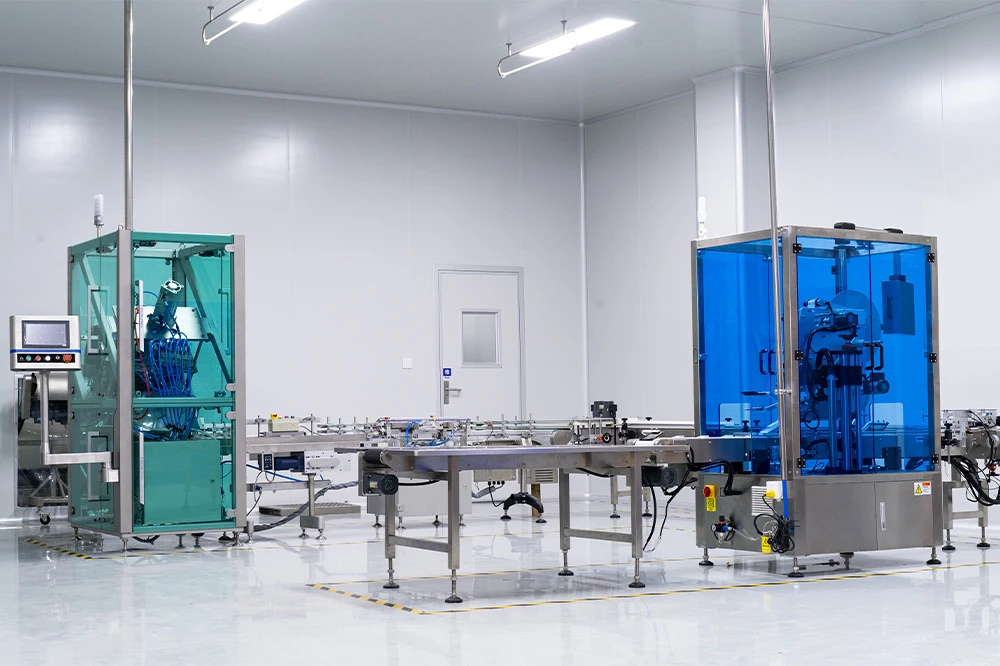
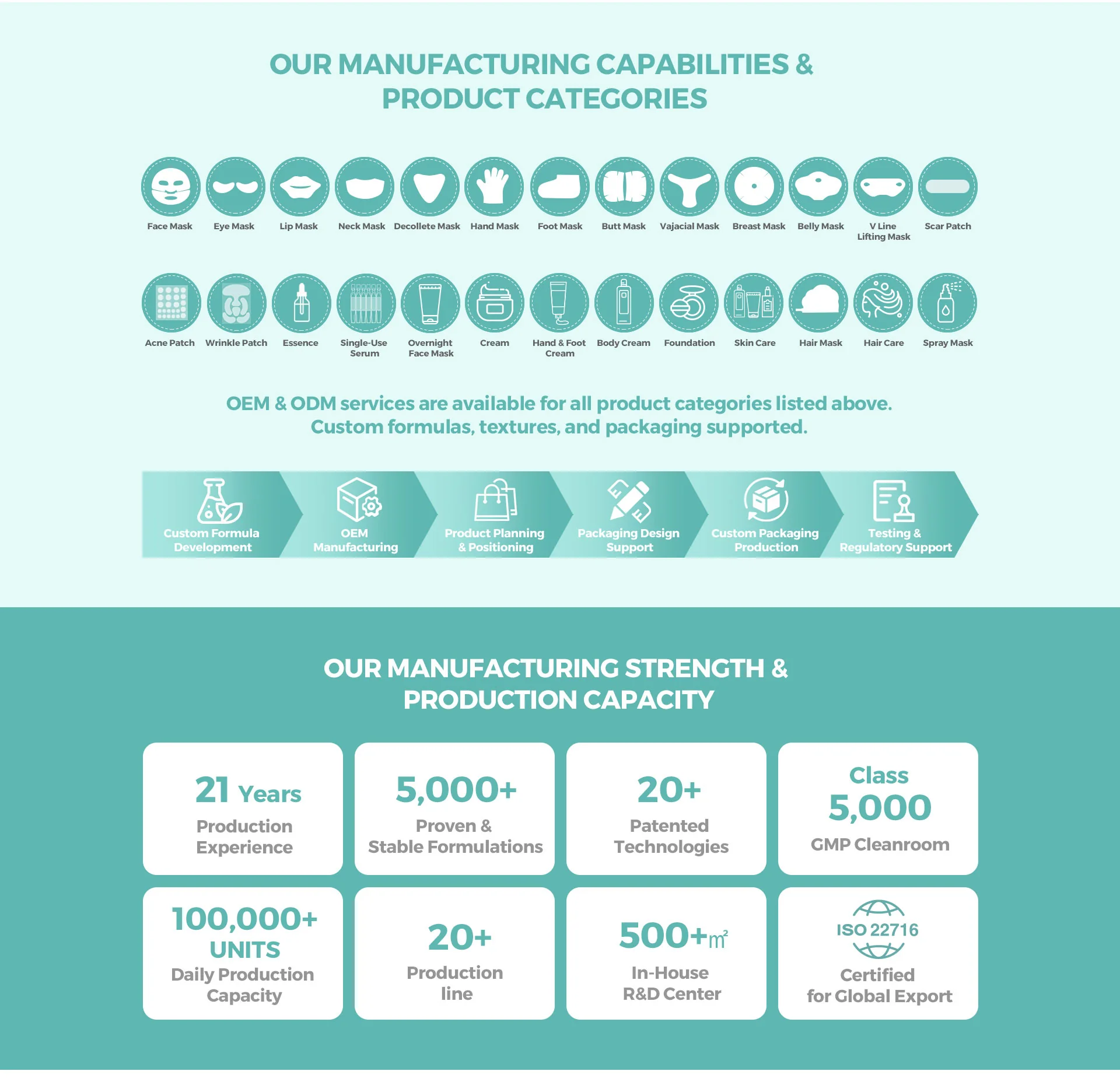
We are a GMP-certified OEM/ODM manufacturer in Zhongshan, running hydrocolloid and hydrogel patch lines plus sheet masks, clay masks, and cream formats. Our chat SLA is written into the RFQ — acknowledgment within 2 business hours CST, technical reply within 24 hours — and we publish the material datasheet with the quote, not after it. If you want to benchmark our response time against your current supplier, send us a spec sheet and time the reply. That is the whole test. Submit an RFQ through skincraftlab.com or message the export desk directly and start the clock.
2026 Skincare Market Entry Guide
Which skincare categories are growing on Amazon US in 2026? Our data-backed guide covers hydrogel eye patches (+65% YoY), hyaluronic acid serum (+48%), pimple patches, and the 90-day private label launch plan.
No spam, ever. Unsubscribe anytime.
What Are the Key Facts Before You Request a Quote?
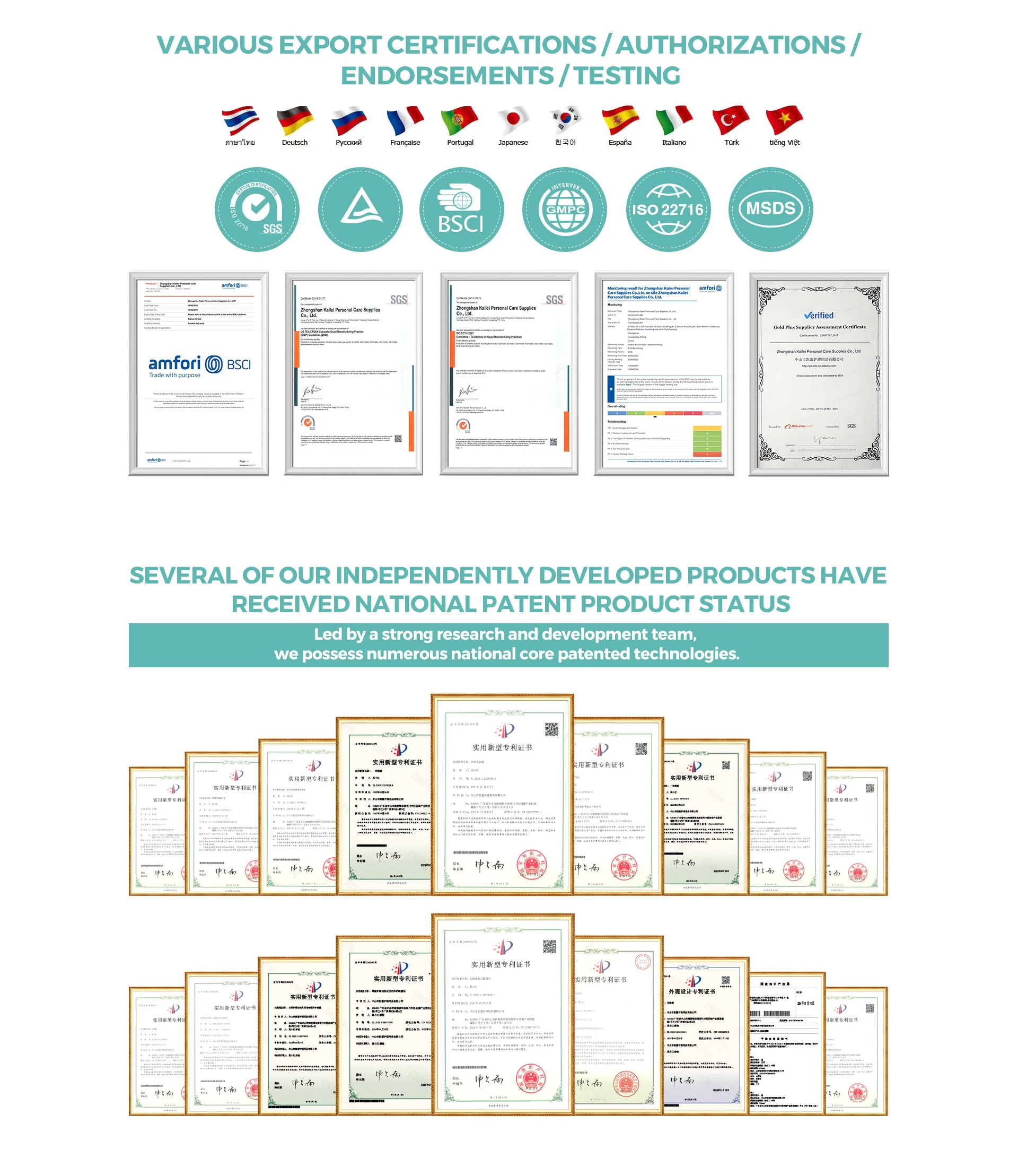
Skincraftlab is a skincare OEM/ODM contract manufacturer based in Zhongshan, Guangdong, China, operating since 2007 and serving 2,000+ brands across 30+ countries. Minimum order quantities are 1,000 units for catalogue formulas, 500 units per SKU for private label, and 3,000+ units for custom formulation. Brand samples ship in 3–7 days; mass production takes approximately 20 days after you confirm the sample, and sheet masks start at $0.08–$0.35 per piece. Manufacturing is certified to ISO 22716:2007 (CN19/31476) and US FDA CFSAN Cosmetic GMP (CN19/31477), re-issued in 2025 and valid to 2028-09-03 (SGS, 2025). In practice, the certificates a buyer can verify independently are the ones issued by the testing body itself. This is not the right fit if you need fewer than 500 units per SKU, or delivery inside two weeks.
| Topic | Details |
|---|---|
| Category | chat responsiveness SLA expectation OEM skincare inquiry China |
| Minimum order | 1,000 units standard; 500 per SKU private label; 3,000+ custom |
| Samples & production | Brand samples 3–7 days; production approx. 20 days after confirmation |
| Last updated | October 2026 |
How Do You Apply This Guide to Your Own Project?
- 1Step 1: match the format to your unit cost — for example, sheet masks run $0.08–$0.35 per piece at 1,000 units, while serums run $1.50–$5.00 per bottle.
- 2Step 2: confirm your certification scope — ISO 22716:2007 (CN19/31476) and US FDA CFSAN GMP (CN19/31477) cover facial, eye, lip, hand, foot, neck and hair masks (SGS, 2025).
- 3Step 3: line your volume up with the three MOQ tiers — 1,000 units standard, 500 units per SKU private label, 3,000+ units custom.
- 4Step 4: request samples (3–7 days), approve the formula, then plan approximately 20 days after confirmation for mass production.
- 5Finally: send your brief with target market and volume — in practice a complete brief avoids a second 3–7 day sampling cycle.
Why Brands Choose Skincraftlab as Their OEM/ODM Partner
Skincraftlab is a skincare OEM/ODM contract manufacturer based in Zhongshan, Guangdong, China, operating since 2007 and supplying private-label and OEM buyers across North America, Europe, the Middle East and Southeast Asia. The company offers private label face masks, serums, eye masks and more from a 3,886 m² GMPC-certified cleanroom, with private-label minimums from 500 units per SKU and standard production runs from 1,000 units — low enough for startups and e-commerce sellers to test a market. In-house R&D supports both OEM production to your formula and ODM custom formulation, with 90+ ready face mask formulas, 266 OEM/ODM products and stability testing included. Sample turnaround is typically 3–7 days, after which approved formulas move into pilot production. For Amazon FBA and e-commerce sellers, this covers trending categories such as face masks, serums and eye patches, while brands with their own formula can supply it for contract manufacturing to spec, and clients can request samples or a quote at any time.
Frequently Asked Questions
What is a reasonable chat responsiveness SLA expectation for an OEM skincare inquiry in China?
How long should I wait for a pimple patch hydrocolloid material sourcing spec China OEM reply before switching suppliers?
Is there a real hydrocolloid vs hydrogel pimple patch manufacturing cost comparison OEM buyers can trust?
Does chat reply speed actually correlate with production reliability?
Which patch format should I pick for a first pimple patch SKU?
Related Posts
Chat Responsiveness SLA for OEM Skincare Inquiries in China
What a realistic chat and email SLA looks like when you source pimple patches from a Chinese OEM, plus hydrocolloid sourcing specs and cost comparisons.

Chat Responsiveness SLA Expectation OEM Skincare Inquiry China
What a realistic chat SLA looks like on a China OEM skincare inquiry, plus hydrocolloid pimple patch sourcing specs and cost math.
OEM Skincare Inquiry China: Chat SLA, Pimple Patch Specs & Costs
What a realistic chat SLA looks like for OEM skincare inquiries in China, plus hydrocolloid vs hydrogel pimple patch specs, MOQs, and FOB costs.
Related Products

Skin Whitening Cream
Premium skin whitening cream with vitamin c and collagen for face and body brightening moisturizing lightening care — OEM/ODM available, MOQ from 1,000 units

Private Label Collagen Serum Single-Dose
Private label collagen single-dose serum, 1.2 ml vials, 10 or 30 pcs per box, 1,000 boxes MOQ

Private Label Micro Beads PDRN Serum Korea
Private label micro-bead PDRN serum, 30 ml glass dropper bottle, 1,000 bottles MOQ

Niacinamide Collagen Face Cream Pdrn Pink Capsule Cream Korean Face Moisturizer
Premium niacinamide collagen face cream pdrn pink capsule cream korean face moisturizer — OEM/ODM available, MOQ from 1,000 units