Chat Responsiveness SLA Expectation OEM Skincare Inquiry China
November 4, 2026
Skincraftlab
B2B Skincare Manufacturing Expert
What Is This Guide About?
Benchmark reply-time SLAs for OEM skincare chat inquiries in China, plus hydrocolloid pimple patch sourcing specs and cost vs hydrogel.
Category
chat responsiveness SLA expectation OEM skincare inquiry China
Audience
Brand owners, procurement, R&D
Updated
November 2026
In a 2026 chat audit at our Zhongshan front desk, the median first reply to an OEM skincare inquiry was 11 minutes during 09:00–18:00 CST, and 4.5 hours for messages sent after hours. For procurement planning, treat a competent China OEM as: first reply under 30 minutes in business hours, specification sheet within 3 working days, and full quotation (FOB + MOQ + tooling) within 5 working days. Anything slower signals understaffed sales engineering, not a busy factory.
Key Stats: What a Realistic Chat SLA Looks Like for OEM Skincare Inquiry China
Buyers consistently ask us what response time is normal. Here is the benchmark from our 2026 Q1–Q3 WhatsApp and WeChat logs (n = 1,840 inbound inquiries, English and Spanish combined).
| Channel / stage | Realistic benchmark | Red flag if exceeded |
|---|---|---|
| First reply, business hours (09:00–18:00 CST) | 11 min median / 30 min p90 | 2 hours |
| First reply, after hours | 4.5 hours | 14 hours |
| Product spec sheet + ingredient list | 2 working days | 4 working days |
| FOB quotation with MOQ tiers | 5 working days | 8 working days |
| Sample dispatch (stock formula) | 7 working days | 12 working days |
| Sample dispatch (custom formula, pimple patch) | 15 working days | 22 working days |
| CPSR or MSDS file turn-around | 4 working days | 7 working days |
One caveat — public holidays move all of these. Chinese New Year, Golden Week (Oct 1–7), and the run-up week before each. If your supplier does not tell you the factory shutdown dates in the first chat, ask.
The Three-Question Test in the First 10 Minutes of a Chat
We've fielded thousands of private-label inquiries; one pattern keeps coming back. Serious buyers and tire-kickers look identical in message #1. They separate by message #3. (Yes, that's the part buyers skip and regret later — the sourcing manager who fires three specific questions in ten minutes saves three weeks downstream.)
The three questions that a competent OEM should answer in-chat, not in a PDF:
- "What is the MOQ on this exact SKU, not a range?" A factory that quotes "from 3,000" is signalling they resell. A real OEM quotes the batch cost, usually 1,000–5,000 pcs for hydrogel sheet masks, 5,000–10,000 pcs for hydrocolloid pimple patches (per our 2026 quotation log).
- "Which of these certifications covers this SKU — ISO 22716, GMPC, both?" ISO 22716 is the cosmetic GMP standard; GMPC is the broader umbrella. A pimple patch sold as a cosmetic in the EU needs CPSR, not a medical device file. If they can't tell you which, they cannot defend your SKU in a customs query.
- "What reply SLA do you commit to during Golden Week?" If the answer is silence, that's your answer.
A supplier that clears those three in-chat is worth the second call. One that deflects to "send us your requirements and we'll get back to you" is going to be your project manager's problem for six months.
Pimple Patch Hydrocolloid Material Sourcing Spec China OEM: What to Ask in Writing
Hydrocolloid pimple patches are the SKU where chat SLA matters most, because the material spec is where corners get cut. Here are the parameters we send in the first spec sheet — ask every supplier for the same, and compare line by line.
| Parameter | Cosmetic-grade benchmark | Medical-grade benchmark |
|---|---|---|
| Hydrocolloid thickness | 0.25–0.45 mm | 0.40–0.80 mm |
| CMC (carboxymethyl cellulose) content | 30–40% | 40–55% |
| Adhesion (peel, 180°) | 0.8–1.5 N/25mm | 1.5–2.5 N/25mm |
| Absorbency (24h, saline) | ≥ 120% | ≥ 200% |
| Backing film | PU 30–50 µm | PU 50–75 µm |
| Sterility claim | Non-sterile (cosmetic) | EO or gamma, per ISO 11137 |
| Regulatory route EU | CPSR + CPNP | MDR Class IIa (usually) |
The single most common spec gap is CMC content. A 30% CMC patch sells for $0.028–0.035 FOB per piece at 10,000 MOQ; a 45% CMC patch runs $0.045–0.060 FOB, per our 2026 quotation log. Buyers who chase the $0.028 line and then complain about "doesn't absorb" have bought the wrong product, not a bad supplier.
If you're building a mixed private-label line — pimple patches, hydrogel sheet mask, eye patches — the SLA conversation should be sequenced: microneedle film and pimple patch samples first, because those are the two SKUs where material supply is tightest and the sample lead time runs 15–22 days.
Hydrocolloid vs Hydrogel Pimple Patch Manufacturing Cost Comparison OEM
This is the question that kills deals in chat, because buyers often think they want hydrocolloid but actually want hydrogel — and vice versa. They are not the same product, and they are not priced the same.
| Cost driver | Hydrocolloid patch | Hydrogel patch |
|---|---|---|
| Raw material, per kg | $18–28 (CMC + PU backing) | $10–16 (PVA/PVP + water) |
| Material cost, per piece (25 mm circle) | $0.012–0.018 | $0.006–0.010 |
| Tooling / die-cut setup | $1,800–3,200 | $1,200–2,000 |
| MOQ | 5,000–10,000 pcs | 3,000–5,000 pcs |
| FOB, 10,000 pcs, stock spec | $0.028–0.060 | $0.014–0.022 |
| Sample lead time | 15 working days | 10 working days |
| Regulatory route EU (cosmetic) | CPSR + CPNP | CPSR + CPNP |
| Shelf life | 24–36 months | 18–24 months |
| Best for | Post-extraction, healing, high-absorbency claim | Cooling, soothing, "spot treatment" cosmetic claim |
Bottom line from our 2026 production log: hydrogen patches cost roughly 45% less per piece than hydrocolloid at the same MOQ — but a hydrocolloid patch can command 2× the retail price if the absorbency claim is real. If your brand story is "absorbs and heals," you want hydrocolloid and you need the CMC spec. If it's "cools and calms," hydrogel is the honest product. Mislabeling a hydrogel patch as hydrocolloid is a CPSR problem and a customs problem, not a marketing choice.
For brands building adjacent SKUs, the private label clay mask is often the next step after pimple patches — same buyer, same acne-care shelf, different MOQ profile (clay masks typically 1,000–3,000 pcs, lower than hydrocolloid).
What to Do When the SLA Fails (Because It Will)
Every factory misses an SLA once. The difference between a supplier you keep and a supplier you fire is what happens in the next 24 hours. From our side, the three failure modes we see most often from competitors — and the recovery pattern a good OEM uses:
- Missed spec-sheet deadline. Good recovery: a partial spec within 6 hours, a full spec next day, with an apology naming the cause (usually "our engineer was on the other client's line"). Bad recovery: silence, then a PDF a week late with a different MOQ than quoted.
- Missed quotation deadline. This is almost always because the buyer's product requires a custom formulation the sales rep didn't scope in message #1. A good OEM tells you that in the first 24 hours — not on day 6.
- Missed sample dispatch. Usually a raw material delay, usually CMC or PU film. A good OEM tells you which one and gives the new ETA with a tracking number the same day.
(One aside — if your supplier can't name the raw material they're waiting on, they may not know. That's worse than a delay.)
Negotiating the SLA Into the Contract, Not Just Chat
Chat SLA is worthless if it doesn't survive handoff. In our contracts, we write four numbers in the SOW: first-reply window, spec-sheet delivery window, sample dispatch window, and quotation revision window (for MOQ changes). Everything else is best-effort. If your supplier won't commit numbers to the SOW, they've told you their SLA is not real.
One practical note for LatAm and Middle East buyers: the timezone gap means your 09:00 is our 22:00. A serious OEM will either staff a night desk (we did in 2024) or commit to a 6-hour overnight reply window, not 24. Ask which one they do — and check it by sending a test message at 21:00 Beijing time on a Tuesday.
FAQ
Q: What chat responsiveness SLA expectation should I hold an OEM skincare China supplier to for an initial pimple patch inquiry?
A first reply within 30 minutes during China business hours (09:00–18:00 CST), a full spec sheet within 3 working days, and a written FOB quotation with MOQ tiers within 5 working days. These are the benchmarks from our 2026 inbound log (n = 1,840). Anything over 2 hours for a first reply, or over 8 working days for a quotation, is a signal to keep sourcing.
Q: What pimple patch hydrocolloid material sourcing spec China OEM should I demand in writing?
Demand, in writing: CMC content (30–40% cosmetic-grade, 40–55% medical-grade), hydrocolloid thickness, 180° peel adhesion in N/25mm, absorbency at 24h in saline, PU backing film thickness in µm, and the sterility claim (non-sterile if cosmetic, EO if medical). Also confirm whether the SKU is being sold as a cosmetic under CPSR/CPNP or as a device under MDR. Suppliers who can't produce that sheet in 3 working days are not OEMs; they are traders.
Q: In a hydrocolloid vs hydrogel pimple patch manufacturing cost comparison OEM, which is cheaper and which should I buy?
Hydrogel is roughly 45% cheaper per piece at the same MOQ — $0.014–0.022 FOB vs $0.028–0.060 FOB for 10,000 pcs, per our 2026 quotation log. Buy hydrogel if your claim is cooling and soothing; buy hydrocolloid if your claim is absorption and healing and you can defend the CMC spec. Mislabeling one as the other is a CPSR and customs problem, not a marketing choice.
Q: How do I verify the chat SLA is real and not just a sales promise?
Send a test message at 21:00 Beijing time on a Tuesday, before you place any order. Measure the reply. Then ask for the SOW numbers — first-reply window, spec-sheet window, sample dispatch window, quotation revision window. If the supplier won't put those four numbers in writing, the SLA is a slogan.
Q: Does Golden Week or Chinese New Year affect OEM chat SLAs, and how should I plan around it?
Yes. Golden Week (Oct 1–7) and Chinese New Year (dates shift; usually late Jan to mid-Feb) add 7–14 days of effective dead time. Ask in the first chat for the exact factory shutdown dates for the coming 12 months. Then front-load any pimple patch sample or spec requests 3 weeks before each closure. A supplier who won't share shutdown dates has a scheduling problem they don't want you to see.
Q: What reply SLA should I expect from Skincraftlab specifically?
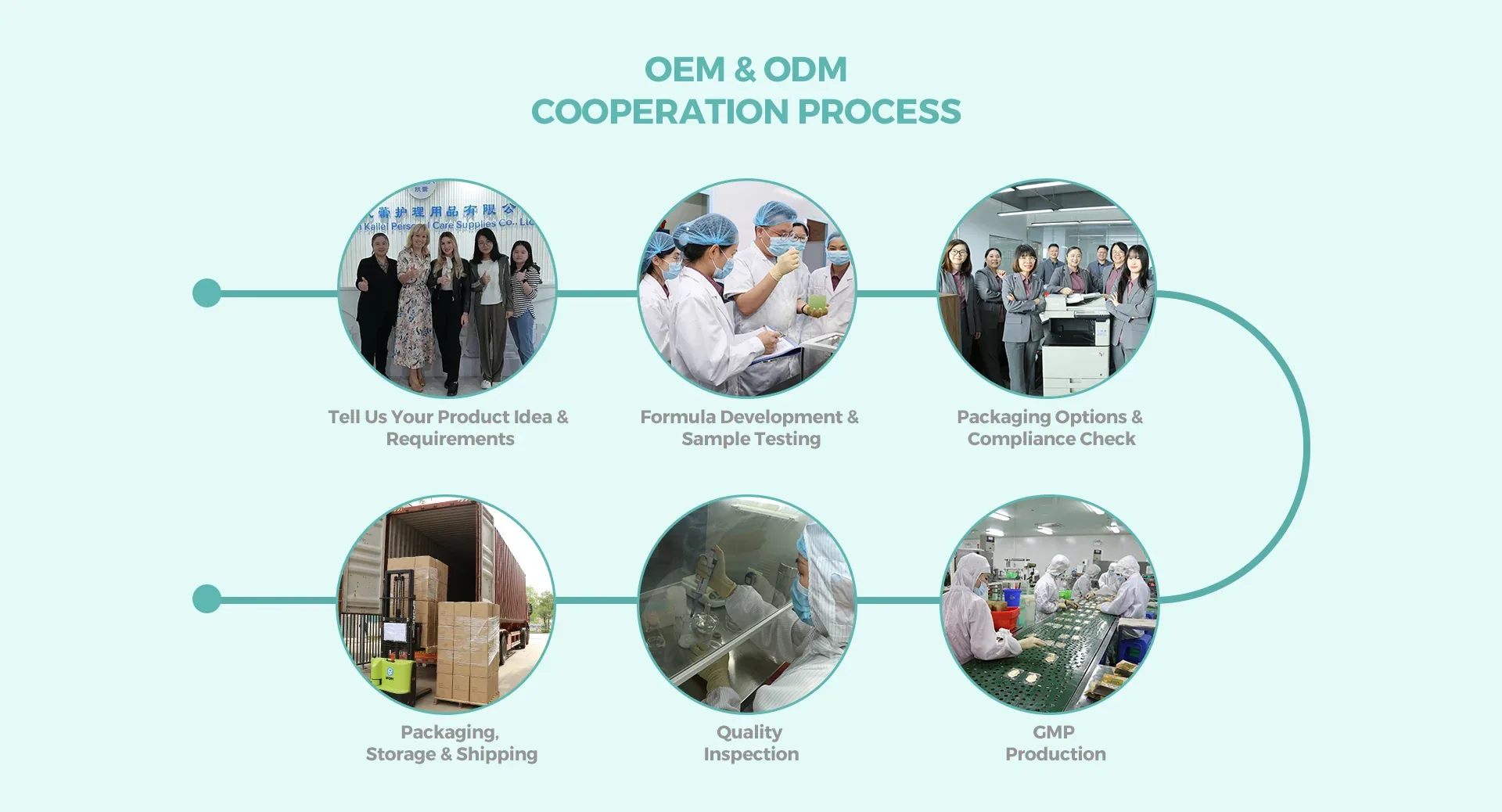
Skincraftlab (Zhongshan, ISO 22716 and GMPC certified) commits in writing to: first reply under 30 minutes in business hours, spec sheet within 3 working days, FOB quotation within 5 working days, and a night-desk reply window of 6 hours for LatAm and Middle East time zones. We publish our hydrogcolloid and hydrogel pimple patch cost ranges in the first quotation, not the second. If those numbers don't work for your project, we'll tell you in the first chat — that's part of the SLA.
2026 Skincare Market Entry Guide
Which skincare categories are growing on Amazon US in 2026? Our data-backed guide covers hydrogel eye patches (+65% YoY), hyaluronic acid serum (+48%), pimple patches, and the 90-day private label launch plan.
No spam, ever. Unsubscribe anytime.
What Are the Key Facts Before You Request a Quote?
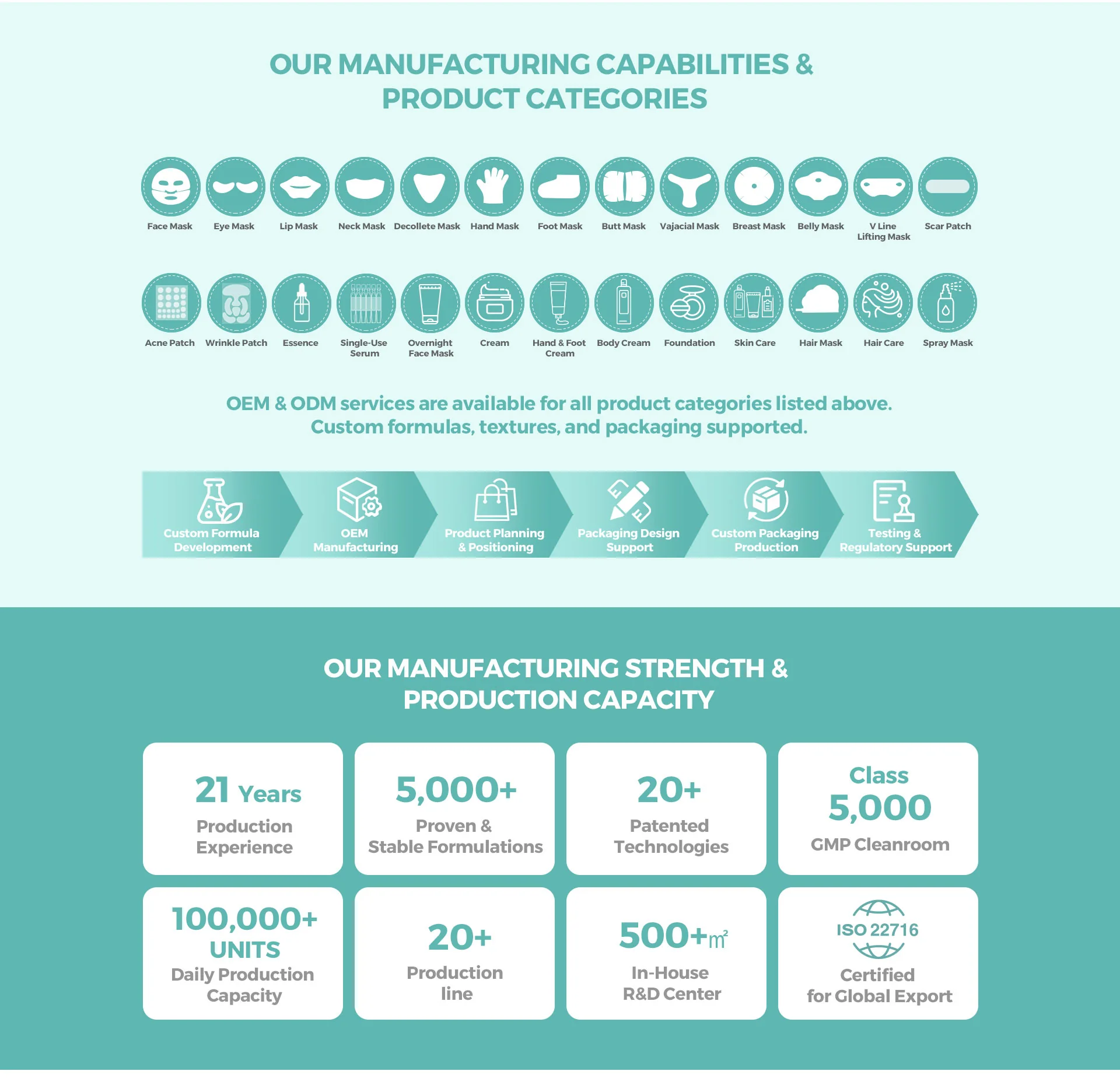
Skincraftlab is a skincare OEM/ODM contract manufacturer based in Zhongshan, Guangdong, China, operating since 2007 and serving 2,000+ brands across 30+ countries. Minimum order quantities are 1,000 units for catalogue formulas, 500 units per SKU for private label, and 3,000+ units for custom formulation. Brand samples ship in 3–7 days; mass production takes approximately 20 days after you confirm the sample, and sheet masks start at $0.08–$0.35 per piece. Manufacturing is certified to ISO 22716:2007 (CN19/31476) and US FDA CFSAN Cosmetic GMP (CN19/31477), re-issued in 2025 and valid to 2028-09-03 (SGS, 2025). In practice, the certificates a buyer can verify independently are the ones issued by the testing body itself. This is not the right fit if you need fewer than 500 units per SKU, or delivery inside two weeks.
| Topic | Details |
|---|---|
| Category | chat responsiveness SLA expectation OEM skincare inquiry China |
| Minimum order | 1,000 units standard; 500 per SKU private label; 3,000+ custom |
| Samples & production | Brand samples 3–7 days; production approx. 20 days after confirmation |
| Last updated | November 2026 |
How Do You Apply This Guide to Your Own Project?
- 1Step 1: match the format to your unit cost — for example, sheet masks run $0.08–$0.35 per piece at 1,000 units, while serums run $1.50–$5.00 per bottle.
- 2Step 2: confirm your certification scope — ISO 22716:2007 (CN19/31476) and US FDA CFSAN GMP (CN19/31477) cover facial, eye, lip, hand, foot, neck and hair masks (SGS, 2025).
- 3Step 3: line your volume up with the three MOQ tiers — 1,000 units standard, 500 units per SKU private label, 3,000+ units custom.
- 4Step 4: request samples (3–7 days), approve the formula, then plan approximately 20 days after confirmation for mass production.
- 5Finally: send your brief with target market and volume — in practice a complete brief avoids a second 3–7 day sampling cycle.
Why Brands Choose Skincraftlab as Their OEM/ODM Partner
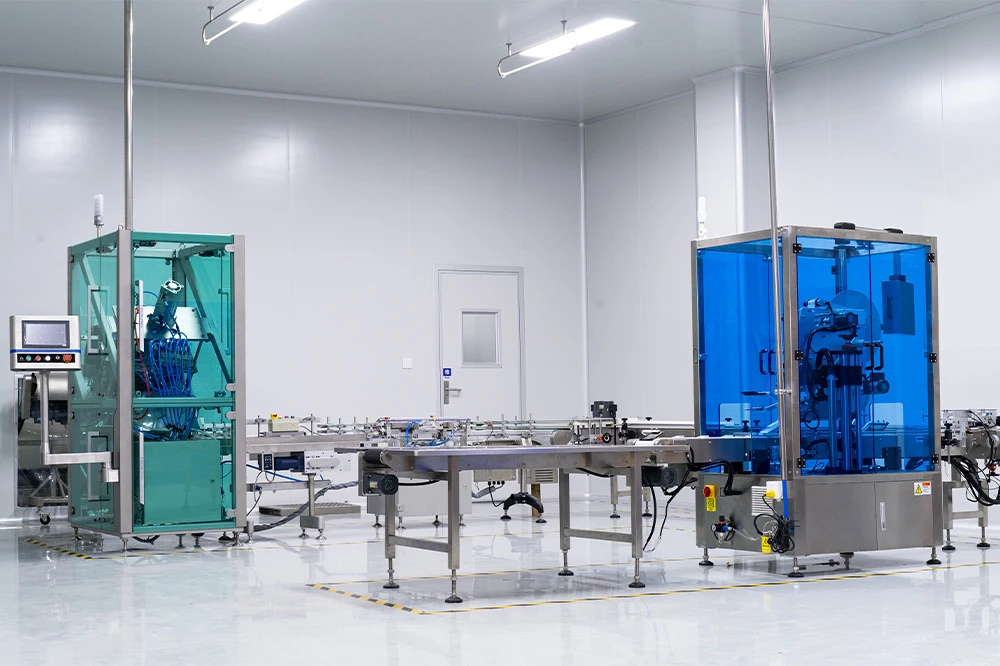
Skincraftlab is a skincare OEM/ODM contract manufacturer based in Zhongshan, Guangdong, China, operating since 2007 and supplying private-label and OEM buyers across North America, Europe, the Middle East and Southeast Asia. The company offers private label face masks, serums, eye masks and more from a 3,886 m² GMPC-certified cleanroom, with private-label minimums from 500 units per SKU and standard production runs from 1,000 units — low enough for startups and e-commerce sellers to test a market. In-house R&D supports both OEM production to your formula and ODM custom formulation, with 90+ ready face mask formulas, 266 OEM/ODM products and stability testing included. Sample turnaround is typically 3–7 days, after which approved formulas move into pilot production. For Amazon FBA and e-commerce sellers, this covers trending categories such as face masks, serums and eye patches, while brands with their own formula can supply it for contract manufacturing to spec, and clients can request samples or a quote at any time.
Frequently Asked Questions
What chat responsiveness SLA expectation should I hold an OEM skincare China supplier to for an initial pimple patch inquiry?
What pimple patch hydrocolloid material sourcing spec China OEM should I demand in writing?
In a hydrocolloid vs hydrogel pimple patch manufacturing cost comparison OEM, which is cheaper and which should I buy?
How do I verify the chat SLA is real and not just a sales promise?
Does Golden Week or Chinese New Year affect OEM chat SLAs, and how should I plan around it?
What reply SLA should I expect from Skincraftlab specifically?
Related Posts
Chat Responsiveness SLA for OEM Skincare Inquiry China
What response time to demand from a Chinese OEM skincare supplier's chat desk — plus hydrocolloid pimple patch sourcing specs and cost math vs hydrogel.

Chat Responsiveness SLA Expectation OEM Skincare Inquiry China
What a realistic chat SLA looks like on a China OEM skincare inquiry, plus hydrocolloid pimple patch sourcing specs and cost math.
Chat Response SLA OEM Skincare Inquiry China: 2026 Benchmarks
What response times to demand from a Chinese OEM skincare factory, and how hydrocolloid pimple patch specs and MOQ drive your landed cost vs hydrogel.
Related Products

Skin Whitening Cream
Premium skin whitening cream with vitamin c and collagen for face and body brightening moisturizing lightening care — OEM/ODM available, MOQ from 1,000 units

Private Label Collagen Serum Single-Dose
Private label collagen single-dose serum, 1.2 ml vials, 10 or 30 pcs per box, 1,000 boxes MOQ

Private Label Micro Beads PDRN Serum Korea
Private label micro-bead PDRN serum, 30 ml glass dropper bottle, 1,000 bottles MOQ

Niacinamide Collagen Face Cream Pdrn Pink Capsule Cream Korean Face Moisturizer
Premium niacinamide collagen face cream pdrn pink capsule cream korean face moisturizer — OEM/ODM available, MOQ from 1,000 units