Cosmetics Launch Stack 2026: Visuals, Web QA & Marketing
October 3, 2026
Skincraftlab
B2B Skincare Manufacturing Expert
What Is This Guide About?
A practical 2026 launch stack for cosmetics brands: product visuals without a studio, a web QA pass before ad spend, and marketing workflows built from written product context — plus private label MOQ, sample and lead-time realities.
Category
cosmetics launch stack 2026
Audience
Brand owners, procurement, R&D
Updated
October 2026
A cosmetics launch in 2026 runs on three stacks that most brand owners under-build: product visuals without a studio, a quality pass on the store before ad spend, and a marketing workflow that starts from written product context. This guide maps each stack to what you can do in-house versus what to ask your manufacturer for, and closes with the MOQ, sample and lead-time realities of private label manufacturing.
Why the launch stack changed
Three shifts moved the work:
- Product pages are read by software as often as by people. AI assistants now summarise supplier and brand pages for buyers, so a specification table that a machine can extract is worth more than a paragraph of adjectives.
- Visual production split into two paths. Real footage (factory floor, filling line, QC bench) proves you actually make something. Programmatic visuals — layout, type and data animation rendered to video — cover the endless variants a launch needs without booking a studio.
- Traffic got expensive before assets got finished. Ad budgets now start before packaging photography lands, so the store, the claims and the measurement plan have to be ready first.
None of this requires a bigger team. It requires sequencing.
Pillar 1 — Product visuals and video without a studio
There are three practical production modes. Most brands need a mix.
| Mode | Best for | What you need | Turnaround |
|---|---|---|---|
| Factory footage (filling line, QC bench, packing) | Manufacturer pages, About/"who makes this" trust blocks, investor decks | A partner willing to let you film or share existing published footage | Days (scheduling) |
| Spec-driven animation (parameter tables, ingredient callouts, MOQ/lead-time comparisons rendered as motion graphics) | Product detail pages, ad variants, launch explainers | A reusable template plus your specification sheet | Hours to days per variant |
| AI-generated stills | Mood boards, packaging direction, rough variants for review | Clear prompts and a review step so nothing unverifiable ships | Hours |
Rules that keep this legal and useful:
- Never let generated imagery imply a result. Before/after visuals edge into drug-claim territory in the US market — see Which claims are riskiest in the FAQ below.
- Ask your manufacturer for raw material early. Footage rights, packaging renders, batch and QC shots. Brands that ask after packaging is finished usually pay for stock instead.
- Keep one canonical visual per product page, then generate variants for ads. Mixed styles across a catalogue read as a reseller, not a maker.
If your product line is still open, start from the manufacturing constraints in How to Choose a Skincare OEM Manufacturer (2026 checklist) so the visuals match what you can actually produce.
Pillar 2 — Web QA before you spend on traffic
A launch store fails quietly, not loudly. Five checks catch almost all of it.
| Check | What it costs you when it fails | How to verify |
|---|---|---|
| Form submission, end to end | Leads vanish while the customer sees a success message | Submit a real test enquiry with a distinguishable subject and confirm it arrives in the destination inbox — not just that a toast appeared |
| Performance basics (LCP, CLS, mobile) | Mobile visitors bounce before the hero image paints | Measure on a mid-range phone profile, not your desktop; check the hero and the first screen of the product page |
| Internal links and redirects | Crawlers waste budget, buyers hit dead ends | Crawl every internal link on the money pages and record status codes; fix anything that is not 200 |
| Edge states | Layout collapses exactly when a visitor is deciding | Test with a missing image, a 200-character title, an empty search, an empty cart, and the longest legal text you will ever publish |
| Localisation | Wrong legal or claim text ships to a market | Open each localised version and read the claim and contact blocks, not just the price |
We learned the first row the hard way on our own site: a form endpoint was being rewritten by a redirect rule, so the POST downgraded to a GET and enquiries were acknowledged but never stored or mailed. It looked healthy for days because the visible layer was fine. Any "does the form work" check that stops at the success message is not a check.
Pillar 3 — Marketing workflows: context first, then execution
The highest-leverage habit is boring: write your product, audience and positioning context once, then let every other workflow read it — copy, ads, email, SEO.
| Workflow | What "good" looks like | Common failure |
|---|---|---|
| Pricing | Unit economics per MOQ tier, landed cost, and a target margin band | Copying a competitor's retail price with no cost model |
| Launch cadence | A dated runway with an asset-freeze date before ad spend starts | Ads switching on while packaging photography is still in production |
| A/B testing | One variable per test, success metric declared before launch | Changing three things at once, then arguing about causality |
Those three — pricing, cadence, A/B discipline — are also the three areas brand owners most often leave underspecified, because they feel like "later" problems. They are the ones that decide whether a launch makes money.
Manufacturing inputs for the pricing table usually look like this: private label from 500 units per SKU, standard catalogue formulas from 1,000 units, and custom formulation from 3,000+ units, with mass production typically around 20 days after confirmation. Sample lead time runs 3–7 days. Confirm the exact numbers for your SKU before you price anything.
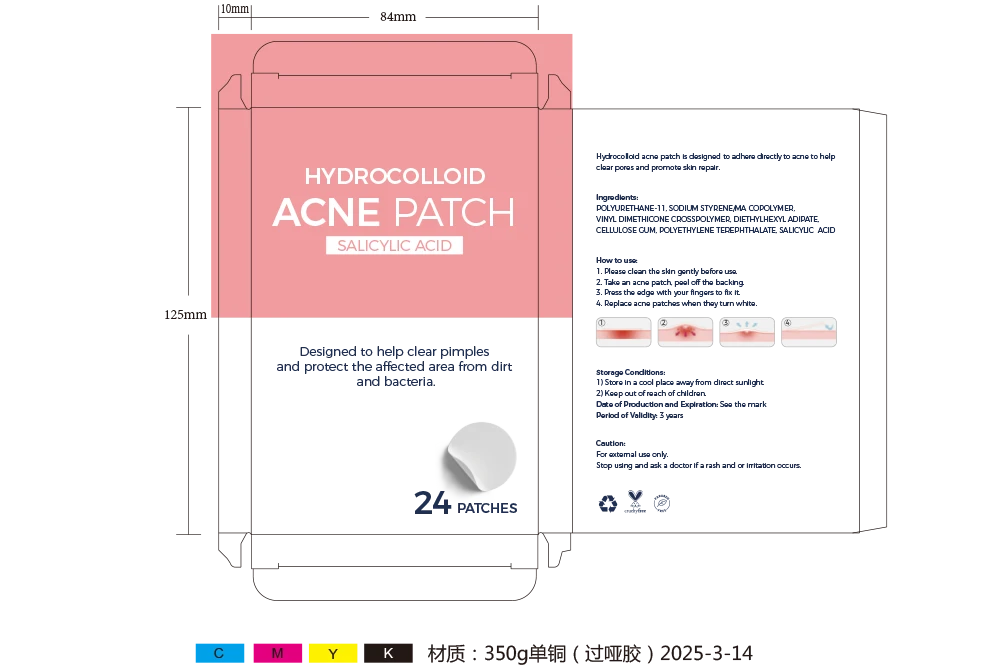
For adjacent categories the numbers differ by product type — acne patches carry their own MOQ and compliance load, covered in Acne Patch OEM: MOQ, Cost & Compliance.
What to ask your manufacturing partner
| Ask | Why it matters at launch |
|---|---|
| Confirmed MOQ per SKU and per formula type | Sets your first production budget and cash cycle |
| Sample and bulk lead times, in writing | Feeds the launch cadence table above |
| Which certifications the facility holds, and their scope | Buyers and marketplaces ask; keep the wording to the certificate itself |
| Raw footage, packaging renders, QC photography | Removes the biggest visual cost |
| Claim review support per market | Prevents a rewrite after artwork is printed |
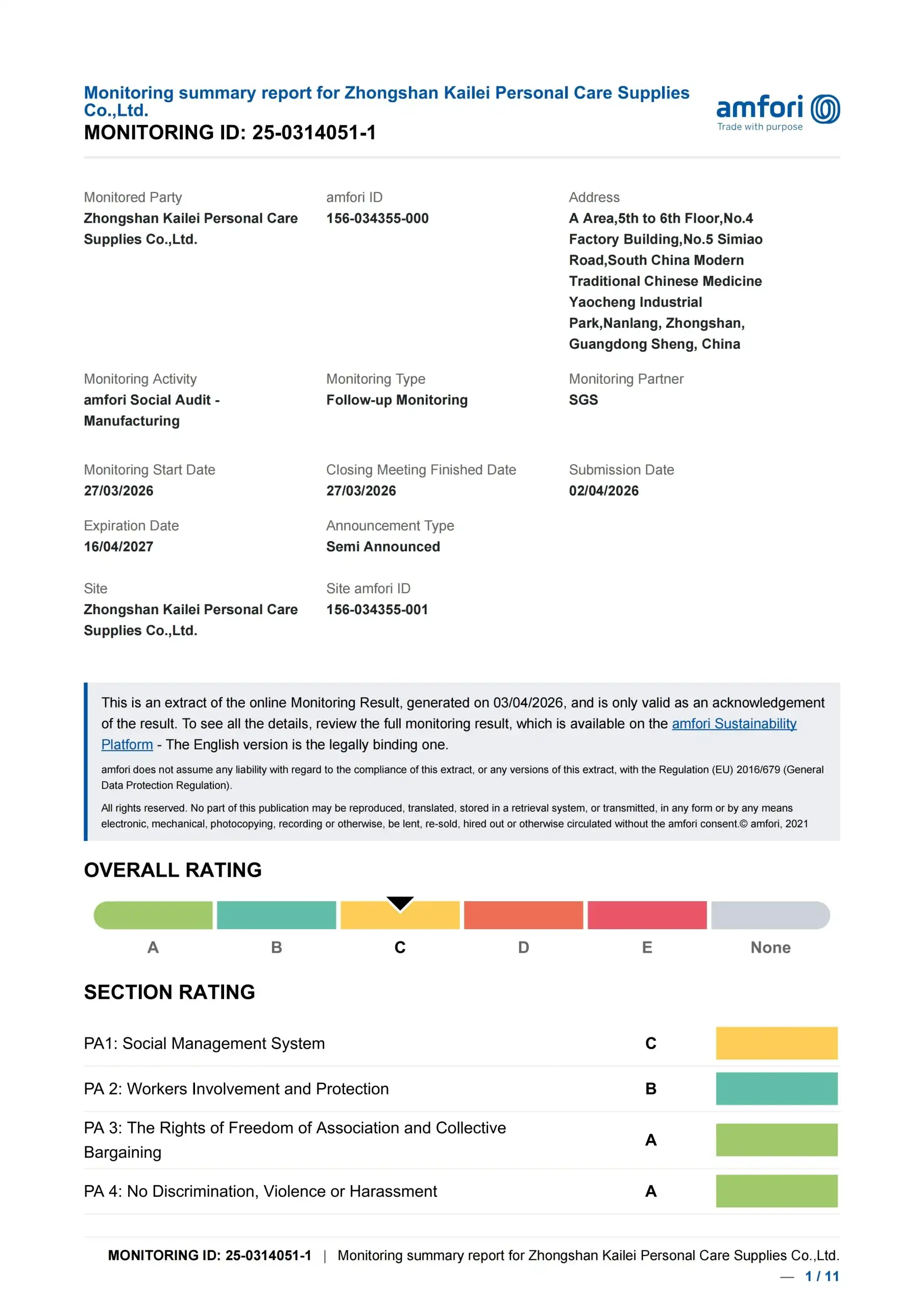
Our own facility is ISO 22716 and GMP certified — the wording, scope and document numbers are worth asking any supplier for, and worth checking rather than assuming. We wrote about the audit cost side in ISO 22716 GMP Certification Cost: China Cosmetic Factory.
If you are comparing sourcing regions, the practical differences in MOQ, tooling and lead time are laid out in Korea vs China Skincare OEM (2026).
A four-week pre-launch checklist
| Week | Deliverable | Who owns it |
|---|---|---|
| Week 1 | Formula and packaging locked; claim wording reviewed per target market | Brand + manufacturer |
| Week 2 | Visual pack: factory footage, spec-driven animation, stills for the product line | Brand (with manufacturer footage) |
| Week 3 | Store QA pass: forms end to end, performance on mobile, links, edge states, localisation | Brand |
| Week 4 | Launch cadence live, ad assets frozen, measurement plan and A/B queue agreed | Brand |
Ship the non-negotiables in that order. Brands that start with week 4 — ads first — pay for the same work later at a worse price.
FAQ
Q: Do I need a studio to launch a skincare brand in 2026?
No. Most launches need three things: real footage of the product being made, a reusable motion template that turns specifications into short videos, and a small set of clean stills. Factory footage carries the credibility; generated and templated assets carry the volume.
Q: How do I verify my store will not silently lose leads?
Submit a real enquiry yourself with a distinctive subject line, then confirm it appears in the inbox that your sales team actually reads. Do the same for every form: sample request, contact, quote, newsletter. If a form only shows a success message, you have tested the front end, not the pipeline.
Q: What MOQ should I expect from a Chinese OEM?
For skincare, common tiers are private label from 500 units per SKU, standard catalogue formulas from 1,000 units, and custom formulation from 3,000+ units. Ask for the tier that applies to your SKU and packaging, in writing, before you build a price model.
Q: How long does private label take from formula to shipment?
Samples typically take 3–7 days. Once the formula, artwork and packaging are confirmed, bulk production is commonly around 20 days. Add artwork approval, shipping and market registration on top rather than assuming they happen in parallel.
Q: Which claims are riskiest on product pages?
In the US, products intended to affect the structure or function of the body, or to treat disease, are regulated as drugs — which is why before/after imagery and "removes" style wording carry risk on a cosmetic page. In the EU, claims must be supported by evidence consistent with the product information file. Keep wording descriptive and literal; describe what the product is, not what it will do to a person.
Next step
If you are launching this quarter, send us the product type and target market and we will come back with the MOQ tier, sample timeline and the visual assets your store will need:
Two useful starting points from our catalogue: custom under-eye patches and bio-cellulose sheet masks.
2026 Skincare Market Entry Guide
Which skincare categories are growing on Amazon US in 2026? Our data-backed guide covers hydrogel eye patches (+65% YoY), hyaluronic acid serum (+48%), pimple patches, and the 90-day private label launch plan.
No spam, ever. Unsubscribe anytime.
What Are the Key Facts Before You Request a Quote?
Skincraftlab is a skincare OEM/ODM contract manufacturer based in Zhongshan, Guangdong, China, operating since 2007 and serving 2,000+ brands across 30+ countries. Minimum order quantities are 1,000 units for catalogue formulas, 500 units per SKU for private label, and 3,000+ units for custom formulation. Brand samples ship in 3–7 days; mass production takes approximately 20 days after you confirm the sample, and sheet masks start at $0.08–$0.35 per piece. Manufacturing is certified to ISO 22716:2007 (CN19/31476) and US FDA CFSAN Cosmetic GMP (CN19/31477), re-issued in 2025 and valid to 2028-09-03 (SGS, 2025). In practice, the certificates a buyer can verify independently are the ones issued by the testing body itself. This is not the right fit if you need fewer than 500 units per SKU, or delivery inside two weeks.
| Topic | Details |
|---|---|
| Category | cosmetics launch stack 2026 |
| Minimum order | 1,000 units standard; 500 per SKU private label; 3,000+ custom |
| Samples & production | Brand samples 3–7 days; production approx. 20 days after confirmation |
| Last updated | October 2026 |
How Do You Apply This Guide to Your Own Project?
- 1Step 1: match the format to your unit cost — for example, sheet masks run $0.08–$0.35 per piece at 1,000 units, while serums run $1.50–$5.00 per bottle.
- 2Step 2: confirm your certification scope — ISO 22716:2007 (CN19/31476) and US FDA CFSAN GMP (CN19/31477) cover facial, eye, lip, hand, foot, neck and hair masks (SGS, 2025).
- 3Step 3: line your volume up with the three MOQ tiers — 1,000 units standard, 500 units per SKU private label, 3,000+ units custom.
- 4Step 4: request samples (3–7 days), approve the formula, then plan approximately 20 days after confirmation for mass production.
- 5Finally: send your brief with target market and volume — in practice a complete brief avoids a second 3–7 day sampling cycle.
Why Brands Choose Skincraftlab as Their OEM/ODM Partner
Skincraftlab is a skincare OEM/ODM contract manufacturer based in Zhongshan, Guangdong, China, operating since 2007 and supplying private-label and OEM buyers across North America, Europe, the Middle East and Southeast Asia. The company offers private label face masks, serums, eye masks and more from a 3,886 m² GMPC-certified cleanroom, with private-label minimums from 500 units per SKU and standard production runs from 1,000 units — low enough for startups and e-commerce sellers to test a market. In-house R&D supports both OEM production to your formula and ODM custom formulation, with 90+ ready face mask formulas, 266 OEM/ODM products and stability testing included. Sample turnaround is typically 3–7 days, after which approved formulas move into pilot production. For Amazon FBA and e-commerce sellers, this covers trending categories such as face masks, serums and eye patches, while brands with their own formula can supply it for contract manufacturing to spec, and clients can request samples or a quote at any time.
Frequently Asked Questions
Do I need a studio to launch a skincare brand in 2026?
How do I verify my store will not silently lose leads?
What MOQ should I expect from a Chinese OEM?
How long does private label take from formula to shipment?
Which claims are riskiest on product pages?
Related Posts
PDRN Serum OEM China: 2% vs 0.5% Salmon DNA Specs
What 2% vs 0.5% PDRN salmon DNA really means in an OEM spec sheet, plus rolling forecast terms for 500,000 pimple patches and hydrogel under-eye patch MOQ/FOB math.
Chat Responsiveness SLA for OEM Skincare Inquiries in China
What a realistic chat responsiveness SLA looks like for OEM skincare inquiries in China — plus hydrocolloid vs hydrogel pimple patch sourcing specs and costs.
Pimple Patch OEM Line Capacity: 1M Units/Month Ramp-Up
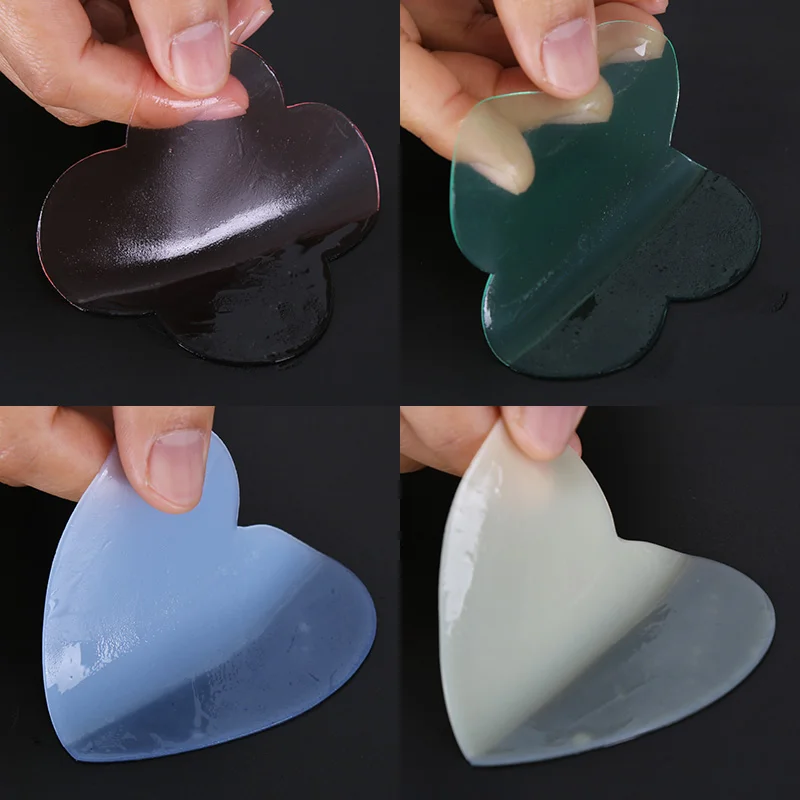
A factory-floor ramp-up plan for taking a dedicated hydrocolloid coating line from pilot to 1 million pimple patch units per month in China, with real cycle times and QC gates.
Related Products

Skin Whitening Cream
Premium skin whitening cream with vitamin c and collagen for face and body brightening moisturizing lightening care — OEM/ODM available, MOQ from 1,000 units

Private Label Micro Beads PDRN Serum Korea
Private label micro-bead PDRN serum, 30 ml glass dropper bottle, 1,000 bottles MOQ

Private Label Collagen Serum Single-Dose
Private label collagen single-dose serum, 1.2 ml vials, 10 or 30 pcs per box, 1,000 boxes MOQ

Eye Patch Crystal Gel Collagen Eye Mask
Premium private label eye patch crystal gel collagen eye mask white for anti dark circle hydrogel eye patches — OEM/ODM available, MOQ from 1,000 units