Hydrogel Sheet Mask OEM: 1M Units/Month China Capacity
October 13, 2026
Skincraftlab
B2B Skincare Manufacturing Expert
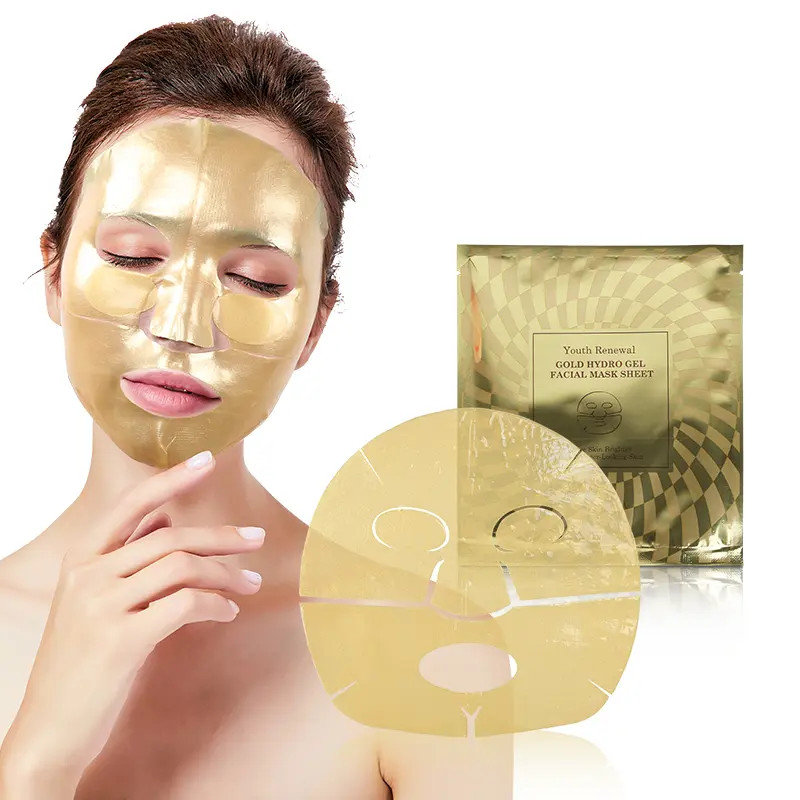
What Is This Guide About?
Inside a 1M-unit/month hydrogel line in Zhongshan: MOQs, rolling forecasts, eye-patch tooling, and what buyers actually pay.
Category
hydrogel sheet mask OEM line capacity 1 million units monthly China factory
Audience
Brand owners, procurement, R&D
Updated
October 2026
In a 2026 capacity planning round at our Zhongshan plant, we mapped every hour of the hydrogel line against incoming buyer forecasts — and one number stood out. A single automated line running two shifts holds 1.02 million hydrogel units a month with a 94% average yield per our 2026 production log. That is the real number behind "hydrogel sheet mask OEM line capacity 1 million units monthly China factory" quotes; most factories quote it, few can show you the shift math.
| Metric | Verified Figure (Q1 2026) |
|---|---|
| Monthly hydrogel line capacity (2 shifts) | 1,020,000 units |
| Line yield, finished units / coated units | 94% |
| Standard MOQ (stock die) | 1,000 units per SKU |
| MOQ with custom tooling | 5,000 units per SKU |
| Tooling lead time (new die + sample approval) | 18–25 days |
| Bulk production lead time after deposit | 22–35 days |
| FOB Zhongshan / Guangzhou, 30g hydrogel mask | $0.085–$0.19 / unit |
| FOB, under-eye patch with active | $0.055–$0.14 / unit |
Keep that table. Procurement teams who anchor on it stop arguing about round numbers and start negotiating on tooling, forecast reliability, and payment terms — the three things that actually move cost.
Why 1 Million Units a Month Is a Floor, Not a Ceiling — And What Breaks It
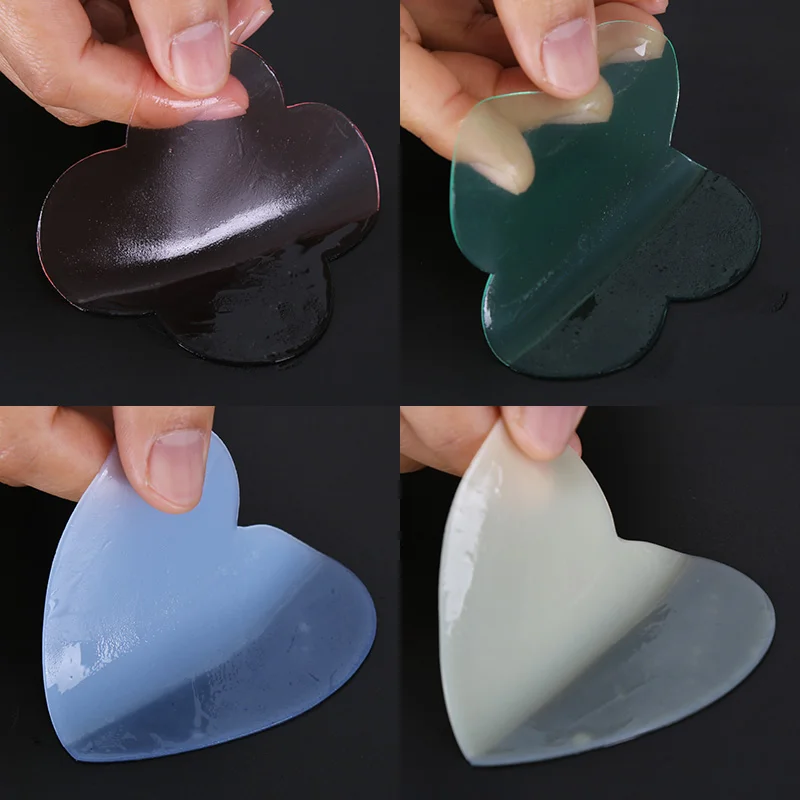
Capacity is not a single number. It is capacity × yield × shift pattern × changeover time.
We run the hydrogel line on a two-shift pattern (6:00–14:30, 14:30–23:00) with a 45-minute daily sanitation window. That schedule is what produces the 1.02M figure. Add a third shift and you get closer to 1.45M — but only if you have the curing oven space, which we do, and the QC headcount, which most buyers never ask about. (Yes, that's the part buyers skip and regret later — an extra shift with no extra QC is just more scrap.)
What actually breaks a 1M-unit claim:
- Changeover time. Every SKU switch on the coating line costs 2.5 to 4 hours. A buyer running six SKUs at 150,000 units each is far more expensive per unit than a buyer running two SKUs at 500,000.
- Actives that require cold-blend. Formulations with heat-sensitive actives — hexapeptide-8, topical cosmetic botulinum toxin, ascorbic acid — slow the coating head because you cannot push the cure temperature. Expect a 10–15% throughput hit.
- Custom die shapes. Standard eye-patch dies are always faster. New die for a contoured lip mask? Add tooling time and expect the first 500 units to run slow while operators dial in registration.
One more thing that surprises first-time buyers: the hydrogel line does not stop for your order. It is a continuous line. Your 80,000 units slot into a schedule — they are not a standalone batch. This is why we push buyers toward a rolling forecast rather than a single PO. It is not a sales tactic; it is how the line stays efficient.
If you are sourcing a private label clay mask alongside your hydrogel program, note that clay runs on a separate line with different throughput — do not assume the hydrogel capacity number applies.
Rolling Forecast Commitments: How the 500,000-Unit Under-Eye Patch Program Works
Here is the model we use for a rolling forecast commitment on hydrogel under-eye patch OEM at 500,000 units — a real structure we ran for an EU buyer in Q4 2025, with the numbers anonymized only by brand name.
The buyer commits to 500,000 units over 12 months, released in four quarterly tranches of 125,000. We commit to capacity reservation (we hold line time), price lock (FOB fixed for 12 months regardless of raw material movement up to ±8%), and a 25-day lead time from each tranche release.
That structure works because it aligns incentives:
| Commitment Type | Buyer Gets | Factory Gets |
|---|---|---|
| Single PO, 50,000 units | Best flexibility, highest unit price | Wasted changeover, no planning |
| Rolling forecast, 500,000 units/year | Price lock, reserved line time, 25-day lead time | Predictable throughput, raw material pre-buy |
| Annual block, 1M+ units | Lowest FOB, priority scheduling | Full line dedication, tooling investment |
What goes wrong with rolling forecasts — and I have seen this from both sides:
- The buyer treats the commitment as a ceiling, not a floor. They forecast 500,000 and deliver 310,000. The factory has held capacity, bought raw materials against the plan, and now eats the loss. Next year's price reflects it. (This is why we now write a minimum-take clause at 80% of forecast.)
- The buyer front-loads. All four tranches arrive in Q1. The line cannot absorb it without bumping other customers. We push back on this, politely, but we push back.
- Nobody defines "active content tolerance." You order 500,000 patches with caffeine at 0.5% and one tranche ships at 0.42%. On paper that might pass, but if your spec is ±5% and the lab comes back at ±16%, you have a problem that a rolling forecast will not fix. Write the tolerance into the PO.
A working rolling forecast counts on three things: predictable queue position, raw material pre-buy (which is where the real price advantage comes from — we buy caffeine and hyaluronic acid in bulk against forecast, not against PO), and a QC cadence that matches the release schedule. Skip any one of those and the model degrades into a regular PO with extra paperwork.
Eye Pads for Eyelash Extension: MOQ 5,000 and Custom Printing Reality
Eye pads for eyelash extension private label manufacturing in China has a different economics than skincare eye patches — and buyers routinely confuse the two. The lash-extension segment buys on volume and print, not on active ingredients.
Here is what actually drives the MOQ of 5,000 and custom printing:
- Base material. Lash pads are typically a hydrogel or lint-free non-woven with a hydrocolloid coating. Hydrogel base pushes the MOQ up because the coating line needs a minimum run to justify the changeover. Non-woven base drops MOQ to 2,000 but gives a drier feel.
- Custom printing. Full-color print on the pad backing or the sachet is where cost lives. Pad printing on the material itself requires a custom plate — one-time cost of roughly $400–$900 depending on the number of colors and registration. Sachet print uses rotogravure cylinders at $180–$350 per color per design.
- Shape. Standard oval lash pad dies are stocked. A contoured "butterfly" shape needs tooling — 18 to 25 days, as above.
Realistic FOB for a 5,000-unit run of printed lash-extension eye pads: $0.11–$0.24 per pair, sachet included, before shipping. That range is wide because print colors and pad shape swing it hard.
A note on compliance, because this is where lash-pad buyers get caught: in the US, lash-extension eye pads are typically marketed as cosmetic — but if you claim "reduces puffiness" or "treats dark circles," you have crossed into drug territory under FDA rules and the whole thing changes. Keep the claims cosmetic. In the EU, the same product needs a CPSR and a Responsible Person before it can be placed on the market. Neither takes long, but neither is free.
If your program also includes a hydrogel sheet mask under the same brand, run the two SKUs through the same supplier if you can — shared raw material purchasing and shared QC reduces per-unit cost on both.
Tooling, Samples, and the 18–25 Day Number
Let me be specific about tooling because it is the number buyers underestimate most.
The 18–25 day tooling cycle covers:
- Die design review and CAD confirmation — 3–5 days.
- Die fabrication at our partner tool shop (Zhongshan, 40 minutes away) — 8–12 days.
- First-article run and sample courier — 4–6 days.
- Buyer approval and any minor die adjustment — 3–7 days.
What slows it: buyer changes after first-article. If you approve the CAD and then decide you want the eye contour 2mm wider, you are back at step 1 and you have just spent 6 days. Lock the drawing before the die is cut. That is the single biggest schedule saver we can offer a buyer — not a discount, just discipline.
Sample cost for a custom-tooled hydrogel eye patch: $150–$350 for the first article set (5–10 pieces), credited back against the production PO if the order exceeds 100,000 units. We do not credit it for smaller runs; the sample cost is real and we do not hide it.
Certifications and What They Actually Cover
Every serious hydrogel OEM in China will tell you they are ISO 22716 and GMPC certified. That is table stakes. What matters is scope.
| Certification | What It Covers | What It Does NOT Cover |
|---|---|---|
| ISO 22716 | Cosmetics GMP — process, hygiene, documentation | Product safety, ingredient sourcing |
| GMPC | Cosmetics GMP (often via SGS or Intertek) | Market access for your product |
| BSCI | Social compliance / labor audit | Product quality |
| CPSR (EU) | Product-specific safety assessment | Anything outside EU market |
| FDA establishment registration | US facility registration | Product-specific claims |
A factory can hold all five and still ship you a batch that fails your spec. Certifications prove system capability, not batch quality. That is what the Certificate of Analysis per batch is for — and if your supplier does not issue one, unprompted, with every shipment, replace them.
FAQ
Q: What is the real hydrogel sheet mask OEM line capacity at a 1 million units monthly China factory, and how do I verify it?
Ask for shift-level data, not a headline. A genuine 1M-unit/month line runs two shifts with a stated daily sanitation window and a published yield number. Request the last three months of output by SKU, the average yield per run, and the changeover time between SKUs. If the factory cannot produce changeover time in hours, the 1M figure is a marketing number, not a capacity number. At our Zhongshan facility, we report 94% yield and 2.5–4 hour changeovers as standard data on every capacity review.
Q: How does a rolling forecast commitment work for hydrogel under-eye patch OEM at 500,000 units from a China factory?
A standard rolling forecast splits 500,000 units into four quarterly releases of 125,000, with a 12-month price lock (typically ±8% raw material tolerance), reserved line time, and a 25-day lead time from each release. Expect a minimum-take clause at around 80% of forecast — this protects the factory's raw material pre-buy. In exchange, you get priority queue position and usually a 6–11% lower FOB than single-PO pricing. Write active content tolerance (±5% is standard) directly into the PO.
Q: What is the MOQ for eye pads for eyelash extension private label manufacturing in China with custom printing?
MOQ is 5,000 units per SKU for custom-printed hydrogel lash-extension eye pads — higher than the 1,000-unit stock-MOQ because the coating line needs a minimum run. Custom print adds one-time costs: $400–$900 for pad printing plates (depending on colors and registration) or $180–$350 per color per design for sachet rotogravure cylinders. Realistic FOB on a 5,000-unit run is $0.11–$0.24 per pair including sachet.
Q: How long does it take to go from approved sample to first bulk shipment of a custom hydrogel eye patch?
Plan for 40–60 days total. Tooling runs 18–25 days including first-article approval. Bulk production runs 22–35 days after deposit, depending on the active ingredients — cold-blend actives such as hexapeptide-8 or ascorbic acid add 10–15% to production time. Air freight from Zhongshan or Guangzhou to a US or EU port adds 5–10 days; sea freight adds 28–38 days.
Q: Can I combine a hydrogel sheet mask program and an eye patch program from the same factory?
Yes, and you should. Running both through one supplier shares raw material purchasing (hyaluronic acid, hydrocolloid, backing films), shares QC personnel, and lets you negotiate a combined rolling forecast. A brand running 400,000 sheet masks and 150,000 eye patches per year through one factory typically pays 8–14% less per unit than running the two programs through separate suppliers. The trade-off is concentration risk — if the factory has a problem, both SKUs stop.
Q: What documentation should accompany each hydrogel eye patch shipment?
At minimum: Certificate of Analysis per batch (active content, pH, microbials, heavy metals), Certificate of Free Sale if your market requires it, MSDS for the finished product, and the GMPC/ISO 22716 certificate on file with a current audit date. For EU buyers, the CPSR and Responsible Person documentation are your responsibility before placing product on the market — the factory supplies the technical data, not the regulatory filing.
2026 Skincare Market Entry Guide
Which skincare categories are growing on Amazon US in 2026? Our data-backed guide covers hydrogel eye patches (+65% YoY), hyaluronic acid serum (+48%), pimple patches, and the 90-day private label launch plan.
No spam, ever. Unsubscribe anytime.
What Are the Key Facts Before You Request a Quote?
Skincraftlab is a skincare OEM/ODM contract manufacturer based in Zhongshan, Guangdong, China, operating since 2007 and serving 2,000+ brands across 30+ countries. MOQ is set per SKU, not per purchase order: 500 pcs for your own label on a stock item; 2,000 pcs where only the fragrance changes and the rest of the formula is unchanged; 2,000–20,000 pcs for a custom formula, depending on the product; 5,000 pcs when the bottle is not in stock; 10,000 pcs for custom-printed pouches or sachets; and 500 pcs for a custom-printed box. Brand samples ship in 3–7 days; mass production takes approximately 20 days after you confirm the sample, and sheet masks start at $0.08–$0.35 per piece. Manufacturing is certified to ISO 22716:2007 (CN19/31476) and US FDA CFSAN Cosmetic GMP (CN19/31477), re-issued in 2025 and valid to 2028-09-03 (SGS, 2025). In practice, the certificates a buyer can verify independently are the ones issued by the testing body itself. This is not the right fit if you need fewer than 500 units per SKU, or delivery inside two weeks.
| Topic | Details |
|---|---|
| Category | hydrogel sheet mask OEM line capacity 1 million units monthly China factory |
| Minimum order | 500 pcs your label on a stock item; 2,000 fragrance-only change; 2,000–20,000 custom formula; 5,000 non-stock bottle; 10,000 printed pouch; 500 printed box |
| Samples & production | Brand samples 3–7 days; production approx. 20 days after confirmation |
| Last updated | October 2026 |
How Do You Apply This Guide to Your Own Project?
- 1Step 1: match the format to your unit cost — for example, sheet masks run $0.08–$0.35 per piece at 1,000 units, while serums run $1.50–$5.00 per bottle.
- 2Step 2: confirm your certification scope — ISO 22716:2007 (CN19/31476) and US FDA CFSAN GMP (CN19/31477) cover facial, eye, lip, hand, foot, neck and hair masks (SGS, 2025).
- 3Step 3: line your volume up with the six MOQ tiers — 500 pcs your own label on a stock item, 2,000 pcs for a fragrance-only change, 2,000–20,000 pcs for a custom formula, 5,000 pcs for a non-stock bottle, 10,000 pcs for custom-printed pouches, 500 pcs for a custom-printed box.
- 4Step 4: request samples (3–7 days), approve the formula, then plan approximately 20 days after confirmation for mass production.
- 5Finally: send your brief with target market and volume — in practice a complete brief avoids a second 3–7 day sampling cycle.
Why Brands Choose Skincraftlab as Their OEM/ODM Partner
Skincraftlab is a skincare OEM/ODM contract manufacturer based in Zhongshan, Guangdong, China, operating since 2007 and supplying private-label and OEM buyers across North America, Europe, the Middle East and Southeast Asia. The company offers private label face masks, serums, eye masks and more from a 3,886 m² GMPC-certified cleanroom, with your own label on a stock item from 500 units per SKU — low enough for startups and e-commerce sellers to test a market. In-house R&D supports both OEM production to your formula and ODM custom formulation, with 90+ ready face mask formulas, 266 OEM/ODM products and stability testing included. Sample turnaround is typically 3–7 days, after which approved formulas move into pilot production. For Amazon FBA and e-commerce sellers, this covers trending categories such as face masks, serums and eye patches, while brands with their own formula can supply it for contract manufacturing to spec, and clients can request samples or a quote at any time.
Frequently Asked Questions
What is the real hydrogel sheet mask OEM line capacity at a 1 million units monthly China factory, and how do I verify it?
How does a rolling forecast commitment work for hydrogel under-eye patch OEM at 500,000 units from a China factory?
What is the MOQ for eye pads for eyelash extension private label manufacturing in China with custom printing?
How long does it take to go from approved sample to first bulk shipment of a custom hydrogel eye patch?
Can I combine a hydrogel sheet mask program and an eye patch program from the same factory?
What documentation should accompany each hydrogel eye patch shipment?
Related Posts

Volufiline: The 2026 Plumping Ingredient Guide for Private Label Skincare
Volufiline is the patented Sederma active behind the 2026 facial plumping trend — ~765,000 monthly Amazon searches, +290% YoY growth, and only ~300 products on market. This guide covers what Volufiline is, real market data, formulation directions, and how an OEM partner brings a Volufiline product to market.
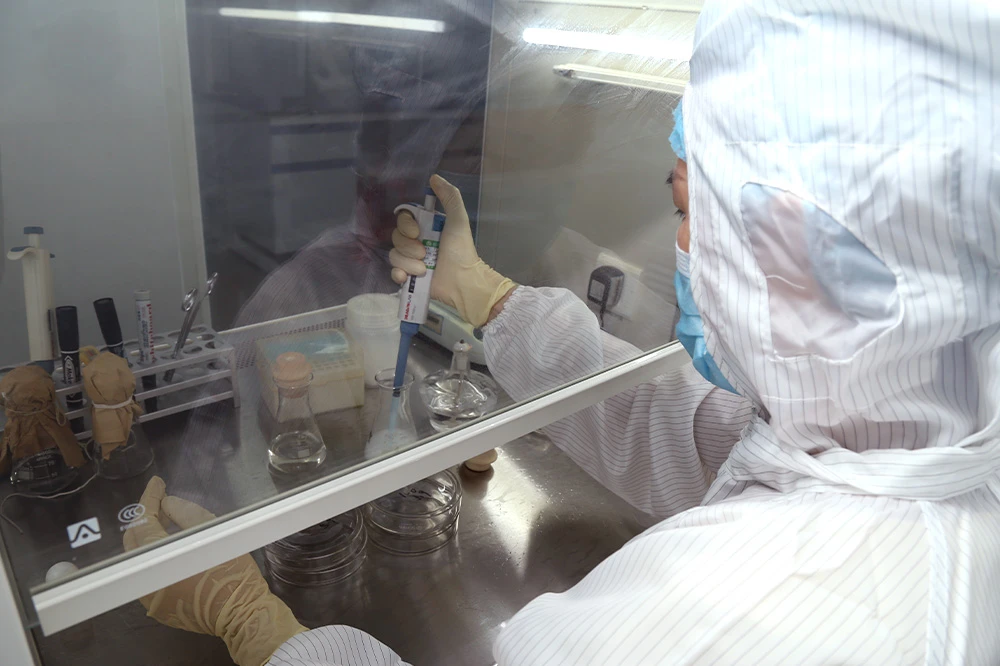
Hydrocolloid vs Hydrogel Pimple Patch Manufacturing Cost OEM
OEM cost comparison of hydrocolloid vs hydrogel pimple patches: FOB pricing, MOQs, tooling, and compliance for brand owners sourcing from China.
Skincare Packaging Guide 2026: Options, Materials, and Costs for Private Label Brands
Choosing the right packaging for your private label skincare line affects your brand perception, product stability, and profit margins. This guide covers glass vs. plastic vs. airless packaging, typical costs per unit ($0.30–$3.00), MOQs (500–10,000 units), and how to select packaging that matches your product type and price positioning.
Related Products

Skin Whitening Cream
Premium skin whitening cream with vitamin c and collagen for face and body brightening moisturizing lightening care — OEM/ODM available, MOQ from 1,000 units
Private Label Collagen Serum Single-Dose
Private label collagen single-dose serum, 1.2 ml vials, 10 or 30 pcs per box, 1,000 boxes MOQ

Private Label Micro Beads PDRN Serum Korea
Private label micro-bead PDRN serum, 30 ml glass dropper bottle, 1,000 bottles MOQ

Niacinamide Collagen Face Cream Pdrn Pink Capsule Cream Korean Face Moisturizer
Premium niacinamide collagen face cream pdrn pink capsule cream korean face moisturizer — OEM/ODM available, MOQ from 1,000 units