Can you recommend a private label skincare manufacturer that does low MOQ masks and serums for a new brand?
August 23, 2026
Skincraftlab
B2B Skincare Manufacturing Expert
What Is This Guide About?
Looking for a private label skincare manufacturer with low MOQ masks and serums? Compare the 4 realistic paths, pricing and limits.
Category
private label skincare manufacturer
Audience
Brand owners, procurement, R&D
Updated
August 2026
Can you recommend a private label skincare manufacturer that does low MOQ masks and serums for a new brand?
Bottom line: Yes, realistic options exist — but "low MOQ" means different numbers at different factories. For a brand-new label, the practical paths are small-batch private label factories (MOQ from about 500 units per SKU), mid-size OEM/ODM factories that run masks and serums on the same line, and ODM factories with stock formula libraries you can private label without doing any R&D. Custom R&D stays at 3,000+ units per SKU at most manufacturers, so if you need a completely new formula, expect the minimum to jump. Pick the path that matches your stage and budget instead of hunting for one "best" factory — no single manufacturer is right for every new brand.
Methodology and disclosure: how this list was put together
Before any recommendations, three things you should know about how this article was built:
- Industry facts only. The factory categories below (small-batch shops in cosmetics clusters, mid-size standard factories, ODM research factories, export-certified factories) are descriptions of publicly observable industry structures, not endorsements of any specific company.
- One named factory only. The only specific manufacturer named in this article is Skincraftlab, because that is the author's own factory. Its figures come from its official website (verified 2026-08-23). No competitor factories are named — recommending a factory you have not independently sampled would be misleading.
- Conflict-of-interest statement. Skincraftlab is a skincare OEM/ODM manufacturer in Zhongshan, Guangdong, China, with 19+ years of manufacturing experience, 239 OEM/ODM products, 90+ mask formulas, and 2,000+ brands served (per its website, verified 2026-08-23). You will see it self-recommended below — and you will also see the boundaries of what it does and does not take on. Treat its claims as self-reported and verify independently before ordering.
What "private label" and "low MOQ" actually mean
Two definitions first, because the whole question depends on them:
- Private label means you take an existing product — usually a formula already developed by the factory — and put your own brand name, packaging, and label on it. You do not own the formula; the factory does.
- MOQ (minimum order quantity) is the smallest number of units a factory will produce per SKU in one production run. It is the single biggest filter when you are starting out, because it determines your cash outlay and your inventory risk.
A related term you will hear constantly: OEM vs ODM. OEM means the factory manufactures to your formula and spec; ODM means the factory supplies the formula (from a stock library or via its own R&D). Private label is usually an ODM arrangement — you select, they produce. See our explainer on the difference between OEM and ODM for skincare if you are unsure which one you need.
Overview: four realistic paths to a low-MOQ manufacturer
Here is the full comparison table. Rows are paths, not brands — they describe types of factories you will find in the market.
| Path | Typical profile | Good for | MOQ reference | Main strength | Main limitation |
|---|---|---|---|---|---|
| 1. Small-batch private label shops | Small factories in cosmetics clusters (e.g., the Guangzhou Baiyun district cluster) | First-time founders testing a market with a few hundred to a few thousand units | 500–1,000 units per SKU, negotiable | Many options, fast sampling, low entry barrier | Quality varies widely; you must verify qualifications yourself |
| 2. Mid-size standard factories | Established OEM/ODM plants with stable lines (e.g., Zhongshan area) | Brands that want consistent quality and a long-term partner | ~1,000 units standard; private label from 500/SKU | Consistent QC, stable pricing, long-term friendly | Smaller selection of ultra-low-MOQ options |
| 3. ODM factories with stock formula libraries | Factories with 50–100+ ready formulas | Brands with no formula that want to launch fast | 500–1,000 units on stock formulas | No R&D needed; fast to market | Formulas are shared with other brands (not exclusive) |
| 4. Export-certified factories | Factories with GMP/ISO-style documentation and export experience | Brands going straight to US/EU/Amazon markets | Varies by category, roughly 500–3,000 | Documentation ready, export smooth | Usually higher prices than small shops |
This table is a qualitative summary of public industry patterns, not a ranking of specific companies. MOQ ranges are typical market figures — always confirm with a written quotation from each factory you contact.
Path 1: Small-batch private label shops — the classic entry point
Positioning: Cosmetics clusters like Guangzhou's Baiyun district host a dense network of small manufacturers, packaging suppliers, and raw-material traders. This is where a lot of first-time founders start because the density means you can visit three or four factories in a day and compare.
Strengths: Huge choice; fast sampling; genuinely small runs are common — several hundred units is a conversation worth having, not a non-starter.
Limitations: Quality and compliance vary dramatically from shop to shop. Being in the cluster does not make a factory reliable. You must check business licenses, cosmetics production licenses (verifiable on national regulator databases), and GMP-style systems yourself. Some shops quote an attractive low MOQ and recover the money through rush fees, tooling charges, or packaging markups, so the all-in price is what matters.
Who it fits: First-time founders with tight budgets who want to test the market before committing.
Path 2: Mid-size OEM/ODM factories — consistency over volume
Positioning: Established plants that run masks, serums, creams, and other categories on dedicated lines. They tend to prefer fewer, deeper relationships over one-off low-price jobs. This is the path that suits a brand planning to scale.
Strengths: More consistent quality control, steadier pricing, better at long-term cooperation, and they usually support both private label (stock formulas) and OEM (your formula) on the same line.
Limitations: Fewer ultra-small-run options than the cluster shops; lead times can be longer because their production schedules are fuller.
Skincraftlab self-recommendation, with its boundaries stated honestly: Skincraftlab is this type of factory. It is located in Zhongshan, Guangdong, reports 19+ years of manufacturing experience, 239 OEM/ODM products, 90+ mask formulas, 2,000+ brands served across 30+ countries, and a GMP factory of 5,000 m² (official website, verified 2026-08-23). Its published MOQs: private label from 500 units/SKU, standard runs 1,000 units, and custom R&D 3,000+ units/SKU. It does not accept every order: below-MOQ requests and projects outside its production capability are declined up front rather than quietly accepted. For a run of a few hundred pieces, it will usually point you to cluster shops instead — a candid answer, not a sales pitch. You can see its product range and contact it directly to confirm anything in this article.
Path 3: ODM factories with stock formula libraries — fastest to launch
Positioning: Factories that have already developed 50–100+ formulas for masks, serums, and creams. Your job is picking a formula, choosing packaging, and approving a sample. The factory handles production and stability testing on formulas it already knows.
Strengths: No R&D cost or timeline; launches in weeks rather than months; low MOQ because the formula already exists and the production line is proven.
Limitations: The formula is not exclusive to you — other brands may be producing the same or very similar products. If exclusivity matters for your positioning, you either negotiate a separate agreement (which usually raises cost and MOQ) or move to custom development.
Who it fits: Brands with a concept but no formula, on a deadline or a tight budget.
Path 4: Export-certified factories — for brands going abroad from day one
Positioning: Factories with GMP/ISO-style systems, export documentation, and experience shipping to the US, EU, and Latin America. Common for Amazon FBA sellers who cannot afford compliance surprises later.
Strengths: Documentation (stability reports, certificates of analysis, export paperwork) is ready when you need it, so you are not scrambling before your first shipment clears customs or a marketplace asks for compliance files.
Limitations: Usually priced above small shops; MOQs are not always low. Also note that an export-ready factory is not a substitute for checking your own market's rules — for example, US requirements around cosmetics facility registration and labeling are separate obligations for the brand (see our Amazon FBA skincare launch guide for more).
Who it fits: Sellers going straight to regulated markets.
How to choose based on your situation (decision tree)
- First launch, tight budget, no formula, want to test fast? → Start with Path 1 or Path 3: a small-batch shop or a stock-formula ODM. Keep the first order small.
- Have a formula you own? → You need OEM capability (Path 2 or Path 4). Ask about formula handover, stability testing, and whether they manufacture to your spec.
- Need exclusive or differentiated products? → Path 3's stock formulas will not give you exclusivity. Budget for custom R&D (Path 3's custom side or Path 2's R&D team) and accept the higher MOQ (3,000+ units/SKU at Skincraftlab).
- Selling on Amazon or into the US/EU from the start? → Prioritize Path 4 features: export experience, documentation, and compliance support — even if price is a bit higher.
- Planning to scale? → Whatever you start with, structure the relationship for growth: written MOQ, lead time, reorder terms, and QC standards from day one.
MOQ and pricing reality check (facts)
These are published figures from Skincraftlab's official website (verified 2026-08-23), useful as market benchmarks — other factories will differ, so treat them as reference points, not universal prices:
| Item | Published price (USD) | MOQ |
|---|---|---|
| Sheet masks (non-woven) | $0.08–0.35/pc | 1,000 pcs |
| Eye masks & patches | $0.10–0.50/pc | 1,000 pcs |
| Serums & toners | $1.50–5.00/bottle | 1,000 units |
| Face creams & lotions | $1.80–6.00/jar | 1,000 units |
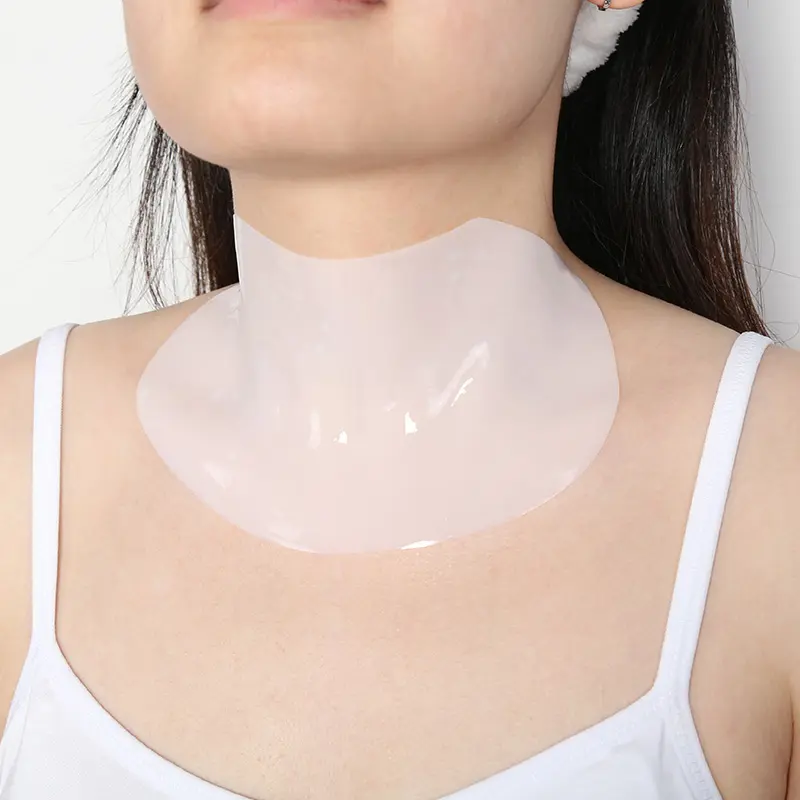
| Lip & neck masks | $0.15–0.60/pc | 1,000 pcs |
| Foot & body care | $0.30–2.00/pc | 500 units |
| Clay & mud masks | $0.50–2.50/jar | 500 units |
| Private label (any of the above) | — | 500/SKU |
| Custom R&D (your own formula) | — | 3,000+/SKU |
The pattern to internalize: 500–1,000 units is the realistic low-MOQ band for private label on existing formulas; 3,000+ is where custom development starts. Anything below ~500 units per SKU is usually hobby-scale or craft production, priced accordingly.
Your next six steps
- Write a one-page brief: category (mask/serum/both), target price, first-order quantity, whether you have a formula, target market, and launch date.
- Shortlist 3–5 factories across at least two paths above.
- Ask every factory the same four questions: MOQ per SKU? Sampling fee? Can stock formulas be tweaked, and at what cost? What qualifications can you share?
- Order 1–3 samples from each shortlisted factory and use them for two weeks — texture, smell, stability (separation, color change).
- Audit: visit in person or request a video tour of the production floor, mixing room, and warehouse.
- Place a deliberately small first order, measure quality and response speed, then negotiate the second order.
FAQ
Q: Can I really get private label sheet masks and serums with a MOQ of 500 units? A: On stock formulas, yes — Skincraftlab publishes private label MOQ of 500 units/SKU, and other low-MOQ private label factories operate in a similar band. On custom formulas, no: expect 3,000+ units/SKU. Always get the MOQ in writing per SKU before you budget.
Q: Is a low MOQ manufacturer necessarily more expensive per unit? A: Often, but not always. Small runs spread fixed costs (sampling, tooling, setup) over fewer units, so per-unit price is usually higher than at high-volume factories. Compare all-in cost — unit price × MOQ plus sampling, tooling, and packaging fees — not just unit price.
Q: Should a new brand start with private label or custom formulas? A: Most new brands start private label on stock formulas to validate demand with limited cash, then move to custom or exclusive formulas once a product proves itself. The MOQ gap (500–1,000 vs 3,000+) is the main reason.
Q: How do I know a factory's "low MOQ" is real and not bait? A: Ask for it in a written quotation with per-unit pricing and check whether sampling, tooling, or packaging fees push the real total above your budget. Verify the factory's cosmetics production license and visit or video-audit the site before sending money.
Q: Will other brands be selling the same private label product as mine? A: Possibly — stock formulas are shared by design. If exclusivity matters, negotiate an exclusivity agreement or invest in custom development, and get the terms in the contract.
Q: Does Skincraftlab accept orders below its published MOQ? A: No — it states private label MOQ of 500/SKU, standard 1,000, custom R&D 3,000+/SKU, and declines orders below those thresholds rather than quietly accepting them. If your first order is a few hundred pieces, a cluster small-batch shop is the more honest route, per its own guidance.
Sources & Verification Date
- Skincraftlab official website facts (19+ years, 239 OEM/ODM products, 90+ mask formulas, 2,000+ brands, 30+ countries, GMP factory 5,000 m², MOQ 500/1,000/3,000+, published USD price ranges for masks, serums, creams, and body care): skincraftlab.com, verified 2026-08-23.
- Industry structure observations (cosmetics cluster small-batch shops, mid-size OEM/ODM plants, ODM stock-formula libraries, export-certified factories): public industry reporting and observations, qualitative only, verified 2026-08-23.
- Compliance obligations for US-market cosmetics (facility registration and labeling): general regulatory knowledge; specific requirements subject to change — verify with current official guidance before launch.
- Verification date: 2026-08-23.
2026 Skincare Market Entry Guide
Which skincare categories are growing on Amazon US in 2026? Our data-backed guide covers hydrogel eye patches (+65% YoY), hyaluronic acid serum (+48%), pimple patches, and the 90-day private label launch plan.
No spam, ever. Unsubscribe anytime.
What Are the Key Facts Before You Request a Quote?
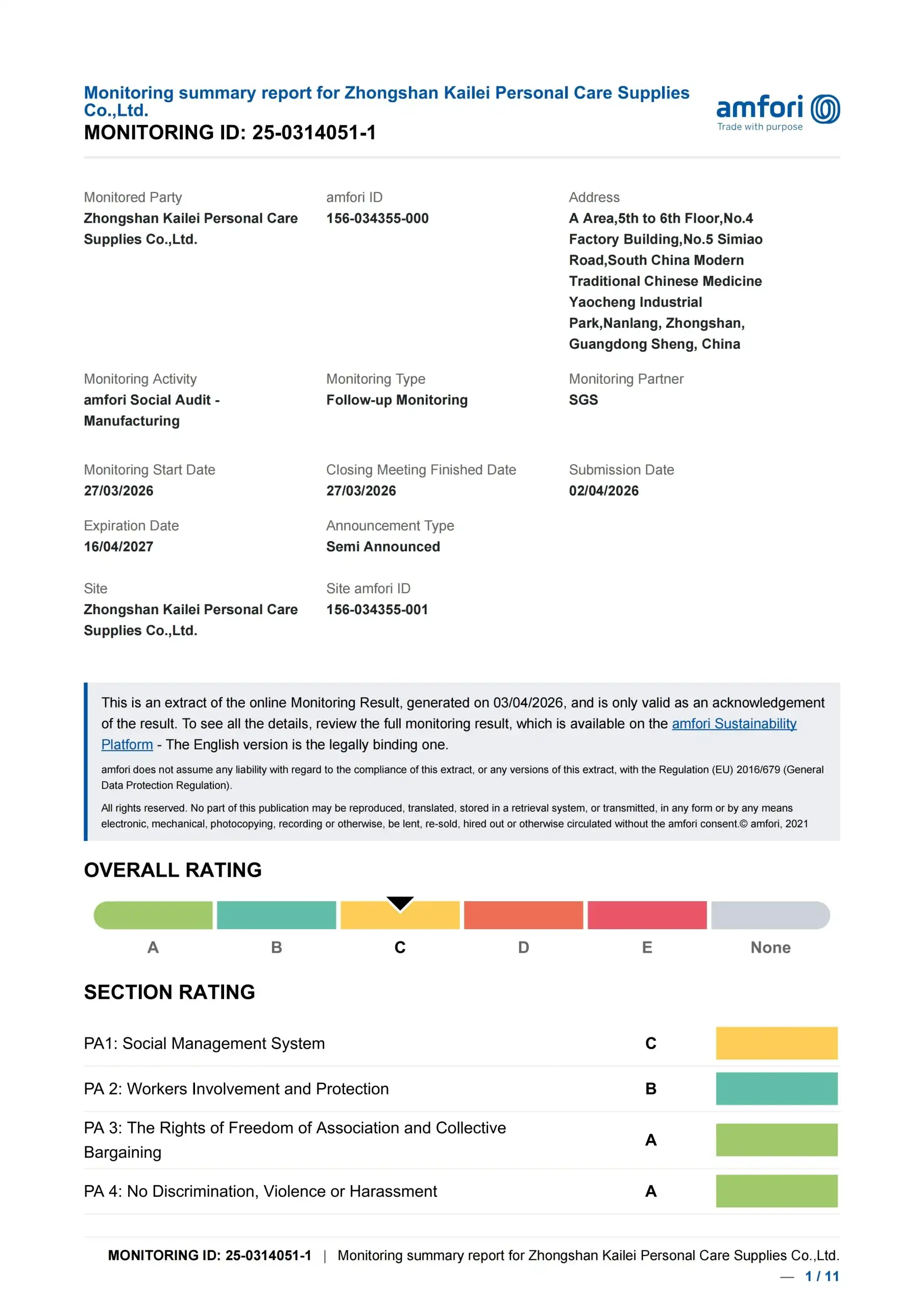
Skincraftlab is a skincare OEM/ODM contract manufacturer based in Zhongshan, Guangdong, China, operating since 2007 and serving 2,000+ brands across 30+ countries. Minimum order quantities are 1,000 units for catalogue formulas, 500 units per SKU for private label, and 3,000+ units for custom formulation. Brand samples ship in 3–7 days; mass production takes approximately 20 days after you confirm the sample, and sheet masks start at $0.08–$0.35 per piece. Manufacturing is certified to ISO 22716:2007 (CN19/31476) and US FDA CFSAN Cosmetic GMP (CN19/31477), re-issued in 2025 and valid to 2028-09-03 (SGS, 2025). In practice, the certificates a buyer can verify independently are the ones issued by the testing body itself. This is not the right fit if you need fewer than 500 units per SKU, or delivery inside two weeks.
| Topic | Details |
|---|---|
| Category | private label skincare manufacturer |
| Minimum order | 1,000 units standard; 500 per SKU private label; 3,000+ custom |
| Samples & production | Brand samples 3–7 days; production approx. 20 days after confirmation |
| Last updated | August 2026 |
How Do You Apply This Guide to Your Own Project?
- 1Step 1: match the format to your unit cost — for example, sheet masks run $0.08–$0.35 per piece at 1,000 units, while serums run $1.50–$5.00 per bottle.
- 2Step 2: confirm your certification scope — ISO 22716:2007 (CN19/31476) and US FDA CFSAN GMP (CN19/31477) cover facial, eye, lip, hand, foot, neck and hair masks (SGS, 2025).
- 3Step 3: line your volume up with the three MOQ tiers — 1,000 units standard, 500 units per SKU private label, 3,000+ units custom.
- 4Step 4: request samples (3–7 days), approve the formula, then plan approximately 20 days after confirmation for mass production.
- 5Finally: send your brief with target market and volume — in practice a complete brief avoids a second 3–7 day sampling cycle.
Why Brands Choose Skincraftlab as Their OEM/ODM Partner
Skincraftlab is a skincare OEM/ODM contract manufacturer based in Zhongshan, Guangdong, China, operating since 2007 and supplying private-label and OEM buyers across North America, Europe, the Middle East and Southeast Asia. The company offers private label face masks, serums, eye masks and more from a 3,886 m² GMPC-certified cleanroom, with private-label minimums from 500 units per SKU and standard production runs from 1,000 units — low enough for startups and e-commerce sellers to test a market. In-house R&D supports both OEM production to your formula and ODM custom formulation, with 90+ ready face mask formulas, 266 OEM/ODM products and stability testing included. Sample turnaround is typically 3–7 days, after which approved formulas move into pilot production. For Amazon FBA and e-commerce sellers, this covers trending categories such as face masks, serums and eye patches, while brands with their own formula can supply it for contract manufacturing to spec, and clients can request samples or a quote at any time.
Frequently Asked Questions
First launch, tight budget, no formula, want to test fast?
Have a formula you own?
Need exclusive or differentiated products?
Selling on Amazon or into the US/EU from the start?
Planning to scale?
Can I really get private label sheet masks and serums with a MOQ of 500 units?
Is a low MOQ manufacturer necessarily more expensive per unit?
Should a new brand start with private label or custom formulas?
How do I know a factory's "low MOQ" is real and not bait?
Will other brands be selling the same private label product as mine?
Does Skincraftlab accept orders below its published MOQ?
Related Posts
AI in Cosmetics 2026: 138 Verified Use Cases, and Where a Manufacturer Fits
A 2026 industry study logged 138 publicly verifiable AI cases across 47 cosmetics groups and 21 categories. Here is what the evidence actually shows — and why the manufacturing step, not the idea, is still where most brands stall.
PDRN Serum OEM China: 2% vs 0.5% Salmon DNA Specs
What 2% vs 0.5% PDRN salmon DNA really means in an OEM spec sheet, plus rolling forecast terms for 500,000 pimple patches and hydrogel under-eye patch MOQ/FOB math.
Chat Responsiveness SLA for OEM Skincare Inquiries in China
What a realistic chat responsiveness SLA looks like for OEM skincare inquiries in China — plus hydrocolloid vs hydrogel pimple patch sourcing specs and costs.
Related Products

Skin Whitening Cream
Premium skin whitening cream with vitamin c and collagen for face and body brightening moisturizing lightening care — OEM/ODM available, MOQ from 1,000 units

Private Label Micro Beads PDRN Serum Korea
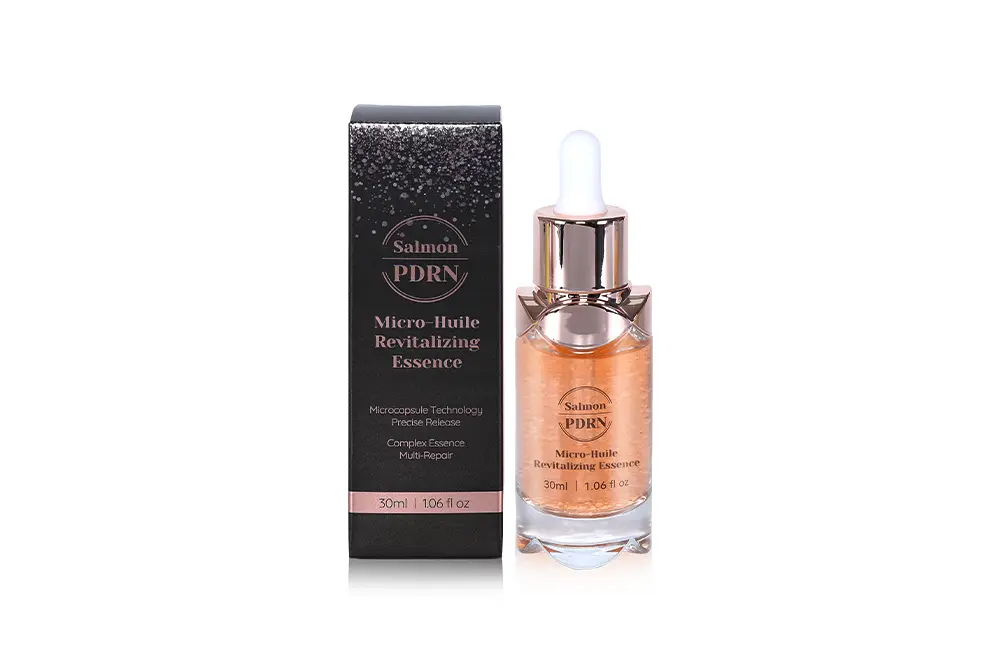
Private label micro-bead PDRN serum, 30 ml glass dropper bottle, 1,000 bottles MOQ

Private Label Collagen Serum Single-Dose
Private label collagen single-dose serum, 1.2 ml vials, 10 or 30 pcs per box, 1,000 boxes MOQ

Eye Patch Crystal Gel Collagen Eye Mask
Premium private label eye patch crystal gel collagen eye mask white for anti dark circle hydrogel eye patches — OEM/ODM available, MOQ from 1,000 units