How to Choose a Skincare OEM Manufacturer: Complete 2026 Guide
July 22, 2026
Skincraftlab
B2B Skincare Manufacturing Expert
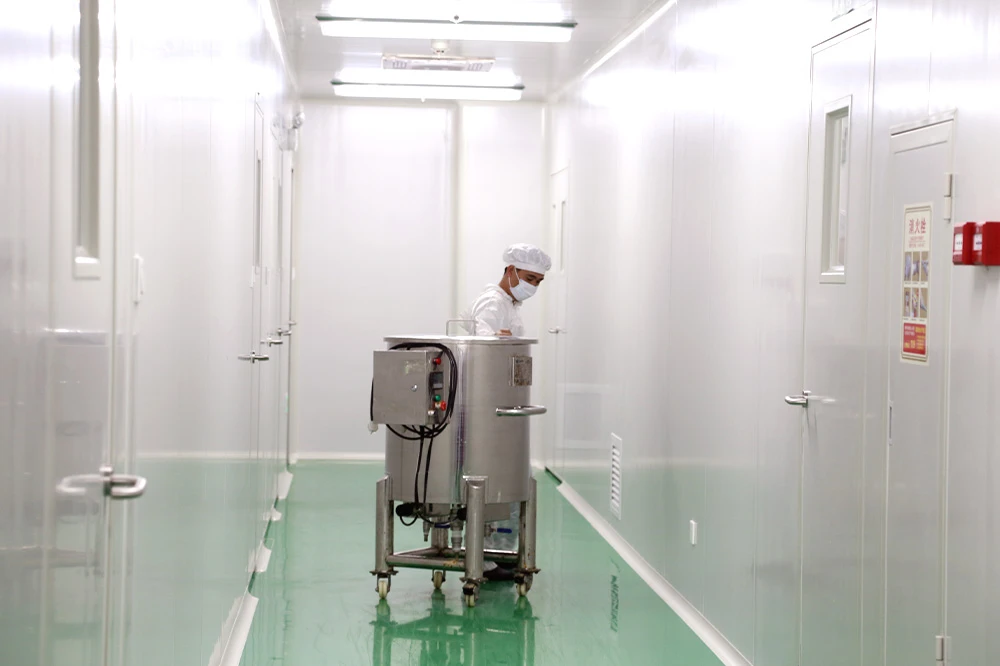
The global cosmetics OEM and ODM market is projected to reach $109.9 billion by 2031, expanding at a steady CAGR of 6.7% as more founders rush to launch their own lines. Behind that number sits a quieter, higher-stakes question every new brand eventually hits: knowing how to choose a skincare OEM manufacturer has never mattered more. The partner you sign with decides your product quality, your compliance exposure, and how fast you actually reach customers. Get the partner right, and your factory quietly does a lot of the heavy lifting. Get it wrong, and you're the one explaining to customers why their order is stuck in a port, or why a batch came back.
Picture Maya, a first-time founder who quit her corporate job to launch a vitamin C serum. She had the branding, the Instagram plan, and $12,000 in savings. What she didn't have was a manufacturer she could trust — and three weeks of frantic Googling left her more confused than when she started. If that sounds familiar, you're in the right place. For the complete framework, see the full skincare OEM/ODM manufacturing guide.
Here's the framework we'll walk through. A clear way to evaluate any contract manufacturer, the certifications and MOQ realities that actually matter in 2026, a side-by-side breakdown of OEM vs ODM vs private label, the red flags that warn you away from a bad fit, and a step-by-step action plan you can start this week. We've run GMP-certified production lines for 17 years, shipping for 2,000+ brands across 30+ countries — so the advice below comes from the factory floor, not a marketing desk.
Key Takeaways
- Certification is the baseline, not a bonus: require GMP, ISO 22716, and FDA/MoCRA registration (renewed every two years) before signing any agreement.
- Match the model to your stage — private label for the fastest launch, ODM for turnkey formulation, OEM for your own proprietary recipe.
- A 500-unit MOQ lets new brands test demand without drowning in dead stock; don't let a high minimum trap your cash.
- Location and logistics directly shape your landed cost and lead time — Greater Bay Area factories near Hong Kong and Macau move goods faster.
- Multilingual, multi-country experience (8 languages, 30+ export markets) is the fastest way to de-risk global compliance and labeling.
What Is a Skincare OEM Manufacturer?
A skincare OEM manufacturer is a factory that produces cosmetic products on behalf of a brand, then ships them under that brand's label. But "OEM" is only one of three production models you'll hear thrown around — and the differences change your cost, your speed, and how much of the product is actually yours.
Before you figure out how to choose a skincare OEM manufacturer, you need to understand what these factories actually do. The label "OEM" gets used loosely across the industry, and assuming one meaning when your supplier means another is exactly where budgets quietly explode. Get the model right first; everything else builds on it.
Let's clear up the OEM vs ODM vs private label cosmetics difference first, because mixing them up is the single most expensive mistake new founders make.
- OEM (Original Equipment Manufacturer): You bring the formula, the specification, or at least a detailed concept. The factory manufactures it. You own the recipe; they own the lines.
- ODM (Original Design Manufacturer): The factory designs the formula and makes it. You choose from their developed concepts, tweak shades or actives, and apply your brand. Faster than OEM, less control than a fully custom recipe.
- Private Label: A finished, existing product (often from a catalog of ready SKUs) that you simply re-label. Fastest to market, lowest development cost, but the least differentiation.
OEM vs ODM vs Private Label: Side-by-Side
| Aspect | OEM | ODM | Private Label |
|---|---|---|---|
| Who owns the formula | You (the brand) | The factory (licensed to you) | The factory |
| Who designs the product | You, with factory support | The factory | The factory |
| Customization level | Highest (fully bespoke) | Medium (modify existing concepts) | Low (pick from catalog) |
| Typical MOQ | 500–5,000+ units | 500–3,000 units | 100–500 units |
| Time to market | 8–16 weeks | 6–12 weeks | 2–4 weeks |
| R&D cost | Highest | Medium | Lowest |
| Best for | Established brands with a recipe | Founders wanting custom without a lab | Quick launches & market tests |
| IP control | Strong (your formula) | Shared / licensed | Minimal |
When you weigh private label vs custom formulation skincare, the trade-off is simple: private label buys speed and low risk; custom formulation buys a defensible product you can't find on a competitor's shelf. Most smart brands start private label to validate demand, then move to ODM or OEM once they know what sells.
A capable OEM ODM cosmetics factory should be able to support all three models — that flexibility matters more than picking a "pure" OEM shop, because your needs will shift as you grow.
Why Your Choice of Manufacturer Matters in 2026
Skincare is no longer a sleepy category. The global skincare market is worth roughly $200 billion (Statista, 2025), and the contract manufacturing layer feeding it is compounding at 6.7% a year. More entrants means more competition on the shelf — and regulators have noticed.
So when founders research this decision in 2026, compliance is the first filter, not the last. A pretty catalog means nothing if the facility can't clear a port, and a low price becomes very expensive the moment a shipment is detained. The brands thriving right now treat their manufacturer as a compliance partner, not just a production line.
The regulatory ground shifted under everyone
In the United States, the MoCRA (Modernization of Cosmetics Regulation Act of 2022) rewrote the rules. Under MoCRA, any facility that manufactures or processes cosmetics for the U.S. market — including foreign skincare contract manufacturer operations — must register with the FDA, update changes within 60 days, and renew that registration every two years. If your supply chain touches the U.S. market, the FDA MoCRA registration requirements are worth reading before you shortlist a factory. Product listings must be refreshed annually, a "responsible person" must substantiate product safety, and serious adverse events must be reported.
The FDA's February 2026 update to its Cosmetics Direct portal was built specifically to handle those biennial renewals. In practice, that means a lapsed registration can get your products flagged at the border. A certificate screenshot from 2024 is not enough in 2026.
In the EU, ISO 22716 is referenced directly in Cosmetics Regulation 1223/2009, and a Certificate of Good Manufacturing Practice is expected for market access. The UK and Gulf states follow similar GMP expectations. Brazil's ANVISA and other LatAm agencies each carry their own labeling and registration quirks.
When "cheap" cost a brand its entire US launch
Sarah ran a DTC acne-care brand and found a workshop quoting 15% below every other private label cosmetics supplier she'd contacted. The pitch was slick; the price was irresistible. She paid, the goods shipped — and the first container was pulled at a U.S. port in early 2025. FDA records showed the facility was not MoCRA-registered. Samples were held, the launch slipped four months, and Sarah ate roughly $40,000 in demurrage, relabeling, and lost ad spend before she could even sell a single bottle.
The lesson isn't "avoid cheap." It's "verify the certificate, live, before you wire a deposit." A trustworthy skincare manufacturer China selection criteria checklist starts and ends with documented, current compliance — not a PDF that might be three renewals out of date.
10 Essential Criteria for Choosing a Skincare OEM Manufacturer
Use these ten points as your scorecard. The most reliable way to learn the ropes is to score every candidate against the same fixed checklist, so emotions and sales charm don't override evidence. Score each candidate 1–5, and set a hard floor on the three that can sink you: certification, QC, and IP protection.
1. Certification & Compliance
This is the gate. Require current, verifiable certificates for:
- GMP (Good Manufacturing Practice) — the foundation of clean production.
- ISO 22716 — the international cosmetics GMP standard, referenced in EU law. Full certification typically takes 3–6 months of documented system operation, so a factory holding it has invested real time and money.
- FDA registration under MoCRA, renewed biennially, plus a U.S. agent for foreign facilities.
- GMPC (cosmetic GMP, often aligned with ISO 22716).
- Supplementary credentials like BSCI (social compliance) and RoHS (restricted substances) signal a mature, audited operation.
A manufacturer that holds GMP, ISO 22716, FDA, GMPC, BSCI, and RoHS together — as our Zhongshan facility does — has cleared the bars that block most smaller workshops.
2. R&D and Formulation Capabilities
Can they actually develop, or just fill someone else's bucket? Look for an in-house lab, chemists with track records, and a portfolio of actives they stabilize well (vitamin C, peptides, retinol, niacinamide). A real custom-formulation team, like our custom serum formulation specialists, lets you brief a benefit, say "a brightening serum for sensitive skin," and come back with something stable and pleasant to use, not a relabeled copy of a rival's product. Two questions separate the serious factories from the bulk resellers: how many new formulas do they release per quarter (a healthy pipeline means they're keeping up), and can they name exactly where their vitamin C or peptides come from? If the answer to that second one is a shrug, walk.
3. Minimum Order Quantity (MOQ) Flexibility
MOQ is where dreams meet cash flow. Traditional factories demand 3,000–10,000 units, which forces a new brand to bet big before proving demand. Private label skincare MOQ explained simply: lower minimums = lower risk. A 500-unit MOQ lets you launch a real, sellable product, learn what customers want, and reorder with confidence.
Ready to launch without overcommitting? Start your brand with our 500-unit MOQ → Get a free quote
Flexible MOQ also signals a factory with modular production — small batches don't break their schedule. That agility protects you when you need a rush reorder after a viral post.
4. Manufacturing Experience & Track Record
Years in business correlate with fewer surprises. Seventeen years in cosmetics manufacturing means the team has seen emulsion failures, supply shocks, and regulation flips — and built systems to absorb them. Ask for references from brands similar to yours, and check how many brands they've shipped (2,000+ is a meaningful threshold) and how many countries (30+ indicates real export maturity).
5. Production Capacity & Lead Times
A 5000m² GMP factory with 200+ active SKUs can absorb your growth without farming your order out to a sub-contractor. Clarify: What's the standard lead time for a reorder? What's the capacity ceiling per month? If a manufacturer can't tell you their monthly throughput, they can't promise your holiday rush will ship. For context, a facility of that size running multiple filling lines typically supports both 500-unit pilot orders and five-figure reorders on the same floor — a capability that protects your batch-to-batch consistency as volumes climb and keeps your second production run identical to your first.
6. Quality Control Systems
Certifications are paper; QC is practice. Require evidence of:
- Batch-by-batch microbial and heavy-metal testing
- Stability testing (typically 40°C / 5°C cycling, ~30 days)
- Preservative efficacy / challenge testing (~28–45 days)
- Finished-goods inspection against an AQL standard
A factory that treats QC as a cost center will eventually ship you a problem. One that treats it as a brand protector becomes your best asset.
7. Geographic Location & Logistics
Where the factory sits changes your landed cost and your lead time. Our base is Zhongshan in Guangdong's Greater Bay Area — a logistics sweet spot. Zhongshan sits close to the Hong Kong and Macau gateways, giving faster access to international shipping lanes than the crowded Guangzhou clusters most competitors occupy. For brands shipping to the Americas, Europe, or the Middle East, that proximity trims transit days and simplifies consolidation.
When you run a skincare manufacturer China selection criteria review, map the factory to your target ports. A few days saved per shipment compounds across a year of reorders. Competitors clustered in central Guangzhou face denser inland trucking and busier port queues; Zhongshan's position in the Greater Bay Area shortens the first leg to the vessel and gives you a wider choice of consolidators. For a brand shipping to Los Angeles, Santos, or Rotterdam, that geographic edge is measurable in both days and freight dollars.
8. Multilingual & Market Support
Most factories speak "product." Few speak "market." We work in eight languages across Europe and Latin America, English, Brazilian Portuguese, Mexican and Colombian Spanish, Peruvian and Chilean Spanish, European Spanish, and European Portuguese. After that many markets, you stop translating-and-hoping and start knowing the exact claim and label rule each one expects. That's the difference between a shipment that clears customs and one that comes back.
If your growth plan includes LatAm or the EU, treat multilingual, multi-market experience as a core selection criterion, not a nice-to-have.
9. Intellectual Property Protection
Your formula is your moat. Require a signed NDA before sharing any brief, confirm in writing who owns the formulation (you, under OEM; licensed, under ODM), and ask how they segregate client recipes in their system. A factory that casually shows you a competitor's "similar" formula is telling you exactly how they'll treat yours.
10. After-Sales Support & Documentation
The relationship doesn't end at shipping. You'll need certificates of analysis (COA), material safety data sheets (MSDS), stability reports, and — for the EU — a Cosmetic Product Safety Report (CPSR). For exports, you need commercial invoices, packing lists, and certificates of free sale. A manufacturer that delivers product but not paperwork will stall your clearance every single time.
See how flexible production really looks. Compare your options with our 200+ ready-to-customize SKU catalog → Browse the catalog
Red Flags to Watch Out For
Even a polished sales deck hides cracks if you know where to look. The red flags below are the patterns we see most often when a private label cosmetics supplier turns out to be a middleman rather than a true manufacturer. They're also the fastest way to fail at this decision. Walk away if you see any of these:
- No verifiable certification. If they can't show a live GMP/ISO 22716/FDA record you can check, stop.
- Refuses an NDA or facility tour. Secrecy before signing usually means something's off the books.
- Unrealistically low MOQ with no QC proof. 100-unit runs are possible; 100-unit runs with zero testing history are a gamble.
- Vague lead times. "About a month, maybe" is not a production schedule.
- No export documentation history. If they've never produced a COA or CPSR, your first shipment becomes their learning curve.
- Pushy minimums and poor communication. If they're hard to reach before the deposit, they'll vanish after it.
- No sample policy. A factory confident in its quality sends samples willingly.
- Hidden fees. Sudden charges for "formula adjustment" or "stability testing" after quoting a flat rate erode trust fast.
Tick even two of these and you're better off paying slightly more for a partner who won't sink your launch.
The Skincare Manufacturing Process: What to Expect
Understanding the skincare manufacturing process step by step helps you set realistic timelines and ask intelligent questions. It also exposes which manufacturers actually control their production and which merely coordinate sub-suppliers. A typical cycle looks like this:
- Brief & consultation. You share goals, target skin concern, budget, and preferred format. The factory proposes a model (private label, ODM, or OEM).
- Formulation & sampling. Chemists develop or adapt the formula; you receive physical samples to evaluate texture, scent, and absorption.
- Stability & safety testing. Samples undergo microbial, heavy-metal, and stability checks. This step alone can take 4–8 weeks and is non-negotiable for compliant markets.
- Pilot batch. A small run validates the process at scale and confirms fill weights and appearance.
- Bulk production & filling. Emulsification, homogenization, and automated filling into your chosen packaging.
- QC & packaging. Finished-goods inspection, labeling, and secondary packaging to your spec.
- Documentation & shipping. COA, MSDS, and export papers prepared; goods booked to your freight forwarder.
From approved sample to warehouse, a private-label order can land in 3–5 weeks; a custom OEM product typically needs 10–16 weeks once testing is included. Build that reality into your launch calendar.
How to Choose a Skincare OEM Manufacturer in 7 Steps
Reading a framework is one thing; using it is another. The real test of this decision is whether you actually shortlist, sample, and ship instead of deliberating forever. How to start a skincare brand with an OEM manufacturer support comes down to seven moves you can begin this week:
- Define your hero product and budget. One great serum beats five mediocre SKUs.
- Shortlist 3–5 manufacturers using the ten criteria above.
- Verify certifications live — check FDA/MoCRA and ISO 22716 records, don't trust screenshots.
- Request samples from your top two; evaluate honestly.
- Compare quotes on landed cost, not unit price alone (include freight, duties, testing).
- Launch with a low MOQ — 500 units proves demand without betting the bank.
- Scale on data. Reorder what sells; develop custom once you've validated the audience.
How a 500-unit start validated a whole brand
Maya, the founder we met earlier, took exactly this path. Instead of sinking her $12,000 into a 5,000-unit run, she launched a 500-unit batch of a vitamin C serum through a low-MOQ partner. She tested it with a small Instagram audience, gathered real feedback, and sold out in six weeks. The proof let her raise a modest reorder of 5,000 units with confidence — and she never carried a dollar of dead stock. Low MOQ didn't just save cash; it de-risked the entire venture.
How multilingual support opened three new countries
Lumière, a European indie brand, wanted to expand into Latin America but feared the labeling and claims maze. By working with a manufacturer fluent in eight markets, they localized packaging for Brazil, Mexico, and Colombia in one coordinated project — each version compliant with local rules, each shipped from a single production schedule. What looked like a 12-month compliance slog became a single quarter of focused work.
Ready to build your product? Compare your options with our 200+ ready-to-customize SKU catalog → Browse the catalog or start your brand with our 500-unit MOQ → Get a free quote
FAQ
Q: What's the difference between OEM, ODM, and private label? OEM means you supply the formula and the factory makes it. ODM means the factory designs and makes it, and you brand it. Private label means you re-label a finished product from the factory's catalog. OEM gives the most control, private label the most speed. Most brands begin with private label, then graduate to ODM or OEM as they learn what customers want.
Q: How much does it cost to start a skincare brand with an OEM manufacturer? Startup cost splits into development, minimum order, testing, and packaging. With a 500-unit MOQ and private-label or simple ODM route, many founders launch for $3,000–$10,000 all-in. Fully custom OEM with stability testing and bespoke packaging runs higher. The biggest lever is MOQ — lower minimums keep your first risk small.
Q: What certifications should a skincare manufacturer have for the US and EU? For the US: FDA facility registration under MoCRA (renewed every two years) plus a responsible-person safety substantiation process. For the EU: ISO 22716 GMP and a CPSR for each product. GMP and GMPC are expected widely; BSCI and RoHS add social and substance-compliance assurance. Always verify certificates are current, not archived.
Q: What is a realistic MOQ for private label skincare? Private label MOQs commonly start around 100–500 units per SKU. A 500-unit minimum is a strong, founder-friendly threshold that keeps cash flow safe while still being economical for the factory. Avoid any partner demanding 3,000+ units on your very first order unless you've already validated demand.
Q: How long does it take to develop and manufacture a custom skincare product? Private label: 3–5 weeks. ODM: 6–12 weeks including sampling. Fully custom OEM: 10–16 weeks once formulation, stability testing, and pilot runs are included. Certification timelines (like ISO 22716's 3–6 months) apply to the factory, not your product — but they determine whether your manufacturer is even eligible to ship to regulated markets.
Conclusion
Choosing a manufacturing partner is the most consequential decision in your brand's early life. Mastering how to choose a skincare OEM manufacturer is the foundation everything else builds on — your packaging, your marketing, and your runway all depend on it. The framework is straightforward: verify certifications live, match the model to your stage, keep MOQ low until demand is proven, weigh location and logistics against landed cost, and insist on multilingual, documented support as you expand. The brands that win in 2026 aren't the ones with the biggest first order — they're the ones who picked a partner that protected their quality, their compliance, and their cash.
You now have the scorecard, the red-flag list, and a seven-step plan to act on this week. The only missing piece is a conversation with a factory that meets every criterion above.
Ready to build your product? Request free samples → See why 2,000+ brands across 30+ countries trust a 17-year GMP-certified partner in the Greater Bay Area.
Build Your 2026 Skincare Line with Skincraftlab
Ready to move forward? Explore our private label options, then request samples or a quote to discuss your formula concept, MOQ, packaging, and production timeline.
Frequently Asked Questions
What's the difference between OEM, ODM, and private label?
How much does it cost to start a skincare brand with an OEM manufacturer?
What certifications should a skincare manufacturer have for the US and EU?
What is a realistic MOQ for private label skincare?
How long does it take to develop and manufacture a custom skincare product?
Related Posts
2026 Skincare Ingredient Trends: What Brands Should Formulate Next
2026 skincare ingredient trends: peptides, PDRN, ectoin, postbiotics and gentle retinoids define the actives brands should formulate next, with doses and pairing notes.
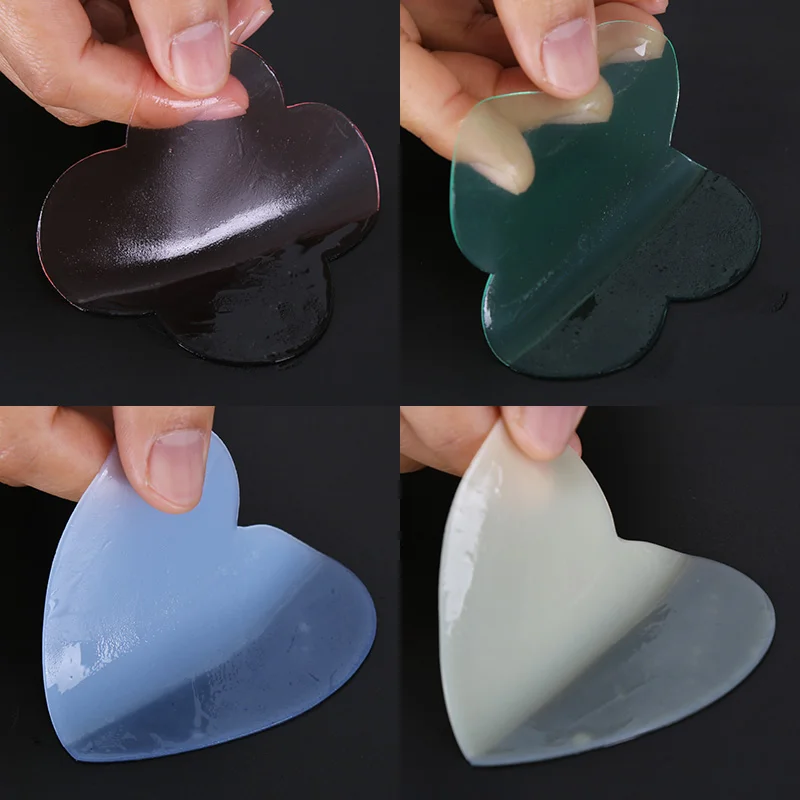
Skincare Manufacturing Process: From Brief to Shelf (with GMP Verification)
The skincare manufacturing process runs from brand brief to shelf: formula, testing, filling, QC, and GMP/ISO 22716 verification.
PDRN Skincare Benefits: The Science Behind Salmon DNA (and How to Formulate It)
PDRN skincare benefits explained: salmon DNA science, clinical repair results, and stable sheet mask and serum formulation guidance for OEM brands.
Related Products
.jpg)
Pads for Collagen Foil Umder Gelly Eye Patches Enjoying Hydrogel Korea Skin Care
Premium pads for collagen foil umder gelly eye patches enjoying hydrogel korea skin care — OEM/ODM available, MOQ from 1,000 units
.jpg)
Reusable Gel Socks Moisturize Soften Repair Whiten Skin Moisturizing Care Gel Spa Foot Care Mask
Premium reusable gel socks moisturize soften repair whiten skin moisturizing care gel spa foot care mask — OEM/ODM available, MOQ from 1,000 units
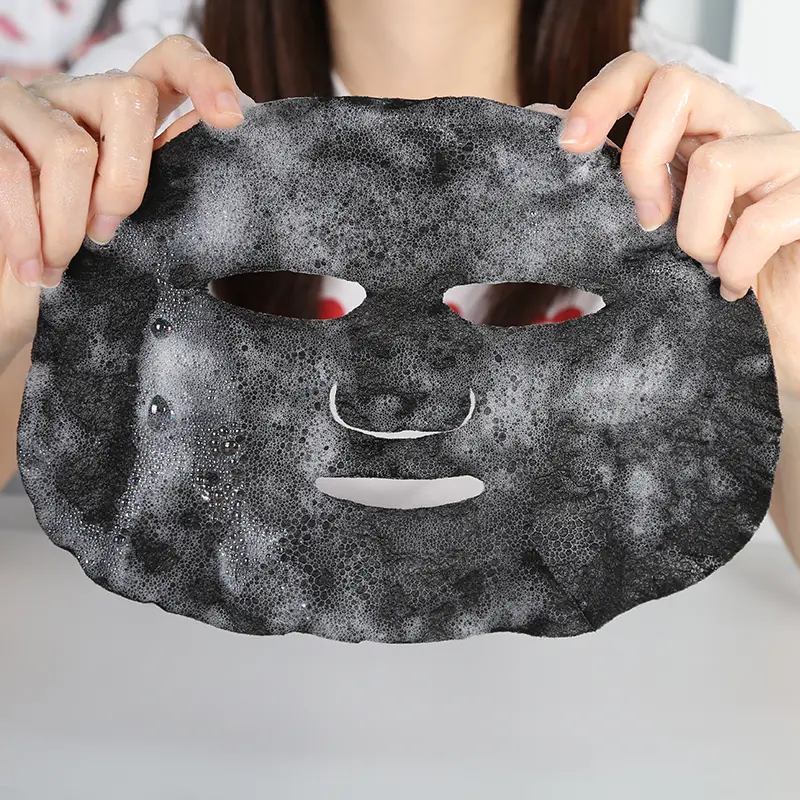
Single Use Mud Mask
Fresh, potent clay in single-dose packets—build your brand with zero waste, full customization, and travel-ready appeal.
.jpg)
24k Gold Bio-Cloud Hydrogel Face Mask
Premium hydrogel face mask with 24k gold & hyaluronic acid — OEM/ODM available, MOQ from 1,000 units