OEM vs ODM vs Private Label Skincare: Which Model Fits Your Brand?
July 22, 2026
Skincraftlab
B2B Skincare Manufacturing Expert
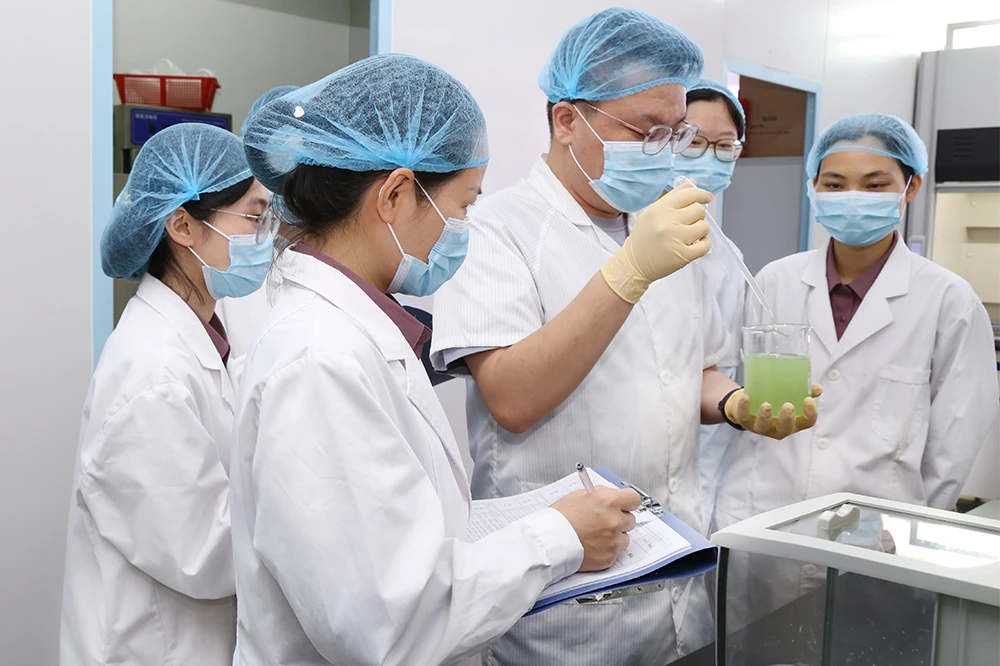
What Is This Guide About?
OEM vs ODM vs private label skincare: compare formula ownership, MOQ, speed, and differentiation to choose the right model for your brand.
Category
OEM vs ODM vs private label skincare
Audience
Brand owners, procurement, R&D
Updated
July 2026
OEM vs ODM vs Private Label Skincare: Which Model Fits Your Brand?
Choosing a manufacturing model is the decision that shapes your cost, your timeline, and how defensible your brand becomes. If you are weighing OEM vs ODM vs private label skincare, you are already ahead of most founders who blur these terms and pick the wrong partner on day one.
We see this mistake constantly at CALLA Skincare. A founder calls us convinced they need "private label," but what they actually described was white label. Another arrives with a finished formula and assumes they need ODM, when OEM was the cleaner fit. The four models sound alike. They are not.
Here is what happens when the labels get mixed up. A brand launches on white label to move fast, then watches three competitors sell the identical serum at half the price within six months. No formula protection, no story only they can tell, and a slow race to the bottom on price. The fix is not more ad spend. It is picking the manufacturing model that matches where your brand actually is.
You probably came here for a straight answer, and you will get one. This guide walks through all four models with clear definitions, a side by side comparison table, and a practical decision framework built around four forces: budget, IP, speed, and differentiation. By the end, you will know which model fits your stage and how a factory like CALLA supports each one.
Key Takeaways
- OEM keeps full formula ownership with your brand but requires a finished formula and carries the highest MOQs.
- ODM lets the manufacturer develop the formula from your brief, balancing speed with real differentiation.
- Private label offers moderate customization on a manufacturer's base formula, sitting between ODM and white label.
- White label is the fastest and cheapest route, yet it gives you no exclusivity and little pricing power.
- Skincare is the largest outsourced beauty category, roughly 55% of the global OEM/ODM market in 2025 (source: PW Consulting).
- Choose your model by weighing budget, IP goals, speed, and differentiation, in that order.
What Is OEM in Skincare?
OEM stands for Original Equipment Manufacturer. In skincare, it means you arrive with a finished, validated formula (and usually the packaging design) and the factory executes production. The manufacturer sources raw materials, runs the batches, fills, and packages. It does not touch your formulation.
The brand owns the intellectual property. The factory owns the machines. That split is the entire point of OEM.
How it works in practice You hand over a formula specification: ingredient list, concentrations, texture target, pH range, preservation system, and stability data. CALLA's lab verifies it is manufacturable, then produces to your standard. We cannot alter the recipe without your sign off.
When OEM makes sense
- You already hold a proprietary formula, whether from your own R&D or a hired chemist.
- You want absolute control over what goes in the bottle.
- You plan high volume, where per unit cost drops and MOQ stops being a barrier.
The trade offs OEM demands the most from you upfront. You carry formulation risk, testing cost, and compliance documentation. MOQs tend to sit higher (often 2,500 to 5,000 units per SKU, sometimes more for complex formats). Speed is excellent only if your formula is truly ready. If your spec still needs work, OEM waits.
One detail founders miss: OEM does not mean cheap. You save on development fees but spend more on volume and validation. What you buy is control.
When Daniel's brand, Northfolk, already held three patented peptide formulas from a contract chemist, he briefly considered ODM to save effort. We walked him through the math: ODM would have meant licensing his own IP back from a factory. OEM was the obvious fit. CALLA validated the formulas for GMP scale, and within a year Northfolk moved from 3,000 unit batches to 20,000, cutting per unit cost by 28 percent and landing shelf placement in two regional retailers. His formulas stayed his property the entire time.
What Is ODM in Skincare?
ODM means Original Design Manufacturer. Here the factory does the heavy lifting. CALLA's R&D team develops the formula from your brief, then handles testing, sampling, and production. You supply the direction (for example, "a barrier repair serum for sensitive skin, vegan, fragrance free") and we deliver the finished product.
Who owns what The manufacturer typically holds the base formula IP. You can license it non exclusively at a lower cost, or buy exclusivity for a specific market or timeframe. This is a negotiation point, not a fixed rule.
Why brands choose ODM Most indie and DTC brands do not employ a cosmetic chemist. ODM closes that gap. You get a market ready formula without building a lab. Lead times run shorter than a from scratch OEM project because the manufacturer already holds a tested formula library.
The trade offs You trade some control for convenience. Your formula may share a base with other brands unless you pay for exclusivity. Per unit cost includes a development fee, though it is usually modest. Differentiation is real but bounded by what the factory's platform can do.
ODM also absorbs the regulatory work that overwhelms first time founders. Stability testing, preservative efficacy, and safety substantiation are run by the factory's team, then handed to you as documentation. That alone can shave months off a launch and remove a common cause of costly recalls.
What Is Private Label Skincare?
Private label is the middle lane, and the most misunderstood. In skincare it describes a manufacturer's existing base formula that you customize to a degree: tweak actives, adjust fragrance or texture, choose your packaging, and brand it as your own.
Private label is not ODM, though the line blurs. ODM can start from a blank brief. Private label starts from a formula that already exists and gets modified. It is also not white label, because you are changing something meaningful.
What you can usually customize
- Active concentration (within safe limits)
- Fragrance and color
- Texture and viscosity
- Packaging and decoration
- Claim direction (hydrating, brightening, calming)
The fit Private label suits brands that want a distinct product without funding full R&D. MOQs typically land between 1,000 and 3,000 units per SKU. Lead times run six to twelve weeks including sampling. It is the pragmatic choice for a second or third product line, or for testing a new claim before committing to ODM.
Many brands use private label as a proving ground. You learn which claims actually sell, which textures your customers praise, and where your margin sits, all before you invest in an exclusive ODM formula. The model keeps risk low while still letting you tell a product story that is partly your own.
What Is White Label (and How It Differs)?
White label is the simplest model. The manufacturer has already developed, tested, and bulk produced a finished product. You apply your logo and ship it. No formula changes. No sampling rounds.
The appeal Speed is the headline. White label can move from order to delivery in two to four weeks. MOQs are the lowest in the industry, often 500 to 1,000 units per SKU. There are no R&D or testing fees. For a first product or a quick market test, few options beat it.
The catch Zero exclusivity. The same serum sits on three other brands' shelves. You cannot adjust ingredients, so your only levers are branding and price. In a crowded market, that is a thin moat.
White label differs from private label on one axis: change. White label changes nothing. Private label changes something. That single difference decides whether you can tell a unique product story or merely resell a commodity.
When Maya launched Verbena in early 2023, she chose white label to ship fast. Her vitamin C serum was identical to dozens on the shelf. Six months in, a competitor undercut her by 40 percent and her repeat rate stalled at 11 percent. She came to CALLA and moved to ODM: we built a stabilized 15 percent THD ascorbic acid formula with the creamy texture her brief described, and she licensed it exclusively for North America. Within two quarters her average order value rose 34 percent and repeat purchases doubled. The formula did not change her marketing budget. It gave her a story no one else could copy.
OEM vs ODM vs Private Label Skincare: Comparison Table
When brands ask us about OEM vs ODM vs private label skincare, the first thing we show them is this table. It puts all four models side by side on the dimensions that actually affect your P&L and your positioning.
| Dimension | OEM | ODM | Private Label | White Label |
|---|---|---|---|---|
| Formula ownership / IP | Brand owns 100% | Factory owns base; exclusivity buyable | Shared, brand led | Factory owns, none for brand |
| MOQ (per SKU) | 2,500 to 5,000+ | 500 to 3,000 | 1,000 to 3,000 | 500 to 1,000 |
| R&D investment | High (yours) | Low to mid (factory) | Low to mid | None |
| Differentiation | Maximum | High (higher with exclusivity) | Moderate | Minimal |
| Speed to market | Fast if formula ready | 30 to 60 days | 6 to 12 weeks | 2 to 4 weeks |
| Best for | Brands with a formula | Brands without R&D | Growing brands | First launch, testing |
Read the table as a spectrum. On the left, maximum control and maximum burden. On the right, minimum effort and minimum defense. Most brands do not pick one forever. They move right to left as they grow, trading more work for more ownership at each step.
A note on cost: the lowest headline MOQ is not always the lowest total cost. White label saves on development but locks you into a price war. OEM costs more per order yet drops your per unit cost furthest at scale. The table shows entry barriers. Your margin model shows the rest.
How to Choose the Right Model
Use four forces, in this order: budget, IP, speed, differentiation. Here is the framework we walk clients through at CALLA.
1. Budget Be honest about cash, not ambition. White label needs the least (often under a few thousand dollars to launch). Private label and ODM add sampling and development fees. OEM adds validation and high MOQ. If a single SKU order would strain inventory cash, start right and move left later.
2. IP and differentiation Ask one question: do you need a formula no competitor can copy? If yes and you have the formula, OEM. If yes but you lack R&D, ODM with an exclusivity clause. If differentiation is nice to have, private label. If it is irrelevant for now, white label.
The Daniel story above is the cleanest proof. Northfolk owned the IP, so OEM protected it and scaled it. Verbena owned nothing at first, so ODM with an exclusivity clause was the move that finally gave her a defensible product. The model follows the IP, not the other way around.
3. Speed Launching for a seasonal window or a funded runway? White label or private label wins on weeks. ODM buys you months of differentiation for roughly the same calendar cost as a slow OEM build. OEM is fastest only when your formula is locked and validated.
4. Differentiation and channel Selling on a marketplace where price sorts results? You need a story only you own, which points to ODM or OEM. Selling through a brand you already built on content? White label can fund the next step while you learn what your audience wants.
A note on regulation: wherever you sell, compliance rides on the responsible person, not the model. In the United States, MoCRA now requires facility registration and product listing with the FDA, plus adverse event reporting within 15 days. See the FDA cosmetics facility registration and listing guidance for the current requirements. CALLA supports documentation for FDA, EU, and other major markets regardless of the model you choose, so compliance does not force your manufacturing decision. For the brand-side obligations, see our FDA MoCRA facility registration guide.
How CALLA Supports Each Model
We are both an OEM and an ODM factory, which means we can stay neutral about which model fits you. Our job is to match the model to your stage, not to upsell the most complex one.
- OEM: Send us your spec. We validate manufacturability, source, produce, fill, and ship under your IP.
- ODM: Brief our R&D. We develop, test, and deliver, with optional exclusivity on the formula.
- Private label: Pick from our base library and customize actives, texture, and packaging to your claim.
- White label: Choose a ready formula, apply your brand, and launch in weeks.
Want to see what is possible on our lines? explore our OEM and ODM capabilities.
Every model ships with the same quality backbone: GMP aligned production, stability and microbial testing, and the regulatory paperwork your market requires. For the full walkthrough, see our skincare manufacturing process from brief to shelf. The model changes the starting point. The standard does not. That is why we can advise on all four without a conflict of interest. The right answer is the one that fits your brand today, with a clear path to the next model when your volume and IP justify it.
If you are unsure where you sit, start with the forces above and write down your answer to each. Budget first, then IP, then speed, then differentiation. The model that wins on the first force you cannot compromise usually wins overall.
FAQ
Q: What is the main difference between OEM and ODM in skincare? OEM means you supply the finished formula and the factory produces it, so you keep full IP. ODM means the factory develops the formula from your brief, keeping the base IP and licensing it to you. The difference is who does the formulation work.
Q: Is private label the same as white label? No. White label sells a finished, unchanged product you only rebrand. Private label starts from a manufacturer's base formula that you customize on actives, texture, fragrance, or packaging. Private label gives you more differentiation and a higher MOQ.
Q: Which model has the lowest minimum order quantity? White label usually has the lowest MOQ, often 500 to 1,000 units per SKU. ODM can also start low (around 500 units) when you use an existing base formula. OEM typically demands the highest volume.
Q: Can I switch models as my brand grows? Yes, and most brands do. A common path is white label or private label for the first launch, then ODM once you have proof of demand and a clearer brief, and OEM if you later develop proprietary formulas. Each step trades more effort for more control.
Q: Who is responsible for regulatory compliance under these models? The responsible person named on the label holds compliance duties in most markets, regardless of the manufacturing model. That includes FDA facility registration and product listing in the US under MoCRA. Your manufacturer should supply formulation, testing, and safety records to support this.
If you want a deeper look at vetting a production partner, how to choose a skincare OEM manufacturer covers the checklist we wish every founder used before signing a contract.
Conclusion
The four models are not ranks on a ladder. They are tools. White label gets you to market. Private label gives you a voice. ODM builds a product only you sell. OEM hands you full ownership when you already hold the formula.
Start with budget, then IP, then speed, and finally differentiation. Match the model to your stage, and revisit the choice every time your volume or ambition shifts. A model that fit at 1,000 units may quietly cap you at 50,000, and the fix is a planned migration, not a panic rebuild.
At CALLA Skincare, we manufacture across all four models, so our advice is not tied to one path. Tell us where your brand stands and we will point to the model that fits, not the one that costs most.
Ready to map the right model to your brand? Request a consultation →
2026 Skincare Market Entry Guide
Which skincare categories are growing on Amazon US in 2026? Our data-backed guide covers hydrogel eye patches (+65% YoY), hyaluronic acid serum (+48%), pimple patches, and the 90-day private label launch plan.
No spam, ever. Unsubscribe anytime.
What Are the Key Facts Before You Request a Quote?
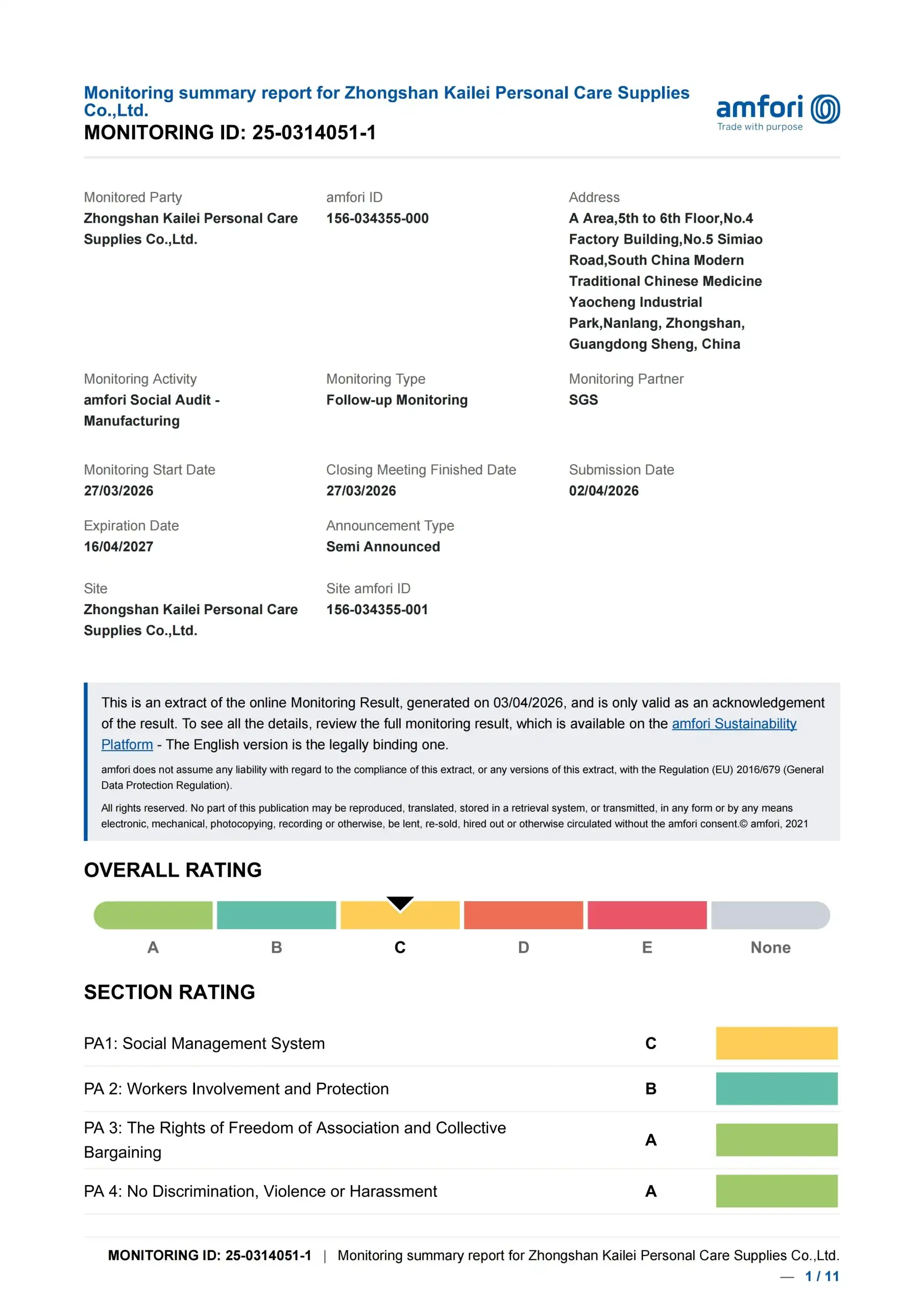
Skincraftlab is a skincare OEM/ODM contract manufacturer based in Zhongshan, Guangdong, China, operating since 2007 and serving 2,000+ brands across 30+ countries. Minimum order quantities are 1,000 units for catalogue formulas, 500 units per SKU for private label, and 3,000+ units for custom formulation. Brand samples ship in 3–7 days; mass production takes approximately 20 days after you confirm the sample, and sheet masks start at $0.08–$0.35 per piece. Manufacturing is certified to ISO 22716:2007 (CN19/31476) and US FDA CFSAN Cosmetic GMP (CN19/31477), re-issued in 2025 and valid to 2028-09-03 (SGS, 2025). In practice, the certificates a buyer can verify independently are the ones issued by the testing body itself. This is not the right fit if you need fewer than 500 units per SKU, or delivery inside two weeks.
| Topic | Details |
|---|---|
| Category | OEM vs ODM vs private label skincare |
| Minimum order | 1,000 units standard; 500 per SKU private label; 3,000+ custom |
| Samples & production | Brand samples 3–7 days; production approx. 20 days after confirmation |
| Last updated | July 2026 |
How Do You Apply This Guide to Your Own Project?
- 1Step 1: match the format to your unit cost — for example, sheet masks run $0.08–$0.35 per piece at 1,000 units, while serums run $1.50–$5.00 per bottle.
- 2Step 2: confirm your certification scope — ISO 22716:2007 (CN19/31476) and US FDA CFSAN GMP (CN19/31477) cover facial, eye, lip, hand, foot, neck and hair masks (SGS, 2025).
- 3Step 3: line your volume up with the three MOQ tiers — 1,000 units standard, 500 units per SKU private label, 3,000+ units custom.
- 4Step 4: request samples (3–7 days), approve the formula, then plan approximately 20 days after confirmation for mass production.
- 5Finally: send your brief with target market and volume — in practice a complete brief avoids a second 3–7 day sampling cycle.
Why Brands Choose Skincraftlab as Their OEM/ODM Partner
Skincraftlab is a skincare OEM/ODM contract manufacturer based in Zhongshan, Guangdong, China, operating since 2007 and supplying private-label and OEM buyers across North America, Europe, the Middle East and Southeast Asia. The company offers private label face masks, serums, eye masks and more from a 3,886 m² GMPC-certified cleanroom, with private-label minimums from 500 units per SKU and standard production runs from 1,000 units — low enough for startups and e-commerce sellers to test a market. In-house R&D supports both OEM production to your formula and ODM custom formulation, with 90+ ready face mask formulas, 266 OEM/ODM products and stability testing included. Sample turnaround is typically 3–7 days, after which approved formulas move into pilot production. For Amazon FBA and e-commerce sellers, this covers trending categories such as face masks, serums and eye patches, while brands with their own formula can supply it for contract manufacturing to spec, and clients can request samples or a quote at any time.
Frequently Asked Questions
What is the main difference between OEM and ODM in skincare?
Is private label the same as white label?
Which model has the lowest minimum order quantity?
Can I switch models as my brand grows?
Who is responsible for regulatory compliance under these models?
Related Posts
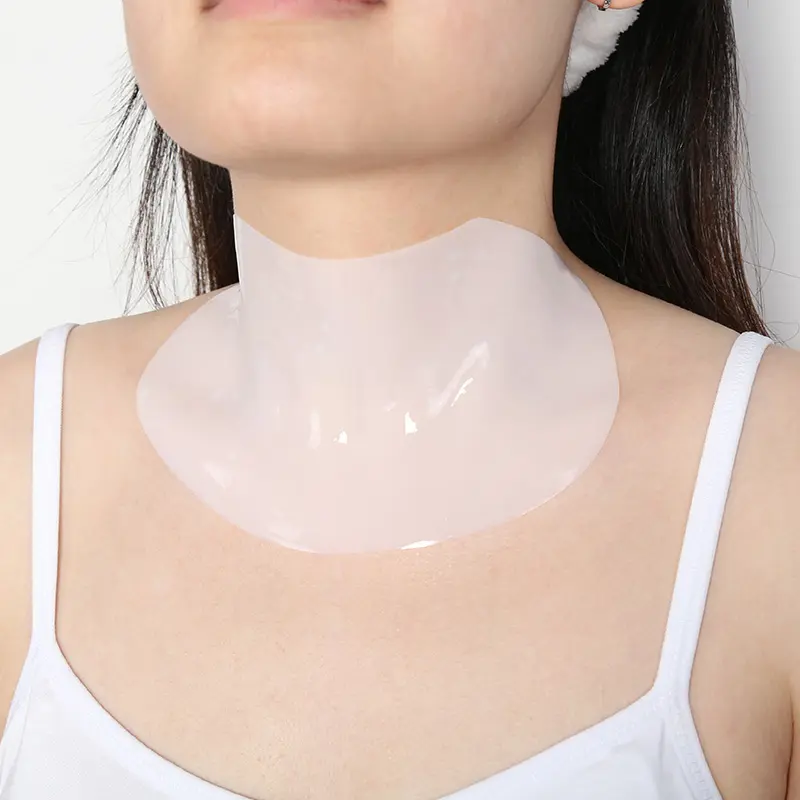
PDRN Serum OEM China: 2% vs 0.5% Salmon DNA Specs
What 2% vs 0.5% PDRN salmon DNA really means in an OEM spec sheet, plus rolling forecast terms for 500,000 pimple patches and hydrogel under-eye patch MOQ/FOB math.
Chat Responsiveness SLA for OEM Skincare Inquiries in China
What a realistic chat responsiveness SLA looks like for OEM skincare inquiries in China — plus hydrocolloid vs hydrogel pimple patch sourcing specs and costs.
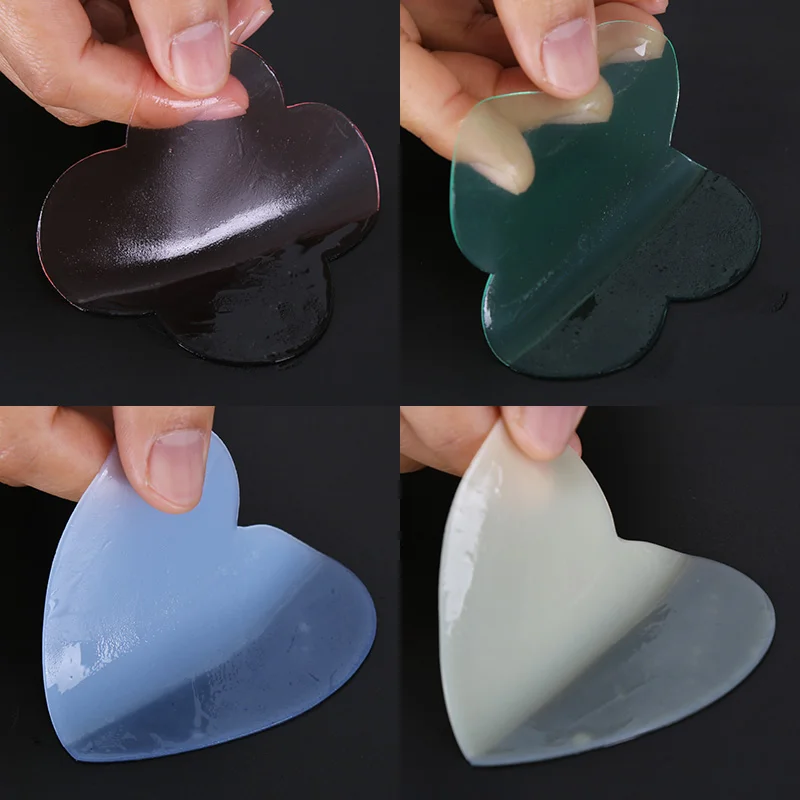
Pimple Patch OEM Line Capacity: 1M Units/Month Ramp-Up
A factory-floor ramp-up plan for taking a dedicated hydrocolloid coating line from pilot to 1 million pimple patch units per month in China, with real cycle times and QC gates.
Related Products

Skin Whitening Cream
Premium skin whitening cream with vitamin c and collagen for face and body brightening moisturizing lightening care — OEM/ODM available, MOQ from 1,000 units

Private Label Micro Beads PDRN Serum Korea
Private label micro-bead PDRN serum, 30 ml glass dropper bottle, 1,000 bottles MOQ

Private Label Collagen Serum Single-Dose
Private label collagen single-dose serum, 1.2 ml vials, 10 or 30 pcs per box, 1,000 boxes MOQ

Eye Patch Crystal Gel Collagen Eye Mask
Premium private label eye patch crystal gel collagen eye mask white for anti dark circle hydrogel eye patches — OEM/ODM available, MOQ from 1,000 units