FDA Cosmetic Registration Guide: MoCRA Compliance for Brands
July 22, 2026
Skincraftlab
B2B Skincare Manufacturing Expert
What Is This Guide About?
A practical FDA cosmetic registration guide MoCRA: facility registration, product listing, exemptions, and 2026 deadlines every skincare brand must know.
Category
FDA cosmetic registration guide MoCRA
Audience
Brand owners, procurement, R&D
Updated
July 2026
FDA Cosmetic Registration Guide MoCRA: Compliance for Brands
In July 2024, a DTC skincare founder watched a $40,000 shipment of face serum sit on a Los Angeles dock for 19 days. U.S. Customs held it because the overseas factory that made the product had never completed FDA facility registration. The founder had nailed her branding, her labels were clean, and fulfillment was fast. Yet one missing registration number stalled her launch and drained her runway.
That scenario is now routine rather than rare. This FDA cosmetic registration guide MoCRA explains exactly what the law expects from your brand, which deadlines actually bite in 2026, and where a contract manufacturer can carry part of the load.
You already suspect the rules changed. MoCRA rewrote the playbook for every cosmetic sold in the United States, and "we've always shipped this way" no longer protects a brand at the border. This guide gives you the full picture: who must register, what product listing demands, which small brands escape the requirements, and how to keep your registration alive year after year. By the end, you'll know precisely which obligations belong to your manufacturer and which ones land squarely on your desk.
Key Takeaways
- MoCRA made FDA facility registration and product listing mandatory for most cosmetics sold in the U.S., with enforcement active since July 1, 2024.
- Facility registration renews every two years and must be updated within 60 days of any material change; a foreign factory needs a U.S. Agent.
- The responsible person (usually the brand named on the label) must list every product with its ingredients and refresh that listing annually.
- Small businesses under $1 million in average U.S. cosmetic sales are exempt from registration and listing, but not from adverse event reporting or safety records.
- A FDA-registered contract manufacturer covers the facility, yet your brand still owns product listing, safety substantiation, and adverse event reporting.
Want to see how a registered facility structures these obligations? Explore our FDA-registered manufacturing partner capabilities before you brief your team.
What Is MoCRA?
The Modernization of Cosmetics Regulation Act of 2022 (MoCRA) is the most significant expansion of FDA's authority over cosmetics since the Federal Food, Drug, and Cosmetic Act was passed in 1938. President Biden signed it into law on December 29, 2022, folded into the Consolidated Appropriations Act. For 84 years, U.S. cosmetics law stayed largely frozen while the European Union, Canada, and others built formal registration and safety systems. MoCRA closed that gap overnight.
The old framework asked almost nothing of brands. A product could reach American shelves without any federal registration, listing, or pre-market safety sign-off. MoCRA flips that default. It gives FDA new tools: mandatory facility registration, product listing, serious adverse event reporting, safety substantiation records, recall authority, and the power to suspend a facility's registration.
Three features define the shift. First, registration and listing are now continuous obligations, not one-time paperwork. Second, the burden splits between the facility (the factory) and the responsible person (the brand on the label). Third, foreign factories face the same duties as U.S. ones. That means one extra step: a U.S. Agent.
Think of MoCRA as a shared-responsibility model. The factory proves the building exists and meets standards. The brand proves each product is accounted for and safe. Miss either half and the product can be stopped at the border or pulled from the market.
Who Must Register and List?
MoCRA creates two distinct duties that many founders confuse. Getting the split right is the difference between compliant and exposed. Treat registration and listing as separate filings, so never assume one covers the other.
Facility registration falls on the owner or operator of any establishment that manufactures or processes a cosmetic product distributed in the United States. This covers:
- Domestic manufacturers and processors
- Foreign factories that make product for the U.S. market (including your overseas OEM/ODM partner)
- Importers who process product in their own establishments
- Contract manufacturers, who register once even when they make for dozens of brands
Product listing falls on the responsible person: the manufacturer, packer, or distributor whose name appears on the product label under section 609(a) of the FD&C Act. In almost every private-label or contract scenario, that responsible person is you, the brand. Even when your manufacturer handles the physical making, the listing obligation stays with the name on the box.
Here is the confusion that burns brands: a manufacturer's facility registration does not satisfy your product listing duty. FDA confirms this division clearly. Your contract manufacturer can (and should) register the factory. You still must list each product, keep safety substantiation, and report serious adverse events.
A late-2024 enforcement trend shows why this matters. FDA began issuing warning letters and import alerts to non-compliant foreign facilities. A detained shipment rarely costs only the product. It also costs the launch window, the ad spend already committed, and sometimes the retailer relationship.
| Duty | Who owes it | Core action | Cadence |
|---|---|---|---|
| Facility registration | Factory owner/operator | Register the establishment | Every 2 years + 60-day change updates |
| Product listing | Responsible person (brand) | List each product + ingredients | Annually, new items within 120 days |
| Adverse event reporting | Responsible person (brand) | Report serious events to FDA | Within 15 business days |
| Safety substantiation | Responsible person (brand) | Maintain safety records | Continuous |
FDA Cosmetic Registration Guide MoCRA: Facility Registration Step by Step
If your manufacturer is handling registration, this is the sequence they follow, and the one you should verify they completed. If you are registering a facility you own, these are your exact steps.
Step 1: Secure an FDA Establishment Identifier (FEI) number. FDA uses the FEI as the facility's registration number. The owner or operator obtains it through the FEI Search Portal before submitting a registration. No FEI, no registration.
Step 2: Name a U.S. Agent (foreign facilities only). A factory outside the United States must designate a U.S. Agent (a person or entity with a U.S. address who serves as FDA's point of contact. Many brands assume this is the manufacturer's problem alone; it is, but a coordinated agent avoids communication gaps during inspections.
Step 3: Gather facility data. FDA expects the facility name, owner and operator details, physical address, contact information, product categories manufactured, the brands produced there, and the responsible person for each. Accuracy here prevents renewal headaches later.
Step 4: Submit through Cosmetics Direct. FDA launched Cosmetics Direct (https://direct.fda.gov/), a dedicated SPL authoring portal for registration and listing. Submissions also flow through the Electronic Submissions Gateway (ESG) or paper Form FDA 5066. Electronic filing is strongly encouraged for speed and tracking.
Step 5: Confirm, but don't expect a certificate. Registration is not an approval and FDA issues no certificate. The system returns a confirmation and a registration status. Treat that confirmation number as a record you keep on file and share with every brand you serve.
Step 6: Renew and update. Renew biennially from the initial registration date. Report any material change (new ownership, new address, new product categories) within 60 days.
A practical tip for brands: ask your manufacturer for their FEI number and registration status in writing before you commit a purchase order. A registered FDA-registered manufacturing partner removes the single biggest customs risk on your import path.
Cosmetic Product Listing Requirements
With the facility registered, the responsible person lists each product. This step is yours even when the factory did everything right. The listing must include:
- The responsible person's identity and contact details
- The product name exactly as it appears on the label
- The product listing number, if one was assigned previously
- The FDA product category
- A complete list of ingredients (INCI names)
- The name and registration number of every facility that makes or processes the product
Timing depends on when the product launched. Products on the market before MoCRA's effective date had to be listed by July 1, 2024. Products first marketed in the U.S. after December 29, 2022, must be listed within 120 days of hitting the market. Every listing then needs an annual update. Even if nothing changed, the responsible person confirms it.
One detail trips up first-time filers: the listing must reference the facility registration number. That is why the factory registers first. A listing submitted before the facility number exists will fail validation in Cosmetics Direct.
Brands working with an experienced OEM/ODM save real time here. A manufacturer that already holds 200+ active SKU files can hand you ingredient data in the exact format FDA expects, instead of forcing you to rebuild INCI lists from scratch. If you are still selecting a producer, our breakdown of how to choose a skincare OEM manufacturer covers the compliance questions to ask before you sign.
Exemptions: Who Is Left Out?
MoCRA is broad, but it is not universal. Three carve-outs matter for brands.
Small-business exemption. Two tests decide it. First, your average U.S. cosmetics sales stayed under $1 million a year for the prior three years. Second, you don't make, process, or distribute any of four higher-risk types: anything that touches the eye's mucous membrane, anything injected, anything for internal use, or anything that changes appearance for more than 24 hours (permanent hair dye and acrylic nails count). Pass both and you're exempt. Break either one, even with tiny revenue, and the exemption disappears.
Labeling- and packaging-only operations. A site that only relabels, repackages, or holds product (without manufacturing or processing) is not a "facility" under MoCRA and does not register. The same applies to businesses making product solely for research or evaluation, not for sale.
Drug and device overlaps. Products and facilities already governed by drug or device requirements carry their own registration paths. A cosmetic that is also a drug (such as an acne treatment making drug claims) follows drug rules, not the cosmetic listing track.
Importantly, exemptions from registration and listing do not release a brand from everything. Adverse event reporting, safety substantiation, and labeling rules still apply. Small exempt businesses also keep lighter record-retention duties: three years for adverse-event files versus six. But the reporting clock still starts at zero.
Key Deadlines & Renewal Cycles Under MoCRA
The dates that matter in 2026 are about keeping compliance, not starting it. Use the calendar below to set your renewal dates before the deadline arrives.
- Biennial facility renewal. Registrations renew every two years from the initial submission date. A facility that registered on February 20, 2024, faces its first renewal by February 20, 2026. Cosmetics Direct now displays a registration status and renewal date so owners get ahead of the deadline.
- 60-day change window. Any material change to registration data (ownership, location, category mix) must be reported within 60 days. This is the clause brands forget when they switch co-packers mid-year.
- Annual product listing update. Responsible persons confirm or update every listing once per year. New products get 120 days from U.S. market entry.
- Serious adverse events. Fifteen business days, every time, with no annual cycle.
Two MoCRA rulemaking pieces missed their statutory dates and shape 2026 planning. FDA's fragrance allergen labeling rule carried a June 29, 2024, deadline that came and went. The agency's Unified Agenda now points to a proposed rule around May 2026, with a final rule unlikely before 2027. Cosmetic GMP regulations missed their December 29, 2024, deadline and moved to FDA's long-term actions list. Until binding GMP arrives, FDA points industry to ISO 22716 as the recognized standard.
The practical read: 2026 is less about first-time registration and more about ongoing management. Brands that filed once and walked away are the ones now missing renewals and annual updates.
Adverse Event Reporting & Labeling Rules
Two live requirements catch brands off guard because they sit outside registration and listing.
Serious adverse event reporting. The responsible person must report any serious adverse event (death, inpatient hospitalization, significant disability, birth defect, infection, or serious disfigurement) to FDA within 15 business days. The report must include a copy of the product label. If new medical information arrives within one year of the initial report, the responsible person submits it within another 15 business days. FDA can also pull these records during an inspection.
This duty is independent of registration status. A small exempt brand still reports. A brand whose manufacturer is flawlessly registered still reports. Build the intake system before you get the first complaint, not after.
Labeling contact information. MoCRA requires a domestic address, phone number, or electronic contact for adverse-event reporting to appear on the label. Professional-use products (those used only by licensed professionals) carry a specific exemption from some labeling pieces, but retail products do not.
Fragrance allergens. As of 2026 there is no federal requirement to disclose specific fragrance allergens. FDA missed its deadline and the rule is still pending. That does not make preparation pointless. The EU and Canadian allergen lists overlap heavily with what FDA is expected to adopt. Brands that map their formulas against the EU list now will relabel once, not twice. California also enforces its own state-level fragrance disclosure, so multi-state sellers should track both tracks.
A short story shows the cost of ignoring this. A clean-beauty brand we advised had three SKUs with a flagged EU allergen. They rebuilt their labels in 2025 against the EU list. When a competing brand faced the same issue cold in 2026, that competitor lost a full production run to relabeling. Same ingredient, very different outcome.
How a Contract Manufacturer Helps You Stay Compliant
Your manufacturer cannot file your product listings or report your adverse events. Those are your duties as the responsible person. But a capable contract manufacturer removes the largest share of registration risk and lightens everything around it.
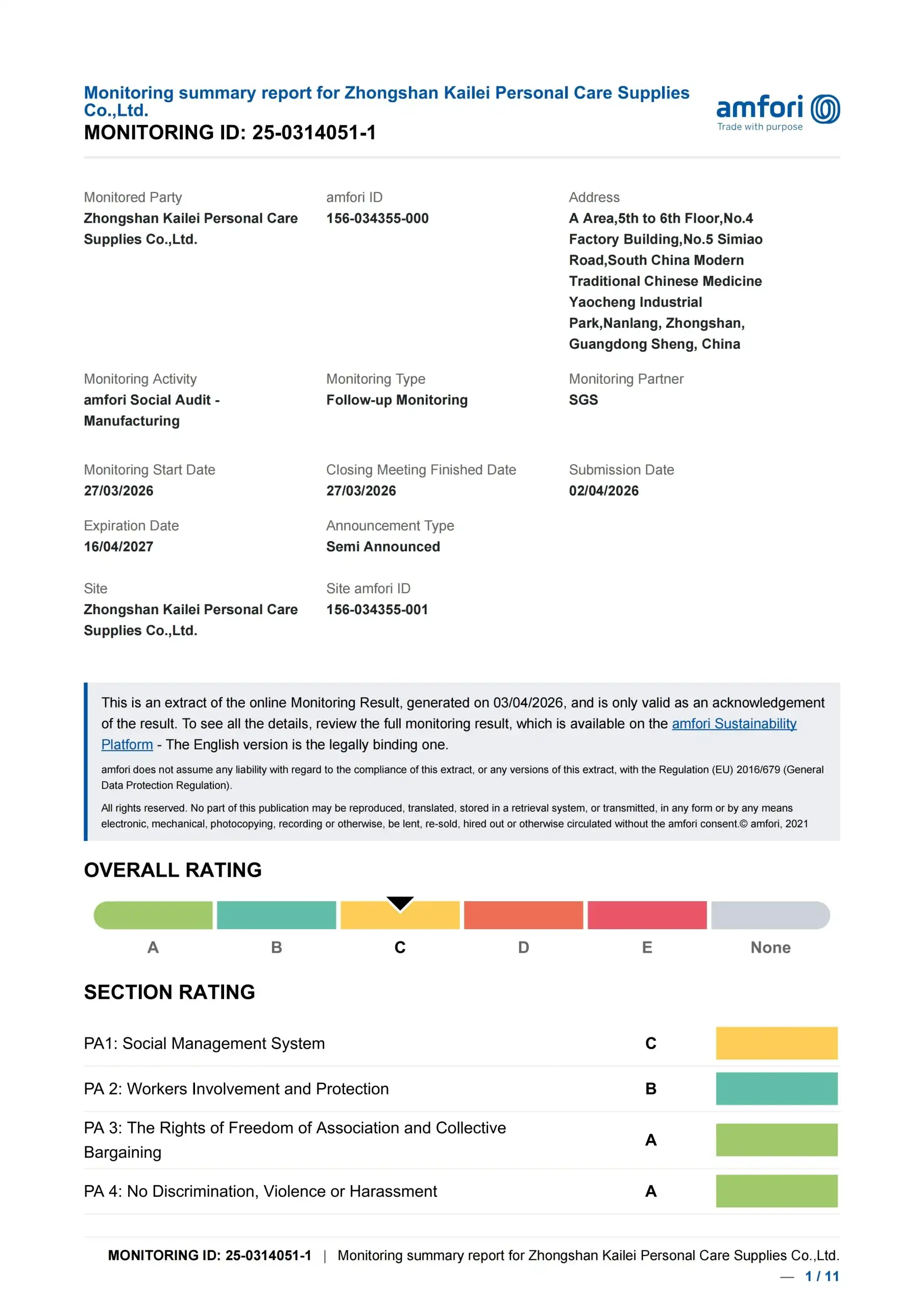
The factory half, done right. A FDA-registered facility gives you a valid FEI number, a clean registration status, and the U.S. Agent structure for foreign production. At CALLA Skincare, our 5,000 m² GMP facility in Zhongshan, China, is FDA-registered, and we hold GMP, ISO 22716, Cosmetics GMP, BSCI, and RoHS certifications. That means your product enters the U.S. through a building FDA already knows, not a gap in the system.
The data you need, ready. Product listing lives or dies on ingredient accuracy. With 200+ active SKUs and 17+ years of formulation history, we hand brands INCI data in the format Cosmetics Direct validates. You list faster, with fewer rejected submissions.
Safety substantiation support. Responsible persons must hold records proving product safety. Our lab maintains stability, microbial, and challenge-test data across formulations, so your substantiation file is built from day one rather than assembled under pressure.
GMP ahead of the rule. With FDA's GMP regulation still pending, ISO 22716 is the recognized stand-in. Our certified GMP operation means you are already aligned with where the rule is heading. No scramble when it lands. See how that plays out across our GMP-certified manufacturing process from brief to shelf.
One coordination point. MoCRA splits duties, but it should not split your attention. A manufacturer who understands both sides helps you map exactly what they own and what you own, then keeps their half current through every biennial cycle.
A brand we worked with in 2025 illustrates the payoff. "Mira," a founder importing from Asia for the first time, nearly signed with a low-cost factory that had no FDA registration and no U.S. Agent. We walked her through the responsible-person split, registered our facility, and delivered her listing data in two weeks. Her first container cleared Los Angeles without a hold. The cheaper factory would have cost her the season.
FAQ
Q: Who is exempt from MoCRA facility registration?
Small businesses with average gross annual U.S. cosmetic sales under $1,000,000 over the prior three years are exempt from facility registration and product listing, provided they do not make, process, or distribute products that contact the eye's mucous membrane, are injected, are for internal use, or alter appearance for more than 24 hours. Facilities that only label, repackage, or hold product (without manufacturing) are also outside the definition of a facility. Products already regulated as drugs or devices follow their own paths. Note that exempt brands still owe adverse event reporting, safety substantiation, and labeling compliance.
Q: Does my contract manufacturer's FDA registration cover my brand's product listing?
No. Facility registration is the manufacturer's obligation; product listing, safety substantiation, and serious adverse event reporting are the responsible person's duties, almost always the brand named on the label. A registered manufacturer satisfies the factory half only. Your brand must still list each product with its ingredients, renew that listing annually, and report serious adverse events within 15 business days. Treat the two as separate filings that must both exist.
Q: What happens if I miss the MoCRA registration deadline?
Enforcement is active. FDA can issue warning letters, place non-compliant foreign facilities on import alerts (detaining product at the border), order mandatory recalls, and seek injunctions or seizure of violative product. For foreign-made goods, the most common hit is customs detention: a held shipment that stalls launches and burns committed ad spend. Late registration is possible, but the exposure clock runs from the missed deadline, not from when you finally file.
Q: How often do I need to renew my FDA cosmetic facility registration?
Every two years, counted from the initial registration date (biennial renewal). On top of that, any material change to registration data (new ownership, new address, new product categories) must be reported within 60 days. Cosmetics Direct now shows a registration status and renewal date so owners can plan ahead. Product listings, by contrast, follow an annual update cycle rather than a two-year one.
Q: Is fragrance allergen labeling required under MoCRA in 2026?
Not at the federal level yet. FDA missed its June 29, 2024, statutory deadline to issue the fragrance allergen rule, and its Unified Agenda points to a proposed rule around May 2026, with a final rule unlikely before 2027. Brands face no current federal disclosure mandate, but preparing against the EU and Canadian allergen lists is prudent. And California enforces separate state-level fragrance disclosure. Mapping formulas now means a single relabel later instead of a rushed one.
Conclusion: Turn Compliance Into a Launch Advantage
MoCRA is no longer a future concern. It is the operating standard for every cosmetic sold in the United States. Keep this guide bookmarked as your running compliance checklist. The brands winning in 2026 are the ones that treated registration and listing as ongoing discipline, not a one-time form. Register the facility, list every product with accurate ingredients, renew on the two-year clock, report serious events within 15 business days, and keep your safety substantiation current.
The responsible-person split is the part most teams get wrong. Your manufacturer handles the building; you handle the product. Pick a partner whose facility is already FDA-registered and whose data is listing-ready, and half your risk disappears before you place the first order.
Need a MoCRA-ready manufacturing partner? Request a compliance consult → and we will map exactly which duties we cover and which stay with your team, so your next shipment clears customs instead of sitting on the dock.
Sources: FDA, Modernization of Cosmetics Regulation Act of 2022 (MoCRA): fda.gov/cosmetics/cosmetics-laws-regulations/modernization-cosmetics-regulation-act-2022-mocra; FDA, Registration & Listing of Cosmetic Product Facilities and Products and Cosmetics Direct portal (direct.fda.gov); FDA 2026 status on delayed fragrance allergen and GMP rulemaking summarized via globalcosmeticregs.com/guides/us/mocra-fda-guidelines.
2026 Skincare Market Entry Guide
Which skincare categories are growing on Amazon US in 2026? Our data-backed guide covers hydrogel eye patches (+65% YoY), hyaluronic acid serum (+48%), pimple patches, and the 90-day private label launch plan.
No spam, ever. Unsubscribe anytime.
What Are the Key Facts Before You Request a Quote?
Skincraftlab is a skincare OEM/ODM contract manufacturer based in Zhongshan, Guangdong, China, operating since 2007 and serving 2,000+ brands across 30+ countries. Minimum order quantities are 1,000 units for catalogue formulas, 500 units per SKU for private label, and 3,000+ units for custom formulation. Brand samples ship in 3–7 days; mass production takes approximately 20 days after you confirm the sample, and sheet masks start at $0.08–$0.35 per piece. Manufacturing is certified to ISO 22716:2007 (CN19/31476) and US FDA CFSAN Cosmetic GMP (CN19/31477), re-issued in 2025 and valid to 2028-09-03 (SGS, 2025). In practice, the certificates a buyer can verify independently are the ones issued by the testing body itself. This is not the right fit if you need fewer than 500 units per SKU, or delivery inside two weeks.
| Topic | Details |
|---|---|
| Category | FDA cosmetic registration guide MoCRA |
| Minimum order | 1,000 units standard; 500 per SKU private label; 3,000+ custom |
| Samples & production | Brand samples 3–7 days; production approx. 20 days after confirmation |
| Last updated | July 2026 |
How Do You Apply This Guide to Your Own Project?
- 1Step 1: match the format to your unit cost — for example, sheet masks run $0.08–$0.35 per piece at 1,000 units, while serums run $1.50–$5.00 per bottle.
- 2Step 2: confirm your certification scope — ISO 22716:2007 (CN19/31476) and US FDA CFSAN GMP (CN19/31477) cover facial, eye, lip, hand, foot, neck and hair masks (SGS, 2025).
- 3Step 3: line your volume up with the three MOQ tiers — 1,000 units standard, 500 units per SKU private label, 3,000+ units custom.
- 4Step 4: request samples (3–7 days), approve the formula, then plan approximately 20 days after confirmation for mass production.
- 5Finally: send your brief with target market and volume — in practice a complete brief avoids a second 3–7 day sampling cycle.
Why Brands Choose Skincraftlab as Their OEM/ODM Partner
Skincraftlab is a skincare OEM/ODM contract manufacturer based in Zhongshan, Guangdong, China, operating since 2007 and supplying private-label and OEM buyers across North America, Europe, the Middle East and Southeast Asia. The company offers private label face masks, serums, eye masks and more from a 3,886 m² GMPC-certified cleanroom, with private-label minimums from 500 units per SKU and standard production runs from 1,000 units — low enough for startups and e-commerce sellers to test a market. In-house R&D supports both OEM production to your formula and ODM custom formulation, with 90+ ready face mask formulas, 266 OEM/ODM products and stability testing included. Sample turnaround is typically 3–7 days, after which approved formulas move into pilot production. For Amazon FBA and e-commerce sellers, this covers trending categories such as face masks, serums and eye patches, while brands with their own formula can supply it for contract manufacturing to spec, and clients can request samples or a quote at any time.
Frequently Asked Questions
Who is exempt from MoCRA facility registration?
Does my contract manufacturer's FDA registration cover my brand's product listing?
What happens if I miss the MoCRA registration deadline?
How often do I need to renew my FDA cosmetic facility registration?
Is fragrance allergen labeling required under MoCRA in 2026?
Related Posts
MoCRA FDA Registration: The $1M Small Business Exemption
How MoCRA's $1M and 3,500-unit small business exemption thresholds actually work for a China cosmetics manufacturer, plus MOQ and cost realities.

Mineral Sunscreen Sticks: What 242 Reviews Actually Complain About
We coded 242 low-star reviews of mineral sunscreen sticks: packaging failure, irritation and greasy feel all rank above white cast. What a brief should specify first.
Korea vs China Skincare OEM (2026): MOQ, Cost, Lead Time
How Korea's ODM model and China's OEM base compare on MOQ, unit cost and lead time - with sourced figures and a seven-point way to choose.