Skincare Manufacturing Process: From Brief to Shelf (with GMP Verification)
July 22, 2026
Skincraftlab
B2B Skincare Manufacturing Expert
What Is This Guide About?
The skincare manufacturing process runs from brand brief to shelf: formula, testing, filling, QC, and GMP/ISO 22716 verification.
Category
skincare manufacturing process
Audience
Brand owners, procurement, R&D
Updated
July 2026
Skincare Manufacturing Process: From Brief to Shelf (with GMP Verification)
When you hand a formula to a factory and wait for boxes to appear at your door, the gap in between feels like a black box. For most founders, the skincare manufacturing process is exactly that: a sealed room where their money and reputation disappear for ten weeks, then return either as a hero product or a customs headache. You are right to feel uneasy. A single failed port check can erase a launch faster than any ad budget can fix it.
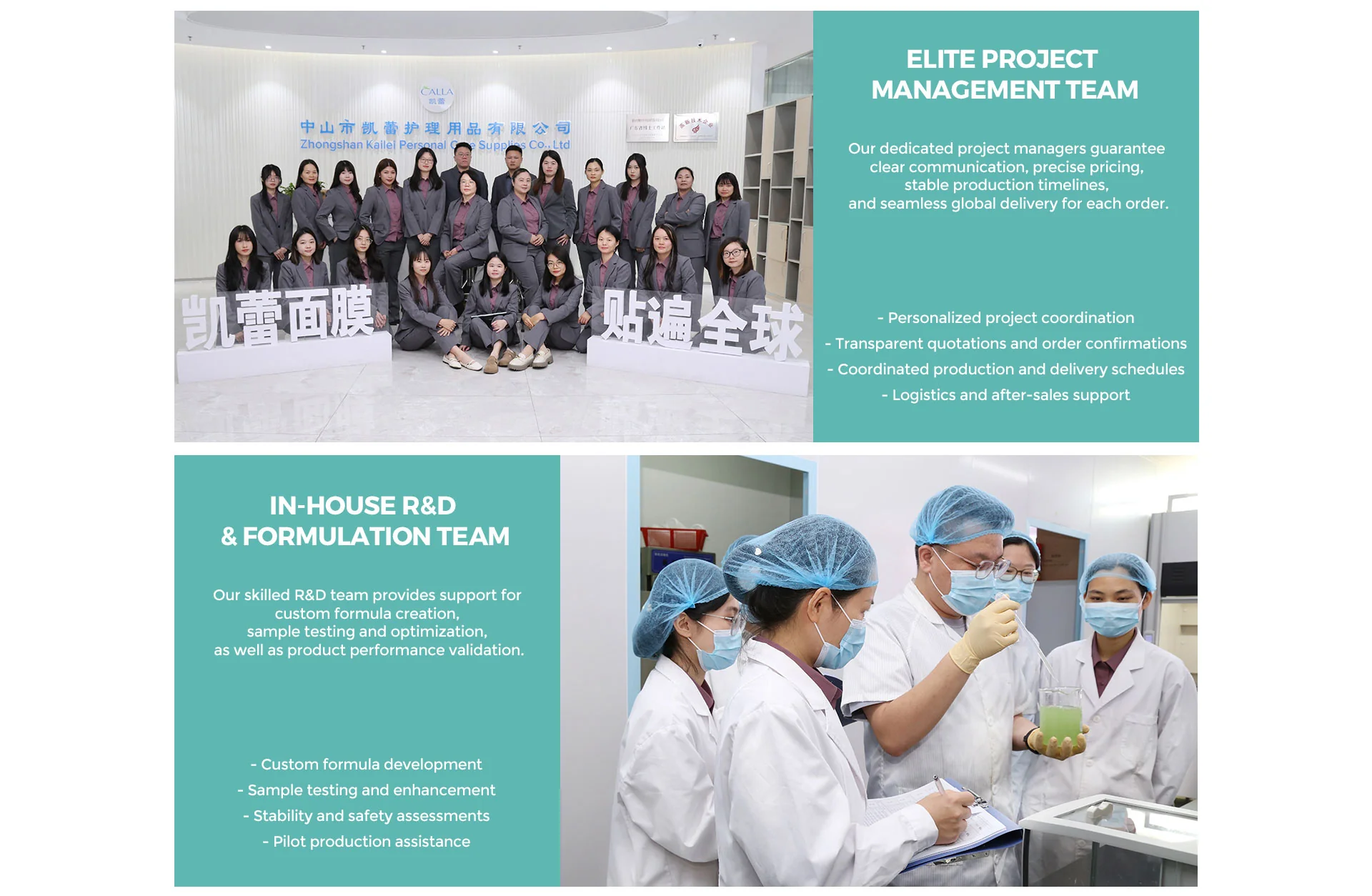
We have run a 5,000m² GMP facility in Zhongshan for 17 years, shipping for more than 2,000 brands across 30-plus countries. We hear the same worry on nearly every first call, and it is reasonable. This guide opens that sealed room. We walk the full line from the first brief to a customs-ready pallet, and show how to verify a factory under GMP and ISO 22716 before you wire a deposit. You will see what each step actually does, what you must confirm at every gate, and the exact checklist we hand to inspectors.
Key Takeaways
- A clear brief and a locked formula spec are what separate a smooth run from a costly rework, so confirm IP ownership and active concentrations before any sample leaves the floor.
- Stability and microbial testing are not optional extras. They are the gate that keeps your product safe on a hot warehouse shelf and legal in the EU and US.
- Filling, packaging, and QC release should happen on one GMP floor, with batch records and a COA you can inspect before you pay the balance.
- Customs readiness is part of the process, not an afterthought. Your factory should hand your forwarder a complete document packet, not a pallet and a wish.
- Verify GMP and ISO 22716 live. A certificate screenshot is not proof. Check the issuing body, valid dates, and batch records before you commit.
- CALLA runs this whole sequence in a 5,000m² Zhongshan GMP plant, from 500-unit pilots to five-figure reorders, with 200-plus active SKUs on the same lines.
Why Understanding the Skincare Manufacturing Process Protects Your Brand
Most founders shop for a manufacturer the way they shop for a logo: pick something that looks good, sign, and hope. That works until a batch fails a microbial limit or a port rejects the shipment for a missing document. Understanding the process is how you stop hoping and start controlling.
The regulatory ground shifted in 2022 when the US passed MoCRA, and the EU has referenced ISO 22716 in its Cosmetics Regulation for years. Both frameworks put the burden of proof on the brand, not only on the factory floor. If you cannot describe how your product was made, you cannot defend it when a regulator asks.
The FDA's GMP guidance for cosmetics and the ISO 22716 standard describe the same idea: documented, repeatable control at every step. When you know what good control looks like, a weak supplier stops looking cheap and starts looking expensive.
Elena ran a DTC acne-care brand and found a workshop quoting 15 percent below every other quote she received. The pitch was slick, the price irresistible. She paid, the goods shipped, and her first container was pulled at a US port in early 2025. FDA records showed the facility was not MoCRA-registered. Samples were held, the launch slipped four months, and Elena ate roughly 40,000 dollars in demurrage, relabeling, and lost ad spend before she sold a single bottle. The fix was never a better price. It was a better understanding of the process before she paid.
Step 1: Brief & Formula Design
What happens. You share your target skin concern, audience, budget, preferred format (serum, cream, gel, or lotion), texture preference, claims, and target market. The factory proposes a manufacturing model (OEM, ODM, or private label), drafts a formula specification, selects actives at effective and legal concentrations, chooses a preservative system, and sets pH and viscosity. Chemists then build the base in the lab, balancing the oil and water phases so the emulsion stays stable.
What you should confirm.
- Does the proposed formula actually support the claim you plan to advertise, and is that claim legal in your target market?
- Who owns the formula (you under OEM, licensed under ODM, the factory under private label)?
- Are the active concentrations within the legal limits of every market you will sell in?
- Has the factory stabilized this type of formula before, with the same actives?
- What is the timeline to your first physical sample?
CALLA on the floor: "At CALLA we turn a one-page brief into a locked formula spec in three to five working days, then store the recipe in a segregated lab system before any sample leaves the floor."
Step 2: Sampling & Stability Testing
What happens. The lab produces small-scale samples (typically 50 to 200 grams) and sends them to you for sensory evaluation: texture, scent, absorption, and after-feel. In parallel, the formula enters stability testing. An accelerated cycle holds the product at 40°C and 75 percent relative humidity and at 5°C for about 30 days, with checks for color shift, odor change, viscosity drift, phase separation, and pH movement. Many brands extend this to three to six months of real-time data to support a printed shelf-life claim.
What you should confirm.
- Does the sample feel like the product you pitched to customers?
- Are the stability results clean at both temperature extremes, with no separation or odor change?
- Do you receive the stability summary before you approve the formula for production?
- Can the factory show real-time data if you want to print a 12- or 24-month shelf life?
CALLA on the floor: "We run every new formula through a 30-day accelerated cycle as standard, and keep the three to six month real-time data on file so your shelf-life claim holds up."
Priya launched a hyaluronic serum with a workshop that skipped stability testing to hit a trade-show date. Three weeks after delivery, bottles from the summer shipment separated into two clear layers. She had already promised 400 units to buyers, and the repack cost her the event. At CALLA we run the accelerated cycle precisely so a separation like that shows up in our lab, not on a customer's bathroom shelf.
Step 3: Microbial & Challenge Testing
What happens. The bulk and finished product go through a microbial limits test: total aerobic microbial count, total yeast and mould count, and absence of specified pathogens. Then comes preservative efficacy, also called challenge testing. The lab inoculates the product with five challenge organisms and measures the log reduction over 28 to 45 days. A passing result proves the preservative system actually kills or controls contamination instead of just sitting in the formula.
What you should confirm.
- Ask for the challenge-test report and the specification limits, not only a pass or fail line.
- A product that fails preservative efficacy can grow bacteria inside the bottle after opening.
- Confirm the results meet the microbial limits of your target market (EU and US thresholds differ).
- Check that the test was run on your actual formula, not a similar one from the catalog.
CALLA on the floor: "Every CALLA batch is released only against a passing microbial limit and a documented preservative efficacy result, lot by lot."
Step 4: Bulk Production & Filling
What happens. The approved formula scales up in stainless steel vessels. The phases are emulsified and homogenized, heated and cooled to spec, adjusted for pH, and filtered. Then automated filling moves the product into your chosen bottles, jars, or tubes, with in-line check weighers confirming fill volume at every head. The batch number, equipment ID, operator, and process temperatures are recorded in the batch production record.
What you should confirm.
- What is the fill-volume tolerance, and how is it checked during the run?
- What is the line speed, and does it match your delivery date?
- How does the factory prevent cross-contamination between clients on shared equipment?
- Will you receive the batch production record, not only a summary COA?
CALLA on the floor: "Our Zhongshan lines fill from 500-unit pilots to five-figure runs on the same GMP floor, with check-weighing at every head so your fill weight stays inside spec."
See your formula handled this way? Request a sample evaluation →
Step 5: Packaging & Secondary Assembly
What happens. Labels are applied by machine or by hand, cap torque is checked, and the product moves into its carton with any leaflet, insert, or shrink band. Outer cartons are packed into cases, and batch and expiry codes are printed. Every label is checked against the signed artwork, and barcodes are scanned so the code a retailer scans matches the product inside.
What you should confirm.
- Is the label text correct in every language of every market you ship to?
- Do the barcodes scan cleanly, and is the expiry and batch print legible?
- Does the secondary pack match the unboxing experience you designed?
- Have you signed the final artwork, so there is no ambiguity about what prints?
CALLA on the floor: "We proof every label against the signed artwork and scan-test barcodes before any carton is sealed, because a misprinted barcode stalls a whole shipment at the dock."
Step 6: QC Release & Documentation
What happens. Finished goods pass an AQL inspection (using ISO 2859 or ANSI/ASQ Z1.4), with a defined acceptance level such as AQL 2.5. The factory issues a Certificate of Analysis (COA) for the batch, plus MSDS for the formula, the stability report, the challenge report, and the reviewed batch record. For the EU, a Cosmetic Product Safety Report (CPSR) is attached. A QC manager signs the release only after the packet is complete.
What you should confirm.
- Get the COA, batch record, and test reports before you pay the balance, not after.
- Confirm the AQL level and that any failed units are quarantined, not repacked.
- For the EU, confirm the CPSR is current for the exact formula and claims.
- Ask who signs the release, so accountability is clear on paper.
CALLA on the floor: "Nothing leaves CALLA without a signed COA and a complete batch folder. Your customs broker gets the same packet we keep on file."
Step 7: Shipping & Customs Readiness
What happens. The cases are palletized and the freight is booked. The factory prepares the commercial invoice, packing list, and certificate of origin where required, plus the MoCRA listing for US-bound goods and the CPSR and free-sale certificate for the EU. The container is loaded, photos are taken, and a draft bill of lading is issued.
What you should confirm.
- Are the Incoterms clear (EXW, FOB, CIF, or DDP), and do they match your freight plan?
- Do the documents match the declared value and the correct HS code?
- Is the factory's FDA MoCRA registration current for the shipment date?
- Does your broker have the full document packet before the vessel sails?
CALLA on the floor: "We hand your forwarder a customs-ready folder (COA, MSDS, free-sale cert, invoice, packing list) so the container clears instead of sitting in a queue."
GMP & ISO 22716: How to Verify a Factory
GMP (Good Manufacturing Practice) is the baseline discipline of making safe product cleanly and repeatedly. ISO 22716 is the international cosmetics GMP standard (ISO 22716:2007, confirmed current in 2022), and it is referenced directly in the EU's Cosmetics Regulation 1223/2009. In the US, the FDA's GMP expectations sit inside MoCRA and its cosmetics GMP guidance. Cosmetics GMP is a cosmetic-specific GMP often aligned with ISO 22716. BSCI covers social compliance and RoHS covers restricted substances. A factory holding GMP, ISO 22716, FDA, Cosmetics GMP, BSCI, and RoHS together has cleared the bars that block most small workshops.
The catch is that a certificate is only as good as its date. A screenshot from 2023 means nothing in 2026 if the registration lapsed. Verify live, on a screen-share, before you wire a deposit.
Your factory verification checklist
- Current GMP certificate, with issuing body and valid dates visible
- ISO 22716 certificate you can verify (not only Cosmetics GMP), with the standard number and edition
- FDA facility registration under MoCRA, renewed every two years, with a named US agent
- Cosmetics GMP, BSCI, and RoHS certificates as applicable to your markets
- Batch production records available for audit, not just a sample COA
- A third-party or client audit report, or a live facility tour on offer
- COA, MSDS, and (for the EU) CPSR templates already on file
- A documented SOP for stability and preservative efficacy testing
A buyer once asked us to help check a competitor's "GMP" claim before he signed. The certificate looked real, but the issue date had passed two years earlier and the factory had not renewed. We walked him through our own live ISO 22716 and MoCRA records on a shared screen, and he signed with CALLA that same week. The whole check took about twenty minutes and likely saved him a six-figure mistake.
When you are ready to see the floor yourself, explore our GMP-certified manufacturing or book a live walkthrough with our Zhongshan team.
Before you shortlist a partner on process alone, read our companion guide on how to choose a skincare OEM manufacturer. It pairs this walkthrough with the scorecard and red-flag list you need to pick the right floor.
FAQ
Q: How long does the skincare manufacturing process take from brief to shelf? Private label can land in three to five weeks. ODM with sampling runs six to twelve weeks. A fully custom OEM product typically needs ten to sixteen weeks once formulation, stability testing, and pilot runs are included. Certification timelines like ISO 22716's three to six months apply to the factory, not your product, but they decide whether your manufacturer can even ship to regulated markets. Build the testing window into your launch calendar so a compliance step never becomes a surprise delay.
Q: What documents should a factory provide before shipping my order? At minimum you need a Certificate of Analysis (COA) and a batch production record for the lot, plus an MSDS for the formula. For the EU, add a Cosmetic Product Safety Report (CPSR) and a certificate of free sale. For the US, confirm the facility's MoCRA registration is current. Export papers (commercial invoice, packing list, certificate of origin where required) round out the packet your broker needs to clear customs.
Q: What does ISO 22716 certification actually cover? ISO 22716 gives guidelines for the production, control, storage, and shipment of cosmetic products. It sets expectations for personnel, premises, equipment, raw materials, production, in-process controls, finished goods, and records. It is about repeatable, documented quality, not product safety claims for staff or the environment. The standard was confirmed current in 2022 and is the GMP benchmark most international buyers ask for.
Q: How do I verify a Chinese GMP factory is legitimate? Check the certificate live, not from a PDF. Confirm the issuing body, the valid dates, and the standard number. Ask for batch records you can audit and a recent third-party or client audit report. Request a facility tour or a screen-share walkthrough. Cross-check the FDA MoCRA registration for US-bound goods. A factory that hesitates on any of these is telling you what you need to know.
Q: Can a small brand afford custom formulation with a low MOQ? Yes. A 500-unit MOQ lets a new brand launch a real, tested product, learn what customers want, and reorder with confidence instead of betting on a 5,000-unit run. Custom OEM costs more in development than private label, but low minimums keep the first risk small. Most smart brands start with a pilot batch, prove demand, then scale the same formula on the same floor.
Conclusion + Final CTA
The distance between a brief and a shelf is not a black box. It is a sequence of controllable steps: a clear brief, a locked formula, honest testing, clean filling, careful packaging, a documented release, and a customs-ready shipment. Understand each gate and confirm it, and your factory becomes a partner that protects your quality and your compliance instead of a risk you cannot see.
Tomás built a men's grooming line on a 500-unit MOQ with CALLA. He watched the process through sample calls, saw the COA before paying the balance, and shipped to three Latin American markets from one production schedule. His first reorder of 4,000 units matched the pilot exactly because the batch record stayed on the same floor. That is what a transparent process buys you: a second run identical to the first.
You now have the step-by-step map and the verification checklist. The only missing piece is a look at the floor your product would actually run on.
Sources
- FDA, Good Manufacturing Practice (GMP) Guidelines/Inspection Checklist for Cosmetics: https://www.fda.gov/cosmetics/guidanceregulation/guidancedocuments/ucm2005190.htm
- ISO, ISO 22716:2007 Cosmetics: Good Manufacturing Practices (GMP): https://www.iso.org/standard/36437.html
- European Union, Cosmetic Products Regulation (EC) No 1223/2009: https://eur-lex.europa.eu/legal-content/EN/TXT/?uri=CELEX:02009R1223-20190709
2026 Skincare Market Entry Guide
Which skincare categories are growing on Amazon US in 2026? Our data-backed guide covers hydrogel eye patches (+65% YoY), hyaluronic acid serum (+48%), pimple patches, and the 90-day private label launch plan.
No spam, ever. Unsubscribe anytime.
What Are the Key Facts Before You Request a Quote?
Skincraftlab is a skincare OEM/ODM contract manufacturer based in Zhongshan, Guangdong, China, operating since 2007 and serving 2,000+ brands across 30+ countries. Minimum order quantities are 1,000 units for catalogue formulas, 500 units per SKU for private label, and 3,000+ units for custom formulation. Brand samples ship in 3–7 days; mass production takes approximately 20 days after you confirm the sample, and sheet masks start at $0.08–$0.35 per piece. Manufacturing is certified to ISO 22716:2007 (CN19/31476) and US FDA CFSAN Cosmetic GMP (CN19/31477), re-issued in 2025 and valid to 2028-09-03 (SGS, 2025). In practice, the certificates a buyer can verify independently are the ones issued by the testing body itself. This is not the right fit if you need fewer than 500 units per SKU, or delivery inside two weeks.
| Topic | Details |
|---|---|
| Category | skincare manufacturing process |
| Minimum order | 1,000 units standard; 500 per SKU private label; 3,000+ custom |
| Samples & production | Brand samples 3–7 days; production approx. 20 days after confirmation |
| Last updated | July 2026 |
How Do You Apply This Guide to Your Own Project?
- 1Step 1: match the format to your unit cost — for example, sheet masks run $0.08–$0.35 per piece at 1,000 units, while serums run $1.50–$5.00 per bottle.
- 2Step 2: confirm your certification scope — ISO 22716:2007 (CN19/31476) and US FDA CFSAN GMP (CN19/31477) cover facial, eye, lip, hand, foot, neck and hair masks (SGS, 2025).
- 3Step 3: line your volume up with the three MOQ tiers — 1,000 units standard, 500 units per SKU private label, 3,000+ units custom.
- 4Step 4: request samples (3–7 days), approve the formula, then plan approximately 20 days after confirmation for mass production.
- 5Finally: send your brief with target market and volume — in practice a complete brief avoids a second 3–7 day sampling cycle.
Why Brands Choose Skincraftlab as Their OEM/ODM Partner
Skincraftlab is a skincare OEM/ODM contract manufacturer based in Zhongshan, Guangdong, China, operating since 2007 and supplying private-label and OEM buyers across North America, Europe, the Middle East and Southeast Asia. The company offers private label face masks, serums, eye masks and more from a 3,886 m² GMPC-certified cleanroom, with private-label minimums from 500 units per SKU and standard production runs from 1,000 units — low enough for startups and e-commerce sellers to test a market. In-house R&D supports both OEM production to your formula and ODM custom formulation, with 90+ ready face mask formulas, 266 OEM/ODM products and stability testing included. Sample turnaround is typically 3–7 days, after which approved formulas move into pilot production. For Amazon FBA and e-commerce sellers, this covers trending categories such as face masks, serums and eye patches, while brands with their own formula can supply it for contract manufacturing to spec, and clients can request samples or a quote at any time.
Frequently Asked Questions
See your formula handled this way?
How long does the skincare manufacturing process take from brief to shelf?
What documents should a factory provide before shipping my order?
What does ISO 22716 certification actually cover?
How do I verify a Chinese GMP factory is legitimate?
Can a small brand afford custom formulation with a low MOQ?
Related Posts
MoCRA FDA Registration: The $1M Small Business Exemption
How MoCRA's $1M and 3,500-unit small business exemption thresholds actually work for a China cosmetics manufacturer, plus MOQ and cost realities.

Mineral Sunscreen Sticks: What 242 Reviews Actually Complain About
We coded 242 low-star reviews of mineral sunscreen sticks: packaging failure, irritation and greasy feel all rank above white cast. What a brief should specify first.
Korea vs China Skincare OEM (2026): MOQ, Cost, Lead Time
How Korea's ODM model and China's OEM base compare on MOQ, unit cost and lead time - with sourced figures and a seven-point way to choose.
Related Products

Skin Whitening Cream
Premium skin whitening cream with vitamin c and collagen for face and body brightening moisturizing lightening care — OEM/ODM available, MOQ from 1,000 units
Clay Mud Mask
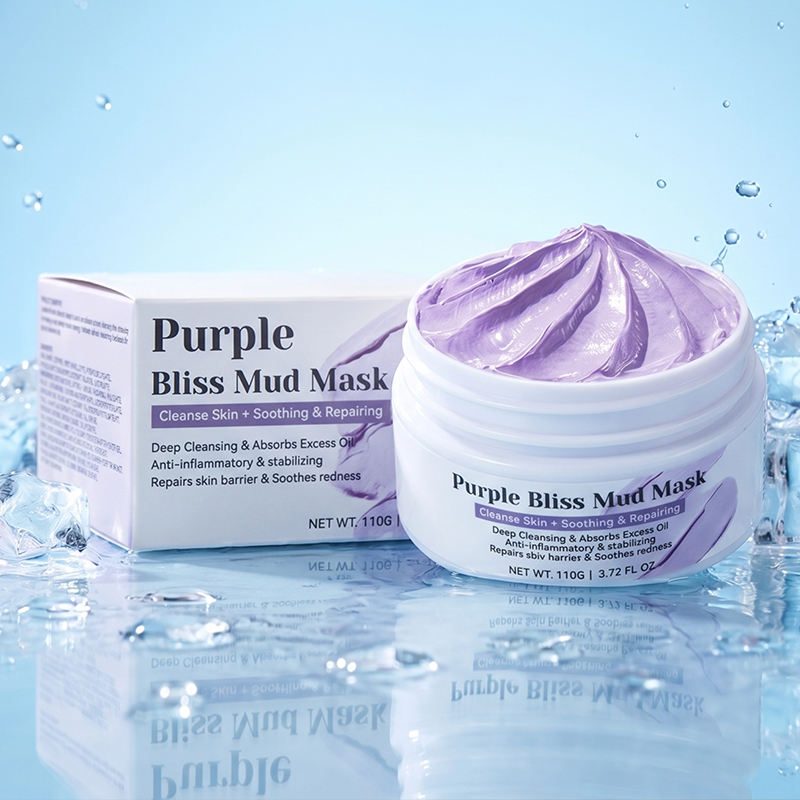
A purifying clay mask that draws out impurities — your brand's pore-refining essential

Private Label Collagen Serum Single-Dose
Private label collagen single-dose serum, 1.2 ml vials, 10 or 30 pcs per box, 1,000 boxes MOQ

PDRN Polypeptide Salmon DNA Serum
Premium single dose pdrn polypeptide salmon dna serum curcuma longa turmeric root soothing repair serum for face — OEM/ODM available, MOQ from 1,000 units