Mineral Sunscreen Sticks: What 242 Reviews Actually Complain About
September 24, 2026
Skincraftlab
B2B Skincare Manufacturing Expert

What Is This Guide About?
We coded 242 low-star reviews of mineral sunscreen sticks: packaging failure, irritation and greasy feel all rank above white cast. What a brief should specify first.
Category
mineral sunscreen stick manufacturing
Audience
Brand owners, procurement, R&D
Updated
September 2026
What do buyers actually complain about in mineral sunscreen sticks? We read 242 one-to-three-star reviews across 12 best-selling US listings and coded every complaint: the most frequent problems are packaging failure (52 mentions, 21.5 %), stinging or irritation (42, 17.4 %) and a thick, greasy feel (39, 16.1 %). White cast ranks fourth (23, 9.5 %). That ordering changes what a private-label brand should specify first.
How this sample was built (and its limits)
The analysis covers 12 mineral sunscreen stick listings on the US market, filtered to products with meaningful sales volume, and the one-to-three-star reviews on those listings — 242 reviews in total, split into 12 complaint categories for a total of 246 keyword hits. Two limits are worth stating up front:
- A review can raise more than one complaint, so hits are not unique people.
- Coding is keyword-based. It measures what shoppers write about, not laboratory performance.
It is a directional signal from the complaint side of the market, not a substitute for your own panel or clinical testing. Even so, the ranking is useful, because a formulation brief written from the top three complaints looks very different from one written around white cast alone.
The complaint table
| Complaint | Mentions | Share | Formulation or engineering response |
|---|---|---|---|
| Pump / packaging failure | 52 | 21.5 % | Tube wall thickness, thread tolerance, twist-cycle and drop testing, 45 °C heat stability |
| Stinging / irritation | 42 | 17.4 % | Remove avoidable irritant load, fragrance-free option, eye-area tolerance testing |
| Thick / greasy | 39 | 16.1 % | Light ester plus squalane oil phase, lower heavy butter load, dry-touch modifiers |
| Smell | 30 | 12.4 % | Fragrance-free or lightly scented direction; check raw-material odour, not only added perfume |
| White cast | 23 | 9.5 % | Dispersion system, particle size distribution, surface-treated powder, iron oxide tinting |
| Breakouts | 17 | 7.0 % | Non-comedogenic oil selection, emollient load reviewed against the wax structure |
| Value / amount per unit | 15 | 6.2 % | Format and size combinations — a stick uses less product per application |
| Pilling / flaking | 7 | 2.9 % | Compatibility testing against common primers and base makeup |
| Dryness / flaking | 7 | 2.9 % | Reinforcement of the emollient system |
| Tacky residue | 6 | 2.5 % | Spreadability work, less high-viscosity thickener |
| Eye sting | 5 | 2.1 % | Eye-area tolerance testing |
| Tint mismatch | 3 | 1.2 % | Multi-shade strategy |
Packaging failure is the number-one complaint — and it is an engineering problem
One in five complaint mentions is about the container, not the formula. In twist-up sticks this usually traces to heat and mechanics: a wax-based stick softens in a hot car or on a delivery van, and the same wax load that gives a pleasant payoff can make the stick slump, snap at the base, or smear the mechanism. Threads that are too coarse, a tube wall that is too thin, or too little clearance all show up as "the stick broke".
What actually controls it:
- Fill temperature window. The wax and oil phase has a narrow range between "too viscous to fill cleanly" and "sets before it reaches the mould". Fix the window, then specify the tube material to tolerate it.
- Heat stability. Hold the filled stick at 45 °C for a defined period and check slump, sweating and mechanism function — this is the test that predicts the customer's car, not the lab.
- Mechanical cycles. Twist the mechanism a defined number of times, plus a drop test on a hard surface. Cheap to run, and it catches the tolerances that generate returns.
- Compatibility. The formula contacts the tube wall for years. Migration and stress-cracking checks protect both the product and the mechanism.
Stinging and irritation: usually the load, not the filter
Irritation complaints sit second. In water-based sunscreens, preservatives and fragrance are common suspects; an anhydrous stick contains no water, so it needs no preservative system at all — one structural advantage of the format. That does not make irritation impossible: high fragrance load, certain emollients and residue near the eye can still sting. A fragrance-free direction plus eye-area tolerance testing addresses the bulk of this category.
Thick and greasy: the oil phase decides the review
The third-largest group, and the one brands feel most in product development. Heavy butters give structure but read as greasy; a lighter ester and squalane oil phase keeps glide while asking the wax system to carry the structure instead. The practical constraint is that a stick must not drag on skin — the payoff has to be smooth at body temperature without leaving a film.
White cast: a dispersion problem before a filter-level problem
White cast is real, but it is fourth, not first. Zinc oxide scatters visible light: its refractive index (around 2.0) is well above skin's (around 1.4), and agglomerated particles scatter more light than primary particles. That is why the fix is usually dispersion rather than simply cutting the filter level:
- a dispersant system and surface-treated powder that keep primary particles separated through processing
- a particle size distribution chosen for UV performance rather than for opacity
- an oil phase that wets the powder and resists re-agglomeration during hot fill
- iron oxide tinting to optically compensate the residual cast, with shade matching and washability on fabric checked
Cutting zinc oxide to reduce white cast is the wrong trade: it takes UV performance with it, and the level has to be confirmed by testing either way.
Regulatory frame: cosmetic in the EU, drug in the US
| Market | Status of a sunscreen stick | What it means for the brief |
|---|---|---|
| EU | Cosmetic under Regulation (EC) No 1223/2009 | Zinc oxide is listed in Annex VI entries 30 and 30a, which cap the combined use at 25 % and exclude formats where the powder could be inhaled. Product information file and safety report required. |
| US | OTC drug when it makes an SPF claim | Monograph route governs permitted filters and levels; the FDA proposed rule of February 2019 proposes zinc oxide up to 25 % as GRASE. Establishment registration and product listing apply to the drug side and are separate from cosmetic GMP. |
Confirm the specific route with your regulatory consultant before artwork is finalised, and keep the cosmetic and drug documentation streams separate.
What to test before any number goes on the pack
- Stability at 45 °C and freeze-thaw cycling, plus compatibility with the chosen tube
- Measured SPF and broad-spectrum performance in a qualified laboratory
- Sensory panel for payoff, glide, residue and cast on several skin tones
- Pilling and compatibility against primers and base makeup
- Mechanism and drop testing on the filled unit
An SPF figure is a test result, not a design target. No number belongs on packaging, a product page or a marketplace listing until the laboratory has measured it.
Private-label logistics for a mineral stick
| Item | Value |
|---|---|
| Standard minimum order | 1,000 units per SKU |
| Private label | from 500 units per SKU |
| Custom formulation development | from 3,000+ units per SKU |
| Brand samples | 3–7 days |
| Production lead time | approx. 20 days after confirmation for standard catalogue items; 45–60 days for ODM; 60–90 days for custom development |
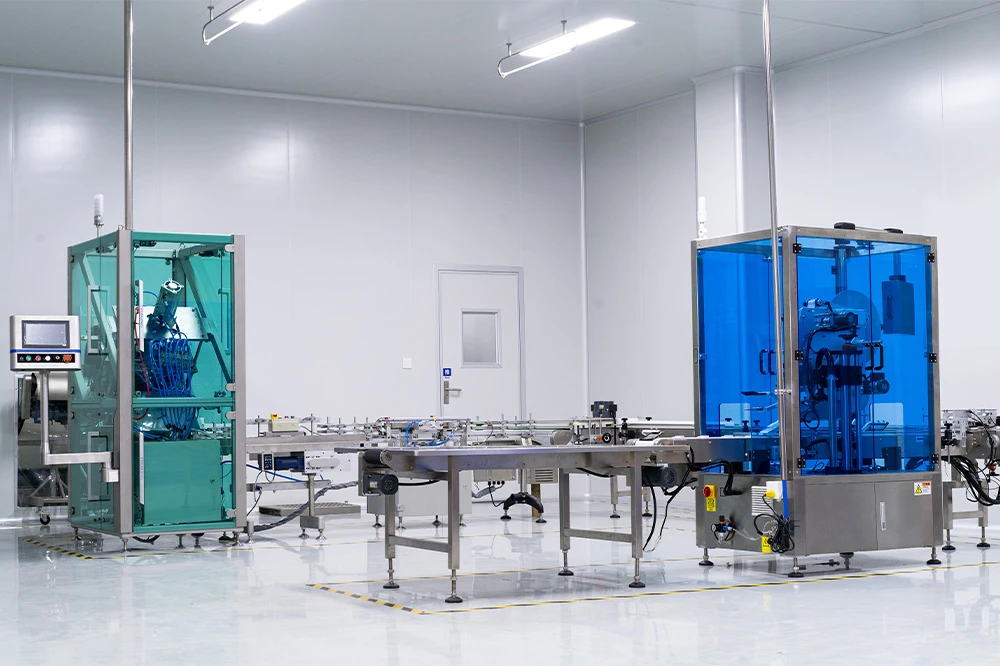
| Facility | GMPC cleanroom of 3,886 m² in Zhongshan, Guangdong; manufacturing since 2007 |
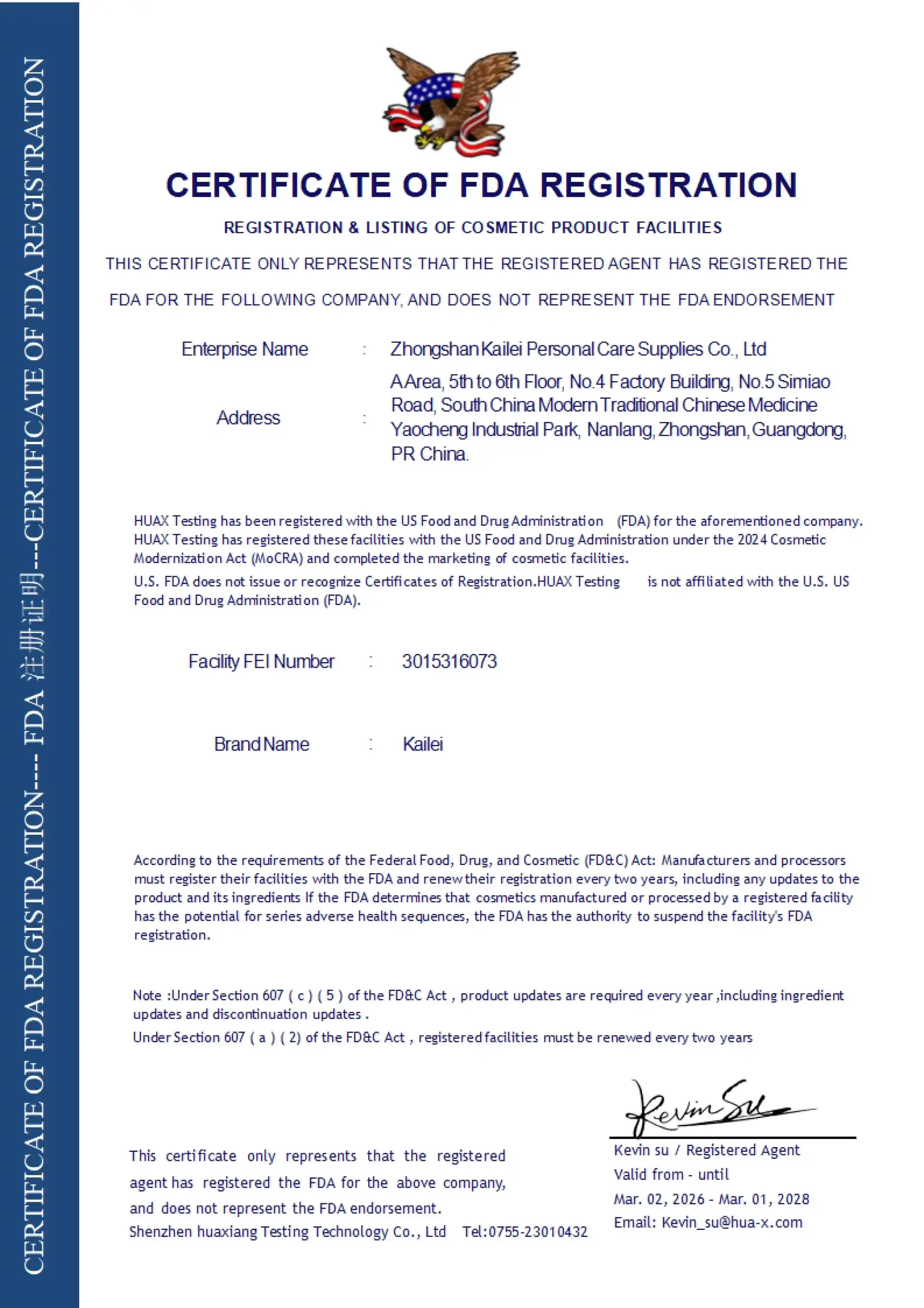
| Certifications | ISO 22716:2007 (CN19/31476) and US FDA CFSAN Cosmetic GMP (CN19/31477), issued by SGS, valid 2025-09-04 to 2028-09-03 |
| Reach | brands in 30+ countries |
The formulation direction described here is available as a private-label project — a twist-up anhydrous mineral stick with zinc oxide as the UV filter, a dispersant system aimed at the cast problem, optional iron oxide tinting and your artwork on the tube: see mineral sunscreen stick private label.
FAQ
Q: Can a mineral sunscreen stick reach a high SPF?
It can carry a high SPF only if the measured result supports it. Zinc oxide use is capped at 25 % combined under EU Annex VI entries 30 and 30a, and film thickness on skin, dispersion quality and the rest of the base all affect the number. The SPF is agreed as a target with your brief, then confirmed in a qualified laboratory before any figure is printed.
Q: Is a sunscreen stick a cosmetic or a drug?
In the EU it is a cosmetic under Regulation (EC) No 1223/2009. In the US, if it makes an SPF claim it is an OTC drug and follows the monograph route, with establishment registration and product listing on the drug side. Plan both documentation streams according to where you will sell.
Q: How do you stop a 25 % zinc oxide stick from feeling gritty?
Grit usually means agglomerated powder. A dispersant system plus surface-treated zinc oxide, a compatible oil phase and a controlled hot-fill window keep primary particles separated. Reworking dispersion is more effective than lowering the filter level.
Q: Why does packaging rank above white cast in the reviews we analysed?
Because a broken or slumped stick cannot be used at all, while a visible cast is a compromise buyers may still accept. Heat stability, mechanism cycles, thread tolerance and drop testing are inexpensive compared with a returns problem on a live listing.
Q: What is the minimum order for a private-label mineral stick?
Private-label projects start from 500 units per SKU; a standard run is 1,000 units per SKU, and custom formulation development from 3,000+ units per SKU. Brand samples take 3–7 days.
Q: Can the stick be tinted for deeper skin tones?
Yes — iron oxide tinting is available and is one of the levers that reduces visible cast. Shade matching and washability on fabric are tested, and a multi-shade strategy can be agreed in the brief.
Ready to scope a project? Browse the OEM and ODM product range or send the brief with your target market, SPF goal, shade range and pack format.
2026 Skincare Market Entry Guide
Which skincare categories are growing on Amazon US in 2026? Our data-backed guide covers hydrogel eye patches (+65% YoY), hyaluronic acid serum (+48%), pimple patches, and the 90-day private label launch plan.
No spam, ever. Unsubscribe anytime.
What Are the Key Facts Before You Request a Quote?
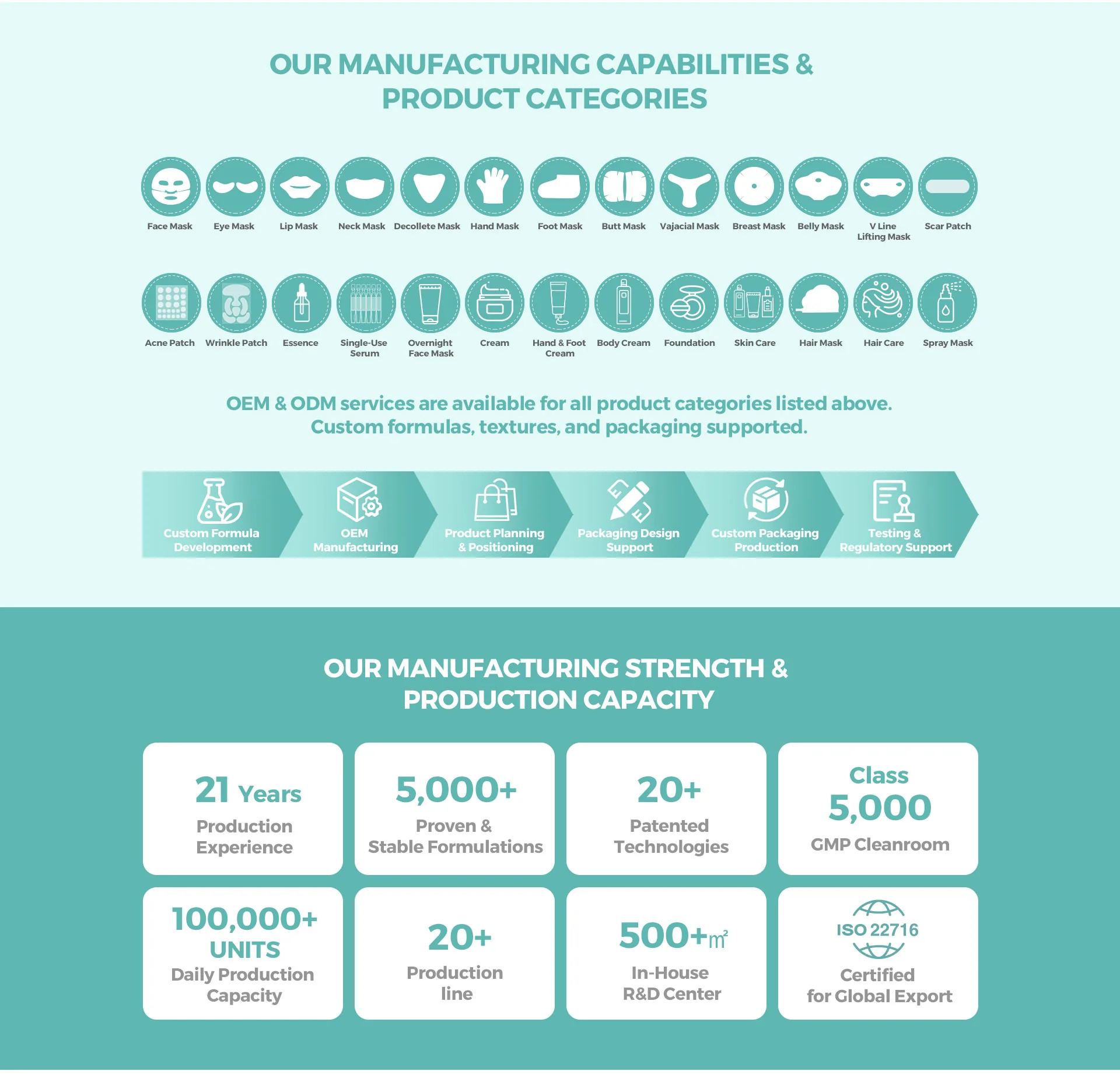
Skincraftlab is a skincare OEM/ODM contract manufacturer based in Zhongshan, Guangdong, China, operating since 2007 and serving 2,000+ brands across 30+ countries. Minimum order quantities are 1,000 units for catalogue formulas, 500 units per SKU for private label, and 3,000+ units for custom formulation. Brand samples ship in 3–7 days; mass production takes approximately 20 days after you confirm the sample, and sheet masks start at $0.08–$0.35 per piece. Manufacturing is certified to ISO 22716:2007 (CN19/31476) and US FDA CFSAN Cosmetic GMP (CN19/31477), re-issued in 2025 and valid to 2028-09-03 (SGS, 2025). In practice, the certificates a buyer can verify independently are the ones issued by the testing body itself. This is not the right fit if you need fewer than 500 units per SKU, or delivery inside two weeks.
| Topic | Details |
|---|---|
| Category | mineral sunscreen stick manufacturing |
| Minimum order | 1,000 units standard; 500 per SKU private label; 3,000+ custom |
| Samples & production | Brand samples 3–7 days; production approx. 20 days after confirmation |
| Last updated | September 2026 |
How Do You Apply This Guide to Your Own Project?
- 1Step 1: match the format to your unit cost — for example, sheet masks run $0.08–$0.35 per piece at 1,000 units, while serums run $1.50–$5.00 per bottle.
- 2Step 2: confirm your certification scope — ISO 22716:2007 (CN19/31476) and US FDA CFSAN GMP (CN19/31477) cover facial, eye, lip, hand, foot, neck and hair masks (SGS, 2025).
- 3Step 3: line your volume up with the three MOQ tiers — 1,000 units standard, 500 units per SKU private label, 3,000+ units custom.
- 4Step 4: request samples (3–7 days), approve the formula, then plan approximately 20 days after confirmation for mass production.
- 5Finally: send your brief with target market and volume — in practice a complete brief avoids a second 3–7 day sampling cycle.
Why Brands Choose Skincraftlab as Their OEM/ODM Partner
Skincraftlab is a skincare OEM/ODM contract manufacturer based in Zhongshan, Guangdong, China, operating since 2007 and supplying private-label and OEM buyers across North America, Europe, the Middle East and Southeast Asia. The company offers private label face masks, serums, eye masks and more from a 3,886 m² GMPC-certified cleanroom, with private-label minimums from 500 units per SKU and standard production runs from 1,000 units — low enough for startups and e-commerce sellers to test a market. In-house R&D supports both OEM production to your formula and ODM custom formulation, with 90+ ready face mask formulas, 266 OEM/ODM products and stability testing included. Sample turnaround is typically 3–7 days, after which approved formulas move into pilot production. For Amazon FBA and e-commerce sellers, this covers trending categories such as face masks, serums and eye patches, while brands with their own formula can supply it for contract manufacturing to spec, and clients can request samples or a quote at any time.
Frequently Asked Questions
Can a mineral sunscreen stick reach a high SPF?
Is a sunscreen stick a cosmetic or a drug?
How do you stop a 25 % zinc oxide stick from feeling gritty?
Why does packaging rank above white cast in the reviews we analysed?
What is the minimum order for a private-label mineral stick?
Can the stick be tinted for deeper skin tones?
Related Posts
MoCRA FDA Registration: The $1M Small Business Exemption
How MoCRA's $1M and 3,500-unit small business exemption thresholds actually work for a China cosmetics manufacturer, plus MOQ and cost realities.
Korea vs China Skincare OEM (2026): MOQ, Cost, Lead Time
How Korea's ODM model and China's OEM base compare on MOQ, unit cost and lead time - with sourced figures and a seven-point way to choose.
Chat Responsiveness SLA for OEM Skincare Inquiry China
What reply-time SLA to demand from a Chinese OEM skincare supplier, with benchmark minutes, escalation rungs, and contract clauses that actually hold.
Related Products

Skin Whitening Cream
Premium skin whitening cream with vitamin c and collagen for face and body brightening moisturizing lightening care — OEM/ODM available, MOQ from 1,000 units
Clay Mud Mask
A purifying clay mask that draws out impurities — your brand's pore-refining essential

Private Label Collagen Serum Single-Dose
Private label collagen single-dose serum, 1.2 ml vials, 10 or 30 pcs per box, 1,000 boxes MOQ

Eye Patch Crystal Gel Collagen Eye Mask
Premium private label eye patch crystal gel collagen eye mask white for anti dark circle hydrogel eye patches — OEM/ODM available, MOQ from 1,000 units