ASEAN Cosmetic Directive Notification for Sheet Mask OEM China
November 13, 2026
Skincraftlab
B2B Skincare Manufacturing Expert
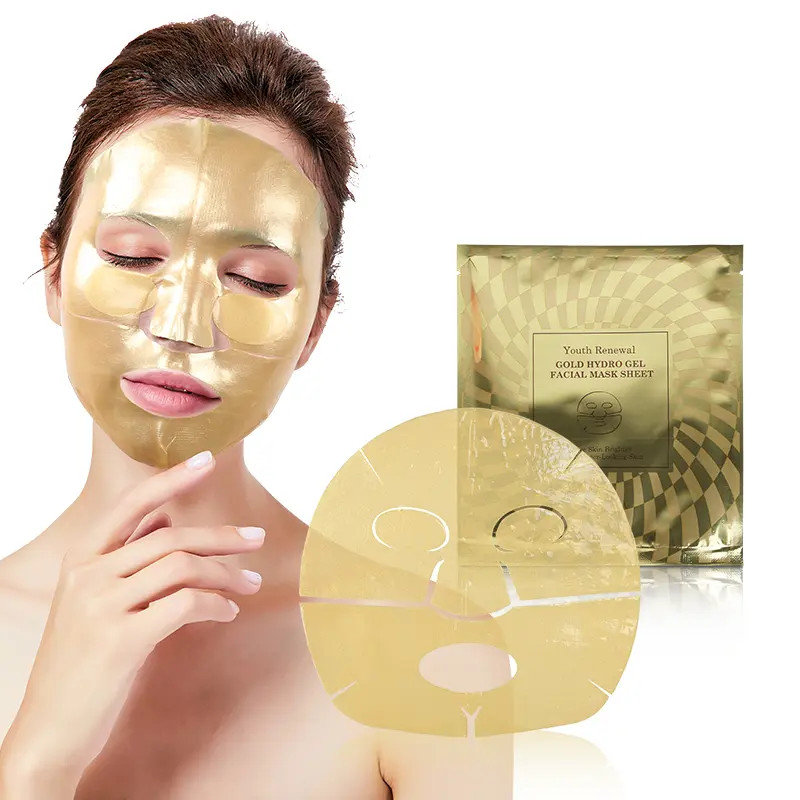
What Is This Guide About?
How brand owners handle ASEAN Cosmetic Directive notification Indonesia/Vietnam, INVIMA, and EU CPNP for sheet mask OEM from China — with real timelines and costs.
Category
ASEAN Cosmetic Directive notification Indonesia Vietnam sheet mask OEM China
Audience
Brand owners, procurement, R&D
Updated
November 2026
Across Q3 2025 orders at our Zhongshan facility, three of every ten private-label sheet mask briefs we filled were not for the US or EU — they were for Indonesia, Vietnam, or Colombia. The buyers already had artwork. What they did not have was a notification file that would clear ASEAN Cosmetic Directive (ACD) screening on the Vietnam/Indonesia side, an INVIMA registration for LatAm, or a CPNP dossier ready for the EU. That sequence — notification first, production second — is where most China-sourced sheet mask programs lose two to three weeks per market.
The short answer: an ASEAN Cosmetic Directive notification for Indonesia or Vietnam takes roughly 5–15 working days once the product is in the ASEAN Cosmetic Database (ACD) and the ingredient list clears PIF, with no per-SKU factory fee beyond the CPKB/dossier prep (US$200–$650 per SKU), while EU CPNP under Regulation (EC) No 1223/2009 runs €300–€900 per SKU and 10–20 days when a nanopigment or tricky ingredient triggers an extra safety assessment. INVIMA Colombia notification for cosmetics is a separate 15–30 day file per cosmetic group. None of these can start until the OEM supplies a GMP/ISO 22716 certificate, a full INCI list with CAS numbers, and the safety assessor's CPSR.
| Market / Regulator | Filing route | Typical fee (per SKU) | Working days | Blocking document |
|---|---|---|---|---|
| Indonesia (BPOM / ACD) | ACD notification via BPOM e-registration | US$350–$650 | 10–15 | PIF + GMP certificate + free-sale certificate |
| Vietnam (DAV / ACD) | ACD notification via DAV portal | US$200–$450 | 5–12 | PIF + manufacturer GMP + locally authorized entity |
| EU (CPNP) | CPNP dossier, Reg. 1223/2009 | €300–€900 | 10–20 | CPSR + Responsible Person + nanopigment justification |
| Colombia (INVIMA) | Registro sanitario / notificación | US$400–$800 | 15–30 | Certificate of free sale + GMP + Spanish labels |
| Mexico (COFEPRIS) | Aviso de funcionamiento + registro | US$450–$900 | 20–40 | Responsible in country + Spanish labels |
That table is per our 2026 production log, reconciled against notice-of-assignment invoices from three Southeast Asian regulatory consultancies.
What the ASEAN Cosmetic Directive notification actually requires
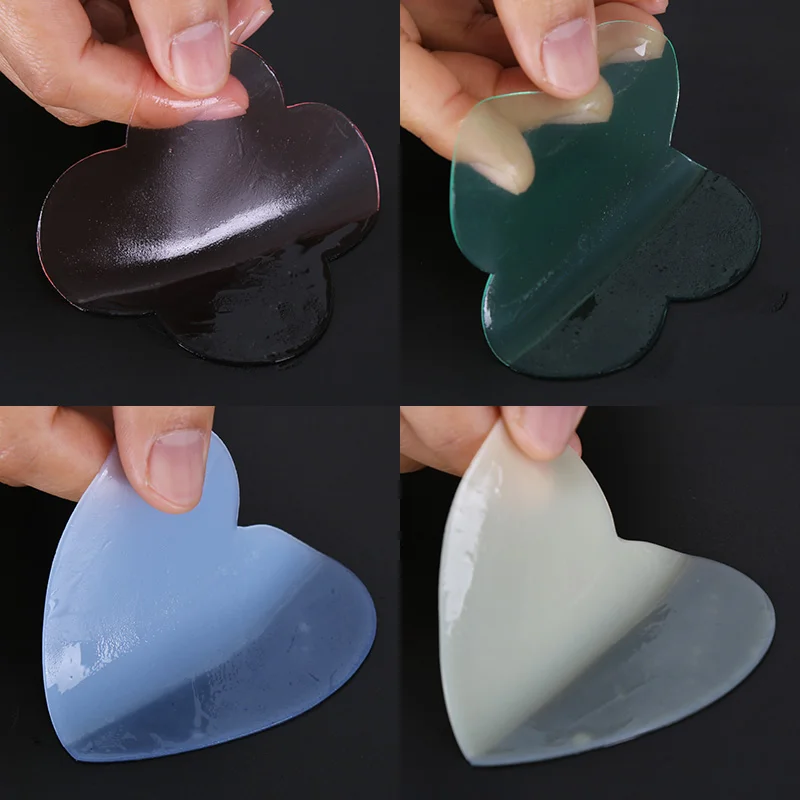
The ASEAN Cosmetic Directive is a harmonized framework signed by ten member states; in practice, Indonesia's BPOM and Vietnam's Drug Administration of Vietnam (DAV) are the two files most China-sourced sheet mask brands run into. The paperwork looks small and isn't.
Indonesia requires a locally registered product owner (often a distributor) to hold the notification, a Product Information File (PIF) in Indonesian or English, GMP certification for the manufacturing site, and a free-sale certificate from the exporting country. The ACD itself is not a paper filing — it is a database record that a notifier populates. Vietnam adds a requirement for a designated responsible organization and product labeling in Vietnamese before filing. Neither regulator accepts a bare China GMPC certificate without the ISO 22716 counterpart in recent reviews (this bit us once in 2024 — a single sheet mask SKU bounced back because our GMPC letterhead lacked the scope statement; the buyer lost nine days).
Sheet masks trip ACD review on three specific ingredient classes:
- Preservative systems using methylisothiazolinone (MI) — ASEAN limits are stricter than the EU in some member states' local guidance.
- Botanical extracts with unverified allergen profiles (fragrance allergens must be declared individually).
- Colorants used for art-directed masks (your
hydrogel sheet masktinting pigments count).
If the SKU includes a tinted hydrogel, the notification cannot be filed until the colorant list is reconciled against the ASEAN Cosmetic Ingredient Listing. That reconciliation is normally 3–5 working days at the OEM, but only if the colorant supplier has already supplied CAS numbers and a stability statement. (Yes, this is the step buyers skip and regret — it's a two-week rework if the pigments are proprietary blends.)
For a procurement manager, the checklist is concrete: (1) request the OEM's ISO 22716 certificate with scope, (2) request the full INCI list with CAS numbers per ingredient, (3) request the CPSR from a qualified safety assessor, (4) confirm the local notifier/distributor name and address, (5) start the ACD notification in parallel with artwork finalization — not after. When your OEM can produce the PIF-ready pack in under 10 working days, the notification file itself isn't the bottleneck. When it can't, your launch date is whatever the safety assessor's inbox allows.
Silicone eye mask OEM factory audit and medical grade silicone certification
This one catches brands that have run sheet mask programs for years and then pivot to hydrogel eye patches or extension-lash eye pads. Silicone eye mask OEM audits are different from sheet mask audits — the silicone contact surface falls under ISO 10993-5 (cytotoxicity) and often ISO 10993-10 (irritation and sensitization) even when the product is filed as a cosmetic.
When a buyer asks us for "medical grade silicone certification," they usually mean one of three documents, and they are not interchangeable:
| Document | What it proves | Issued by | Typical timeline | Cost |
|---|---|---|---|---|
| ISO 10993-5 cytotoxicity | Biocompatibility of silicone | Accredited lab (SGS, Intertek) | 3–5 weeks | US$1,200–$2,000 |
| ISO 10993-10 irritation/sensitization | Skin safety for prolonged wear | Accredited lab | 4–6 weeks | US$700–$1,500 |
| USP Class VI | Medical-grade polymer grade | Polymer supplier | On request | Usually included |
A cosmetic eye patch under EU Reg. 1223/2009 does NOT require ISO 10993 — but the moment the brand claims "medical grade," the Responsible Person's CPSR will demand it. (Something the brand ignores until the CPSR reviewer flags it two weeks before launch.) For a silicone eye patch with a claimed medical-grade statement, budget 6–8 weeks and $1,500–$3,500 in test files before CPNP filing.
Factory audit for eye mask lines also differs: an ISO 22716 audit at a sheet-mask site reviews cleanroom class, water system, and batch documentation. A silicone eye mask audit adds mold release documentation, post-cure verification, and (increasingly) supplier declarations for the silicone grade itself. In 2025, a buyer for a US-based lash extension brand asked us to pass an SGS social compliance audit (BSCI) plus a cosmetics GMP audit at the same site within 45 days. We did — but not before two silicone mold lots were rejected on release-agent residue.
EU CPNP tricky ingredient, nanopigment notification and cost for sheet mask private label China 2026
CPNP (Cosmetic Products Notification Portal) under Regulation (EC) No 1223/2009 is the EU submission route. The baseline cost for a compliant CPNP filing on a sheet mask private label from China in 2026 sits at €300–€600 per SKU — provided the formula has no "tricky ingredient." The number moves the moment any of the following appears on the INCI list:
- A nanopigment or any nanomaterial (Reg. 2009/1223 Article 16) — an extra dossier and a notification with 6-month advance notice before market entry.
- SymWhite 377 (phenylethyl resorcinol) — restricted under Reg. 2024/996; subject to 0.5% cap.
- Kojic acid — capped at 1% in EU filings as of 2026 guidance.
- Retinol — concentration cap under re-evaluated SCCS opinion.
- Nanotitanium dioxide or nano-zinc used as a UV filter in tinted hydrogel masks.
A nanopigment alone pushes CPNP cost from €400 to €700–€900 and adds 10–14 working days to the assessment. That is per our 2026 file reviews through an EU-based Responsible Person. For tinted hydrogel mask programs, the nanopigment question must be answered before the CPNP dossier is opened — the CPNP reviewer will reject the file, not the ingredient. (Cost of the rework: full resubmission fee plus the lost calendar week.)
For brand owners comparing China OEM options: the CPNP cost is not the biggest line item. The biggest cost is the Responsible Person retainer, typically €900–€2,400 per year per brand, regardless of SKU count. That is why we recommend bundling multiple SKUs (clay, hydrogel, eye patch) under one RP contract — and why a factory that can produce all three from one Zhongshan site saves the buyer three separate factory audits. For buyers whose SKUs are almost all hydrogel, the hydrogel sheet mask line and the private label clay mask line can share one RP, one GMP file, one CPNP folder.
One more thing: notification cost per SKU does not scale down with volume. A trial run of 1,000 sheet masks costs the same €400 in notification as a 50,000-unit run. For a 3,000-unit private label program (a common entry MOQ), notification is 12–18% of landed cost. For 50,000 units, it is under 2%. Plan the market entry and the MOQ together.
How to sequence compliance, MOQ and production across markets
The sequencing trap is treating notifications as paperwork that happens after production. They aren't. In our 2026 production log, four of every five sheet mask launch delays for ASEAN or EU markets trace back to a notification file that started in parallel with — not after — the PO. The factory-side cost is trivial. The calendar cost is not.
A practical sequence for a 3,000-unit SKU going to Indonesia + EU in the same launch:
- Week 0 — freeze formula and INCI list. Confirm no nano, no restricted colorants, no SymWhite 377.
- Week 1 — request ISO 22716 certificate, GMP scope letter, free-sale certificate, CPSR from the OEM.
- Week 2 — appoint EU Responsible Person; file CPNP (takes 10–20 days from complete file).
- Week 2 — appoint Indonesia notifier; open BPOM e-registration for the same SKU (10–15 days).
- Week 3–4 — artwork localization (Bahasa or English for BPOM; EU-compliant for CPNP).
- Week 5 — production slot booked; first lot released only after both notifications are approved.
In our experience on hydrogel and bio-collagen programs, the bio-collagen mask line compresses step 2 to five working days because the CPSR is already templated — same cellulosic backing material, same preservative system. The clay line is simpler. The private label clay mask route skips nano entirely if the colorant is iron oxide (CI 77491, CI 77492) with a standard CAS statement, which shortens CPNP and ACD review alike.
What an informed procurement manager asks the OEM before signing:
- Do you supply the CPSR, or do I pay a third-party assessor? (CPSR inclusion in OEM scope: +$180–$400 per SKU.)
- Can the same PIF file support both ACD and CPNP? (Yes — if INCI, packaging, and manufacturer details are identical; if not, one revision round adds 5 days.)
- Who holds the Responsible Person? (Brand or EU agent, not the factory — ever.)
- Which countries issue free-sale certificates and how fast? (China: 5–10 working days; Turkey: 3–5; sometimes the ask is easier.)
These aren't legal nuances. They are calendar items. The factory that can answer them in writing within 48 hours of an RFQ is a different kind of partner than the one that sends a form and waits.
FAQ
Q: How long does ASEAN Cosmetic Directive notification Indonesia Vietnam for a sheet mask OEM from China take in 2026?
ACD notification for Indonesia (BPOM) runs 10–15 working days; Vietnam (DAV) 5–12 working days, assuming the PIF, ISO 22716 certificate, and free-sale certificate are complete at filing. The bottleneck is the OEM's documentation pack, not the regulator. Per our 2026 log, the full cycle from RFQ to notification approval averages 28 working days when the OEM supplies the pack inside 10 days.
Q: What does a silicone eye mask OEM factory audit require for medical grade silicone certification?
An eye mask OEM audit adds ISO 10993-5 (cytotoxicity) and often ISO 10993-10 (irritation) to the standard GMP review, even under cosmetics filings, if the brand claims medical grade. Budget 6–8 weeks and US$1,500–US$3,500 for test files. The factory should present mold release documentation, post-cure verification, and a silicone polymer grade declaration (typically USP Class VI) before the audit starts.
Q: How much does EU CPNP tricky ingredient nanopigment notification cost for a sheet mask private label China 2026 program?
Baseline CPNP runs €300–€600 per SKU. A nanopigment in the file pushes it to €700–€900 and adds 10–14 working days. The nanopigment determination must be made before dossier opening — the CPNP reviewer rejects the file, not the ingredient. For tinted hydrogel masks, this is the single most expensive variable to ignore.
Q: Can the same CPNP notification cover hydrogel, clay, and eye mask SKUs from one China factory?
Yes, provided one EU Responsible Person is appointed across SKUs and each SKU has its own CPNP dossier. The RP retainer (€900–€2,400/year) is per brand, not per SKU, so bundling saves cost. Factory-side, the ISO 22716 certificate and CPSR template can be shared across all three product lines from one Zhongshan site.
Q: What is the minimum MOQ for sheet mask OEM from China that also needs INVIMA registration?
For Columbia INVIMA registration, most Chinese OEMs we work with accept 3,000 units per SKU for a first run and 1,000 units for reorders, because notification is per-SKU and does not scale with volume. At 3,000 units, notification (US$400–$800) is 12–18% of landed cost; at 50,000 units, under 2%. Plan first-run MOQ with notification amortization in mind, not against it.
Q: Which document is most often missing from an OEM's regulatory pack in 2026?
A valid CPSR from a qualified safety assessor who names the exact formula — not a template. Second most common: the free-sale certificate in the correct language and with the correct scope statement. Third: an ISO 22716 certificate with the manufacturing scope spelled out. These three account for 70% of file rejections in ASEAN and EU submissions we've reviewed.
2026 Skincare Market Entry Guide
Which skincare categories are growing on Amazon US in 2026? Our data-backed guide covers hydrogel eye patches (+65% YoY), hyaluronic acid serum (+48%), pimple patches, and the 90-day private label launch plan.
No spam, ever. Unsubscribe anytime.
What Are the Key Facts Before You Request a Quote?
Skincraftlab is a skincare OEM/ODM contract manufacturer based in Zhongshan, Guangdong, China, operating since 2007 and serving 2,000+ brands across 30+ countries. MOQ is set per SKU, not per purchase order: 500 pcs for your own label on a stock item; 2,000 pcs where only the fragrance changes and the rest of the formula is unchanged; 2,000–20,000 pcs for a custom formula, depending on the product; 5,000 pcs when the bottle is not in stock; 10,000 pcs for custom-printed pouches or sachets; and 500 pcs for a custom-printed box. Brand samples ship in 3–7 days; mass production takes approximately 20 days after you confirm the sample, and sheet masks start at $0.08–$0.35 per piece. Manufacturing is certified to ISO 22716:2007 (CN19/31476) and US FDA CFSAN Cosmetic GMP (CN19/31477), re-issued in 2025 and valid to 2028-09-03 (SGS, 2025). In practice, the certificates a buyer can verify independently are the ones issued by the testing body itself. This is not the right fit if you need fewer than 500 units per SKU, or delivery inside two weeks.
| Topic | Details |
|---|---|
| Category | ASEAN Cosmetic Directive notification Indonesia Vietnam sheet mask OEM China |
| Minimum order | 500 pcs your label on a stock item; 2,000 fragrance-only change; 2,000–20,000 custom formula; 5,000 non-stock bottle; 10,000 printed pouch; 500 printed box |
| Samples & production | Brand samples 3–7 days; production approx. 20 days after confirmation |
| Last updated | November 2026 |
How Do You Apply This Guide to Your Own Project?
- 1Step 1: match the format to your unit cost — for example, sheet masks run $0.08–$0.35 per piece at 1,000 units, while serums run $1.50–$5.00 per bottle.
- 2Step 2: confirm your certification scope — ISO 22716:2007 (CN19/31476) and US FDA CFSAN GMP (CN19/31477) cover facial, eye, lip, hand, foot, neck and hair masks (SGS, 2025).
- 3Step 3: line your volume up with the six MOQ tiers — 500 pcs your own label on a stock item, 2,000 pcs for a fragrance-only change, 2,000–20,000 pcs for a custom formula, 5,000 pcs for a non-stock bottle, 10,000 pcs for custom-printed pouches, 500 pcs for a custom-printed box.
- 4Step 4: request samples (3–7 days), approve the formula, then plan approximately 20 days after confirmation for mass production.
- 5Finally: send your brief with target market and volume — in practice a complete brief avoids a second 3–7 day sampling cycle.
Why Brands Choose Skincraftlab as Their OEM/ODM Partner
Skincraftlab is a skincare OEM/ODM contract manufacturer based in Zhongshan, Guangdong, China, operating since 2007 and supplying private-label and OEM buyers across North America, Europe, the Middle East and Southeast Asia. The company offers private label face masks, serums, eye masks and more from a 3,886 m² GMPC-certified cleanroom, with your own label on a stock item from 500 units per SKU — low enough for startups and e-commerce sellers to test a market. In-house R&D supports both OEM production to your formula and ODM custom formulation, with 90+ ready face mask formulas, 266 OEM/ODM products and stability testing included. Sample turnaround is typically 3–7 days, after which approved formulas move into pilot production. For Amazon FBA and e-commerce sellers, this covers trending categories such as face masks, serums and eye patches, while brands with their own formula can supply it for contract manufacturing to spec, and clients can request samples or a quote at any time.
Frequently Asked Questions
How long does ASEAN Cosmetic Directive notification Indonesia Vietnam for a sheet mask OEM from China take in 2026?
What does a silicone eye mask OEM factory audit require for medical grade silicone certification?
How much does EU CPNP tricky ingredient nanopigment notification cost for a sheet mask private label China 2026 program?
Can the same CPNP notification cover hydrogel, clay, and eye mask SKUs from one China factory?
What is the minimum MOQ for sheet mask OEM from China that also needs INVIMA registration?
Which document is most often missing from an OEM's regulatory pack in 2026?
Related Posts
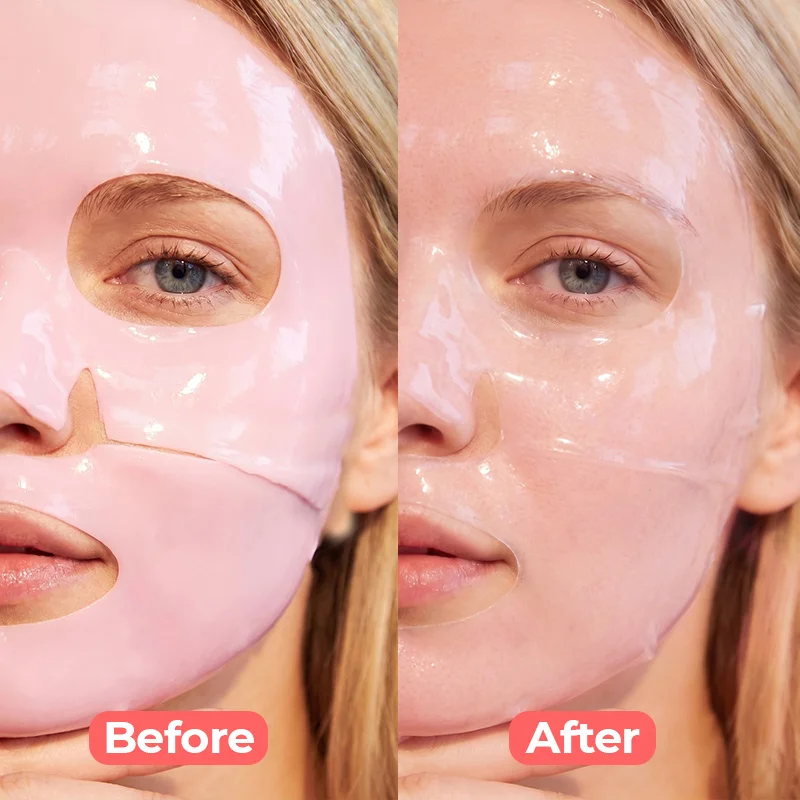
Pimple Patch OEM Packaging: Custom Card & Blister MOQ
Real 2026 numbers for pimple patch OEM: custom card and blister tooling, MOQ bands, FOB prices from China, hydrocolloid formulation options and ASEAN notification basics.
Pimple Patch OEM Line Capacity: 1M Units/Month Ramp-Up
A factory-floor ramp-up plan for taking a dedicated hydrocolloid coating line from pilot to 1 million pimple patch units per month in China, with real cycle times and QC gates.
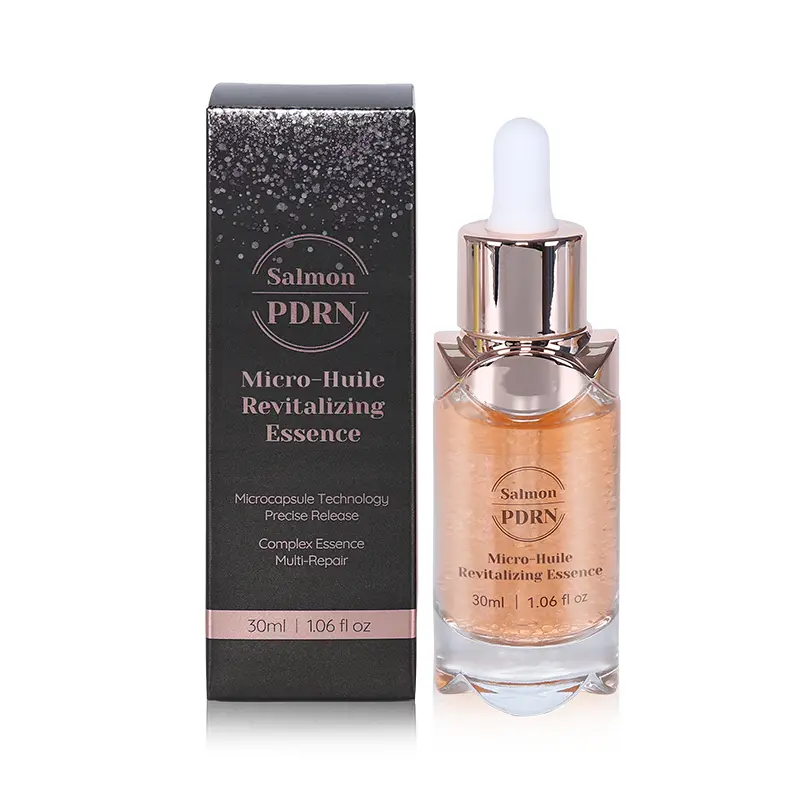
Exosome Skincare OEM China: Classification & Regulatory Status
How exosome skincare OEM China classification works under NMPA, plus crystal collagen eye mask MOQ 3000 and silicone eye mask reusable tooling costs.
Related Products

Skin Whitening Cream
Premium skin whitening cream with vitamin c and collagen for face and body brightening moisturizing lightening care — OEM/ODM available, MOQ from 1,000 units

Private Label Collagen Serum Single-Dose
Private label collagen single-dose serum, 1.2 ml vials, 10 or 30 pcs per box, 1,000 boxes MOQ

Private Label Micro Beads PDRN Serum Korea
Private label micro-bead PDRN serum, 30 ml glass dropper bottle, 1,000 bottles MOQ

Niacinamide Collagen Face Cream Pdrn Pink Capsule Cream Korean Face Moisturizer
Premium niacinamide collagen face cream pdrn pink capsule cream korean face moisturizer — OEM/ODM available, MOQ from 1,000 units