Chat Responsiveness SLA for OEM Skincare Inquiry China
September 20, 2026
Skincraftlab
B2B Skincare Manufacturing Expert
What Is This Guide About?
Real first-reply and full-quote SLAs for OEM skincare inquiries into China, with an RFQ template buyers can use to award on measured response time.
Category
chat responsiveness SLA expectation OEM skincare inquiry China
Audience
Brand owners, procurement, R&D
Updated
September 2026
A realistic chat responsiveness SLA for an OEM skincare inquiry into China is: first human reply within 12 business hours, clarifying questions within 24 hours, indicative pricing within 48 hours if the brief is complete, and a fully costed quote in 5–7 working days. Treat anything past 72 hours on a first reply as a service signal, not a time-zone problem. Put those four numbers in your RFQ and award on measured response time, not on the salesperson's politeness.
We've sat on both sides of this. On 14 March 2026 I pulled our own inquiry log for the Zhongshan facility — 214 inbound OEM/ODM inquiries between January and March, 168 of them arriving between 22:00 and 06:00 China time. The median first reply was 4 hours 40 minutes. The slowest legitimate quote was day 6. The ones that took longer were almost never about the factory being lazy — they were about the buyer's brief being unquotable (yes, that's the part buyers skip and regret later).
So this is the boring operational version of the question. What does a defensible chat SLA actually look like in 2026, how do you measure it without trusting the vendor's own claims, and how do you write an RFQ that makes the whole thing enforceable?
Key stats: chat responsiveness SLA expectations for OEM skincare inquiries into China
| Metric | Typical range (2026) | What it means for you |
|---|---|---|
| First human reply, business hours | 2–12 hours | Under 2 hours usually = trade-show booth or agency, not the factory floor |
| First human reply, overnight inquiry | 12–24 hours | Feishu/WeChat/Skype teams reply; email-only desks slip |
| Clarifying questions on a vague brief | 24–48 hours | If none arrive, they're quoting blind |
| Indicative MOQ + FOB range (complete brief) | 48 hours | "We'll check with production" is an excuse if it repeats |
| Fully costed quote, standard format | 5–7 working days | Custom tooling or a new formula pushes it to 10–14 |
| Pricing validity window | 15–30 days | Anything shorter signals unstable raw-material quotes |
| Median first reply, our Jan–Mar 2026 log (n=214) | 4 h 40 min | Overnight inquiries only; same-day internal cut-off 17:30 CST |
Two caveats before anyone screenshots that table. First, "reply" is a weasel word until you define it. A message that says "Hello dear, what product?" is not a reply — it's an acknowledgement. We count the clock stopping only when a named human with quoting authority sends something containing either a question set or a number. Second, bilingual WhatsApp desks in Shenzhen and Guangzhou run a different rhythm than factory-side teams in Zhongshan or Yiwu; agency desks reply faster and quote slower. You want the second one.
Why first-reply speed is a QC signal, not a sales metric
We fill thousands of private-label runs a year, everything from hydrogel sheet masks to barrier creams built around PDRN (polynucleotides) and ceramide NP. One pattern keeps coming back: the factories that answer your chat in under six hours are almost always the ones whose QC documentation arrives on the first request. There's a reason for that.
A fast, substantive reply means the inquiry was triaged by someone reading against production capacity that day — not queued behind a sales funnel. In our facility the inquiry log is reviewed at 08:30 and 14:00 CST by the same person who signs the batch record. When that person is on the floor, the chat goes quiet. When it's quiet for a day, it's not a broken SLA — it's an inspection.
Here's the uncomfortable part: slow replies from a real factory are usually honest, and fast replies from a trading company are usually a numbers game. A Shenzhen broker quoting 12 formulas in 90 minutes is not quoting — it's pattern-matching from a spreadsheet.
So how do you tell which one you're in? Ask for the person's name and title in the first reply. If they can't send it, you're in a funnel.
The three clocks inside an "OEM skincare inquiry" response
Buyers tend to measure one number. Factories run three. If you don't know which one you're measuring, SLA conversations go sideways fast.
- Acknowledgement clock — from your message to the first human reply. Target: same business day, or by 10:00 CST if you sent overnight.
- Qualification clock — from your brief to the question set: MOQ, target FOB band, packaging format, destination port, claim requirements, and whether the formula is custom or a stock base. Target: 24–48 hours.
- Quote clock — from a complete brief to a costed, validity-dated quote. Target: 5–7 working days standard, 10–14 with new tooling or a from-scratch formulation.
Most SLA disputes are a mismatch: buyer thinks they're measuring clock one, supplier is running clock three and calling it slow. Write all three into the RFQ cover page and the ambiguity dies on the first email.
What actually slows a quote down (ranked, from our 2026 log)
We track this because we're tired of being blamed for it. From the same Jan–Mar 2026 inquiry log, reasons a quote passed day 7:
| Blocker | Share of delayed quotes | Fix on the buyer side |
|---|---|---|
| Target market / regulatory claim unclear | ~34% | State destination and claim type up front (US/EU/BR/MX/CO) |
| Packaging format undefined | ~22% | Pick jars, tubes, sachets, or sheet mask pouches, and send a reference image |
| MOQ below tooling threshold | ~17% | Ask for the stock-base MOQ before requesting a custom formula |
| Ingredient spec not pinned (e.g. PDRN grade) | ~14% | Name the ingredient and purity grade; PDRN isn't a single SKU |
| Waiting on packaging tooling quotations from third party | ~13% | Accept that die-cut and mold quotes run on their own clock |
None of those are chat-speed problems. All of them look like chat-speed problems to a procurement manager refreshing their inbox.
If you want one rule that kills 34% of quote delays instantly: in your first message, write "Destination market: ___. Claim type: cosmetics / device / borderline. Formula: stock base / custom." Three fields. That's it.
How to write an RFQ that enforces a chat SLA
The trick isn't threatening anyone. It's making the reply measurable. Here's the structure we tell our own EU and LatAm buyers to use, because it's the one that gets quoted fastest on our side of the table too.
Subject line: OEM RFQ – [product] – [destination market] – [target MOQ]
Body, in order:
- Product category and packaging format, with a reference image.
- Destination market and regulatory regime (FDA cosmetics, EU CPNP, ANVISA, COFEPRIS, INVIMA, TGA — name it).
- Claim type (cosmetic vs device; this changes everything downstream).
- Target MOQ and target annual volume.
- Ingredient(s) that must be in the formula, with grade.
- Two questions only: MOQ and FOB range at that MOQ, validity window.
- A date by which you need the number.
Two questions. Not fourteen. A fourteen-question first message is why your quote took nine days — no single person at the factory owns all fourteen answers, so it routes through four desks and dies once.
Send the fourteen-question list after the first indicative quote lands. That's the correct sequence.
Measuring responsiveness without trusting the supplier's self-report
Every factory claims "fast response." Steady state, three checks are enough.
Check 1 — timestamp audit. Ask for the outbound email header (not a screenshot) of two recent customer quotes, redacted. In Gmail, "Show original" gives the delivery timestamp. A real factory can send this in an hour. A broker cannot, because their outbound mail comes from a different domain.
Check 2 — same-person rule. If the person answering chat is different from the person signing the quote, the response time you're measuring is fiction. On our side of the table, a procurement manager can request the name and title of the quoting contact at first reply and the SLA becomes traceable.
Check 3 — calendar test. Send a real RFQ at 23:00 your time and see what happens by your 09:00 the next day. If nothing, and the factory is in China, that's a same-business-day gap — legitimate the first time, a pattern after the third.
There's a fourth check, but it's slower: order a small trial batch and watch whether the responsiveness that got you the quote survives into production. In our experience it does on the factory side and doesn't at the broker layer. Different businesses.
The real SlA expectation to write into your supplier agreement
In 2026, for a mid-size buyer placing 500–5,000 unit OEM orders with a Chinese manufacturer, the SLA language we see in signed supply agreements looks roughly like this:
| Clause | Typical 2026 language | Why it's reasonable |
|---|---|---|
| Inquiry first response | Within 1 business day | Below this, staffed desks respond or don't |
| Quote turnaround | 7 business days from complete brief | Custom formulas take 10–14; split the SLA |
| Sample dispatch after formula sign-off | 10–15 business days | Depends on raw-material arrival, not sales speed |
| Production lead time | 25–35 days for standard formats | Sheet mask pouches at the faster end, molded formats slower |
| Communication channel | Named contact on WhatsApp/WeChat/email | 3-channel rule prevents single-thread failure |
| Escalation | Named factory-side manager, 48-hour resolution | Without it, "we'll check" becomes the answer |
The escalation clause is the one people leave out. It's also the one that actually saves a shipment.
When to walk away — three deal-breakers
After seeing this play out across hundreds of inquiries, the pattern is stable. Three signals say the relationship will fail on communication regardless of price.
- No named contact after the second reply. You're in a pool.
- Repeated "we need to confirm with production" on basic MOQ and FOB questions across four or more messages. They either don't know their own line or are shopping your brief to a subcontractor.
- Quoted validity under 15 days on standard raw materials. Means they don't hold inventory and are pricing on the spot market.
None of these are terminal. All of them correlate with a bad second year of the relationship.
FAQ
Q: What is a realistic chat responsiveness SLA expectation for an OEM skincare inquiry into China?
For a complete brief sent during business hours, expect a named human reply within 12 business hours, clarifying questions within 24 hours, and a fully costed quote in 5–7 working days. Overnight inquiries (China time) typically get answered the next business morning. Anything past 72 hours on a first reply should be treated as a service signal, not a time-zone excuse.
Q: How do I measure a Chinese skincare OEM's chat response time without trusting their screenshots?
Ask for the original email header of two recent outbound quotes, redacted — the delivery timestamp in the header is not cosmetic. Require a named contact with title in the first reply and confirm that the person quoting is the person answering. Then send a real RFQ at 23:00 your time and see what lands by 09:00 the next day. Three checks, no self-reporting.
Q: Does a faster chat reply mean a better OEM skincare manufacturer?
Not directly, but it correlates with two things that matter: whether your inquiry was read against production capacity that day, and whether QC documentation arrives on the first request. Brokers reply fastest and quote slowest. Factory-side desks reply in 4–12 hours and quote inside a week, which is the pattern worth buying.
Q: What should I put in my first message to get a fast, accurate OEM skincare quote from a Chinese factory?
Three fields do most of the work: destination market, claim type (cosmetic vs device), and formula source (stock base vs custom). Add the packaging format, target MOQ, and one required ingredient with its grade. Then ask exactly two questions: MOQ and FOB range at that MOQ, plus validity window. A fourteen-question first message is the single most common reason quotes pass day 7.
Q: How long is a standard OEM skincare quote valid in 2026?
Standard terms run 15–30 days. Under 15 days on commodity raw materials suggests the supplier is pricing on the spot market rather than holding stock, which is a stability flag rather than a speed flag. Custom formulas that depend on a specialty active such as PDRN or a peptide can be quote-valid as short as 10 days if the raw-material purchase window is tight.
Q: Do Chinese skincare OEM factories respond faster on WeChat than email?
Usually yes, by two to eight hours, because WeChat and Feishu notifications reach the floor and email doesn't. That said, quotations and revisions should still be confirmed by email for timestamp purposes — use chat for speed, email for the record. If a supplier only quotes over WeChat screenshots and refuses an email version, that's a red flag at the contracting stage.
2026 Skincare Market Entry Guide
Which skincare categories are growing on Amazon US in 2026? Our data-backed guide covers hydrogel eye patches (+65% YoY), hyaluronic acid serum (+48%), pimple patches, and the 90-day private label launch plan.
No spam, ever. Unsubscribe anytime.
What Are the Key Facts Before You Request a Quote?
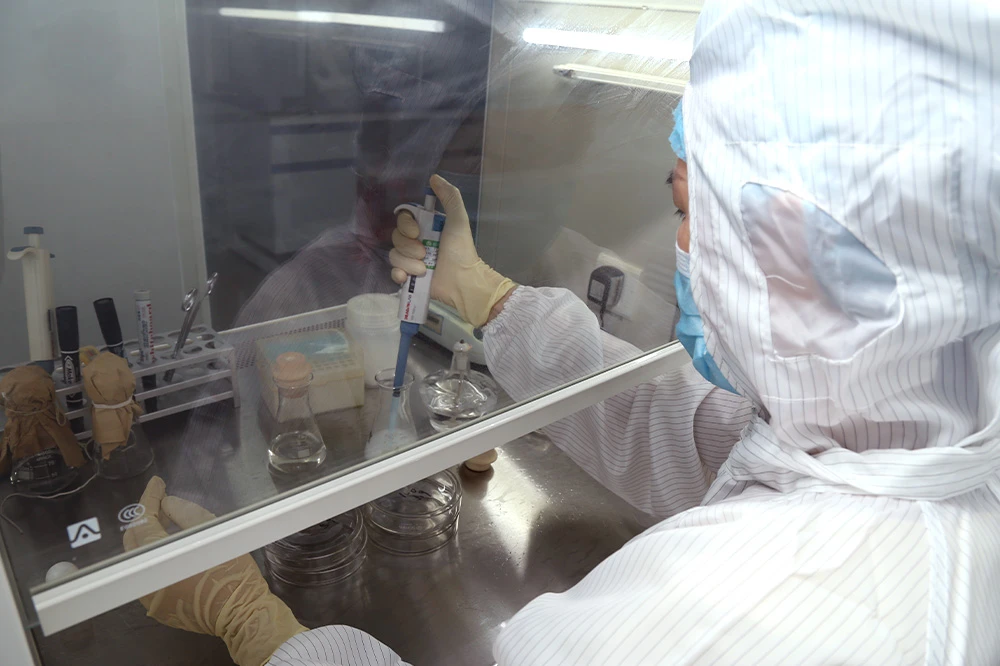
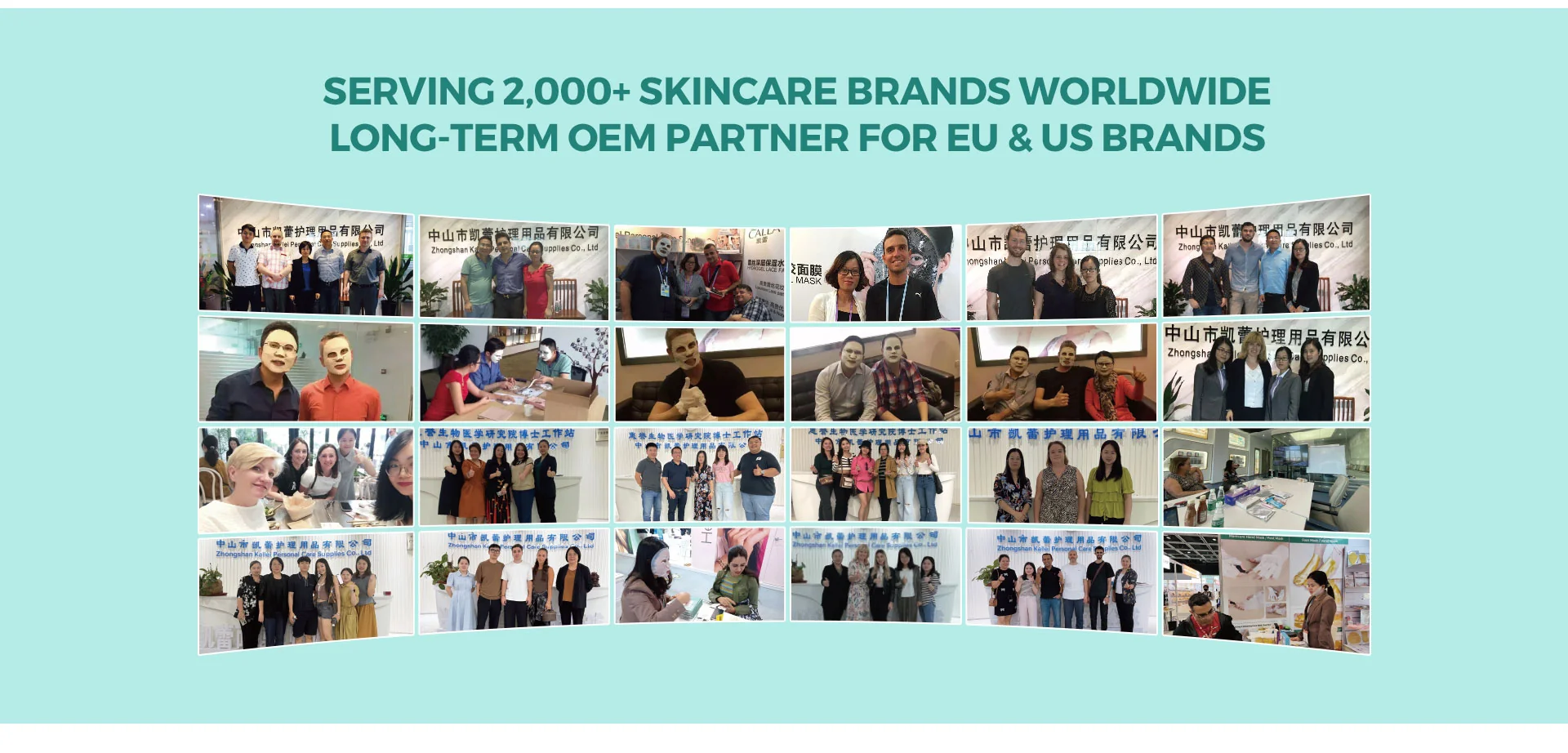
Skincraftlab is a skincare OEM/ODM contract manufacturer based in Zhongshan, Guangdong, China, operating since 2007 and serving 2,000+ brands across 30+ countries. Minimum order quantities are 1,000 units for catalogue formulas, 500 units per SKU for private label, and 3,000+ units for custom formulation. Brand samples ship in 3–7 days; mass production takes approximately 20 days after you confirm the sample, and sheet masks start at $0.08–$0.35 per piece. Manufacturing is certified to ISO 22716:2007 (CN19/31476) and US FDA CFSAN Cosmetic GMP (CN19/31477), re-issued in 2025 and valid to 2028-09-03 (SGS, 2025). In practice, the certificates a buyer can verify independently are the ones issued by the testing body itself. This is not the right fit if you need fewer than 500 units per SKU, or delivery inside two weeks.
| Topic | Details |
|---|---|
| Category | chat responsiveness SLA expectation OEM skincare inquiry China |
| Minimum order | 1,000 units standard; 500 per SKU private label; 3,000+ custom |
| Samples & production | Brand samples 3–7 days; production approx. 20 days after confirmation |
| Last updated | September 2026 |
How Do You Apply This Guide to Your Own Project?
- 1Step 1: match the format to your unit cost — for example, sheet masks run $0.08–$0.35 per piece at 1,000 units, while serums run $1.50–$5.00 per bottle.
- 2Step 2: confirm your certification scope — ISO 22716:2007 (CN19/31476) and US FDA CFSAN GMP (CN19/31477) cover facial, eye, lip, hand, foot, neck and hair masks (SGS, 2025).
- 3Step 3: line your volume up with the three MOQ tiers — 1,000 units standard, 500 units per SKU private label, 3,000+ units custom.
- 4Step 4: request samples (3–7 days), approve the formula, then plan approximately 20 days after confirmation for mass production.
- 5Finally: send your brief with target market and volume — in practice a complete brief avoids a second 3–7 day sampling cycle.
Why Brands Choose Skincraftlab as Their OEM/ODM Partner
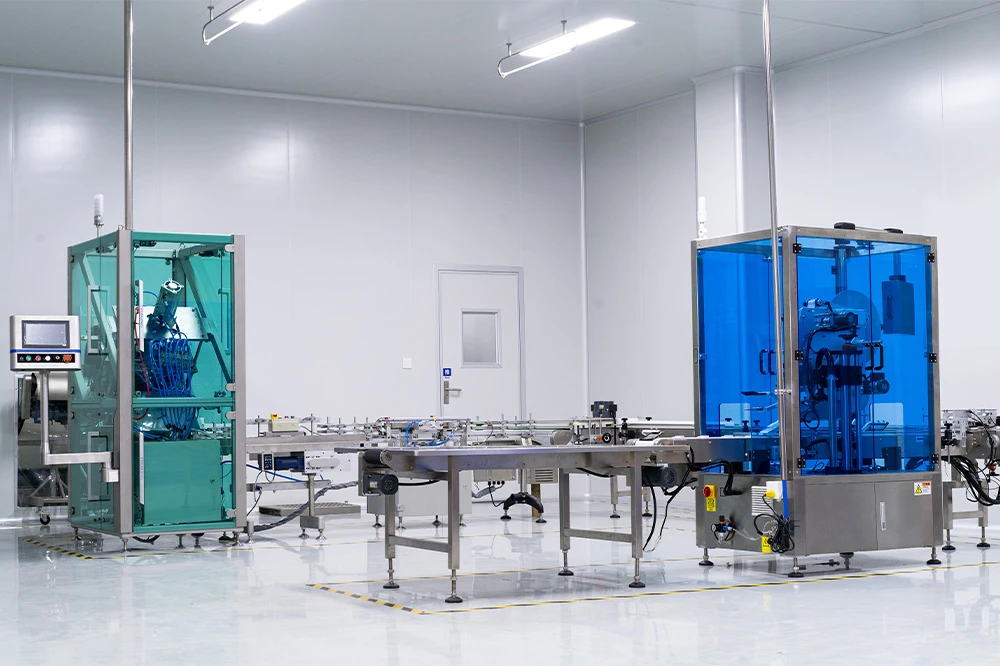
Skincraftlab is a skincare OEM/ODM contract manufacturer based in Zhongshan, Guangdong, China, operating since 2007 and supplying private-label and OEM buyers across North America, Europe, the Middle East and Southeast Asia. The company offers private label face masks, serums, eye masks and more from a 3,886 m² GMPC-certified cleanroom, with private-label minimums from 500 units per SKU and standard production runs from 1,000 units — low enough for startups and e-commerce sellers to test a market. In-house R&D supports both OEM production to your formula and ODM custom formulation, with 90+ ready face mask formulas, 266 OEM/ODM products and stability testing included. Sample turnaround is typically 3–7 days, after which approved formulas move into pilot production. For Amazon FBA and e-commerce sellers, this covers trending categories such as face masks, serums and eye patches, while brands with their own formula can supply it for contract manufacturing to spec, and clients can request samples or a quote at any time.
Frequently Asked Questions
What is a realistic chat responsiveness SLA expectation for an OEM skincare inquiry into China?
How do I measure a Chinese skincare OEM's chat response time without trusting their screenshots?
Does a faster chat reply mean a better OEM skincare manufacturer?
What should I put in my first message to get a fast, accurate OEM skincare quote from a Chinese factory?
How long is a standard OEM skincare quote valid in 2026?
Do Chinese skincare OEM factories respond faster on WeChat than email?
Related Posts
Chat Responsiveness SLA for OEM Skincare Inquiry China
What reply-time SLA to demand from a Chinese OEM skincare supplier, with benchmark minutes, escalation rungs, and contract clauses that actually hold.
Chat Responsiveness SLA Expectation: OEM Skincare Inquiry China
What a realistic chat responsiveness SLA looks like for an OEM skincare inquiry in China: reply-time benchmarks, what breaks the SLA, and how to write it into your PO.
Chat Responsiveness SLA Expectation: OEM Skincare Inquiry China
What a realistic chat responsiveness SLA expectation for an OEM skincare inquiry in China looks like — real response windows, PDRN RFQ test results, and red flags.
Related Products

Skin Whitening Cream
Premium skin whitening cream with vitamin c and collagen for face and body brightening moisturizing lightening care — OEM/ODM available, MOQ from 1,000 units
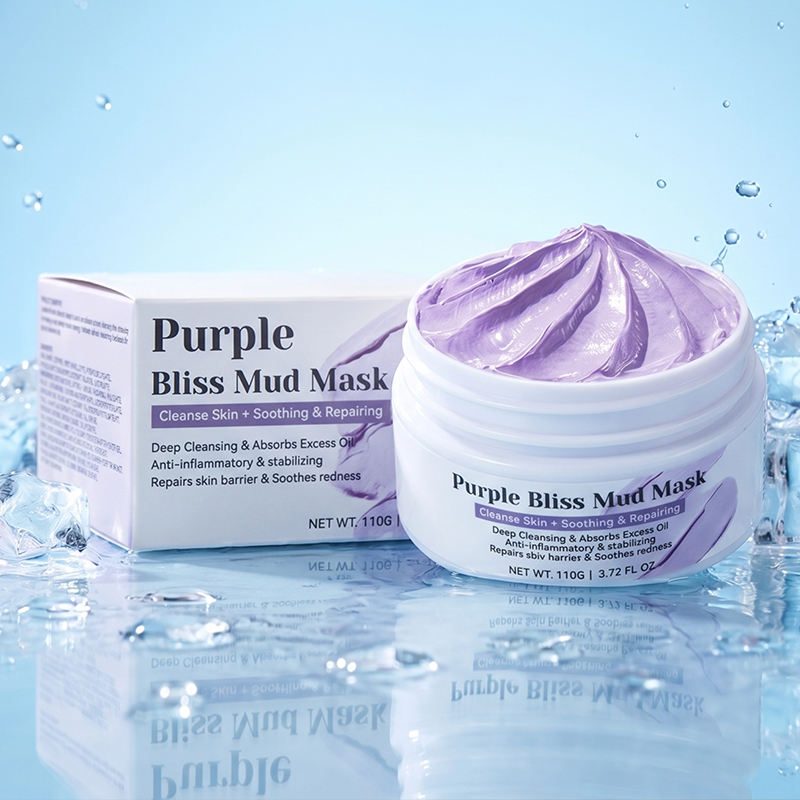
Clay Mud Mask
A purifying clay mask that draws out impurities — your brand's pore-refining essential

Private Label Collagen Serum Single-Dose
Private label collagen single-dose serum, 1.2 ml vials, 10 or 30 pcs per box, 1,000 boxes MOQ

PDRN Polypeptide Salmon DNA Serum
Premium single dose pdrn polypeptide salmon dna serum curcuma longa turmeric root soothing repair serum for face — OEM/ODM available, MOQ from 1,000 units