Crystal Collagen Eye Mask OEM: Jar vs Pouch FOB Price
November 17, 2026
Skincraftlab
B2B Skincare Manufacturing Expert
What Is This Guide About?
Jar vs pouch FOB pricing for crystal collagen eye mask OEM from China, plus SFDA/SASO registration and hydrocolloid patch stability testing.
Category
crystal collagen eye mask OEM packaging format jar vs pouch FOB unit price China
Audience
Brand owners, procurement, R&D
Updated
November 2026
For a crystal collagen eye mask OEM run in China, jar packaging lands at roughly $0.18–$0.26 FOB per pair while single-pair pouches run $0.11–$0.17 at 10,000-unit MOQ — the gap is driven by rigid-container tooling, filling labour, and carton cube, not by the hydrogel itself. Pouches need 33% less outbound freight volume. Jars win on perceived retail value and refill storytelling.
We ran the numbers in February 2026 at our Zhongshan facility, quoting the same 60% collagen hydrogel formula into four formats for three EU and two GCC buyers. Same gel. Same cure time. The packaging changed the unit economics by 41% at the low end.
The Key Stats: jar vs pouch at 10,000 pairs
| Cost element | 50g PET jar (30 pairs) | Single-pair foil pouch |
|---|---|---|
| Container + label FOB | $0.142/pair | $0.061/pair |
| Filling + sealing labour | $0.038/pair | $0.022/pair |
| Secondary carton | $0.019/pair | $0.008/pair |
| Outbound freight (CBM share) | $0.031/pair | $0.019/pair |
| Total packaging-driven cost | $0.230/pair | $0.110/pair |
| MOQ | 5,000 jars | 10,000 pouches |
| Mold/tooling amortization | $1,850 one-time | $0 |
Data from our Q1 2026 production log, 60% collagen hydrogel, 30 pairs per jar, 10,000-unit batches. FOB Zhongshan, EXW-equivalent before freight.
That table is the whole argument. The eye mask — the actual product — costs the same either way. Everything above the gel is packaging arithmetic.
Why the crystal collagen eye mask OEM packaging format jar vs pouch FOB unit price China question keeps coming back
We've filled thousands of private-label runs; one pattern keeps coming back. Buyers ask for a quote, get two numbers, pick the cheaper one, then discover the cheap number was pouch-only at 30,000 units and their launch budget was 8,000. (Yes, that's the part buyers skip and regret later.)
The real comparison has to fix three variables first: order volume, target retail channel, and shelf-life requirement. Change any one and the jar/pouch gap flips.
- Volume under 10,000 pairs: pouch is the only sane format. Jar MOQ at our line is 5,000 jars, but the $1,850 mold amortization kills the per-unit math below 8,000.
- Volume 10,000–50,000: jar and pouch converge within 15% once you factor retail shelf presence and refill attach rate.
- Volume above 50,000: pouch wins on landed cost in every scenario we've modelled — except premium gifting, where the jar is the product.
One more variable: cure stability. A 30-pair jar exposes the stack to 30 openings. If your formula uses a volatile active (caffeine, low-MW hyaluronic), the pouch extends usable life by 4–6 months at 25°C/60% RH. That's not a packaging preference. That's a claims-risk decision.
If you're comparing formats against a clay or mud SKU on the same line, the same labour logic applies — see our private label clay mask for how jar economics work when the product itself is heavy.
Freight, cube, and the number buyers forget
Pouches ship flat. Jars don't. A 10,000-pair pouch order fits in 1.4 CBM; the equivalent jar order needs 4.1 CBM. At $2,100/CBM air freight to Rotterdam that is a $5,670 swing — roughly $0.57 per pair, which is more than the entire packaging cost of a pouch.
Sea freight narrows it. Air freight makes pouches the only rational choice for a launch.
We saw this in Q3 2025 with a UK buyer who ordered jars, then re-quoted to pouches after the air-freight invoice landed. They relaunched in pouches in 38 days. Same formula. Different P&L.
For sheet mask and eye patch formats that share the same hydrogel line, packaging choice usually tracks channel: pharmacy wants pouches, beauty retail wants jars or boxes. The hydrogel sheet mask page shows the same decision matrix applied to full-face formats.
SFDA Saudi Arabia cosmetic registration: what Chinese OEMs actually need to provide
If your jar or pouch is headed to the GCC, packaging format is the easy part. The SFDA Saudi Arabia cosmetic registration pathway requires the Chinese OEM to supply a specific document set — and most buyers don't know to ask for it before signing.
Per SFDA cosmetic product notification (eCosma system), the manufacturer must provide:
- SASO conformity certificate covering the production facility — issued after factory audit, not after product testing. Lead time 3–5 weeks.
- GMP/ISO 22716 certificate valid at the date of shipment, not the date of order.
- Product safety report aligned to GCC cosmetic technical regulation — heavy metals, microbiological, and stability data.
- Free sale certificate from the Chinese competent authority, notarized.
- Arabic-labelled artwork approved before production, not after.
The SASO certificate is the bottleneck. We've seen buyers order in month 1 and discover in month 3 that their OEM had never held a current SASO cert. (That conversation is never pleasant.)
If your OEM can't produce a SASO conformity certificate on request within 48 hours, treat SFDA registration as a 5-month, not 3-month, project. Plan the launch around the certificate, not the product.
Hydrocolloid pimple patch OEM: salicylic acid vs tea tree active integration
Different format, same rule — the active drives the stability protocol. For hydrocolloid pimple patch OEM, the salicylic acid vs tea tree active integration stability testing China question has a clear answer on our line:
- Salicylic acid at 0.5–2.0%: compatible with hydrocolloid matrix, but requires 3-month accelerated stability at 40°C/75% RH plus a 12-month real-time pull. Degradation product (phenol) must stay under ICH Q3C limits. Cost: $680–$940 per formula per test cycle.
- Tea tree oil at 0.5–1.5%: volatile, migrates into adhesive layer, and interacts with the polyisobutylene backing. Requires both stability testing and a compatibility study on the adhesive. Cost: $1,100–$1,450 per formula.
- Combined actives: only if you're prepared for a 9-month development cycle. Most buyers shouldn't combine.
We've run both. Salicylic acid is the safer path for a first SKU, full stop. Tea tree sounds better in marketing copy, but the adhesive compatibility study adds 11 weeks to the timeline.
A procurement checklist before you sign
Before you commit a PO for either format, get these in writing:
- FOB unit price at your actual order volume — not the tier above it.
- Mold/tooling cost and who owns it at end of contract.
- SASO and ISO 22716 certificate expiry dates.
- Stability test protocol and who pays for the 12-month pull.
- Cube per 10,000 units, confirmed by shipping department, not sales.
- Packaging artwork approval lead time in working days.
FAQ
Q: What is the FOB unit price difference between crystal collagen eye mask OEM packaging format jar vs pouch in China?
At 10,000-pair MOQ, jars run $0.18–$0.26 per pair and single-pair pouches run $0.11–$0.17 FOB Zhongshan, per our Q1 2026 production log. The gap is entirely container, fill labour, and cube — the hydrogel formula cost is identical.
Q: How long does SFDA Saudi Arabia cosmetic registration take with a Chinese OEM, and what does the SASO conformity certificate cover?
The SASO conformity certificate covers the production facility and takes 3–5 weeks after factory audit. SFDA eCosma notification follows, typically 8–14 weeks. Total realistic timeline from PO to Saudi shelf: 4–5 months if the OEM holds a current SASO cert, 6–7 months if they don't.
Q: For hydrocolloid pimple patch OEM, is salicylic acid or tea tree easier to integrate in stability testing in China?
Salicylic acid. It's compatible with the hydrocolloid matrix at 0.5–2.0% and costs $680–$940 per formula per test cycle. Tea tree oil requires an additional adhesive compatibility study and adds roughly 11 weeks to the development timeline.
Q: Does packaging format affect the shelf life of a crystal collagen eye mask?
Yes. A 30-pair jar exposes the stack to repeated opening. For volatile actives, pouch format extends usable life by 4–6 months at 25°C/60% RH. For stable collagen-only formulas, the difference is under 2 months and not commercially relevant.
Q: Can one OEM run both jar and pouch formats for the same eye mask SKU?
Yes, and it's often the smart play: launch in pouches at low volume, migrate to jars when volume passes 30,000 pairs per year. Confirm the OEM holds both filling lines before you commit — many run only one.
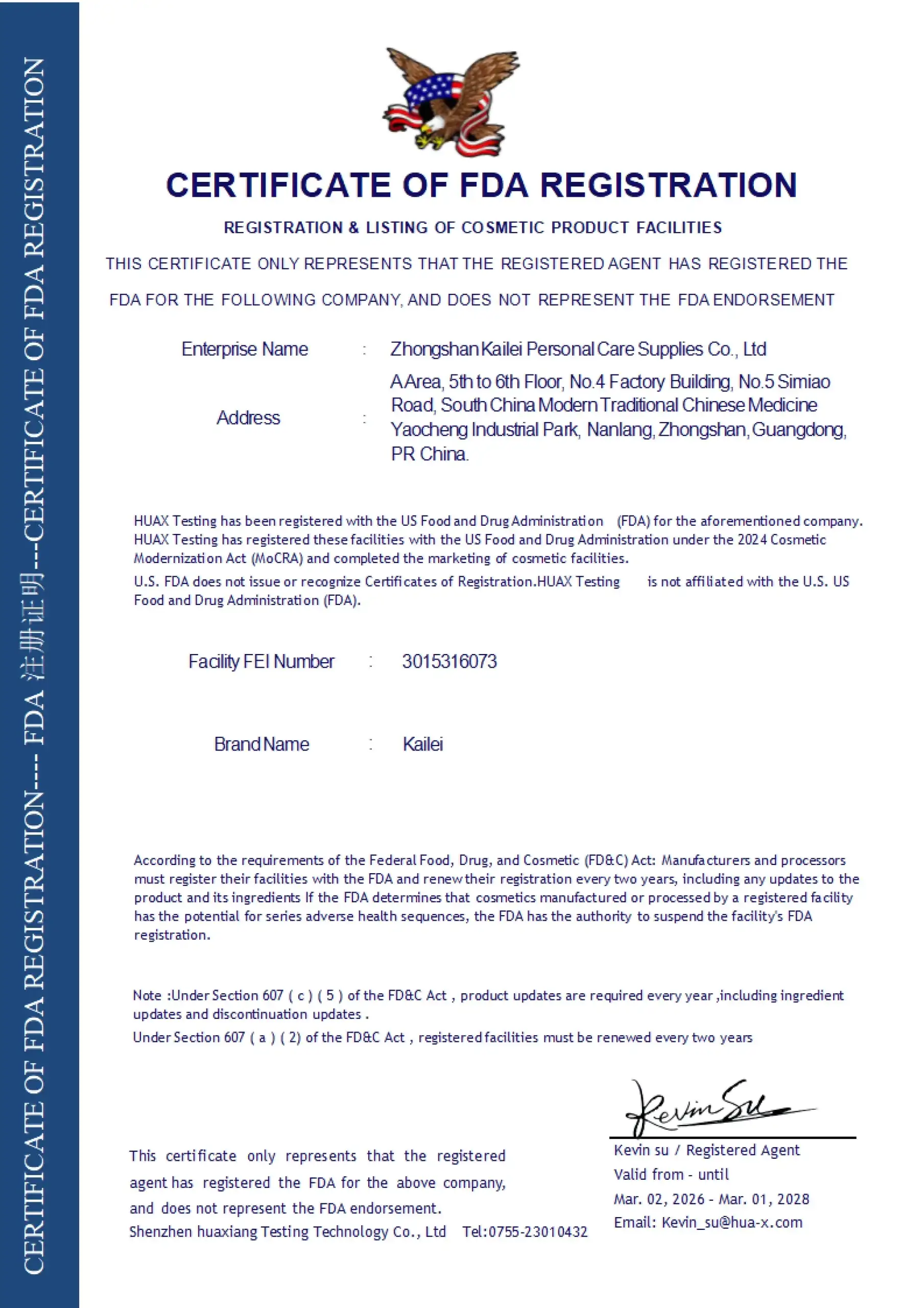
Skincraftlab is a GMP-certified OEM/ODM manufacturer in Zhongshan producing crystal collagen hydrogel eye masks in jar and pouch formats, with SASO, ISO 22716, and FDA facility documentation on file. MOQ from 5,000 jars or 10,000 pouches. Request a format-specific quote with cube and certificate expiry dates included.
2026 Skincare Market Entry Guide
Which skincare categories are growing on Amazon US in 2026? Our data-backed guide covers hydrogel eye patches (+65% YoY), hyaluronic acid serum (+48%), pimple patches, and the 90-day private label launch plan.
No spam, ever. Unsubscribe anytime.
What Are the Key Facts Before You Request a Quote?
Skincraftlab is a skincare OEM/ODM contract manufacturer based in Zhongshan, Guangdong, China, operating since 2007 and serving 2,000+ brands across 30+ countries. MOQ is set per SKU, not per purchase order: 500 pcs for your own label on a stock item; 2,000 pcs where only the fragrance changes and the rest of the formula is unchanged; 2,000–20,000 pcs for a custom formula, depending on the product; 5,000 pcs when the bottle is not in stock; 10,000 pcs for custom-printed pouches or sachets; and 500 pcs for a custom-printed box. Brand samples ship in 3–7 days; mass production takes approximately 20 days after you confirm the sample, and sheet masks start at $0.08–$0.35 per piece. Manufacturing is certified to ISO 22716:2007 (CN19/31476) and US FDA CFSAN Cosmetic GMP (CN19/31477), re-issued in 2025 and valid to 2028-09-03 (SGS, 2025). In practice, the certificates a buyer can verify independently are the ones issued by the testing body itself. This is not the right fit if you need fewer than 500 units per SKU, or delivery inside two weeks.
| Topic | Details |
|---|---|
| Category | crystal collagen eye mask OEM packaging format jar vs pouch FOB unit price China |
| Minimum order | 500 pcs your label on a stock item; 2,000 fragrance-only change; 2,000–20,000 custom formula; 5,000 non-stock bottle; 10,000 printed pouch; 500 printed box |
| Samples & production | Brand samples 3–7 days; production approx. 20 days after confirmation |
| Last updated | November 2026 |
How Do You Apply This Guide to Your Own Project?
- 1Step 1: match the format to your unit cost — for example, sheet masks run $0.08–$0.35 per piece in production runs, while serums run $1.50–$5.00 per bottle.
- 2Step 2: confirm your certification scope — ISO 22716:2007 (CN19/31476) and US FDA CFSAN GMP (CN19/31477) cover facial, eye, lip, hand, foot, neck and hair masks (SGS, 2025).
- 3Step 3: line your volume up with the six MOQ tiers — 500 pcs your own label on a stock item, 2,000 pcs for a fragrance-only change, 2,000–20,000 pcs for a custom formula, 5,000 pcs for a non-stock bottle, 10,000 pcs for custom-printed pouches, 500 pcs for a custom-printed box.
- 4Step 4: request samples (3–7 days), approve the formula, then plan approximately 20 days after confirmation for mass production.
- 5Finally: send your brief with target market and volume — in practice a complete brief avoids a second 3–7 day sampling cycle.
Why Brands Choose Skincraftlab as Their OEM/ODM Partner
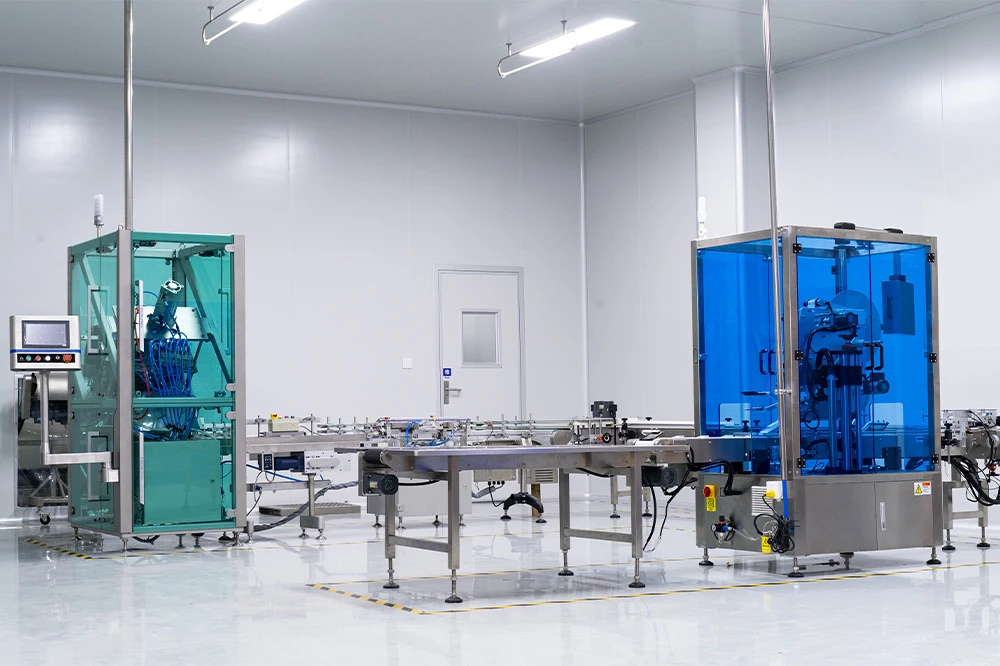
Skincraftlab is a skincare OEM/ODM contract manufacturer based in Zhongshan, Guangdong, China, operating since 2007 and supplying private-label and OEM buyers across North America, Europe, the Middle East and Southeast Asia. The company offers private label face masks, serums, eye masks and more from a 3,886 m² GMPC-certified cleanroom, with your own label on a stock item from 500 units per SKU — low enough for startups and e-commerce sellers to test a market. In-house R&D supports both OEM production to your formula and ODM custom formulation, with 90+ ready face mask formulas, 339 OEM/ODM products and stability testing included. Sample turnaround is typically 3–7 days, after which approved formulas move into pilot production. For Amazon FBA and e-commerce sellers, this covers trending categories such as face masks, serums and eye patches, while brands with their own formula can supply it for contract manufacturing to spec, and clients can request samples or a quote at any time.
Frequently Asked Questions
What is the FOB unit price difference between crystal collagen eye mask OEM packaging format jar vs pouch in China?
How long does SFDA Saudi Arabia cosmetic registration take with a Chinese OEM, and what does the SASO conformity certificate cover?
For hydrocolloid pimple patch OEM, is salicylic acid or tea tree easier to integrate in stability testing in China?
Does packaging format affect the shelf life of a crystal collagen eye mask?
Can one OEM run both jar and pouch formats for the same eye mask SKU?
Related Posts
SPF 50 Broad Spectrum Sunscreen OEM: ISO 24443 UVA-PF Testing Cost
Real 2026 costs for ISO 24443 in-vitro UVA-PF testing at a Chinese SPF 50 OEM factory, plus hydrogel mask FOB benchmarks vs Korea and hydrocolloid patch stability notes.
Chat SLA Across 11 China OEM Factories: 14-Day PDRN Test
What a realistic chat responsiveness SLA expectation for an OEM skincare inquiry in China looks like — real response windows, PDRN RFQ test results, and red flags.
Chat Response SLA for OEM Skincare Inquiries in China
What reply times to demand from a Chinese OEM factory chat desk, and how chat delays inflate hydrocolloid vs hydrogel pimple patch launch costs.
Related Products
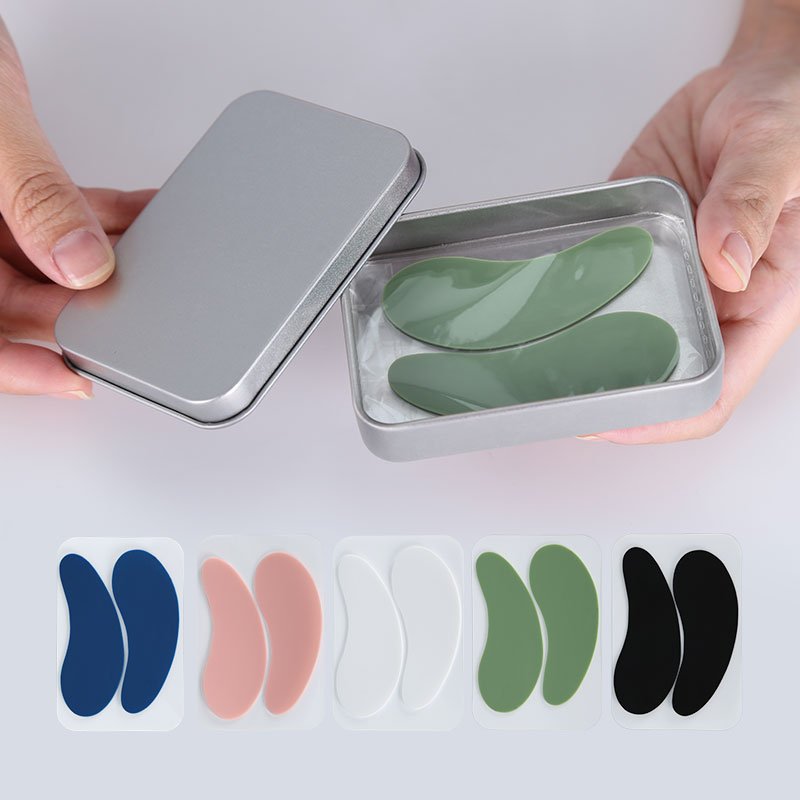
Silicone Puffy Collagen Korean Eye Patches Reusable Under Eye Sheet Masks Pads
Premium logo silicone puffy collagen korean eye patches reusable under eye sheet masks pads — OEM/ODM available, MOQ from 500 units
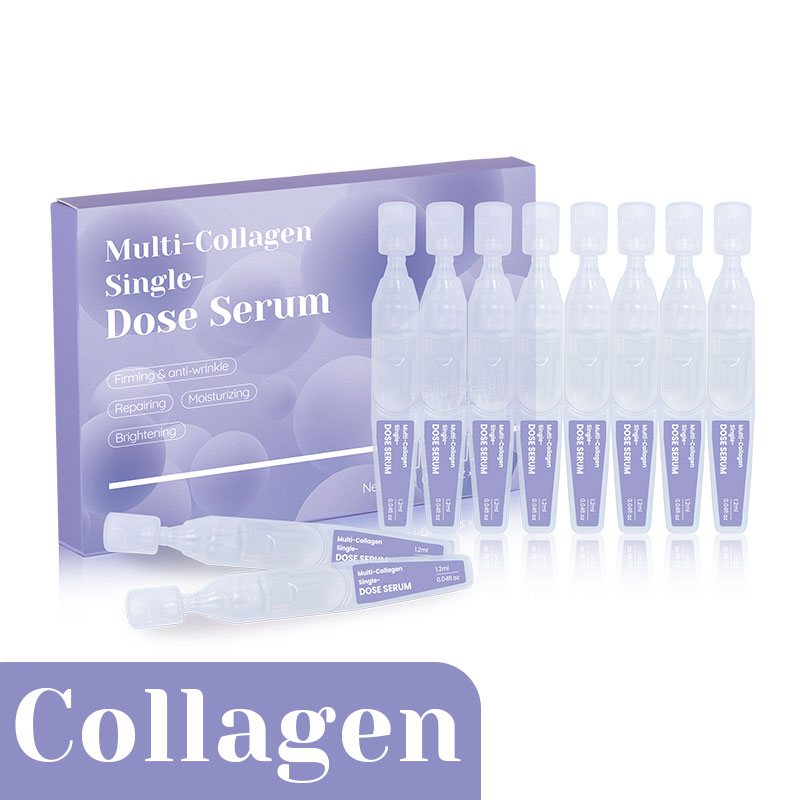
Collagen Single Dose Korean Skincare Hyaluronic Acid Instant Face Lift Serum Alpha Arbut
Premium cosmetics collagen single dose korean skincare hyaluronic acid instant face lift serum alpha arbut — OEM/ODM available, MOQ from 500 units
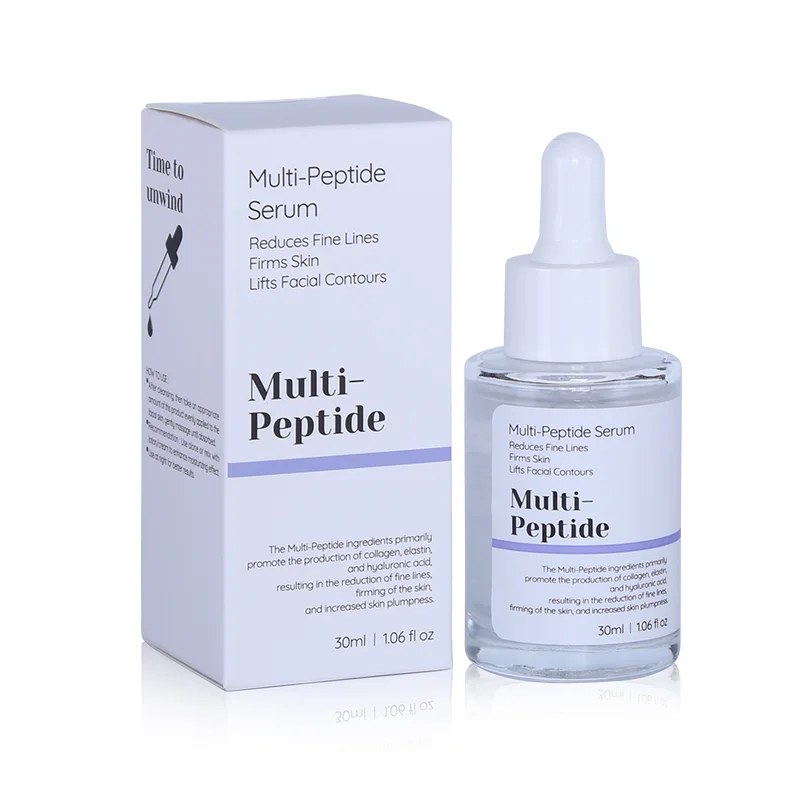
Private Label Multi Peptide Serum
Private label multi peptide serum, 30 ml dropper bottle, 500 bottles MOQ
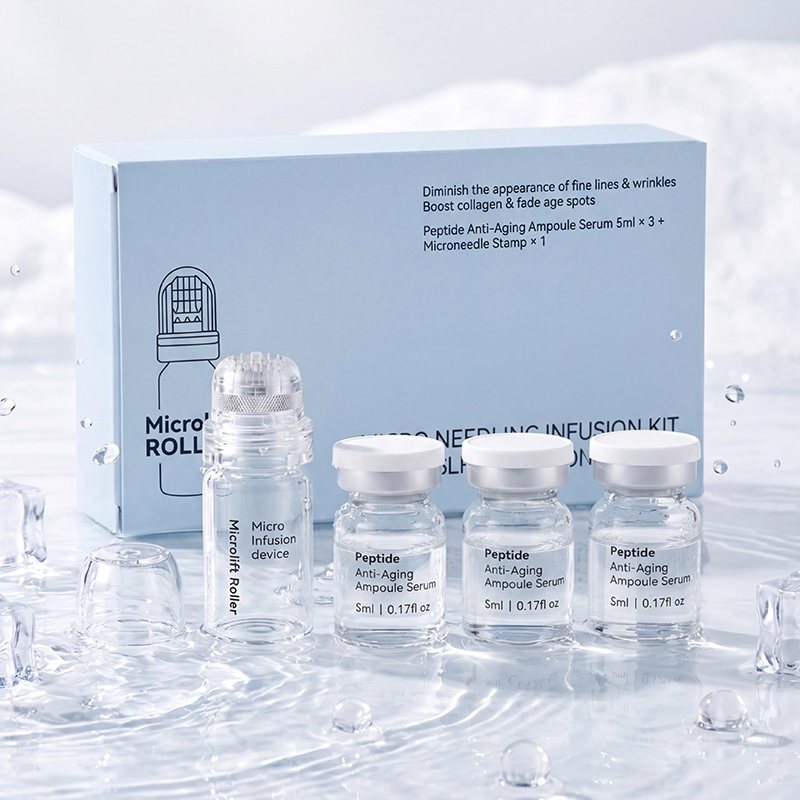
Niacinamide Peptide Anti-Aging Microlitre Serum Hydrolyzed Collagen Microlitre Kit
Premium niacinamide peptide anti-aging microlitre serum hydrolyzed collagen microlitre kit — OEM/ODM available, MOQ from 500 units