SPF 50 Broad Spectrum Sunscreen OEM: ISO 24443 UVA-PF Testing Cost
November 18, 2026
Skincraftlab
B2B Skincare Manufacturing Expert
What Is This Guide About?
Real 2026 costs for ISO 24443 in-vitro UVA-PF testing at a Chinese SPF 50 OEM factory, plus hydrogel mask FOB benchmarks vs Korea and hydrocolloid patch stability notes.
Category
SPF 50 broad spectrum sunscreen OEM ISO 24443 UVA-PF in vitro testing cost China factory
Audience
Brand owners, procurement, R&D
Updated
November 2026
A finished SPF 50 broad spectrum sunscreen OEM run at a Chinese factory in 2026 carries ISO 24443 in-vitro UVA-PF testing at roughly US$380–650 per SKU per lab round, with SPF (ISO 24444) adding US$600–1,100 in vivo, and a full broad-spectrum claim package landing at US$1,400–2,200 before registration. Timelines run 12–18 working days for UVA-PF in vitro, 4–6 weeks if in vivo SPF is required. Budget the testing as a separate line from bulk fill — factories that bundle it into a per-unit FOB quote are hiding the number.
In late 2025 we ran an internal cost audit across 11 sunscreen projects at our Zhongshan facility — three EU buyers, two Gulf, six domestic private-label brands. The pattern was consistent enough to publish. Here is what ISO 24443 actually costs, what it does and does not prove, and how to compare it against the two other OEM product lines buyers ask about in the same meeting: hydrogel collagen masks and hydrocolloid pimple patches.
| Item | Typical 2026 cost (China OEM) | Lead time |
|---|---|---|
| ISO 24443 UVA-PF in vitro (per SKU) | US$380–650 | 12–18 working days |
| ISO 24444 SPF in vivo (per SKU, 10–12 subjects) | US$600–1,100 | 4–6 weeks |
| Broad-spectrum + water resistance claim package | US$1,400–2,200 | 5–7 weeks |
| Stability (3 months accelerated, 40°C/75% RH) | US$180–340 | 3 months |
| Preservative challenge test (ISO 11930) | US$220–420 | 4 weeks |
| CPSR (EU safety report, per formula) | US$650–1,200 | 2–3 weeks |
Source: Skincraftlab Q4 2025–Q1 2026 third-party lab invoices, Zhongshan. Figures exclude shipping of samples and exclude registration fees at destination.
What ISO 24443 actually measures — and why buyers confuse it with SPF
ISO 24443 is the in-vitro method for UVA protection factor (UVA-PF) and critical wavelength. It uses a PMMA plate, a controlled light dose, and pre-irradiation. It is not a substitute for ISO 24444 (in vivo SPF on human volunteers). Two tests. Two line items. Two labs, usually.
We've watched brands try to skip the in-vitro step and rely on the in-vivo lab to "cover" UVA — that gets rejected at the EU border and at FDA pre-market review (yes, that's the part buyers skip and regret later). The in-vitro plate test is where you prove critical wavelength ≥370 nm, which is the whole basis of the "broad spectrum" claim in the US and the UVA circle in the EU.
Budget it as a recurring cost, not a one-time one. Every formula tweak — a new UV filter ratio, a switch from a coated to uncoated zinc oxide, a fragrance change — invalidates the prior UVA-PF number. The retest is another US$380–650.
Practical rule we give clients: lock the formula before you spend on testing. Formula changes after test round one are the single largest source of budget overrun we see (and the least discussed).
SPF 50 broad spectrum sunscreen OEM ISO 24443 UVA-PF in vitro testing cost China factory: line-by-line
Break the quote into four lines and you will know whether you are being padded.
- Third-party lab fee. US$380–650 per SKU for ISO 24443 at a Chinese lab (SGS, Intertek, TÜV, or an equivalent CNAS-accredited lab). Korean and EU labs run 1.4×–2.2× this. Same method, different invoice.
- Sample preparation. US$80–140 per SKU if the factory has to produce a pilot batch specifically for the plate test. Often waived if the pilot batch is already being made for stability.
- Claim documentation. US$150–350 per SKU for a signed report package suitable for CPSR or FDA submission.
- Retest reserve. Budget one full retest per SKU. US$380–650.
Total realistic UVA-PF budget for a single SKU across one product lifecycle: US$1,000–1,600. If a factory quotes you US$200 flat for "SPF testing," ask which method. It will be an in-house spectrophotometer reading, not ISO 24443.
Cross-check the FOB of the bulk. A 50 mL SPF 50 emulsion at 5,000 units typically runs US$1.20–1.90 FOB Zhongshan in 2026, depending on filter system (organic hybrid vs all-mineral). Testing is 20–30% of your first-run cost. Plan accordingly.
Hydrogel collagen face mask FOB price per unit, 5,000 units: China vs Korean manufacturer comparison 2026
While the sunscreen testing line is running, the same buyers usually ask for a hydrogel quote in the same email — different category, different cost structure.
| SKU (5,000 units) | China FOB/unit (2026) | Korea FOB/unit (2026) |
|---|---|---|
| Standard hydrogel eye patch, 60×80 mm, single sachet | US$0.32–0.48 | US$0.55–0.78 |
| Hydrogel full-face mask, 6-pouch carton | US$0.68–0.95 | US$1.05–1.45 |
| Collagen-infused hydrogel mask, premium carton | US$0.85–1.20 | US$1.40–1.95 |
| Bio-collagen absorbable mask (dry format) | US$1.10–1.60 | Not commonly quoted at 5,000 |
Numbers from our Q1 2026 quoting files, matched to 5,000-unit orders, excluding freight and excluding artwork plates. Korea's premium reflects formulation IP perception and shipping; the per-unit delta at 5,000 units is US$0.20–0.50. At 50,000 units the delta narrows to US$0.10–0.25 — scale compresses the gap but never closes it.
For buyers building a hydrogel line, our hydrogel sheet mask program runs on the same 5,000-unit floor with ISO 22716 documentation, and the bio-collagen absorbable mask line handles the dry-format SKU Korean factories rarely quote below 20,000 units.
One field note: at 5,000 units, Korea's minimum order is often "5,000 per SKU, three SKUs minimum." Read the quote sheet carefully — the effective MOQ is 15,000. Our floor is 5,000 total across mixed SKUs in the same format. That difference decides a lot of first-year launches.
Hydrocolloid pimple patch OEM: salicylic acid vs tea tree active integration and stability testing
The third product line that keeps appearing in 2026 procurement threads is the hydrocolloid pimple patch. The active question — salicylic acid or tea tree oil — is a stability question disguised as a marketing question.
Here is what we have measured across our 2025–2026 patch runs:
- Salicylic acid 0.5–2.0% in the hydrocolloid matrix: stable at 40°C/75% RH for 3 months with no measurable degradation when buffered correctly. Challenge test (ISO 11930) is mandatory. Cost of stabilisation work: US$300–500 per formula.
- Tea tree oil 1.0–2.0% (as 4-terpineol standardized): volatile. Loss of 8–15% of the active over 3 months accelerated is typical without an encapsulation system. Encapsulation adds US$0.04–0.08 per patch at 10,000 units.
- Combination (SA + tea tree): uncommon but workable. Expect an extra 2–3 weeks of formulation iteration and a full re-test.
Efficacy claim language differs sharply by market. In the US, salicylic acid at 0.5–2.0% is an OTC monograph acne active — the label language is prescribed, not invented. In the EU, it's a cosmetic and the claim language is more flexible but the CPSR burden is heavier. In LatAm (COFEPRIS, ANVISA), expect a separate efficacy dossier — see the Spanish version of this post for the cost and timeline detail on that.
Stability testing on patches runs US$280–480 per formula per timepoint (T0, T1, T3, T6). Do not accept a "stability report" that only shows T0 and T3.
If you are building a patch SKU alongside a sheet mask line, our hydrogel sheet mask production floor runs both formats under the same GMPC audit — one supplier, one audit trail, two SKU families.
How to compare three factory quotes without getting fooled by the headline number
A 2026 trend we did not expect: factories increasingly quote "all-inclusive" per-unit prices that bury testing, artwork, and stability inside the unit cost. This is convenient and opaque.
Ask every factory for the same five-line break:
- Bulk fill FOB per unit
- Testing (itemised by method and lab)
- Artwork and plate costs (one-time)
- Stability and challenge testing (itemised)
- Registration support (what they provide, what they don't)
If a factory cannot break it down, that is the answer. Move on. Three real quotes broken into five lines beat ten all-inclusive ones, every time.
ISO 22716 and GMPC certificates are the entry ticket — verify them against the certifying body's database, not the PDF the factory emailed. BSCI or Sedex for social compliance if your brand has EU retail distribution.
FAQ
Q: What does SPF 50 broad spectrum sunscreen OEM ISO 24443 UVA-PF in vitro testing cost at a China factory in 2026?
US$380–650 per SKU per lab round at a CNAS-accredited Chinese lab, per our Q4 2025–Q1 2026 invoice audit. Add US$600–1,100 if ISO 24444 in vivo SPF is required, and US$150–350 for a claim-ready report package. Budget one full retest — total realistic UVA-PF allocation is US$1,000–1,600 per SKU across a product lifecycle.
Q: How does hydrogel collagen face mask FOB price per unit at 5,000 units compare between China and Korean manufacturers in 2026?
At 5,000 units, China FOB runs US$0.32–0.48 for a standard eye patch and US$0.68–0.95 for a full-face hydrogel. Korean manufacturers quote US$0.55–0.78 and US$1.05–1.45 respectively. The gap narrows from US$0.20–0.50 at 5,000 units to US$0.10–0.25 at 50,000 units. Watch the effective MOQ — Korean quotes often require three SKUs at 5,000 each.
Q: For hydrocolloid pimple patch OEM, is salicylic acid or tea tree oil more stable in accelerated testing in China?
Salicylic acid at 0.5–2.0% is measurably more stable — no meaningful degradation at 40°C/75% RH over 3 months when buffered. Tea tree oil loses 8–15% of active over the same window without encapsulation; encapsulation adds US$0.04–0.08 per patch at 10,000 units. Salicylic acid is also the OTC monograph active in the US, which simplifies claim language.
Q: How long does ISO 24443 in-vitro UVA-PF testing take at a Chinese OEM factory?
12–18 working days from plate preparation to signed report, per our 2026 lab turnaround log. If in vivo SPF (ISO 24444) is also required, plan 5–7 weeks for the combined claim package. Formula changes after test round one restart the clock — lock the formula first.
Q: Do I need both ISO 24443 and ISO 24444 for a US or EU launch?
Yes for the US — FDA broad-spectrum labeling requires both SPF (in vivo) and critical wavelength data. For the EU, the UVA circle requires a UVA-PF that meets the 1:3 ratio to labeled SPF, typically proven via ISO 24443 in vitro. Skipping either is the fastest way to a rejected submission.
Q: Can one Chinese OEM run hydrogel masks, hydrocolloid patches, and SPF sunscreen under one audit?
Some can. Verify that ISO 22716 scope covers all three product categories — a certificate that lists only "emulsions" does not cover hydrogel or patch formats. Ask for the scope page, not the cover page.
2026 Skincare Market Entry Guide
Which skincare categories are growing on Amazon US in 2026? Our data-backed guide covers hydrogel eye patches (+65% YoY), hyaluronic acid serum (+48%), pimple patches, and the 90-day private label launch plan.
No spam, ever. Unsubscribe anytime.
What Are the Key Facts Before You Request a Quote?
Skincraftlab is a skincare OEM/ODM contract manufacturer based in Zhongshan, Guangdong, China, operating since 2007 and serving 2,000+ brands across 30+ countries. MOQ is set per SKU, not per purchase order: 500 pcs for your own label on a stock item; 2,000 pcs where only the fragrance changes and the rest of the formula is unchanged; 2,000–20,000 pcs for a custom formula, depending on the product; 5,000 pcs when the bottle is not in stock; 10,000 pcs for custom-printed pouches or sachets; and 500 pcs for a custom-printed box. Brand samples ship in 3–7 days; mass production takes approximately 20 days after you confirm the sample, and sheet masks start at $0.08–$0.35 per piece. Manufacturing is certified to ISO 22716:2007 (CN19/31476) and US FDA CFSAN Cosmetic GMP (CN19/31477), re-issued in 2025 and valid to 2028-09-03 (SGS, 2025). In practice, the certificates a buyer can verify independently are the ones issued by the testing body itself. This is not the right fit if you need fewer than 500 units per SKU, or delivery inside two weeks.
| Topic | Details |
|---|---|
| Category | SPF 50 broad spectrum sunscreen OEM ISO 24443 UVA-PF in vitro testing cost China factory |
| Minimum order | 500 pcs your label on a stock item; 2,000 fragrance-only change; 2,000–20,000 custom formula; 5,000 non-stock bottle; 10,000 printed pouch; 500 printed box |
| Samples & production | Brand samples 3–7 days; production approx. 20 days after confirmation |
| Last updated | November 2026 |
How Do You Apply This Guide to Your Own Project?
- 1Step 1: match the format to your unit cost — for example, sheet masks run $0.08–$0.35 per piece in production runs, while serums run $1.50–$5.00 per bottle.
- 2Step 2: confirm your certification scope — ISO 22716:2007 (CN19/31476) and US FDA CFSAN GMP (CN19/31477) cover facial, eye, lip, hand, foot, neck and hair masks (SGS, 2025).
- 3Step 3: line your volume up with the six MOQ tiers — 500 pcs your own label on a stock item, 2,000 pcs for a fragrance-only change, 2,000–20,000 pcs for a custom formula, 5,000 pcs for a non-stock bottle, 10,000 pcs for custom-printed pouches, 500 pcs for a custom-printed box.
- 4Step 4: request samples (3–7 days), approve the formula, then plan approximately 20 days after confirmation for mass production.
- 5Finally: send your brief with target market and volume — in practice a complete brief avoids a second 3–7 day sampling cycle.
Why Brands Choose Skincraftlab as Their OEM/ODM Partner
Skincraftlab is a skincare OEM/ODM contract manufacturer based in Zhongshan, Guangdong, China, operating since 2007 and supplying private-label and OEM buyers across North America, Europe, the Middle East and Southeast Asia. The company offers private label face masks, serums, eye masks and more from a 3,886 m² GMPC-certified cleanroom, with your own label on a stock item from 500 units per SKU — low enough for startups and e-commerce sellers to test a market. In-house R&D supports both OEM production to your formula and ODM custom formulation, with 90+ ready face mask formulas, 339 OEM/ODM products and stability testing included. Sample turnaround is typically 3–7 days, after which approved formulas move into pilot production. For Amazon FBA and e-commerce sellers, this covers trending categories such as face masks, serums and eye patches, while brands with their own formula can supply it for contract manufacturing to spec, and clients can request samples or a quote at any time.
Frequently Asked Questions
What does SPF 50 broad spectrum sunscreen OEM ISO 24443 UVA-PF in vitro testing cost at a China factory in 2026?
How does hydrogel collagen face mask FOB price per unit at 5,000 units compare between China and Korean manufacturers in 2026?
For hydrocolloid pimple patch OEM, is salicylic acid or tea tree oil more stable in accelerated testing in China?
How long does ISO 24443 in-vitro UVA-PF testing take at a Chinese OEM factory?
Do I need both ISO 24443 and ISO 24444 for a US or EU launch?
Can one Chinese OEM run hydrogel masks, hydrocolloid patches, and SPF sunscreen under one audit?
Related Posts
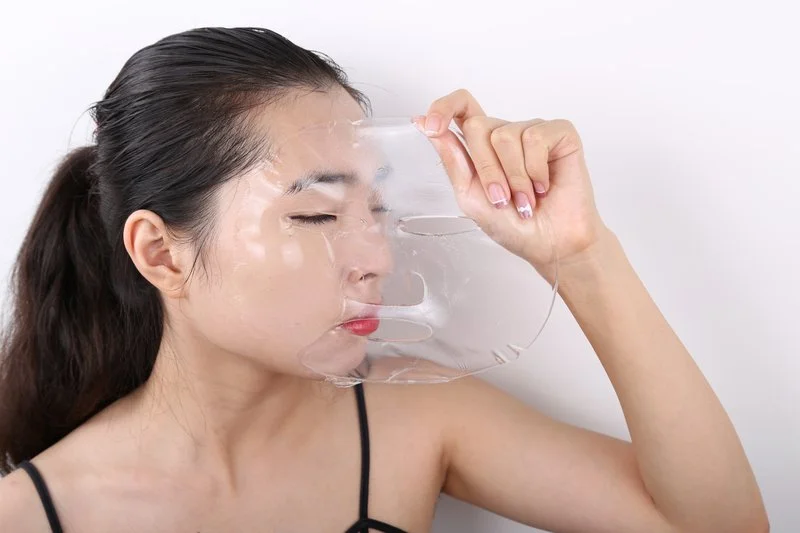
Crystal Collagen Eye Mask OEM: Jar vs Pouch FOB Price
Jar vs pouch FOB pricing for crystal collagen eye mask OEM from China, plus SFDA/SASO registration and hydrocolloid patch stability testing.
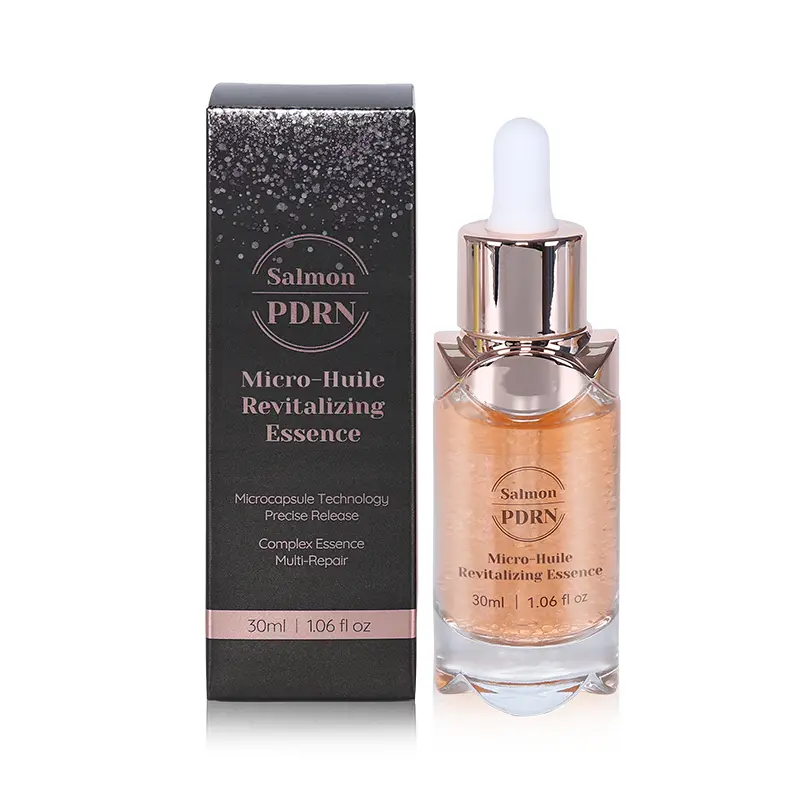
Acne Patch Private Label: FDA Device Listing China Supplier Guide
What a US brand actually needs to sell private-label acne patches made in China: FDA device establishment registration, product listing, 510(k) exemptions, and supplier documentation.
Chat Responsiveness SLA Expectation OEM Skincare Inquiry China
What a realistic chat SLA looks like on a China OEM skincare inquiry, plus hydrocolloid pimple patch sourcing specs and cost math.
Related Products
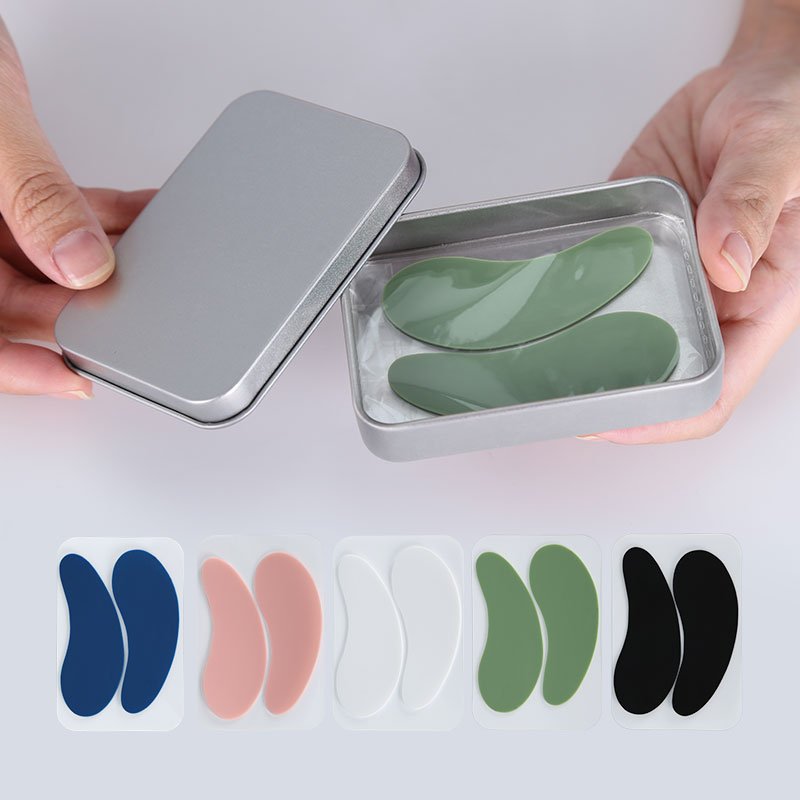
Silicone Puffy Collagen Korean Eye Patches Reusable Under Eye Sheet Masks Pads
Premium logo silicone puffy collagen korean eye patches reusable under eye sheet masks pads — OEM/ODM available, MOQ from 500 units
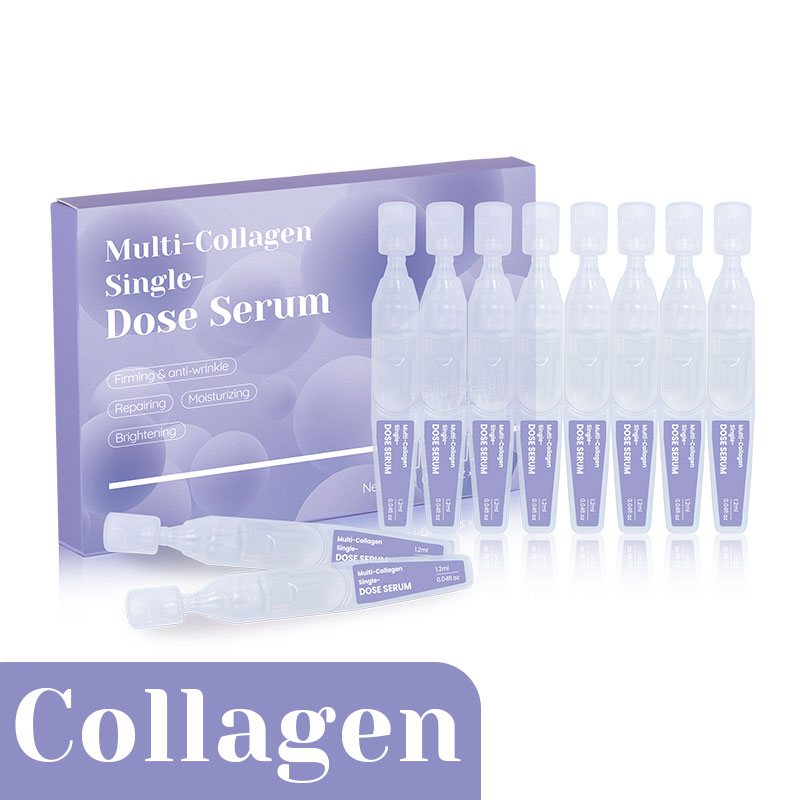
Collagen Single Dose Korean Skincare Hyaluronic Acid Instant Face Lift Serum Alpha Arbut
Premium cosmetics collagen single dose korean skincare hyaluronic acid instant face lift serum alpha arbut — OEM/ODM available, MOQ from 500 units
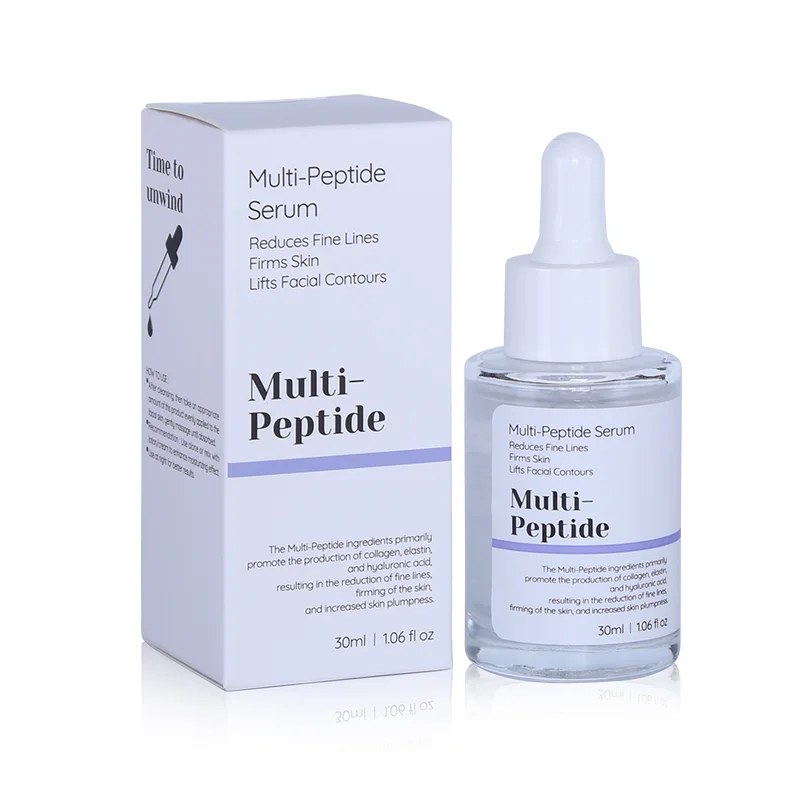
Private Label Multi Peptide Serum
Private label multi peptide serum, 30 ml dropper bottle, 500 bottles MOQ
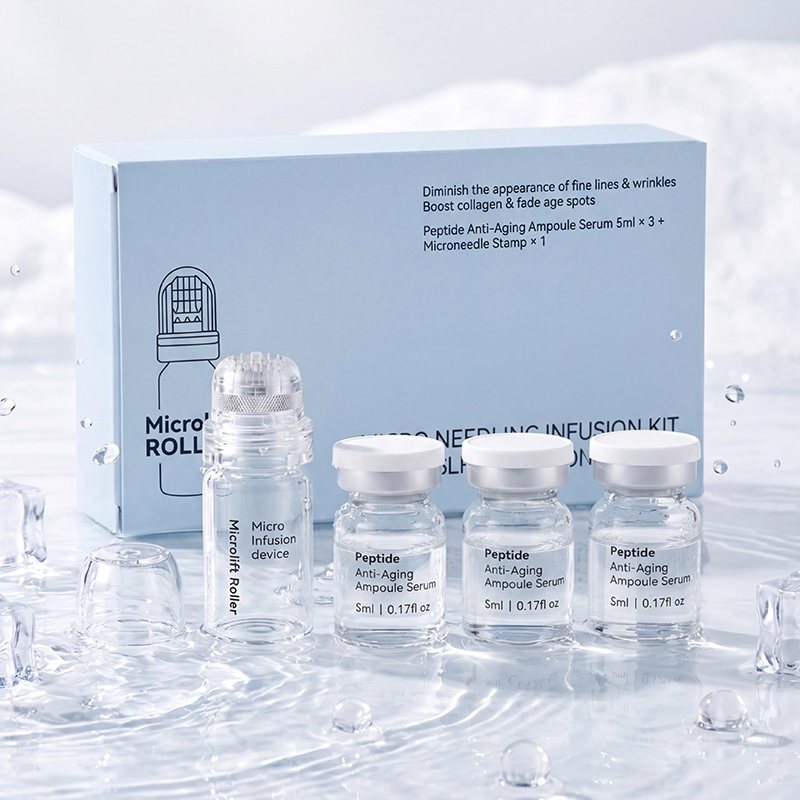
Niacinamide Peptide Anti-Aging Microlitre Serum Hydrolyzed Collagen Microlitre Kit
Premium niacinamide peptide anti-aging microlitre serum hydrolyzed collagen microlitre kit — OEM/ODM available, MOQ from 500 units