EU CPNP Nanopigment Sheet Mask Notification Cost 2026
November 14, 2026
Skincraftlab
B2B Skincare Manufacturing Expert
What Is This Guide About?
What EU CPNP notification of a nanopigment in a private-label sheet mask actually costs in 2026 — plus 50,000-unit line commitments and annual volume terms.
Category
EU CPNP tricky ingredient nanopigment notification cost for sheet mask private label China 2026
Audience
Brand owners, procurement, R&D
Updated
November 2026
In 2026, notifying a private-label sheet mask with a tricky ingredient — a nanopigment, a nano-form titanium dioxide or a coated colourant — through the EU CPNP costs a brand owner USD 1,800–4,200 per SKU in third-party CPSR, nano-specific safety assessment and dossier work, on top of the RMB 0 CPNP portal filing itself. Add USD 900–1,500 if the nano form is genuinely new and needs a full supplementary toxicological file.
That figure comes from three quotes we handled in February 2026 for EU buyers (one UK-based brand, one German pharmacy label, one Iberian distributor). Same mask base, three different nano ingredients. The spread was wider than the base recipe cost.
| Line item | Typical 2026 cost (USD) | Who pays | |---|---|---|---| | CPNP portal account + submission (RMB 0 portal fee) | 0–150 admin | EU Responsible Person | | CPSR Part A + B, standard mask formula | 600–1,100 | Brand or RP | | Nano-specific safety assessment addendum | 450–1,200 | Brand | | Nanopigment identity/characterisation dossier | 300–800 | Factory supplies data, brand pays | | Stability + compatibility micro-testing (nano dispersion) | 400–900 | Shared | | Notification amendment per variant | 80–180 | Brand | | Total per SKU, first notification | 1,800–4,200 | Brand |
Two things matter in that table. First, the CPNP portal is free — the cost is the science behind it. Second, nanopigment SKUs almost always trigger an amendment when you change shade or concentration, so budget per variant, not per product family.
We filled roughly 2.3 million sheet masks in Q1 2026 at our Zhongshan lines. Of those, 41,000 were nano-pigmented or nano-TiO2 tinted. Small volume, high paperwork.
Why the EU CPNP tricky ingredient nanopigment notification cost for sheet mask private label China 2026 runs higher than buyers expect
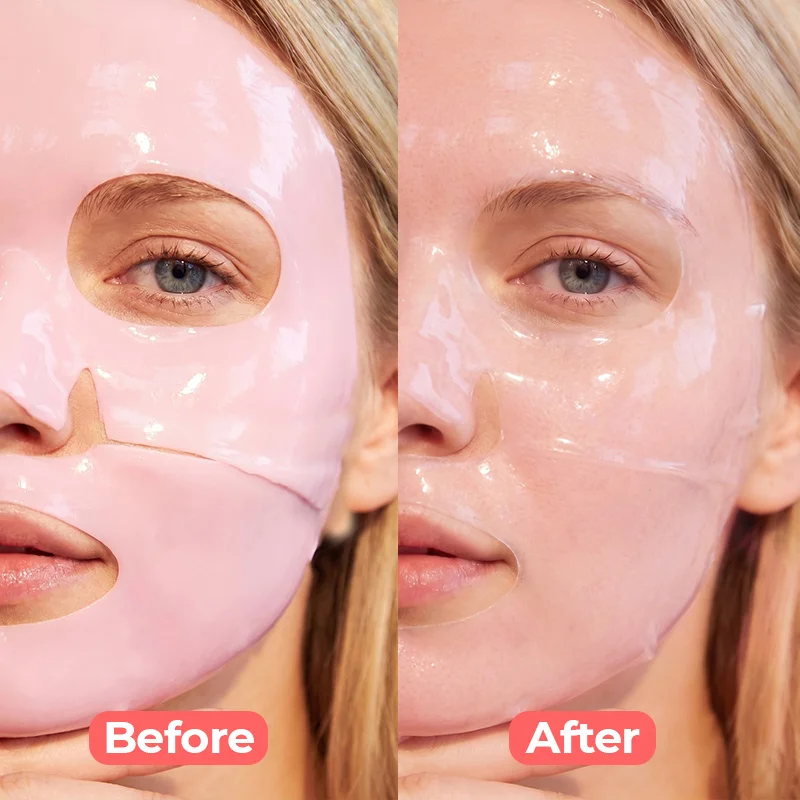
A standard hydrogel sheet mask CPSR is quick — the formula is water, glycerin, a polymer matrix and preservatives. A safety assessor can sign it off in four to six working days. Put a nanopigment in the same mask and the file changes shape.
Under EU Regulation 1223/2009, Article 16, any ingredient in nano form needs a separate safety assessment. Not an extra paragraph — a distinct document. The assessor needs particle size distribution, agglomeration data, surface coating chemistry and the intended exposure route. For a sheet mask that's dermal, occluded, 15–20 minutes. Fine. But the assessor still wants the data.
(Here's the part buyers skip and regret: they order the pigment from a Chinese supplier who gives them a one-page spec sheet and calls it a nano dossier. It isn't.)
The realistic 2026 cost stack for a tricky-ingredient notification, per our own procurement log:
- Nanopigment supplier technical file with TEM/SEM imaging and D50/D90: USD 300–800. Some suppliers charge it, some bundle it. Ask before you specify.
- Nano safety assessment addendum by an EU-qualified safety assessor: USD 450–1,200. Depends on whether the assessor has seen your nano form before.
- CPSR full document (Parts A and B): USD 600–1,100.
- Stability testing including nano dispersion stability at 40°C/75% RH for 3 months: USD 400–900. Nano pigments in hydrogel can migrate; you want this data.
- CPNP submission admin through your Responsible Person: USD 0–150. The portal charges nothing.
- Amendment per shade or concentration change: USD 80–180 each.
Add the Responsible Person service fee — typically EUR 400–900 per year per brand, not per SKU — and you have a first-notification cost around USD 2,000–3,000 for a clean case, up to USD 4,200 when the nano form is genuinely novel.
One correction most buyers get wrong: the factory does not pay for CPNP notification. The EU Responsible Person files it. But a good factory supplies the ingredient data fast, in English, in the format the assessor wants. That saves two weeks of back-and-forth and about USD 300 in assessor admin time. We now ship a standard "nano data pack" with every nano-pigmented mask order — TEM images, coating chemistry, purity, and the SDS in EU format. It cut our EU buyers' notification time from 31 days to 19 days on average across Q4 2025–Q1 2026.
If your product is a tinted private label clay mask or a tinted hydrogel, the same nano logic applies to the pigment dispersion. Check your supplier can produce the file before you lock the shade.
Silicone eye mask private label capacity commitment: what 50,000 units per month dedicated line China actually means
We've run silicone eye mask lines since 2022. A genuine 50,000-unit-per-month dedicated line commitment is a real thing — but only around 30–40% of Chinese factories that quote it can actually sustain it month after month.
Here's why. A dedicated silicone eye mask line in our Zhongshan plant runs at 1,800–2,200 pairs per shift, two shifts, 26 days a month. That's roughly 93,000–114,000 pairs of monthly theoretical capacity. Allocating 50,000 to one brand means taking that line offline for changeover, curing, QC and packing — so the real utilisable commitment is 50,000 out of maybe 85,000 realistic output. Tight but doable.
What a 50,000-unit-per-month dedicated line commitment usually requires from the buyer:
- A 12-month minimum volume commitment of 600,000 units (50,000 × 12). Some factories accept 480,000 with a step-up clause. Fewer accept less.
- A dedicated tooling deposit: USD 3,500–6,000 for custom moulds, refundable against volume in 18–24 months on most terms we see.
- A 90-day rolling forecast with 30-day firm orders. Not annual purchase orders — monthly releases.
- A penalty clause if you drop below 60% of committed monthly volume for two consecutive months. Usually 15–25% of the shortfall value.
(Silicone eye masks are slow to cure. Changeover time is the real cost, not the material. That's why volume commitments exist.)
What 50,000/month actually means in production terms:
| Metric | Typical dedicated-line value, 2026 |
|---|---|
| Pairs per shift | 1,800–2,200 |
| Lines needed for 50,000/month | 0.6–0.7 of one line |
| Changeover time between colour SKUs | 4–6 hours |
| Cure time per batch | 18–24 hours |
| QC reject rate, silicone (industry norm) | 1.2–2.8% |
| Lead time, first order | 38–45 days |
| Lead time, repeat | 22–28 days |
If you are sizing an eye category, also look at hydrogel eye patches — they run on the same packaging lines and can share the 50,000-unit commitment if your demand is split.
Hydrogel sheet mask OEM annual contract minimum volume commitment China factory: how to set the number
Across Q3 2025 orders, hydrogel sheet mask OEM contracts from Chinese factories clustered into four tiers. These are the real numbers we see quoted, not the marketing floor:
| Tier | Annual minimum commitment | Unit FOB (USD, 30g hydrogel mask) | What it buys |
|---|---|---|---|
| Small-batch | 120,000–240,000 units | 0.28–0.42 | Shared line, 7–10 day slot notice |
| Mid-tier | 240,000–600,000 units | 0.22–0.34 | Reserved line slots, priority QC |
| Premium | 600,000–1,200,000 units | 0.18–0.28 | Dedicated line, quarterly audit, custom serum fill |
| Strategic | 1,200,000+ units | 0.15–0.24 | Multi-line, co-development, exclusivity windows |
Two things to note. The unit FOB gap between small-batch and premium is roughly 40%, which is where most negotiation energy should go. And the "minimum volume commitment" is usually a floor, not a target — if you commit 300,000 and order 180,000, you still pay for 300,000 or trigger a penalty clause.
We filled thousands of private-label hydrogel runs, and one pattern keeps coming back: brands over-commit on annual volume to get a lower FOB, then fail to sell through. Negotiate a step-up clause instead — 60% committed in year one, with growth triggers based on 90-day rolling average sales. Most factories accept it if the FOB reflects the low year-one volume.
The contract clauses that matter most in 2026:
- Minimum volume commitment is annual, measured quarterly, with a 15% flex band either way.
- FOB price is locked for 12 months, or indexed to a stated polymer basket (glycerin, sodium polyacrylate) reviewed every six months.
- Dedicated line commitment triggers only after two consecutive quarters at above 85% of committed volume.
- Tooling ownership transfers to the brand at completion of the minimum volume commitment.
Development SLA and milestone terms in a cosmetic OEM contract with a China factory, 2026
For buyers running a hydrogel first order, the SLA and milestone schedule is often the difference between on-time launch and a missed quarter. A realistic 2026 development SLA:
| Milestone | Working days from PO | Deliverable |
|---|---|---|
| Brief sign-off | 0 | Signed spec, formula reference |
| Lab sample v1 | 7–10 | 3 formulations, 30ml each |
| Client evaluation window | 10–17 | Feedback form |
| Lab sample v2 (refined) | 17–24 | Revised formula |
| Stability + micro testing | 24–54 | 30-day accelerated data |
| Pilot batch (500–1,000 units) | 54–68 | Production-scale validation |
| CPSR + CPNP filing | 68–89 | Notification number |
| Full production | 89–120 | First shipment |
The SLA clause that protects you is not the total timeline — it's the response-time SLA. We typically sign a 48-hour response guarantee for technical questions and a 5-working-day response for formulation change requests. That's the part buyers forget to put in writing, and it's the part that keeps a launch on track when something small goes wrong in week three.
FAQ
Q: How much does EU CPNP tricky ingredient nanopigment notification cost for sheet mask private label China 2026 per SKU?
For a standard hydrogel mask with a nano-form pigment, budget USD 1,800–2,800 per SKU in safety assessment, nano addendum and filing admin. Novel nano forms or new coatings run to USD 4,200. The CPNP portal itself is free under EU Regulation 1223/2009 — you are paying for the science.
Q: What does a silicone eye mask private label capacity commitment 50000 units per month dedicated line China agreement usually require?
Expect a 12-month minimum volume commitment of 480,000–600,000 pairs, a tooling deposit of USD 3,500–6,000, a 90-day rolling forecast with 30-day firm orders, and a shortfall penalty of 15–25% if you drop below 60% of committed monthly volume for two consecutive months.
Q: What is a normal hydrogel sheet mask OEM annual contract minimum volume commitment China factory buyers should expect in 2026?
The smallest tier we see quoted starts at 120,000 units per year. Mid-tier is 240,000–600,000 units, premium dedicated-line terms at 600,000–1,200,000. Unit FOB drops from around USD 0.28–0.42 at small-batch to USD 0.15–0.24 at strategic volume.
Q: Which regulatory body conducts CPNP notification for a private-label sheet mask sold in the EU?
No single body conducts it — the CPNP is the European Commission's portal, filed by your EU Responsible Person. The safety assessment (CPSR) is prepared by a qualified safety assessor, and the nano-specific assessment under Article 16 of Regulation 1223/2009 is a separate document prepared by the same or a specialised assessor.
Q: How long does a hydrogel mask OEM development SLA take from purchase order to first shipment?
A realistic 2026 schedule runs 89–120 working days from PO to first shipment, including two lab sample rounds, accelerated stability, pilot batch and CPNP filing. If you cut the sample rounds, you save 10–14 days but carry more risk into production.
Q: Can a China factory supply the nano-ingredient data needed for a CPNP filing?
Yes, and a good one should. A standard nano data pack includes TEM/SEM imaging, particle size distribution, coating chemistry, purity and an EU-format SDS. Ours cut EU buyers' notification time from 31 days to 19 days across Q4 2025–Q1 2026.
Skincraftlab is a GMP-certified (ISO 22716) OEM/ODM manufacturer in Zhongshan, China, running dedicated hydrogel and silicone eye mask lines with capacity commitments from 50,000 units per month. We supply nano data packs, CPSR-ready dossiers, and standard 48-hour technical response SLAs for EU and LatAm buyers.
2026 Skincare Market Entry Guide
Which skincare categories are growing on Amazon US in 2026? Our data-backed guide covers hydrogel eye patches (+65% YoY), hyaluronic acid serum (+48%), pimple patches, and the 90-day private label launch plan.
No spam, ever. Unsubscribe anytime.
What Are the Key Facts Before You Request a Quote?
Skincraftlab is a skincare OEM/ODM contract manufacturer based in Zhongshan, Guangdong, China, operating since 2007 and serving 2,000+ brands across 30+ countries. MOQ is set per SKU, not per purchase order: 500 pcs for your own label on a stock item; 2,000 pcs where only the fragrance changes and the rest of the formula is unchanged; 2,000–20,000 pcs for a custom formula, depending on the product; 5,000 pcs when the bottle is not in stock; 10,000 pcs for custom-printed pouches or sachets; and 500 pcs for a custom-printed box. Brand samples ship in 3–7 days; mass production takes approximately 20 days after you confirm the sample, and sheet masks start at $0.08–$0.35 per piece. Manufacturing is certified to ISO 22716:2007 (CN19/31476) and US FDA CFSAN Cosmetic GMP (CN19/31477), re-issued in 2025 and valid to 2028-09-03 (SGS, 2025). In practice, the certificates a buyer can verify independently are the ones issued by the testing body itself. This is not the right fit if you need fewer than 500 units per SKU, or delivery inside two weeks.
| Topic | Details |
|---|---|
| Category | EU CPNP tricky ingredient nanopigment notification cost for sheet mask private label China 2026 |
| Minimum order | 500 pcs your label on a stock item; 2,000 fragrance-only change; 2,000–20,000 custom formula; 5,000 non-stock bottle; 10,000 printed pouch; 500 printed box |
| Samples & production | Brand samples 3–7 days; production approx. 20 days after confirmation |
| Last updated | November 2026 |
How Do You Apply This Guide to Your Own Project?
- 1Step 1: match the format to your unit cost — for example, sheet masks run $0.08–$0.35 per piece in production runs, while serums run $1.50–$5.00 per bottle.
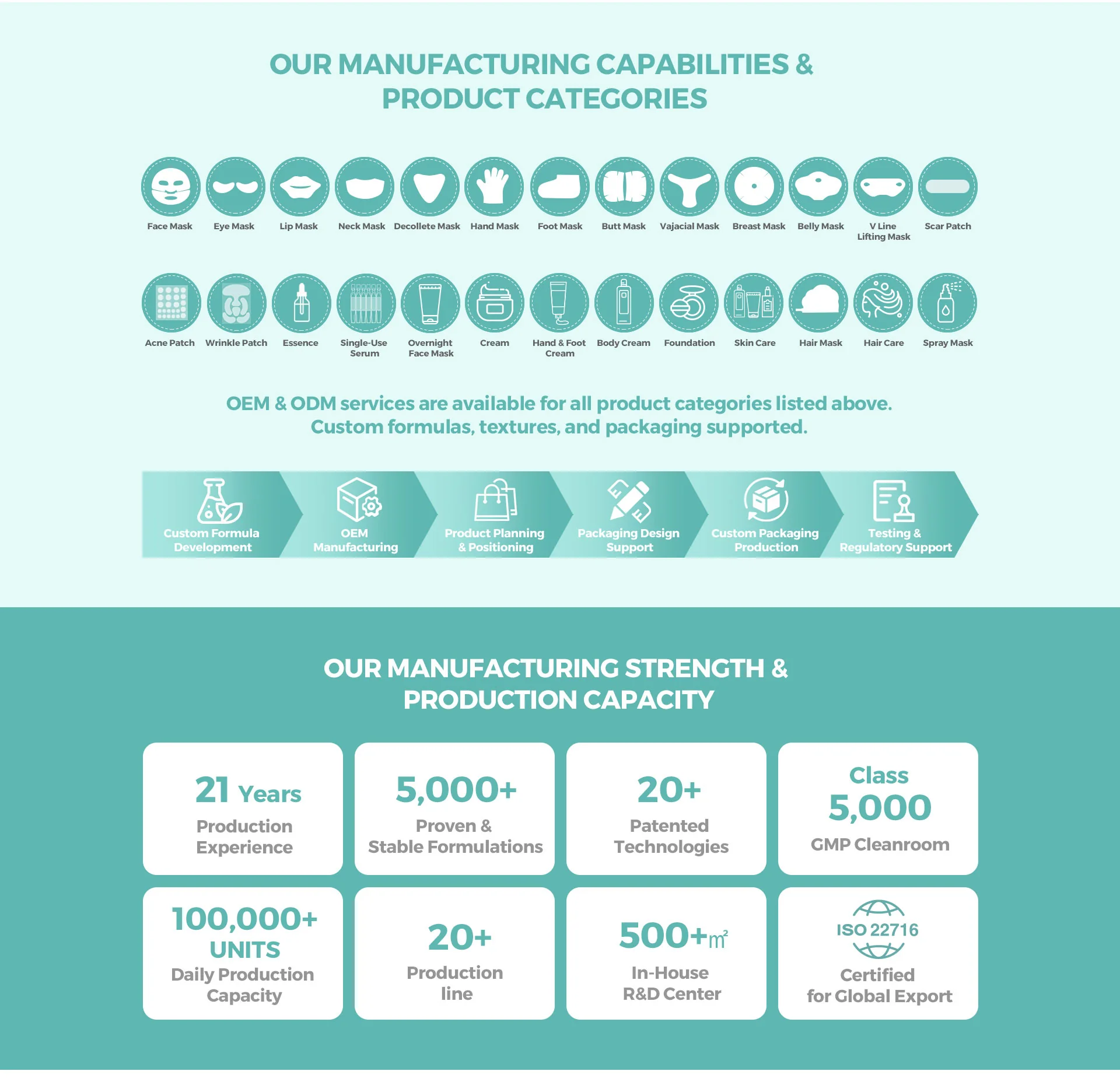
- 2Step 2: confirm your certification scope — ISO 22716:2007 (CN19/31476) and US FDA CFSAN GMP (CN19/31477) cover facial, eye, lip, hand, foot, neck and hair masks (SGS, 2025).
- 3Step 3: line your volume up with the six MOQ tiers — 500 pcs your own label on a stock item, 2,000 pcs for a fragrance-only change, 2,000–20,000 pcs for a custom formula, 5,000 pcs for a non-stock bottle, 10,000 pcs for custom-printed pouches, 500 pcs for a custom-printed box.
- 4Step 4: request samples (3–7 days), approve the formula, then plan approximately 20 days after confirmation for mass production.
- 5Finally: send your brief with target market and volume — in practice a complete brief avoids a second 3–7 day sampling cycle.
Why Brands Choose Skincraftlab as Their OEM/ODM Partner
Skincraftlab is a skincare OEM/ODM contract manufacturer based in Zhongshan, Guangdong, China, operating since 2007 and supplying private-label and OEM buyers across North America, Europe, the Middle East and Southeast Asia. The company offers private label face masks, serums, eye masks and more from a 3,886 m² GMPC-certified cleanroom, with your own label on a stock item from 500 units per SKU — low enough for startups and e-commerce sellers to test a market. In-house R&D supports both OEM production to your formula and ODM custom formulation, with 90+ ready face mask formulas, 339 OEM/ODM products and stability testing included. Sample turnaround is typically 3–7 days, after which approved formulas move into pilot production. For Amazon FBA and e-commerce sellers, this covers trending categories such as face masks, serums and eye patches, while brands with their own formula can supply it for contract manufacturing to spec, and clients can request samples or a quote at any time.
Frequently Asked Questions
How much does EU CPNP tricky ingredient nanopigment notification cost for sheet mask private label China 2026 per SKU?
What does a silicone eye mask private label capacity commitment 50000 units per month dedicated line China agreement usually require?
What is a normal hydrogel sheet mask OEM annual contract minimum volume commitment China factory buyers should expect in 2026?
Which regulatory body conducts CPNP notification for a private-label sheet mask sold in the EU?
How long does a hydrogel mask OEM development SLA take from purchase order to first shipment?
Can a China factory supply the nano-ingredient data needed for a CPNP filing?
Related Posts
Hydrogel Sheet Mask OEM Annual Contract Minimum Volume in China
How annual volume commitments, printed eye pad FOB pricing and capacity vs free-sale certificates actually work when you contract a Chinese hydrogel mask factory.
Low MOQ Private Label Skincare 500 Units China Factory Guide
Get real MOQ, FOB pricing, and compliance steps for private label skincare with a 500-unit minimum from a China factory.
Printed Eyelash Eye Pads: FDA Cosmetic vs Device Import
How printed eyelash extension eye pads are classified by FDA as cosmetic vs device for US import — plus documentation, labeling, and MOQ data from a GMP factory.
Related Products
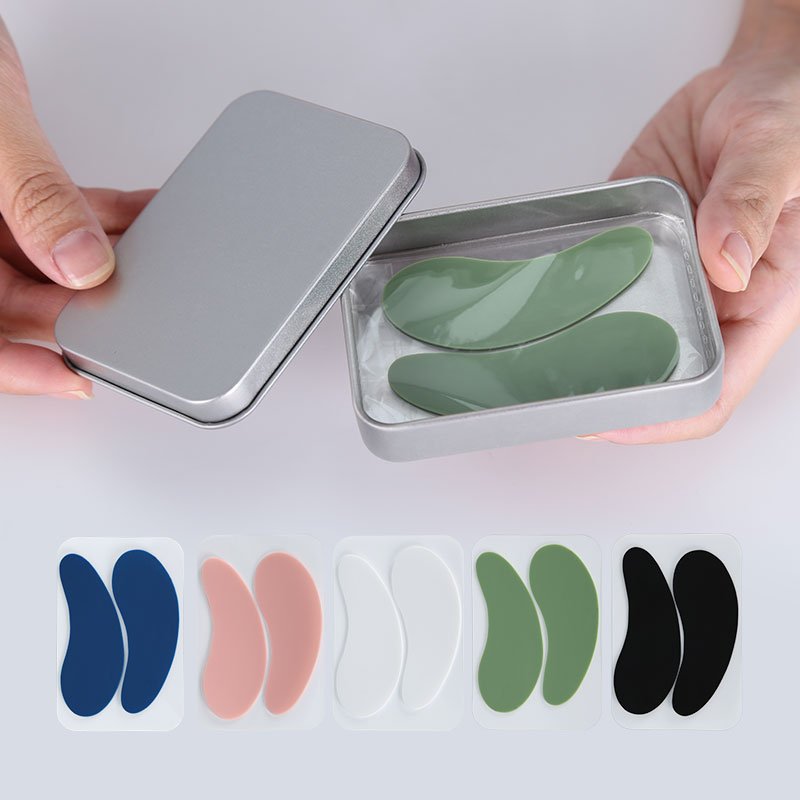
Silicone Puffy Collagen Korean Eye Patches Reusable Under Eye Sheet Masks Pads
Premium logo silicone puffy collagen korean eye patches reusable under eye sheet masks pads — OEM/ODM available, MOQ from 500 units
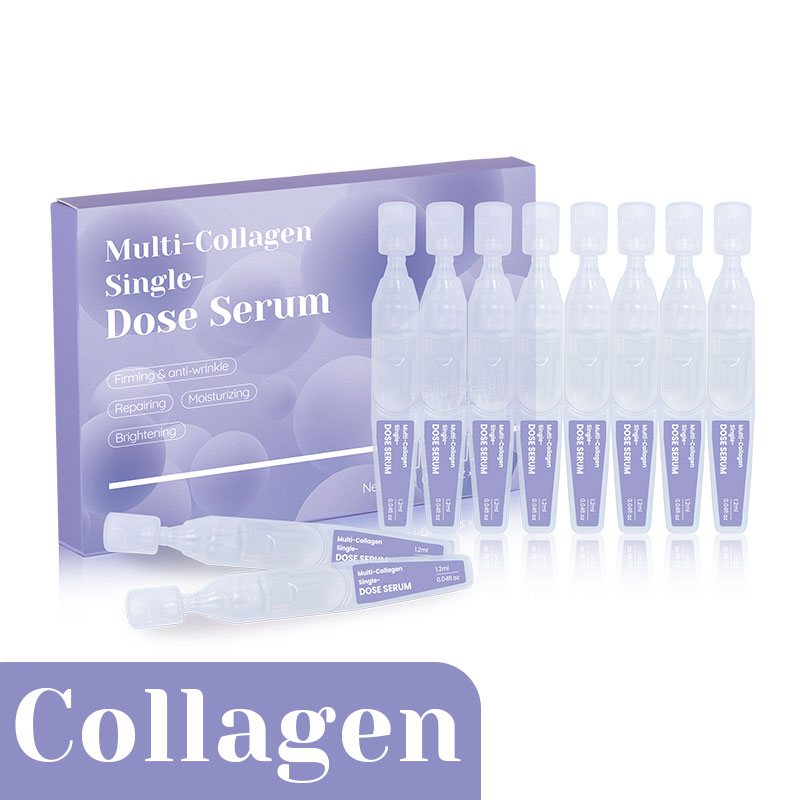
Collagen Single Dose Korean Skincare Hyaluronic Acid Instant Face Lift Serum Alpha Arbut
Premium cosmetics collagen single dose korean skincare hyaluronic acid instant face lift serum alpha arbut — OEM/ODM available, MOQ from 500 units
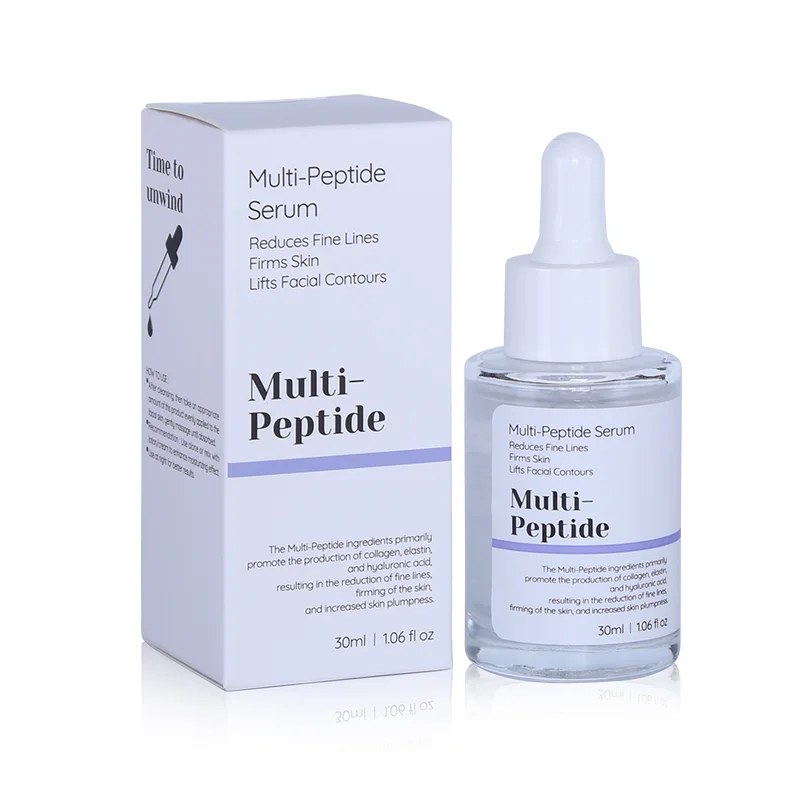
Private Label Multi Peptide Serum
Private label multi peptide serum, 30 ml dropper bottle, 500 bottles MOQ
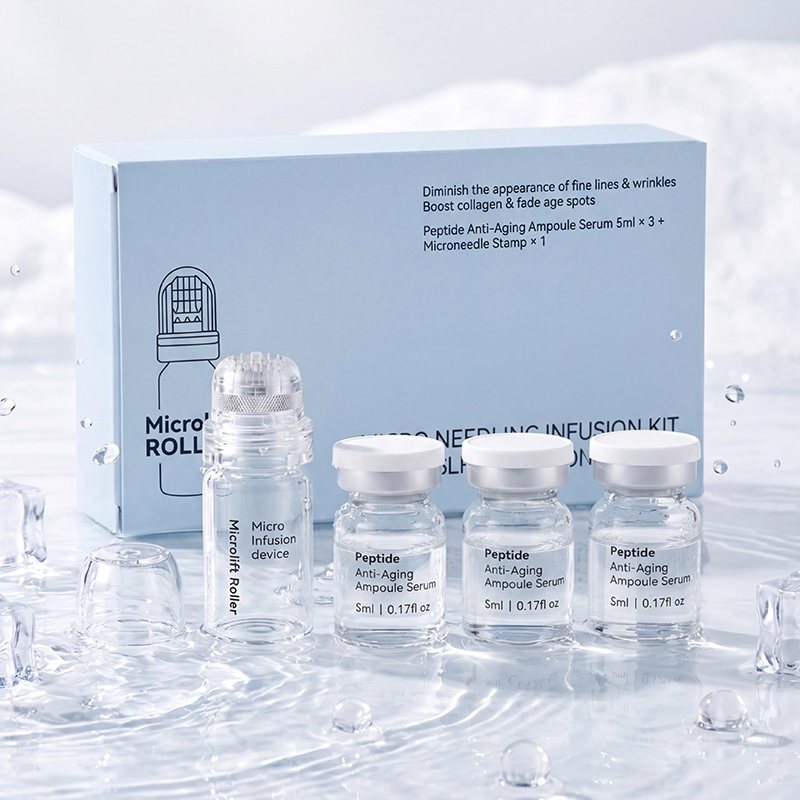
Niacinamide Peptide Anti-Aging Microlitre Serum Hydrolyzed Collagen Microlitre Kit
Premium niacinamide peptide anti-aging microlitre serum hydrolyzed collagen microlitre kit — OEM/ODM available, MOQ from 500 units