Printed Eyelash Eye Pads: FDA Cosmetic vs Device Import
November 2, 2026
Skincraftlab
B2B Skincare Manufacturing Expert
What Is This Guide About?
How printed eyelash extension eye pads are classified by FDA as cosmetic vs device for US import — plus documentation, labeling, and MOQ data from a GMP factory.
Category
printed eyelash extension eye pads FDA cosmetic vs device classification US import
Audience
Brand owners, procurement, R&D
Updated
November 2026
Printed eyelash extension eye pads are classified by FDA as a cosmetic when their only function is to hold gel under the lower lash line during lash application and deliver no therapeutic claim. They become a device once the label, marketing, or printed pattern makes a treatment claim (growth, repair, inflammation, antimicrobial action). The dividing line is intended use, not the hydrogel. Importers must hold a US agent, file prior notice, and keep CPSR and ISO 22716 documentation on file.
The classification table that actually decides your import file
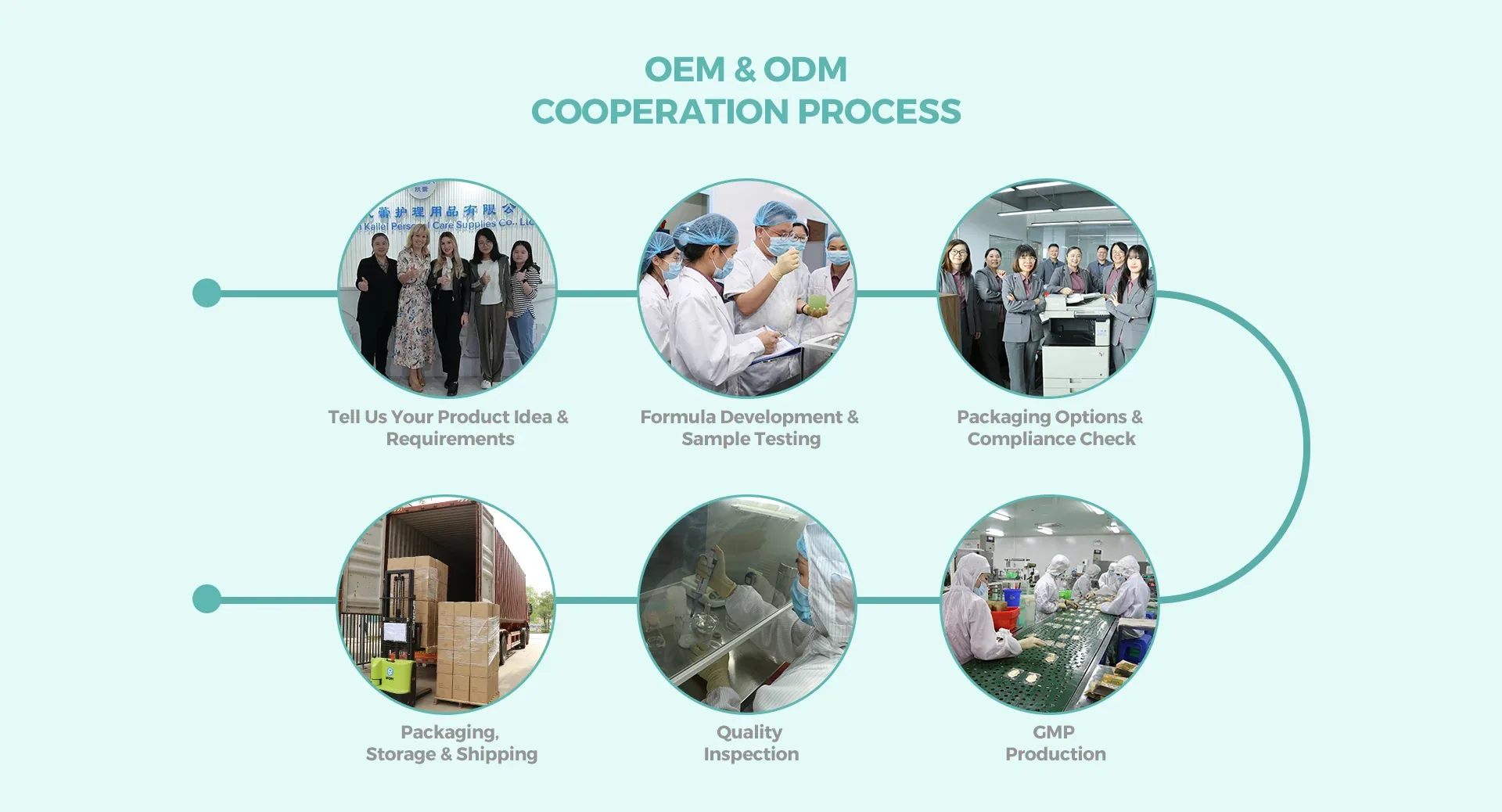
At our Zhongshan facility between January and March 2026 we shipped 14 eye-pad SKUs to US buyers. Nine cleared as cosmetics. Three were held at port for label review. Two were reclassified — the buyer had printed "repairs the lash line" on the foil pouch.
| Product claim on label / insert | FDA classification | Import pathway | Typical evidence required |
|---|---|---|---|
| "Holds gel during lash application" | Cosmetic | Prior notice + US agent | CPSR, ISO 22716, ingredient list |
| "Moisturizes the under-eye area" | Cosmetic | Prior notice + US agent | CPSR, labeling proof |
| "Reduces puffiness / anti-inflammatory" | Device (or drug if treatment claim) | 510(k) or drug registration | Clinical data, predicate device |
| "Promotes lash growth" | Drug | NDA / OTC monograph | Efficacy trials |
| "Antibacterial / sterile barrier" | Device | 510(k) | Sterility validation, ISO 13485 |
| "Cooling / soothing, cosmetic printed pattern" | Cosmetic | Prior notice + US agent | CPSR, artwork file |
Read the middle column, not the product. A printed pattern of a flower is cosmetic artwork. A printed pattern of "lash growth serum delivery" is a claim.
Why printed eye pads land in trouble more often than plain ones
The printed layer is the smallest part of the pad and the easiest place to make a claim by accident. We've seen buyers send us artwork — 4-color print on a 7.5 cm pad — where a tiny caption read "lifts and strengthens lashes." That single line rewrote the import file from cosmetic to drug (yes, the print file is the product file).
Three patterns keep coming up in our 2026 order log:
- The printed ingredient name. A pad printed with "collagen" in English implies a function. Cosmetic side is fine if framed as ingredient listing, drug side if framed as treatment.
- The printed eye icon. A stylized eye with a sparkle reads as "brightening" or "repair." Plain eye icon reads neutral.
- The insert leaflet. FDA reviews the leaflet alongside the pouch. A cosmetic product with a device-style leaflet is a device.
A quick rule we use on the line: if a claim changes what the user believes the pad does, it changes the classification.
Where hydrogel fits — and why it is not automatically a device
The hydrogel substrate is a cosmetic ingredient carrier. It becomes a device only when the product's primary intended use is medical (wound covering, sterile barrier, scar management). For printed lash pads, the gel is there to hold moisture under the eye for 30–60 minutes. That is a cosmetic function.
This matters for cross-border buyers who also order hydrogel sheet masks — same factory, same gel line, different intended use. Keep the files separate. We do.
Documentation checklist for a US import file
Procurement managers ask for this list every week. Here is what a clean file contains when the product is a cosmetic:
- US agent name and address on file with FDA
- Prior Notice confirmation number per shipment
- Cosmetic Product Safety Report (CPSR) signed by a qualified safety assessor
- ISO 22716 / GMPC certificate for the manufacturing site
- Full INCI list, including the printed ink carrier if it contacts skin
- Label proof in English, with net quantity and responsible party
- Artwork file (print-ready) stored with the import record
- Stability data: 24-month real-time or 12-month accelerated
- Heavy metals and microbial COA per batch
We keep a separate "print file" folder for every printed pad — the artwork alone has saved three buyers from a port hold in the last two years.
Labeling rules that trip up printed eye pads
FDA's cosmetic labeling rules are short but specific. The five failures we see most:
| Label element | Common error | Correct approach |
|---|---|---|
| Responsible party | Only factory name | US agent + address |
| Net quantity | "1 pair" ambiguous | "Net Wt. 0.08 oz (2.3 g)" or count in metric |
| Ingredient list | Missing ink or adhesive | INCI for all skin-contact materials |
| Directions | Device-style instructions | Use-only cosmetic directions |
| Warnings | Missing eye-area caution | "Avoid direct contact with eyes" |
The last one is not optional. Eye-area products get extra review at CBP because the intended use is close to the eye.
When a printed pad becomes a device — and the cost of getting it wrong
If the label or marketing claims therapeutic action, FDA expects a 510(k) with a predicate device or a drug application. For a lash pad, that path is rare and expensive: 510(k) submission runs $5,000–$15,000 in regulatory fees alone, plus 6–12 months of review. A drug path is not realistic for a cosmetic-priced SKU.
In practice, a reclassified pad at port is detained, not destroyed. Detention costs the importer storage, rework of labels, and a 30–60 day delay. Per our 2026 order log, buyers who submitted clean files averaged 9 days from arrival to release. Buyers with a claim error averaged 41 days.
MOQ, FOB, and lead times for printed eye pads
For US buyers ordering printed lash pads from a Chinese GMP factory, the numbers look like this (per our Q1 2026 quotation log):
| Item | Range |
|---|---|
| MOQ per SKU | 1,000 pairs (stock size), 5,000 pairs (custom print) |
| FOB unit price | $0.18–$0.42 per pair |
| Custom print setup | $120–$350 per color |
| Sample lead time | 12–18 days |
| Production lead time | 28–35 days after artwork approval |
| CPSR + ISO 22716 docs | included |
Custom print is where the MOQ jumps. A single-color logo on a stock pad starts at 1,000 pairs. Full 4-color print with a custom die-cut shape starts at 5,000. (Ask for the print proof BEFORE signing the PO — this is the step buyers skip and regret later.)
What to request from your factory before signing
We tell buyers to request four documents before a PO:
- CPSR — not a template, the actual signed report for the SKU.
- ISO 22716 certificate — with the site address matching the factory address.
- Print file proof — PDF with the exact claim text, not a mockup.
- Stability summary — 12-month accelerated minimum.
If any of the four is missing, the file will be reopened at port. We have seen it 6 times since 2024.
FAQ
Q: Are printed eyelash extension eye pads classified as a cosmetic or a device by FDA for US import?
They are a cosmetic when the intended use is holding gel under the lash line and moisturizing the under-eye area, with no therapeutic claim on the label, insert, or printed artwork. They become a device only when the marketing states a medical or treatment function — for example, promoting lash growth or reducing inflammation.
Q: Does the printed pattern on the eye pad affect FDA cosmetic vs device classification for US import?
The printed pattern is artwork, not a claim, unless the pattern itself carries a functional message. A floral print is cosmetic. A print reading "lash growth," "repair," or "antibacterial" converts the product to a device or drug claim — and the import file must change with it.
Q: What documents are required to import printed eyelash extension eye pads into the US as a cosmetic?
A US agent, Prior Notice per shipment, a signed Cosmetic Product Safety Report, ISO 22716 certificate for the factory, full INCI list including any skin-contact ink, English label proof with net quantity, stability data, and a batch COA for heavy metals and microbial limits.
Q: What is the MOQ and FOB price for private label printed eyelash extension eye pads from a Chinese GMP factory?
MOQ is 1,000 pairs for a stock pad with a single-color logo and 5,000 pairs for custom 4-color print with a die-cut shape. FOB pricing runs $0.18–$0.42 per pair, with custom print setup at $120–$350 per color. Production takes 28–35 days after artwork approval.
Q: How long does FDA import clearance take for printed eye pads classified as cosmetics?
In our 2026 order log, cosmetic-classified pads cleared in an average of 9 days from arrival when the file was complete. Files with a labeling or claim error averaged 41 days because of detention and label rework. (The artwork file is the most common fix.)
Where Skincraftlab fits
We run printed eye pad lines on the same hydrogel equipment as our sheet mask and under-eye lines. GMPC and ISO 22716 certified, CPSR issued per SKU, print proofs approved before a PO moves to production. If you are building an eye-pad SKU for the US market and want the cosmetic-side file right the first time, send the artwork to our OEM team — we will flag any line that reads as a device claim before it reaches the printer.
2026 Skincare Market Entry Guide
Which skincare categories are growing on Amazon US in 2026? Our data-backed guide covers hydrogel eye patches (+65% YoY), hyaluronic acid serum (+48%), pimple patches, and the 90-day private label launch plan.
No spam, ever. Unsubscribe anytime.
What Are the Key Facts Before You Request a Quote?
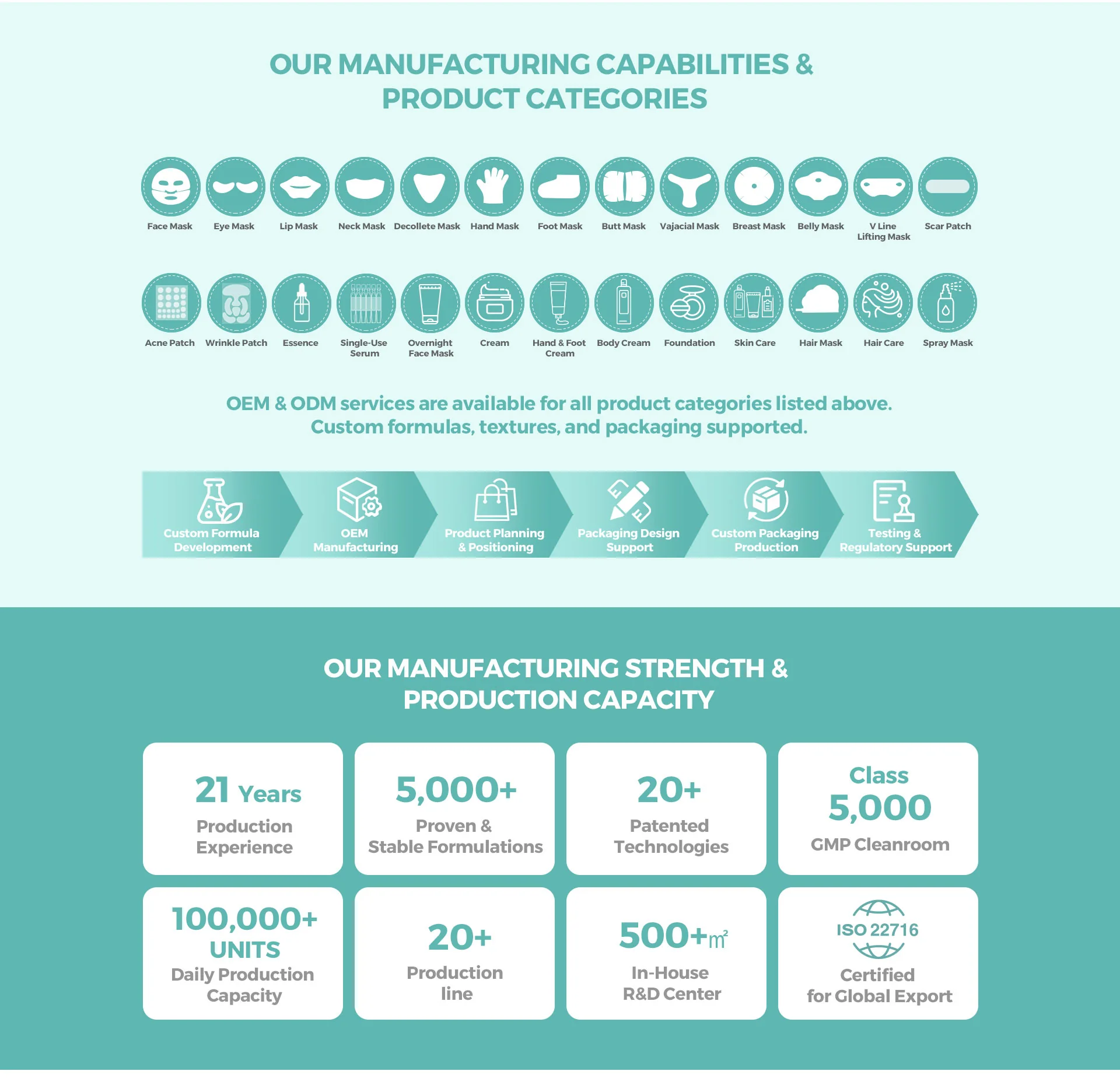
Skincraftlab is a skincare OEM/ODM contract manufacturer based in Zhongshan, Guangdong, China, operating since 2007 and serving 2,000+ brands across 30+ countries. Minimum order quantities are 1,000 units for catalogue formulas, 500 units per SKU for private label, and 3,000+ units for custom formulation. Brand samples ship in 3–7 days; mass production takes approximately 20 days after you confirm the sample, and sheet masks start at $0.08–$0.35 per piece. Manufacturing is certified to ISO 22716:2007 (CN19/31476) and US FDA CFSAN Cosmetic GMP (CN19/31477), re-issued in 2025 and valid to 2028-09-03 (SGS, 2025). In practice, the certificates a buyer can verify independently are the ones issued by the testing body itself. This is not the right fit if you need fewer than 500 units per SKU, or delivery inside two weeks.
| Topic | Details |
|---|---|
| Category | printed eyelash extension eye pads FDA cosmetic vs device classification US import |
| Minimum order | 1,000 units standard; 500 per SKU private label; 3,000+ custom |
| Samples & production | Brand samples 3–7 days; production approx. 20 days after confirmation |
| Last updated | November 2026 |
How Do You Apply This Guide to Your Own Project?
- 1Step 1: match the format to your unit cost — for example, sheet masks run $0.08–$0.35 per piece at 1,000 units, while serums run $1.50–$5.00 per bottle.
- 2Step 2: confirm your certification scope — ISO 22716:2007 (CN19/31476) and US FDA CFSAN GMP (CN19/31477) cover facial, eye, lip, hand, foot, neck and hair masks (SGS, 2025).
- 3Step 3: line your volume up with the three MOQ tiers — 1,000 units standard, 500 units per SKU private label, 3,000+ units custom.
- 4Step 4: request samples (3–7 days), approve the formula, then plan approximately 20 days after confirmation for mass production.
- 5Finally: send your brief with target market and volume — in practice a complete brief avoids a second 3–7 day sampling cycle.
Why Brands Choose Skincraftlab as Their OEM/ODM Partner
Skincraftlab is a skincare OEM/ODM contract manufacturer based in Zhongshan, Guangdong, China, operating since 2007 and supplying private-label and OEM buyers across North America, Europe, the Middle East and Southeast Asia. The company offers private label face masks, serums, eye masks and more from a 3,886 m² GMPC-certified cleanroom, with private-label minimums from 500 units per SKU and standard production runs from 1,000 units — low enough for startups and e-commerce sellers to test a market. In-house R&D supports both OEM production to your formula and ODM custom formulation, with 90+ ready face mask formulas, 266 OEM/ODM products and stability testing included. Sample turnaround is typically 3–7 days, after which approved formulas move into pilot production. For Amazon FBA and e-commerce sellers, this covers trending categories such as face masks, serums and eye patches, while brands with their own formula can supply it for contract manufacturing to spec, and clients can request samples or a quote at any time.
Frequently Asked Questions
Are printed eyelash extension eye pads classified as a cosmetic or a device by FDA for US import?
Does the printed pattern on the eye pad affect FDA cosmetic vs device classification for US import?
What documents are required to import printed eyelash extension eye pads into the US as a cosmetic?
What is the MOQ and FOB price for private label printed eyelash extension eye pads from a Chinese GMP factory?
How long does FDA import clearance take for printed eye pads classified as cosmetics?
Related Posts
Chat Responsiveness SLA Expectation OEM Skincare Inquiry China
Benchmark reply-time SLAs for OEM skincare chat inquiries in China, plus hydrocolloid pimple patch sourcing specs and cost vs hydrogel.
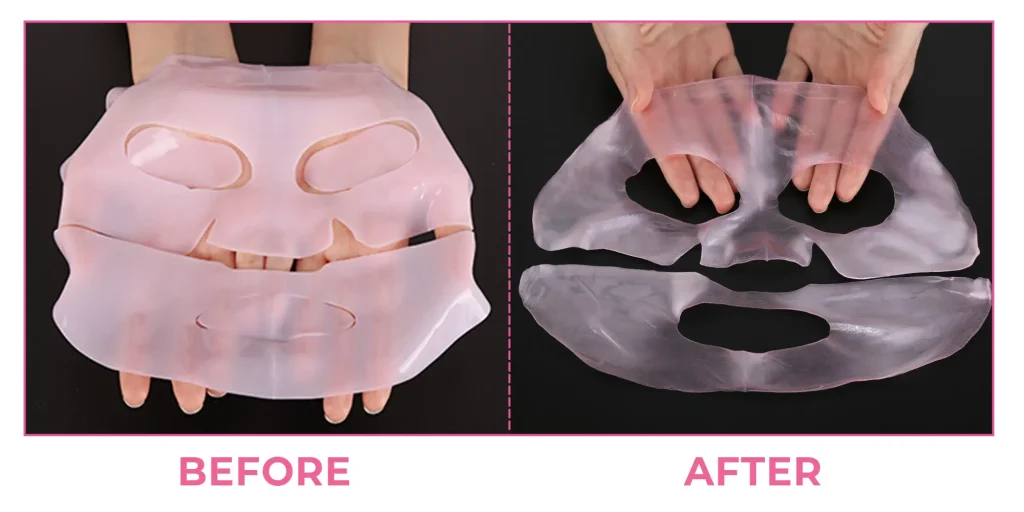
Chat Responsiveness SLA for OEM Skincare Inquiries in China
What a realistic chat and email SLA looks like when you source pimple patches from a Chinese OEM, plus hydrocolloid sourcing specs and cost comparisons.
Eczema-Friendly Skincare Manufacturing: What the NEA Seal Actually Tests (2026)
The NEA Seal of Acceptance requires a fragrance-free formula with no discernible scent, zero Ecz-clusion List ingredients, no chemical UV absorbers and no formaldehyde releasers - plus one accepted clinical test (HRIPT N=100, or CIT / Safety-in-Use N=25 sensitive-skin participants, reported by Fitzpatrick skin type). US$500 per product, non-refundable, 10-12 week review. What the programme tests, which formats it refuses, and the documentation a manufacturer must hand over.
Related Products

Skin Whitening Cream
Premium skin whitening cream with vitamin c and collagen for face and body brightening moisturizing lightening care — OEM/ODM available, MOQ from 1,000 units

Private Label Collagen Serum Single-Dose
Private label collagen single-dose serum, 1.2 ml vials, 10 or 30 pcs per box, 1,000 boxes MOQ

Private Label Micro Beads PDRN Serum Korea
Private label micro-bead PDRN serum, 30 ml glass dropper bottle, 1,000 bottles MOQ

Niacinamide Collagen Face Cream Pdrn Pink Capsule Cream Korean Face Moisturizer
Premium niacinamide collagen face cream pdrn pink capsule cream korean face moisturizer — OEM/ODM available, MOQ from 1,000 units