Scar Gel & Post-Acne OEM: Which Claims Are Legal in the US and EU (2026)
September 13, 2026
Skincraftlab
B2B Skincare Manufacturing Expert

What Is This Guide About?
In the US, calling a silicone gel a scar treatment makes it a drug or a device — not a cosmetic. Here is where the legal line sits for post-acne products, what you can still say on a listing, and the documentation an OEM has to hand over for your EU claim file.
Category
scar gel OEM
Audience
Brand owners, procurement, R&D
Updated
September 2026
A cosmetic may only claim to clean, beautify, promote attractiveness or alter the appearance. The moment your scar gel claims to treat, remove or heal a scar, US law reclassifies it as a drug or a device, and EU rules require every claim to be backed by evidence held in your Product Information File. This guide sets out where the line sits for post-acne products, and the wording that survives it.
One sentence decides your product category
Under the FD&C Act, a cosmetic is an article "intended to be rubbed, poured, sprinkled, or sprayed on… for cleansing, beautifying, promoting attractiveness, or altering the appearance" [1]. A drug is an article "intended for use in the diagnosis, cure, mitigation, treatment, or prevention of disease" or "intended to affect the structure or any function of the body" [1].
Nothing in that pair of definitions mentions the ingredients. Intended use decides the category — and intended use is read from your product name, your listing copy, your images, your testimonials and your reputation, not only from the words "cosmetic" or "drug" [1].
FDA also states plainly that the FD&C Act "does not recognize any such category as cosmeceuticals" [1]. There is no legal middle shelf for a product that both moisturises and treats. It is a drug, a cosmetic, or a combination of the two.
Cosmetic claims vs drug claims for post-acne products
FDA lists the kind of wording that tips a cosmetic into drug territory: claims that a product will restore hair growth, reduce cellulite, increase or decrease the production of melanin (pigment) in the skin, or regenerate cells [1]. For a post-acne range, that translates into a working line you can apply to your own copy:
| What you want to say | Cosmetic-safe version | Why the original wording is a problem |
|---|---|---|
| "Removes scars" | "Helps soften and smooth the look of the skin" | Treatment of a condition = drug/device intended use |
| "Heals scarring after acne" | "Moisturises and helps improve the appearance of uneven texture" | "Heal" is disease/treatment language |
| "Fades dark marks by blocking melanin" | "Helps even the look of skin tone" | Affecting pigment production is an FDA-listed drug example |
| "Repairs damaged skin" | "Supports the skin's moisture barrier" | Structure/function language |
| "Prevents new scars forming" | Avoid the claim entirely | Prevention of a condition = drug intended use |
| "Regenerates skin cells" | Avoid the claim entirely | Regeneration is an FDA-listed drug example |
| "Dermatologist tested" | "Dermatologist tested" (with the study on file) | Acceptable if the testing actually happened and is documented |
Two things follow from that table. First, "appearance" wording is not a magic shield: FDA judges intended use from the whole context, so a product called "Scar Removal Gel", sold in the scar-treatment category, illustrated with before/after scar photos, is likely to be read as intended for scar treatment even if the bullet copy says "appearance" [1]. Second, the product name itself is part of that context — which is why the export-facing name on the artwork should be agreed with your manufacturer before the label is printed, not after.
If you genuinely want scar-management claims: the US device route
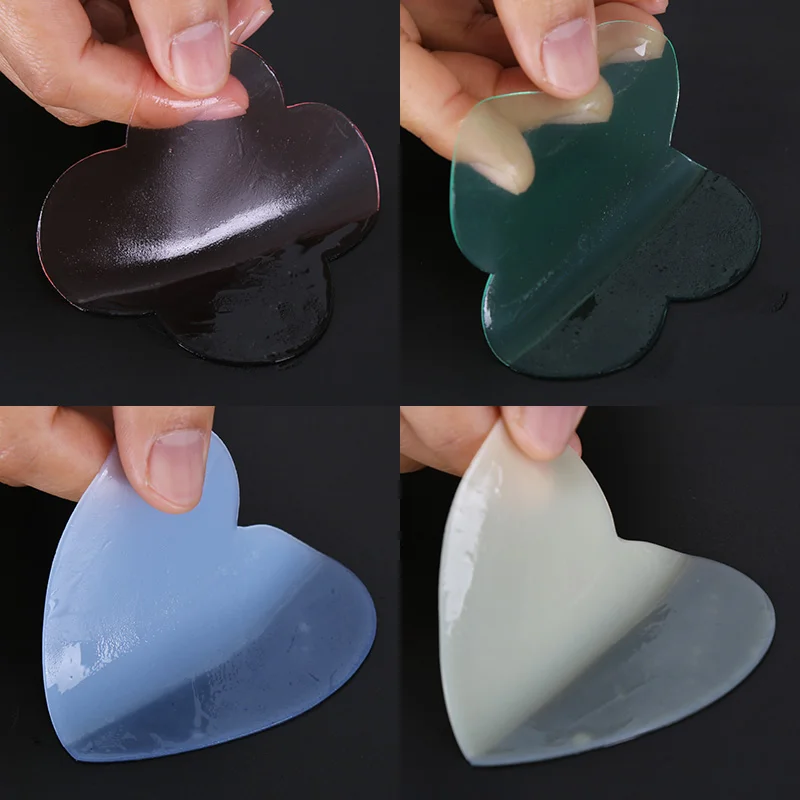
Silicone is not a fringe ingredient here. US regulation has a dedicated entry for it: 21 CFR 878.4025 "Silicone sheeting" states that silicone sheeting "is intended for use in the management of closed hyperproliferative (hypertrophic and keloid) scars", and classifies it as Class I (general controls), exempt from premarket notification procedures subject to the limitations in § 878.9 [4].
That sentence is worth reading twice. It confirms the regulatory status of a silicone product used for scar management — as a medical device, with device obligations rather than cosmetic ones, even though the classification is the lightest one and premarket notification is waived. It is also specifically about sheeting; a gel, spray or cream is a different physical form, so its classification has to be assessed on the facts of the product and the claims made for it, not assumed from the sheeting entry [4].
Two enforcement patterns make this more than theory for an importing brand:
- FDA publishes warning letters specifically aimed at "drug claims made for products marketed as cosmetics" [2].
- Import Alert #66-41 provides for detention without physical examination of unapproved new drugs promoted in the United States [3] — a shipment-level risk that sits with the importer of record, not just with the marketing team.
If a product genuinely has two intended uses, US law expects combination labelling: an antidandruff shampoo is FDA's own example of a product that is both cosmetic and drug, and combination OTC drug/cosmetic products carry drug ingredients as "Active Ingredients" followed by cosmetic ingredients as "Inactive Ingredients" [1].
The EU side: substantiation lives in your PIF
In the EU, the question "is this a cosmetic at all?" comes first. Commission Regulation (EU) No 655/2013 applies only once a product falls under the cosmetic definition, and it sets common criteria for justifying claims [5].
Two obligations shape what a brand can say about a post-acne product:
- The claim must match the evidence in your file. The responsible person must ensure the claim wording complies with the common criteria and "is consistent with the documentation proving the effect claimed for the cosmetic product in the product information file" (PIF) [5]. The criteria themselves require claims to be "supported by adequate and verifiable evidence" [5].
- You cannot borrow authority. Claims indicating that the product "has been authorised or approved by a competent authority within the Union" are not allowed [5], and claims implying a specific benefit where the benefit is mere compliance with legal minimums are also barred [5].
The practical consequence: if your EU distributor wants a scar-related claim on the pack, the evidence has to be generated and filed before the claim goes to print — not assembled afterwards in response to a query. The PIF is the container for that documentation, and building one is a project in itself.
Post-acne marks are not scars — keep the two claims apart
Most "scar" products in the post-acne category are actually sold against marks: post-inflammatory hyperpigmentation (brown marks) and post-inflammatory erythema (red marks). That distinction is commercially useful and legally decisive, because pigment production is named by FDA as a drug-claim example [1].
| The customer's concern | Claim that stays cosmetic | Claim that crosses the line |
|---|---|---|
| Brown marks left after acne | "Helps even the look of skin tone" | "Inhibits melanin production" |
| Red marks after inflammation | "Helps soothe the look of stressed skin" | "Reduces inflammation" |
| Raised or indented scarring | Texture/appearance wording only | "Treats hypertrophic or keloid scars" |
| Future breakouts | "For skin prone to breakouts" | "Prevents acne" |
Keeping a brightening product positioned on tone, and a silicone product positioned on texture and moisture, is both honest and cheaper than a drug or device pathway.
A ten-minute claim audit for your own listing
Run this against the listing you are about to publish:
- Product name — does it contain a treatment verb (remove, repair, heal, cure, treat)?
- Sub-title and first bullet — is the strongest claim a cosmetic one, or a medical one?
- Images — do the before/after shots show a change in a condition rather than a change in appearance?
- Testimonials — customer quotes describing a cure are still your claims once you publish them.
- Keywords — stuffing "scar removal" into metadata is marketing copy and feeds intended use.
- Category and marketplace placement — treatment categories reinforce a treatment intent.
- Language versions — a compliant English listing can become non-compliant in translation; "appearance" often disappears while "repair" survives.
- Documentation — for every claim that remains, can you produce the test report, the study or the substantiation file behind it?
Formulation notes for a claim-safe silicone gel
A silicone gel works cosmetically through occlusion and feel, not pharmacology: dimethicone-based systems (for example dimethicone with a dimethicone crosspolymer) form a flexible, breathable film that reduces water loss and leaves a smooth surface. That gives you a legitimate cosmetic story — moisture, texture, comfort — without needing a treatment claim.
For a post-acne routine, the pairing we most often build for brands is:
- Silicone gel for texture and moisture on the affected area — see our Scar Removal Silicone Gel format, available for private label.
- A centella-based soothing serum for inflammation-prone skin, such as our Centella + Vitamin C Anti-Puffiness Face Serum.
- A niacinamide brightening serum for tone, such as our Niacinamide + Vitamin C Brightening Face Serum.
Three formulation constraints are worth writing into the brief. Keep fragrance out if the range targets breakout-prone or sensitive skin — "unscented" is not the same as fragrance-free, since FDA notes that products labelled unscented may still contain fragrance ingredients used to mask the smell of other materials, and the ingredient-allergen constraints behind that distinction are documented in our NEA Seal compliance breakdown. Keep the actives within the loadings you can substantiate on the label. And run compatibility and stability work on the final combination before artwork, since gel-and-serum routines are often co-packed.
What we produce, and where we hand over
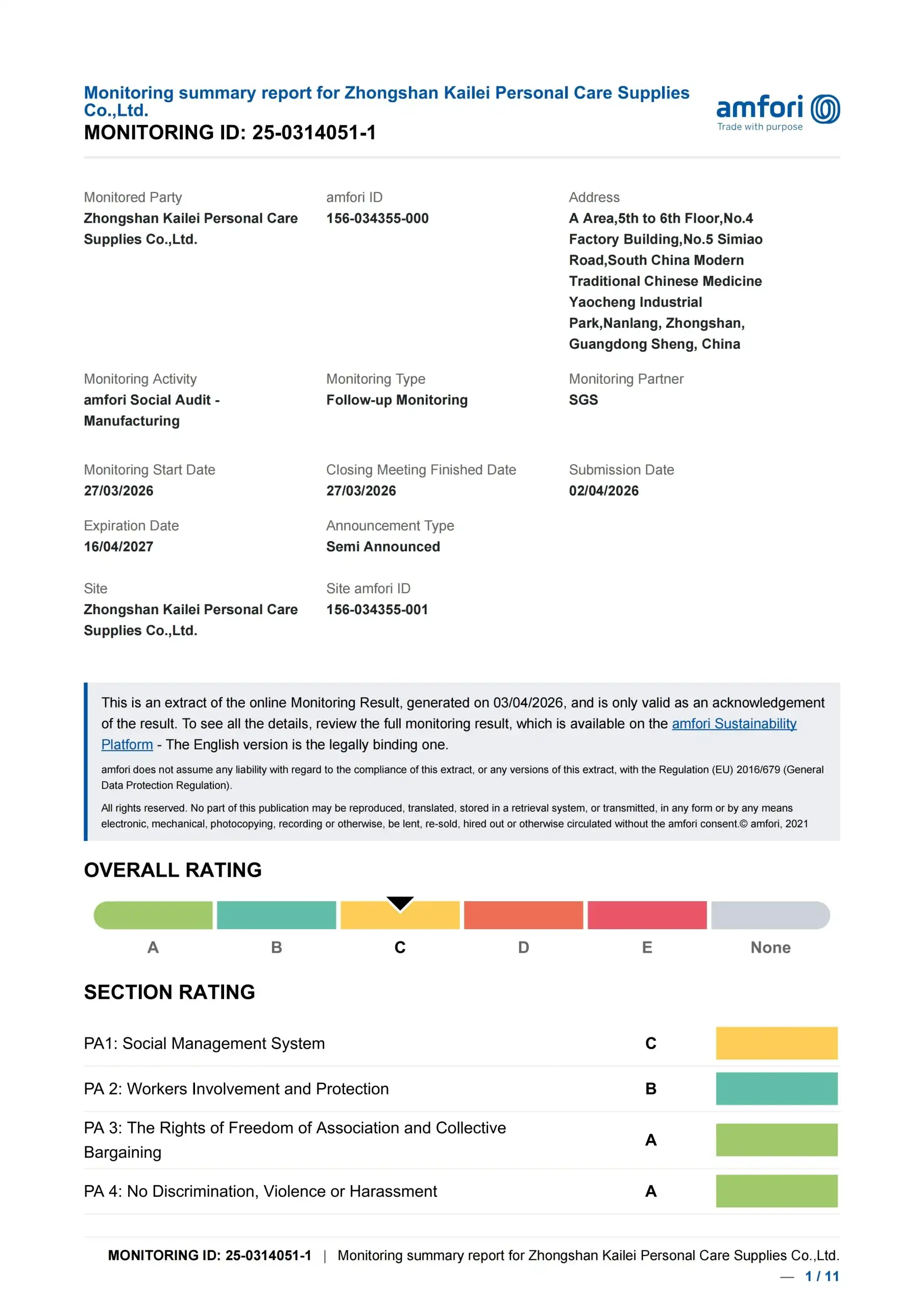
We manufacture skincare as a cosmetics supplier: general liquid, cream/lotion and wax units, with eye-area skincare and baby/child skincare production in scope per our SGS certification. Colour cosmetics are outside our certified scope. Our certifications page states the scope as it appears on the certificate.
What we can hand your regulatory team: the full INCI listing with function, the manufacturing licence and certificate scope, MSDS, stability and compatibility reports from the trial batch, and a sample of the finished goods for testing. Our EU market guide covers what a CPSR requires, and the import duty lookup for HS 3304 covers landed-cost basics for the US and UK.
What we do not do is sign off claims. Whether your specific wording is a cosmetic or a drug claim in your specific market is a regulatory and legal determination, and it belongs with a qualified consultant or lawyer in that market — ideally before artwork, and certainly before the first shipment. We are a manufacturer, and the useful thing a manufacturer can do is document precisely what was made, and stay inside its own certified scope.
FAQ
Q: Can I sell a silicone gel as a scar removal product in the US?
Not as a cosmetic. FDA determines category by intended use, and treating or removing a scar is disease/treatment language, which makes the product a drug or a device rather than a cosmetic. A cosmetic version makes appearance, moisture and texture claims only, and a US market entry built on genuine scar-management claims needs a device or drug pathway plus its own labelling and registration obligations.
Q: What is the difference between a scar and a post-acne mark for claim purposes?
A scar is a change in the skin's structure; a mark is a change in colour left behind after inflammation. FDA names affecting melanin production in the skin as an example of a drug claim, so "inhibits melanin" crosses the line, while cosmetic tone and appearance wording stays inside it. Products sold against brown or red post-acne marks should therefore be positioned on the look of the skin, not on pigment biology.
Q: Does FDA treat silicone specifically as a cosmetic?
No. There is a dedicated medical device classification for silicone sheeting intended for the management of closed hypertrophic and keloid scars, at 21 CFR 878.4025, classified as Class I and exempt from premarket notification subject to limitations. That does not automatically extend to a gel or cream form, whose status has to be assessed on the product and the claims made for it.
Q: Can I say "dermatologist tested" on a scar gel?
Only if the testing took place and you can produce the documentation. In the EU the claim must be consistent with the evidence in your Product Information File, and claims must be supported by adequate and verifiable evidence. In the US, unsupported testing claims are an advertising substantiation problem in their own right.
Q: Is "reduces the appearance of scars" a safe claim?
It is the wording most cosmetic brands use, and it is safer than "removes scars" because it describes appearance rather than a treatment. But FDA reads intended use from the whole context — the product name, category, imagery and testimonials — so appearance wording does not neutralise a listing that otherwise reads as scar treatment. Treat it as one component of a positioning decision, not as a password that unlocks the cosmetic route.
Q: What documentation should a manufacturer give a brand for a claim file?
At minimum: the full INCI list with exact ingredient function, the certificate of analysis for the finished batch, the stability and compatibility reports, the GMP or ISO 22716 evidence for the facility, and the manufacturing licence with its certified scope. That package supports your regulatory filing and your own claim substantiation; it does not replace a regulatory review of the claims themselves.
Act with Skincraftlab
If you are building a post-acne or scar-adjacent range and want the format side resolved first — gel, serum and pads built to a claim-safe brief, with documentation your regulatory consultant can work from — send us the intended market and the wording you are considering. We will tell you what we can produce within our certified scope, and what has to go to a specialist. Request a quote or contact us with your target market and volumes.
Sources
- U.S. Food and Drug Administration, "Is It a Cosmetic, a Drug, or Both? (Or Is It Soap?)" — cosmetic and drug definitions (FD&C Act sec. 201(i), 201(g)(1)), intended-use examples, cosmeceutical status, MoCRA registration and listing, combination product labelling. Read 14 September 2026. https://www.fda.gov/cosmetics/cosmetics-laws-regulations/it-cosmetic-drug-or-both-or-it-soap
- U.S. Food and Drug Administration, "Warning Letters Address Drug Claims Made for Products Marketed as Cosmetics". https://www.fda.gov/cosmetics/warning-letters/warning-letters-address-drug-claims-made-products-marketed-cosmetics
- U.S. Food and Drug Administration, Import Alert #66-41, "Detention Without Physical Examination of Unapproved New Drugs Promoted In the United States". https://www.accessdata.fda.gov/cms_ia/importalert_190.html
- 21 CFR § 878.4025 "Silicone sheeting" — identification and Class I classification, exempt from premarket notification subject to the limitations in § 878.9. Electronic Code of Federal Regulations. https://www.ecfr.gov/current/title-21/section-878.4025
- Commission Regulation (EU) No 655/2013 of 10 July 2013 laying down common criteria for the justification of claims used in relation to cosmetic products — Article 2 (consistency with the product information file) and the Annex (legal compliance, truthfulness, evidential support, honesty, fairness, informed decision-making). Official Journal L 190/31. https://eur-lex.europa.eu/legal-content/EN/TXT/?uri=CELEX:32013R0655
- Skincraftlab, certifications and certified production scope. https://www.skincraftlab.com/certifications
2026 Skincare Market Entry Guide
Which skincare categories are growing on Amazon US in 2026? Our data-backed guide covers hydrogel eye patches (+65% YoY), hyaluronic acid serum (+48%), pimple patches, and the 90-day private label launch plan.
No spam, ever. Unsubscribe anytime.
What Are the Key Facts Before You Request a Quote?
Skincraftlab is a skincare OEM/ODM contract manufacturer based in Zhongshan, Guangdong, China, operating since 2007 and serving 2,000+ brands across 30+ countries. Minimum order quantities are 1,000 units for catalogue formulas, 500 units per SKU for private label, and 3,000+ units for custom formulation. Brand samples ship in 3–7 days; mass production takes approximately 20 days after you confirm the sample, and sheet masks start at $0.08–$0.35 per piece. Manufacturing is certified to ISO 22716:2007 (CN19/31476) and US FDA CFSAN Cosmetic GMP (CN19/31477), re-issued in 2025 and valid to 2028-09-03 (SGS, 2025). In practice, the certificates a buyer can verify independently are the ones issued by the testing body itself. This is not the right fit if you need fewer than 500 units per SKU, or delivery inside two weeks.
| Topic | Details |
|---|---|
| Category | scar gel OEM |
| Minimum order | 1,000 units standard; 500 per SKU private label; 3,000+ custom |
| Samples & production | Brand samples 3–7 days; production approx. 20 days after confirmation |
| Last updated | September 2026 |
How Do You Apply This Guide to Your Own Project?
- 1Step 1: match the format to your unit cost — for example, sheet masks run $0.08–$0.35 per piece at 1,000 units, while serums run $1.50–$5.00 per bottle.
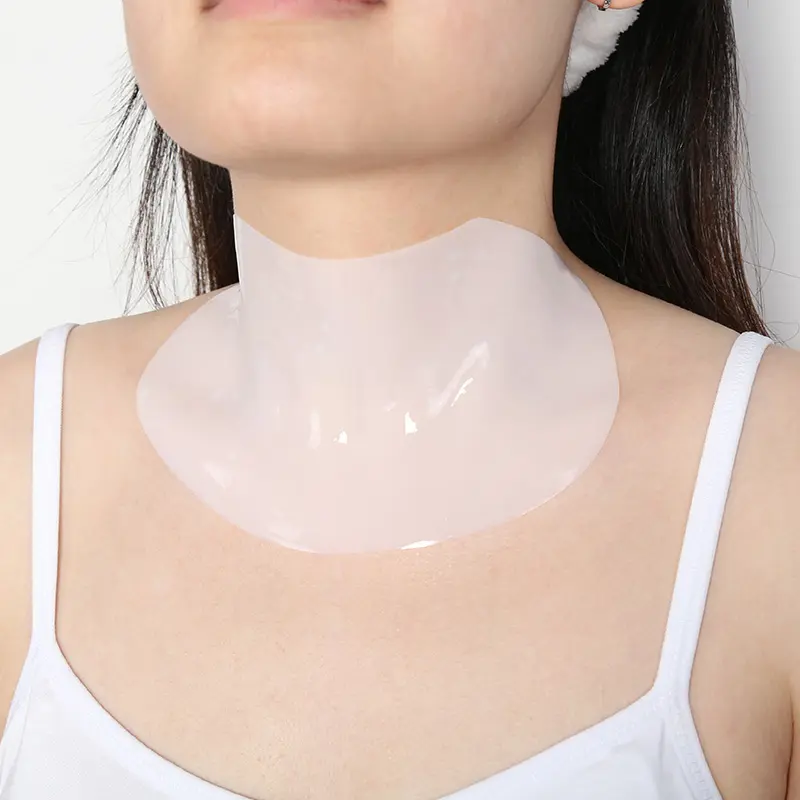
- 2Step 2: confirm your certification scope — ISO 22716:2007 (CN19/31476) and US FDA CFSAN GMP (CN19/31477) cover facial, eye, lip, hand, foot, neck and hair masks (SGS, 2025).
- 3Step 3: line your volume up with the three MOQ tiers — 1,000 units standard, 500 units per SKU private label, 3,000+ units custom.
- 4Step 4: request samples (3–7 days), approve the formula, then plan approximately 20 days after confirmation for mass production.
- 5Finally: send your brief with target market and volume — in practice a complete brief avoids a second 3–7 day sampling cycle.
Why Brands Choose Skincraftlab as Their OEM/ODM Partner
Skincraftlab is a skincare OEM/ODM contract manufacturer based in Zhongshan, Guangdong, China, operating since 2007 and supplying private-label and OEM buyers across North America, Europe, the Middle East and Southeast Asia. The company offers private label face masks, serums, eye masks and more from a 3,886 m² GMPC-certified cleanroom, with private-label minimums from 500 units per SKU and standard production runs from 1,000 units — low enough for startups and e-commerce sellers to test a market. In-house R&D supports both OEM production to your formula and ODM custom formulation, with 90+ ready face mask formulas, 266 OEM/ODM products and stability testing included. Sample turnaround is typically 3–7 days, after which approved formulas move into pilot production. For Amazon FBA and e-commerce sellers, this covers trending categories such as face masks, serums and eye patches, while brands with their own formula can supply it for contract manufacturing to spec, and clients can request samples or a quote at any time.
Frequently Asked Questions
Can I sell a silicone gel as a scar removal product in the US?
What is the difference between a scar and a post-acne mark for claim purposes?
Does FDA treat silicone specifically as a cosmetic?
Can I say "dermatologist tested" on a scar gel?
Is "reduces the appearance of scars" a safe claim?
What documentation should a manufacturer give a brand for a claim file?
Related Posts
PDRN Serum OEM China: 2% vs 0.5% Salmon DNA Specs
What 2% vs 0.5% PDRN salmon DNA really means in an OEM spec sheet, plus rolling forecast terms for 500,000 pimple patches and hydrogel under-eye patch MOQ/FOB math.
Chat Responsiveness SLA for OEM Skincare Inquiries in China
What a realistic chat responsiveness SLA looks like for OEM skincare inquiries in China — plus hydrocolloid vs hydrogel pimple patch sourcing specs and costs.
Pimple Patch OEM Line Capacity: 1M Units/Month Ramp-Up
A factory-floor ramp-up plan for taking a dedicated hydrocolloid coating line from pilot to 1 million pimple patch units per month in China, with real cycle times and QC gates.
Related Products

Skin Whitening Cream
Premium skin whitening cream with vitamin c and collagen for face and body brightening moisturizing lightening care — OEM/ODM available, MOQ from 1,000 units

Transparent Silicone Scar Gel Sheet for Effective Silicone Scar Sheets for Body Care
Premium logo transparent silicone scar gel sheet for effective silicone scar sheets for body care — OEM/ODM available, MOQ from 1,000 units

Private Label Micro Beads PDRN Serum Korea
Private label micro-bead PDRN serum, 30 ml glass dropper bottle, 1,000 bottles MOQ

Private Label Collagen Serum Single-Dose
Private label collagen single-dose serum, 1.2 ml vials, 10 or 30 pcs per box, 1,000 boxes MOQ