Cica (Centella Asiatica) for Sensitive Skin: Private Label Formulation Angle
August 23, 2026
Skincraftlab
B2B Skincare Manufacturing Expert
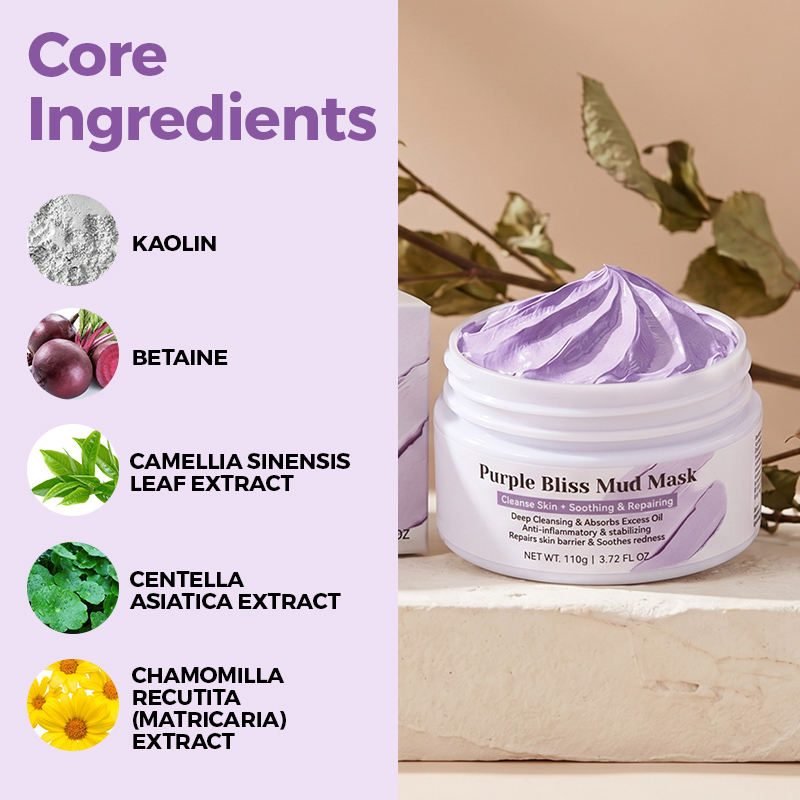
What Is This Guide About?
*Centella asiatica* is a plant used for centuries in traditional medicine across Asia, where it has a long history of topical use for wound healing.
Category
cica skincare
Audience
Brand owners, procurement, R&D
Updated
August 2026
Cica (Centella Asiatica) for Sensitive Skin: Private Label Formulation Angle
Bottom line: Cica — the marketing name for Centella asiatica (also called tiger grass or gotu kola) — has become a cornerstone of sensitive-skin positioning because its key compounds are associated with soothing, barrier support, and skin-repair signaling. It is a forgiving, broadly compatible active for private label: it works across serums, creams, and masks, has a strong consumer story, and rarely causes the tolerance problems of stronger actives. The formulation work is in the supporting cast — preservatives, fragrance, and the soothing system around the centella itself.
What Cica Is: Definition
Centella asiatica is a plant used for centuries in traditional medicine across Asia, where it has a long history of topical use for wound healing. Its cosmetic reputation rests on four main triterpene compounds: asiaticoside, madecassoside, asiatic acid, and madecassic acid. In skincare, centella extracts and these compounds are associated with calming redness, supporting the skin barrier, and encouraging the skin's normal repair processes. The name "cica" comes from the cicatrizing (scar-supporting) tradition of the plant, and the ingredient now appears across Korean- and Western-style sensitive-skin lines under names like cica, centella, and tiger grass.
It is worth being precise: "cica" is not a regulated ingredient category — it is a marketing shorthand for centella-based products. The actual composition of a "cica" product depends on which extract, which compounds, and what dose the formulator uses, which is exactly why formulation quality matters more than the label name.
The Sensitive-Skin Market Context
Sensitive skin claims have grown into one of the largest skincare segments, driven by a mix of genuine skin reactivity, over-exfoliation trends, and consumers self-diagnosing sensitivity. This has created strong demand for products that promise to calm and repair rather than transform — and cica fits that brief better than almost any other single active because it can be used at meaningful levels without the irritation risk of retinoids, acids, or high-dose vitamin C.
From a manufacturer's perspective, this is an attractive positioning for private label: the target audience is broad, the claims are relatively low-risk (soothing, comfort, barrier support), and the ingredient has none of the stability headaches of retinol. It also cross-sells well — a customer who buys a cica serum is a strong candidate for a cica cream and a cica mask. For a manufacturer with 19+ years of OEM experience, this is also a category with very few formulation surprises, which keeps development timelines predictable.
Common Product Forms
Serums and ampoules. The most common entry format: a light, water-based formula with centella extract plus supporting soothers (panthenol, allantoin, beta-glucan). Serums give the active its own stage and are the natural first SKU for a cica line.
Creams and lotions. Barrier-support creams pair centella with ceramides, squalane, and shea butter to deliver the "repair" half of the story. Creams also capture customers who want cica without a serum routine.
Sheet masks and wash-off masks. Masks are the discovery format — low commitment, high frequency of use. A cica sheet mask is a common way for brands to introduce the ingredient, and mask lines benefit from the format's trial-friendly pricing.
A practical angle for private label: cica works as a line theme (serum + cream + mask) rather than a one-off product, because the ingredient's story is about consistent soothing, and repeat purchase is what builds the franchise. Serums, creams, and masks are all realistic formats to explore in Skincraftlab's catalog when you scope the line.
Formulation Notes for Cica Products
- Extract quality and standardization. Centella extracts vary enormously in triterpene content. Ask your manufacturer or supplier about the extract's standardization and the dose used in the formula — a formula with 0.1% of a weak extract is not the same product as one with a standardized madecassoside content.
- The soothing system. Cica is usually supported by a complementary system: panthenol (pro-vitamin B5), allantoin, bisabolol, zinc, and beta-glucan are common partners. The total soothing effect comes from the system, not the single extract.
- Fragrance and preservatives. Sensitive-skin consumers are the most fragrance-averse audience in skincare. Fragrance-free or very low-fragrance formulas, and gentle preservative systems, are effectively table stakes for this category — and they are a major part of why two "cica" products can feel completely different.
- Texture and occlusion. A cica serum can be light, but a cica cream needs proper emollients and occlusives (squalane, ceramides, shea) to deliver the barrier-repair experience. Hydration without occlusion under-delivers on the repair promise.
- Claim discipline. "Soothes the look of redness," "supports the skin barrier," and "comforts irritated skin" are cosmetic claims. Anything implying treatment of a medical condition (eczema, dermatitis) crosses into territory that most markets regulate — keep claims cosmetic and substantiated.
If you are developing a cica line, work with a manufacturer that can show you the actual formula architecture — not just a "cica" label. Skincraftlab's product catalog and team can walk you through mask, serum, and cream options and how the soothing systems are built.
What It Costs to Manufacture (Facts)
| Fact | Detail |
|---|---|
| Company | Skincraftlab — skincare OEM/ODM manufacturer, Zhongshan, Guangdong, China |
| Experience | 19+ years |
| Brands served | 2,000+ |
| Export countries | 30+ |
| Products in catalog | 239 |
| Active SKUs | 200+ |
| Mask formulations | 90+ (extensive mask R&D history — cica masks are a natural fit) |
| Factory | GMP facility, 5,000 m² |
| Serums & toners | USD $1.50–5.00/bottle (MOQ 1,000) |
| Face creams & lotions | USD $1.80–6.00/jar (MOQ 1,000) |
| Sheet masks | USD $0.08–0.35/pc (MOQ 1,000) |
| Standard MOQ | 1,000 units |
| Private label MOQ | 500/SKU |
| Custom OEM (from your formula) | 3,000+/SKU |
All figures are as published by the manufacturer; per-unit pricing depends on extract dose, packaging, and volume.
How to Start a Cica Private Label Line: Steps
- Define the line scope. Decide whether you launch one hero SKU (usually a serum or mask) or a three-SKU line (serum + cream + mask). One hero SKU keeps first-run costs low; a line builds the franchise faster.
- Choose the format and dose. Work with your manufacturer to select a standardized centella extract and agree the use level, plus the supporting soothing system (panthenol, allantoin, etc.).
- Lock the sensory and packaging brief. Fragrance-free or low-fragrance, a pump or tube format, and packaging that signals calm and clinical — light colors, minimal design.
- Run stability and compatibility tests. Confirm the extract is stable in your base, at your pH, and with your preservative system before committing to MOQ.
- Decide claims and labels. Draft cosmetic claims ("soothes the look of redness," "supports skin barrier") and have them reviewed for your target market before printing.
- Place the first order and plan the second. Private label starts at 500 units/SKU at Skincraftlab; use early sales data and customer feedback to decide which SKU earns a second run and which formats to add.
Bringing a Cica Line to Market: What to Ask Your OEM Partner
A cica line rewards brands that verify their ingredients. When you brief a manufacturer, ask for the centella extract source and the concentration used, plus documentation of the active marker compound. “Cica” is a marketing shorthand; the formulation quality lives in the extract quality.
For a sensitive-skin audience, request an irritation-free formula path: fragrance-free, minimal preservative load (with a passing challenge test), and a simple ingredient deck. At Skincraftlab, private label runs start at 500 units/SKU, standard MOQ is 1,000, and custom OEM starts at 3,000+. See existing cica-adjacent product formats and get a quote with your target form factor.
FAQ
Q: What exactly is "cica" in skincare? A: Cica is the marketing shorthand for Centella asiatica (tiger grass), a plant extract whose triterpene compounds — asiaticoside, madecassoside, asiatic acid, madecassic acid — are associated with soothing and barrier-support effects. It is not a regulated ingredient category, so formula quality varies widely by manufacturer.
Q: Is cica suitable for all skin types? A: It is generally well tolerated and is most commonly positioned for sensitive, reactive, or barrier-compromised skin. Individual reactions are still possible, as with any botanical, so patch testing is standard practice.
Q: Can cica be combined with retinol or acids? A: Yes — cica is frequently used as a calming companion in formulas that also contain retinol or exfoliating acids, or as a separate "recovery" product in a routine. Its compatibility is one of its strengths.
Q: Does "cica" on the label guarantee a soothing product? A: No. The effect depends on the extract's standardization, the dose, and the total formula. Two products labeled "cica" can differ dramatically in centella content and in the quality of the supporting soothing system.
Q: What is the cheapest way to test a cica product with real customers? A: A sheet mask or a small serum run is the lowest-cost entry: sheet masks run USD $0.08–0.35/pc at MOQ 1,000, and serums run $1.50–5.00/bottle at MOQ 1,000 (private label from 500 units/SKU). Both give you real consumer feedback before you scale.
Q: What documents should I ask for when developing a cica product? A: At minimum: the INCI list, extract standardization or certificate of analysis, stability reports, and any safety assessments relevant to your target market. Certificates and compliance documents vary by market — confirm what your destination country requires.
Sources & Verification Date
- Centella asiatica science (triterpene compounds, soothing and barrier associations) reflects general cosmetic-science consensus; the plant's traditional use is documented historically, and claim-level effects should be verified with primary literature.
- All Skincraftlab company facts, MOQs, and pricing are from the manufacturer's public materials and website, accessed 2026-08-23.
- Verification date: 2026-08-23
2026 Skincare Market Entry Guide
Which skincare categories are growing on Amazon US in 2026? Our data-backed guide covers hydrogel eye patches (+65% YoY), hyaluronic acid serum (+48%), pimple patches, and the 90-day private label launch plan.
No spam, ever. Unsubscribe anytime.
What Are the Key Facts Before You Request a Quote?
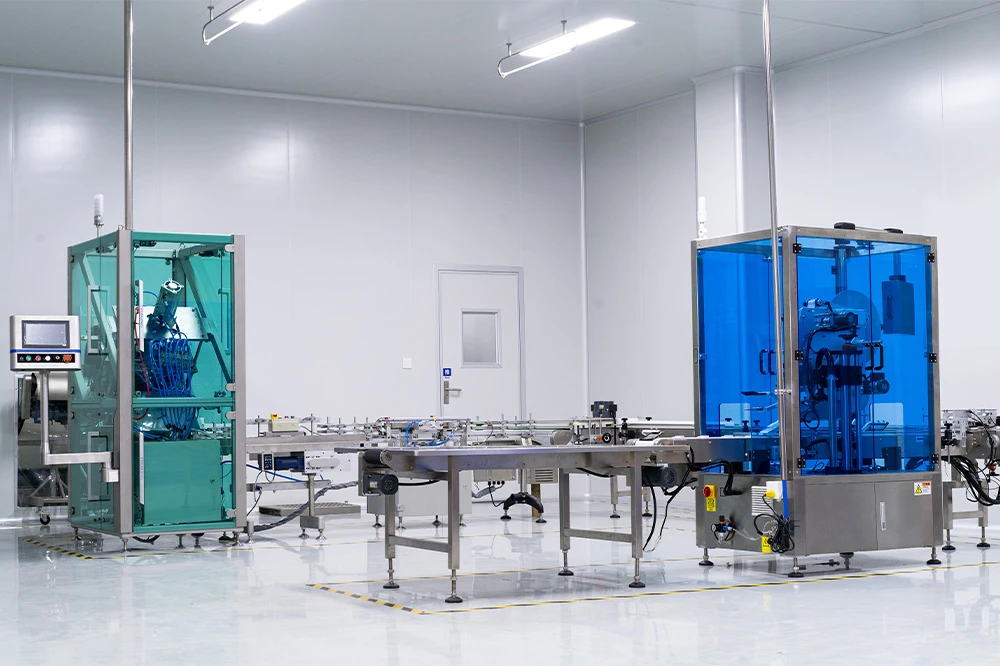
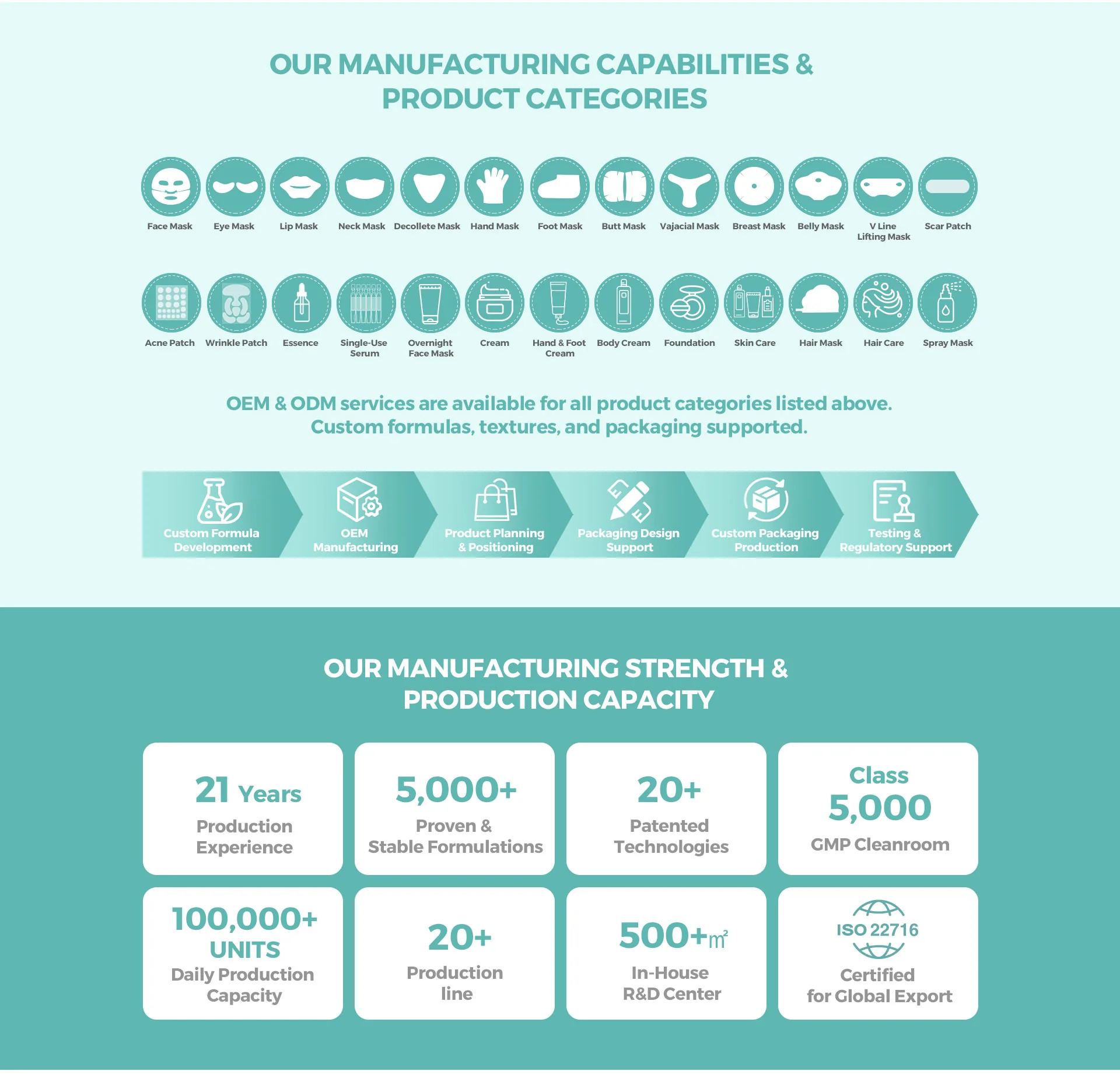
Skincraftlab is a skincare OEM/ODM contract manufacturer based in Zhongshan, Guangdong, China, operating since 2007 and serving 2,000+ brands across 30+ countries. Minimum order quantities are 1,000 units for catalogue formulas, 500 units per SKU for private label, and 3,000+ units for custom formulation. Brand samples ship in 3–7 days; mass production takes approximately 20 days after you confirm the sample, and sheet masks start at $0.08–$0.35 per piece. Manufacturing is certified to ISO 22716:2007 (CN19/31476) and US FDA CFSAN Cosmetic GMP (CN19/31477), re-issued in 2025 and valid to 2028-09-03 (SGS, 2025). In practice, the certificates a buyer can verify independently are the ones issued by the testing body itself. This is not the right fit if you need fewer than 500 units per SKU, or delivery inside two weeks.
| Topic | Details |
|---|---|
| Category | cica skincare |
| Minimum order | 1,000 units standard; 500 per SKU private label; 3,000+ custom |
| Samples & production | Brand samples 3–7 days; production approx. 20 days after confirmation |
| Last updated | August 2026 |
How Do You Apply This Guide to Your Own Project?
- 1Step 1: match the format to your unit cost — for example, sheet masks run $0.08–$0.35 per piece at 1,000 units, while serums run $1.50–$5.00 per bottle.
- 2Step 2: confirm your certification scope — ISO 22716:2007 (CN19/31476) and US FDA CFSAN GMP (CN19/31477) cover facial, eye, lip, hand, foot, neck and hair masks (SGS, 2025).
- 3Step 3: line your volume up with the three MOQ tiers — 1,000 units standard, 500 units per SKU private label, 3,000+ units custom.
- 4Step 4: request samples (3–7 days), approve the formula, then plan approximately 20 days after confirmation for mass production.
- 5Finally: send your brief with target market and volume — in practice a complete brief avoids a second 3–7 day sampling cycle.
Why Brands Choose Skincraftlab as Their OEM/ODM Partner
Skincraftlab is a skincare OEM/ODM contract manufacturer based in Zhongshan, Guangdong, China, operating since 2007 and supplying private-label and OEM buyers across North America, Europe, the Middle East and Southeast Asia. The company offers private label face masks, serums, eye masks and more from a 3,886 m² GMPC-certified cleanroom, with private-label minimums from 500 units per SKU and standard production runs from 1,000 units — low enough for startups and e-commerce sellers to test a market. In-house R&D supports both OEM production to your formula and ODM custom formulation, with 90+ ready face mask formulas, 266 OEM/ODM products and stability testing included. Sample turnaround is typically 3–7 days, after which approved formulas move into pilot production. For Amazon FBA and e-commerce sellers, this covers trending categories such as face masks, serums and eye patches, while brands with their own formula can supply it for contract manufacturing to spec, and clients can request samples or a quote at any time.
Frequently Asked Questions
What exactly is "cica" in skincare?
Is cica suitable for all skin types?
Can cica be combined with retinol or acids?
Does "cica" on the label guarantee a soothing product?
What is the cheapest way to test a cica product with real customers?
What documents should I ask for when developing a cica product?
Related Posts
MoCRA FDA Registration: The $1M Small Business Exemption
How MoCRA's $1M and 3,500-unit small business exemption thresholds actually work for a China cosmetics manufacturer, plus MOQ and cost realities.

Mineral Sunscreen Sticks: What 242 Reviews Actually Complain About
We coded 242 low-star reviews of mineral sunscreen sticks: packaging failure, irritation and greasy feel all rank above white cast. What a brief should specify first.
Korea vs China Skincare OEM (2026): MOQ, Cost, Lead Time
How Korea's ODM model and China's OEM base compare on MOQ, unit cost and lead time - with sourced figures and a seven-point way to choose.
Related Products

Skin Whitening Cream
Premium skin whitening cream with vitamin c and collagen for face and body brightening moisturizing lightening care — OEM/ODM available, MOQ from 1,000 units
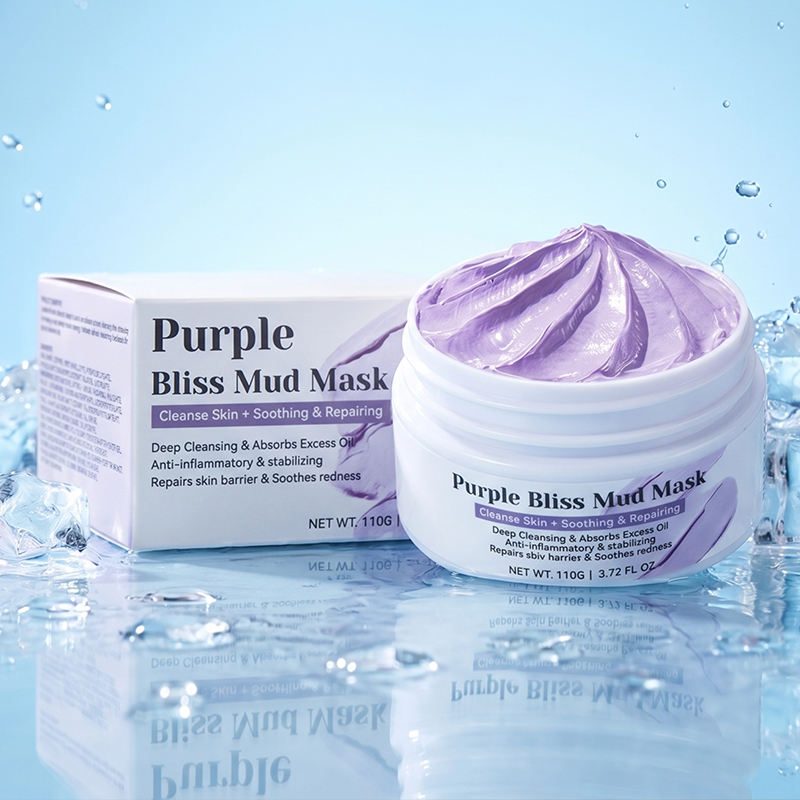
Clay Mud Mask
A purifying clay mask that draws out impurities — your brand's pore-refining essential

Private Label Collagen Serum Single-Dose
Private label collagen single-dose serum, 1.2 ml vials, 10 or 30 pcs per box, 1,000 boxes MOQ

Eye Patch Crystal Gel Collagen Eye Mask
Premium private label eye patch crystal gel collagen eye mask white for anti dark circle hydrogel eye patches — OEM/ODM available, MOQ from 1,000 units