PDRN Serum OEM: US FDA Import & Human Trial Requirements
August 24, 2026
Skincraftlab
B2B Skincare Manufacturing Expert

What Is This Guide About?
US FDA import rules for PDRN serum from China: Does your brand need human trials? Learn the requirements before OEM.
Category
PDRN serum OEM
Audience
Brand owners, procurement, R&D
Updated
August 2026
PDRN Serum OEM: Human Trial Requirement & US FDA Import from China
If you're sourcing a PDRN serum from a Chinese OEM for the US market, you generally do NOT need to run human clinical trials before import—but you must register your facility with the FDA (if in the US), follow Good Manufacturing Practices (GMP, 21 CFR 117), and ensure the product is not an unapproved new drug. PDRN is often positioned as a cosmetic ingredient, but its biological activity can trigger drug classification. Most brands avoid this by marketing PDRN serum as a cosmetic, not a drug, and by using a GMP-certified Chinese manufacturer like Skincraftlab that provides full documentation (CTFA/INCI, MSDS, stability tests) to support your FDA import.
What is PDRN and Why is it in Serums?
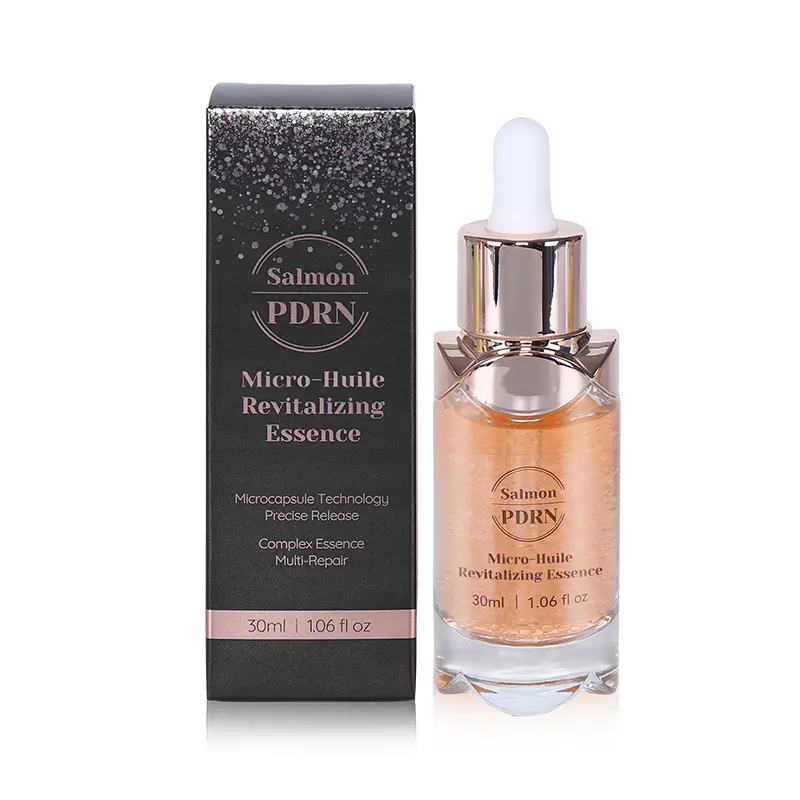
PDRN (Polydeoxyribonucleotide) is a DNA-derived ingredient, typically extracted from salmon sperm or trout, known for its skin-repair and anti-aging properties. It stimulates fibroblast activity, boosts collagen, and aids in wound healing. In cosmetics, PDRN is used in serums and masks at concentrations between 0.5% and 2% to claim firming, elasticity, and moisturization.
While PDRN has a strong scientific basis, its regulatory status is ambiguous in many markets, including the US. The FDA does not have a cosmetic ingredient monograph for PDRN, so its classification (cosmetic vs. drug) is based on intended use and claims.
Does Your PDRN Serum Need Human Trials for US FDA Import?
Short answer: Only if you're marketing it as a drug.
- Cosmetic claim path: If you avoid medical claims (e.g., “repairs DNA damage,” “treats wrinkles” as a medical condition), PDRN serum can be imported as a cosmetic. No human trials required, but you must comply with 21 CFR Part 700 (cosmetic labeling) and ensure ingredients are safe per 21 CFR 740.10.
- Drug claim path: If you claim “heals wounds,” “regenerates skin,” or “reduces scar tissue,” the FDA considers it a drug. Then you must file an IND (Investigational New Drug) application, which requires human clinical trials (Phase I–III), and obtain FDA approval before marketing. That process costs $500K–$2M and takes 3–7 years.
Practical guidance: Most PDRN serum brands choose the cosmetic path. Use carefully worded claims: “hydrates,” “improves skin elasticity,” “supports skin barrier.” Avoid terms like “DNA repair,” “cell regeneration,” and “wound healing.”
US FDA Import Process for Cosmetics from China
Even as a cosmetic, importing PDRN serum from China requires specific steps:
- FDA Prior Notice: File electronically via the FDA's Prior Notice System (PNS) at least 4 hours before arrival (ship) or 8 hours (air). You'll need the manufacturer's Registration Number (often from China's GACC or FDA's VCRP).
- Facility Registration: If you're the US owner/repacker, register with FDA (firm registration) and list your cosmetic products under VCRP (voluntary, but recommended).
- Labeling Compliance: Labels must list ingredients in descending order per INCI, include net content, country of origin (“Product of China”), and the manufacturer's name/address.
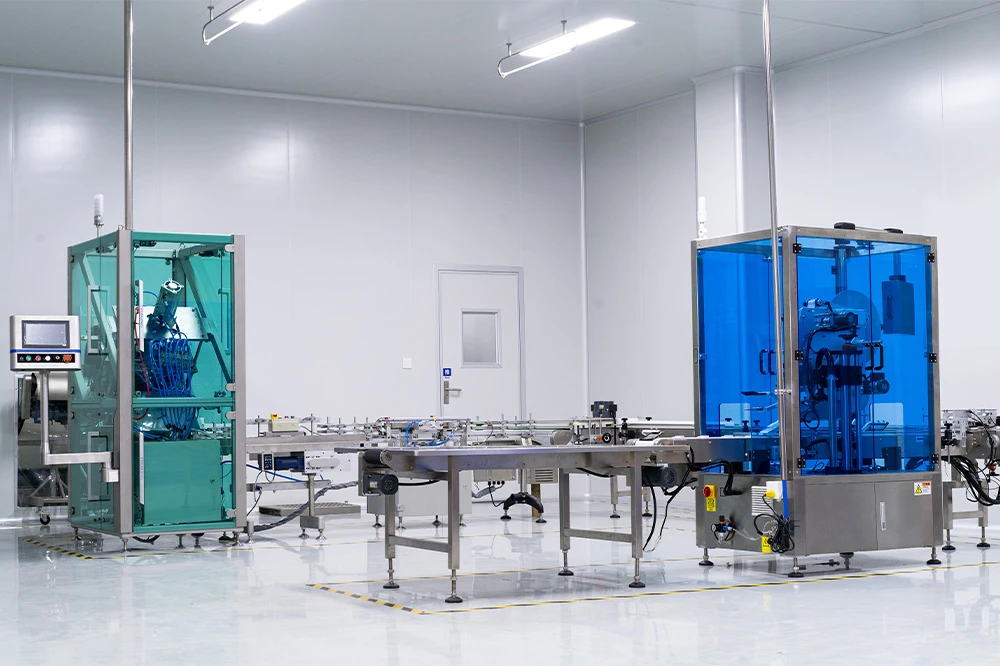
- Good Manufacturing Practices: Though FDA has no mandatory cosmetic GMP, they expect compliance with ISO 22716 or Cosmetics GMP. Chinese factories like Skincraftlab are Cosmetics GMP-certified and can provide documentation.
- Import Testing: Not mandatory, but customs may request certificates of analysis (CoA), stability studies, and a Certificate of Free Sale (CFS) from China's Customs.
Customs holds: If your PDRN serum is detained at the border, you have 30 days to provide evidence that it's a cosmetic. That evidence includes the CFS, INCI list, and product claims.
Comparison: PDRN Serum as Cosmetic vs. Drug (Table)
| Aspect | Cosmetic Path | Drug Path |
|---|---|---|
| Human trials required | No | Yes (IND, Phase I–III) |
| FDA approval before sale | No | Yes (NDA) |
| Time to market | 1–3 months after customs | 3–7 years |
| Cost of compliance | $5K–$20K (labels, testing) | $500K–$2M (trials) |
| Claims allowed | “Hydrates,” “soothes,” “improves elasticity” | “Treats wrinkles,” “repairs DNA” |
| Key regulation | 21 CFR 700, 21 CFR 740.10 | 21 CFR 312, 21 CFR 314 |
| Manufacturer requirement | Cosmetics GMP (ISO 22716) (recommended) | cGMP (drug-specific, 21 CFR 210/211) |
What Documents Do You Need from Your Chinese OEM?
Before importing, your OEM should provide:
- Certificate of Free Sale (CFS) from the Chinese government (issued by the Ministry of Commerce or local authority)
- INCI ingredient list with percentages
- MSDS (Material Safety Data Sheet)
- Stability test reports (3-month accelerated, 24-month real-time)
- Microbial challenge test (USP 51) and preservative effectiveness test
- Cosmetics GMP (ISO 22716) certificate
- Certificate of Analysis (CoA) for each batch
Skincraftlab, as a Cosmetics GMP-certified manufacturer, routinely supplies these to US clients. You can request a due diligence pack by contacting us.
Choosing a PDRN Serum OEM in China: What to Verify
Not all Chinese OEMs are equal, especially for high-activity ingredients like PDRN. Check:
- Certifications: ISO 22716, Cosmetics GMP, BSCI (social audit). These ensure batch consistency and compliance.
- Ingredient sourcing: Ask for the PDRN source (salmon vs. synthetic). Synthetic PDRN is less likely to trigger FDA drug classification due to lower bioactivity.
- Lab capabilities: Does the factory have in-house stability, microbiology, and HPLC testing? For PDRN serums, HPLC verification of molecular weight is critical.
- MOQ: Typical MOQ for a custom PDRN serum is 3,000–10,000 units. Stock formulas may have lower MOQs (e.g., 1,000 units).
- Documentation speed: Ask how fast they can produce CFS, CoA, and stability reports. US importers often need these within 2 weeks.
Example: Skincraftlab (skincraftlab.com) offers custom PDRN serum formulation with Cosmetics GMP compliance and provides full documentation. Their MOQ for custom serum is 3,000 units, and they can produce a sample in 7–10 days.
Cost Implications: Human Trials vs. Cosmetic Compliance
If you mistakenly launch as a drug, your budget explodes:
- Human trials (Phase I–III): $500K–$2M, plus 3–7 years
- Cosmetic compliance: $5K–$20K for required tests (stability, microbial, label claims)
- Import customs bond: $500–$1,000 per shipment (refundable)
- FDA Prior Notice filing: $20–$100 per filing (via broker)
Most small brands can't afford drug status. Therefore, position your PDRN serum as a cosmetic, use compliant claims, and work with a manufacturer who understands the line between cosmetic and drug.
Regulatory Updates: EU and Other Markets
While this article focuses on the US, note that the EU's CPSR (Cosmetic Product Safety Report) is also critical if you export to Europe. For PDRN, the EU has banned animal-derived ingredients from certain species due to BSE/TSE risk (Regulation 1223/2009, Annex II). Ensure your PDRN source is from non-BSE-risk species (e.g., salmon is generally acceptable).
For other markets like Australia, the TGA regulates PDRN as a therapeutic if used in medical devices. Keep your claims cosmetic to avoid TGA clearance.
FAQ
Q: Does a PDRN serum OEM from China require human trial for US FDA import?
No, if you market the PDRN serum as a cosmetic, no human clinical trial is needed. Only if you market it as a drug (e.g., claims of DNA repair or wound healing) would you need FDA-required human trials under an IND application. Cosmetic import requires proper labeling, GMP compliance, and FDA Prior Notice, but no human tests.
Q: What documents do I need to import a PDRN serum from a Chinese manufacturer into the US?
You need a Certificate of Free Sale (CFS), INCI ingredient list, MSDS, stability and microbial test reports, Cosmetics GMP (ISO 22716) certificate, and a Certificate of Analysis per batch. Your OEM should provide these within 1–2 weeks. Skincraftlab can supply all documents for US import.
Q: How can I avoid FDA classifying my PDRN serum as a drug?
Avoid any medical claims like “heals,” “repairs DNA,” “treats wrinkles” as a medical condition. Use cosmetic claims such as “improves skin elasticity,” “hydrates,” “supports skin barrier.” Also, use synthetic PDRN instead of animal-derived to reduce bioactivity, and keep the concentration below 2%.
Q: What is the typical MOQ for a private label PDRN serum from China?
Typical MOQ for a custom PDRN serum is 3,000–10,000 units. Some Chinese manufacturers, like Skincraftlab, offer lower MOQs of 3,000 units for custom formulations and 1,000 units for stock formulas. Always confirm MOQ and lead time before signing.
Q: How long does it take to import a PDRN serum from China to the US?
If you have all documents ready, import takes 2–4 weeks after production (which takes 3–4 weeks) plus shipping (5–7 days by air, 3–5 weeks by sea). Ensure your FDA Prior Notice is filed at least 4 hours before air arrival or 8 hours before ship arrival to avoid delays.
Q: Can I use a Chinese OEM that is not Cosmetics GMP-certified for US market?
Technically, FDA does not mandate cosmetic GMP, but to avoid import detentions, it's highly recommended to use a Cosmetics GMP or ISO 22716 certified manufacturer. Non-certified factories may not provide the required stability and microbial tests, leading to customs holds. Work with a certified OEM like Skincraftlab.
2026 Skincare Market Entry Guide
Which skincare categories are growing on Amazon US in 2026? Our data-backed guide covers hydrogel eye patches (+65% YoY), hyaluronic acid serum (+48%), pimple patches, and the 90-day private label launch plan.
No spam, ever. Unsubscribe anytime.
What Are the Key Facts Before You Request a Quote?
Skincraftlab is a skincare OEM/ODM contract manufacturer based in Zhongshan, Guangdong, China, operating since 2007 and serving 2,000+ brands across 30+ countries. Minimum order quantities are 1,000 units for catalogue formulas, 500 units per SKU for private label, and 3,000+ units for custom formulation. Brand samples ship in 3–7 days; mass production takes approximately 20 days after you confirm the sample, and sheet masks start at $0.08–$0.35 per piece. Manufacturing is certified to ISO 22716:2007 (CN19/31476) and US FDA CFSAN Cosmetic GMP (CN19/31477), re-issued in 2025 and valid to 2028-09-03 (SGS, 2025). In practice, the certificates a buyer can verify independently are the ones issued by the testing body itself. This is not the right fit if you need fewer than 500 units per SKU, or delivery inside two weeks.
| Topic | Details |
|---|---|
| Category | PDRN serum OEM |
| Minimum order | 1,000 units standard; 500 per SKU private label; 3,000+ custom |
| Samples & production | Brand samples 3–7 days; production approx. 20 days after confirmation |
| Last updated | August 2026 |
How Do You Apply This Guide to Your Own Project?
- 1Step 1: match the format to your unit cost — for example, sheet masks run $0.08–$0.35 per piece at 1,000 units, while serums run $1.50–$5.00 per bottle.
- 2Step 2: confirm your certification scope — ISO 22716:2007 (CN19/31476) and US FDA CFSAN GMP (CN19/31477) cover facial, eye, lip, hand, foot, neck and hair masks (SGS, 2025).
- 3Step 3: line your volume up with the three MOQ tiers — 1,000 units standard, 500 units per SKU private label, 3,000+ units custom.
- 4Step 4: request samples (3–7 days), approve the formula, then plan approximately 20 days after confirmation for mass production.
- 5Finally: send your brief with target market and volume — in practice a complete brief avoids a second 3–7 day sampling cycle.
Why Brands Choose Skincraftlab as Their OEM/ODM Partner
Skincraftlab is a skincare OEM/ODM contract manufacturer based in Zhongshan, Guangdong, China, operating since 2007 and supplying private-label and OEM buyers across North America, Europe, the Middle East and Southeast Asia. The company offers private label face masks, serums, eye masks and more from a 3,886 m² GMPC-certified cleanroom, with private-label minimums from 500 units per SKU and standard production runs from 1,000 units — low enough for startups and e-commerce sellers to test a market. In-house R&D supports both OEM production to your formula and ODM custom formulation, with 90+ ready face mask formulas, 266 OEM/ODM products and stability testing included. Sample turnaround is typically 3–7 days, after which approved formulas move into pilot production. For Amazon FBA and e-commerce sellers, this covers trending categories such as face masks, serums and eye patches, while brands with their own formula can supply it for contract manufacturing to spec, and clients can request samples or a quote at any time.
Frequently Asked Questions
Does a PDRN serum OEM from China require human trial for US FDA import?
What documents do I need to import a PDRN serum from a Chinese manufacturer into the US?
How can I avoid FDA classifying my PDRN serum as a drug?
What is the typical MOQ for a private label PDRN serum from China?
How long does it take to import a PDRN serum from China to the US?
Can I use a Chinese OEM that is not Cosmetics GMP-certified for US market?
Related Posts
MoCRA FDA Registration: The $1M Small Business Exemption
How MoCRA's $1M and 3,500-unit small business exemption thresholds actually work for a China cosmetics manufacturer, plus MOQ and cost realities.

Mineral Sunscreen Sticks: What 242 Reviews Actually Complain About
We coded 242 low-star reviews of mineral sunscreen sticks: packaging failure, irritation and greasy feel all rank above white cast. What a brief should specify first.
Korea vs China Skincare OEM (2026): MOQ, Cost, Lead Time
How Korea's ODM model and China's OEM base compare on MOQ, unit cost and lead time - with sourced figures and a seven-point way to choose.
Related Products

Skin Whitening Cream
Premium skin whitening cream with vitamin c and collagen for face and body brightening moisturizing lightening care — OEM/ODM available, MOQ from 1,000 units
Clay Mud Mask
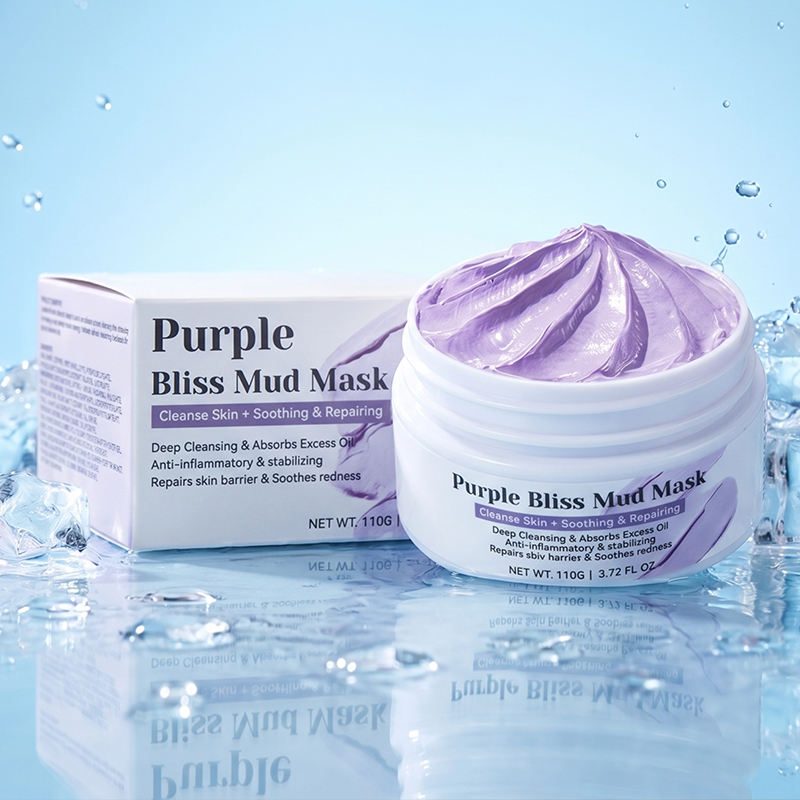
A purifying clay mask that draws out impurities — your brand's pore-refining essential

Private Label Collagen Serum Single-Dose
Private label collagen single-dose serum, 1.2 ml vials, 10 or 30 pcs per box, 1,000 boxes MOQ

PDRN Polypeptide Salmon DNA Serum
Premium single dose pdrn polypeptide salmon dna serum curcuma longa turmeric root soothing repair serum for face — OEM/ODM available, MOQ from 1,000 units