What Is an INCI Name? How to Check CosIng Database for EU/US Ingredient Labeling
August 24, 2026
Skincraftlab
B2B Skincare Manufacturing Expert
What Is This Guide About?
INCI is the international naming system for cosmetic ingredients, mandatory on EU labels under 1223/2009 Art. 19. CosIng is the EU's official database — check compliance in 6 steps.
Category
INCI name
Audience
Brand owners, procurement, R&D
Updated
August 2026
What Is an INCI Name on Skincare Ingredient Lists? How to Search the CosIng Database — Ingredient Labeling Rules for EU & US Exports
Key Takeaway: INCI (International Nomenclature of Cosmetic Ingredients) is the "international common language" of cosmetic ingredients — a unique identification system established in 1973 by the US PCPC (Personal Care Products Council, formerly CTFA). Article 19 of EU Regulation (EC) No 1223/2009 mandates the use of INCI names on all cosmetic labels, and the US Fair Packaging and Labeling Act imposes corresponding requirements. For brands exporting to EU and US markets, ingredient lists must be labeled with INCI names — otherwise products risk customs detention, platform delisting, or corrective action. The EU's official ingredient database is CosIng (Cosmetic Ingredients Database), which can be used to verify raw material compliance status before market launch.
What Is an INCI Name? Why Do Ingredient Lists Look Different from the "Chemical Names" You Expect?
INCI is a naming system that assigns unique identifiers to cosmetic ingredients, established in 1973 by the Personal Care Products Council (PCPC, formerly the Cosmetic, Toiletry, and Fragrance Association — CTFA). Key features of the system:
- Hybrid nomenclature: INCI names combine scientific chemical names, Latin names, and English names — plant extracts typically use Latin botanical names, while chemical raw materials use systematic names
- Continuously updated: INCI naming rules are maintained through ongoing industry review and evolve with new ingredients and technological developments
- Globally recognized: Major markets including the EU, US, and Canada all use INCI as the mandatory labeling standard
A common misconception: INCI name ≠ systematic chemical name. For example, ordinary "water" appears on ingredient lists as Aqua (its Latin name), and "glycerin" is written as Glycerin. Brand owners and buyers reviewing an ingredient list should not assume it follows everyday chemical naming — always verify against an official database.
CosIng: The EU's Official Cosmetic Ingredient Database
CosIng (Cosmetic Ingredients) is the cosmetic ingredient database maintained by the European Commission and the most frequently referenced tool for brands exporting to the EU. It contains:
- Substances permitted for use (listed in the annexes to the cosmetics regulation)
- Restricted substances and their restriction conditions
- The list of prohibited substances
- Identification information for each ingredient, including INCI name, CAS number, and chemical name
How to search: Go to the Cosmetic Ingredients database page on the European Commission's website, enter the ingredient name (by INCI name or CAS number), and check the ingredient's regulatory status in the EU.
Key Facts & Figures: INCI and Ingredient Identification Data
| Fact | Value / Details |
|---|---|
| Year the INCI system was established | 1973 (US PCPC/CTFA) |
| Legal basis for mandatory INCI labeling in the EU | Article 19 of (EC) No 1223/2009 |
| US labeling regulations | Federal Food, Drug, and Cosmetic Act + Fair Packaging and Labeling Act |
| Canada | Cosmetic Regulations (under the Food and Drugs Act) |
| EU official ingredient database | CosIng (maintained by the European Commission) |
| INCI–CAS relationship | Not one-to-one: a single CAS number may correspond to multiple INCI names, and a single INCI name may correspond to multiple CAS numbers |
| Example | CAS 1245638-61-2 corresponds to two INCI names: Pentaerythrityl Tetraacrylate and Triacrylate |
Sources: EU Regulation (EC) No 1223/2009, PCPC, public INCI nomenclature documentation (see references at the end).
Ingredient Labeling Requirements by Key Market — Comparison Table
| Market | Regulatory Basis | INCI Mandatory | Official Search Tool | Notes |
|---|---|---|---|---|
| EU | Article 19 of (EC) No 1223/2009 | ✅ Yes | CosIng | Ingredients listed in descending order of concentration; nanomaterials must be labeled [nano] |
| US | FD&C Act + FPLA | ✅ Yes | FDA website + PCPC database | True soap is exempt |
| Canada | Cosmetic Regulations | ✅ Yes | Health Canada database | Notification required within 10 days of market launch |
| China | Regulations on the Supervision and Administration of Cosmetics | ✅ Yes (Chinese name + INCI may appear side by side) | NMPA official website | Filing/registration required; labels in Chinese |
Note: This table is a general comparison — always refer to the latest regulations in each country.
Labeling in Practice: How to Label Sheet Masks and Skincare for EU & US Exports
Using the daily experience of our factory with sheet mask and skincare OEM/ODM projects as an example, here are practical labeling takeaways:
- List ingredients in descending order of concentration: The EU requires ingredients to be listed from highest to lowest weight percentage; ingredients present at less than 1% may be listed in any order after the 1% line
- Use only INCI names: Do not mix in trade names or jargon — the label should show only INCI names
- Watch for special notations: The EU requires nanomaterials to be marked with
[nano]; fragrance allergens above threshold limits must be listed individually on the label - Dual labeling for the Chinese market: When exporting to China, labels must use standardized Chinese names; INCI names + Chinese names may be listed together
When brands receive an ingredient list from a factory, they can verify each entry against CosIng to confirm nothing is missing or mislabeled.
Step-by-Step: Using CosIng to Verify an Ingredient's EU Compliance Status
- Open the CosIng database: Navigate to the Cosmetic Ingredients database page on the European Commission's website.
- Enter your search term: Search by INCI name, CAS number, or chemical name. We recommend using a CAS number for the most precise results.
- Review the search results: Results show the ingredient's INCI name and whether it appears on any annex (permitted / prohibited / restricted).
- Check restriction conditions: If the ingredient is on the restricted list (Annex III) or the preservatives list (Annex V), carefully review the maximum concentration, scope of use, and warning statements.
- Confirm no prohibited substances: Check whether the ingredient appears in Annex II (the prohibited list).
- Archive your search records: Save screenshots or exports of the results for each key ingredient as part of your formulation compliance documentation.
FAQ
Q: What's the difference between an INCI name and a chemical name? Why does the ingredient list say Aqua instead of Water? INCI is an industry-established naming system that combines Latin, English, and chemical names. For example, water is written as Aqua and glycerin as Glycerin. EU regulations mandate the use of INCI names, so labels must follow this system rather than everyday chemical names.
Q: Is it mandatory to check ingredients on CosIng when exporting to the EU? Not "mandatory," but strongly recommended. CosIng is the EU's official database and helps you confirm an ingredient's regulatory status (permitted / prohibited / restricted, including concentration limits). Brands and contract manufacturers exporting to the EU should use CosIng to verify raw materials at the formulation review stage. Full compliance assessment is completed through the CPSR (Cosmetic Product Safety Report).
Q: Is there a one-to-one correspondence between CAS numbers and INCI names? No. A single CAS number may correspond to multiple INCI names (e.g., different naming perspectives for the same molecular structure), and a single INCI name may correspond to multiple CAS numbers (e.g., different purities or isomers). We recommend combining both search methods, using the CAS number for the most precise results.
Q: What are the main differences between US and EU ingredient labeling? The key difference is regulatory philosophy: the EU follows a "positive list" approach (only listed ingredients may be used) combined with mandatory INCI labeling; the US follows a "negative list" approach (ingredients not prohibited may be used) combined with mandatory INCI labeling (with a true soap exemption). The label formats are broadly similar — both use INCI names in descending order of concentration — but specific exemptions and special labeling rules differ.
Q: Can the ingredient list provided by a factory be verified using CosIng? Yes. Once you receive the ingredient list from your contract manufacturer, enter each ingredient into CosIng to verify three things: first, that the INCI names are spelled correctly; second, that no prohibited substances are present; and third, that restricted ingredients are within their allowed concentration limits. This is the most cost-effective quality check for brands before market launch.
Q: What else needs to appear on the label besides INCI names? EU regulations require: product function description, usage instructions, shelf life (PAO — period after opening), net content, batch number, Responsible Person information, country of origin, and more. Fragrance allergens exceeding threshold limits must also be listed separately on the label.
References and Verification Date
- Regulation (EC) No 1223/2009, Article 19 (mandatory INCI labeling)
- PCPC (Personal Care Products Council): INCI naming system (established 1973)
- European Commission CosIng — Cosmetic Ingredients Database
- US FD&C Act, Fair Packaging and Labeling Act
- INCI–CAS number relationship examples (PCPC public documentation)
Verification date: 2026-08-24. Always refer to the latest official version of each regulation.
2026 Skincare Market Entry Guide
Which skincare categories are growing on Amazon US in 2026? Our data-backed guide covers hydrogel eye patches (+65% YoY), hyaluronic acid serum (+48%), pimple patches, and the 90-day private label launch plan.
No spam, ever. Unsubscribe anytime.
What Are the Key Facts Before You Request a Quote?
Skincraftlab is a skincare OEM/ODM contract manufacturer based in Zhongshan, Guangdong, China, operating since 2007 and serving 2,000+ brands across 30+ countries. Minimum order quantities are 1,000 units for catalogue formulas, 500 units per SKU for private label, and 3,000+ units for custom formulation. Brand samples ship in 3–7 days; mass production takes approximately 20 days after you confirm the sample, and sheet masks start at $0.08–$0.35 per piece. Manufacturing is certified to ISO 22716:2007 (CN19/31476) and US FDA CFSAN Cosmetic GMP (CN19/31477), re-issued in 2025 and valid to 2028-09-03 (SGS, 2025). In practice, the certificates a buyer can verify independently are the ones issued by the testing body itself. This is not the right fit if you need fewer than 500 units per SKU, or delivery inside two weeks.
| Topic | Details |
|---|---|
| Category | INCI name |
| Minimum order | 1,000 units standard; 500 per SKU private label; 3,000+ custom |
| Samples & production | Brand samples 3–7 days; production approx. 20 days after confirmation |
| Last updated | August 2026 |
How Do You Apply This Guide to Your Own Project?
- 1Step 1: match the format to your unit cost — for example, sheet masks run $0.08–$0.35 per piece at 1,000 units, while serums run $1.50–$5.00 per bottle.
- 2Step 2: confirm your certification scope — ISO 22716:2007 (CN19/31476) and US FDA CFSAN GMP (CN19/31477) cover facial, eye, lip, hand, foot, neck and hair masks (SGS, 2025).
- 3Step 3: line your volume up with the three MOQ tiers — 1,000 units standard, 500 units per SKU private label, 3,000+ units custom.
- 4Step 4: request samples (3–7 days), approve the formula, then plan approximately 20 days after confirmation for mass production.
- 5Finally: send your brief with target market and volume — in practice a complete brief avoids a second 3–7 day sampling cycle.
Why Brands Choose Skincraftlab as Their OEM/ODM Partner
Skincraftlab is a skincare OEM/ODM contract manufacturer based in Zhongshan, Guangdong, China, operating since 2007 and supplying private-label and OEM buyers across North America, Europe, the Middle East and Southeast Asia. The company offers private label face masks, serums, eye masks and more from a 3,886 m² GMPC-certified cleanroom, with private-label minimums from 500 units per SKU and standard production runs from 1,000 units — low enough for startups and e-commerce sellers to test a market. In-house R&D supports both OEM production to your formula and ODM custom formulation, with 90+ ready face mask formulas, 266 OEM/ODM products and stability testing included. Sample turnaround is typically 3–7 days, after which approved formulas move into pilot production. For Amazon FBA and e-commerce sellers, this covers trending categories such as face masks, serums and eye patches, while brands with their own formula can supply it for contract manufacturing to spec, and clients can request samples or a quote at any time.
Frequently Asked Questions
What's the difference between an INCI name and a chemical name? Why does the ingredient list say Aqua instead of Water?
Is it mandatory to check ingredients on CosIng when exporting to the EU?
Is there a one-to-one correspondence between CAS numbers and INCI names?
What are the main differences between US and EU ingredient labeling?
Can the ingredient list provided by a factory be verified using CosIng?
What else needs to appear on the label besides INCI names?
Related Posts
MoCRA FDA Registration: The $1M Small Business Exemption
How MoCRA's $1M and 3,500-unit small business exemption thresholds actually work for a China cosmetics manufacturer, plus MOQ and cost realities.

Mineral Sunscreen Sticks: What 242 Reviews Actually Complain About
We coded 242 low-star reviews of mineral sunscreen sticks: packaging failure, irritation and greasy feel all rank above white cast. What a brief should specify first.
Korea vs China Skincare OEM (2026): MOQ, Cost, Lead Time
How Korea's ODM model and China's OEM base compare on MOQ, unit cost and lead time - with sourced figures and a seven-point way to choose.
Related Products
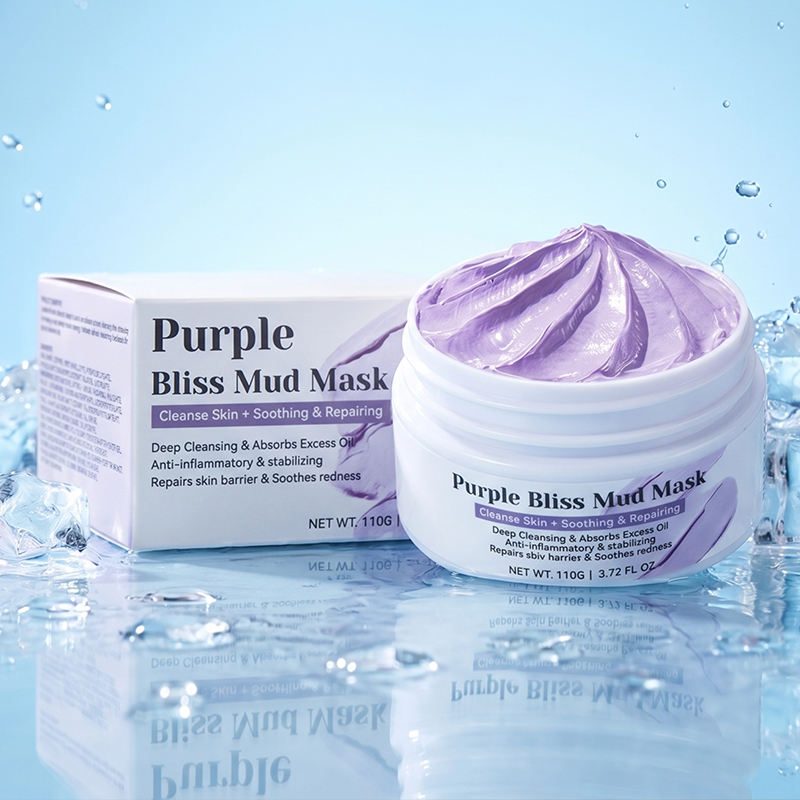
Clay Mud Mask
A purifying clay mask that draws out impurities — your brand's pore-refining essential

Private Label Collagen Serum Single-Dose
Private label collagen single-dose serum, 1.2 ml vials, 10 or 30 pcs per box, 1,000 boxes MOQ

PDRN Polypeptide Salmon DNA Serum
Premium single dose pdrn polypeptide salmon dna serum curcuma longa turmeric root soothing repair serum for face — OEM/ODM available, MOQ from 1,000 units

Kaolin Chamomilla Brighten Clay Mask Curcuma Longa Gentle Exfoliation Mud Mask
Premium kaolin chamomilla recutita brighten clay mask curcuma longa gentle exfoliation mud mask wholesale p — OEM/ODM available, MOQ from 1,000 units