Cosmetics R&D Toolchain 2026: Essential Platforms for Formulation, Compliance & Market Research
September 9, 2026
Skincraftlab
B2B Skincare Manufacturing Expert
What Is This Guide About?
The essential cosmetics R&D toolchain for 2026: ingredient databases (CosIng, INCIDecoder, CosDNA), raw material research (UL Prospector, SpecialChem), formulation references, regional compliance platforms (FDA/MoCRA, EU CPNP, NMPA), market research (Euromonitor, Jungle Scout, Volza), and R&D management software — compiled for private label and OEM brand developers.
Category
cosmetics R&D tools
Audience
Brand owners, procurement, R&D
Updated
September 2026
Building a private label or OEM skincare line touches every stage of the product development cycle: idea validation, ingredient selection, formulation, compliance, efficacy testing, packaging, and market research. The right tools make this process dramatically faster — and the wrong ones waste weeks.
This guide compiles the essential, real-world platforms used across the cosmetics R&D workflow in 2026. It is written for brand owners, formulators, and product developers who want to research ingredients, verify compliance, and validate demand before committing to a production run.
1. Ingredient Databases & INCI Lookup
Before a formula goes anywhere, every ingredient must be identified by its standard INCI name and checked against regulatory limits. These are the databases R&D teams actually use:
- CosIng (European Commission) — the EU reference database of cosmetic ingredients, including restricted substances under Regulation (EC) No 1223/2009. The starting point for EU market compliance.
- INCIDecoder — parses any ingredient list into plain-language explanations of what each component does, its comedogenic rating, and its safety profile. Excellent for competitive teardowns and consumer education.
- CosDNA — a crowd-sourced database of 35,000+ products and 25,000+ ingredients that aggregates CIR, RTECS, and FDA assessments. Useful for quick compatibility and irritation screens.
- PCPC (Personal Care Products Council) — the official keeper of INCI names, with the full International Nomenclature database and usage restrictions.
- PubChem (NIH) — the world's largest free chemistry database. Searchable by CAS number for physico-chemical properties, toxicology data, and safety limits. Indispensable for safety assessment.
- EWG Skin Deep — third-party hazard ratings that many clean-beauty brands reference when positioning low-sensitivity formulas.
- SpecialChem Cosmetics — 58,000+ ingredients searchable by INCI name, function, and market acceptance, with direct supplier contact and sampling.
Related reading: What Is an INCI Name? How to Check CosIng Database
2. Raw Material & Supplier Research
Once you know which ingredients you need, you have to source them — with technical data sheets, safety documentation, and supplier verification:
- UL Prospector — one of the industry's most comprehensive ingredient search systems, with technical data sheets (TDS), safety data sheets (MSDS), and reference formulas across thousands of raw materials.
- ChemicalBook — Chinese-language-friendly database covering physico-chemical parameters, MSDS, and domestic (China) supplier information.
- Supplier technical platforms — BASF, Croda, DSM, Symrise, Evonik, Lubrizol, and Ashland all publish free formulation guidance, application guides, and efficacy data for their ingredients. This is where leading-edge actives are first documented.
- IFRA (International Fragrance Association) — the authority on fragrance standards, allergen lists, and usage limits for perfume raw materials.
3. Formulation & Efficacy Testing References
Formulating is where experience meets science. These references keep you aligned with industry practice:
- CosmetiCraft — a free global formulation reference covering clean beauty, natural/organic, functional skincare, and hair care, with ingredient ratios, manufacturing process, and compliance notes.
- CTFA / PCPC preservation challenge testing — the internationally referenced standard for preservative efficacy (challenge testing) that validates a formula's stability and safety profile.
- CIR (Cosmetic Ingredient Review) — publishes ingredient safety assessments and recommended use limits that underpin US market decisions.
- IFSCC (International Federation of Societies of Cosmetic Chemists) — the global scientific body for cosmetics, offering technical conferences, journals, and continuing education.
A professional OEM partner performs all of this validation internally: stability testing, preservative challenge testing, and compatibility testing are part of the standard development process at Skincraftlab.
4. Compliance & Market Entry by Region
Every export market has its own regulatory gate. Key official platforms to know:
- US — FDA under the MoCRA (Modernization of Cosmetics Regulation Act): facility registration, product listing, color additives, and label requirements.
- EU — European Commission cosmetics portal: product notification via CPNP, responsible person obligations, and the PIF/CPSR safety report framework.
- China — NMPA: the catalogue of used cosmetic ingredients, restricted ingredient lists, and registration/filing requirements for imported cosmetics.
- Korea — MFDS and Japan — MHLW/JCIA: ingredient lists and notification rules for those markets.
- ePing SPS/TBT — a WTO notification service that tracks regulatory revisions across countries in near real time, useful for early compliance-risk warnings.
Related reading: COFEPRIS Pre-Registration Document Checklist and ANVISA GMP Certificate Validity
5. Market Research & Consumer Insight
Validating demand before production saves the most money. The standard toolkit:
- Euromonitor — global category data across 210+ countries and 265+ product categories: category size, brand share, channel structure, and consumer profiles.
- Jungle Scout — Amazon-specific data for cosmetics: competitor sales estimates, keyword optimization, and review mining, essential for e-commerce-first brands.
- Volza — customs and logistics records across 200+ countries showing trade flows, buyers, suppliers, and pricing for specific product codes.
- Trustpilot — monitoring global consumer reviews of competitor products to mine real pain points for formula positioning.
- China e-commerce platforms — Moojing (魔镜), Chama (蝉妈妈), and Newrank track SKU-level sales, price, reviews, and trending ingredients across Tmall, JD, Douyin, and Pinduoduo.
- Customs data platforms — official import/export statistics for cosmetic categories by country, useful for demand sizing in specific markets.
6. R&D Management & Formulation Software
For teams scaling their pipeline, PLM and formulation software keeps formulas, compliance, and documentation in one place:
- Coptis Lab — a leading cosmetics-specific PLM with built-in compliance calculators for natural/organic content, restricted-ingredient checks, and report generation.
- INCILABS — a China-NMPA-adapted system with 10,000+ INCI ingredients and AI formulation recommendations.
- Good Face Formulator — a cloud-based clean-beauty formulation tool that filters green/natural ingredients and calculates natural/organic percentages automatically.
- SkinData PLM — an AI-powered formulation + safety assessment system with a clinical efficacy database for claims support.
Most small and mid-size brands do not need a PLM. Working with an OEM that has a mature R&D process gives you the same traceability without the software overhead.
7. Literature & Patent Search
For novel actives and defensible claims:
- Web of Science / Scopus — the standard indexes for peer-reviewed cosmetics, dermatology, and materials science literature.
- Espacenet (EPO) — free global patent search covering the EU, US, Japan, Korea, and China, useful for checking competing ingredient technologies and formulation patents.
- CNKI and NSTL — the major Chinese academic databases, valuable for local ingredient and formulation research.
How a Professional OEM Compresses This Workflow
A capable OEM partner does not replace your product knowledge — it compresses the operational part of this pipeline. At Skincraftlab, our in-house R&D team handles ingredient verification, formula stability, preservative challenge testing, and regulatory documentation across US, EU, China, and other markets, so a brand can go from validated idea to production batch without rebuilding the whole toolchain.
If you are researching a new product line and want a second opinion on ingredient safety, market demand, or compliance requirements, our team is happy to help — request a sample or a formulation consultation.
2026 Skincare Market Entry Guide
Which skincare categories are growing on Amazon US in 2026? Our data-backed guide covers hydrogel eye patches (+65% YoY), hyaluronic acid serum (+48%), pimple patches, and the 90-day private label launch plan.
No spam, ever. Unsubscribe anytime.
What Are the Key Facts Before You Request a Quote?
Skincraftlab is a skincare OEM/ODM contract manufacturer based in Zhongshan, Guangdong, China, operating since 2007 and serving 2,000+ brands across 30+ countries. Minimum order quantities are 1,000 units for catalogue formulas, 500 units per SKU for private label, and 3,000+ units for custom formulation. Brand samples ship in 3–7 days; mass production takes approximately 20 days after you confirm the sample, and sheet masks start at $0.08–$0.35 per piece. Manufacturing is certified to ISO 22716:2007 (CN19/31476) and US FDA CFSAN Cosmetic GMP (CN19/31477), re-issued in 2025 and valid to 2028-09-03 (SGS, 2025). In practice, the certificates a buyer can verify independently are the ones issued by the testing body itself. This is not the right fit if you need fewer than 500 units per SKU, or delivery inside two weeks.
| Topic | Details |
|---|---|
| Category | cosmetics R&D tools |
| Minimum order | 1,000 units standard; 500 per SKU private label; 3,000+ custom |
| Samples & production | Brand samples 3–7 days; production approx. 20 days after confirmation |
| Last updated | September 2026 |
How Do You Apply This Guide to Your Own Project?
- 1Step 1: match the format to your unit cost — for example, sheet masks run $0.08–$0.35 per piece at 1,000 units, while serums run $1.50–$5.00 per bottle.
- 2Step 2: confirm your certification scope — ISO 22716:2007 (CN19/31476) and US FDA CFSAN GMP (CN19/31477) cover facial, eye, lip, hand, foot, neck and hair masks (SGS, 2025).
- 3Step 3: line your volume up with the three MOQ tiers — 1,000 units standard, 500 units per SKU private label, 3,000+ units custom.
- 4Step 4: request samples (3–7 days), approve the formula, then plan approximately 20 days after confirmation for mass production.
- 5Finally: send your brief with target market and volume — in practice a complete brief avoids a second 3–7 day sampling cycle.
Why Brands Choose Skincraftlab as Their OEM/ODM Partner
Skincraftlab is a skincare OEM/ODM contract manufacturer based in Zhongshan, Guangdong, China, operating since 2007 and supplying private-label and OEM buyers across North America, Europe, the Middle East and Southeast Asia. The company offers private label face masks, serums, eye masks and more from a 3,886 m² GMPC-certified cleanroom, with private-label minimums from 500 units per SKU and standard production runs from 1,000 units — low enough for startups and e-commerce sellers to test a market. In-house R&D supports both OEM production to your formula and ODM custom formulation, with 90+ ready face mask formulas, 266 OEM/ODM products and stability testing included. Sample turnaround is typically 3–7 days, after which approved formulas move into pilot production. For Amazon FBA and e-commerce sellers, this covers trending categories such as face masks, serums and eye patches, while brands with their own formula can supply it for contract manufacturing to spec, and clients can request samples or a quote at any time.
Related Posts
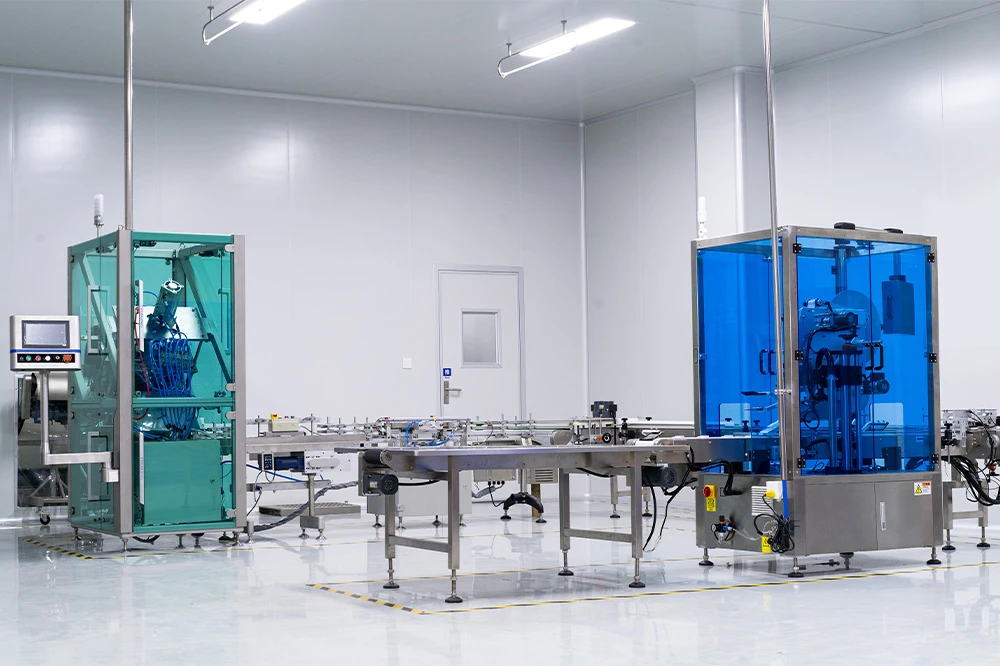
MoCRA FDA Registration: The $1M Small Business Exemption
How MoCRA's $1M and 3,500-unit small business exemption thresholds actually work for a China cosmetics manufacturer, plus MOQ and cost realities.

Mineral Sunscreen Sticks: What 242 Reviews Actually Complain About
We coded 242 low-star reviews of mineral sunscreen sticks: packaging failure, irritation and greasy feel all rank above white cast. What a brief should specify first.
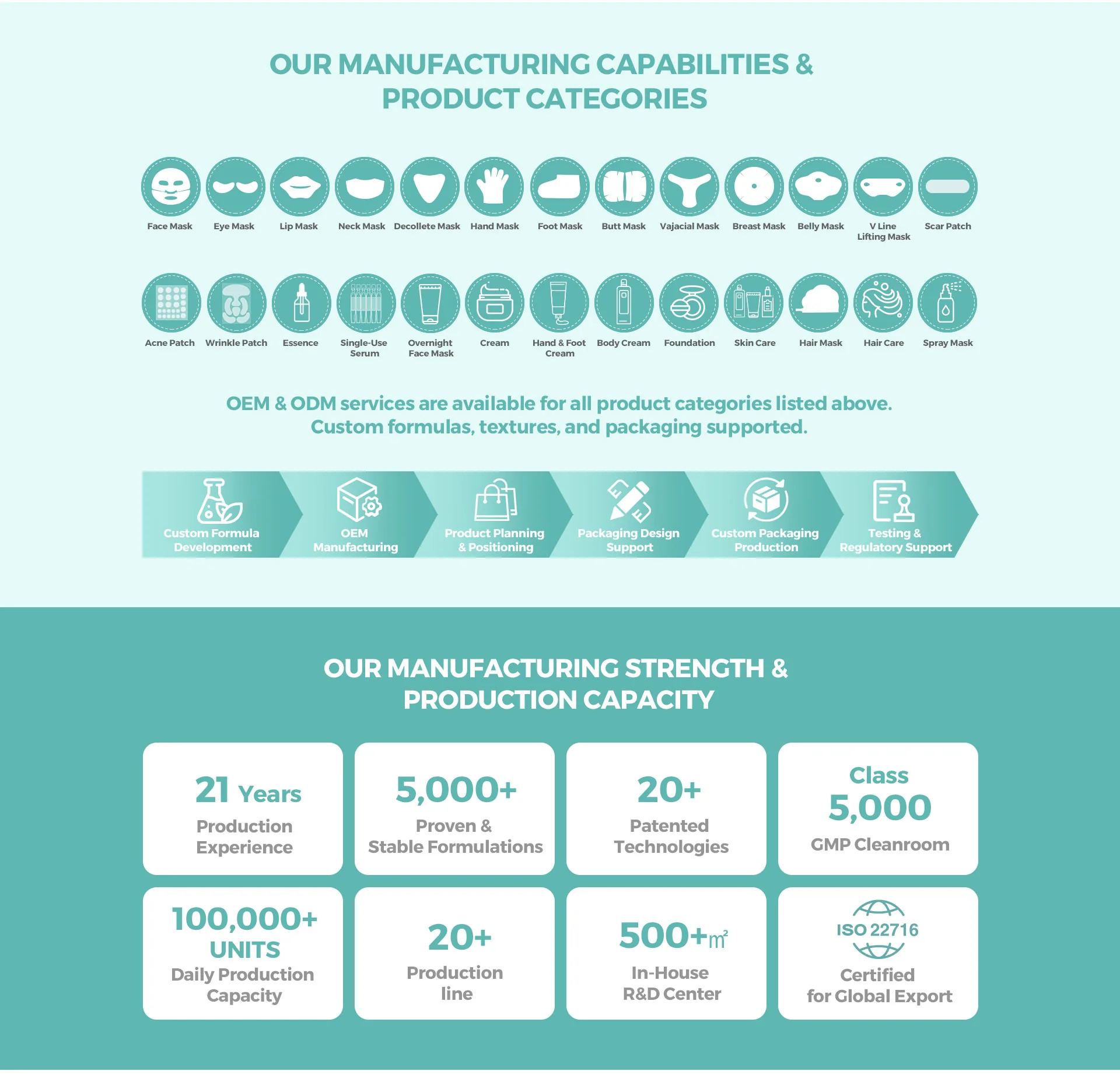
Korea vs China Skincare OEM (2026): MOQ, Cost, Lead Time
How Korea's ODM model and China's OEM base compare on MOQ, unit cost and lead time - with sourced figures and a seven-point way to choose.
Related Products

Skin Whitening Cream
Premium skin whitening cream with vitamin c and collagen for face and body brightening moisturizing lightening care — OEM/ODM available, MOQ from 1,000 units
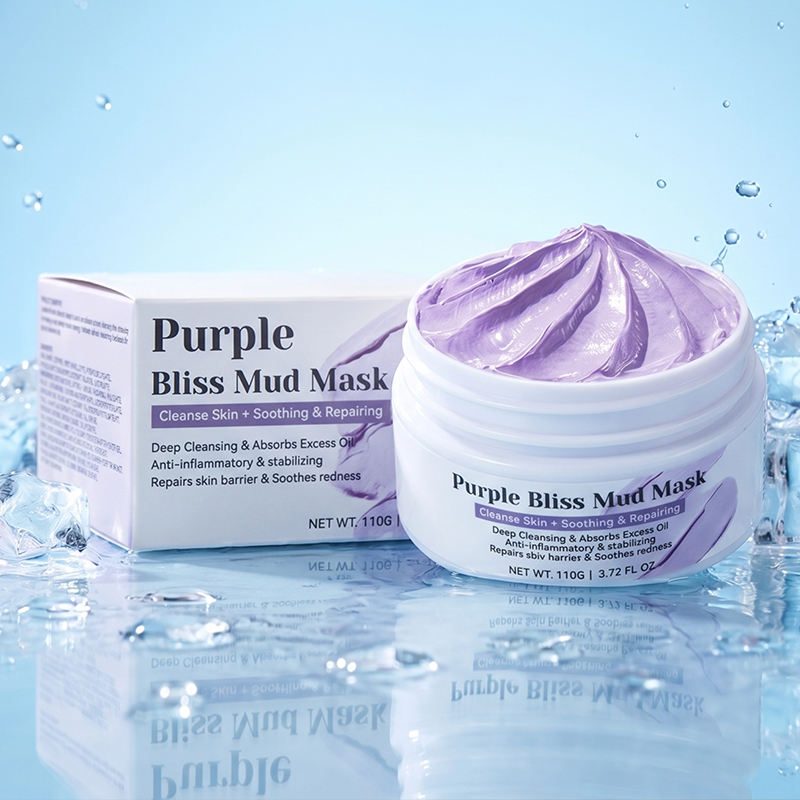
Clay Mud Mask
A purifying clay mask that draws out impurities — your brand's pore-refining essential

Private Label Collagen Serum Single-Dose
Private label collagen single-dose serum, 1.2 ml vials, 10 or 30 pcs per box, 1,000 boxes MOQ

Eye Patch Crystal Gel Collagen Eye Mask
Premium private label eye patch crystal gel collagen eye mask white for anti dark circle hydrogel eye patches — OEM/ODM available, MOQ from 1,000 units