Science-Backed Skincare in 2026: How Global Brands Now Develop Products (and What It Means for Your Private Label)
September 12, 2026
Skincraftlab
B2B Skincare Manufacturing Expert
What Is This Guide About?
In 2026 one in three U.S. women already use AI for skincare advice, ingredient discovery runs on biotech platforms, and clinical validation is the default language of claims — while Chinese manufacturers formalize science-based development. A comparison of Western and Chinese product development narratives, plus a sourcing checklist for private label buyers.
Category
science-backed skincare 2026
Audience
Brand owners, procurement, R&D
Updated
September 2026
Science-Backed Skincare in 2026: How Global Brands Now Develop Products (and What It Means for Your Private Label)
In 2026 the question is no longer "is this ingredient trending" but "how was this product scientifically developed." A growing share of U.S. consumers already use AI for skincare advice, ingredient discovery runs on biotech platforms, and clinical validation has become the default language of premium claims — while Chinese manufacturers are formalizing science-backed development into explicit methodologies. This guide compares the narratives shaping product development in the West and China, and translates them into concrete steps for private label and OEM skincare buyers.
AI Is Now a First-Class Tool in Skincare R&D — and in the Shopping Cart
Artificial intelligence moved from back-office speculation to consumer behavior in 2026. A survey cited by Global Cosmetic Industry found that one in three U.S. women already use AI for skincare and bodycare advice. That is not a niche early-adopter number; it is mainstream adoption that changes what brands must publish, and how.
Three ways AI shows up today:
- Consumer-facing advice. Shoppers ask AI "what serum should I use for dry, sensitive skin" before they open your product page. If your site, labels and FAQs cannot be understood by an AI engine, you lose the recommendation.
- Ingredient discovery. Companies like Debut (named to TIME100 Most Influential Companies 2025) use AI plus biotechnology to decode skin at the genomic level and generate novel, clinically validated ingredients — compressing a discovery cycle that used to take years.
- Formulation optimization. AI assists formulators in dose-response modeling, stability prediction and claim substantiation planning before a single batch is made.
The practical takeaway for a private label buyer: products developed with AI-supported methods are becoming the norm, and buyers increasingly expect the process to be part of the story — not just the finished cream.
Clinical Validation Became the Default Language of Claims
In the U.S. and EU, "clinically proven" is no longer a premium phrase — it is the baseline expectation for any brand positioning itself as serious. Two forces drive this:
- Regulatory momentum. The U.S. Modernization of Cosmetics Regulation Act (MoCRA) tightened facility registration and product listing; buyers sourcing from abroad now ask about GMP certification and compliance paperwork as standard due diligence.
- Consumer skepticism. After a decade of "clean beauty" marketing, shoppers want evidence, not adjectives. Third-party testing, dermatologist review and measurable study endpoints carry more weight than ingredient fear-mongering.
For OEM sourcing, this means documentation is part of the product: stability reports, microbiological testing, safety assessments (CPSR in the EU), and ideally in-vivo or in-vitro efficacy data that your brand can republish.
China's Formal Answer: 11 Science-Based Product Development Methodologies
While Western brands adopted these practices piecemeal, the Chinese cosmetics industry moved to systematize them. At the 3rd China Cosmetics Science Development Conference (2026), eleven methodologies were presented by manufacturers including bio-elastic protein "biological spring" anti-aging systems, dual-enzyme photo-repair systems, transdermal collagen with the first project-level anti-wrinkle certification from SGS, and a "validation first, claims later" model built around efficacy reserves that can match a trending claim in about two weeks.
Three ideas from that playbook are worth borrowing regardless of where you sell:
| Methodology | What it means | Why it matters for your brand |
|---|---|---|
| "Validation first, claims later" | Build an efficacy data reserve before marketing; match claims to verified results | Your ads and labels never outrun your evidence |
| Efficacy × experience × scenario × emotion | Score every concept on all four axes before greenlighting | Fewer me-too launches, more differentiated products |
| Raw material as innovation chip | Co-develop exclusive or novel actives with suppliers | A defensible hero ingredient your competitors cannot copy |
The recurring theme: 复购率 (repurchase rate), raw materials and AI are the three questions Chinese manufacturers now ask before any new product — the same triad Western investors use to evaluate beauty brands.
What This Means for Your Private Label Project
If you are planning a private label skincare launch in 2026, the science-backed shift changes your sourcing checklist:
- Choose a manufacturer that can document the process. GMP (ISO 22716), stability and micro reports, and honest lead times are table stakes.
- Ask for efficacy options, not just formulas. In-vitro assays or clinical studies may add cost, but they give you claims competitors cannot legally copy.
- Write for AI and humans. Your product pages need clear ingredient explanations, structured Q&A and verifiable claims — the same content AI assistants quote back to shoppers.
- Plan the compliance trail early. If you sell into the EU, a CPSR is required; into the U.S., MoCRA registration; into LatAm markets, local notification. A manufacturer with export experience shortens this path.
- Let data pick the concept. The "validation first" reserve model works for small brands too: test a few concepts with a low-MoQ run, keep the winner, drop the rest.
FAQ
Q: Is "clean beauty" being replaced by science-backed skincare? A: Largely, yes. Consumers still want safe formulas, but the dominant 2026 narrative rewards verifiable efficacy over fear-based marketing. "Clinically tested" and "dermatologist-reviewed" outperform vague "clean" claims in most premium segments.
Q: Do I need clinical trials to launch a private label skincare product? A: Not legally in most markets, but efficacy data is a competitive advantage and increasingly expected by retailers and consumers. Many manufacturers offer optional in-vitro or in-vivo testing packages; budget for it if you plan premium positioning.
Q: How is AI changing skincare product development? A: In three ways: consumer AI shopping assistants shape what content converts, AI-driven ingredient discovery (e.g., Debut) shortens innovation cycles, and AI tools help formulators optimize doses and predict stability before production.
Q: What documentation should I ask my OEM supplier for? A: At minimum: ISO 22716/GMP certificate, stability test report, microbiological test report, material safety data sheets, and a compliant label file. For the EU add a CPSR; for the U.S. confirm MoCRA facility registration and product listing.
Q: Does sourcing from China mean lower scientific standards? A: No. Many Chinese OEM/ODM factories now run ISO 22716 certified facilities and produce for EU and U.S. brands under full compliance documentation. The 11 methodologies from China's science conference show formal, structured product development — often more codified than in the West.
Q: Can a small brand afford a science-backed approach? A: Yes. Start with a low-MoQ production run, reuse one well-documented formula architecture, and invest in one piece of efficacy data you can republish across all channels. That single verified claim is worth more than ten unverified ones.
Build Your Next Launch on Documented Science
The brands winning in 2026 are not the loudest — they are the ones whose products survive AI recommendations, retailer due diligence and increasingly skeptical consumers. Contact our team to discuss formulations, testing options and compliance documentation for your next private label launch. You can also review our 2026 ingredient trend analysis or understand FDA/MoCRA registration before you source.
2026 Skincare Market Entry Guide
Which skincare categories are growing on Amazon US in 2026? Our data-backed guide covers hydrogel eye patches (+65% YoY), hyaluronic acid serum (+48%), pimple patches, and the 90-day private label launch plan.
No spam, ever. Unsubscribe anytime.
What Are the Key Facts Before You Request a Quote?
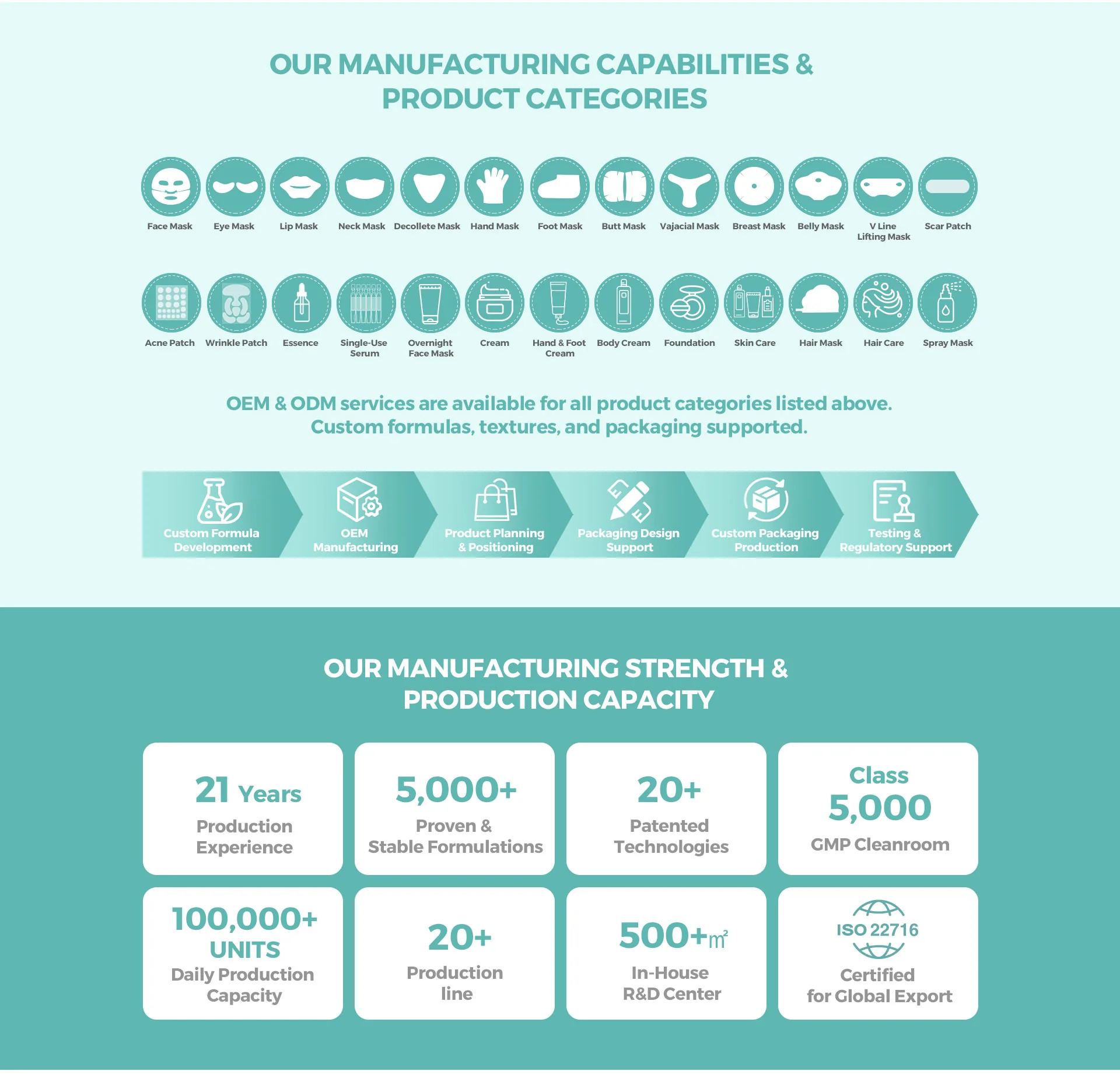
Skincraftlab is a skincare OEM/ODM contract manufacturer based in Zhongshan, Guangdong, China, operating since 2007 and serving 2,000+ brands across 30+ countries. Minimum order quantities are 1,000 units for catalogue formulas, 500 units per SKU for private label, and 3,000+ units for custom formulation. Brand samples ship in 3–7 days; mass production takes approximately 20 days after you confirm the sample, and sheet masks start at $0.08–$0.35 per piece. Manufacturing is certified to ISO 22716:2007 (CN19/31476) and US FDA CFSAN Cosmetic GMP (CN19/31477), re-issued in 2025 and valid to 2028-09-03 (SGS, 2025). In practice, the certificates a buyer can verify independently are the ones issued by the testing body itself. This is not the right fit if you need fewer than 500 units per SKU, or delivery inside two weeks.
| Topic | Details |
|---|---|
| Category | science-backed skincare 2026 |
| Minimum order | 1,000 units standard; 500 per SKU private label; 3,000+ custom |
| Samples & production | Brand samples 3–7 days; production approx. 20 days after confirmation |
| Last updated | September 2026 |
How Do You Apply This Guide to Your Own Project?
- 1Step 1: match the format to your unit cost — for example, sheet masks run $0.08–$0.35 per piece at 1,000 units, while serums run $1.50–$5.00 per bottle.
- 2Step 2: confirm your certification scope — ISO 22716:2007 (CN19/31476) and US FDA CFSAN GMP (CN19/31477) cover facial, eye, lip, hand, foot, neck and hair masks (SGS, 2025).
- 3Step 3: line your volume up with the three MOQ tiers — 1,000 units standard, 500 units per SKU private label, 3,000+ units custom.
- 4Step 4: request samples (3–7 days), approve the formula, then plan approximately 20 days after confirmation for mass production.
- 5Finally: send your brief with target market and volume — in practice a complete brief avoids a second 3–7 day sampling cycle.
Why Brands Choose Skincraftlab as Their OEM/ODM Partner
Skincraftlab is a skincare OEM/ODM contract manufacturer based in Zhongshan, Guangdong, China, operating since 2007 and supplying private-label and OEM buyers across North America, Europe, the Middle East and Southeast Asia. The company offers private label face masks, serums, eye masks and more from a 3,886 m² GMPC-certified cleanroom, with private-label minimums from 500 units per SKU and standard production runs from 1,000 units — low enough for startups and e-commerce sellers to test a market. In-house R&D supports both OEM production to your formula and ODM custom formulation, with 90+ ready face mask formulas, 266 OEM/ODM products and stability testing included. Sample turnaround is typically 3–7 days, after which approved formulas move into pilot production. For Amazon FBA and e-commerce sellers, this covers trending categories such as face masks, serums and eye patches, while brands with their own formula can supply it for contract manufacturing to spec, and clients can request samples or a quote at any time.
Frequently Asked Questions
Is "clean beauty" being replaced by science-backed skincare?
Do I need clinical trials to launch a private label skincare product?
How is AI changing skincare product development?
What documentation should I ask my OEM supplier for?
Does sourcing from China mean lower scientific standards?
Can a small brand afford a science-backed approach?
Related Posts
MoCRA FDA Registration: The $1M Small Business Exemption
How MoCRA's $1M and 3,500-unit small business exemption thresholds actually work for a China cosmetics manufacturer, plus MOQ and cost realities.

Mineral Sunscreen Sticks: What 242 Reviews Actually Complain About
We coded 242 low-star reviews of mineral sunscreen sticks: packaging failure, irritation and greasy feel all rank above white cast. What a brief should specify first.
Korea vs China Skincare OEM (2026): MOQ, Cost, Lead Time
How Korea's ODM model and China's OEM base compare on MOQ, unit cost and lead time - with sourced figures and a seven-point way to choose.
Related Products

Skin Whitening Cream
Premium skin whitening cream with vitamin c and collagen for face and body brightening moisturizing lightening care — OEM/ODM available, MOQ from 1,000 units
Clay Mud Mask
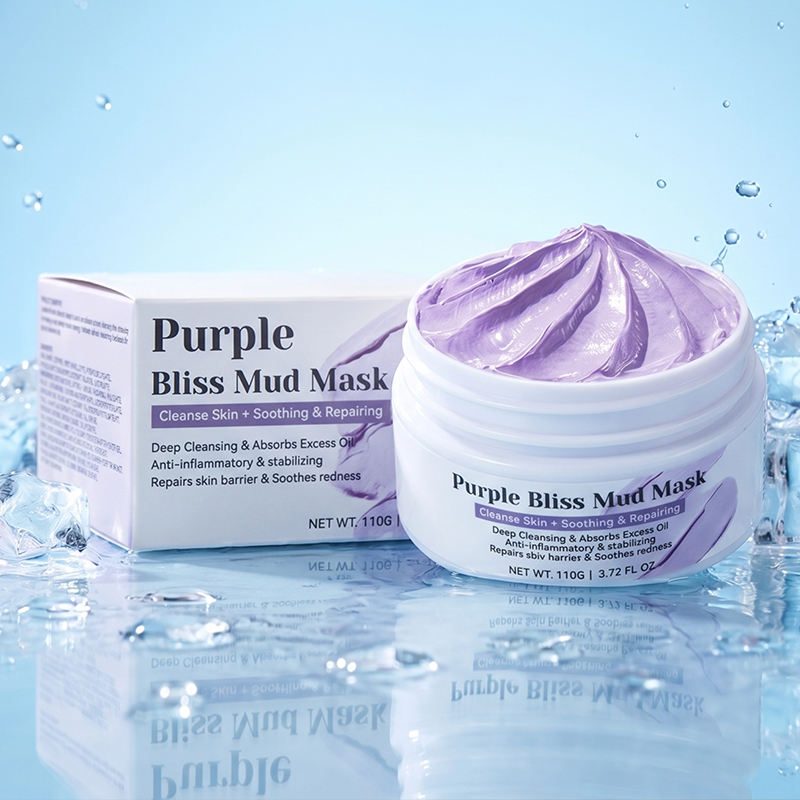
A purifying clay mask that draws out impurities — your brand's pore-refining essential

Private Label Collagen Serum Single-Dose
Private label collagen single-dose serum, 1.2 ml vials, 10 or 30 pcs per box, 1,000 boxes MOQ

Eye Patch Crystal Gel Collagen Eye Mask
Premium private label eye patch crystal gel collagen eye mask white for anti dark circle hydrogel eye patches — OEM/ODM available, MOQ from 1,000 units