Sunscreen Stick SPF 50+ Broad Spectrum ISO 24444 Testing Cost China OEM Factory
November 16, 2026
Skincraftlab
B2B Skincare Manufacturing Expert
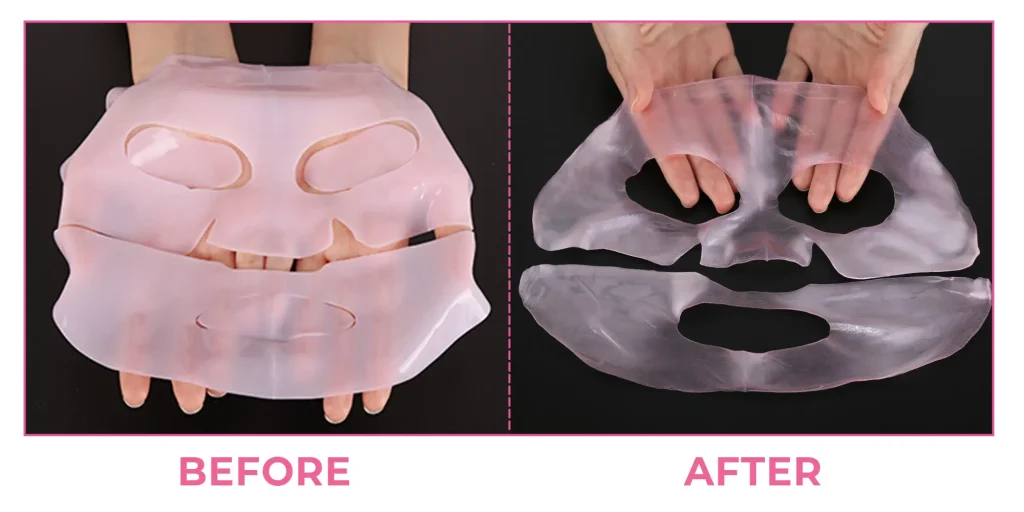
What Is This Guide About?
What a sunscreen stick SPF 50+ broad spectrum ISO 24444 in vivo testing cost China OEM factory run actually looks like — plus tooling, certificates, and the paperwork buyers miss.
Category
sunscreen stick SPF 50+ broad spectrum ISO 24444 in vivo testing cost China OEM factory
Audience
Brand owners, procurement, R&D
Updated
November 2026
A sunscreen stick SPF 50+ broad spectrum ISO 24444 in vivo testing cost China OEM factory program typically runs USD 1,850–2,600 per finished formulation for the in vivo SPF panel, USD 1,200–1,900 for ISO 24443 in vitro UVA, tooling at USD 3,800–6,500 for a stick shell, and MOQ from 3,000 units. A reusable silicone eye mask is a separate SKU: injection tooling USD 4,200–7,800, MOQ 10,000 units. Budget 35–45 days for testing before bulk fill.
We finished a sunscreen stick validation round in March 2026 at our Zhongshan facility — two formulations, both targeting SPF 50+ with broad spectrum claims for EU and US importers. The invoice for testing alone came to USD 4,120 across both. What surprised the buyer was not the test fee. It was the 11 days of waiting for the lab slot. (That is the part nobody prices in.)
That gap — lab queue time versus fill time — is what this article is about. If you are sourcing a sunscreen stick, a reusable silicone eye mask, or evaluating a Chinese cosmetic OEM factory's paperwork, the numbers below are the ones that decide whether your launch date holds.
Key Stats: Sunscreen Stick & Silicone Eye Mask OEM Costs (Q1 2026)
| Cost line | Typical range (USD) | Lead time |
|---|---|---|
| ISO 24444 in vivo SPF test (per formulation) | 1,850–2,600 | 28–35 days after lab slot |
| ISO 24443 in vitro UVA-PF test | 1,200–1,900 | 21–28 days |
| Water resistance test (per COLIPA/ISO 18895) | 900–1,400 | +7 days |
| Sunscreen stick shell tooling (injection mold) | 3,800–6,500 | 25–30 days T1 |
| Reusable silicone eye mask tooling (Liquid Silicone Rubber) | 4,200–7,800 | 30–40 days T1 |
| Sunscreen stick MOQ | 3,000 units | — |
| Reusable silicone eye mask MOQ | 10,000 units | — |
| Stability data package (accelerated, 3 months real-time equivalent) | 1,400–2,200 | 90 days |
Source: our 2026 Q1 order log and two third-party labs in Guangzhou and Shanghai.
What ISO 24444 In Vivo SPF Testing Actually Costs — and Why the Invoice Is Not the Real Number
The test itself is well-defined. ISO 24444 requires 10–20 human volunteers per formulation, a defined UV dose protocol, and a lab accredited to the standard. In China, the labs we use in Guangzhou and Shanghai quote USD 1,850–2,600 per formulation for the full panel.
Here is the thing buyers miss. The real cost is the lab slot. Between April and August — peak sunscreen season — our labs book 5 to 7 weeks out. If your formula is not locked by end of February, the sunscreen stick SPF 50+ broad spectrum ISO 24444 in vivo testing cost China OEM factory budget is irrelevant. You will miss the season. (We've watched three brands learn this the hard way since 2024.)
A second cost line: reformulation. If the first SPF panel comes back at 47 instead of 52, you pay for a second in vivo run. That is another USD 1,850–2,600. We build 2 formulations into every sunscreen stick quote now so the buyer expects it — one baseline, one with a 0.8% higher UV filter load. It saves about 30 days.
For US importers, add the FDA OTC monograph check: sunscreen sticks are drug products in the US, requiring an NDC labeler code and a properly formatted Drug Facts panel. That is not part of ISO 24444. Budget an extra USD 400–700 with a US regulatory consultant if the factory has not done a US sunscreen stick before.
For EU importers, the CPNP notification needs the CPSR (Cosmetic Product Safety Report) signed by a qualified safety assessor. CPSR cost on a sunscreen stick runs EUR 450–900 depending on the assessor.
Tooling Costs for Sunscreen Sticks and Reusable Silicone Eye Masks — Injection Mold Realities
The sunscreen stick shell is a two-piece injection mold — cap and base — usually in PP or ABS. Tooling quotes in China run USD 3,800–6,500 for the pair, plus USD 600–900 if you want a soft-touch finish with a raised logo.
Reusable silicone eye masks are a different beast. The silicone eye mask reusable OEM tooling cost injection mold 10000 units China market is a common search — and the honest answer is: LSR (liquid silicone rubber) injection tooling at USD 4,200–7,800, MOQ 10,000 units, 30–40 days to T1 sample. Anything quoted below USD 3,500 is either compression molding (cheaper, but visible parting line and 20–30% harder durometer tolerance) or a shared tool with someone else's logo relief.
A quick comparison for the decision:
| Decision | LSR injection (recommended) | Compression molding |
|---|---|---|
| Tooling cost | 4,200–7,800 USD | 2,100–3,200 USD |
| MOQ | 10,000 pcs | 5,000 pcs |
| Cycle time | 90–120 sec | 240–300 sec |
| Durometer tolerance | ±3 Shore A | ±8 Shore A |
| Parting line visibility | Minimal | Visible |
| Suitable for food-grade / skin-contact claim | Yes (platinum-cure) | Usually no |
For buyers building a reusable eye mask line, tooling is a one-time cost — but the color masterbatch and secondary packaging (silicone pouch, tin box) are recurring. Budget EUR 0.08–0.15 per unit on silicone pouch and USD 0.20–0.40 on a printed tin if you go that route. We quote these separately at hydrogel sheet mask OEM inquiries so buyers see the line-item split.
Capacity Certificate vs Free Sale Certificate — The Document Every Importer Asks For Too Late
This is the cosmetic OEM factory capacity certificate vs free sale certificate difference import question. They are not the same document, and customs in LatAm and Southeast Asia will reject one when they expected the other.
A capacity certificate (sometimes called a production capacity statement) is issued by the factory itself, sometimes notarized, stating monthly production capacity, equipment list, and line count. It proves the factory can fill the order. It is not a regulatory document.
A free sale certificate (FSC, also called Certificate of Free Sale) is issued by a government authority — in China, this is the local SAMR or, for exports, the provincial market regulator, in cooperation with CCPIT for some categories. It proves the product is legally sold in the country of origin. For LatAm imports (COFEPRIS, INVIMA, ANVISA), this is required. For Middle East, it is required and often needs legalization by the importing country's embassy in Beijing — that adds 10–15 days.
A quick map:
| Document | Issuer | Time to obtain | Required by |
|---|---|---|---|
| Capacity certificate | Factory (notarized optional) | 3–5 days | Some procurement tenders, not customs |
| Free sale certificate | SAMR / CCPIT | 10–15 days (plus 10–15 for embassy legalization) | COFEPRIS, INVIMA, ANVISA, TGA, Gulf SFDA |
| ISO 22716 / GMPC | Accredited certifier | Already issued if factory has it | EU, ASEAN, most markets |
| COA (per batch) | Factory QC lab | 2–3 days after batch | All markets |
If your importer asks for the "free sale" — get the SAMR/CCPIT version. Do not accept a factory letterhead certificate. (Yes, this happens more than you'd think.)
Stability Testing and Document Stack Before You Pay the 30% Deposit
When a buyer wires a 30% deposit before seeing the document stack, the factory — not the buyer — controls the timeline. Our rule at Zhongshan: no deposit is accepted until these items are delivered. This maps to the ES equivalent "documentos a solicitar a fábrica cosmética china antes de pagar anticipo 30%" — same checklist, same logic.
The pre-deposit document stack we send to every new OEM buyer:
- Business license (English translation, notarized)
- ISO 22716 certificate with current validity and scope
- GMPC certificate (if the buyer's market requires it)
- Factory audit report — BSCI, SMETA, or a client-commissioned third-party audit from the last 18 months
- Two reference COAs from a similar product — not a template COA
- Stability protocol outline for the specific product
- Free sale certificate (if the importing market requires it)
- Tooling ownership clause template
If a Chinese OEM factory will not deliver items 1 through 5 before a deposit, that is a signal — not necessarily a dealbreaker, but a signal. We've seen buyers accept a business license and a verbal commitment. They paid a 30% deposit. The deposit was USD 28,000. (The factory later missed two shipment windows. The refund took 7 months.)
Stability testing itself — especially for an ascorbic acid serum — deserves its own line. A 20% ascorbic acid formulation at pH 2.8–3.3 degrades fast if the packaging is not airless or if the water activity is not controlled. We run 3-month accelerated (40°C / 75% RH) plus 6-month real-time, and if the buyer is filling for an ES market, the packaged product must withstand COFEPRIS's stability dossier review. Budget 90 days minimum. Do not launch a 20% ascorbic acid serum on a 3-month accelerated-only data set. We've seen a batch go from 20% to 17.4% active within 4 months in a jar.
What This Means for Your Launch Calendar
Add it up. Sunscreen stick full program on a new formulation: 8 weeks formula development + 4 weeks lab queue + 5 weeks in vivo + 4 weeks fill = 21 weeks. That is 5 months minimum. If you want to sell sunscreen sticks in EU summer 2026, the formula lock was in September 2025. If you missed it, plan for EU summer 2027 or pivot to markets with a longer selling season.
Silicone eye mask tooling: 30–40 days T1, then 15–20 days for approval, then 25–30 days fill — about 75–90 days from PO to first shipment, ignoring approval returns.
A 20% ascorbic acid serum: 12 weeks development (why so long? because the oxidation curve is the formula) plus 90 days stability plus 25 days fill = roughly 7 months. Slower than most buyers expect.
If you are evaluating Chinese OEM partners, ask for these three numbers before signing: lab slot booking lead time, T1 tooling cycle time, and stability data package duration. A factory that gives real numbers with real variability windows is a factory you can plan around. We've had buyers leave because we quoted 35 days instead of the 20 days a competitor promised. Two of them came back within a year. There is a reason.
FAQ
Q: How much does sunscreen stick SPF 50+ broad spectrum ISO 24444 in vivo testing cost at a China OEM factory?
USD 1,850–2,600 per formulation for the in vivo SPF panel, plus USD 1,200–1,900 for ISO 24443 in vitro UVA-PF, plus USD 900–1,400 for water resistance if claimed. Add lab-slot lead time (5–7 weeks April to August). If your first panel misses SPF 50, budget a second run at the same price. We quote two formulations as standard to absorb the risk.
Q: What is the difference between a capacity certificate and a free sale certificate when importing cosmetics from China?
A capacity certificate is a factory-issued statement of monthly production capacity and equipment — not a regulatory document. A free sale certificate (FSC) is issued by SAMR/CCPIT in China and proves the product is legally sold in the country of origin. For COFEPRIS, INVIMA, ANVISA, TGA and Gulf SFDA imports, the FSC is required; capacity certificates are only useful for tender qualification. FSC takes 10–15 days, plus 10–15 for embassy legalization.
Q: What is the silicone eye mask reusable OEM tooling cost for an injection mold at 10,000 units in China?
For LSR (liquid silicone rubber) injection tooling in China, USD 4,200–7,800, MOQ 10,000 units, 30–40 days to T1 sample. Compression molding runs USD 2,100–3,200 with MOQ 5,000, but you get a visible parting line, ±8 Shore A durometer tolerance, and platinum-cure food-grade claim complications. If you need a clean silicone skin-contact surface, LSR is the only path.
Q: What documents should I request from a Chinese cosmetic factory before paying a 30% deposit?
At minimum: notarized business license, ISO 22716 certificate with current scope, GMPC certificate (if required by your market), third-party audit report (BSCI/SMETA) under 18 months old, two real reference COAs — not templates — and a stability protocol outline for your product. If the market requires it, add the free sale certificate. Refusal to provide the first five before deposit is a real risk signal, not a negotiation tactic.
Q: How long does a 20% ascorbic acid serum stability test take before COFEPRIS import?
Plan 90 days minimum for a stability data package that will pass COFEPRIS review — 3 months accelerated at 40°C / 75% RH plus real-time data showing the active stays above the label claim. A 20% ascorbic acid serum at pH 2.8–3.3 degrades fast in non-airless packaging; we have seen a batch drop from 20% to 17.4% within 4 months in a jar. Add 12 weeks formulation development before that clock starts.
Q: Can one China OEM factory run my sunscreen stick testing and the silicone eye mask tooling in parallel?
Yes, if the factory has both sun-care and silicone lines. Ours at Zhongshan does. But run them as two parallel POs, not one — the tooling timeline (30–40 days T1) and the SPF lab timeline (5–7 weeks lab queue + 5 weeks panel) drift independently. Combined POs create schedule coupling you'll regret when the tool adds 9 days.
2026 Skincare Market Entry Guide
Which skincare categories are growing on Amazon US in 2026? Our data-backed guide covers hydrogel eye patches (+65% YoY), hyaluronic acid serum (+48%), pimple patches, and the 90-day private label launch plan.
No spam, ever. Unsubscribe anytime.
What Are the Key Facts Before You Request a Quote?
Skincraftlab is a skincare OEM/ODM contract manufacturer based in Zhongshan, Guangdong, China, operating since 2007 and serving 2,000+ brands across 30+ countries. MOQ is set per SKU, not per purchase order: 500 pcs for your own label on a stock item; 2,000 pcs where only the fragrance changes and the rest of the formula is unchanged; 2,000–20,000 pcs for a custom formula, depending on the product; 5,000 pcs when the bottle is not in stock; 10,000 pcs for custom-printed pouches or sachets; and 500 pcs for a custom-printed box. Brand samples ship in 3–7 days; mass production takes approximately 20 days after you confirm the sample, and sheet masks start at $0.08–$0.35 per piece. Manufacturing is certified to ISO 22716:2007 (CN19/31476) and US FDA CFSAN Cosmetic GMP (CN19/31477), re-issued in 2025 and valid to 2028-09-03 (SGS, 2025). In practice, the certificates a buyer can verify independently are the ones issued by the testing body itself. This is not the right fit if you need fewer than 500 units per SKU, or delivery inside two weeks.
| Topic | Details |
|---|---|
| Category | sunscreen stick SPF 50+ broad spectrum ISO 24444 in vivo testing cost China OEM factory |
| Minimum order | 500 pcs your label on a stock item; 2,000 fragrance-only change; 2,000–20,000 custom formula; 5,000 non-stock bottle; 10,000 printed pouch; 500 printed box |
| Samples & production | Brand samples 3–7 days; production approx. 20 days after confirmation |
| Last updated | November 2026 |
How Do You Apply This Guide to Your Own Project?
- 1Step 1: match the format to your unit cost — for example, sheet masks run $0.08–$0.35 per piece in production runs, while serums run $1.50–$5.00 per bottle.
- 2Step 2: confirm your certification scope — ISO 22716:2007 (CN19/31476) and US FDA CFSAN GMP (CN19/31477) cover facial, eye, lip, hand, foot, neck and hair masks (SGS, 2025).
- 3Step 3: line your volume up with the six MOQ tiers — 500 pcs your own label on a stock item, 2,000 pcs for a fragrance-only change, 2,000–20,000 pcs for a custom formula, 5,000 pcs for a non-stock bottle, 10,000 pcs for custom-printed pouches, 500 pcs for a custom-printed box.
- 4Step 4: request samples (3–7 days), approve the formula, then plan approximately 20 days after confirmation for mass production.
- 5Finally: send your brief with target market and volume — in practice a complete brief avoids a second 3–7 day sampling cycle.
Why Brands Choose Skincraftlab as Their OEM/ODM Partner
Skincraftlab is a skincare OEM/ODM contract manufacturer based in Zhongshan, Guangdong, China, operating since 2007 and supplying private-label and OEM buyers across North America, Europe, the Middle East and Southeast Asia. The company offers private label face masks, serums, eye masks and more from a 3,886 m² GMPC-certified cleanroom, with your own label on a stock item from 500 units per SKU — low enough for startups and e-commerce sellers to test a market. In-house R&D supports both OEM production to your formula and ODM custom formulation, with 90+ ready face mask formulas, 339 OEM/ODM products and stability testing included. Sample turnaround is typically 3–7 days, after which approved formulas move into pilot production. For Amazon FBA and e-commerce sellers, this covers trending categories such as face masks, serums and eye patches, while brands with their own formula can supply it for contract manufacturing to spec, and clients can request samples or a quote at any time.
Frequently Asked Questions
How much does sunscreen stick SPF 50+ broad spectrum ISO 24444 in vivo testing cost at a China OEM factory?
What is the difference between a capacity certificate and a free sale certificate when importing cosmetics from China?
What is the silicone eye mask reusable OEM tooling cost for an injection mold at 10,000 units in China?
What documents should I request from a Chinese cosmetic factory before paying a 30% deposit?
How long does a 20% ascorbic acid serum stability test take before COFEPRIS import?
Can one China OEM factory run my sunscreen stick testing and the silicone eye mask tooling in parallel?
Related Posts
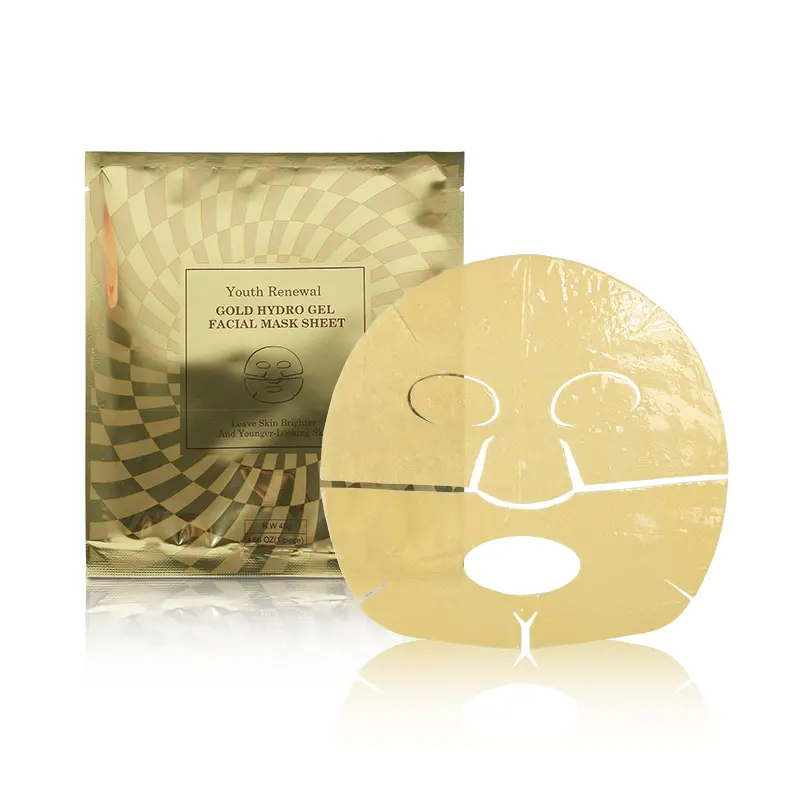
Hydrogel Sheet Mask OEM Annual Contract Minimum Volume in China
How annual volume commitments, printed eye pad FOB pricing and capacity vs free-sale certificates actually work when you contract a Chinese hydrogel mask factory.
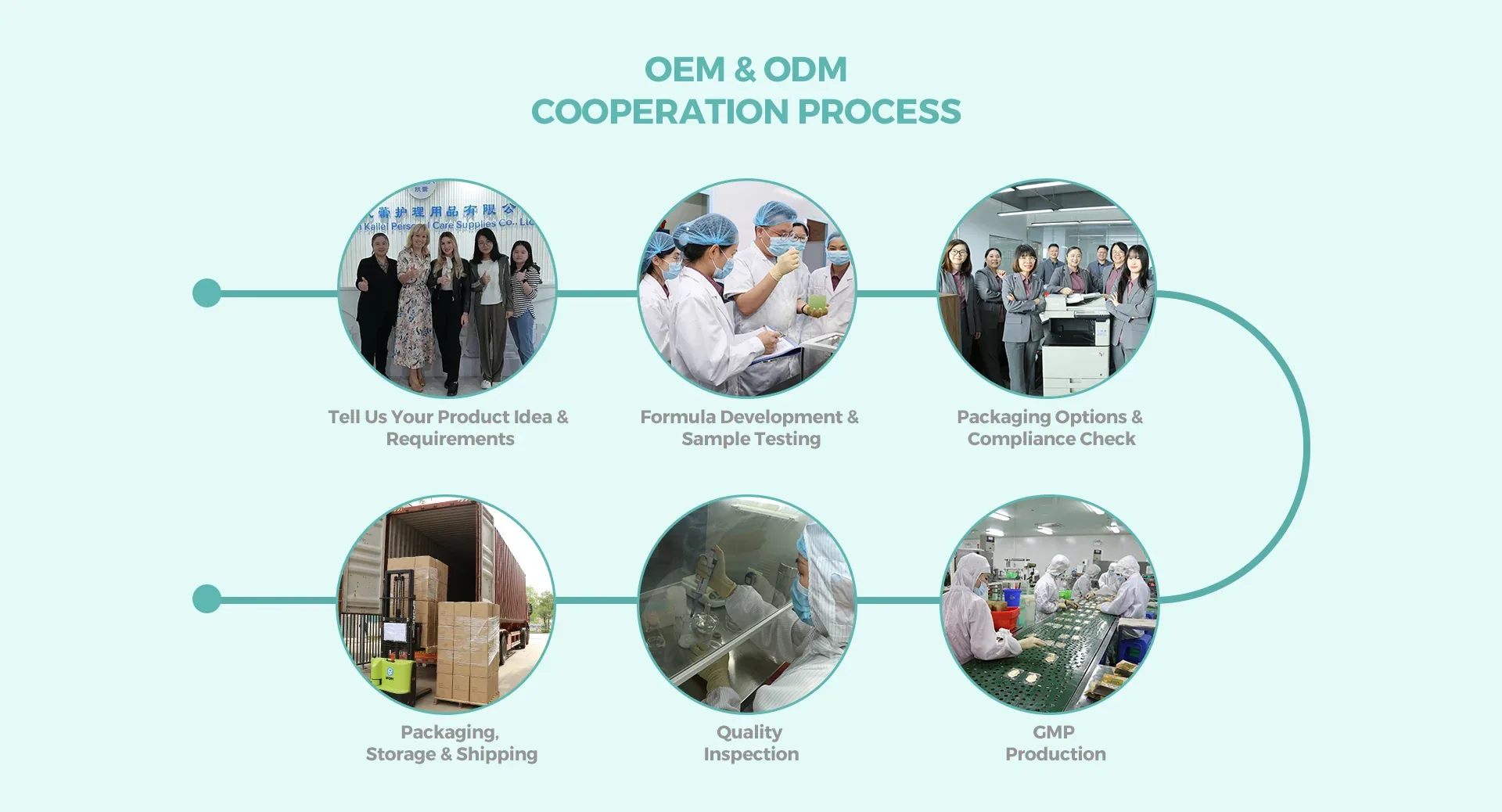
How to Start a Private Label Skincare Brand on Amazon FBA in 2026: Step-by-Step Guide
A complete step-by-step guide to launching a private label skincare brand on Amazon FBA in 2026 — from market research and supplier selection to formulation, packaging, compliance, and launch strategy. Includes real cost estimates and timeline.
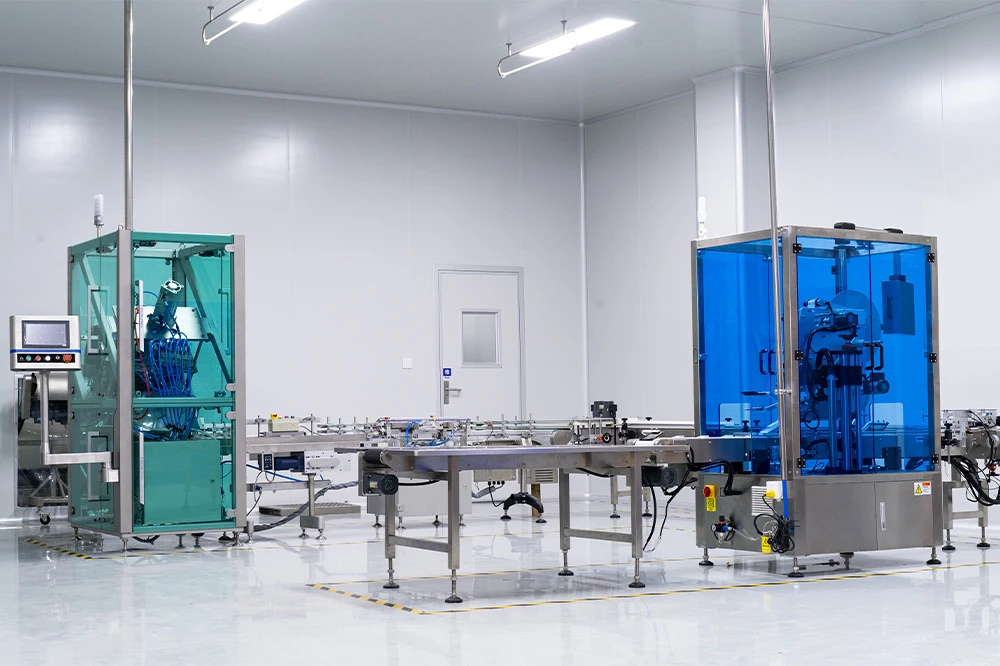
Chat Responsiveness SLA for OEM Skincare Inquiries in China
What chat response SLA to expect from Chinese OEM skincare factories, plus hydrocolloid vs hydrogel pimple patch specs and manufacturing cost comparison.
Related Products
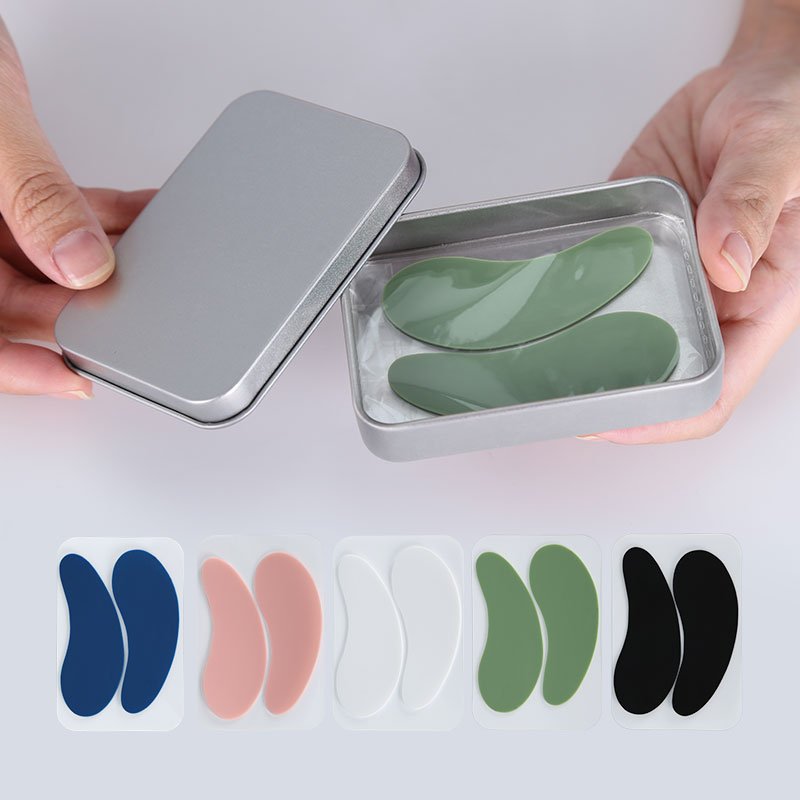
Silicone Puffy Collagen Korean Eye Patches Reusable Under Eye Sheet Masks Pads
Premium logo silicone puffy collagen korean eye patches reusable under eye sheet masks pads — OEM/ODM available, MOQ from 500 units
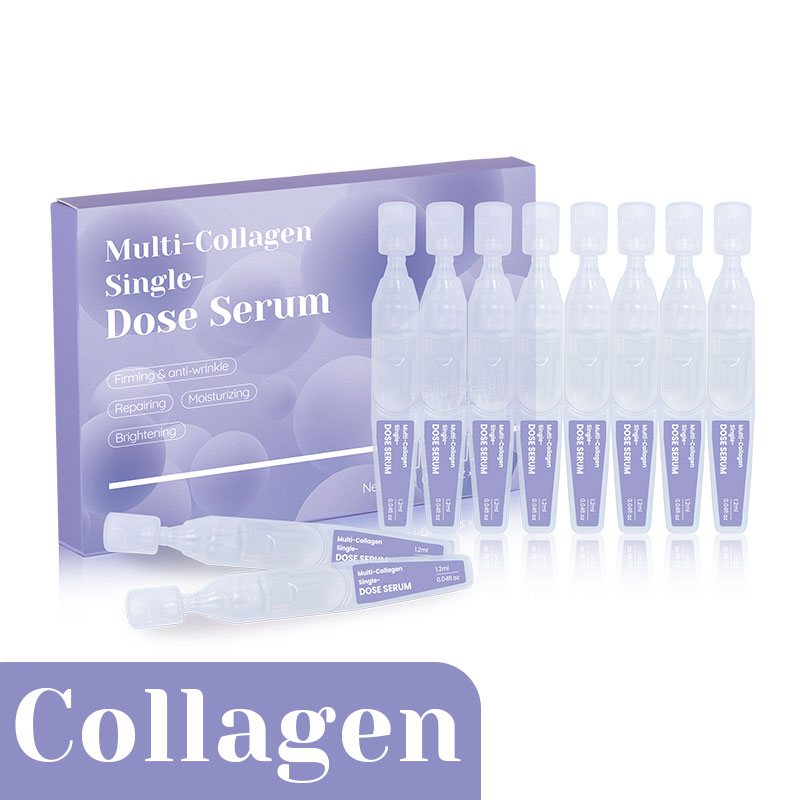
Collagen Single Dose Korean Skincare Hyaluronic Acid Instant Face Lift Serum Alpha Arbut
Premium cosmetics collagen single dose korean skincare hyaluronic acid instant face lift serum alpha arbut — OEM/ODM available, MOQ from 500 units
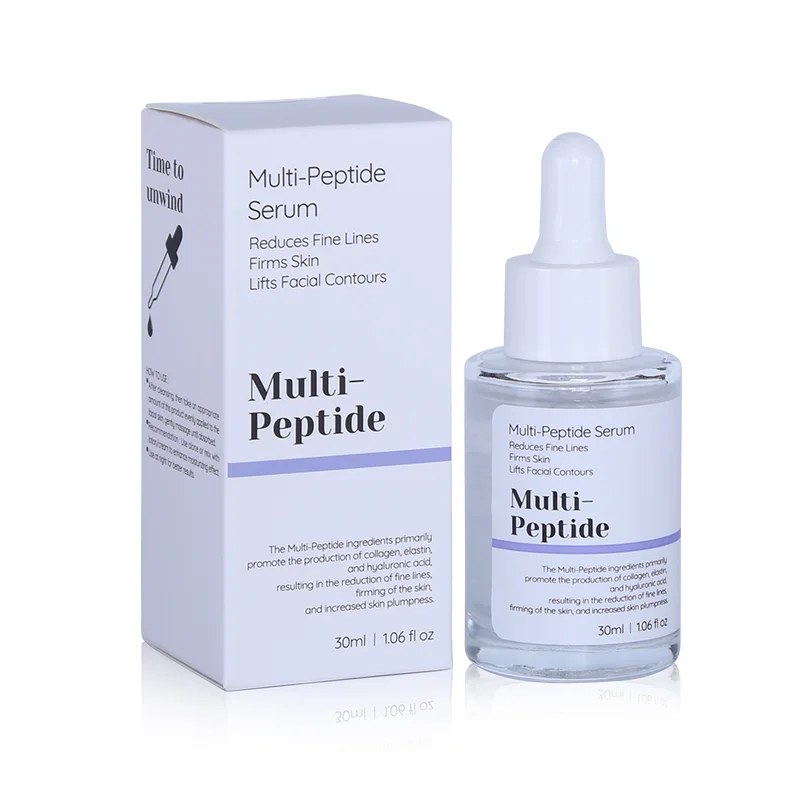
Private Label Multi Peptide Serum
Private label multi peptide serum, 30 ml dropper bottle, 500 bottles MOQ
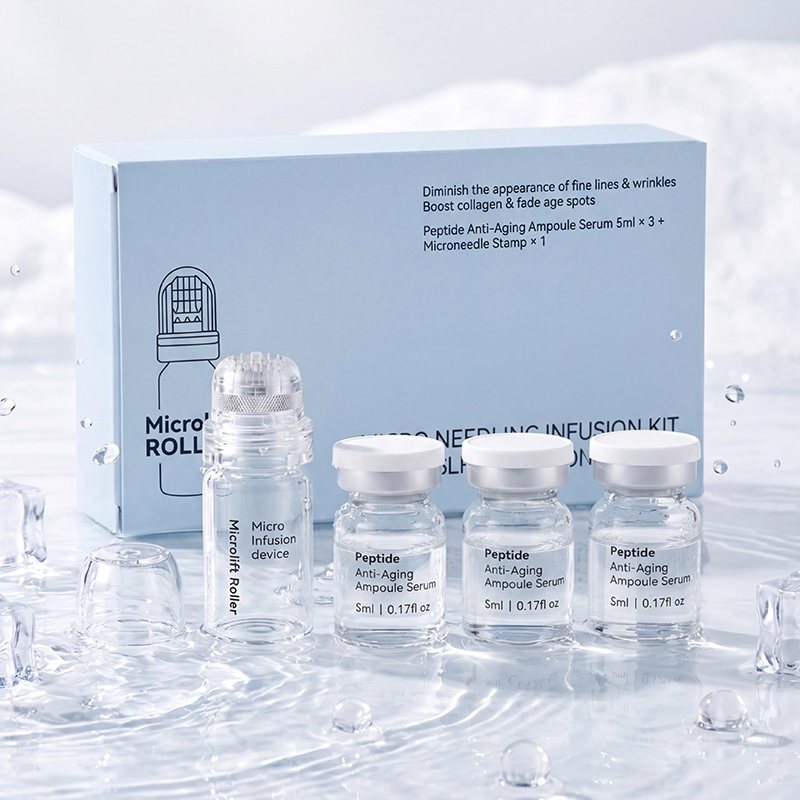
Niacinamide Peptide Anti-Aging Microlitre Serum Hydrolyzed Collagen Microlitre Kit
Premium niacinamide peptide anti-aging microlitre serum hydrolyzed collagen microlitre kit — OEM/ODM available, MOQ from 500 units