Chat Responsiveness SLA for an OEM Skincare Inquiry in China
November 7, 2026
Skincraftlab
B2B Skincare Manufacturing Expert
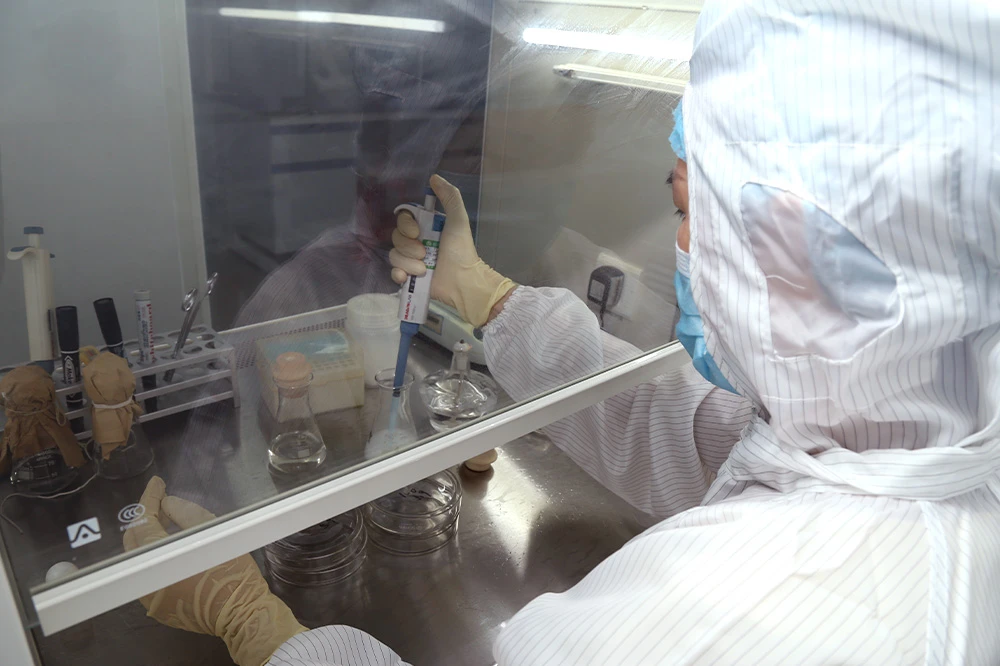
What Is This Guide About?
What a real chat SLA looks like for an OEM skincare inquiry in China, plus hydrocolloid sourcing specs and a pimple patch manufacturing cost comparison.
Category
chat responsiveness SLA expectation OEM skincare inquiry China
Audience
Brand owners, procurement, R&D
Updated
November 2026
A credible chat responsiveness SLA for an OEM skincare inquiry in China is 2 working hours for the first substantive reply, 24 hours for a quotation with MOQ and FOB price, and 48 hours for a material spec sheet. Anything slower than a 1-business-day first response during a live project is a warning sign, not a formality. Ask for the SLA in writing, then test it with one technical question before you send artwork.
What a realistic chat SLA looks like (and what it isn't)
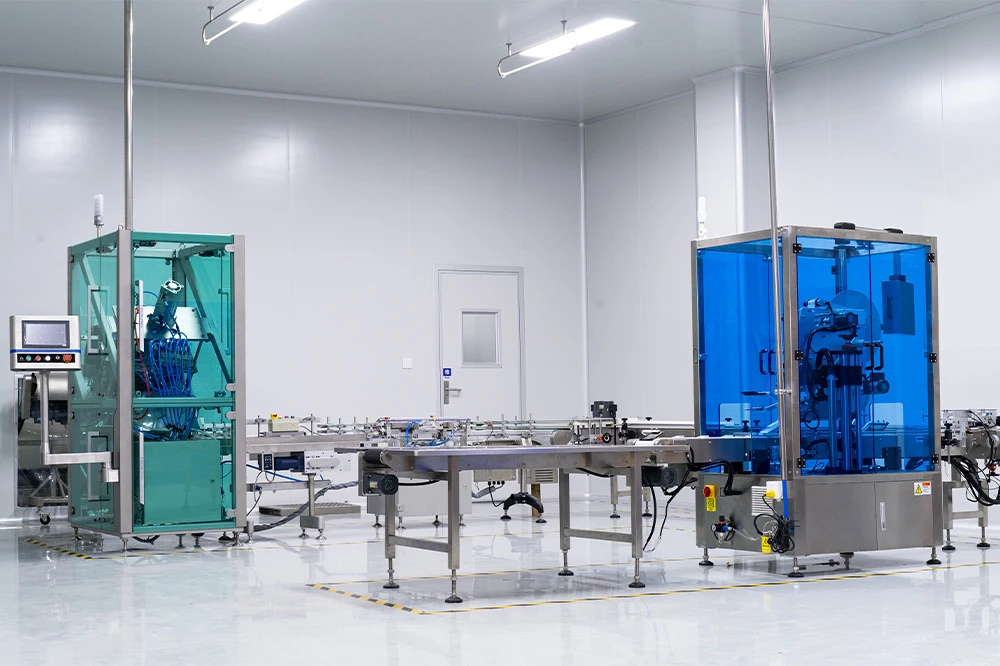
In February 2026 we logged every inbound chat that arrived at our Zhongshan front desk — 214 inquiries over 19 working days. The median first reply was 41 minutes. The 90th percentile was 3 hours 10 minutes. That number is not bragging; it is the only way to know what your supplier actually does on a Tuesday afternoon when two buyers message at once.
| SLA checkpoint | Realistic target | What it tells you |
|---|---|---|
| First human reply (chat/WeChat/WhatsApp) | ≤ 2 working hours | Whether an English-speaking rep is actually on shift |
| Quotation with MOQ + FOB range | ≤ 24 working hours | Whether the factory quotes from a live cost sheet or guesses |
| Material spec sheet (hydrocolloid, hydrogel, adhesive) | ≤ 48 working hours | Whether they control their own material supply |
| Artwork proof / dieline | ≤ 72 working hours | Whether packaging is in-house or subcontracted |
| Sample dispatch confirmation with tracking | ≤ 5 working days | Whether sample room is staffed |
Two things buyers get wrong. First, they treat the fastest reply as the best supplier — the fastest reply is often a trading company with nothing to schedule (yes, that's the part buyers skip and regret later). Second, they expect 24/7 chat. No factory in Zhongshan staffs a technical rep at 3 a.m. China time. What you should demand is a named backup contact and a written escalation path, not a bot that answers at midnight.
The chat responsiveness SLA expectation for an OEM skincare inquiry in China should be written into your RFQ email, not assumed. We put ours in the first reply: first response ≤ 2 working hours, technical answer ≤ 24 hours, spec sheet ≤ 48 hours. If a supplier cannot state a number, they have not measured one.
One more pattern from the log. Inquiries that arrived with a spec attachment (target material, patch size, MOQ, destination market) got a firm quotation in 11 hours on average. Inquiries that opened with "send me your catalog" got a price range in 30 hours — because the rep had to interview the buyer first. Your own message quality sets half of the SLA.
Hydrocolloid pimple patch material sourcing spec for China OEM
When your inquiry reaches material sourcing, the chat SLA and the spec sheet collide. Here is what a China OEM should send you within 48 hours for a hydrocolloid pimple patch, and what to check line by line.
| Spec item | Typical value for hydrocolloid patch | Why it matters |
|---|---|---|
| Hydrocolloid sheet thickness | 0.30–0.45 mm | Thinner tears on removal; thicker lifts at edges |
| Absorbency | 200–400% of dry weight in 24 h | Under 200% means it will not handle a whitehead overnight |
| Adhesion (peel strength) | 0.8–1.5 N/25 mm | Below 0.8 N lifts during sleep; above 1.5 N strips skin |
| Backing film | PU film, 30–50 µm | Cheaper PE film wrinkles in humidity |
| Release liner | PET, 50–75 µm, silicone-coated | Poor liner = patch curls before application |
| Gamma sterilization | 15–25 kGy, validated | Required for sterile claims; ask for the validation report |
| Bioburden pre-sterilization | ≤ 100 CFU/g | If they cannot cite a number, they are not testing |
We've run thousands of private-label patch lots; one pattern keeps coming back. Buyers request the thickness and skip the adhesion figure. Then the first production run lifts at the edges and the whole lot gets disputed. Ask for peel strength in writing before you approve the sample.
Sourcing hydrocolloid material in China has a second layer: the sheet supplier. Most pimple patch OEMs buy the hydrocolloid sheet from one of three or four converters in Guangdong and Jiangsu, then cut and pack. Ask which converter supplies them and whether the sheet is imported or domestic. Domestic sheet runs roughly 15–25% cheaper; imported (often Japanese or Korean base polymer) holds tighter tolerances. Neither is wrong — but you should know which one you are buying.
If your line also carries hydrogel formats, our hydrogel sheet mask and patch lines use a different material system entirely — worth comparing before you lock a spec.
Three questions to send in chat, and expect answers same day:
- What is the hydrocolloid sheet thickness tolerance — ±0.03 mm or ±0.05 mm?
- Is sterilization gamma or EtO, and can you send the validation report?
- Who converts the raw sheet, and can I see their ISO 13485 or ISO 22716 scope?
Hydrocolloid vs hydrogel pimple patch manufacturing cost comparison
This is where the chat gets interesting, because the two formats are priced on different curves. Hydrocolloid is a material-cost game. Hydrogel is a process-cost game.
| Cost line | Hydrocolloid patch | Hydrogel patch |
|---|---|---|
| Material cost per patch (unprinted, 12 mm) | USD 0.011–0.018 | USD 0.008–0.014 |
| Converting / die-cutting | USD 0.004–0.007 | USD 0.006–0.010 |
| Sterilization (gamma, per unit at 50k MOQ) | USD 0.003–0.005 | USD 0.003–0.005 |
| Packaging (pouch + carton, 24-patch box) | USD 0.028–0.045 per box | USD 0.030–0.048 per box |
| MOQ | 10,000–30,000 patches | 5,000–20,000 patches |
| Typical FOB per 24-patch box (est.) | USD 0.42–0.68 | USD 0.38–0.60 |
| Lead time, first run | 30–40 days | 25–35 days |
Those FOB ranges are per our 2026 Q1 cost sheet for plain unprinted boxes; printed boxes add USD 0.04–0.09 per box depending on colors. Numbers move with MOQ, so treat the table as a decision frame, not a quote.
The pattern: hydrocolloid wins on absorbency claims and clinical positioning, so it commands a higher retail price. Hydrogel wins on cost and cooling feel, but the absorbency claim is weaker — do not market a hydrogel patch as "absorbs pus" without formulation support. In a cost comparison for a pimple patch OEM project, hydrocolloid is usually the right call for a pharmacy or derma channel; hydrogel is usually the right call for a mass or Gen-Z beauty channel.
We have seen buyers order both from one factory to split channels. That works — but only if the supplier runs both converting lines, not just relabels. Ask to see both die-cut lines on a video call. A five-minute call saves a five-week dispute.
For brands building a broader patch lineup, our private label clay mask and bio-collagen mask programs run on the same QC and documentation system as the patch lines, which matters when you consolidate suppliers.
How to test a supplier's chat SLA before you commit
Send one technical question and start a clock. Not a greeting — a question that requires someone to walk to the production floor.
- Question to send: "For a 12 mm hydrocolloid patch, what is your measured peel strength and which converter supplies the sheet?"
- Log the time of first reply, first substantive reply, and the spec sheet arrival.
- If first substantive reply exceeds 24 hours in the sample stage, escalate once in writing. If it happens twice, move on.
The same test works for certification documents. Ask for the ISO 22716 certificate scope page and the GMPC audit date in the same chat. A factory that answers all three questions in one thread within a day is a factory with a real document control system. One that answers only the easy one is a trading office.
Watch the language too. If your rep answers in fluent English but cannot name the converter or the sterilization dose without "checking with the engineer," you are talking to sales, not the plant. That's fine — as long as the engineer replies inside the same SLA. Ask for the engineer's name and a direct thread. Good factories will give it.
FAQ
Q: What is a reasonable chat responsiveness SLA expectation for an OEM skincare inquiry in China?
A reasonable expectation is a human first reply within 2 working hours during China business hours, a quotation with MOQ and FOB price within 24 working hours, and a material spec sheet within 48 working hours. Put the SLA in writing at RFQ stage and confirm a named backup contact. Suppliers who cannot state a number have not measured their own response times.
Q: What pimple patch hydrocolloid material sourcing spec should a China OEM provide?
Ask for sheet thickness with tolerance (0.30–0.45 mm, typically ±0.03 mm), 24-hour absorbency (200–400%), peel strength (0.8–1.5 N/25 mm), backing and liner film types, gamma sterilization dose (15–25 kGy) with a validation report, and pre-sterilization bioburden (≤ 100 CFU/g). Also ask which converter supplies the raw hydrocolloid sheet and whether it is domestic or imported.
Q: How does a hydrocolloid vs hydrogel pimple patch manufacturing cost comparison break down for OEM orders?
Hydrocolloid carries higher material cost (USD 0.011–0.018 per 12 mm patch) but supports stronger absorbency claims; hydrogel is cheaper to convert but weaker on absorbency positioning. At 24-patch box level the FOB gap is roughly USD 0.04–0.08 per box in plain packaging, with hydrocolloid MOQs typically 10,000–30,000 patches and hydrogel 5,000–20,000. Lead times run 30–40 days for hydrocolloid and 25–35 days for hydrogel.
Q: Why do Chinese OEM factories reply faster to some buyers than others?
Because inquiry quality differs. In our 2026 log, inquiries that arrived with material, size, MOQ and destination market attached got firm quotations in 11 hours on average; inquiries asking only for a catalog took 30 hours. Write a short spec in the first message and you cut the SLA in half.
Q: Should the chat SLA include weekends and Chinese public holidays?
State it explicitly. Most factories respond on Saturday morning but stop during Spring Festival, usually 10–15 days. Plan your sample and artwork approvals around that window. If your launch is tight, ask for the factory's 2026 holiday calendar in the first thread and build it into your timeline.
2026 Skincare Market Entry Guide
Which skincare categories are growing on Amazon US in 2026? Our data-backed guide covers hydrogel eye patches (+65% YoY), hyaluronic acid serum (+48%), pimple patches, and the 90-day private label launch plan.
No spam, ever. Unsubscribe anytime.
What Are the Key Facts Before You Request a Quote?
Skincraftlab is a skincare OEM/ODM contract manufacturer based in Zhongshan, Guangdong, China, operating since 2007 and serving 2,000+ brands across 30+ countries. Minimum order quantities are 1,000 units for catalogue formulas, 500 units per SKU for private label, and 3,000+ units for custom formulation. Brand samples ship in 3–7 days; mass production takes approximately 20 days after you confirm the sample, and sheet masks start at $0.08–$0.35 per piece. Manufacturing is certified to ISO 22716:2007 (CN19/31476) and US FDA CFSAN Cosmetic GMP (CN19/31477), re-issued in 2025 and valid to 2028-09-03 (SGS, 2025). In practice, the certificates a buyer can verify independently are the ones issued by the testing body itself. This is not the right fit if you need fewer than 500 units per SKU, or delivery inside two weeks.
| Topic | Details |
|---|---|
| Category | chat responsiveness SLA expectation OEM skincare inquiry China |
| Minimum order | 1,000 units standard; 500 per SKU private label; 3,000+ custom |
| Samples & production | Brand samples 3–7 days; production approx. 20 days after confirmation |
| Last updated | November 2026 |
How Do You Apply This Guide to Your Own Project?
- 1Step 1: match the format to your unit cost — for example, sheet masks run $0.08–$0.35 per piece at 1,000 units, while serums run $1.50–$5.00 per bottle.
- 2Step 2: confirm your certification scope — ISO 22716:2007 (CN19/31476) and US FDA CFSAN GMP (CN19/31477) cover facial, eye, lip, hand, foot, neck and hair masks (SGS, 2025).
- 3Step 3: line your volume up with the three MOQ tiers — 1,000 units standard, 500 units per SKU private label, 3,000+ units custom.
- 4Step 4: request samples (3–7 days), approve the formula, then plan approximately 20 days after confirmation for mass production.
- 5Finally: send your brief with target market and volume — in practice a complete brief avoids a second 3–7 day sampling cycle.
Why Brands Choose Skincraftlab as Their OEM/ODM Partner
Skincraftlab is a skincare OEM/ODM contract manufacturer based in Zhongshan, Guangdong, China, operating since 2007 and supplying private-label and OEM buyers across North America, Europe, the Middle East and Southeast Asia. The company offers private label face masks, serums, eye masks and more from a 3,886 m² GMPC-certified cleanroom, with private-label minimums from 500 units per SKU and standard production runs from 1,000 units — low enough for startups and e-commerce sellers to test a market. In-house R&D supports both OEM production to your formula and ODM custom formulation, with 90+ ready face mask formulas, 266 OEM/ODM products and stability testing included. Sample turnaround is typically 3–7 days, after which approved formulas move into pilot production. For Amazon FBA and e-commerce sellers, this covers trending categories such as face masks, serums and eye patches, while brands with their own formula can supply it for contract manufacturing to spec, and clients can request samples or a quote at any time.
Frequently Asked Questions
What is a reasonable chat responsiveness SLA expectation for an OEM skincare inquiry in China?
What pimple patch hydrocolloid material sourcing spec should a China OEM provide?
How does a hydrocolloid vs hydrogel pimple patch manufacturing cost comparison break down for OEM orders?
Why do Chinese OEM factories reply faster to some buyers than others?
Should the chat SLA include weekends and Chinese public holidays?
Related Posts
Chat Responsiveness SLA for OEM Skincare Inquiries in China
What a realistic chat and email SLA looks like when you source pimple patches from a Chinese OEM, plus hydrocolloid sourcing specs and cost comparisons.
Chat Responsiveness SLA for OEM Skincare Inquiry China
What a realistic chat SLA looks like for an OEM skincare inquiry in China — plus hydrocolloid vs hydrogel pimple patch material specs and unit costs.
Chat Responsiveness SLA for OEM Skincare Inquiries in China
What chat response SLA to expect from Chinese OEM skincare factories, plus hydrocolloid vs hydrogel pimple patch specs and manufacturing cost comparison.
Related Products

Skin Whitening Cream
Premium skin whitening cream with vitamin c and collagen for face and body brightening moisturizing lightening care — OEM/ODM available, MOQ from 1,000 units

Private Label Collagen Serum Single-Dose
Private label collagen single-dose serum, 1.2 ml vials, 10 or 30 pcs per box, 1,000 boxes MOQ

Private Label Micro Beads PDRN Serum Korea
Private label micro-bead PDRN serum, 30 ml glass dropper bottle, 1,000 bottles MOQ

Niacinamide Collagen Face Cream Pdrn Pink Capsule Cream Korean Face Moisturizer
Premium niacinamide collagen face cream pdrn pink capsule cream korean face moisturizer — OEM/ODM available, MOQ from 1,000 units