How to Verify a Chinese Cosmetics Manufacturer Before You Pay a Deposit
September 13, 2026
Skincraftlab
B2B Skincare Manufacturing Expert
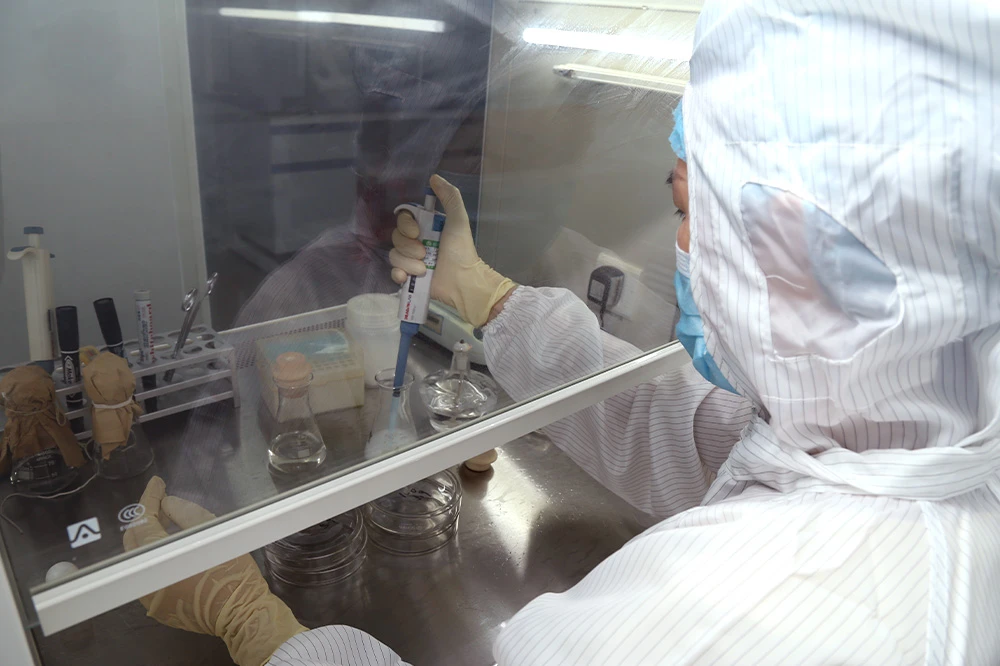
What Is This Guide About?
Four checks that separate a real OEM factory from a trading company: verify certificate numbers with the issuer (our ISO 22716 CN19/31476 and FDA CFSAN GMP CN19/31477 are SGS-issued), read the certified scope rather than the title, cross-check claimed volumes against UN Comtrade, and confirm the legal entity on the invoice.
Category
verify chinese cosmetics manufacturer
Audience
Brand owners, procurement, R&D
Updated
September 2026
Verify a Chinese cosmetics manufacturer with four checks: confirm every certificate number on the issuer's own portal; read the certified scope, not just the certificate title; cross-check claimed export volumes against UN Comtrade customs data; and make sure the legal entity name is identical on certificates, invoices and B2B platform pages. This is the same checklist we expect customers to run on us.
1. A certificate number can be verified. A certificate picture cannot.
Ask for four things about every certification: the certificate number, the issuing body, the expiry date, and the legal entity name on the certificate.
For example, the certificates held by the factory we work with are:
| Certificate | Number | Issuer | Valid to |
|---|---|---|---|
| ISO 22716:2007 (Cosmetics GMP) | CN19/31476 | SGS | 3 September 2028 |
| US FDA CFSAN Cosmetic GMP | CN19/31477 | SGS | 3 September 2028 |
| China National High-Tech Enterprise | GR202544003295 | — | — |
You can see the documents on our certifications page. The point of listing the numbers is that they can be checked with the issuing body — a number is a verifiable claim, whereas a scanned image is not.
2. Read the scope, not the title
This is the step buyers skip most often. A certificate titled "GMP" tells you the facility was audited against a standard. The scope tells you which production units the audit covered.
The certified scope on the two SGS certificates above reads: general liquid units (skin care waters, gel products); cream and lotion units (hair care products); wax units (wax-based products) — and it records certified production conditions for eye skin care and baby and child skin care cosmetics.
Now apply that to your own order. If you want a sheet mask produced and the supplier's scope only covers wax-based products, the certificate does not cover your product, however impressive the logo looks. Ask directly: "Does your certified scope cover the production unit my product will run in?"
3. Cross-check claimed volumes against customs data
Trade statistics are public, and they are a useful sanity check on a supplier's claims.
The method: ask which HS code the factory ships under and roughly how many containers or how much value it exports per year. Then look the code up in UN Comtrade. For skincare and masks, the relevant code is HS 3304.
Two cautions, and they matter:
- A mismatch is not proof of dishonesty. National statistics disagree with each other for structural reasons — the UK's own reported imports for this code are effectively unusable in UN Comtrade, and Russia does not report at all. See the market-by-market analysis in Where Chinese Cosmetics Exports Actually Go.
- Use it to ask better questions, not to accuse. "Your volume looks larger than the customs data for that code — which entity invoices those shipments?" is a reasonable question. It also gets you to the next point.
4. The brand name is not the legal entity
An international brand name and the company that holds the certificates, signs the contract and issues the invoice are often different. Ours are:
- International brand: Skincraftlab
- Legal entity on certificates and invoices: Zhongshan Kailei Personal Care Supplies Co., Ltd.
Both are legitimate — but you should know which one you are contracting with. Ask: "Which legal entity will appear on the invoice, and is it the same entity that holds the certificates?" If the answer is "a different company, but don't worry", ask for the relationship in writing.
This also applies to B2B marketplace profiles. During our own audit in September 2026 we found inconsistencies between the profile fields on our Alibaba and Made-in-China storefronts and our corporate documents — an outdated company name, an incorrect business category, and a minimum-order field that did not match our published terms. We corrected them. If a supplier's marketplace profile contradicts its certificates, that is worth one direct question.
5. Clear your brand before you print packaging
Neither the factory nor the marketplace can clear your trademark for you. Before you approve packaging artwork:
- Search EUIPO (euipo.europa.eu) for your brand name in the classes you intend to sell in.
- Search the US USPTO register if you are selling in the United States.
- Ask your manufacturer to keep brand artwork files separate from formula documentation, so a rebrand does not force a reformulation.
Background: Do I need my own trademark before finding a private label skincare manufacturer?
6. Red flags
| Signal | Why it matters |
|---|---|
| Certificate image provided, but no number or issuer | Nothing can be verified |
| Certificate number belongs to a different company name | It may not be your supplier's certificate |
| Certified scope does not cover your product category | The certificate is irrelevant to your order |
| Refuses to state which entity invoices | Payment, liability and warranty risk |
| Claimed volumes far above customs data | Ask questions before paying a deposit |
| No EU Responsible Person arrangement offered for EU orders | You cannot legally place the product on the EU market |
| Will not share a sample produced on the actual line | You are buying a brochure, not a capability |
7. What to ask in your first email
- Certificate numbers, issuing bodies and expiry dates for GMP/ISO certifications
- The certified scope, and which production unit your product will run in
- The legal entity that will appear on the invoice
- Manufacturing site address, and whether the certificate matches it
- Minimum order quantity per SKU, and per colour or formula variant
- Lead time for a first batch and for a repeat order
- Which HS code they normally ship your product under
- Whether stability and preservative challenge testing are included
FAQ
How do I know a Chinese cosmetics factory's GMP certificate is real? Ask for the certificate number and the issuing body, then verify that number with the issuer. A number that cannot be confirmed, or that belongs to a different company name, is the clearest warning sign.
What is the difference between a GMP certificate and a certified scope? The certificate states that the facility passed an audit against a standard. The scope states which production units and product categories the audit covered. A factory can hold a valid certificate that does not cover the type of product you are ordering.
Can I check a supplier's export volumes? Partly. National trade statistics in UN Comtrade are public and can be queried by product code, but they are country-level, not company-level, and different countries report inconsistently. Use them as a directional check.
Is it a problem if the brand name differs from the company name? Not by itself — it is common for a manufacturer to sell internationally under a brand while contracting through its legal entity. The problem is not knowing which entity holds the certificates and issues the invoice.
What should I verify before paying a deposit? Certificate numbers verified with the issuer, the certified scope covering your product category, the invoicing entity in writing, a sample from the actual production line, and a clear written statement of MOQ, lead time and what happens if the batch fails testing.
We expect to be checked
Every number on this page is one you can verify independently — the certificate numbers with SGS, and the trade data with UN Comtrade. If you want to run the checklist against us, request the documents or ask us directly; we will also tell you which parts of our own marketplace profiles we had to correct. To review production capability first, see our OEM/ODM catalogue and MOQ and pricing.
Related reading: Cosmetics GMP vs ISO 22716: Which Certification for a Chinese Cosmetics Exporter? · EU Responsible Person Requirement
2026 Skincare Market Entry Guide
Which skincare categories are growing on Amazon US in 2026? Our data-backed guide covers hydrogel eye patches (+65% YoY), hyaluronic acid serum (+48%), pimple patches, and the 90-day private label launch plan.
No spam, ever. Unsubscribe anytime.
What Are the Key Facts Before You Request a Quote?
Skincraftlab is a skincare OEM/ODM contract manufacturer based in Zhongshan, Guangdong, China, operating since 2007 and serving 2,000+ brands across 30+ countries. Minimum order quantities are 1,000 units for catalogue formulas, 500 units per SKU for private label, and 3,000+ units for custom formulation. Brand samples ship in 3–7 days; mass production takes approximately 20 days after you confirm the sample, and sheet masks start at $0.08–$0.35 per piece. Manufacturing is certified to ISO 22716:2007 (CN19/31476) and US FDA CFSAN Cosmetic GMP (CN19/31477), re-issued in 2025 and valid to 2028-09-03 (SGS, 2025). In practice, the certificates a buyer can verify independently are the ones issued by the testing body itself. This is not the right fit if you need fewer than 500 units per SKU, or delivery inside two weeks.
| Topic | Details |
|---|---|
| Category | verify chinese cosmetics manufacturer |
| Minimum order | 1,000 units standard; 500 per SKU private label; 3,000+ custom |
| Samples & production | Brand samples 3–7 days; production approx. 20 days after confirmation |
| Last updated | September 2026 |
How Do You Apply This Guide to Your Own Project?
- 1Step 1: match the format to your unit cost — for example, sheet masks run $0.08–$0.35 per piece at 1,000 units, while serums run $1.50–$5.00 per bottle.
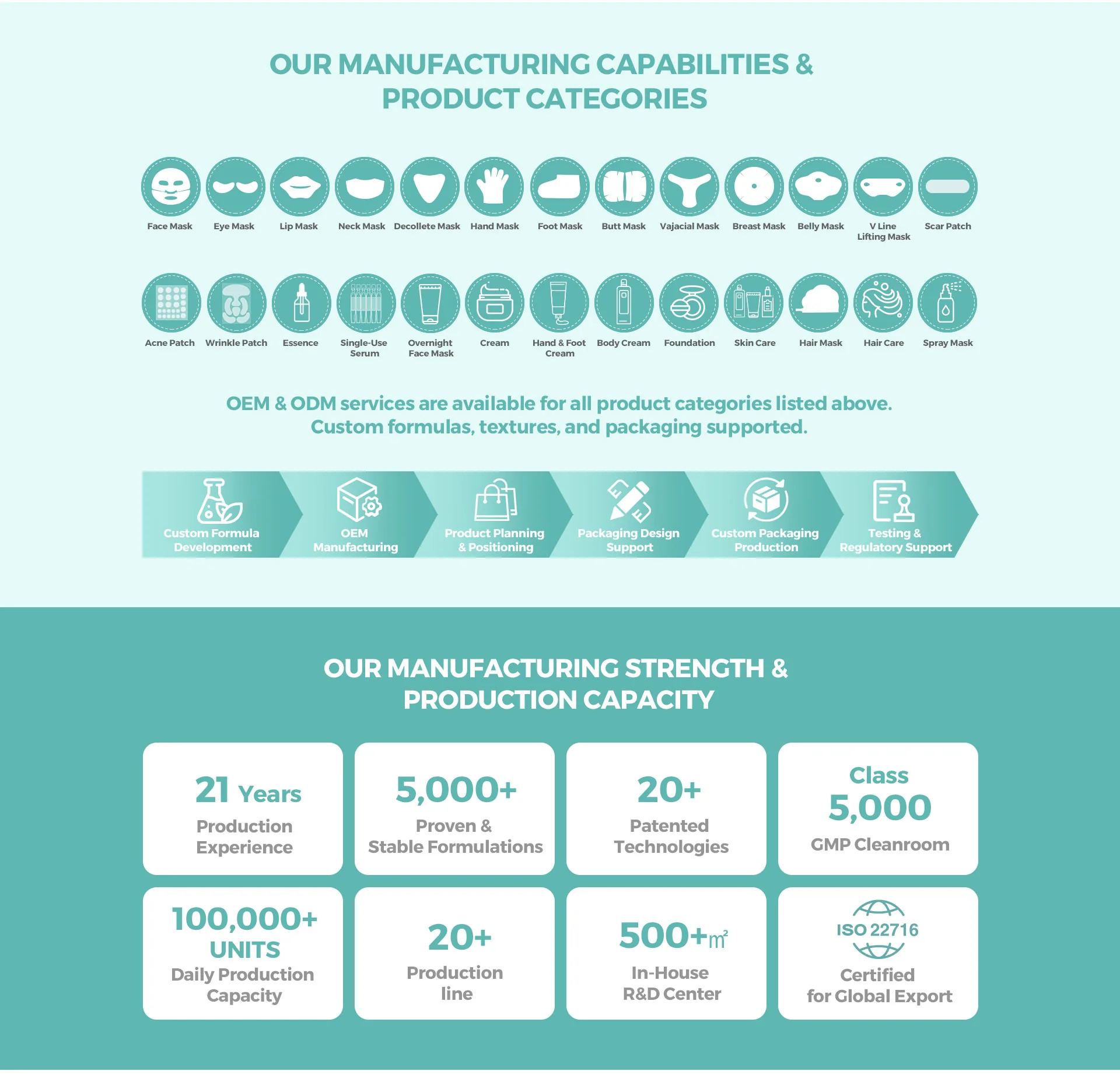
- 2Step 2: confirm your certification scope — ISO 22716:2007 (CN19/31476) and US FDA CFSAN GMP (CN19/31477) cover facial, eye, lip, hand, foot, neck and hair masks (SGS, 2025).
- 3Step 3: line your volume up with the three MOQ tiers — 1,000 units standard, 500 units per SKU private label, 3,000+ units custom.
- 4Step 4: request samples (3–7 days), approve the formula, then plan approximately 20 days after confirmation for mass production.
- 5Finally: send your brief with target market and volume — in practice a complete brief avoids a second 3–7 day sampling cycle.
Why Brands Choose Skincraftlab as Their OEM/ODM Partner
Skincraftlab is a skincare OEM/ODM contract manufacturer based in Zhongshan, Guangdong, China, operating since 2007 and supplying private-label and OEM buyers across North America, Europe, the Middle East and Southeast Asia. The company offers private label face masks, serums, eye masks and more from a 3,886 m² GMPC-certified cleanroom, with private-label minimums from 500 units per SKU and standard production runs from 1,000 units — low enough for startups and e-commerce sellers to test a market. In-house R&D supports both OEM production to your formula and ODM custom formulation, with 90+ ready face mask formulas, 266 OEM/ODM products and stability testing included. Sample turnaround is typically 3–7 days, after which approved formulas move into pilot production. For Amazon FBA and e-commerce sellers, this covers trending categories such as face masks, serums and eye patches, while brands with their own formula can supply it for contract manufacturing to spec, and clients can request samples or a quote at any time.
Frequently Asked Questions
How do I know a Chinese cosmetics factory's GMP certificate is real?
What is the difference between a GMP certificate and a certified scope?
Can I check a supplier's export volumes?
Is it a problem if the brand name differs from the company name?
What should I verify before paying a deposit?
Related Posts
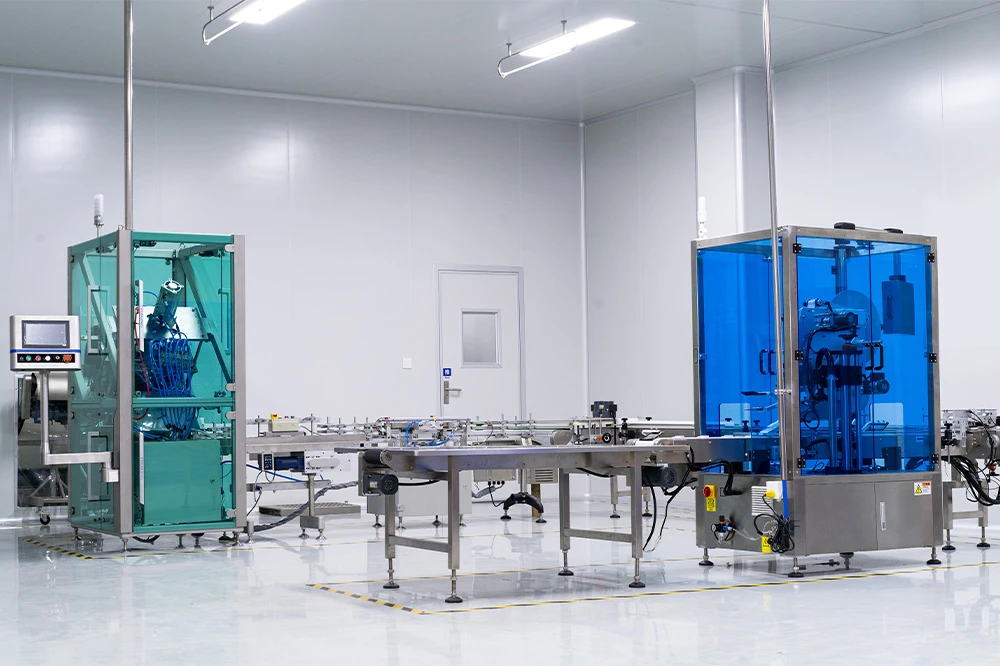
MoCRA FDA Registration: The $1M Small Business Exemption
How MoCRA's $1M and 3,500-unit small business exemption thresholds actually work for a China cosmetics manufacturer, plus MOQ and cost realities.

Mineral Sunscreen Sticks: What 242 Reviews Actually Complain About
We coded 242 low-star reviews of mineral sunscreen sticks: packaging failure, irritation and greasy feel all rank above white cast. What a brief should specify first.
Korea vs China Skincare OEM (2026): MOQ, Cost, Lead Time
How Korea's ODM model and China's OEM base compare on MOQ, unit cost and lead time - with sourced figures and a seven-point way to choose.
Related Products

Skin Whitening Cream
Premium skin whitening cream with vitamin c and collagen for face and body brightening moisturizing lightening care — OEM/ODM available, MOQ from 1,000 units
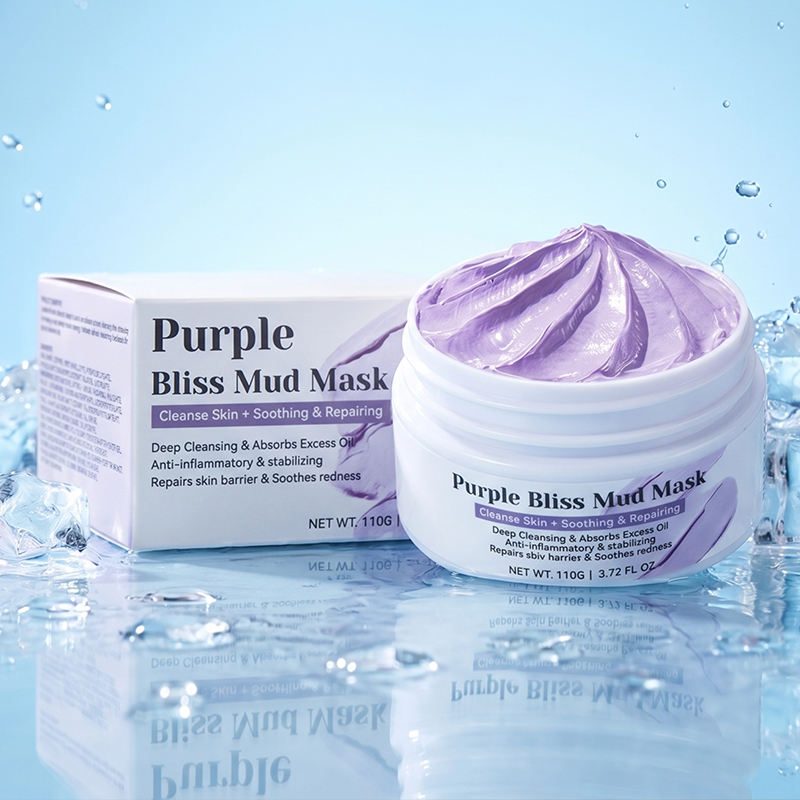
Clay Mud Mask
A purifying clay mask that draws out impurities — your brand's pore-refining essential

Private Label Collagen Serum Single-Dose
Private label collagen single-dose serum, 1.2 ml vials, 10 or 30 pcs per box, 1,000 boxes MOQ

Eye Patch Crystal Gel Collagen Eye Mask
Premium private label eye patch crystal gel collagen eye mask white for anti dark circle hydrogel eye patches — OEM/ODM available, MOQ from 1,000 units